




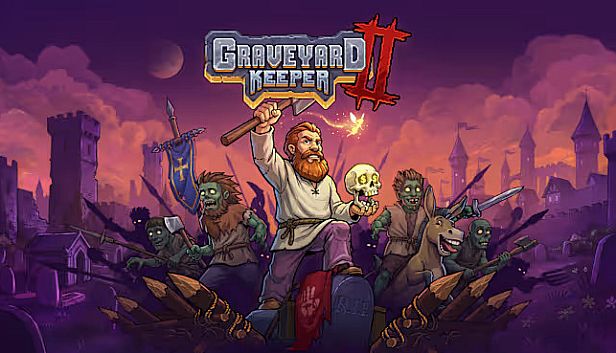


Graveyard Keeper 2 is a single-player management simulation with role-playing elements set in a medieval world filled with dark humor and grotesque characters. Players take on the role of the Grand Inquisitor on Nintendo Switch 2, tasked with running a graveyard while rebuilding a town and defending against a zombie apocalypse through undead forces.
Gameplay
The core loop centers on graveyard management. Players harvest flora, fauna, and human remains to craft machinery, expand plots, and generate profit through burials and related activities. Automation plays a larger role than before, with zombies handling production tasks in underground factories and along conveyor systems once unlocked.
Town rebuilding forms another major pillar. Players complete quests for townsfolk to restore homes and businesses, turning local problems into revenue streams while undead workers manage the physical labor. Exploration expands across a larger map that includes villages, forests, swamps, and other locations, supported by improved fast travel options through milestones.
Combat integrates directly into the experience. Players craft armor and weapons, build towers and fortifications, train troops, and lead undead armies in defensive battles against zombie waves. Direct control allows melee swings and area spells during these encounters, which serve to reclaim territory and protect built-up areas. Resource loops connect everything: the graveyard supplies materials, the town drives demand, zombies produce goods passively, and combat safeguards progress.
Game Modes
Graveyard Keeper 2 operates entirely in single-player mode with no multiplayer components. The experience blends management, automation, questing, and combat into one continuous campaign rather than separate selectable modes. Progression ties these elements together through a technology tree, talent system, and story-driven objectives that advance the central narrative of restoring the kingdom.
Combat encounters function as timed defensive sequences focused on capturing territory and repelling waves, while management sections emphasize steady expansion and optimization. Questing in the town provides directed goals that feed back into the other systems without requiring players to switch between distinct game types.
Story and Setting
The narrative continues from the original game with the player as the Grand Inquisitor facing a zombie apocalypse. The story unfolds through quests, grotesque characters, and unhinged humor as players restore order to the town and surrounding areas. Eight years have passed in the setting, opening up a bigger world with new districts and locations to explore and develop.
Twisted elements remain central, including the handling of corpses and morally questionable business practices, all presented with the series' signature irreverent tone. Players customize their character and engage with storylines that reward steady progress across the interconnected systems.
Is It Worth Playing?
Graveyard Keeper 2 suits players who enjoy management simulations that combine resource gathering, automation, light combat, and town-building elements. The sequel reduces some of the early friction from the first game through better pacing and immediate access to certain tools, while adding meaningful zombie-based automation and defensive battles that break up routine tasks.
Reception has been generally positive, with critics noting the satisfying loops, expanded world, and humorous writing, though some mention ongoing grind in certain progression areas. The game launched on September 22, 2026, at a price of $24.99 with a free demo available beforehand. It runs on Nintendo Switch 2 in TV, tabletop, and handheld modes as a single-player title with no additional purchases required.
Those who appreciate dark cozy management experiences with clear goals and interconnected systems will find substantial depth here. The title rewards experimentation with automation and combat setups, making it a strong choice for fans of the genre on the Nintendo Switch 2 platform.