


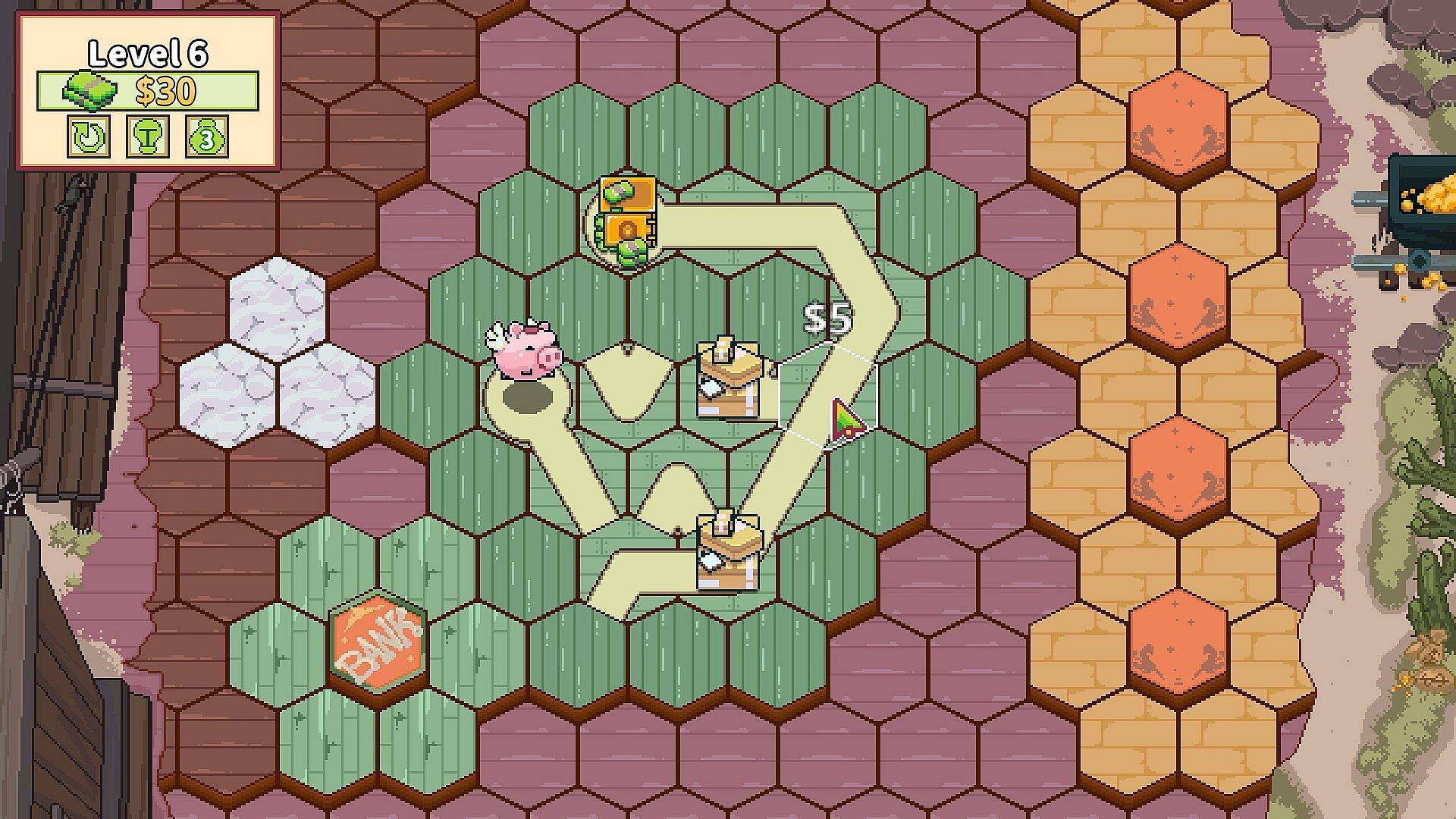
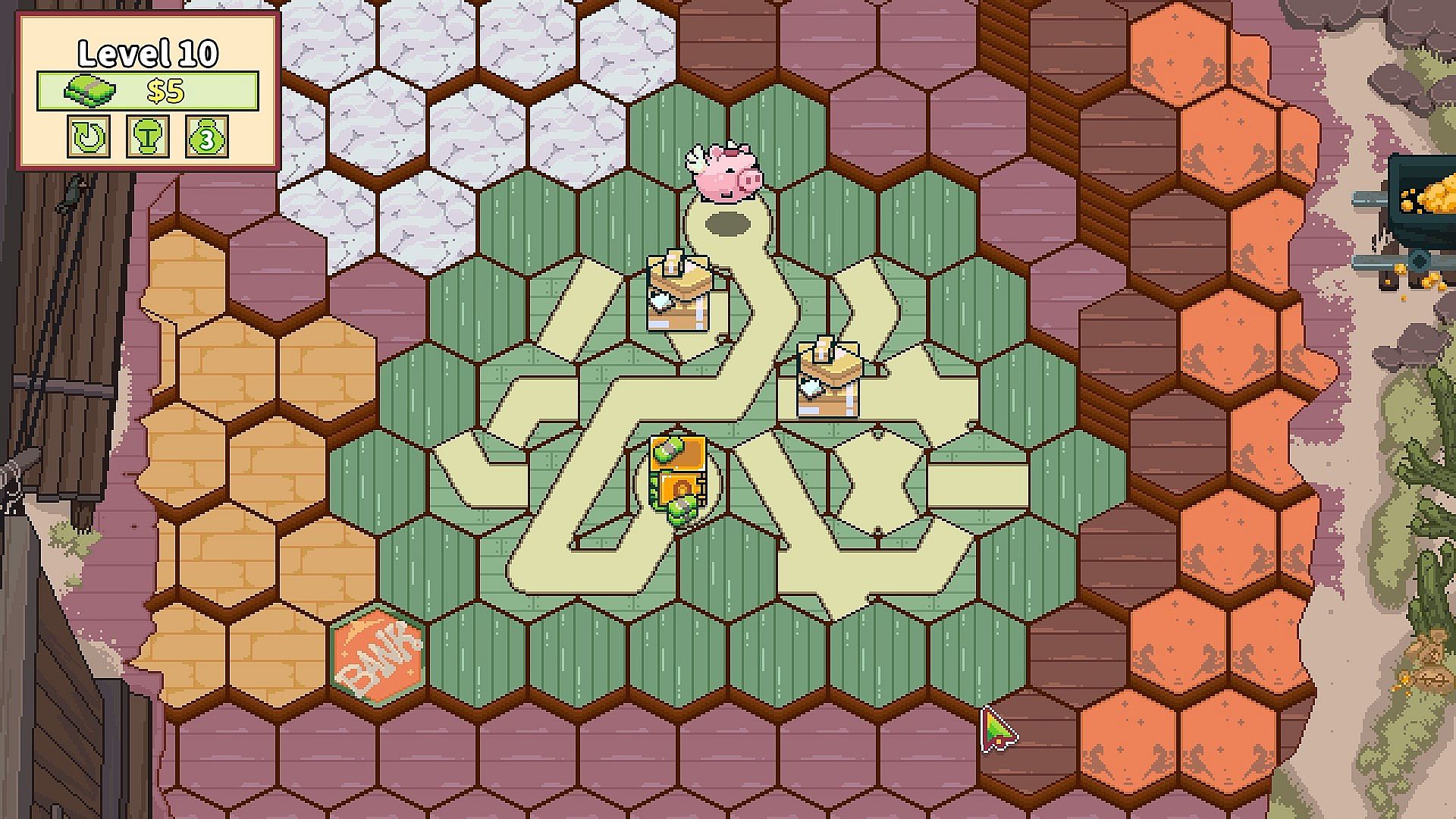
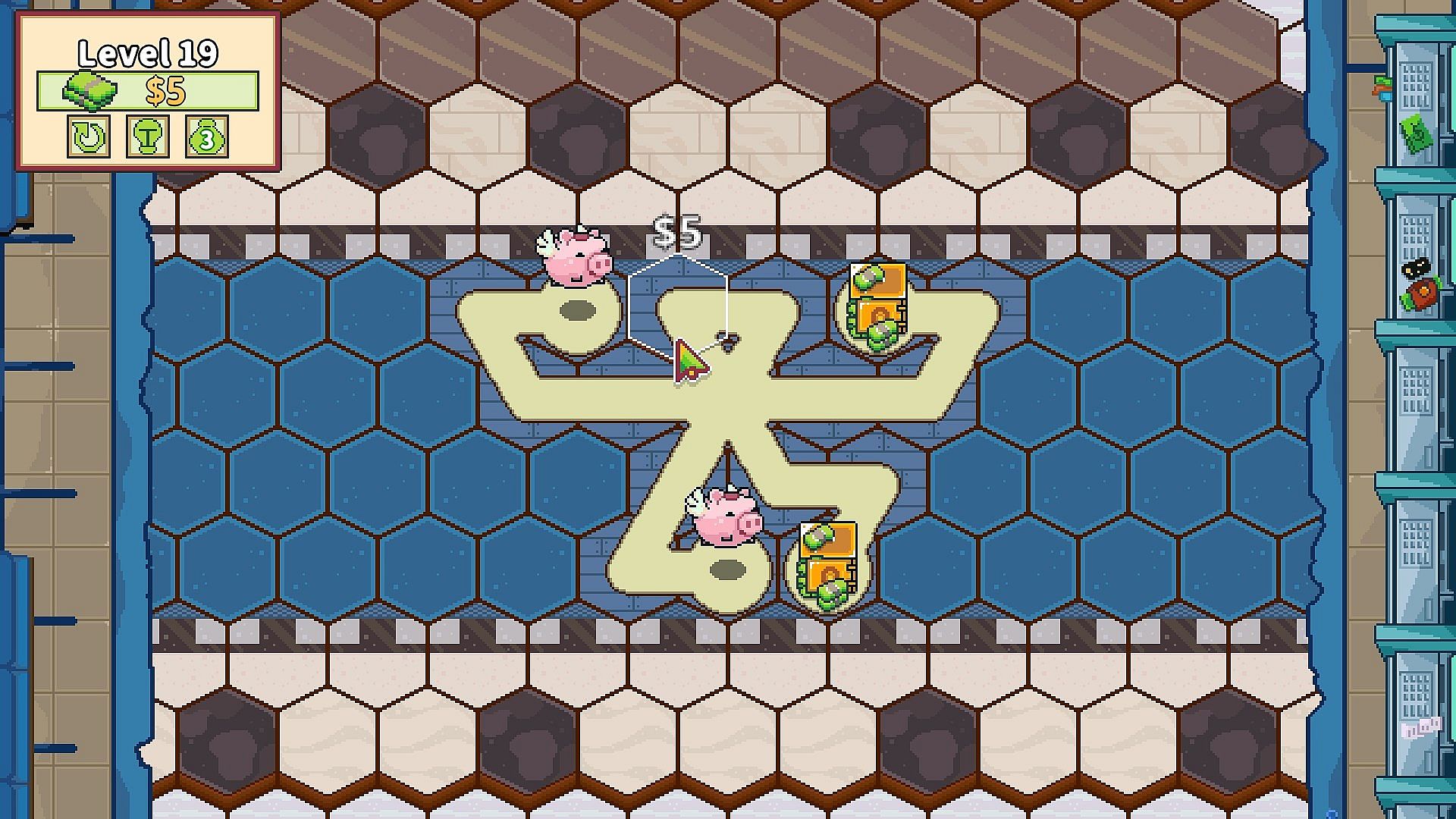
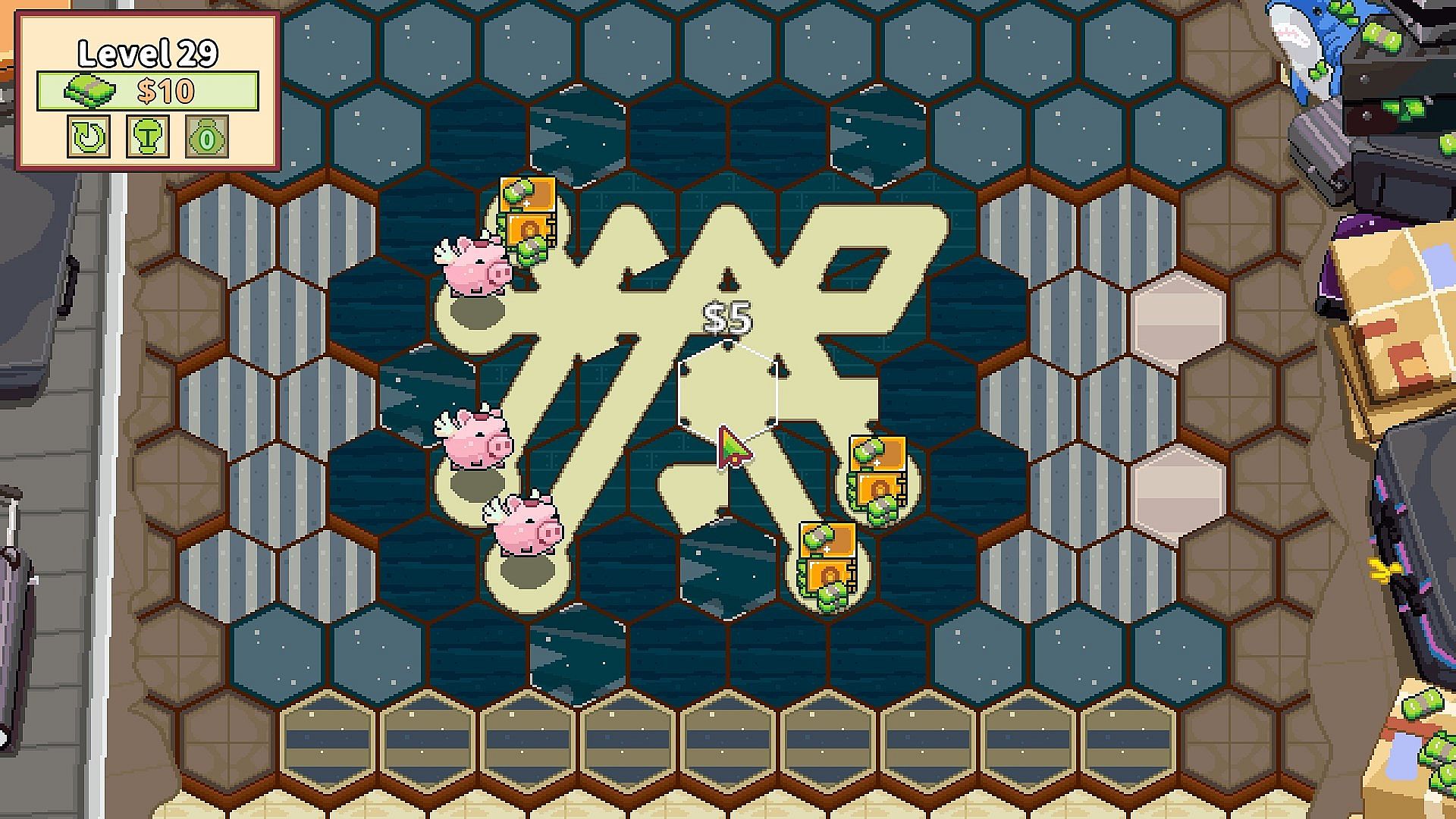
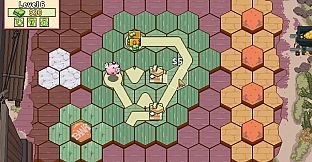
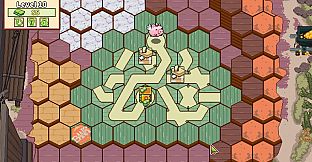
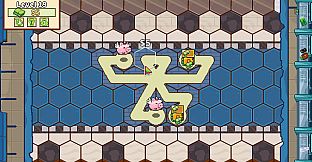
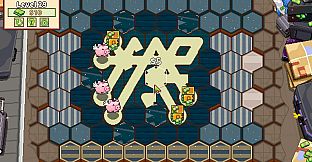
Pay To Path is a strategy and casual puzzle game developed for Xbox Series X|S. Players guide adorable piggy banks through grid-based levels by rearranging paths, rotating tiles, and removing obstacles while staying within a limited coin budget. Every action carries a cost, turning resource management into a core part of solving each puzzle.
Gameplay
The central loop revolves around planning efficient routes for multiple piggy banks on each stage. Players swap path pieces to connect roads, rotate tiles to adjust directions, and clear boxes that block progress. These moves deduct from the available coin pool, so decisions must balance immediate needs against long-term efficiency. Completing a level with coins remaining unlocks bonus rewards, encouraging careful spending across the full set of challenges.
Mechanics build gradually. Early stages introduce basic swaps and rotations, while later ones demand precise sequences of moves and occasional use of optional aids like hints or extra funds. The system rewards experimentation within the budget constraint, as over-spending leaves no room for adjustments on tougher grids.
Game Modes
Pay To Path offers a single-player experience focused entirely on its campaign of puzzle levels. There are no multiplayer options or additional modes. Progress unfolds through a linear sequence of 30 distinct stages, each presenting a fresh layout that tests spatial reasoning and spending discipline. Achievements track milestones such as completing the first five levels, swapping pieces a set number of times, rotating tiles efficiently, and finishing stages with coins left over.
Key Mechanics and Progression
Resource management sits at the heart of every solution. Coins fund all path alterations and obstacle removals, while optional financial aids provide temporary relief at a premium. Players learn to prioritize high-impact moves and avoid unnecessary actions. Progression feels steady as new levels introduce tighter budgets and more complex arrangements of roads and barriers.
Visual presentation stays light and approachable with charming character designs and clear grid layouts. The emphasis remains on logical problem-solving rather than speed or reflexes, making each session feel deliberate and satisfying when a route finally aligns.
Is It Worth Playing?
Pay To Path suits players who enjoy thoughtful puzzle games that incorporate light resource management. Its single-player structure and fixed set of 30 levels deliver a contained experience without ongoing updates or additional content. Those who appreciate games where every move has a tangible cost will find the budget system adds meaningful depth to standard path-building puzzles. The game launches with a complete achievement list that highlights its core actions, providing clear goals for completionists. If relaxed strategy puzzles with a spending twist appeal to you, the title offers a focused alternative to more complex strategy titles on the platform.