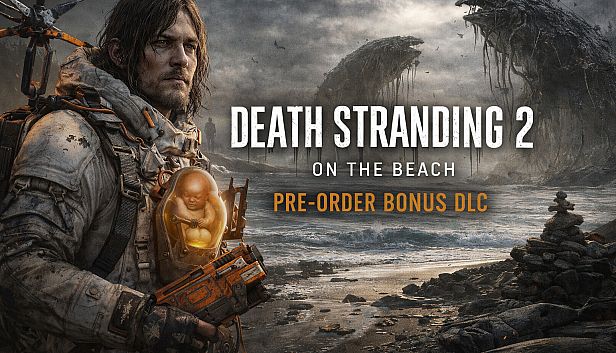






Death Stranding 2: On the Beach is an open-world action-adventure game developed by Kojima Productions and released exclusively for PlayStation 5. Players control Sam Porter Bridges as he undertakes deliveries across expansive regions, rebuilds connections through the Chiral Network, and navigates threats in a post-apocalyptic setting that spans Mexico and Australia.
Gameplay
The core loop centers on cargo delivery, where players manage the weight, balance, and condition of packages while crossing varied terrain. Movement requires careful footing on slopes, through mud, sand, and water, with stamina management playing a constant role. Vehicles such as trucks and motorcycles become available to speed up longer routes, and players can fabricate tools including ladders, climbing anchors, and deployable bridges to overcome obstacles.
Environmental factors add layers of strategy. A dynamic day and night cycle influences visibility and enemy behavior, while weather events like Timefall, earthquakes, sandstorms, and forest fires demand route adjustments or protective measures. Combat options range from non-lethal takedowns and stealth approaches using decoys and silent movement to direct engagements with fabricated firearms such as machine guns, shotguns, and grenade launchers. New enemy types include evolved Beached Things known as Watchers, along with mech soldiers and armed human groups.
Progression comes through the APAS system, which offers skill enhancements across categories like porter abilities, combat efficiency, stealth, and servicemanship. These upgrades can be reset and customized based on playstyle. Players also improve proficiency through repeated actions, such as traversing rough ground or using specific weapons, unlocking better performance over time.
Game Modes
The game operates primarily in a single-player campaign structured around main story orders divided into episodes. These deliveries advance the narrative while requiring players to connect terminals and facilities to the Chiral Network. Side content includes standard orders and sub orders that provide additional delivery tasks, along with aid requests that may involve building specific infrastructure or assisting other characters.
Asynchronous multiplayer integrates through the Social Strand system. Structures, roads, and signs created by other players appear in the world once regions connect, allowing indirect cooperation without real-time interaction. Players can contribute to shared projects like road networks or monorail systems that benefit everyone on the server. Offline play remains fully supported, though the asynchronous elements enhance the experience when connected.
Difficulty settings adjust enemy strength and player resilience across four presets: Story for narrative focus, Casual for lighter challenges, Normal for balanced play, and Brutal for heightened demands. A later addition introduces an extreme option called To The Wilder for those seeking maximum challenge.
Exploration and Progression
The world opens gradually as players link areas, revealing more of the Australian and Mexican landscapes filled with natural hazards and hidden locations. Fast travel options expand through vehicles and later infrastructure like monorails. Photo mode allows capturing moments with adjustable camera controls, poses, and lighting at nearly any time.
Character development ties directly to delivery performance and exploration choices. Higher connection levels with facilities grant access to more materials and equipment. The game emphasizes preparation, with players scanning terrain for hazards, planning routes via maps, and deciding when to engage threats or bypass them entirely.
Is It Worth Playing?
Death Stranding 2: On the Beach refines the original formula with smoother traversal, expanded combat choices, and a more dynamic environment that rewards careful planning. The asynchronous multiplayer continues to foster a sense of shared world-building without requiring coordinated sessions. Reviews from major outlets highlight improved pacing, visual fidelity on PS5, and a compelling narrative continuation, with aggregate scores reflecting strong critical approval.
The game suits players who enjoy methodical traversal challenges, resource management, and story-driven exploration over fast-paced action alone. Those who appreciated the first title will find meaningful evolution in mechanics and scope, while newcomers can start with adjustable difficulties to ease into the systems. Ongoing updates, including the PC release and new challenge modes, indicate continued support. It stands as a distinctive experience for those drawn to its unique blend of delivery simulation and open-world adventure.