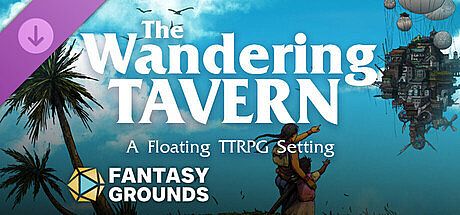



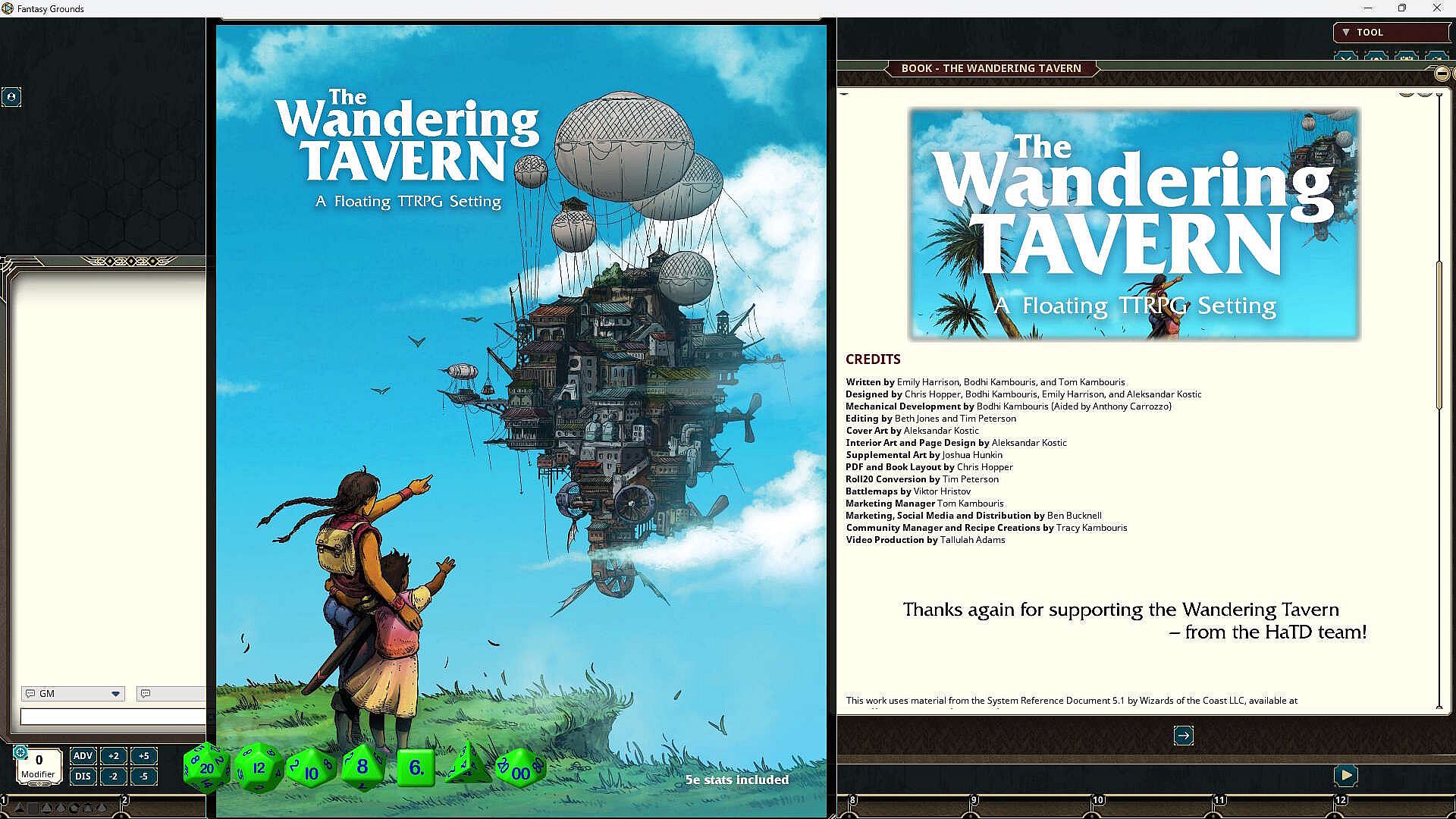
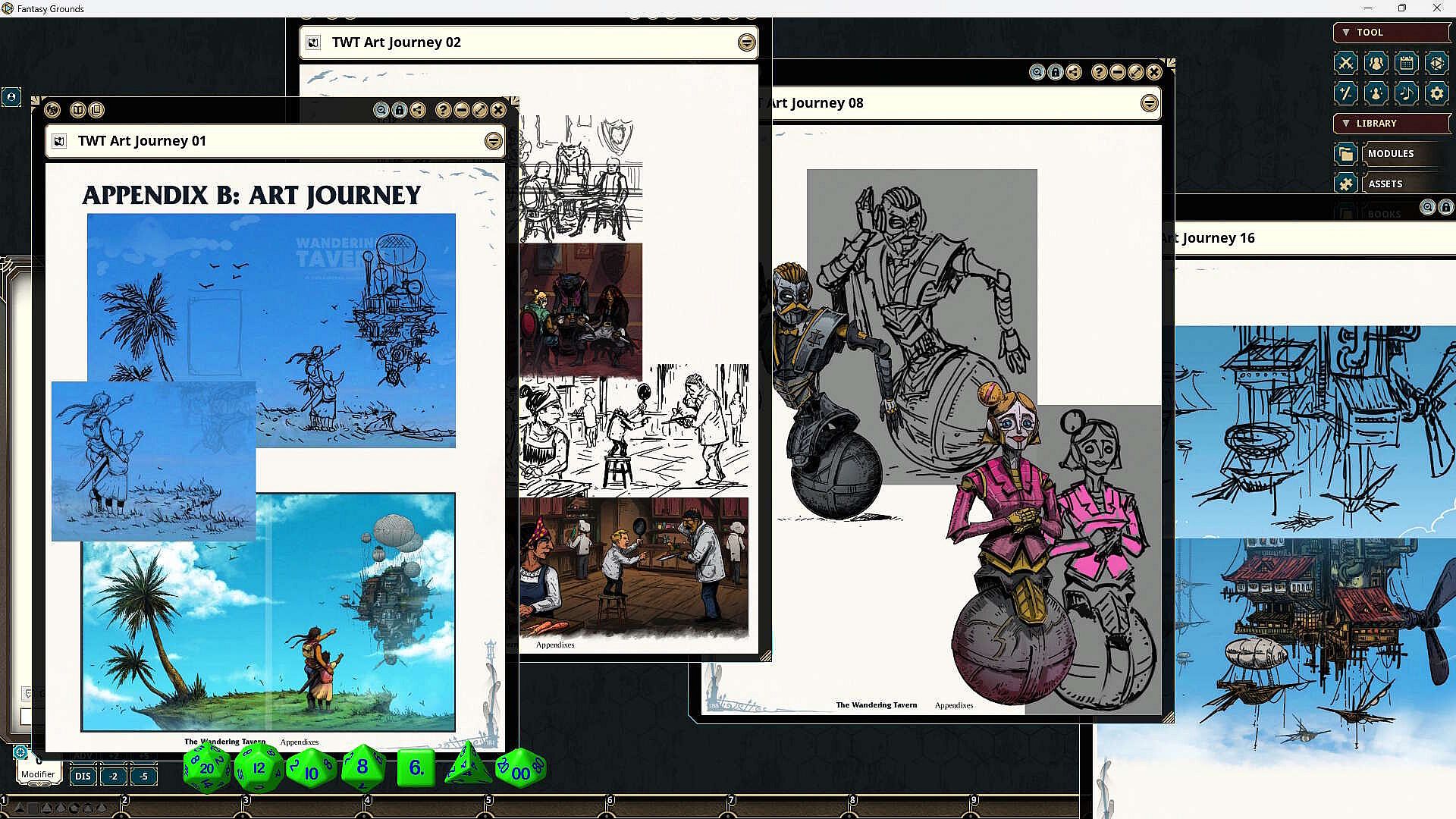
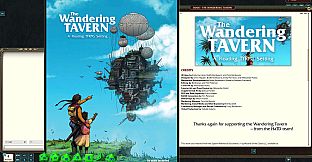
Fantasy Grounds - The Wandering Tavern ist ein unabhängiges RPG-Modul für den virtuellen Fantasy-Grounds-Tisch. Es bietet ein systemunabhängiges Setting einer fliegenden Stadt, inspiriert von Studio-Ghibli-Ästhetik, und enthält optional 5E-Statistiken für Dungeons-and-Dragons-Fünfte-Edition-Kampagnen. Spieler und Spielleiter nutzen den Inhalt in der kostenlosen Fantasy-Grounds-Software, um Abenteuer in dieser gewaltigen schwebenden Metropole zu erleben.
Gameplay
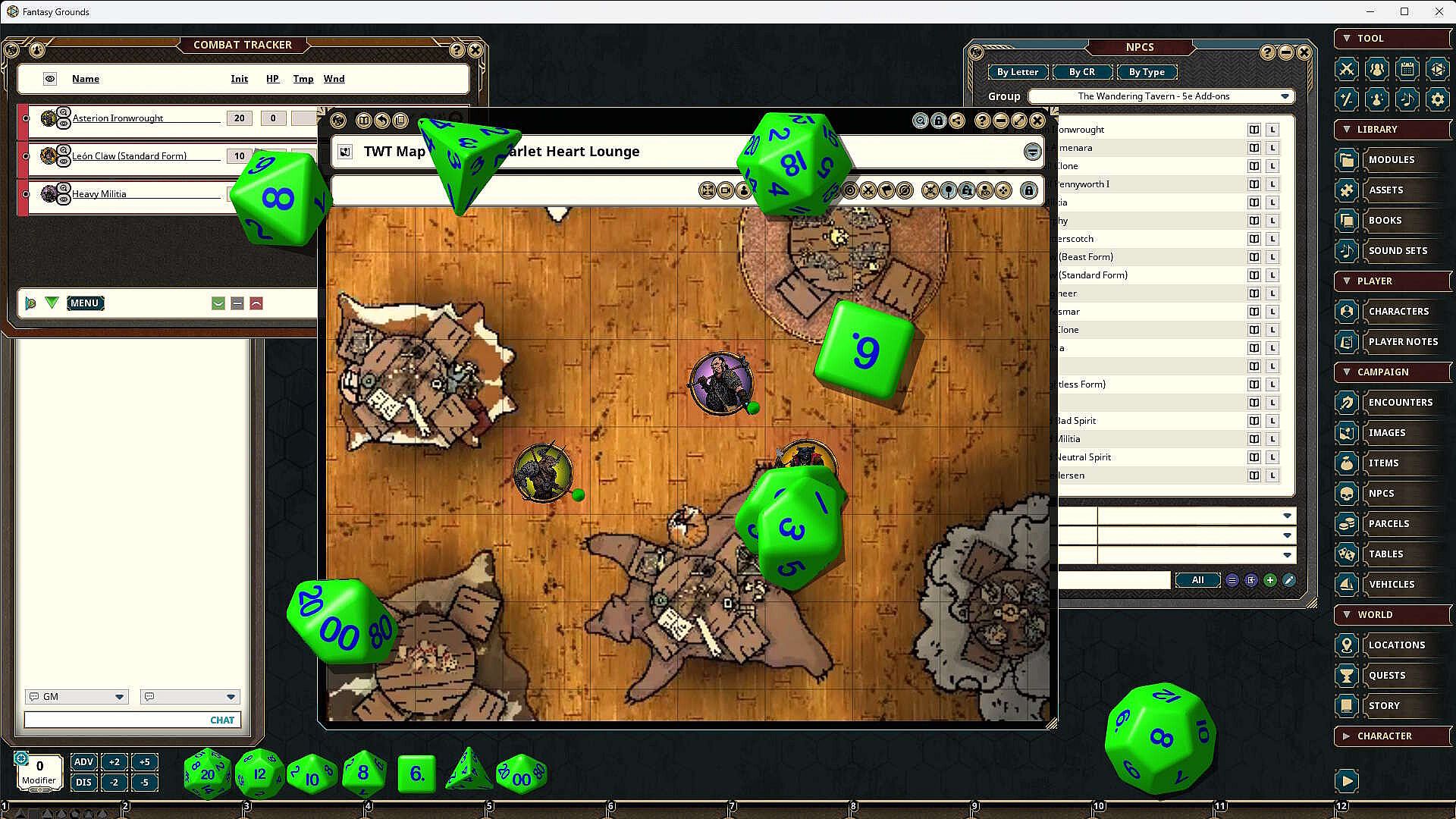
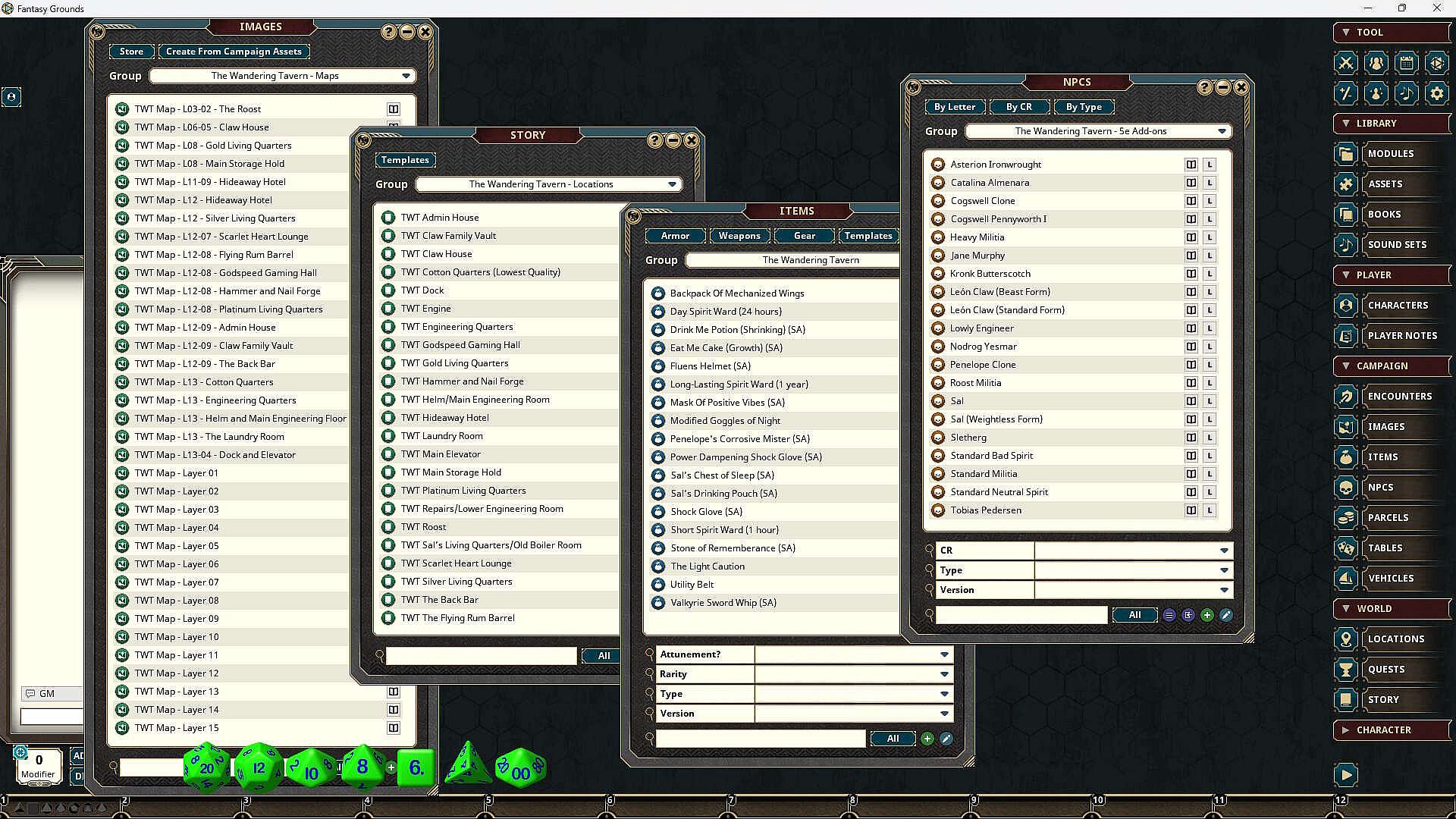
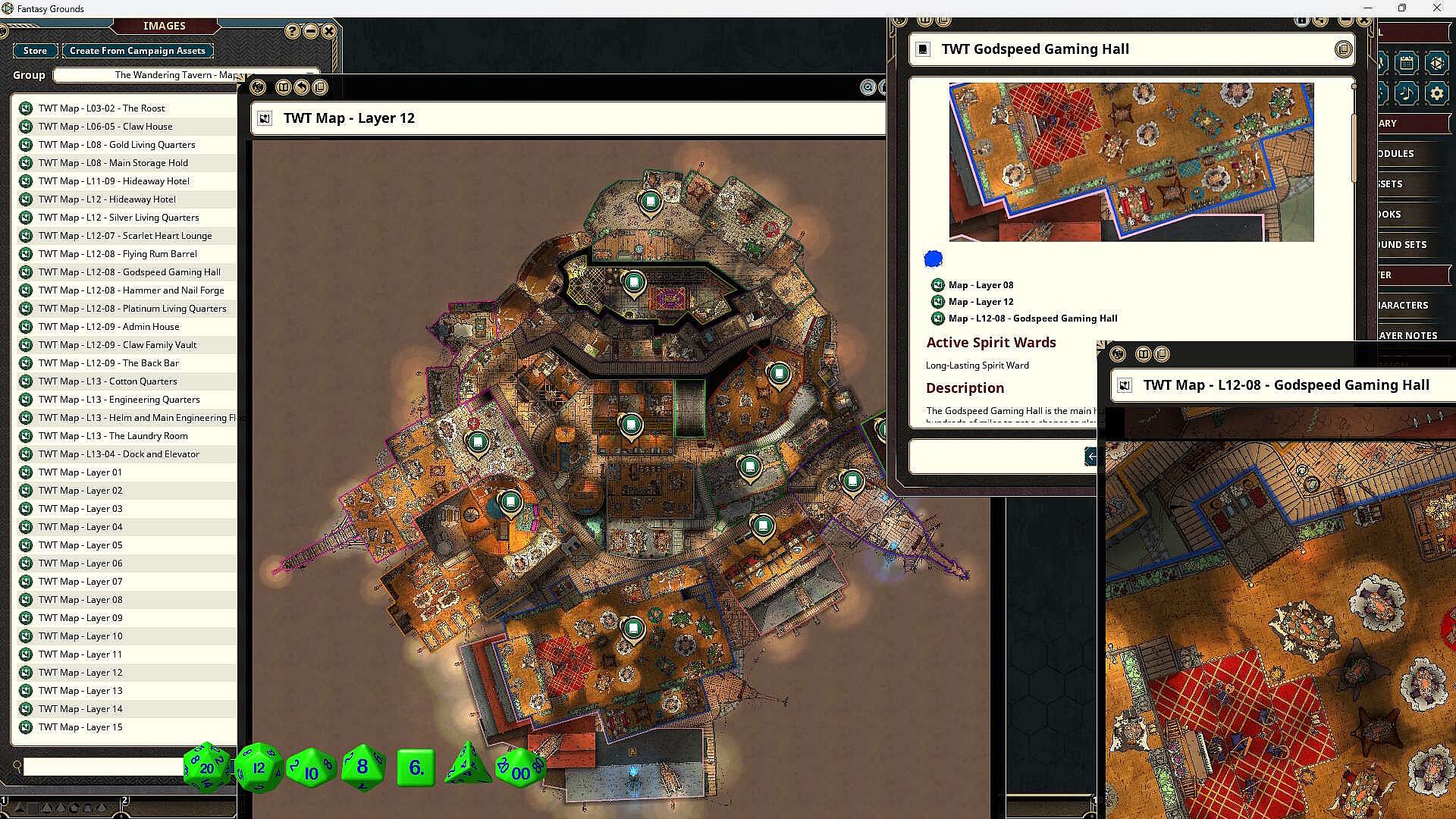
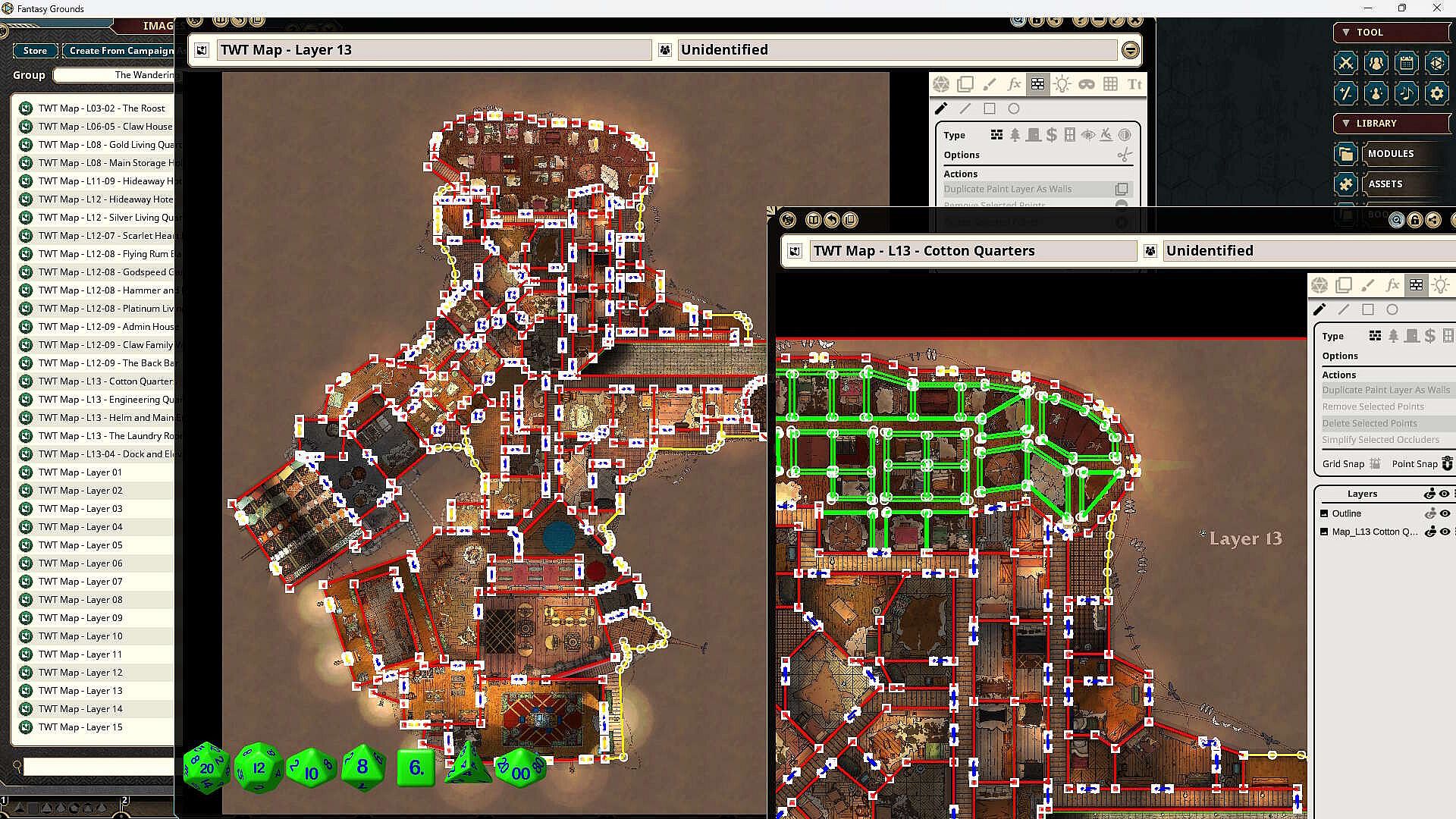
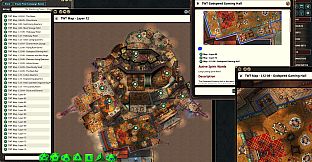
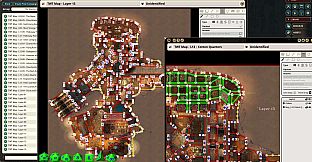
Im Mittelpunkt steht die Erkundung der Wandering Tavern über mehr als dreißig Gebiets- und Kampfpläne, die alle wichtigen Viertel und versteckten Winkel abdecken. Gruppen wechseln zwischen zentralen Orten und interagieren mit einer Reihe einzigartiger NPCs, die bei Bedarf vollständige 5E-Werte erhalten. Magische Gegenstände bieten Schutz vor den Geistern, die durch die Gänge ziehen. Diese Geister erscheinen in freundlichen, neutralen und feindseligen Varianten und bringen eigene Begegnungsregeln mit.
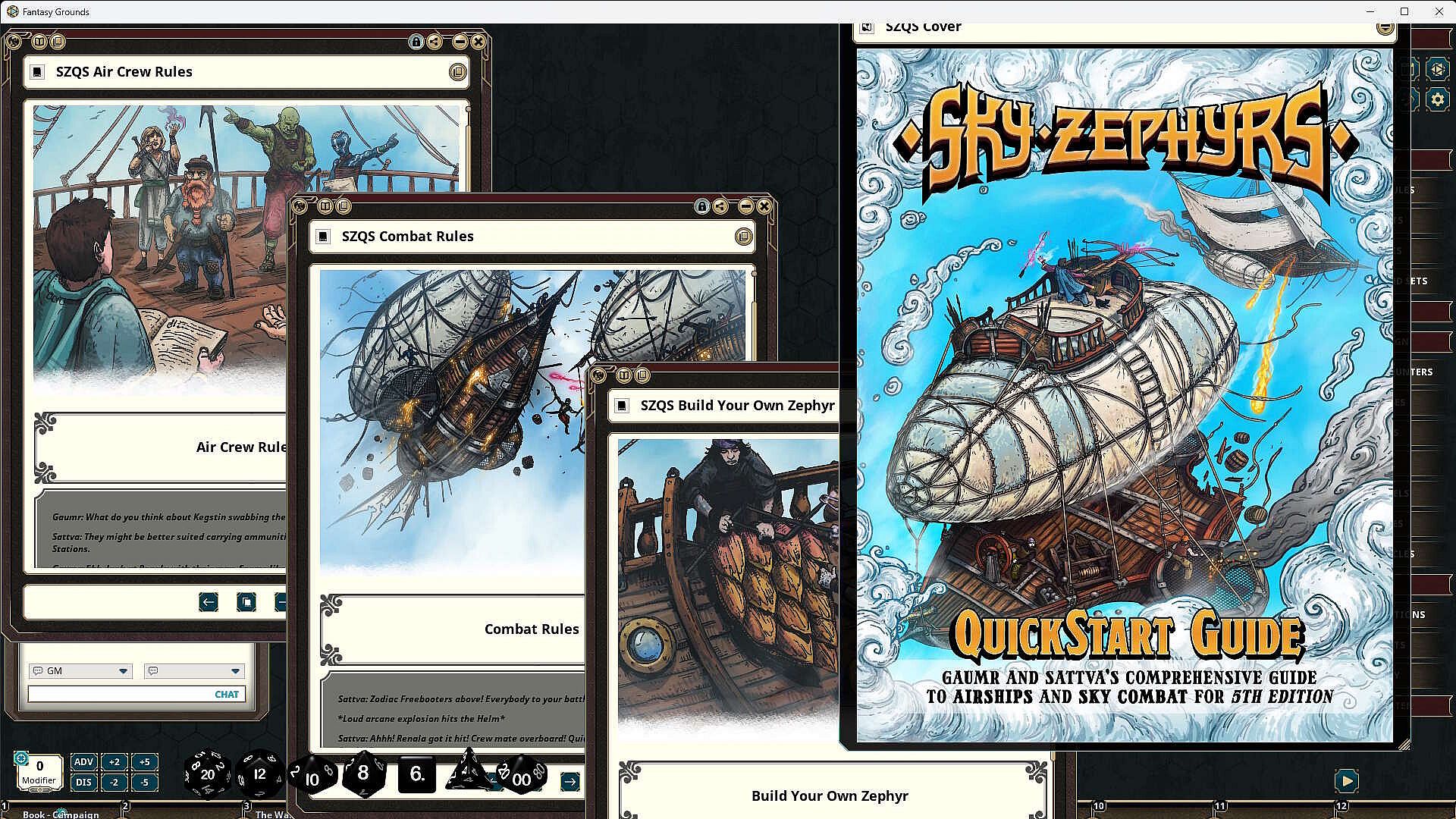
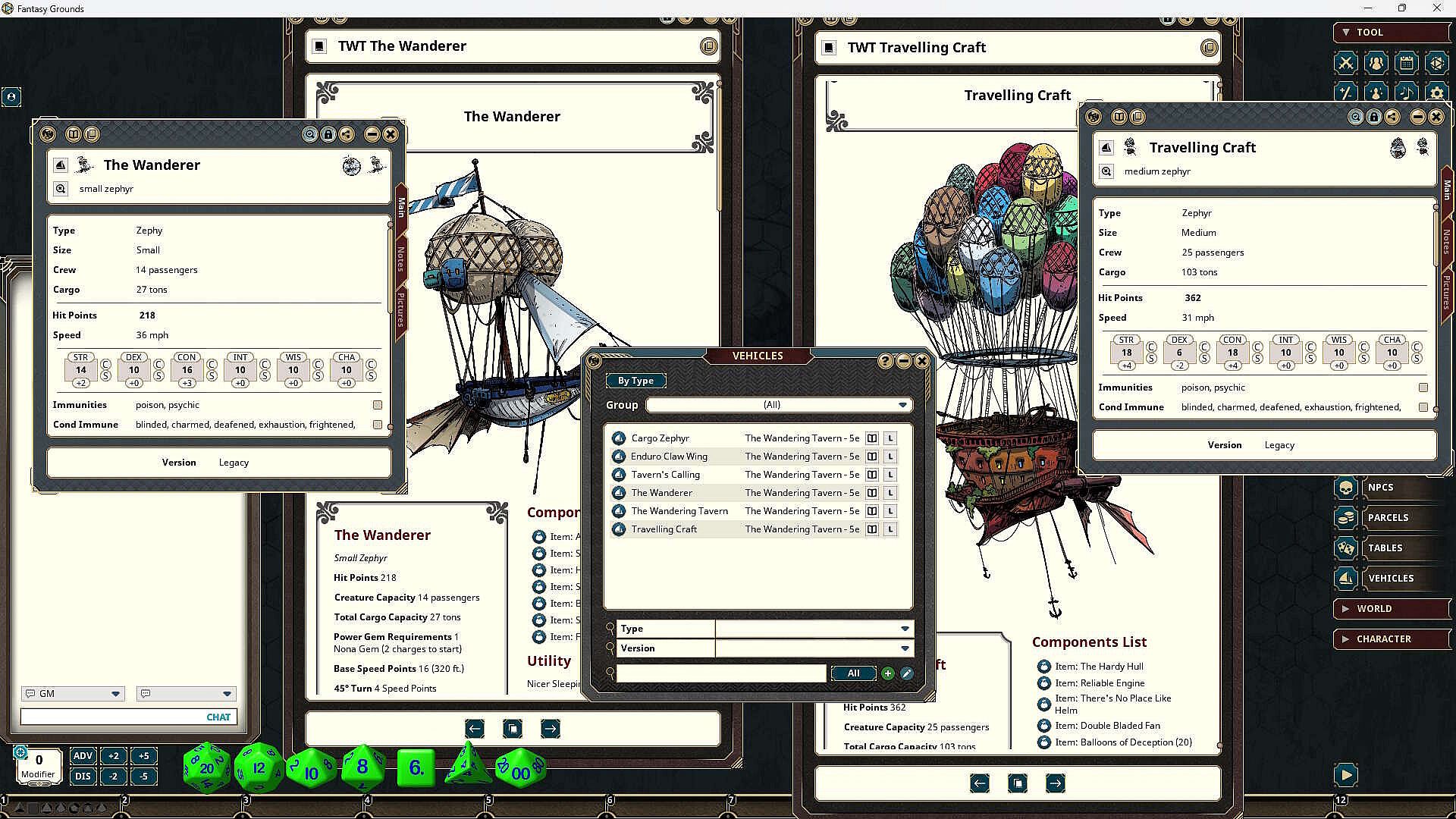
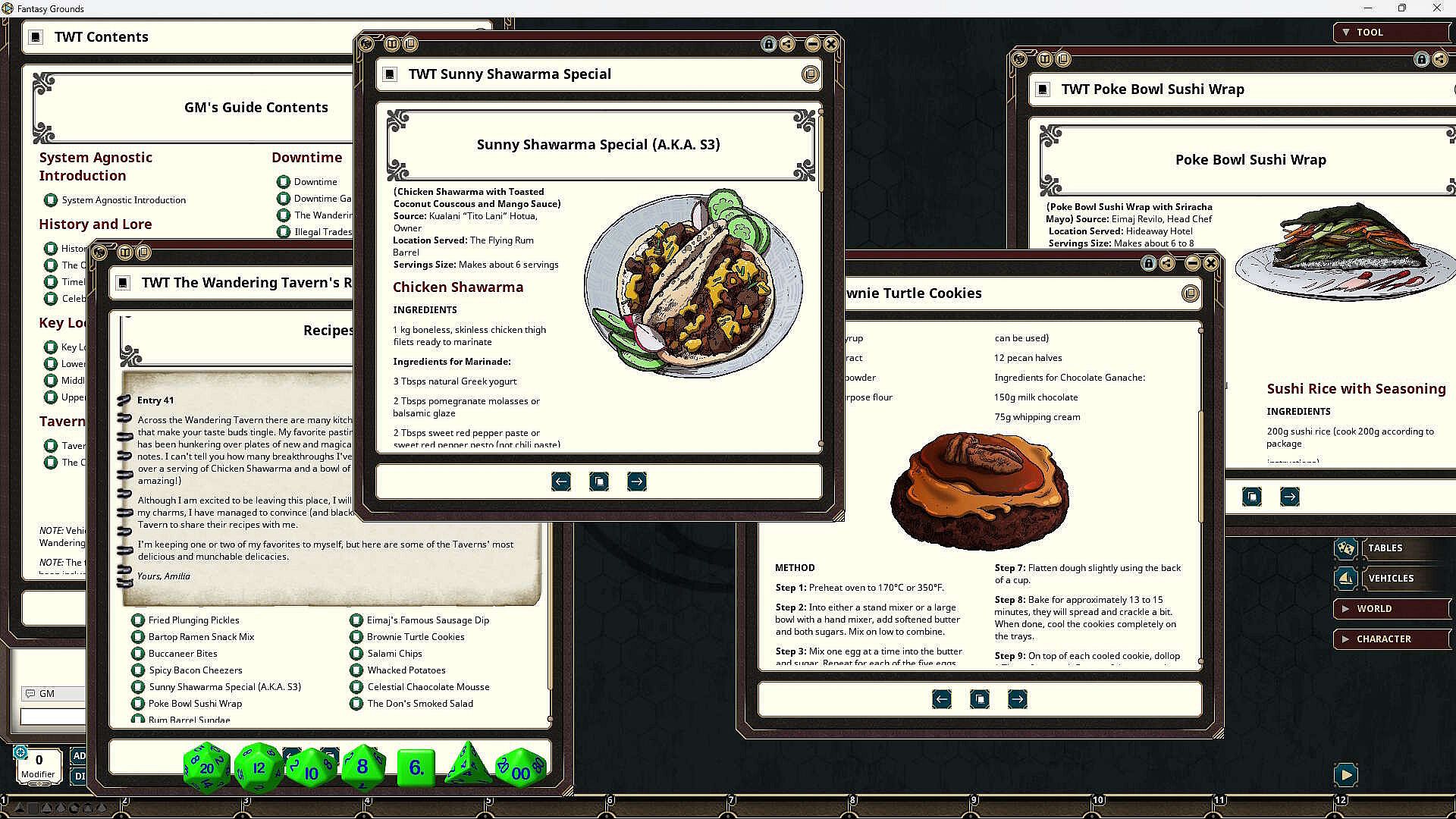
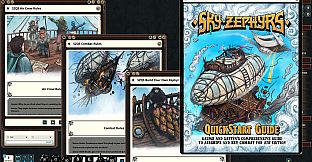
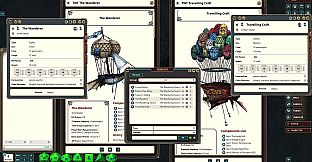
Die Verbindung zwischen den Vierteln erfolgt über Zephyre - Luftschiffe aus modularen Bauteilen und Stationen. Fünf verschiedene Zephyr-Modelle liegen mit vollständigen 5E-Statistiken vor, sodass Gruppen ihre Schiffe für schnelle Fluchten oder längere Reisen durch unerforschte Himmel anpassen können. In der Zwischenzeit sorgen Geschicklichkeits-, Glücks- und Täuschungsspiele für Beschäftigung, während Rezepte aus professionellen Küchenquellen den Tavernenszenen zusätzliche Atmosphäre verleihen.
Handlungsansätze, die an Orte, Gegenstände, Personen und Fraktionen geknüpft sind, geben Spielleitern sofort einsetzbares Material. Illegale Waren und Substanzen werden mit klaren Warnhinweisen und optionalen Regeln aufgeführt, sodass Gruppen sie einbeziehen oder auslassen können, ohne das restliche Setting zu beeinflussen.
Spielmodi
Das Modul unterstützt Kampagnen in jedem System und bietet integrierte 5E-Kompatibilität für Gruppen, die dieses Regelwerk bevorzugen. Sitzungen drehen sich typischerweise um die Aufklärung der Geheimnisse der Tavern, die Erkundung ihrer Unterwelt und den Umgang mit Geisterbegegnungen mithilfe der bereitgestellten Pläne und Statblocks.
Kürzere Aufenthalte funktionieren ebenso gut, wenn die fliegende Stadt als Zwischenstopp in eine bestehende Kampagne eingebaut wird. Spielleiter können die Tavern für ein einzelnes Abenteuer in eine andere Welt einfügen, das sich auf einen bestimmten Fraktionskonflikt oder eine magische Gegenstandsquest konzentriert.
Der Erkundungsmodus legt den Schwerpunkt auf kartenbasierte Bewegung und Entdeckung, während soziale Begegnungen auf dem detaillierten NPC-Verzeichnis und den Freizeitspielen beruhen. Kämpfe entstehen naturgemäß aus Geisterkonfrontationen oder Fraktionsspannungen und werden durch die Kampfpläne sowie die Zephyr-Mechaniken für Luftkämpfe unterstützt.
Wichtige Features und Inhalt
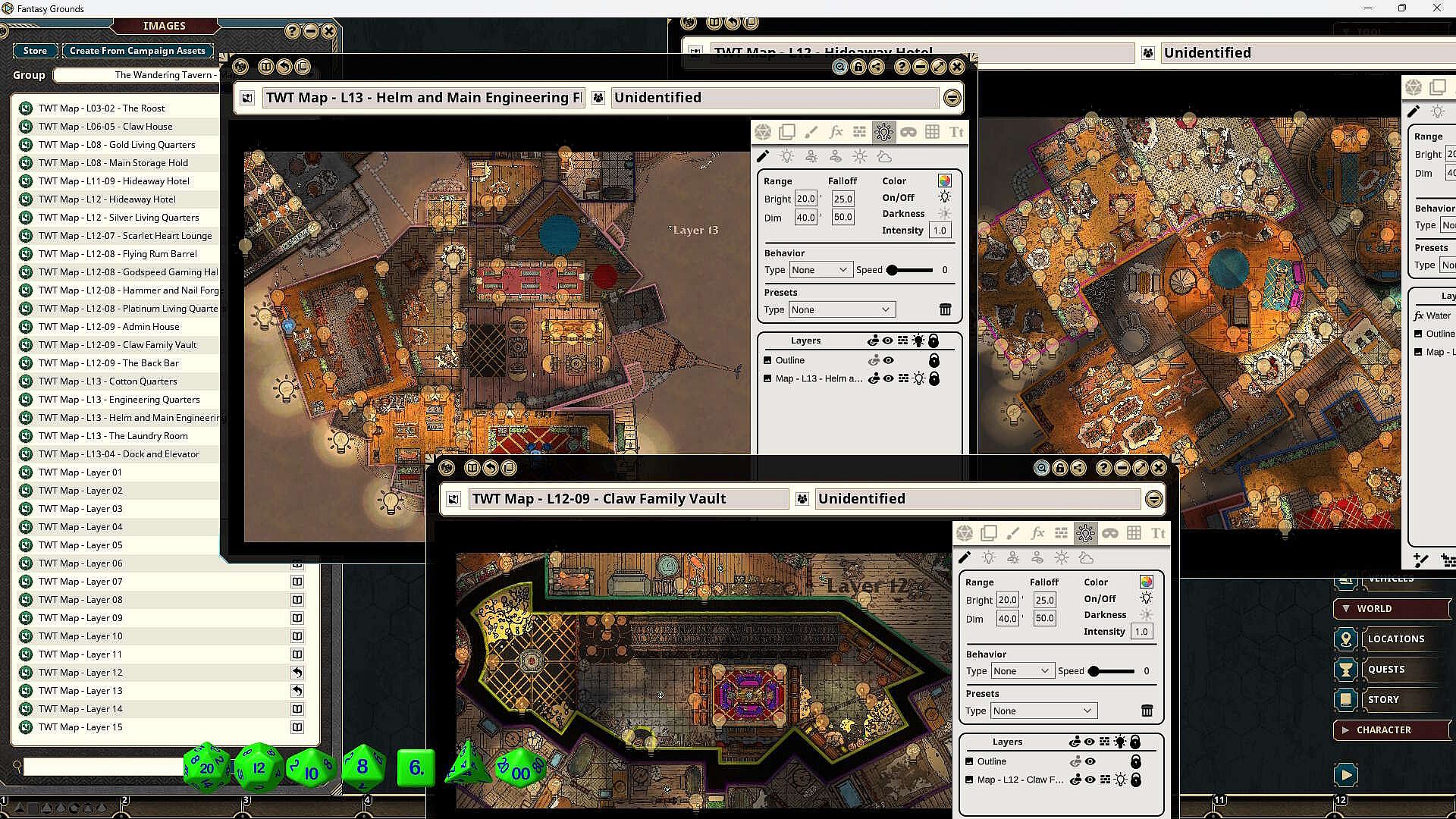
Mehr als fünfzehn Kampfpläne zeigen das Layout der Tavern detailliert, ergänzt durch weitere Gebietspläne für vollständige Abdeckung. Neue NPCs bevölkern jede Ebene, viele davon mit fertigen Statblocks. Magische Gegenstände reichen von Schutzausrüstung bis zu nützlichen Objekten, die zum Setting der fliegenden Stadt passen.
Das Zephyr-System zeichnet sich durch sein Plug-and-Play-Design aus. Fünf vollständige Luftschiffe liegen mit Statblocks, einem Schnellstart-Leitfaden und fünfzig neuen Bauteilen und Stationen vor, die sich mit externen Bauwerkzeugen kombinieren lassen. Geister erhalten eine vollständige mechanische Ausarbeitung, einschließlich Beispielen für das Verhalten jeder Gesinnungsvariante während des Spiels.
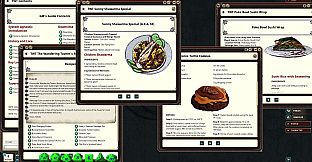
Rezepte eines professionellen Kochs ergänzen das tavernentypische Leben mit immersiven Details, ohne mechanische Integration zu erfordern. Sämtlicher Inhalt stammt von menschlichen Autoren ohne KI-Unterstützung.
Lohnt sich das Spiel?
The Wandering Tavern eignet sich für Gruppen, die bereits Fantasy Grounds nutzen und ein in sich geschlossenes Setting einer fliegenden Stadt mit umfangreichen Karten und sofort einsetzbaren NPCs suchen. Der systemunabhängige Ansatz ermöglicht Flexibilität über verschiedene Regelwerke hinweg, während die optionalen 5E-Elemente den Einstieg für D&D-Tische erleichtern.
Gruppen, die detaillierte Erkundung, geisterbasierte Bedrohungen und modulare Luftschiffreisen schätzen, finden die Pläne und Mechaniken direkt nutzbar. Die Einbindung von Freizeitspielen und optionalen illegalen Inhalten gibt Spielleitern Werkzeuge, um den Ton ohne zusätzliche Vorbereitung anzupassen.
Da das Modul erst kürzlich erschienen ist, liegen noch begrenzte Langzeit-Feedbacks vor. Interessierte, die eine sofort einsetzbare TTRPG-Umgebung mit starker visueller Unterstützung auf der Fantasy-Grounds-Plattform suchen, werden die Tiefe der Karten und die Breite des Begleitmaterials wahrscheinlich schätzen. Gruppen, die leichtere Settings bevorzugen oder VTT-Spiele meiden, finden möglicherweise weniger direkten Mehrwert.