


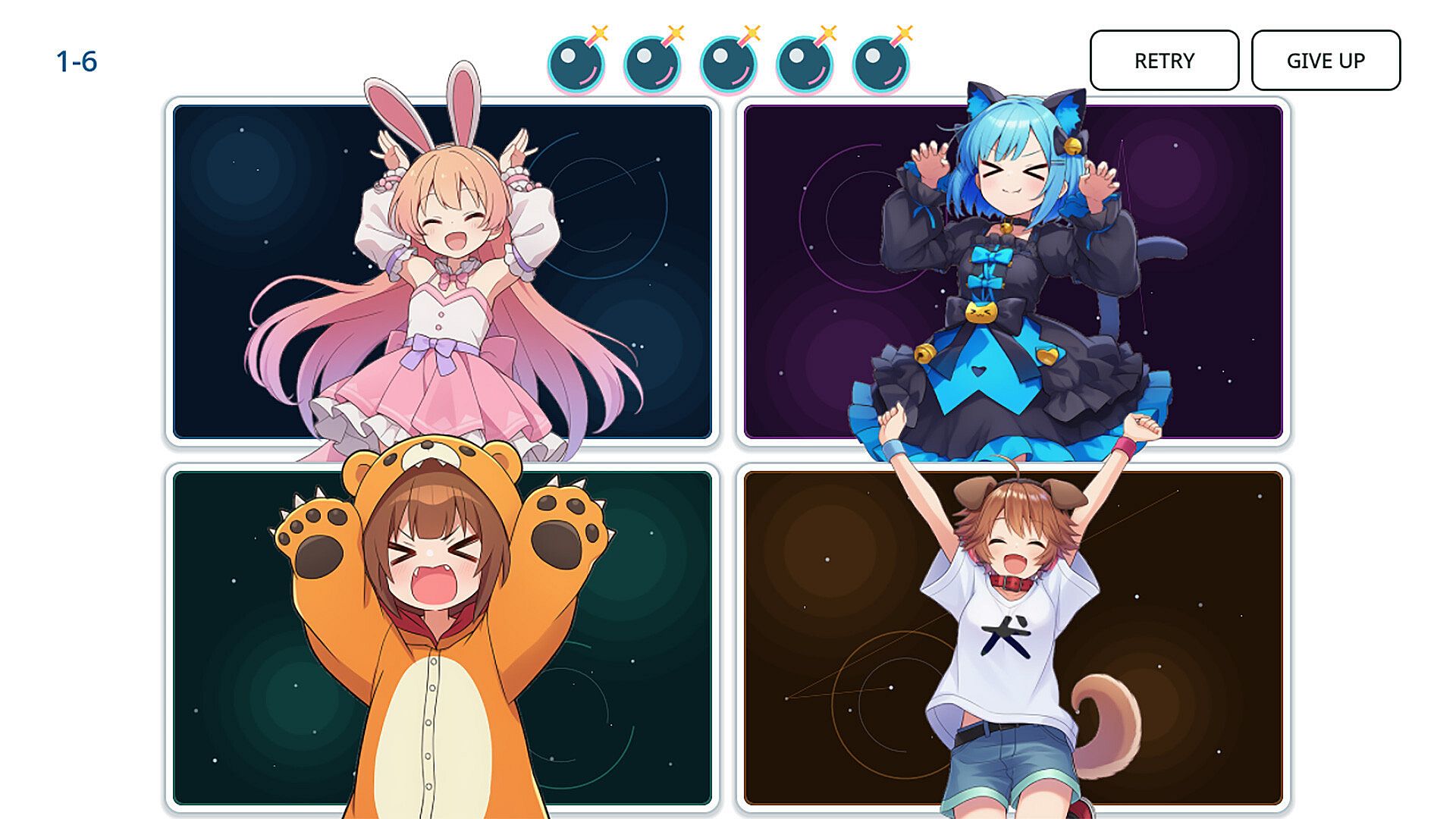
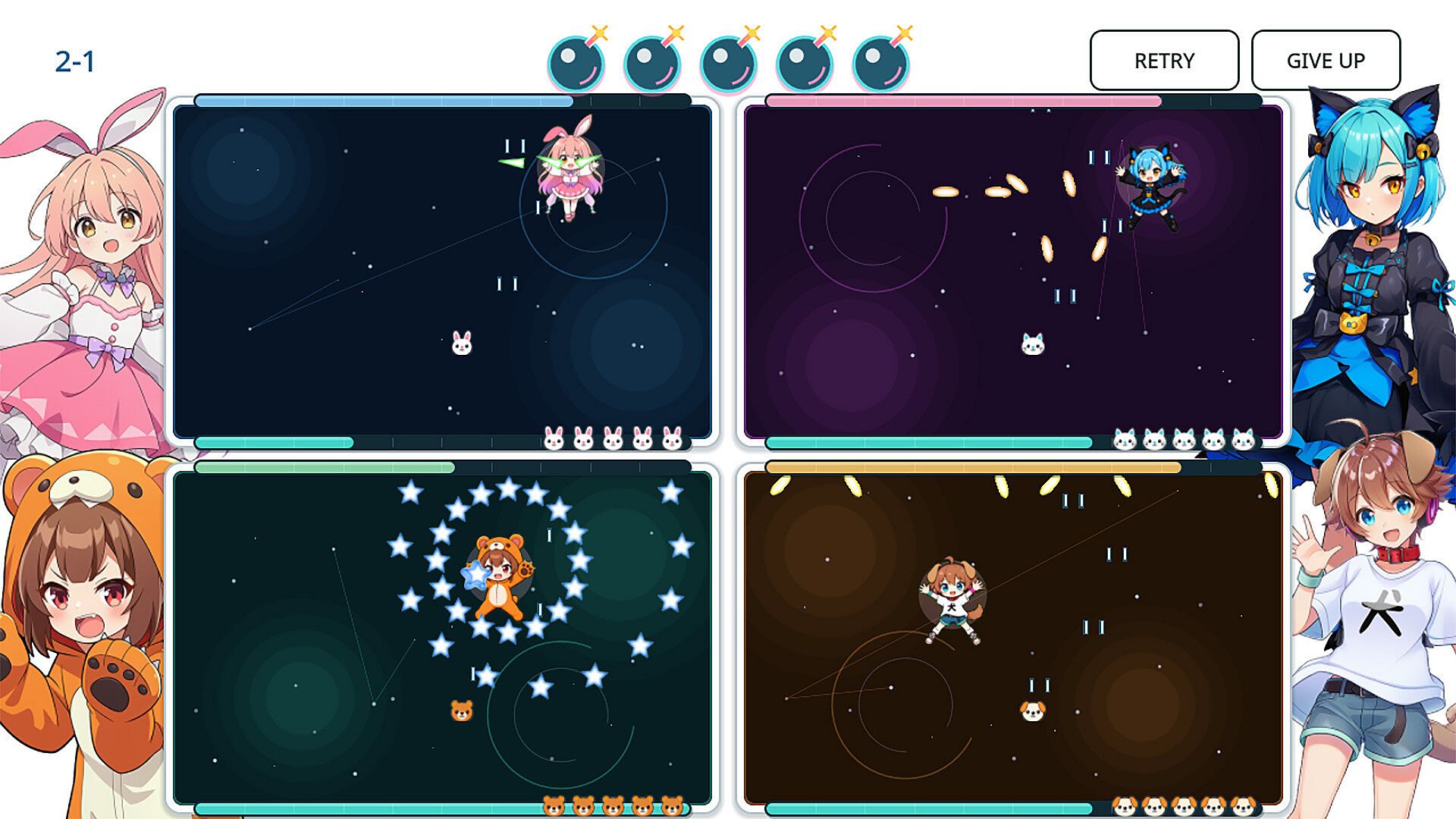
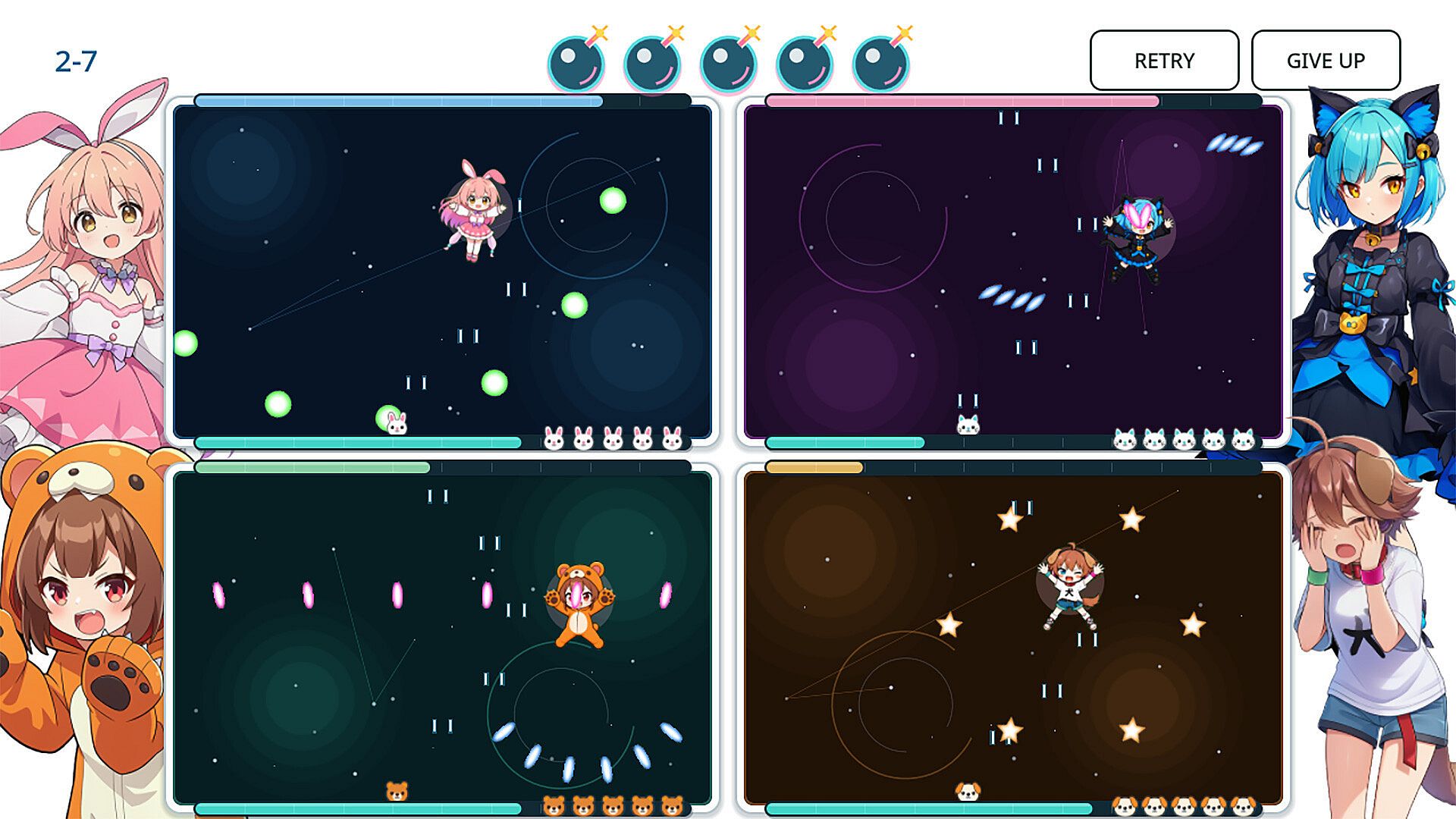
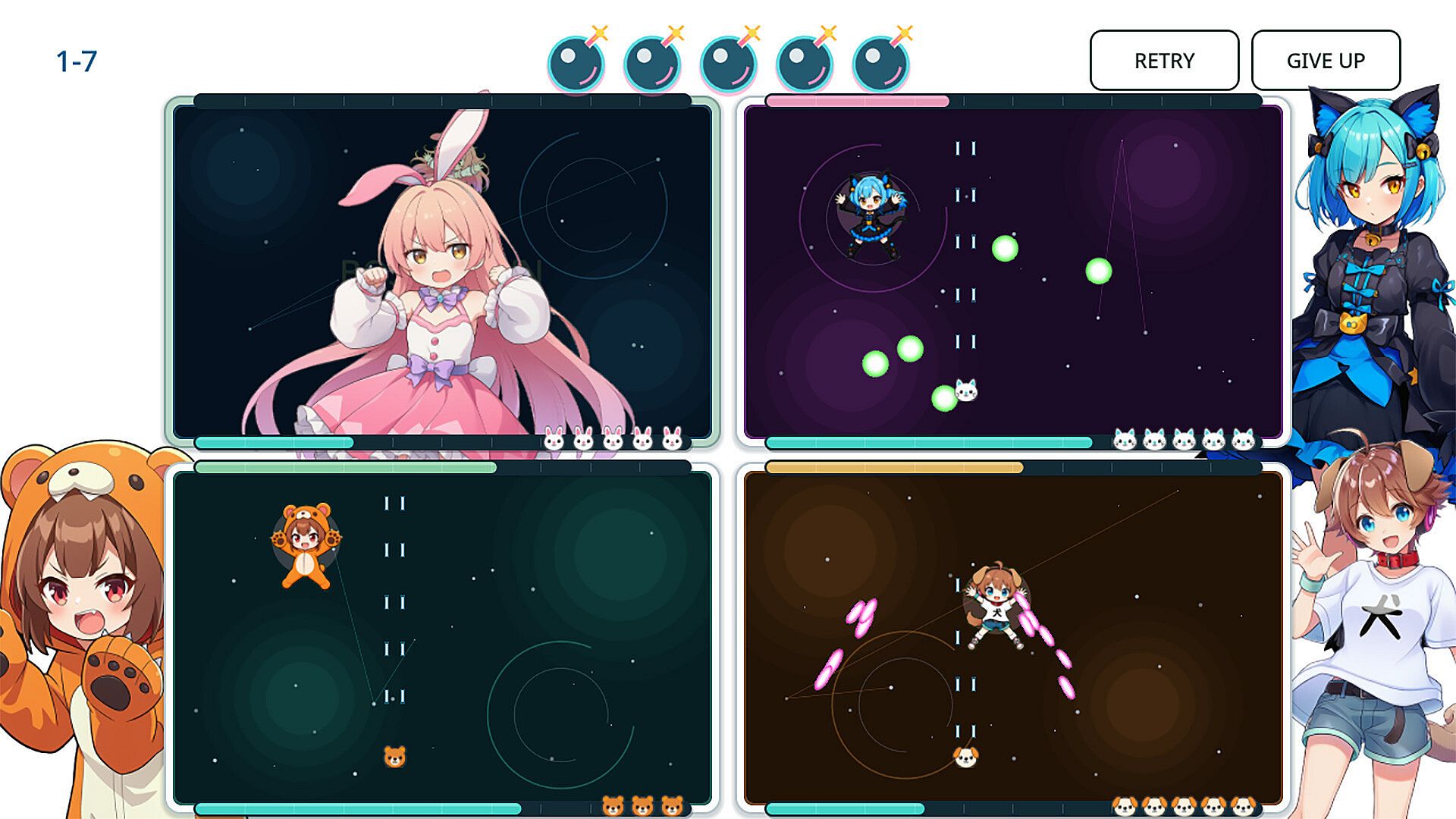
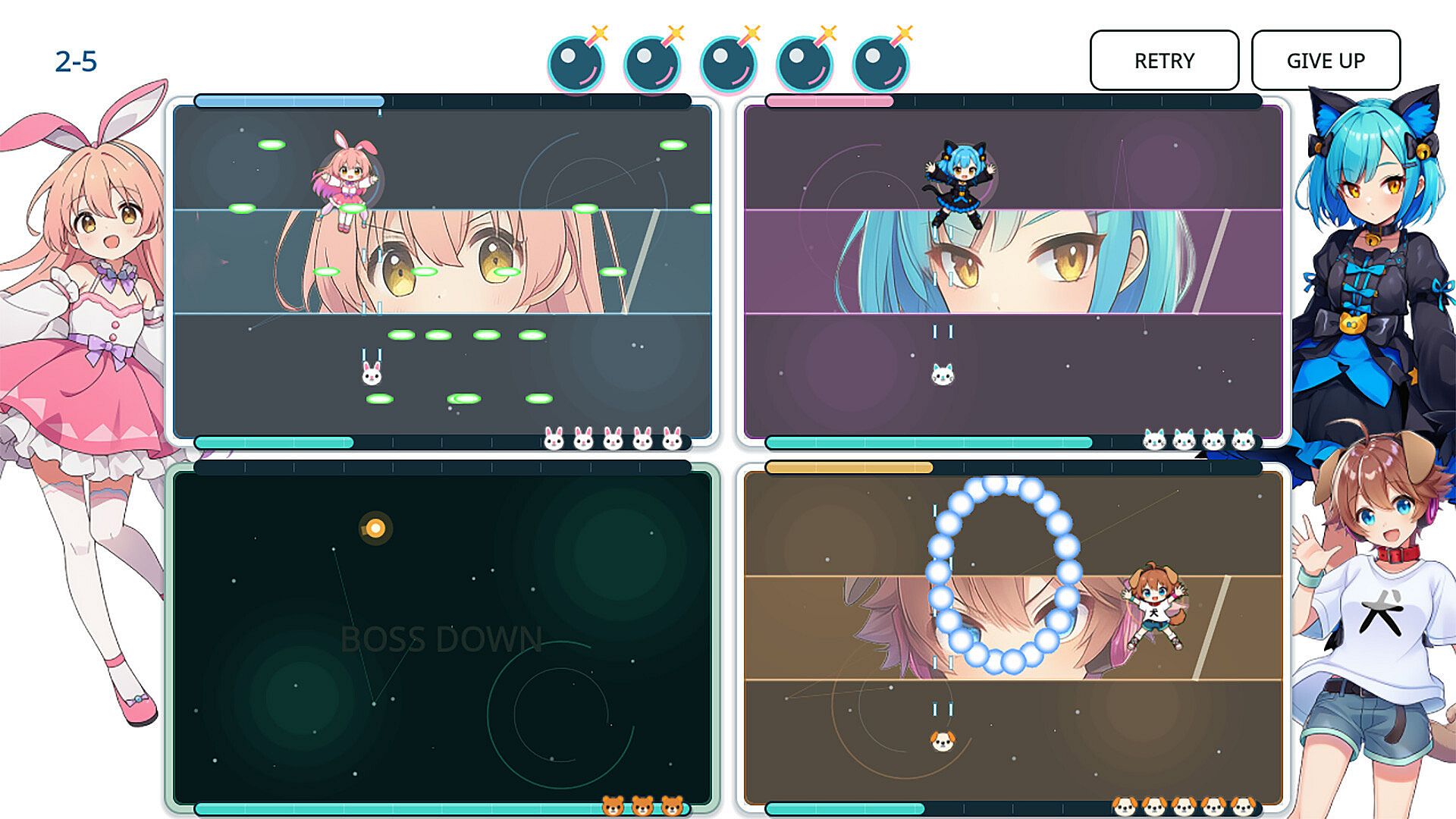
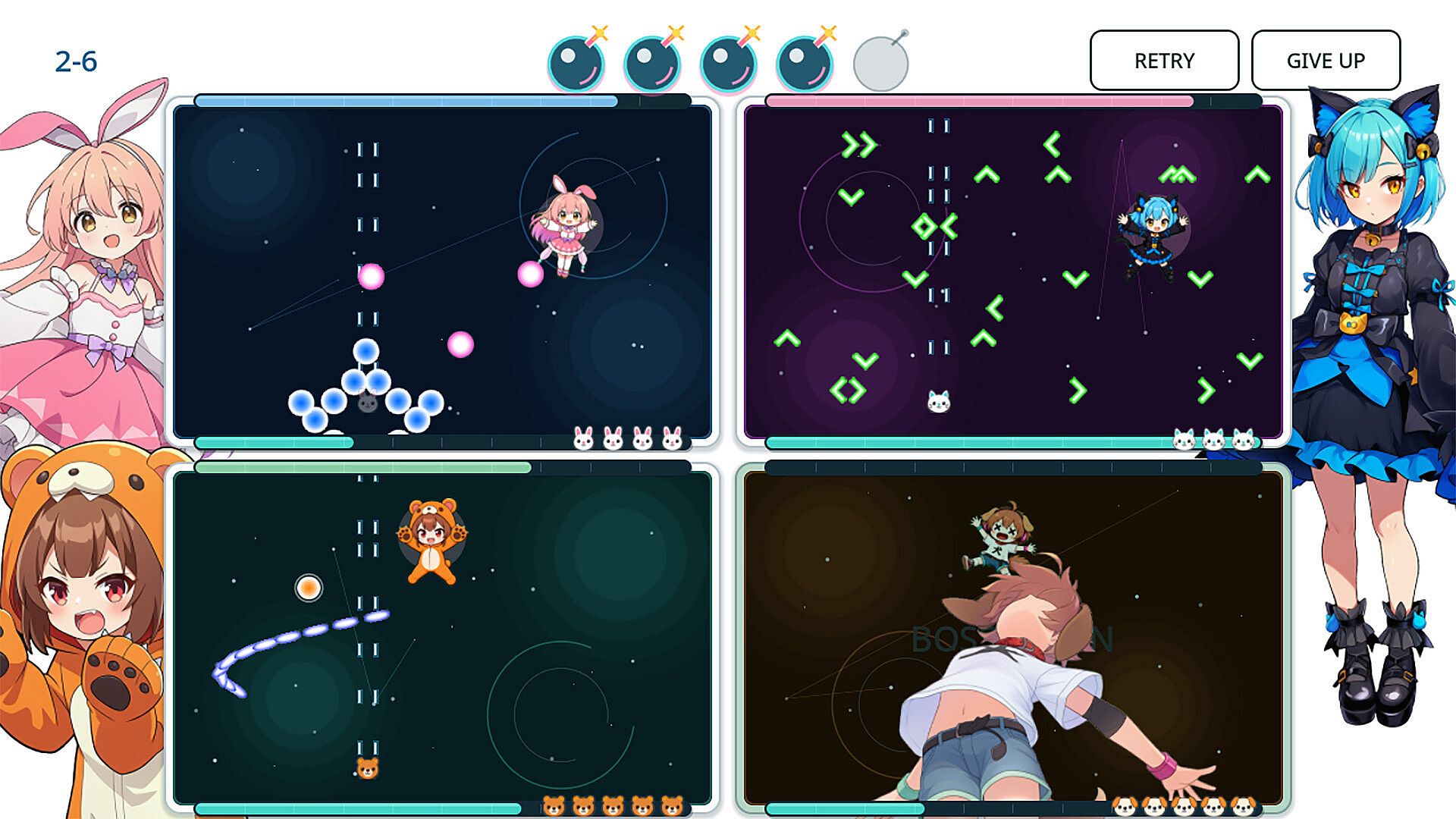
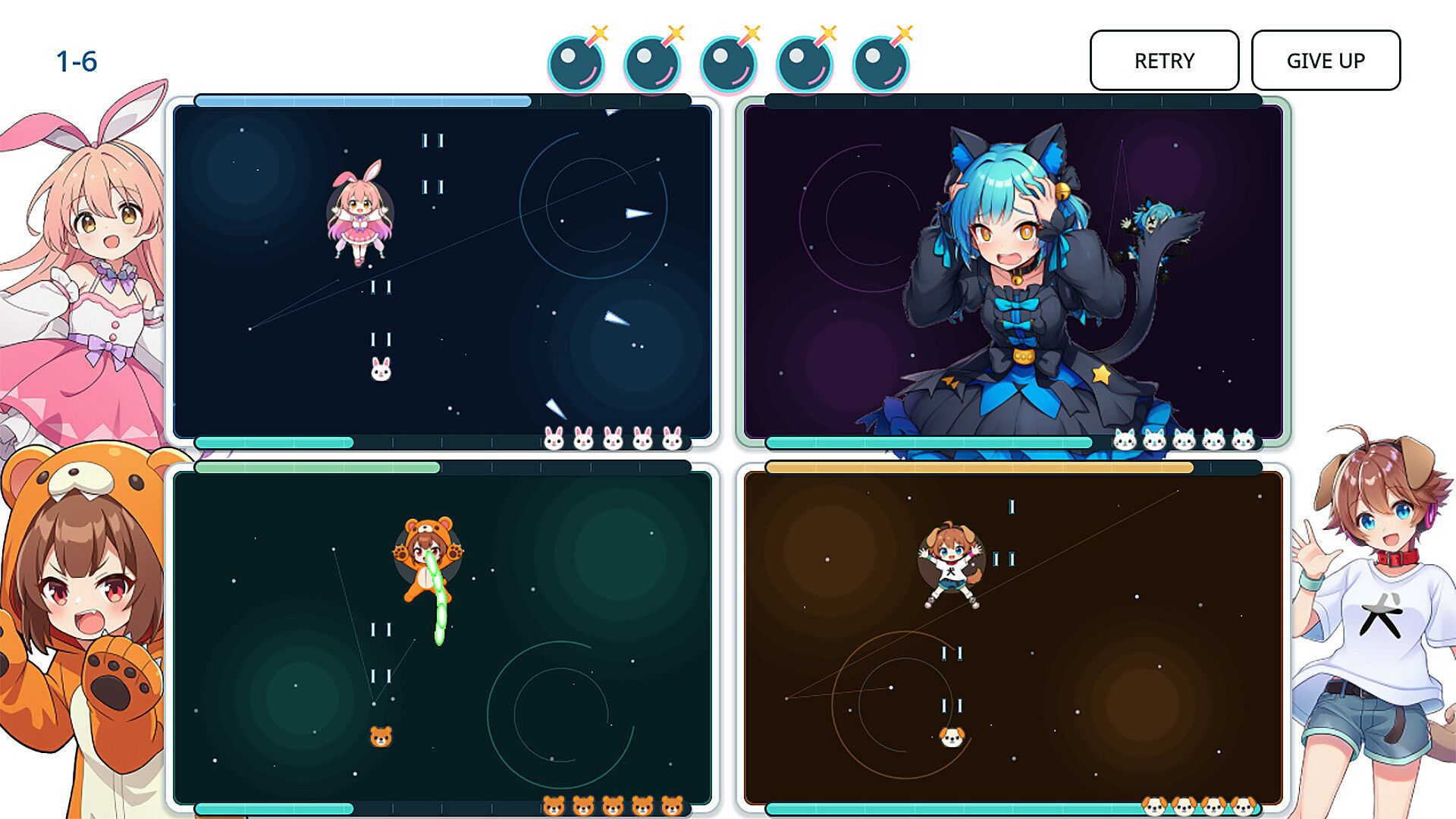
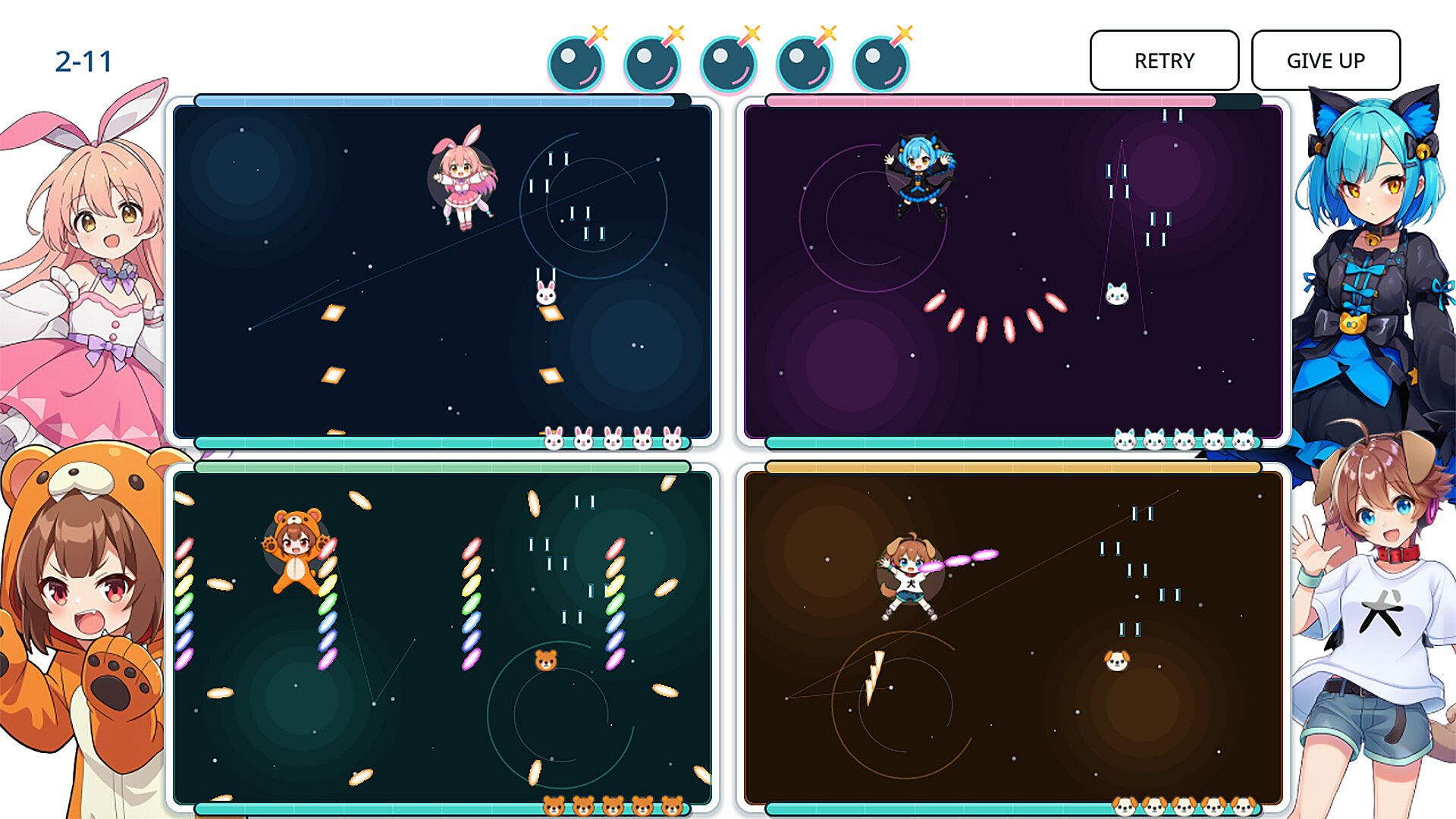
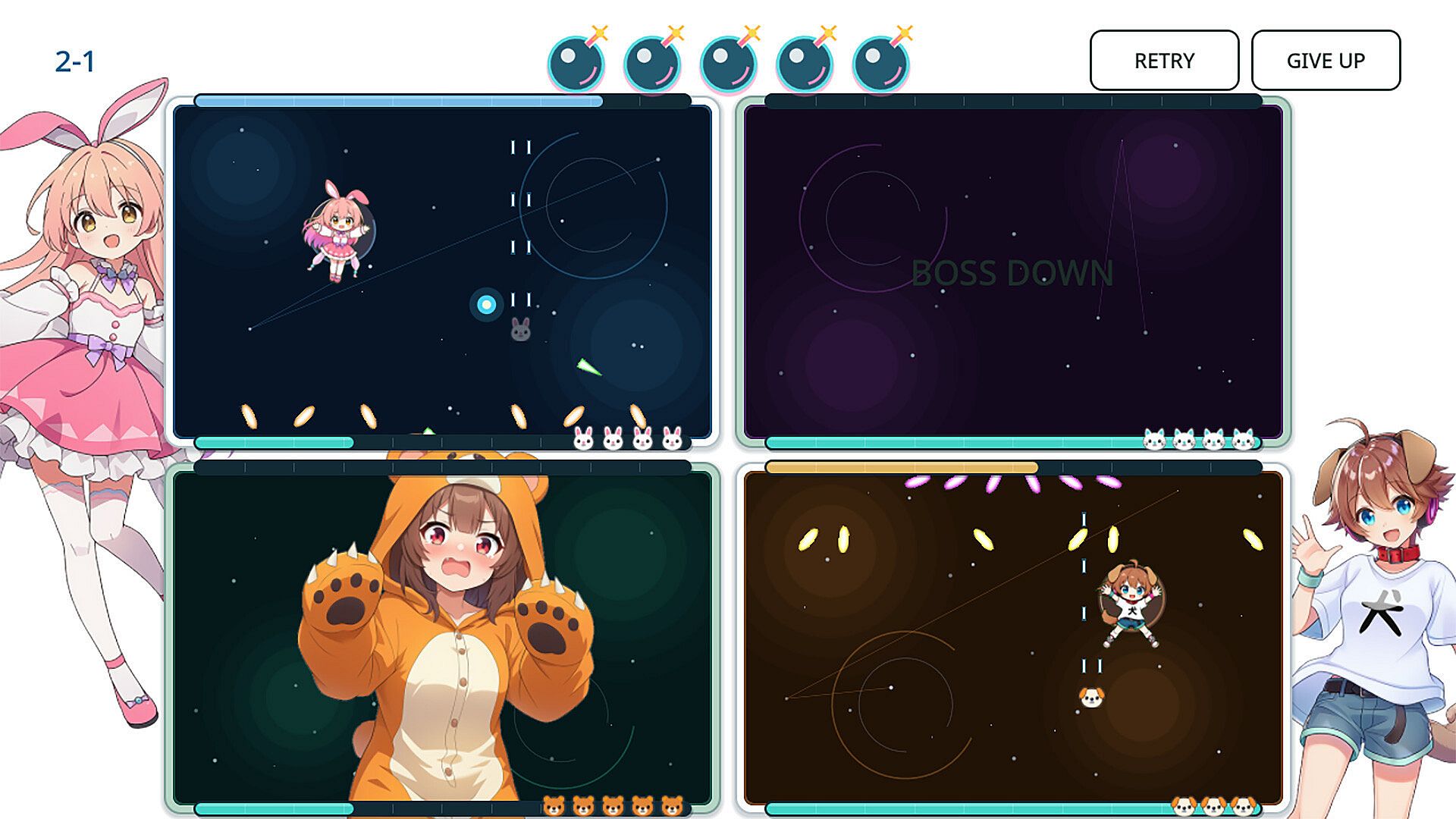
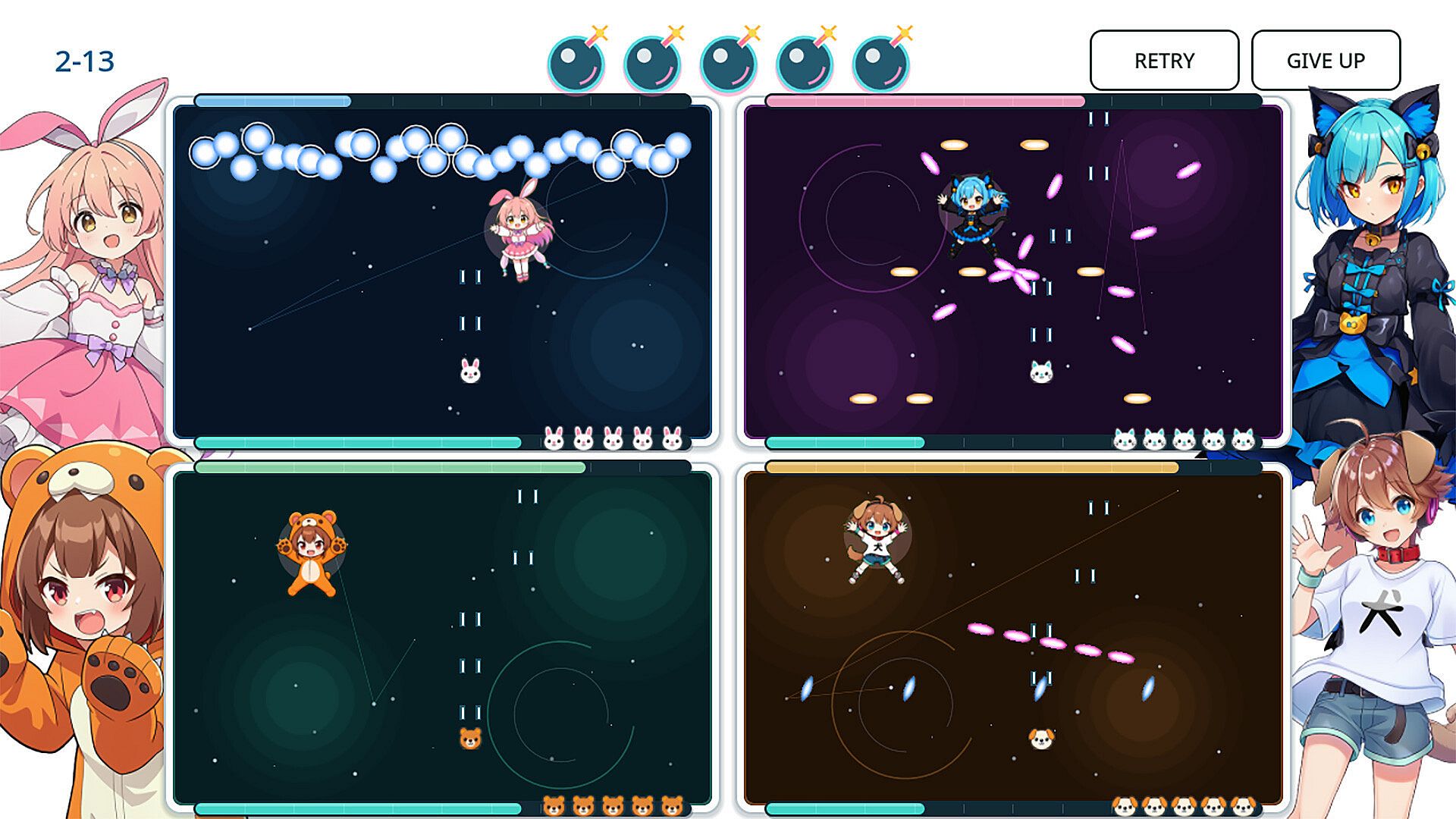
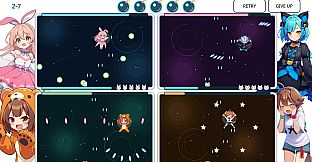
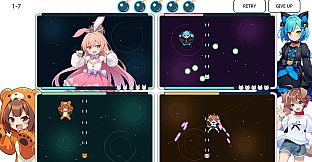
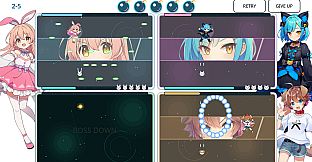
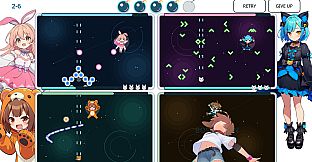
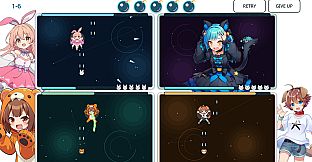
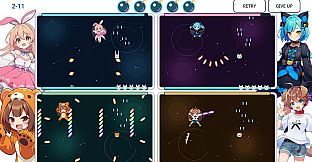
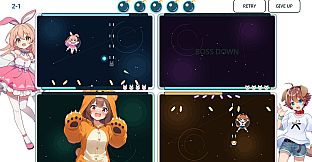
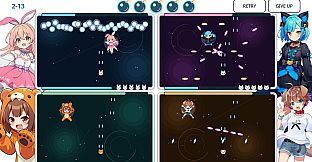
4 SCREENS, 1 SHOT is a casual single-player bullet hell shooter for PC that challenges players to control multiple ships simultaneously through a shared movement input. Each of four screens features its own boss and distinct bullet pattern, with automatic firing that shifts focus entirely to positioning and dodging across every active battle at once.
Gameplay
The core loop centers on managing overlapping threats from separate bullet barrages. A single set of movement controls directs all ships, so a safe gap on one screen can easily become a lethal zone on another. Players must scan patterns in real time, prioritize attention, and steer every vessel through openings before any single screen depletes its lives and ends the run.
Defeating a boss removes its screen from the encounter, yet the remaining bosses regain health and intensify their attacks. This creates ongoing decisions about target priority and the order in which stronger patterns will appear later. Shared bombs provide a limited escape tool that clears bullets across all active screens, rewarding careful timing to preserve lives through difficult stretches.
Automatic shots remove aiming concerns, allowing full concentration on reading multiple patterns together. Keyboard or controller input supports precise adjustments, and the design emphasizes survival across simultaneous challenges rather than individual screen mastery.
Game Modes
The game operates in a single-player format with no additional modes listed. All content revolves around the multi-screen bullet hell setup, progressing through structured stages where the shared mechanics remain consistent.
Progression spans 360 stages organized into 12 sets. Each set presents new combinations of bosses and patterns, building on the same core rules of shared movement, automatic fire, and collective bomb use. Completion goals include clearing every boss while retaining as many lives as possible across the full sequence.
Key Mechanics and Progression
Shared movement forces constant cross-screen awareness. A path that works on three screens may force a ship into danger on the fourth, requiring players to evaluate trade-offs quickly. Lives function as a shared resource pool, so damage on any screen impacts the entire attempt.
Boss elimination changes the battlefield dynamically. Removing one threat strengthens the survivors, encouraging strategic choices about which patterns to tackle early versus late. Bombs serve as a shared safety net, clearing space across remaining screens without resetting individual ship positions.
The structure rewards repeated attempts as players learn to read combined patterns and optimize boss order. Controller support adds flexibility for those who prefer analog precision during tight dodges.
Is It Worth Playing?
This title suits players who enjoy bullet hell challenges that demand simultaneous attention across multiple independent threats. The shared controls create a distinctive puzzle-like layer on top of traditional dodging, where success depends on pattern recognition and split-second prioritization rather than raw reflexes alone.
With 360 stages across 12 sets, the content offers substantial length for those who appreciate methodical improvement. The absence of separate modes keeps the experience focused on the central multi-screen concept. Keyboard and controller options broaden accessibility for different play styles.
Those drawn to single-player experiences that test multitasking under pressure will find the mechanics rewarding. The game remains in development with a future release planned, so interested players can follow its progress for the complete set of stages and refinements.