




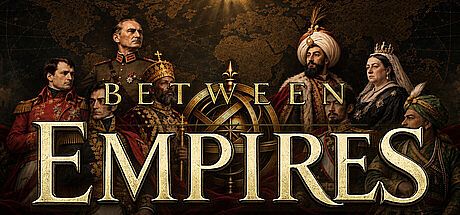


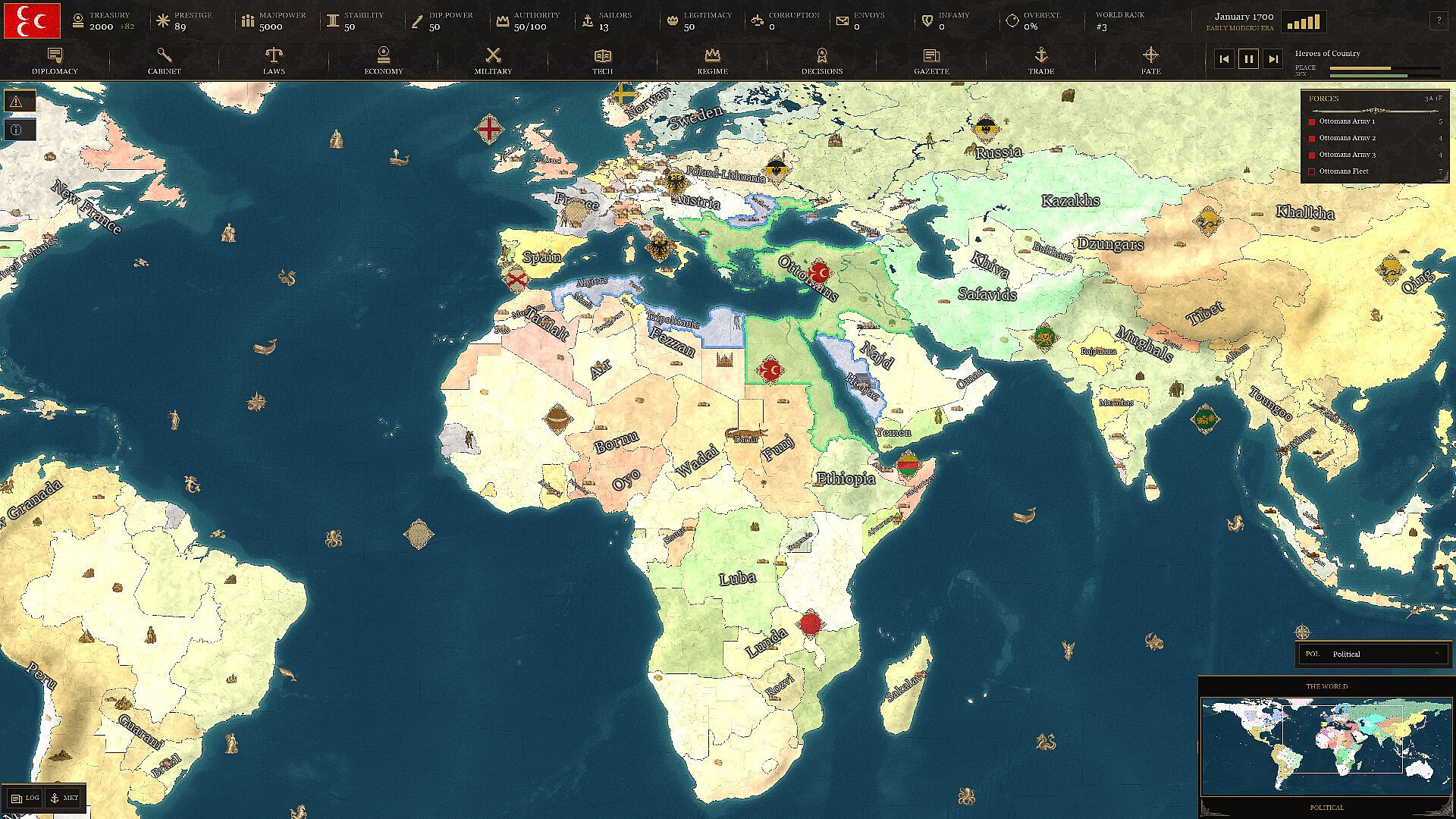
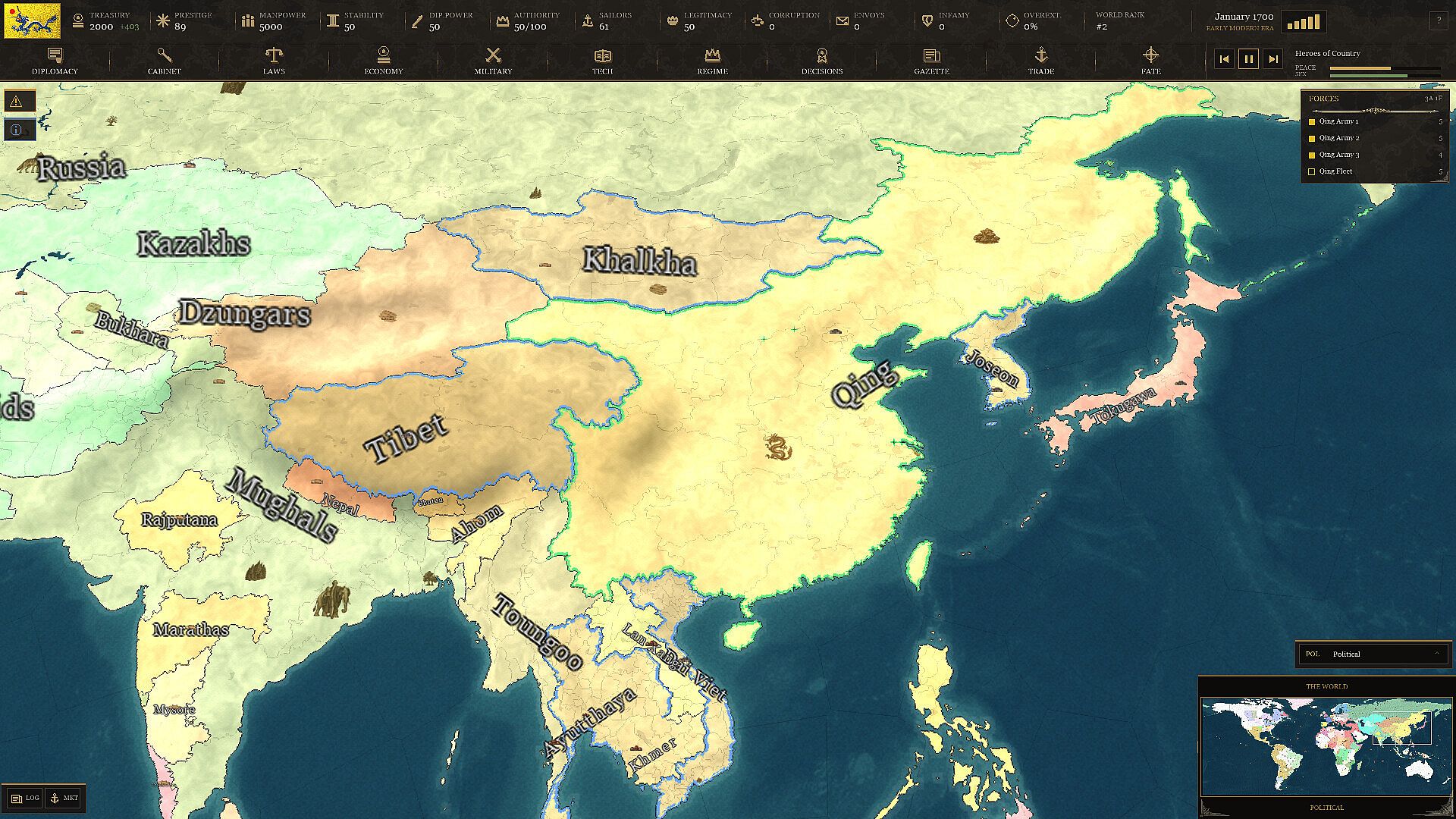
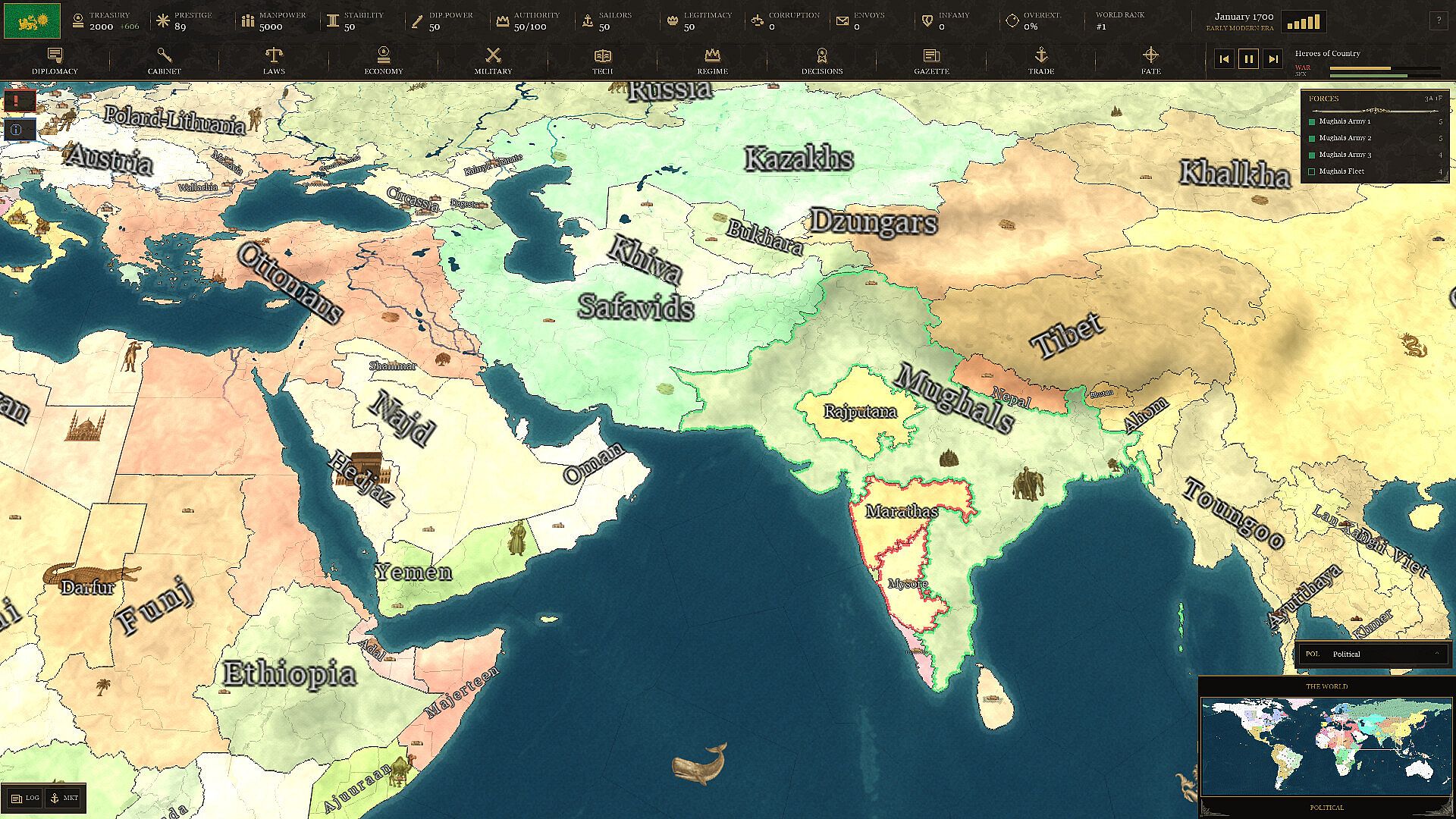
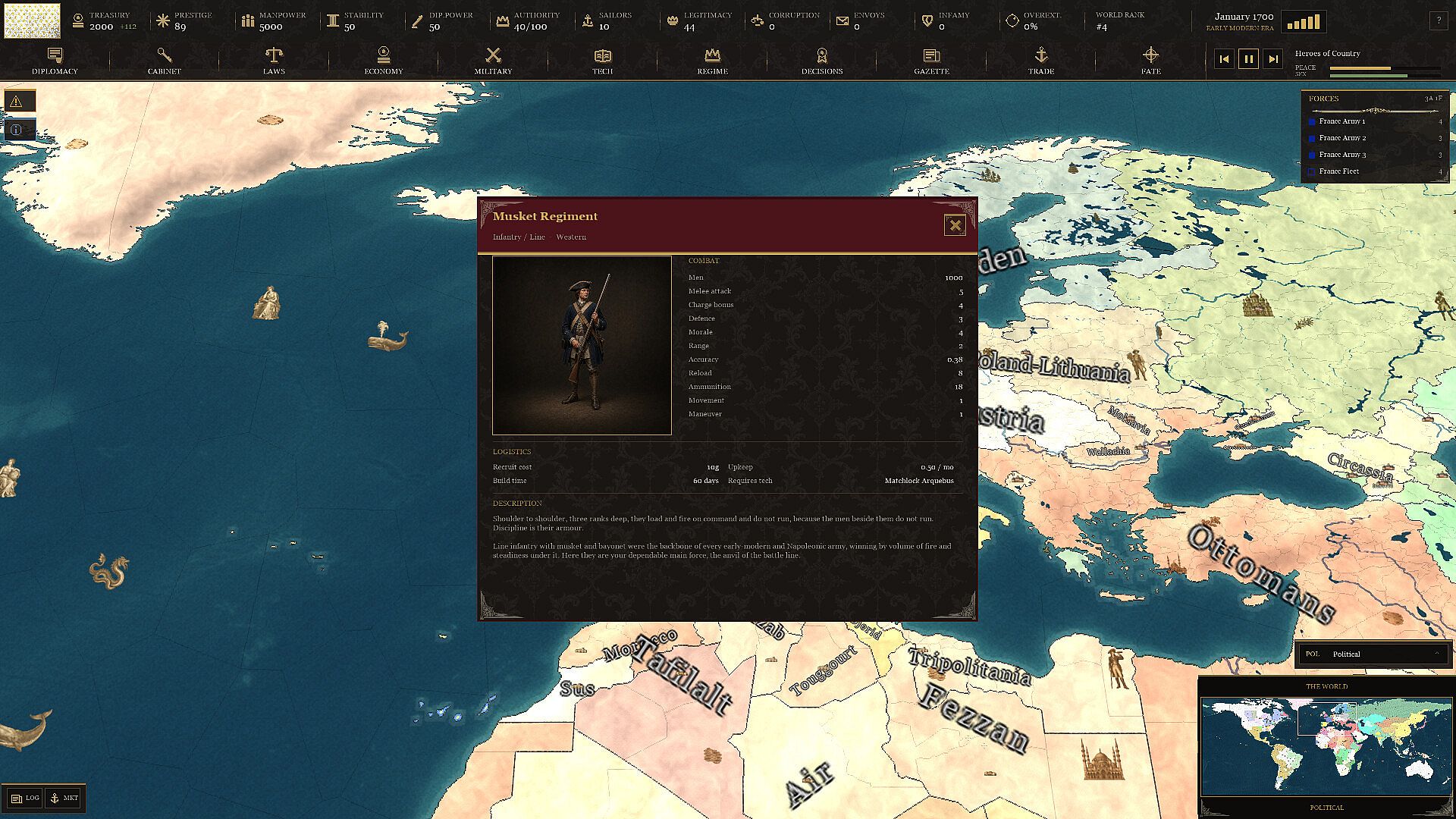
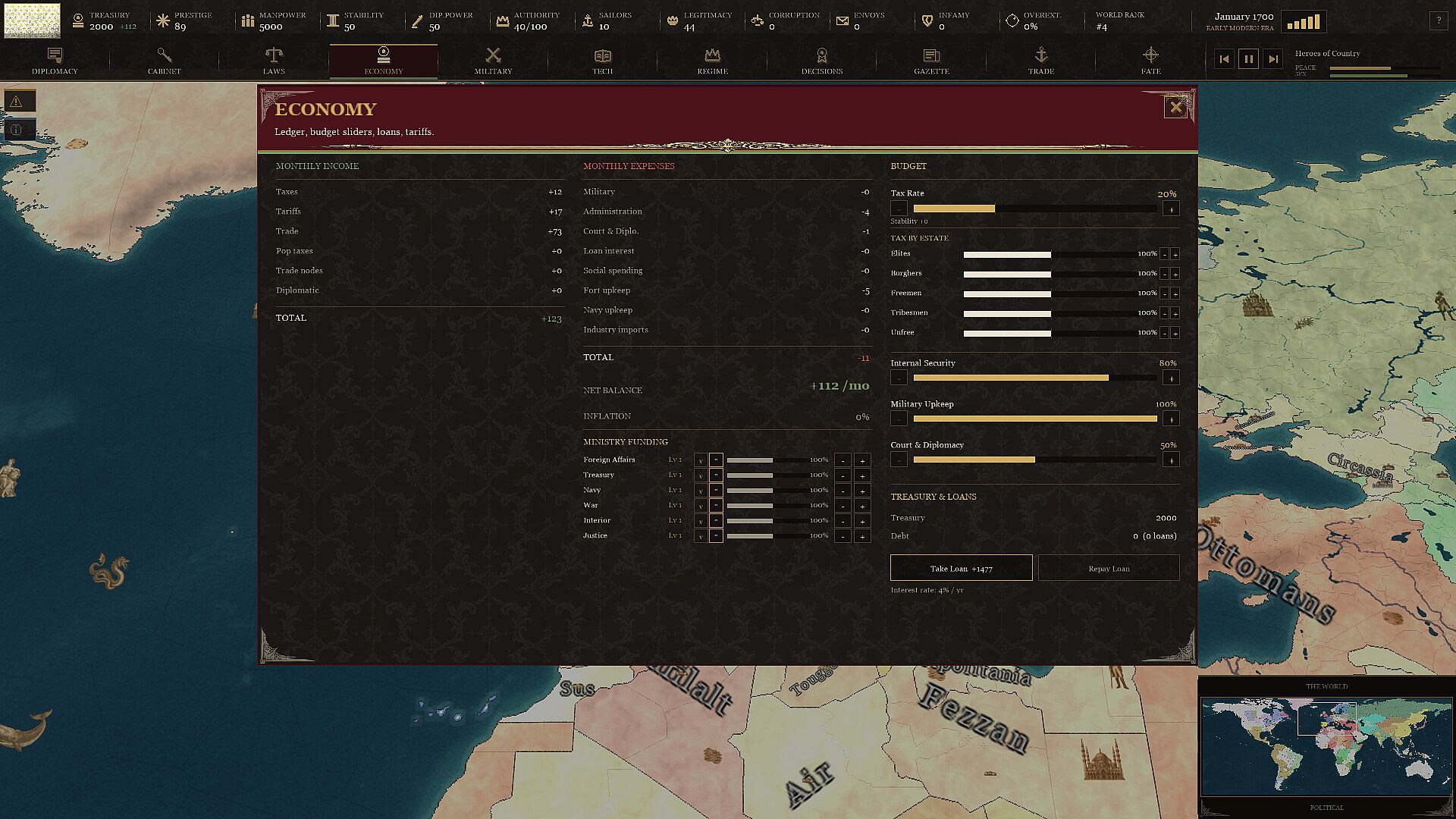
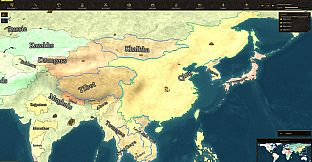
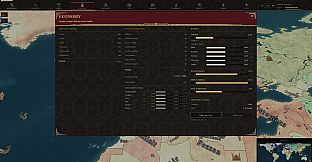
Between Empires is a historical grand strategy and simulation game set on PC. Players govern a single state across more than two centuries, beginning in the dynastic courts of 1700 and extending through industrialization, mass politics, and total war up to 1936. The experience centers on long-term governance rather than map painting or army movement alone.
Gameplay
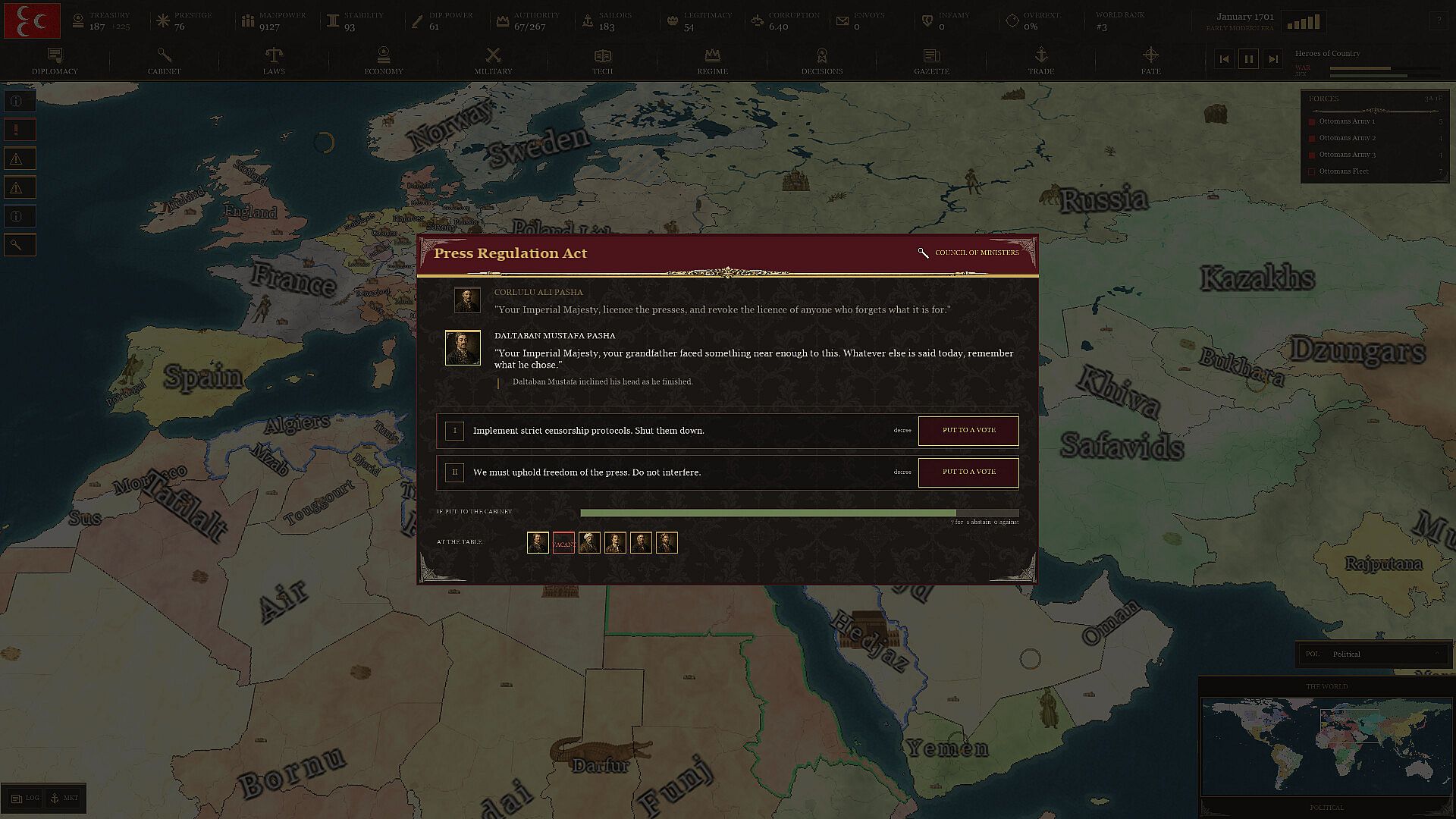
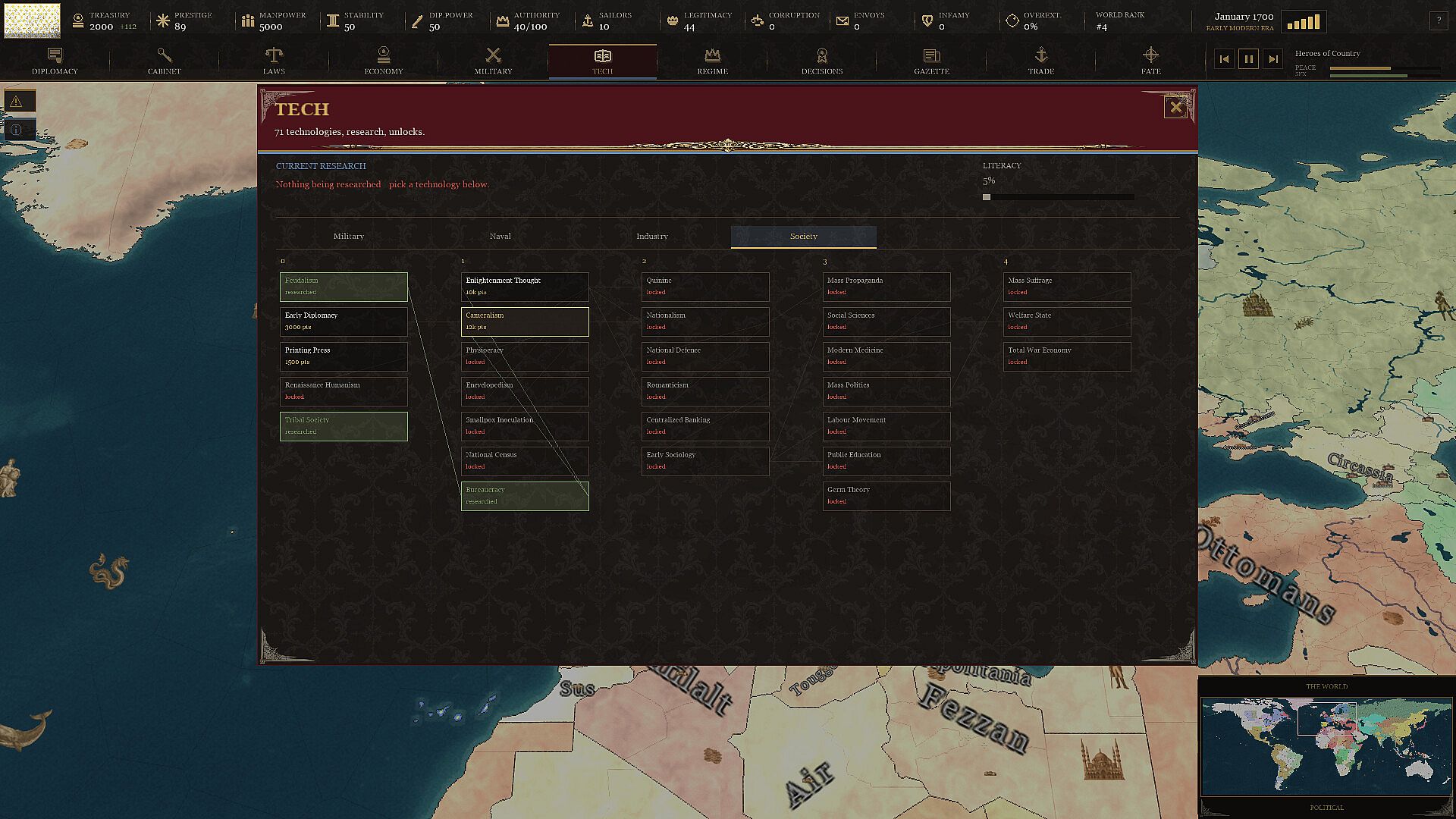
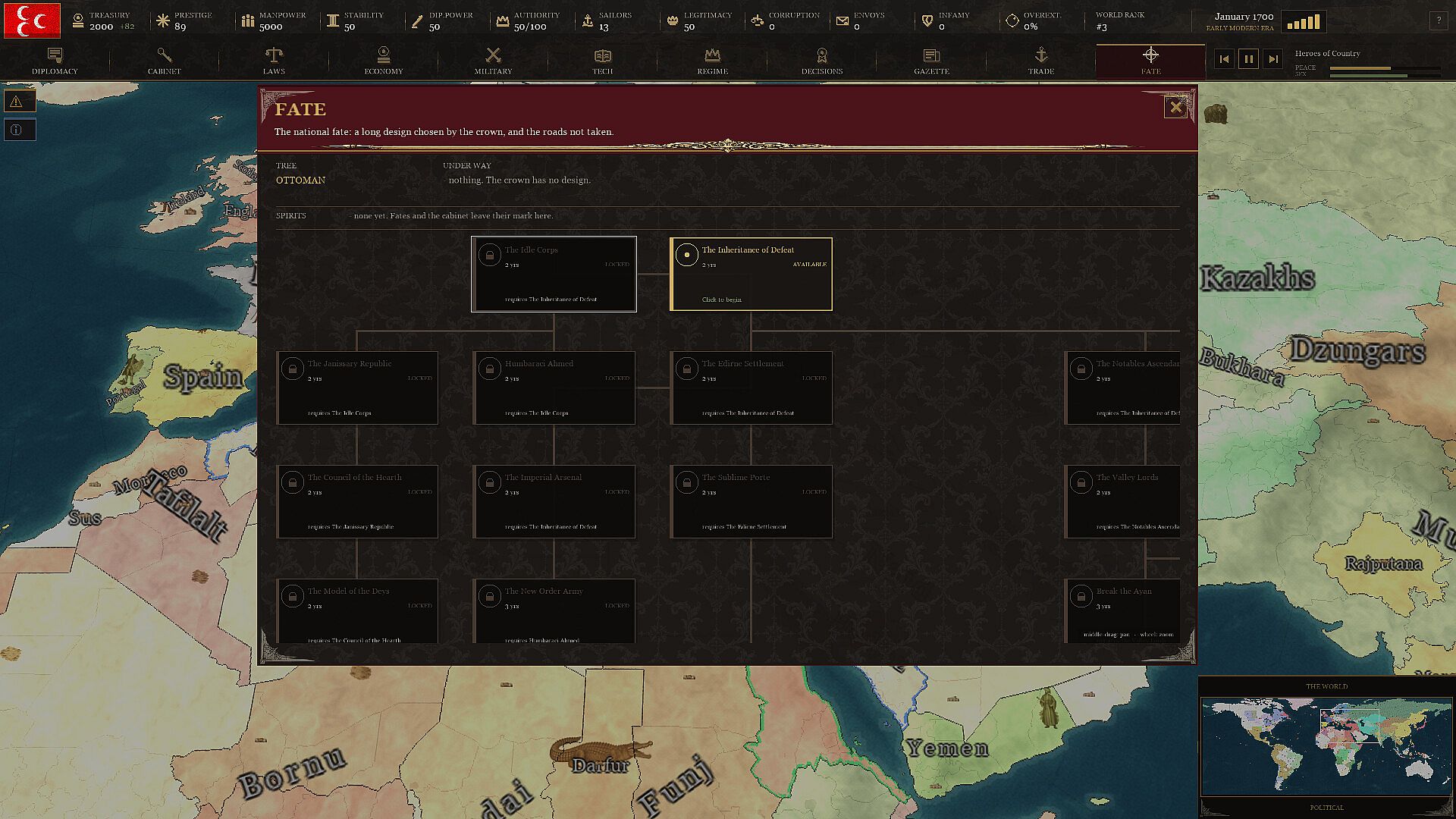
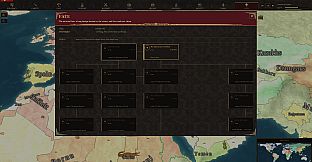
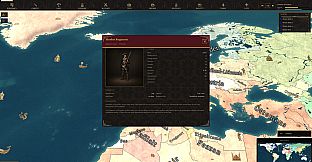
Core play involves appointing ministers to cabinet offices and managing their abilities, loyalties, and political positions. These individuals shape what policies succeed or fail, as trust and rivalries among them influence outcomes. Decisions on taxation, trade, industry, law reform, and technology development carry forward through the National Fate system, where reforms strengthen institutions while compromises spawn factions and emergency measures linger across generations.
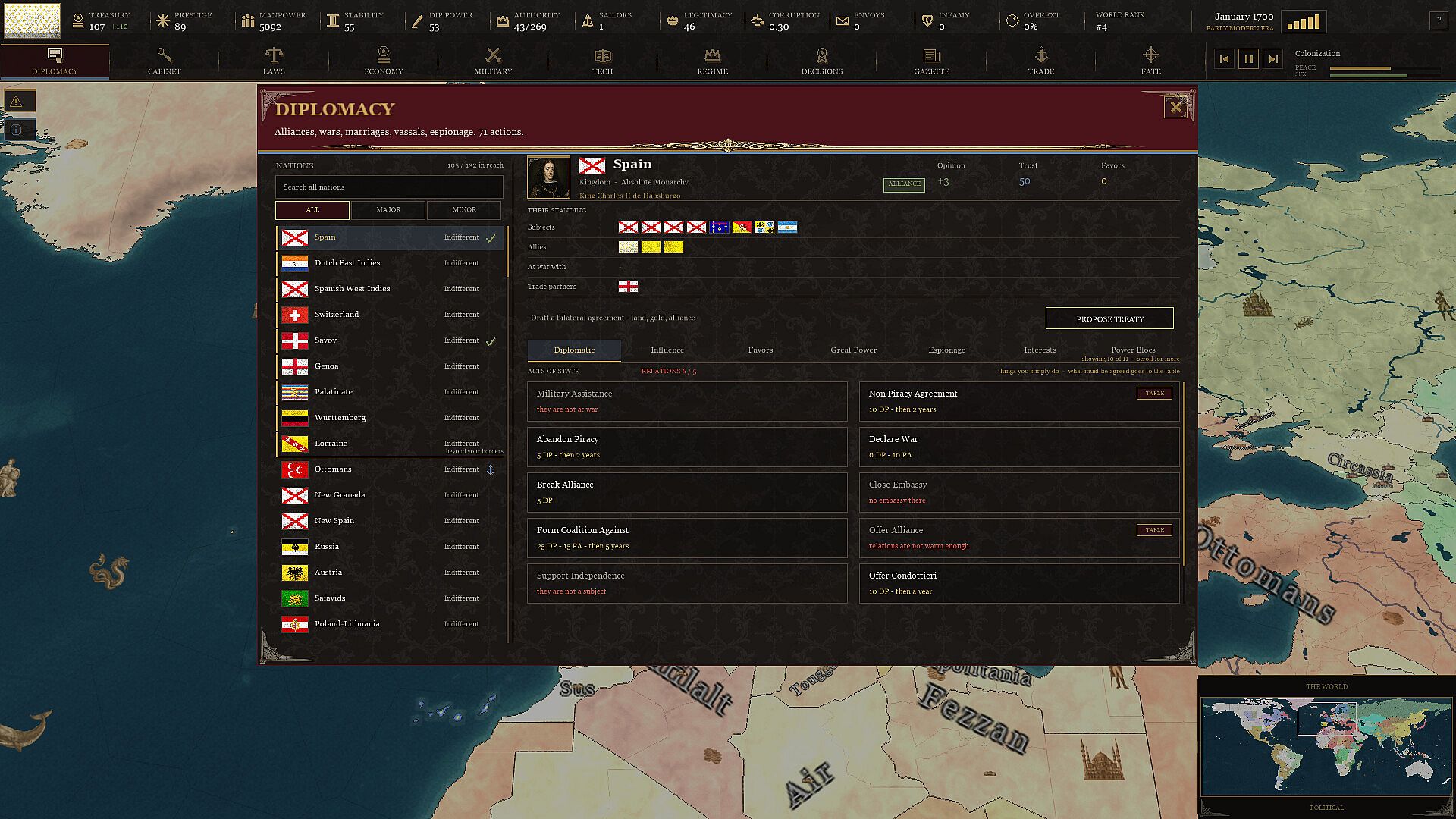
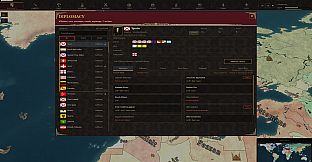
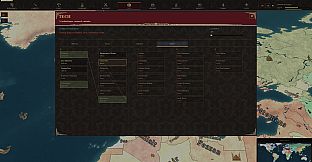
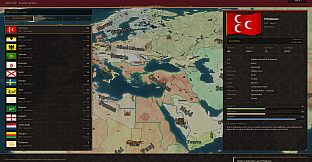
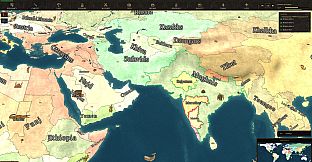
Five historical ages structure the campaign. Early periods emphasize dynastic courts and mercantile competition, while later eras introduce industrial expansion, political movements, and large-scale conflict. Every choice creates ripple effects: increased wealth can complicate internal control, a powerful military may gain independent influence, and a reform that stabilizes one region can ignite unrest elsewhere. Diplomacy includes alliances, dynastic marriages, guarantees, subject relationships, trade negotiations, espionage, and territorial bargains across roughly 2,000 provinces and 133 starting powers.
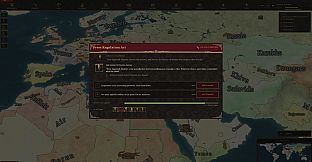
Warfare incorporates manpower limits, terrain, fortifications, logistics, and political endurance. Armies and fleets operate under these constraints, and outcomes depend on sustained support rather than isolated battles. Events, cabinet meetings, and a world gazette track the delayed consequences of prior actions, ensuring history does not unfold on a fixed script.
Game Modes
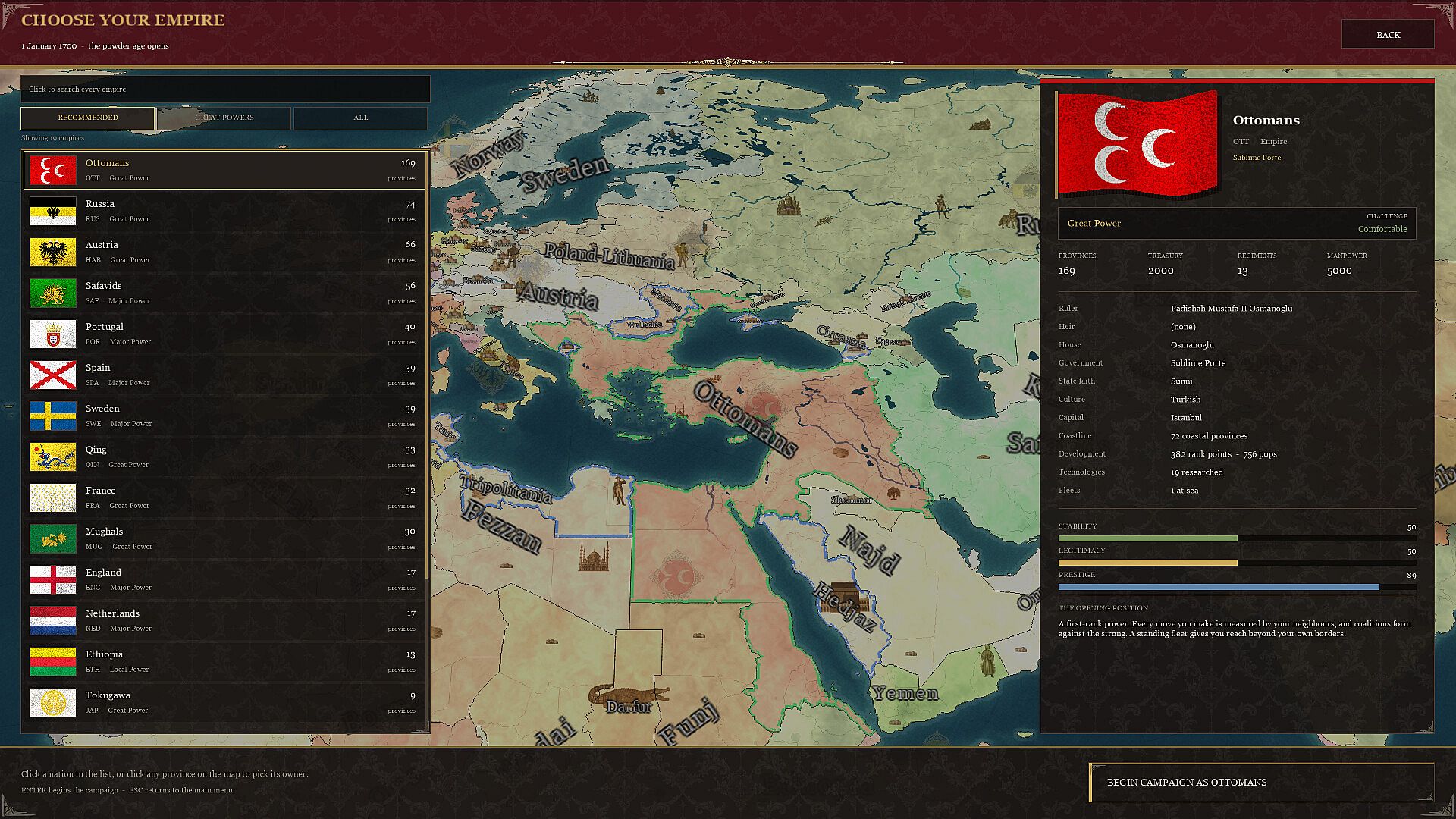
The game offers a single continuous campaign that runs uninterrupted from 1700 to 1936. Within this framework, players direct one chosen power through reform, succession, and external pressures without resetting progress. No separate scenarios or time-limited modes exist; all systems feed into the same long-running state simulation.
Key Mechanics and Systems
Ministers and political movements operate with independent interests, requiring players to build coalitions and legitimacy before major changes. Institutions evolve based on sustained policy rather than one-time bonuses. Trade and production balance against taxation demands, while technology advances reshape both economy and military capacity. Rival states and internal factions pursue their own goals, creating unpredictable interactions even on familiar historical dates.
Alternative paths remain possible but demand concrete capacity and support to overcome subsequent reactions. The emphasis stays on managing competing pressures across politics, economics, and diplomacy rather than achieving quick dominance.
Is It Worth Playing?
Between Empires suits players who enjoy deep, consequence-driven grand strategy focused on internal governance and multi-generational outcomes. Its single-player campaign rewards careful cabinet management and long-term planning over rapid conquest. With a scheduled release in October 2026 and no reviews available yet, interest depends on preference for detailed political simulation and historical continuity. Those drawn to titles that treat decisions as permanent state memory will find the described systems align closely with that style of play.











