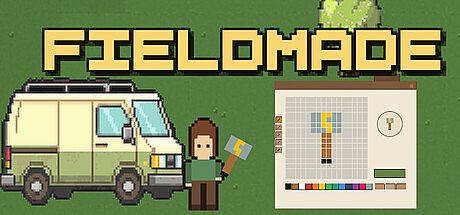


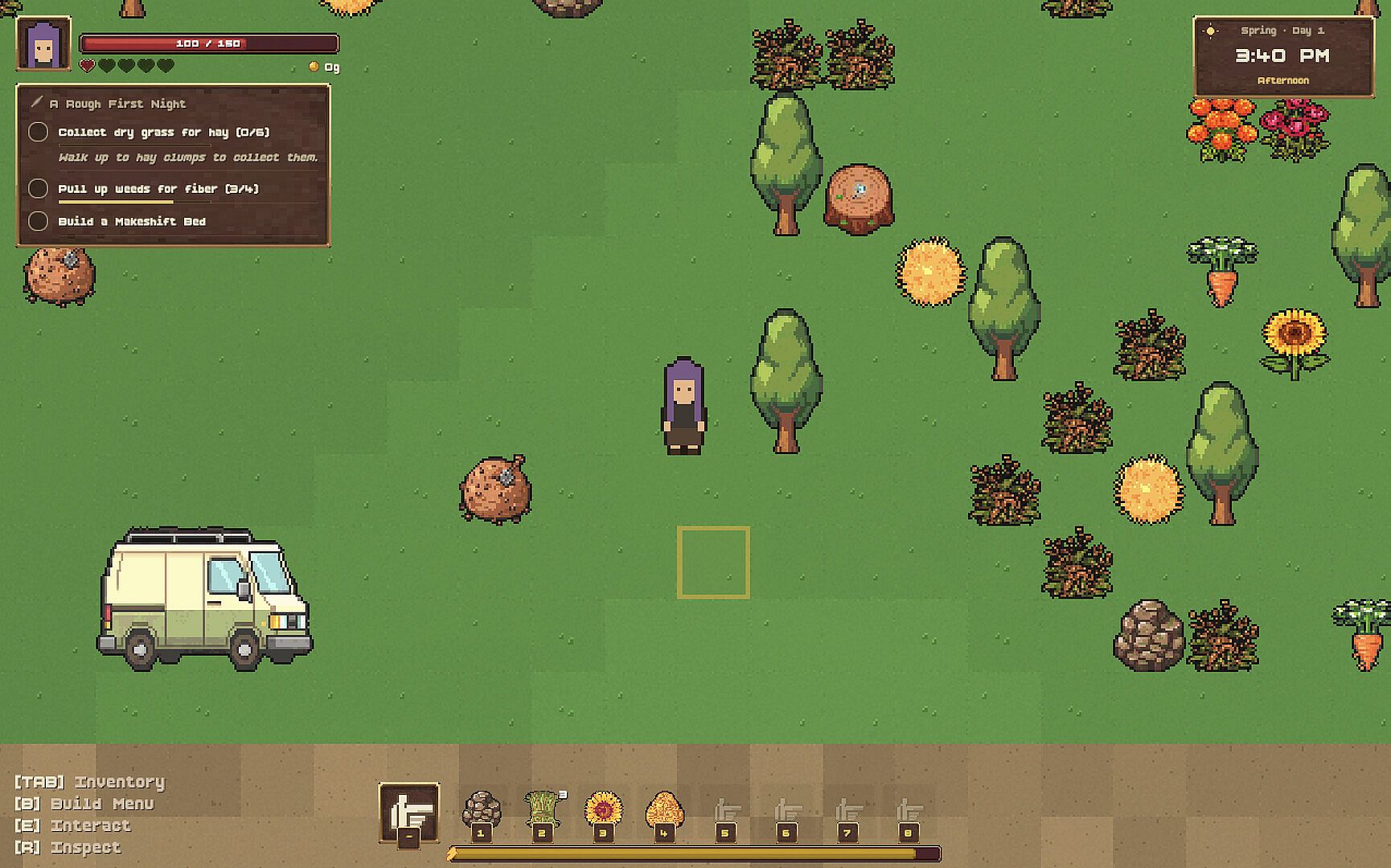
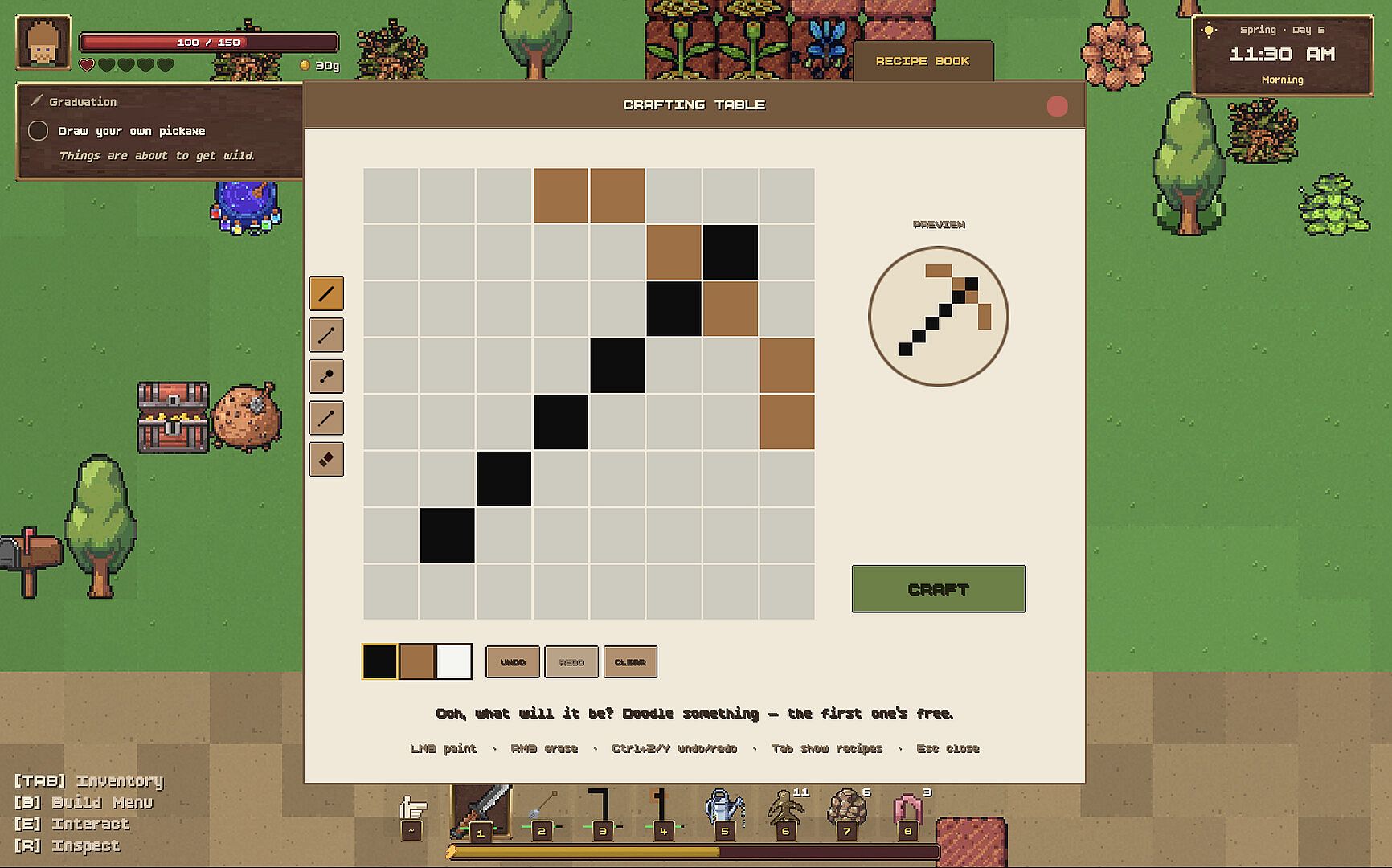
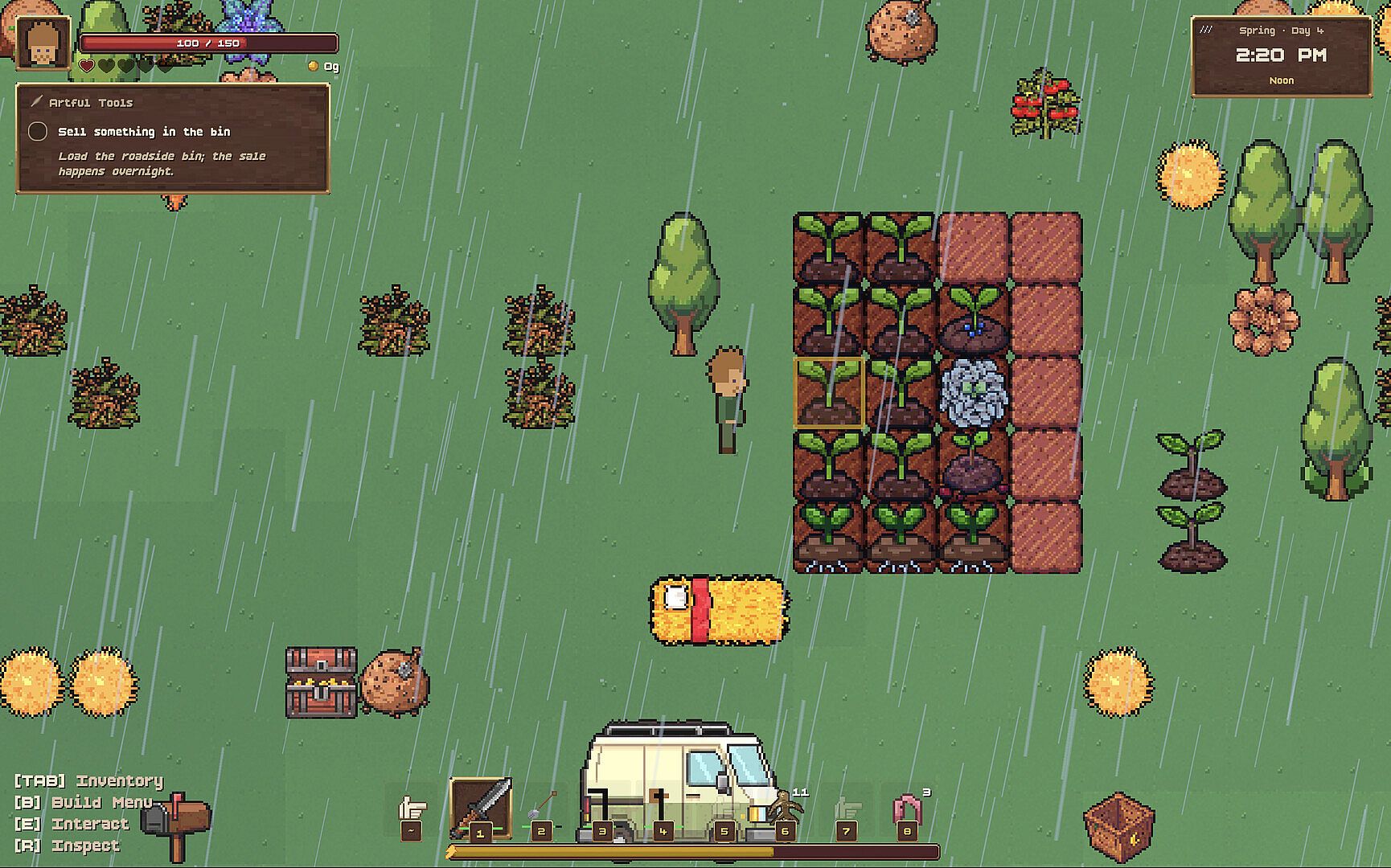
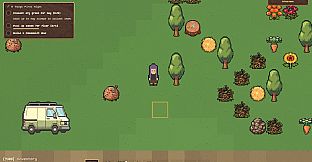
Fieldmade is an indie RPG and simulation game for PC that blends farming, crafting, and creative expression through a distinctive drawing system. Players begin with little more than a sketchbook after their van breaks down on a rural road, then earn their way forward by turning hand-drawn ideas into functional objects in a living world.
Gameplay
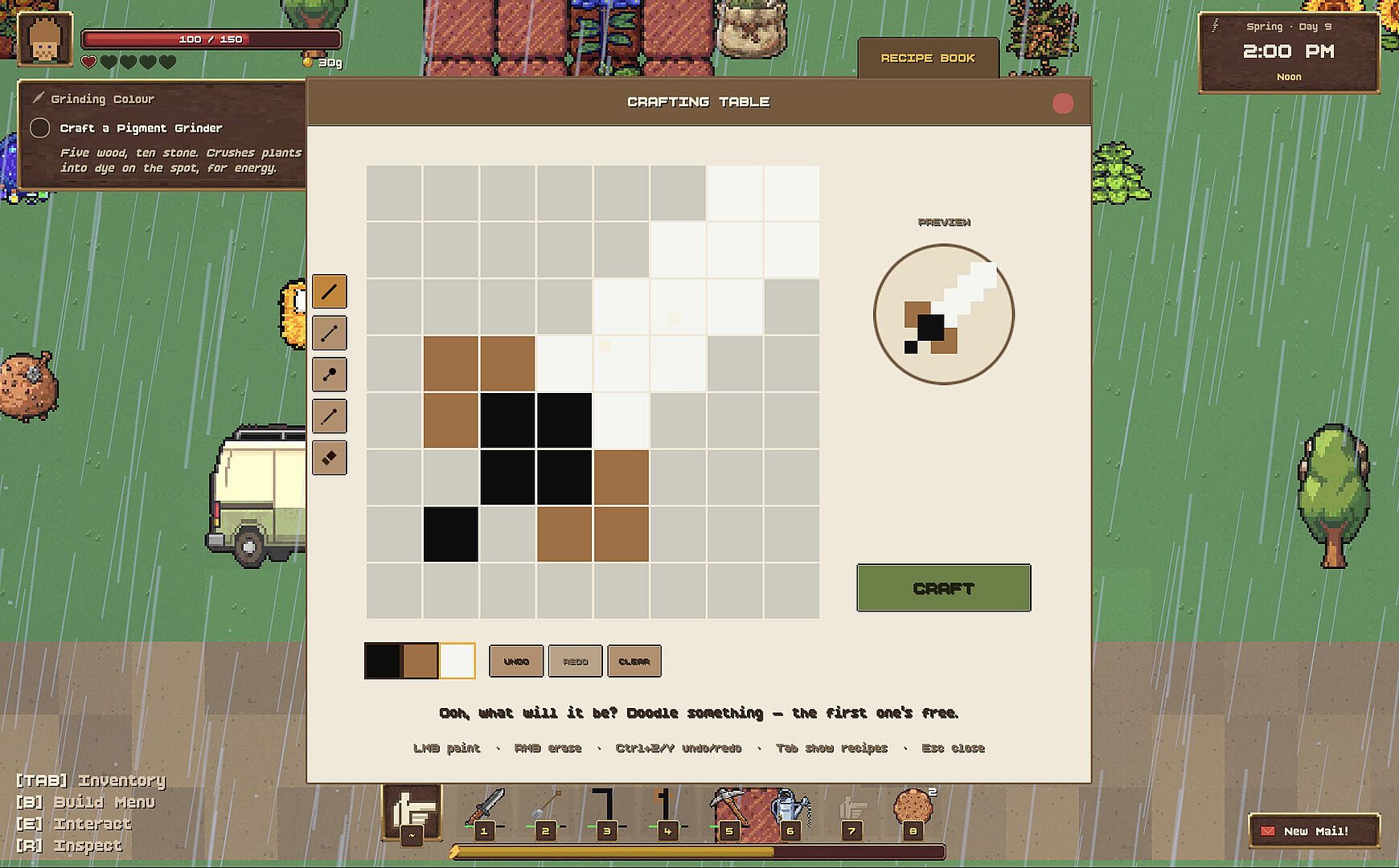
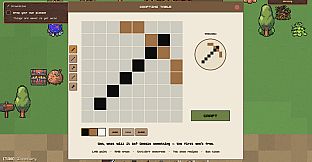
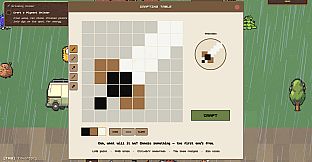
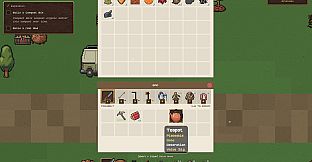
The core loop centers on sketching items that immediately become usable tools or decorations. A simple hoe drawn on the page tills soil for planting, while an axe chops wood or a fishing rod pulls in catches. These objects carry real stats and behave according to their drawn form, giving each creation a personal touch that no preset recipe could match.
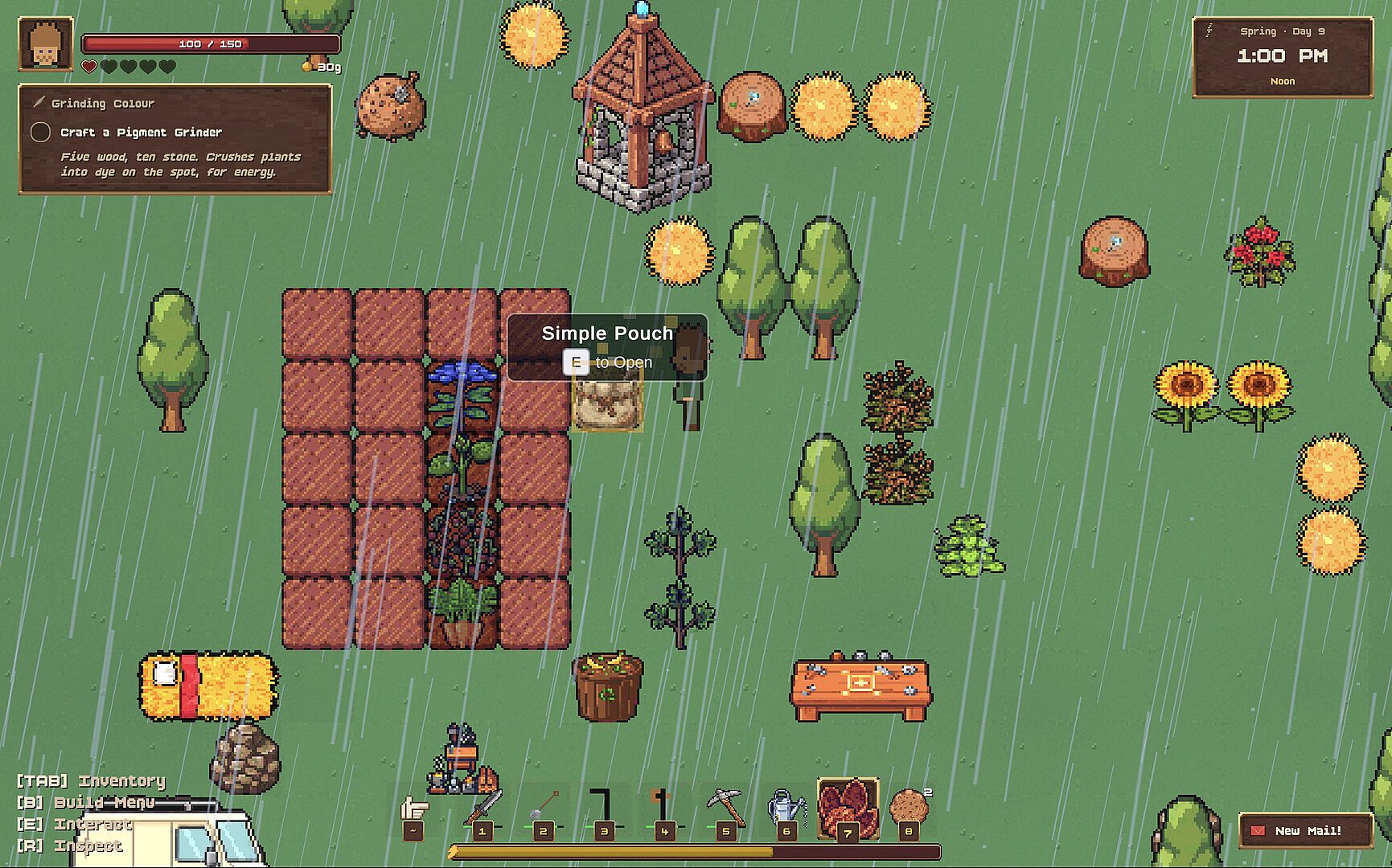
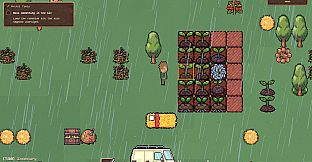
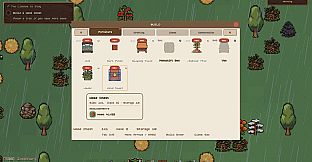
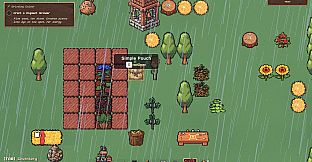
Players grow a palette of natural dyes from crops such as marigold, woad, and madder. Harvested plants are processed into pigments and mixed at a dye bench to unlock new colors for future sketches. Fields therefore directly support artistic output, and the resulting artwork shapes the farm itself through custom furniture, lanterns, rocking chairs, wind chimes, and scarecrows that exist nowhere else.
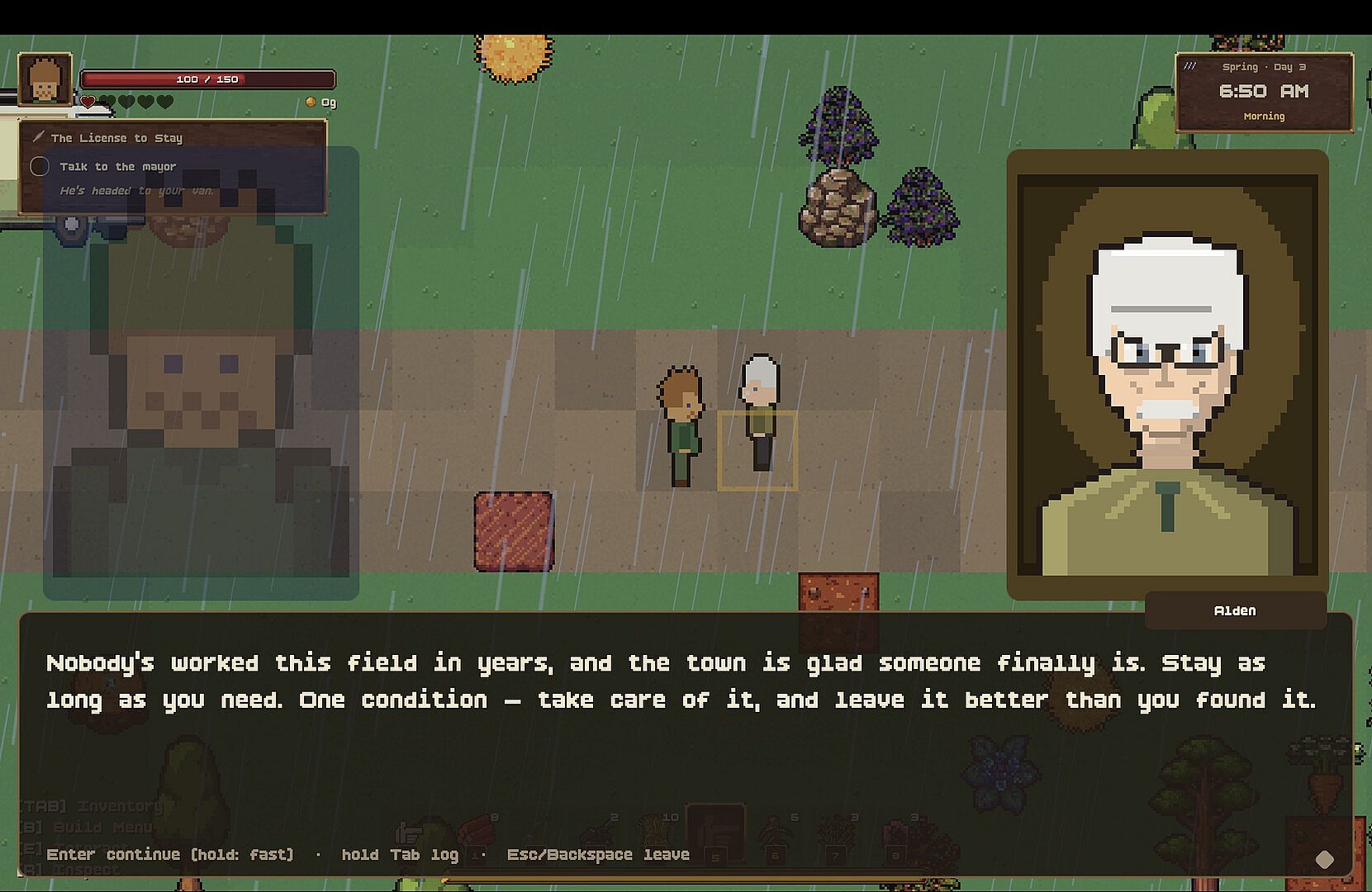
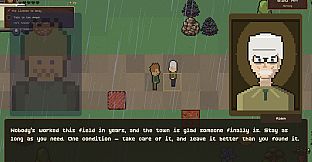
Community requests add another layer. Townsfolk ask for specific items, and fulfilling those sketches brings coin, favors, and deeper story connections. The sketchbook serves as both tool and key, opening personal narratives among residents who face their own quiet struggles.
Game Modes
Fieldmade offers a single continuous experience without separate named modes. All activity unfolds in one persistent world where drawing, farming, and social interactions happen side by side. There are no distinct multiplayer lobbies, competitive arenas, or seasonal variants confirmed at this stage.
Progression remains open-ended. Players decide how much time to spend expanding the farm, fulfilling requests, or experimenting with new drawings. The absence of a tech tree or unlock list keeps the focus on creative freedom rather than gated advancement.
Creative Freedom and World Building
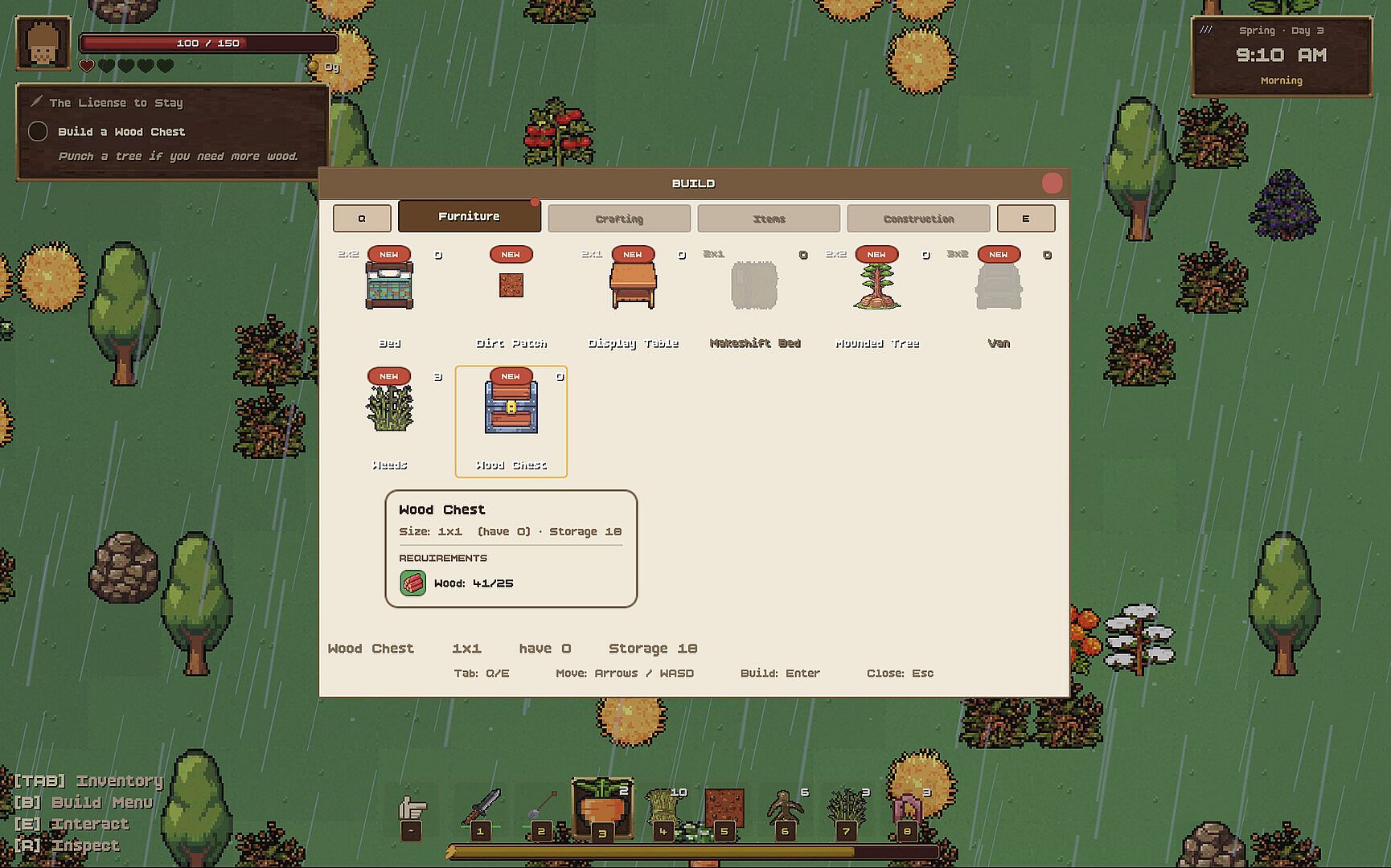
Every object in the environment originates from a player sketch. This approach removes traditional crafting grids and instead rewards imagination. A lantern sketched one way might cast a different light than another version, while a crooked scarecrow adds unique character to the fields. The system encourages repeated experimentation because each drawing can produce slightly different results based on the lines and colors used.
Color mixing from farm produce ties the agricultural side directly to artistic output. Growing and processing the listed crops feeds the dye bench, which in turn expands what can be drawn next. This closed loop rewards consistent attention to both the land and the sketchbook.
Is It Worth Playing?
Fieldmade suits players who enjoy relaxed simulation games with a strong creative component. The drawing mechanic replaces conventional menus and lists with direct, visual problem-solving that feels immediate and personal. Those who like tending farms, completing light community tasks, and shaping an environment through their own choices will find a coherent loop here.
The game remains in active development with its core systems already playable on PC. Reception so far centers on the novelty of turning sketches into working tools and the satisfying connection between farming and art. Anyone drawn to indie titles that prioritize player expression over structured progression will likely appreciate the approach, while those seeking combat, complex multiplayer systems, or preset crafting trees may find less to engage with.