
















Golden Hour is an indie simulation adventure game centered on running a portrait photography studio while managing mounting debt. Players step into the role of a photographer who has inherited a business saddled with 72,000 in obligations, with repayment checkpoints every few weeks that end the run if missed. The core experience revolves around planning and executing photo shoots, selecting and editing images, and navigating relationships with two distinct clients over a 25-week period on PC.
Gameplay
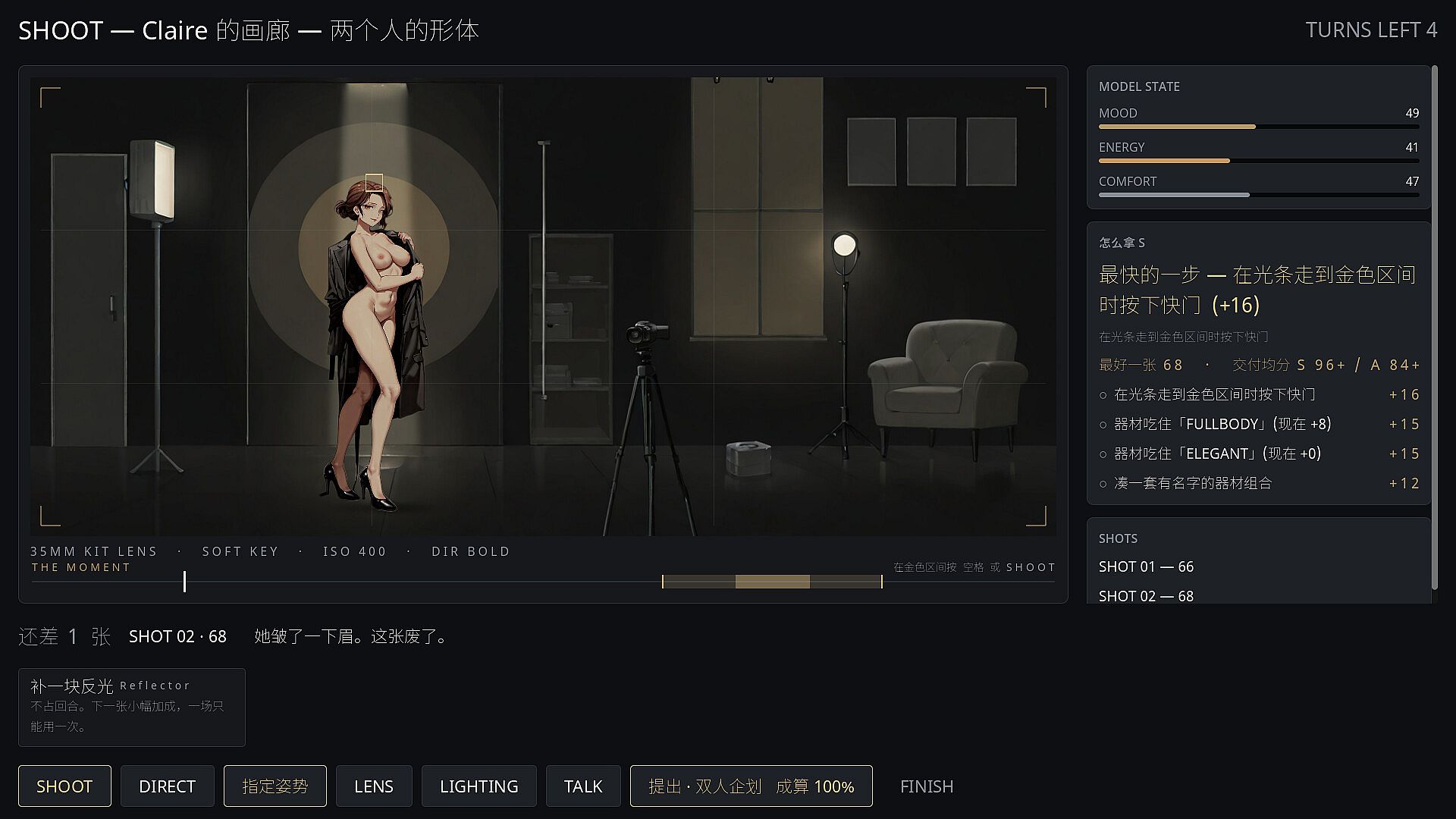
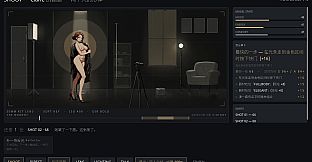
The gameplay loop breaks down into preparation, the shoot itself, selection, and post-production. Players assemble a kit from fifteen pieces of gear, weighing trade-offs such as how an 85mm lens flatters portraits yet limits full-length compositions or how RGB lighting enhances visuals at the cost of the subject's energy. Each session lasts six to eight turns during which the client's mood, energy, and comfort levels shift based on actions like adjusting lights, changing lenses, directing poses, or conversing. A decisive-moment slider appears while shooting, rewarding precise timing for strong frames and even tighter timing for deliverable shots.
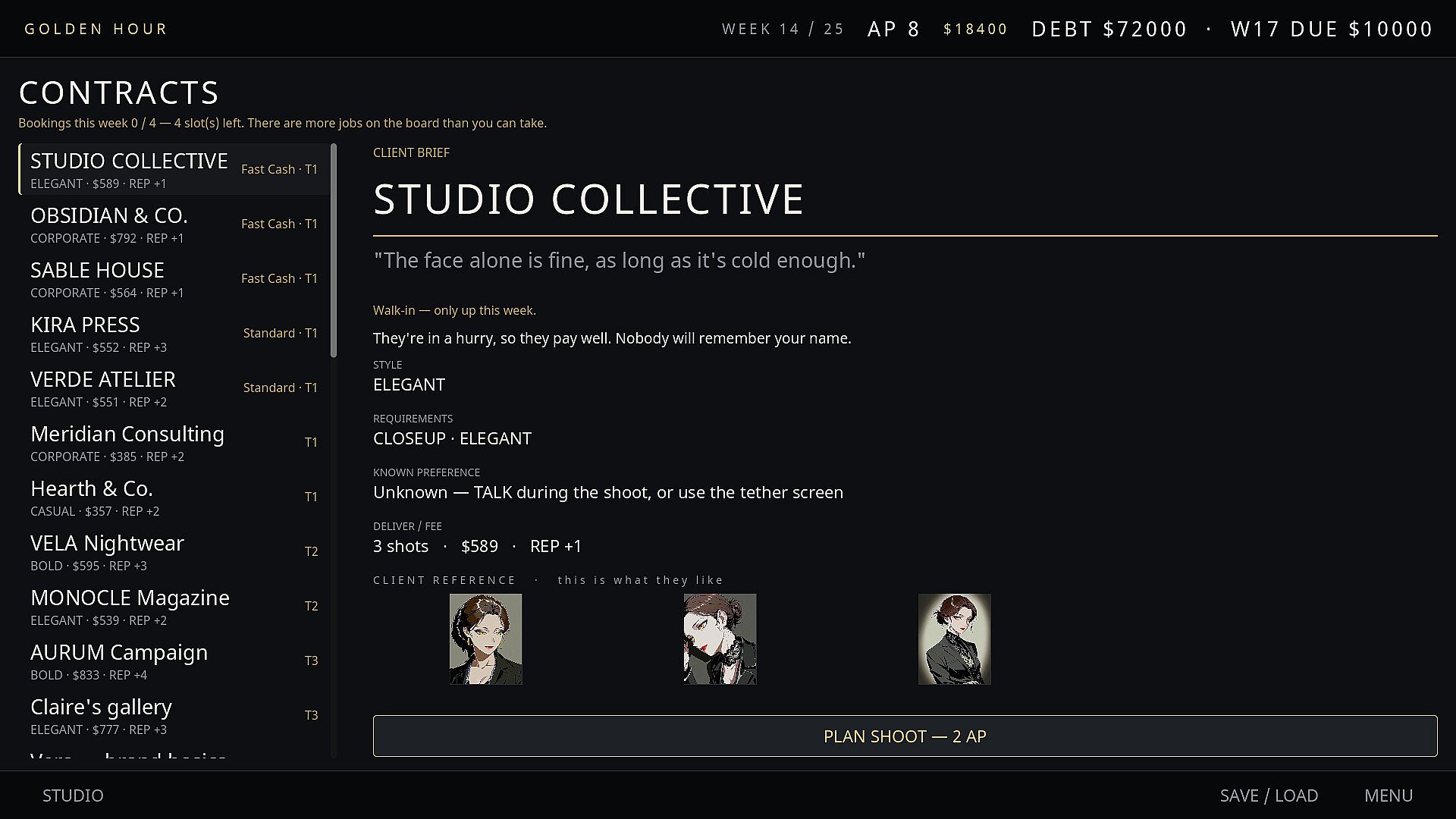
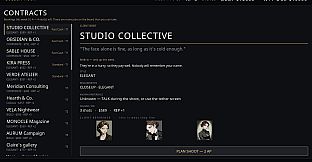
After capturing images, players choose three out of seven or more to submit, with the combination determining an S, A, B, or C rating. The darkroom phase follows, where three to five grading adjustments must align with the client's brief to maximize gains or risk losses. Studio upgrades expand available slots on the booking board, which presents five jobs weekly but allows only three acceptances. Night shoots outside the studio add variety across locations like rooftops or alleys, and three camera bodies provide distinct handling and sound feedback during use.
Game Modes
Golden Hour structures its sessions around client bookings that vary in intensity and requirements. Regular shoots focus on standard portrait work, while higher tiers introduce lingerie, art nude, or combined framing with both women present. Access to these tiers depends on current rapport, the client's immediate state, prior spending, and how often boundaries have been tested in a single session. Hardware upgrades enable closed-set options for more private work.
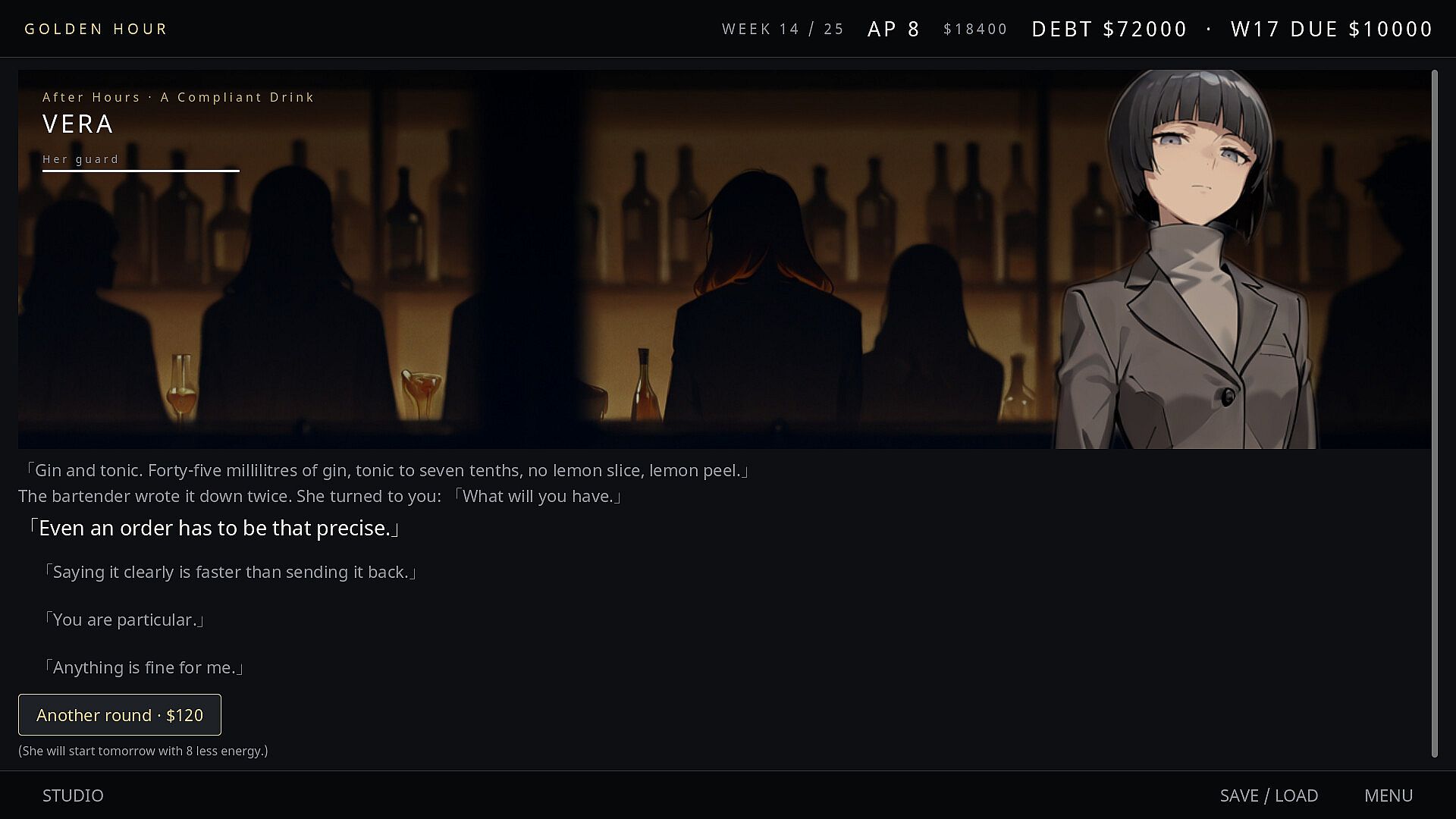
Interactions with the two women operate on separate rhythms. One client, tied to the debt and gallery ownership, tends toward quicker progression with bolder steps. The other, a brand director, maintains a measured pace and serves as the sole path to the most advanced tier. Intimacy sequences function through a state machine tracking arousal, engagement, and pace, where misreads lead to altered scenes rather than abrupt failure.
Story and Progression
Over 25 weeks with eight action points each, players balance bookings against six debt checkpoints. Missing a checkpoint ends the studio run, though the first two receive limited coverage from one client. Twenty-eight contracts and 25 story events unfold alongside gear and studio improvements. The gallery holds 164 unlockable photographs across tiers, positions, and locations, though a single playthrough leaves many slots empty. Four endings exist, one of which involves losing the business entirely. Full support for English, Simplified Chinese, and Japanese appears throughout.
Is It Worth Playing?
Golden Hour suits players who enjoy deliberate management sims with layered decision-making around resources, timing, and interpersonal dynamics. Sessions typically run three and a half to five hours for a complete run when played carefully, though poor choices can end progress as early as week nine. The emphasis on gear trade-offs, client state tracking, and post-shoot selection creates a focused loop without extraneous systems. Those drawn to photography-themed simulations or short, high-stakes management experiences will find the mechanics align closely with the described systems. The game remains available on PC with no additional modes or expansions confirmed beyond the core 25-week structure.