





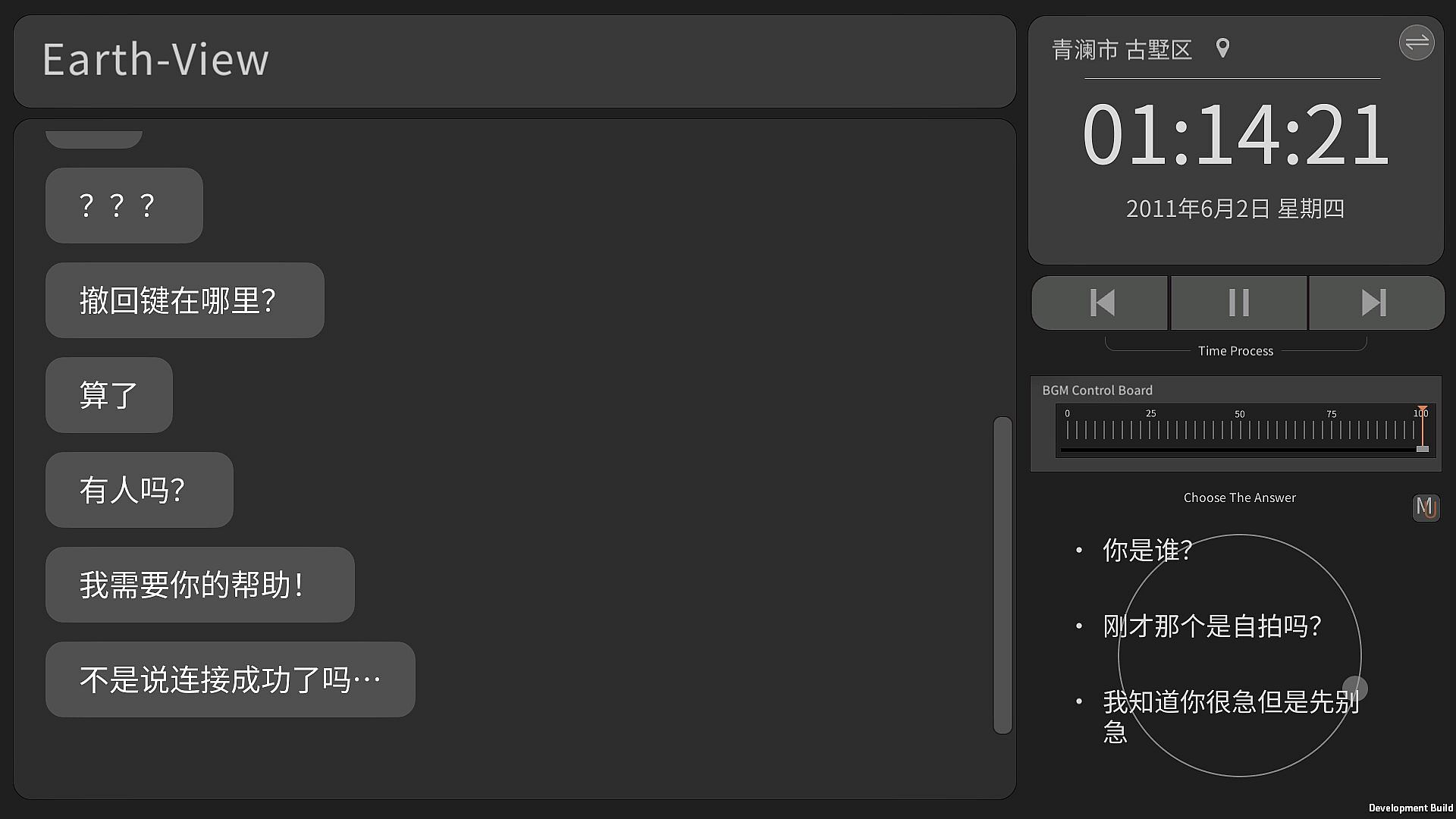






彗星通讯仪 is an indie title that blends RPG, simulation, and adventure elements into a single-player visual novel centered on text-based communication. Players connect with a character named Qingyu Gu through a mysterious device, guiding her through an unstable realm known as the Ruins while she searches for her missing twin sister.
Gameplay
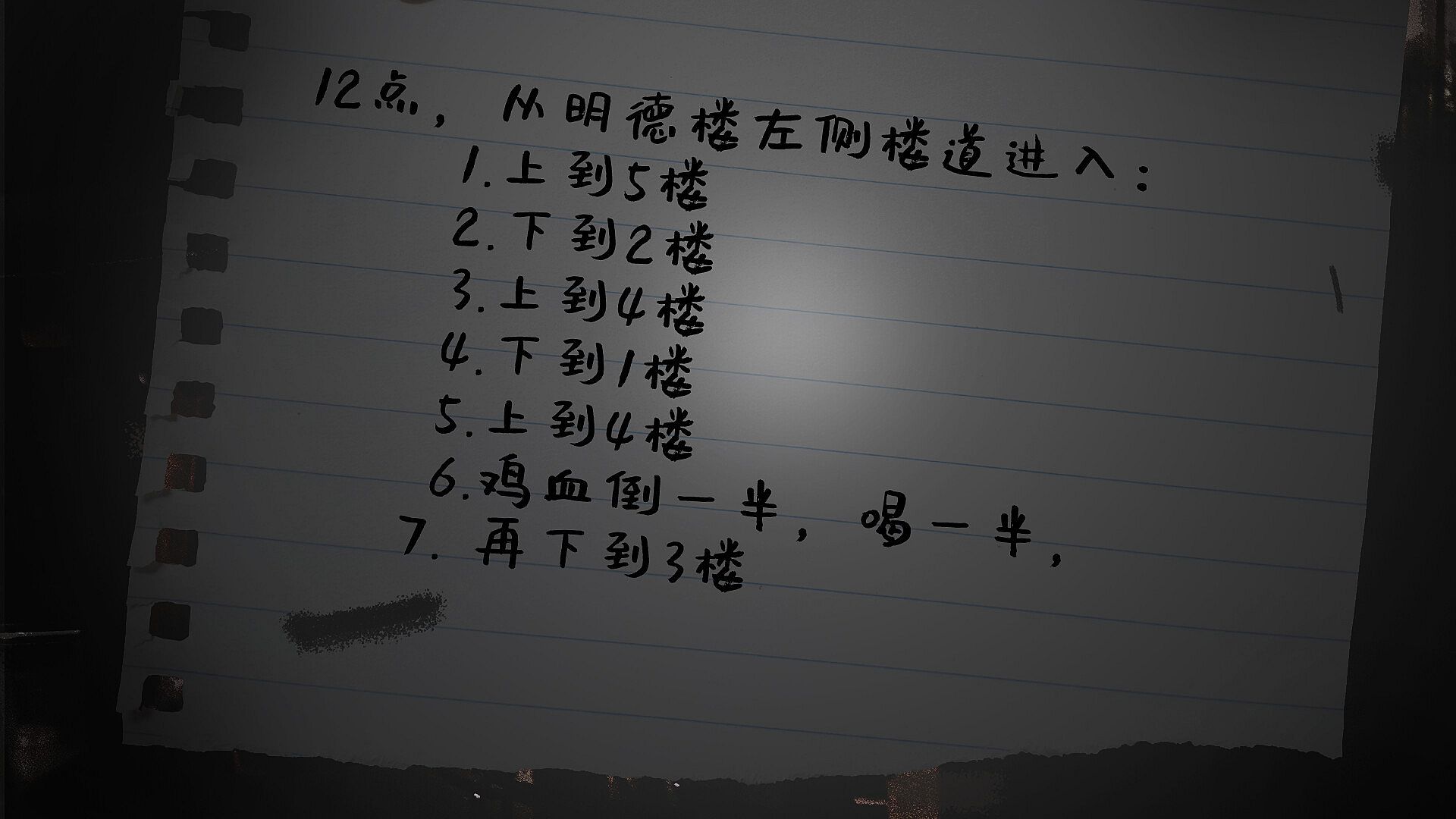
The core loop revolves around asynchronous exchanges. Messages arrive from Qingyu describing her surroundings in an abandoned school where time loops and memories repeat. Players review these texts, select responses from available options, and examine photographs she transmits. An interpretation tool highlights visual discrepancies in those images, such as altered colors or structural breaks, that Qingyu herself cannot perceive. These clues help identify hidden paths, functional objects, or mental states that serve as keys or doors within the environment.
Qingyu operates with independent judgment. She may challenge suggestions, withhold information, or pursue actions that diverge from player input. Prolonged exposure to the Ruins risks a process called Drift, where false memories overwrite her sense of self. Detecting these shifts requires close attention to inconsistencies in her messages, followed by targeted dialogue choices that trigger calibration sequences to restore her identity.
Progression ties directly to relationship building and deduction. Each exchange builds context that influences later events, while family secrets and recurring incidents like a teacher's repeated fall gradually surface. The system emphasizes incomplete information, forcing players to weigh advice carefully without full certainty about outcomes.
Game Modes
The experience operates as a continuous single-player narrative without separate competitive or cooperative modes. All activity unfolds through the communication interface, where dialogue branches, photo analysis, and calibration events form the primary structure. Story advancement occurs via sequential message threads that incorporate investigations and relationship decisions, leading toward multiple potential conclusions based on accumulated choices and trust levels.
No traditional multiplayer components exist. The design focuses entirely on the one-sided yet interactive connection between player and character, with the Ruins serving as the shared, evolving space explored through text and imagery rather than direct control.
Story and Setting
The narrative begins with a simple incoming message and expands into questions of identity, memory, and familial history. Qingyu's search for her sister intersects with anomalies in the Ruins, including reconstructed people and events that blur the line between reality and record. Themes of agency and truth emerge as players navigate ethical decisions about how much information to share or withhold during calibration moments.
The abandoned school functions as an entry point to larger mysteries involving a communication device that defies normal explanation. Players piece together fragments across conversations, gradually confronting deeper layers of the family's past and the nature of the realm itself.
Is It Worth Playing?
Those drawn to narrative-driven visual novels that emphasize dialogue, deduction, and character agency will find the described systems align closely with that preference. The absence of direct character control and the reliance on interpretation and trust mechanics distinguish it from more conventional point-and-click adventures. Because the game remains unreleased with no player reviews available, any final assessment depends on how the full implementation delivers on the outlined communication and calibration features once it launches. Fans of mystery stories involving memory and relationships may appreciate the focused, text-heavy approach when it becomes available.











