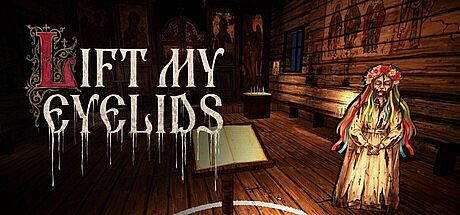



Read over the dead girl for three nights.
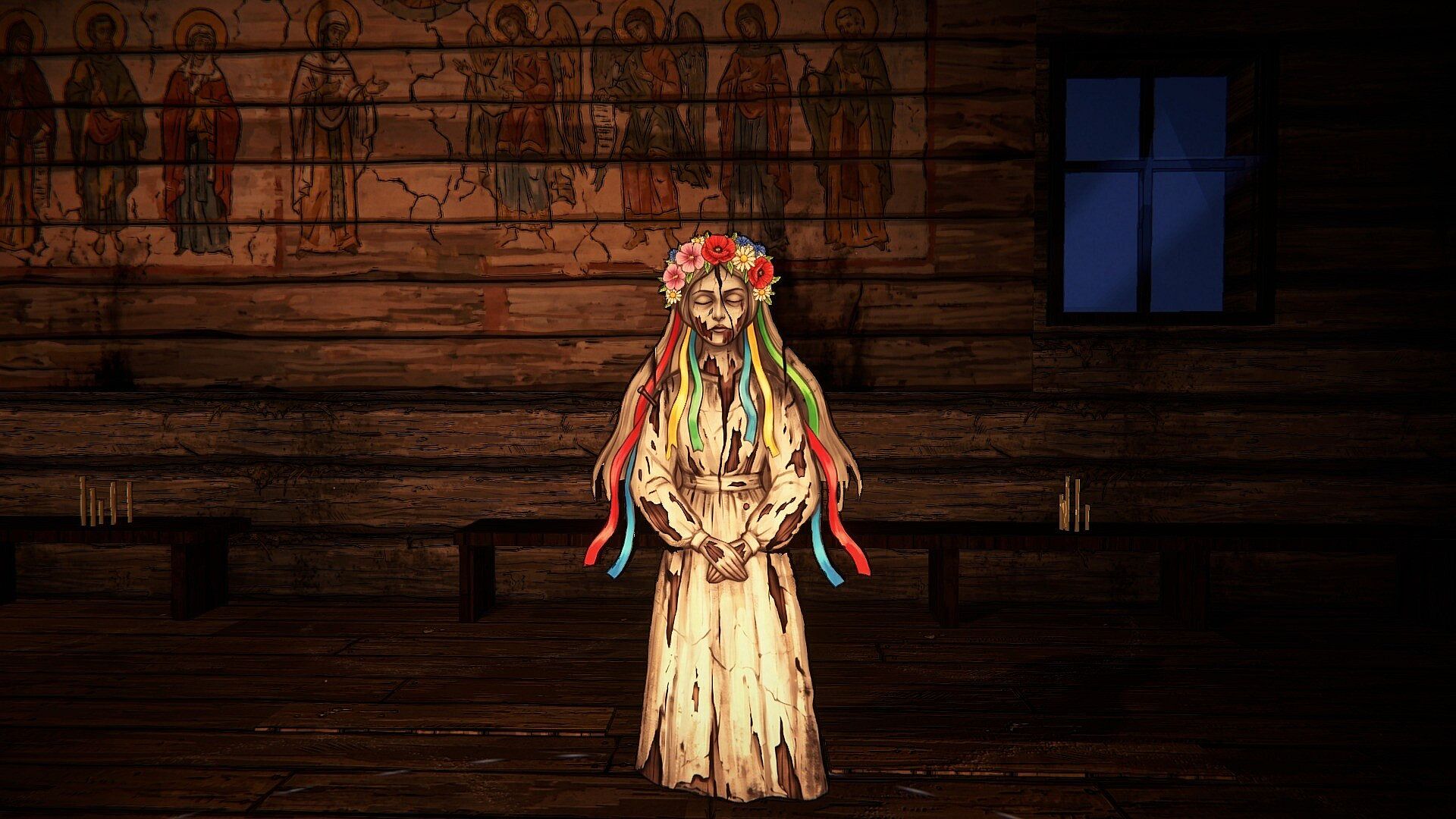
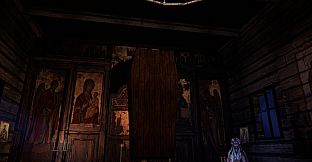
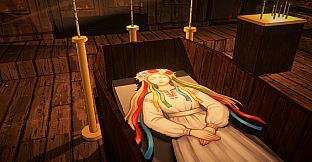
Kyiv, 1835. The philosopher Khoma Brut is sent for by a rich Cossack sotnik. His daughter came home beaten and died asking for Khoma by name. For three nights he must read the psalter over her, alone, in the wooden church on the hill.Each evening the Cossacks bring you in while the sun is still up. Gold through the windows, dust in the light, every candle lit. She lies in the coffin as they buried her: beautiful, in a clean embroidered shirt, as if asleep. Then the sun goes, the door is slammed and barred from outside, and the night begins.
She is blind. She hears.
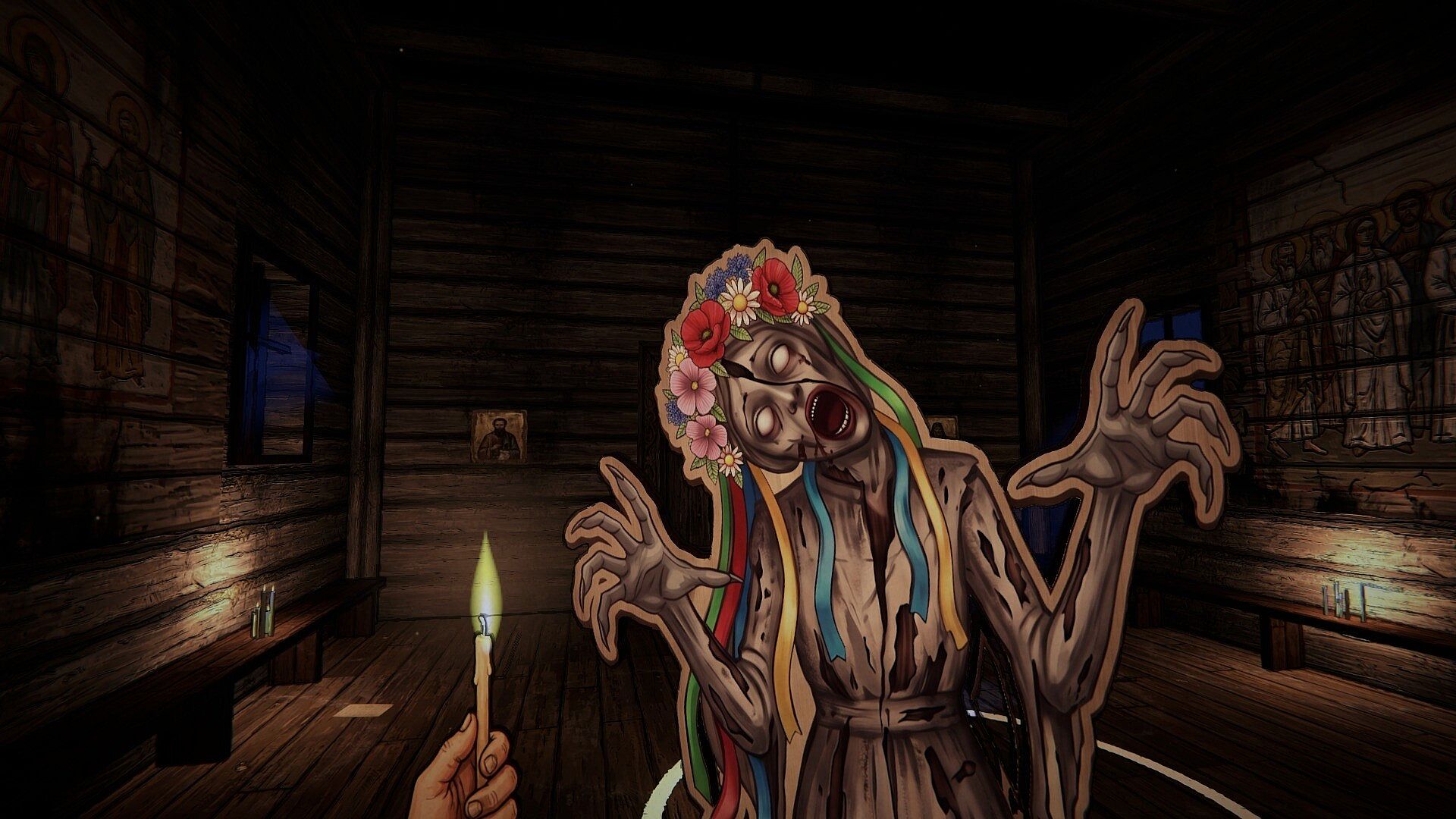
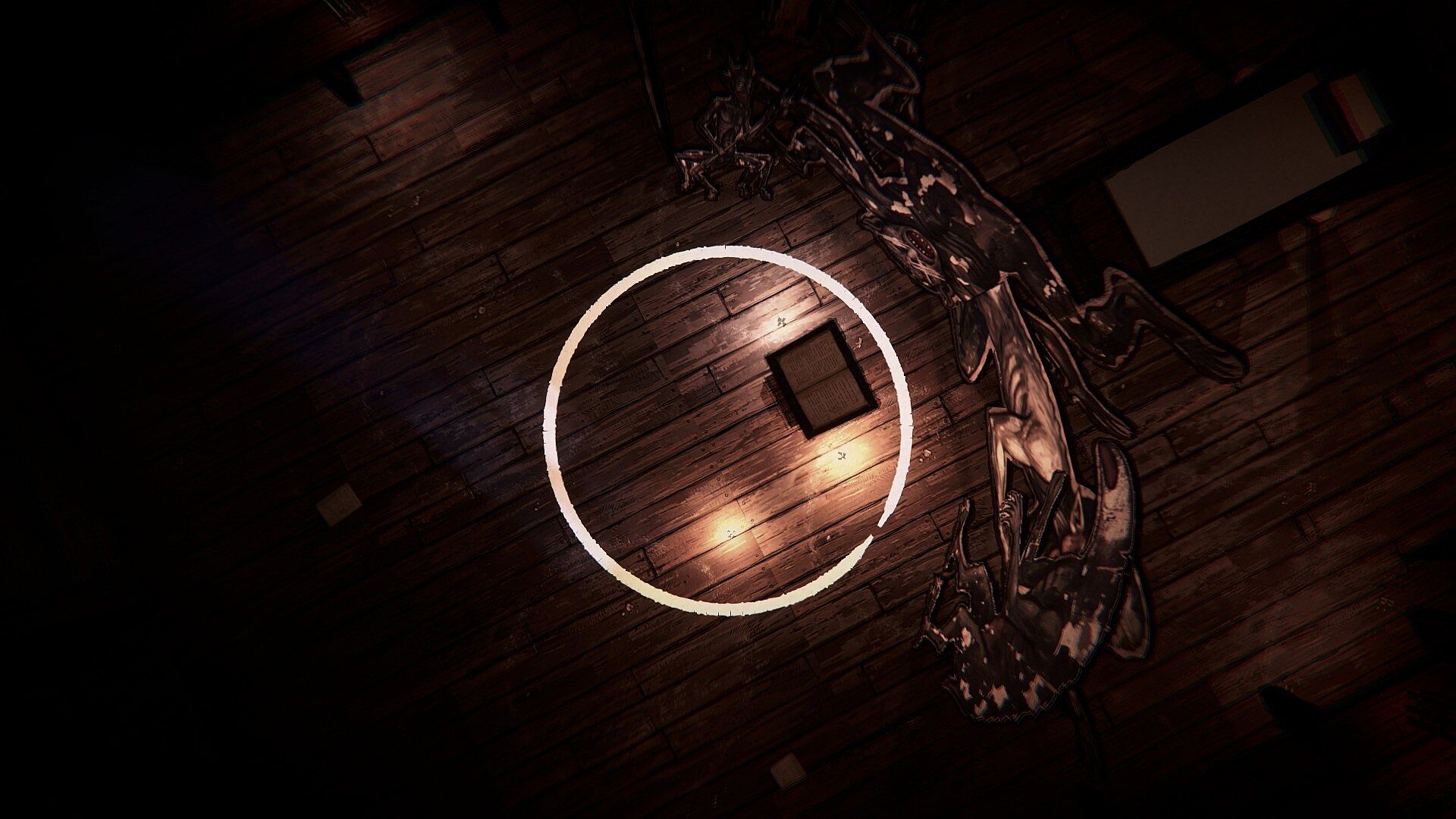
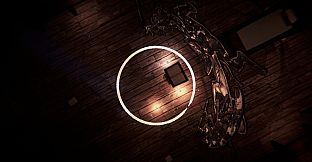
Inside the chalk circle you draw with your own hand she can't see you, and can't cross it. But she hears your steps on the loose boards, your breath, the psalm itself. Read, and the psalm drives her back, hissing. Fall silent and she comes to the line and scratches at it. When her eyes open, look at the floor. When she asks into the dark, never answer.The days between the nights are spent on the sunlit khutor. The villagers know the old rules, gifts help, and the psalter on the table can be learned by heart for the third night. That is the night they bring him.
Features
- Rules you can feel. A chalk circle drawn by hand, candles that burn down, a blind dead girl who hunts by sound. Every death has a reason, and every rule is Gogol's.
- Read aloud, for real (optional). Turn on the microphone and read the psalm with your own voice. She hears what you say: say her red word, or answer her, and she is invited in.
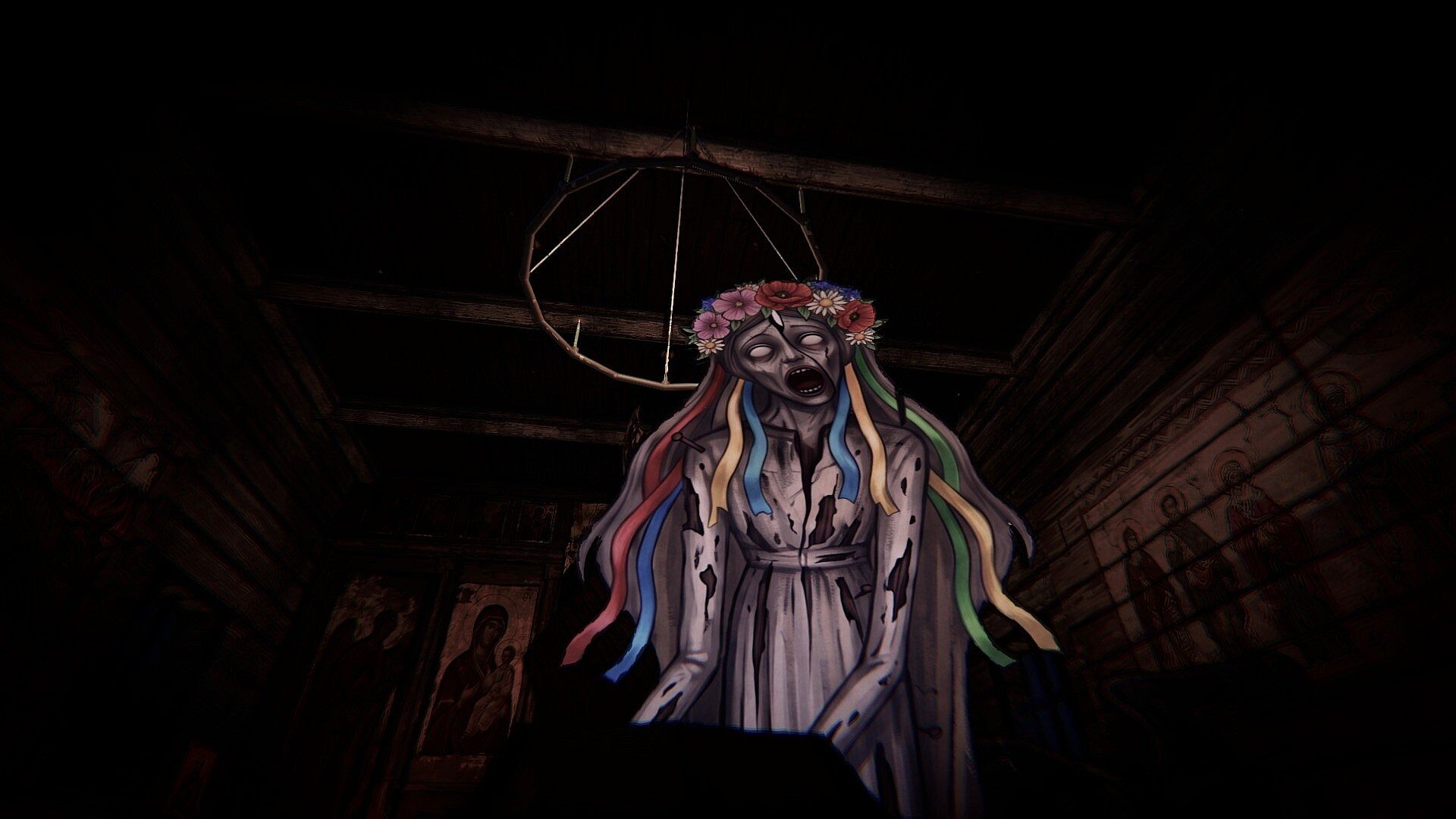
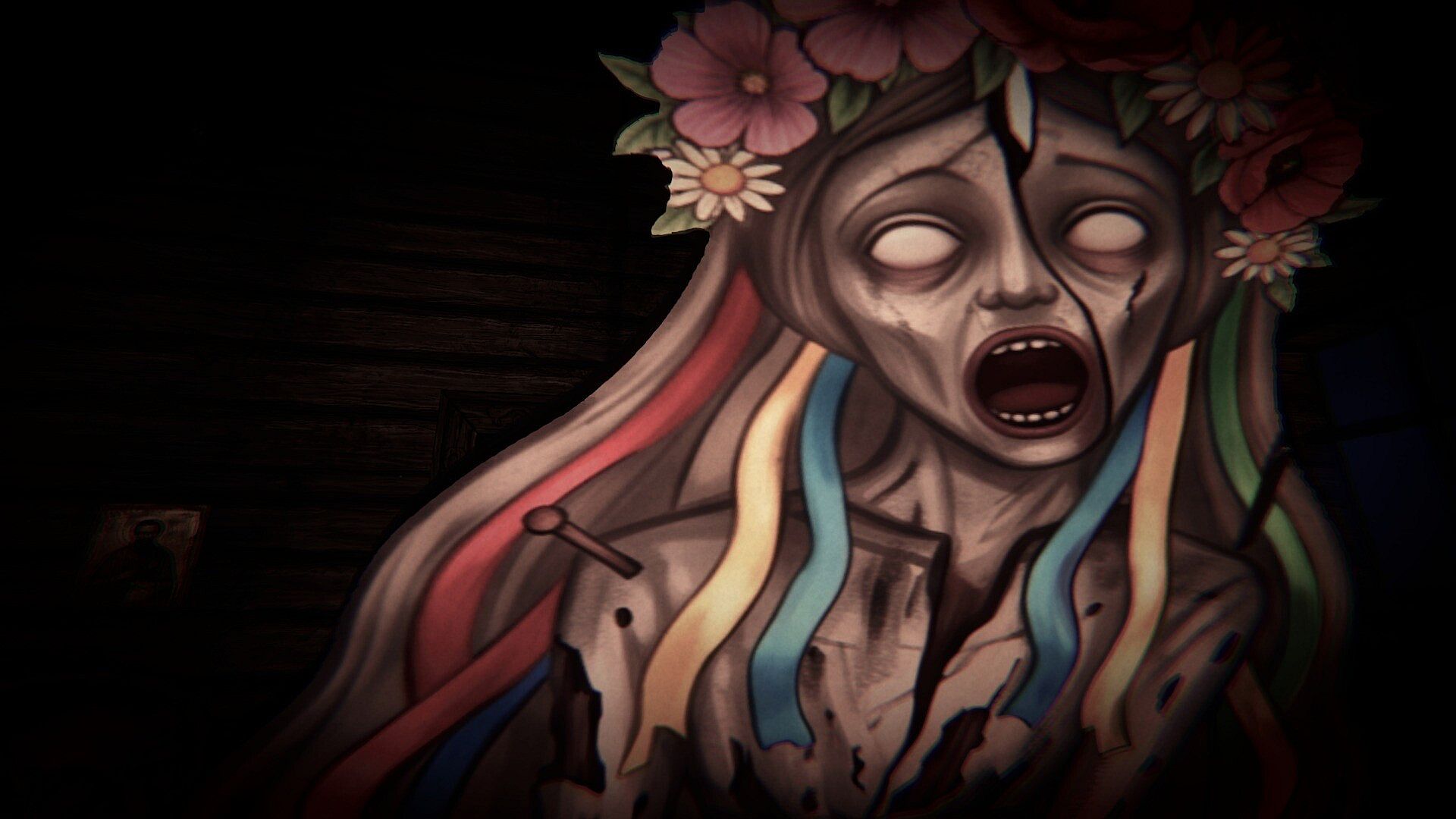
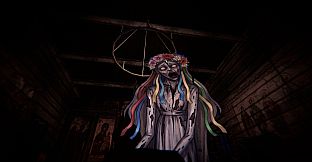
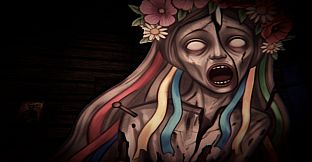
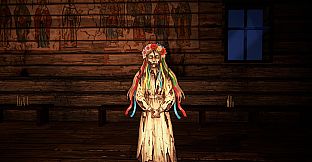
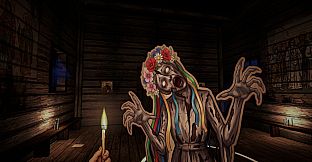
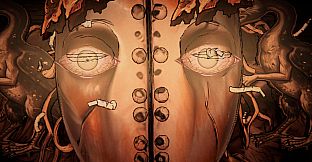
- A face you won't forget. The dead girl is a painted board that moves like a puppet on a rod, and grows taller only when no one is looking.
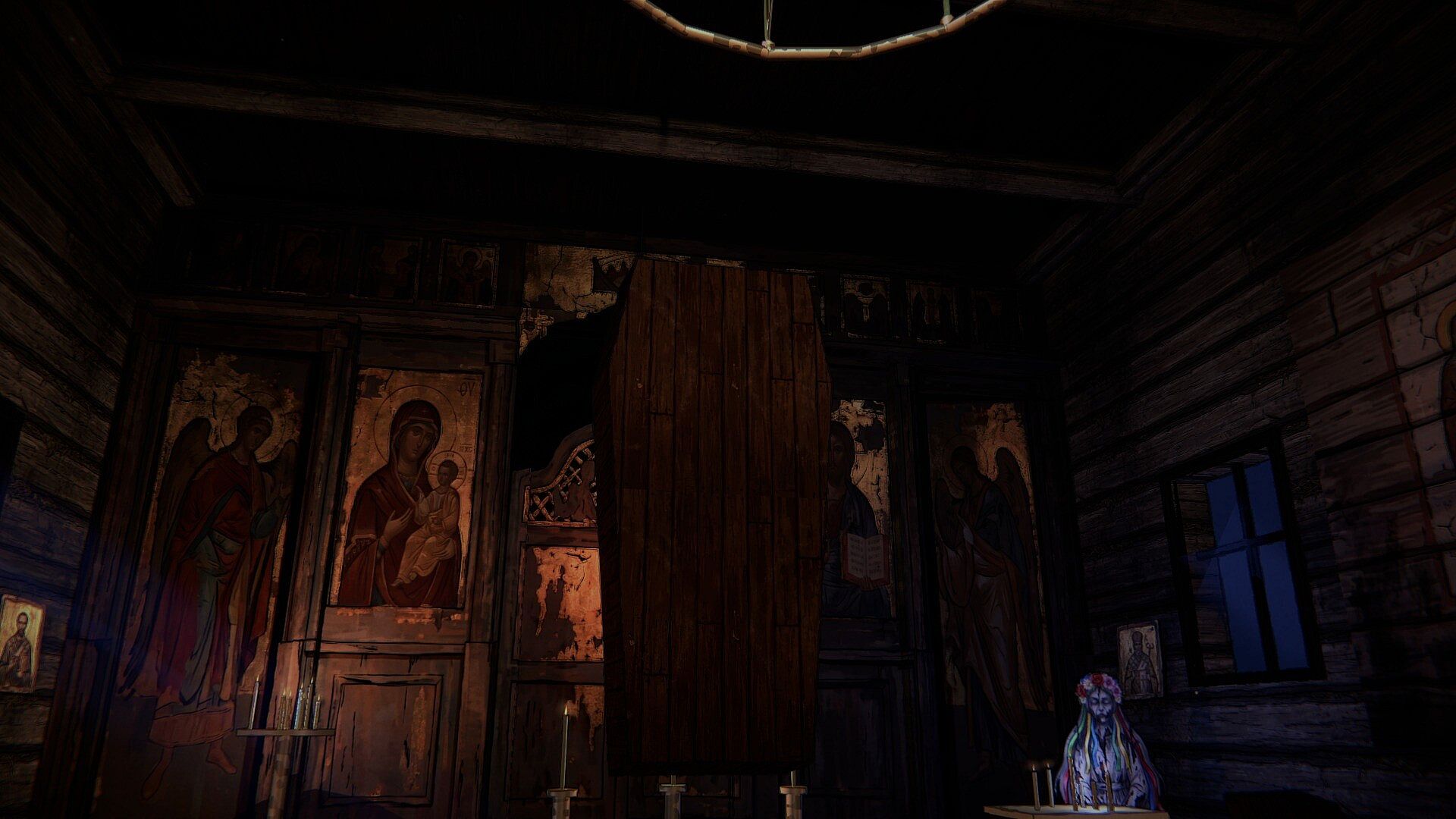
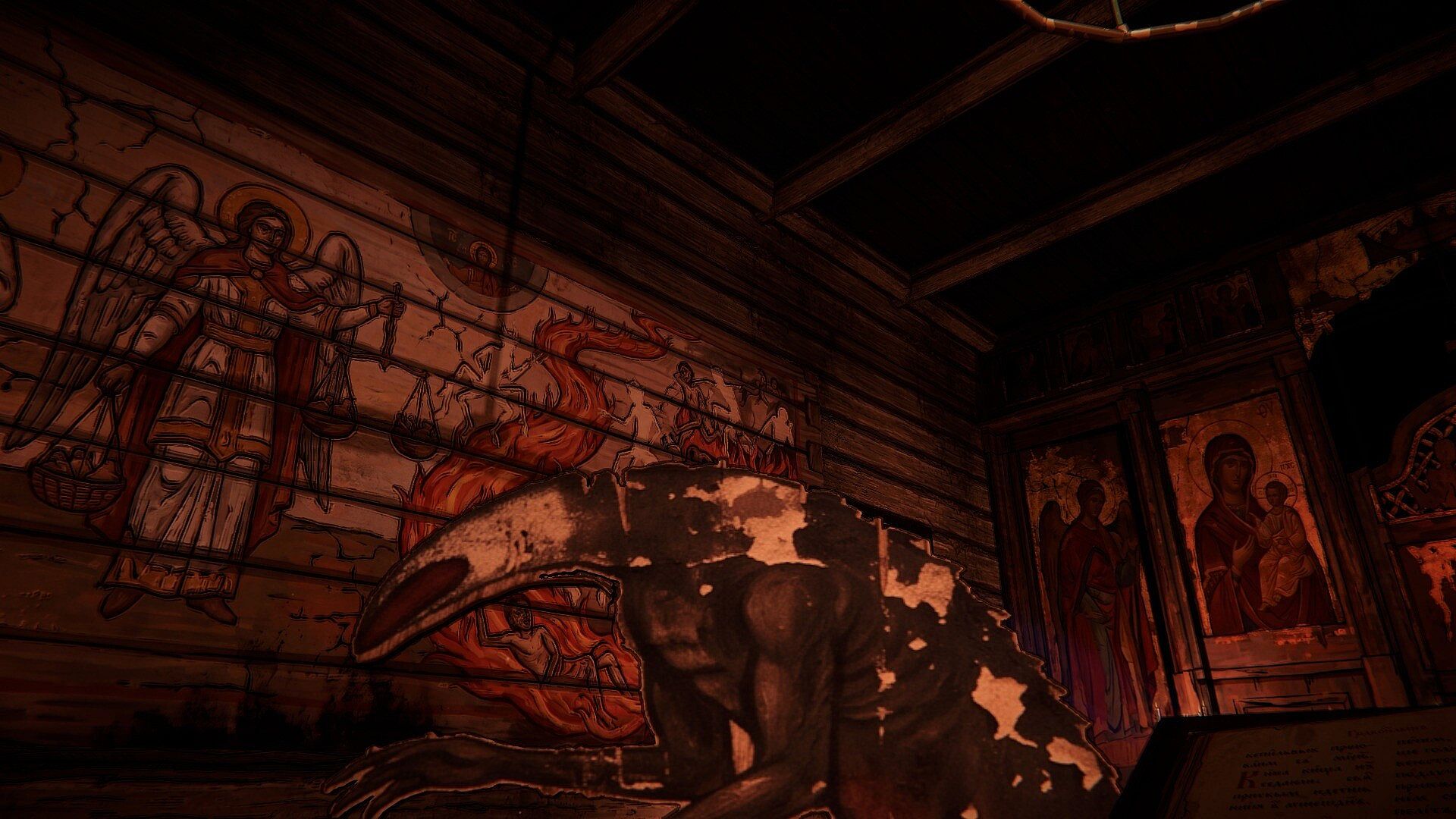
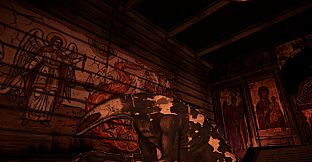
- Painted, not modelled. Hand-painted cut-out figures in a candle-lit wooden church. The devils tear themselves out of the Last Judgment fresco, drop from the ceiling, climb in at the windows.
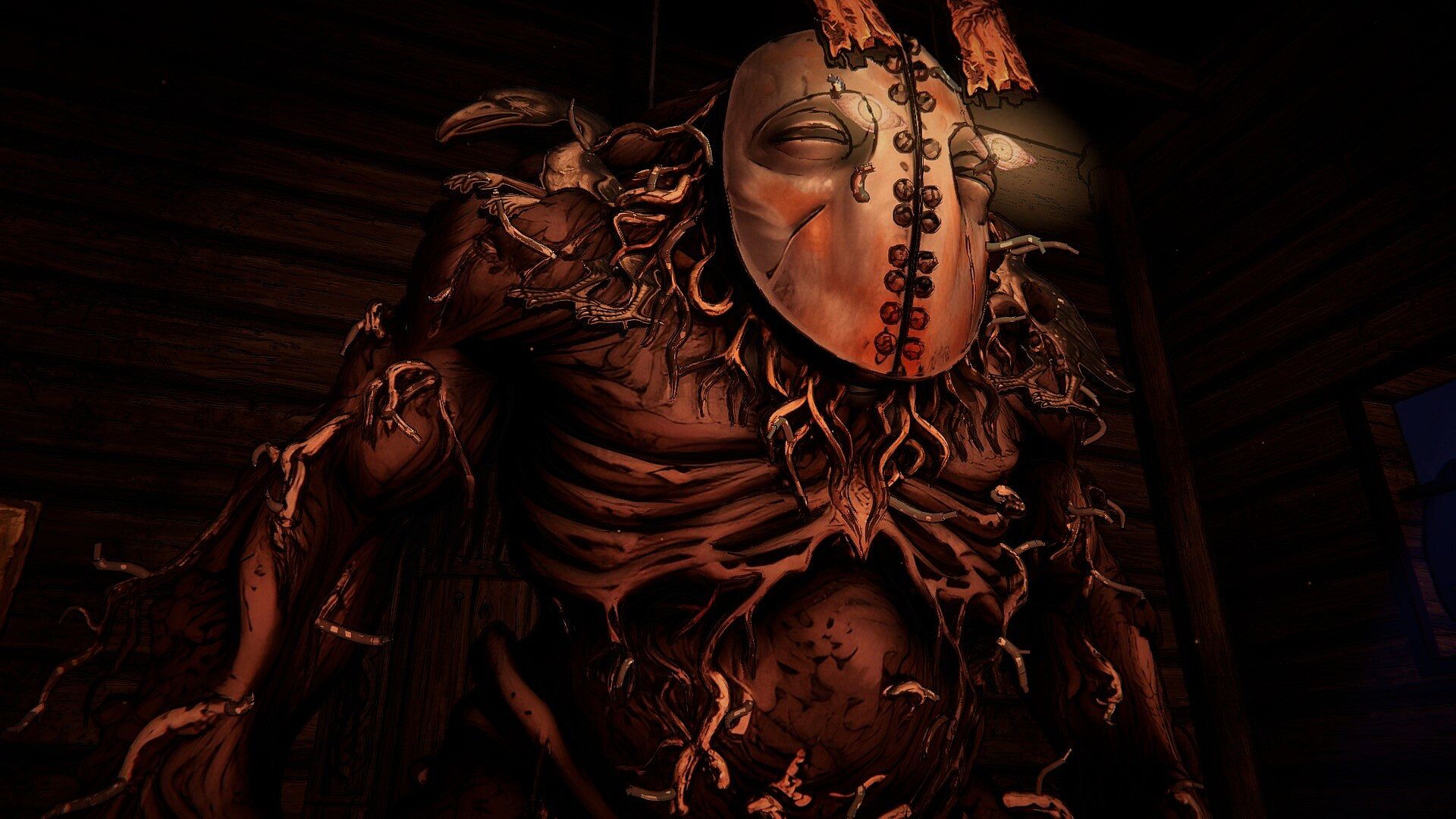
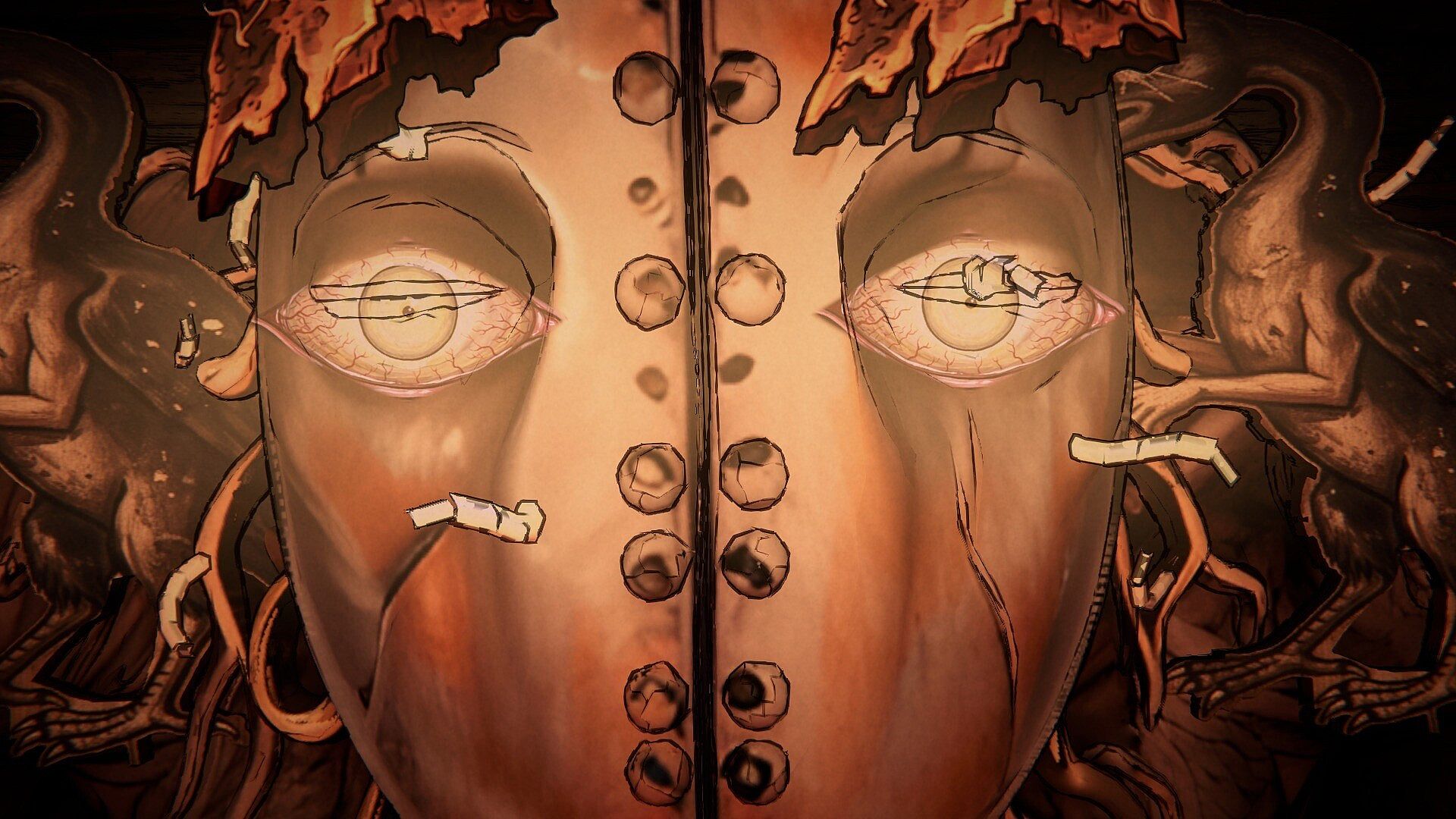
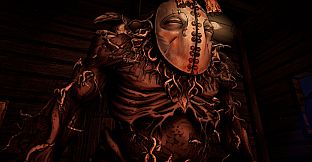
- Three nights, each worse. A flying coffin. Devils. And Viy, whose eyelids reach the ground.
- Gogol's ending, or yours. Live to the cock-crow, run from the khutor, or look.