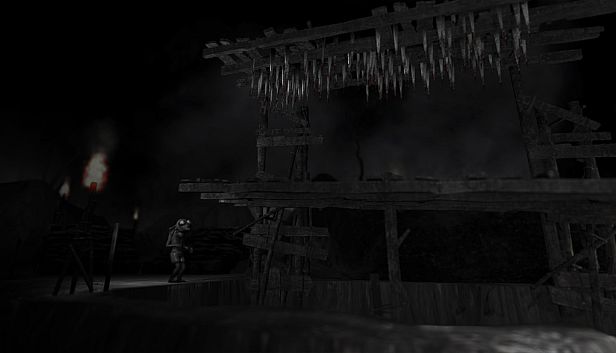


Lithium: Inmate 39 is a horror puzzle platformer developed for PlayStation consoles that places players in control of a small humanoid lemur character representing a psychiatric patient's self-perception. The experience centers on navigating a distorted mental landscape across seven chapters, where the protagonist seeks to uncover his origins and resolve the confusion within his mind.
Gameplay
The core loop combines platforming sequences with three-dimensional puzzle solving and trap avoidance in an unsettling environment rendered primarily in grayscale tones. Vivid blood red accents appear during moments of extreme danger to heighten tension. Players guide the diminutive main character through hazardous paths filled with environmental threats such as spike pits, electrified surfaces, and sudden hazards that demand precise timing and observation.
A key mechanic involves switching between the vulnerable small form and a powerful alter ego ally that emerges in dire situations. This larger entity allows for direct confrontation with enemies and obstacles through physical force or available weapons, creating distinct play styles within the same levels. Fixed camera angles, reminiscent of classic survival horror titles, dictate the perspective and can shift abruptly, requiring players to adapt movement and positioning quickly.
Enemies draw inspiration from drawings created by real psychiatric patients, manifesting as manifestations of traumatic memories that block progress. More than two hundred traps and puzzles populate the chapters, many relying on trial and error combined with environmental interaction rather than combat alone. Lantern management adds another layer, as limited light sources must be replenished from floating containers scattered throughout the areas.
Game Modes
The game operates exclusively as a single-player experience structured around a linear story campaign divided into seven chapters. Each chapter unfolds within a unique vision of the protagonist's inner world, advancing the narrative through exploration, puzzle resolution, and occasional encounters with the alter ego form. No separate multiplayer options, competitive modes, or additional gameplay variants exist beyond this focused campaign structure.
Story and Atmosphere
The narrative unfolds through the patient's internal monologue and cutscenes that encourage personal interpretation of events. Chapters reflect fragmented perceptions of reality, with environments and creatures tied directly to the character's mental state. The overall presentation emphasizes psychological unease over graphic violence, using the limited color palette and creature designs to evoke discomfort without relying on excessive gore.
Progression reveals clues about the patient's past while confronting the horrors that inhabit his mind. The dual-character system integrates into the story, as the alter ego serves both as a tool for survival and a representation of internal conflict.
Is It Worth Playing?
Reception for Lithium: Inmate 39 remains mixed, with user reviews on its original platform showing around 65 percent positive from a modest sample. Critics noted strengths in its distinctive atmosphere and creative premise but frequently highlighted frustrations with camera controls and occasional technical issues that demand patience during platforming and puzzle sections.
The game suits players who appreciate deliberate puzzle-platformers with horror elements and are willing to navigate fixed-camera challenges similar to older titles in the genre. Its short length, estimated around three to four hours for a focused playthrough, makes it accessible for those seeking a compact, thought-provoking experience rather than extended sessions or replayability features. Those drawn to indie horror with psychological themes and unique character mechanics may find value, while others sensitive to control quirks or seeking polished modern gameplay might look elsewhere.