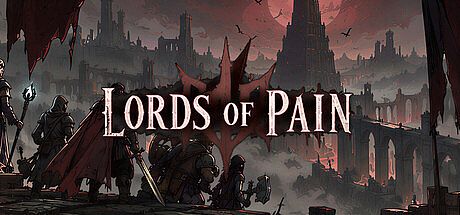


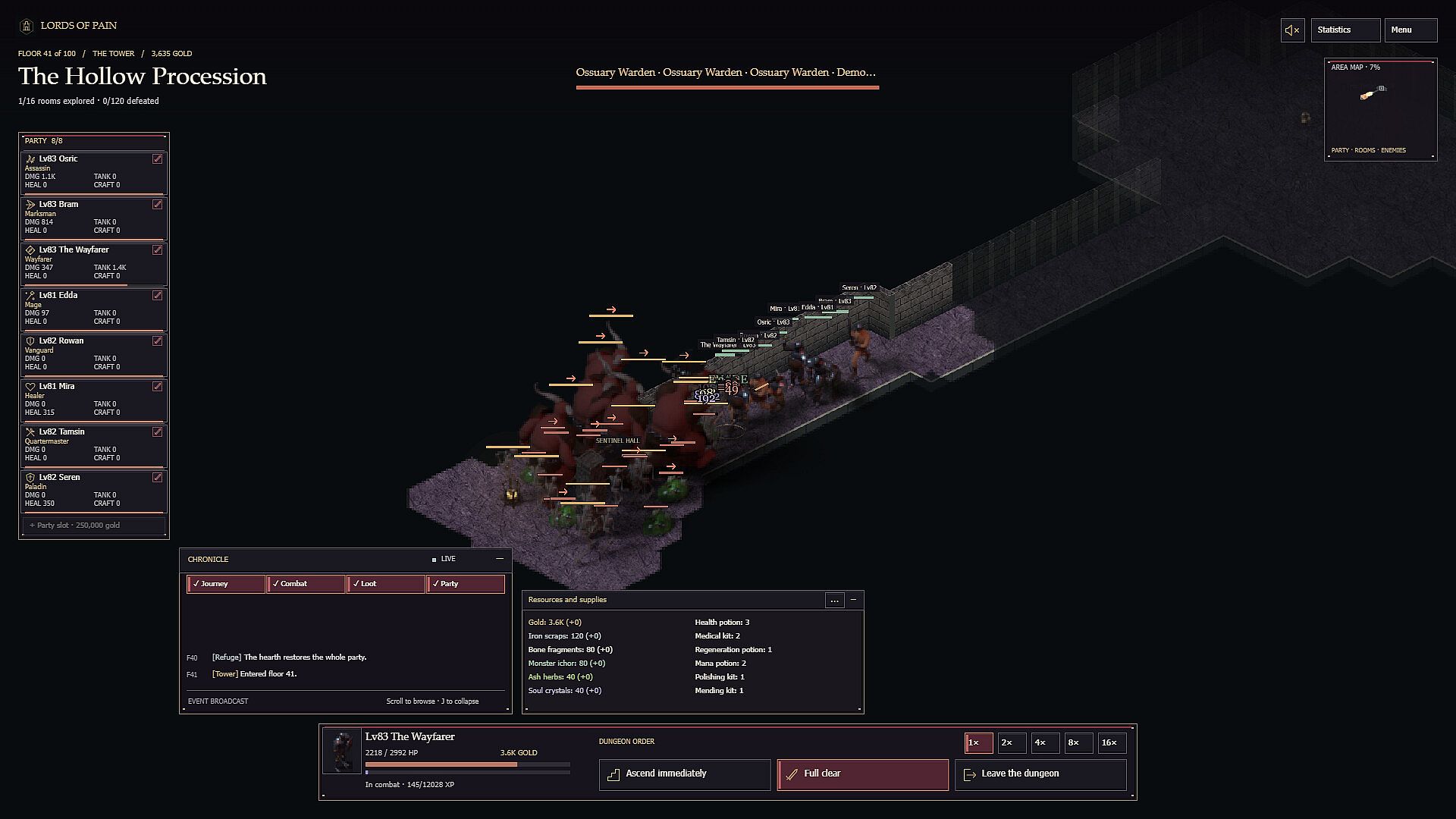
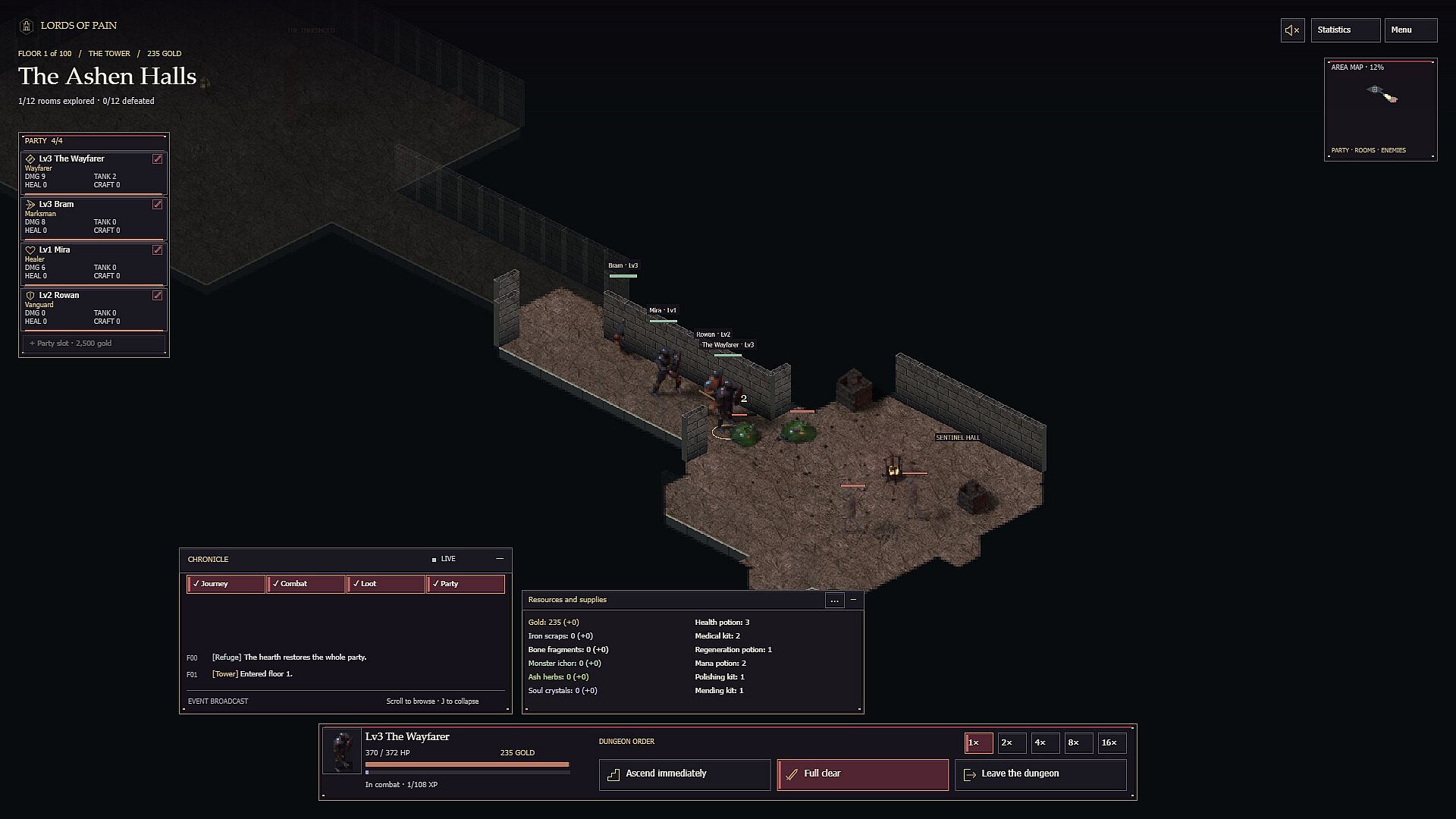
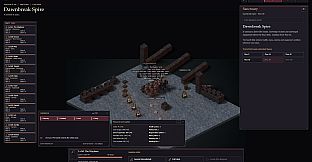
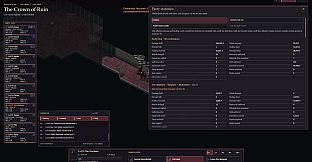
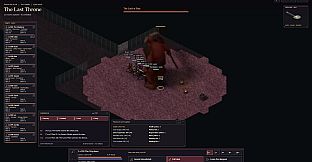
Lords of Pain is a single-player strategy RPG that combines party management with autonomous dungeon exploration on PC. Players recruit and prepare teams of adventurers before sending them into a multi-floor tower filled with monsters, resources, and guardians. The core loop centers on outfitting the group, planning their route, and monitoring their progress without direct control over individual fights.
Gameplay
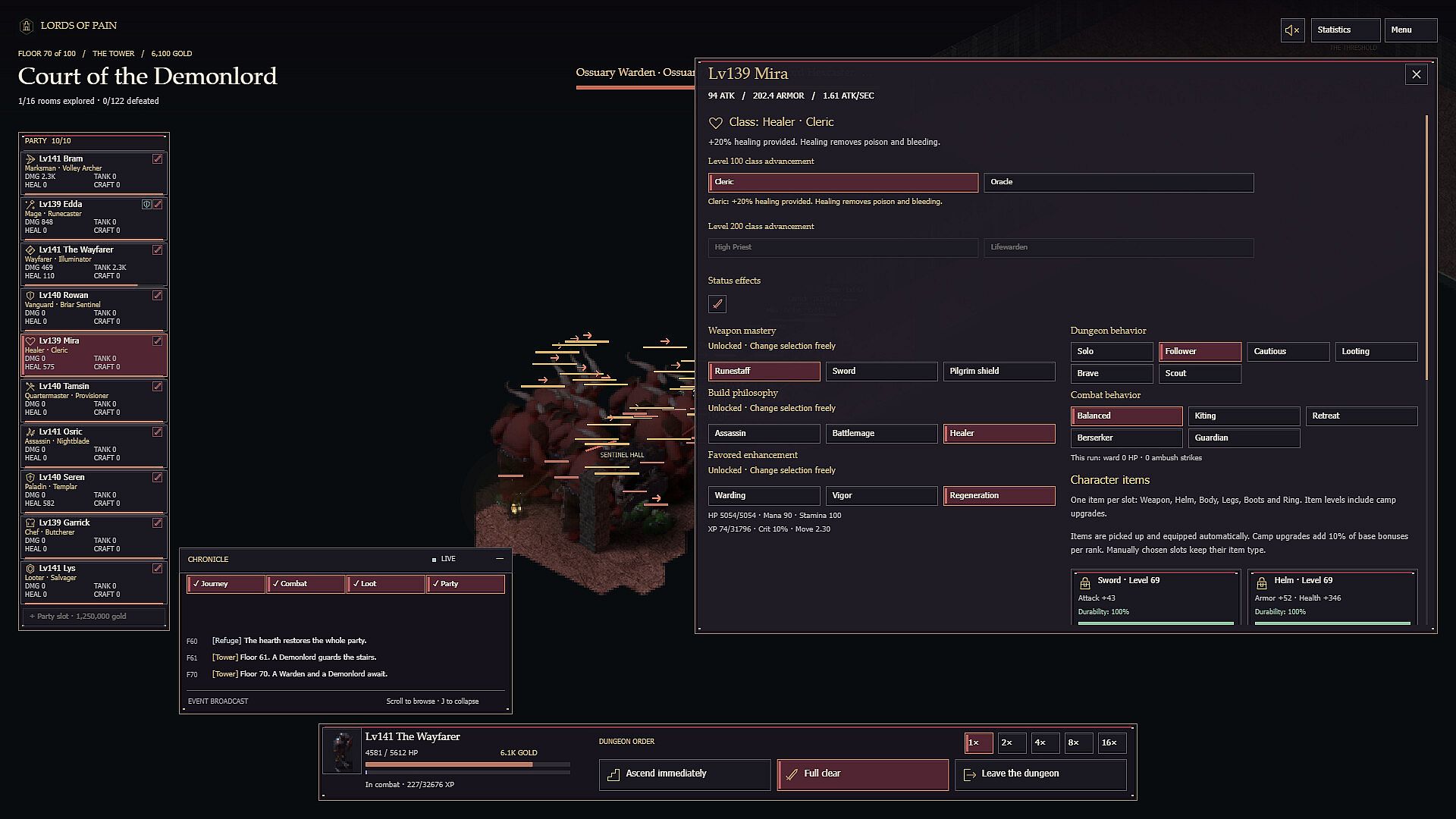
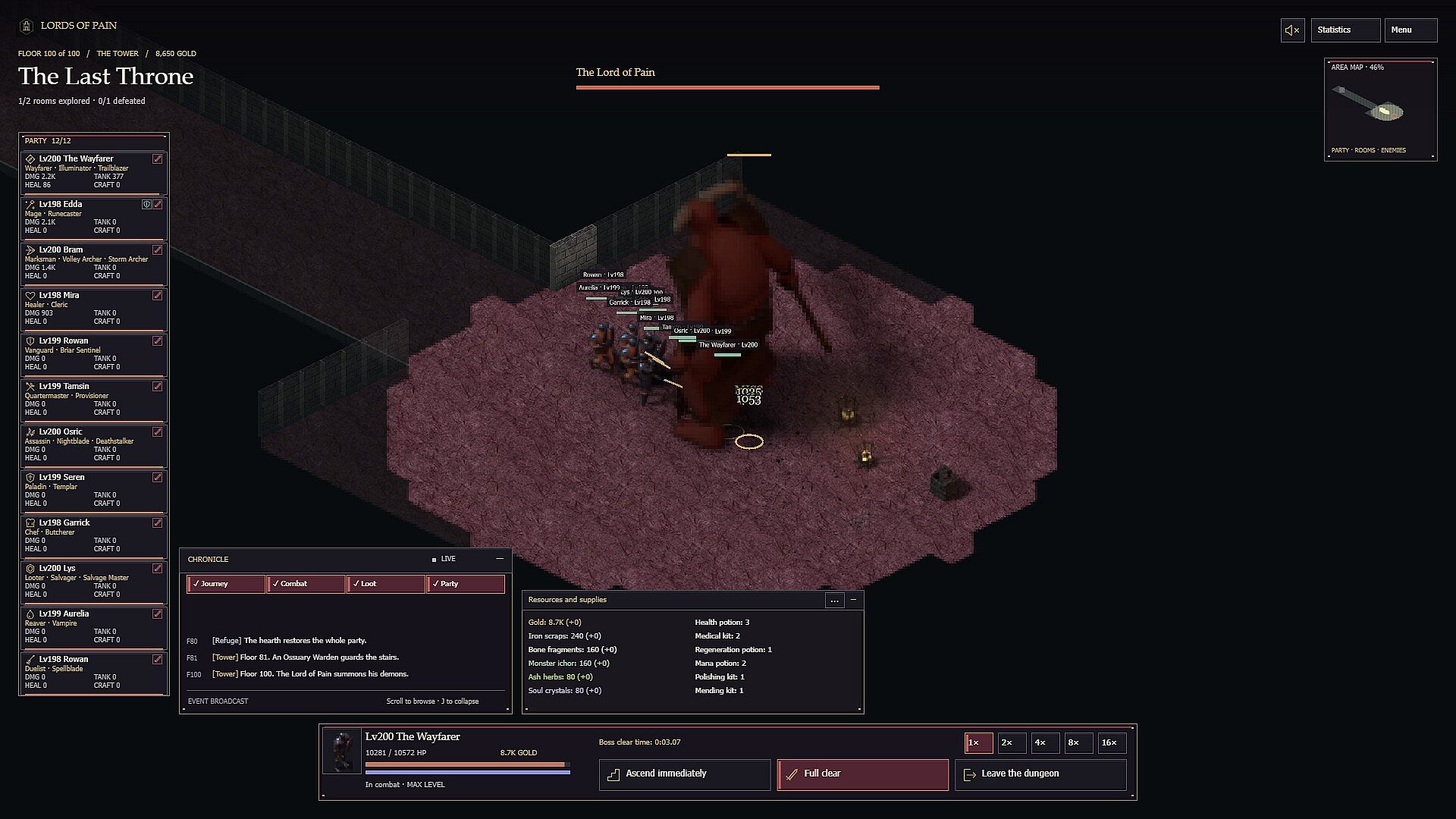
The experience revolves around building and sustaining a cohesive party of up to twelve members drawn from roles such as warriors, healers, mages, assassins, and specialists. Each adventurer carries distinct traits that influence combat effectiveness and survival chances. Equipment selection, supply allocation, and marching order determine how the group performs during expeditions. Fatigue, hunger, thirst, and gear condition require ongoing attention, with camps providing opportunities for recovery through foraging, cooking, crafting, and repairs.
Progression happens through repeated runs that yield gold and materials for upgrades, enchantments, and temple blessings. Characters advance via levels and class choices that allow specialization, such as evolving a basic warrior into a Sword Saint or a standard healer into a High Priest. Supporters contribute outside of direct combat by handling logistics that keep the main fighters operational. The system rewards experimentation with combinations that balance frontline power, ranged output, healing, and utility.
Game Modes
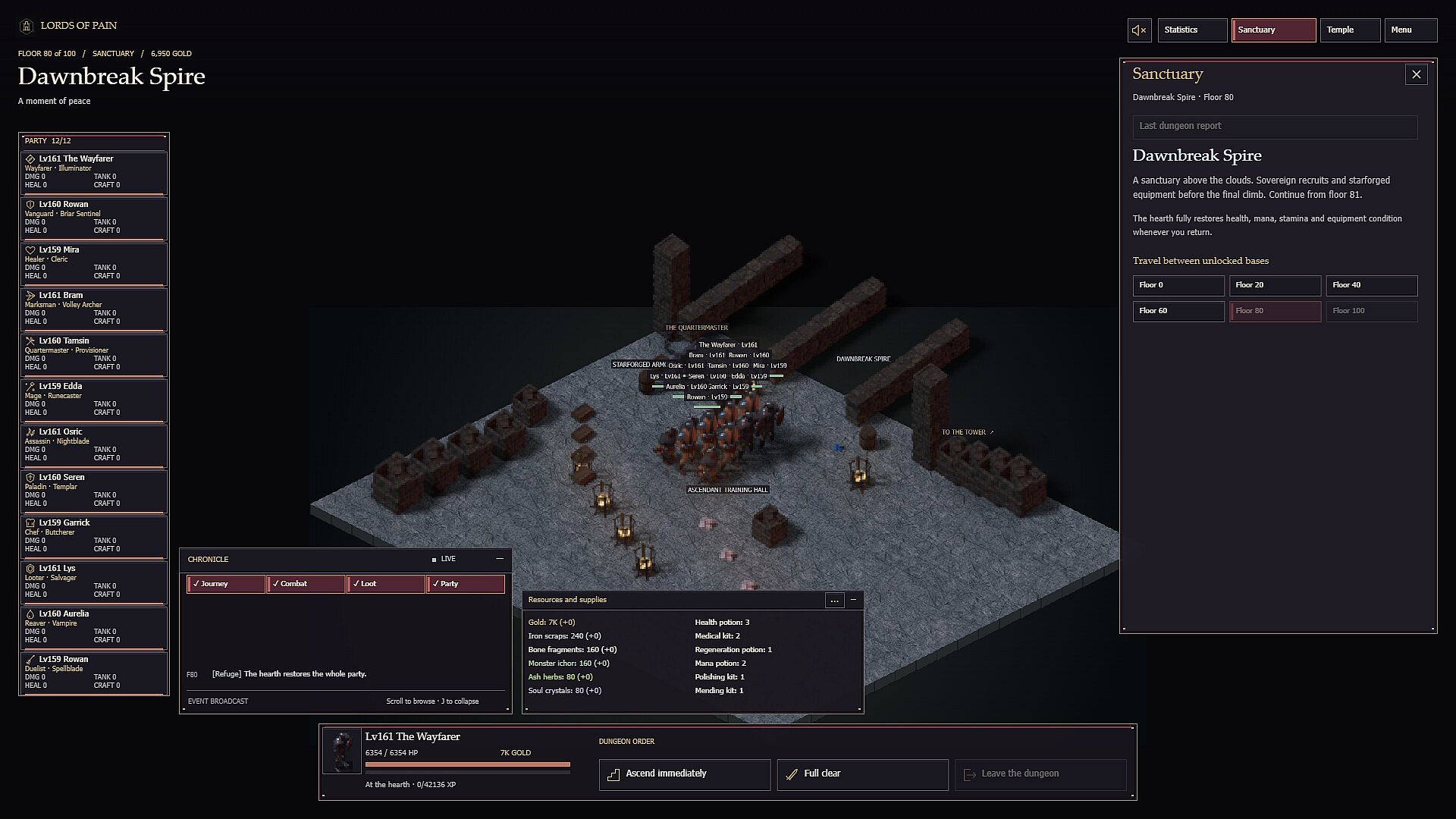
Lords of Pain operates entirely in single-player format with no multiplayer components. Expeditions form the primary activity, where players decide between a direct push toward higher floors or thorough exploration of side chambers for extra resources. Parties can withdraw to sanctuary at any point to restock and reorganize before attempting another run. A leaderboard tracks completion times for those who reach the top floor and defeat the final guardian, encouraging repeated attempts to refine strategies and improve results.
Return trips to unlocked sanctuaries allow recruitment of new members and preparation for subsequent challenges. The structure supports both focused climbs and resource-gathering loops without altering the underlying single-player ruleset.
Party Building and Development
Recruitment draws from a pool of adventurers with unique roles and starting traits. Growth occurs through combat experience, proficiency gains, and deliberate build decisions that unlock advanced classes. Combining different archetypes creates synergies that help the group handle varied threats across the tower's branching paths and hidden rooms. Management extends beyond combat statistics to include food, water, and equipment maintenance, which directly affect performance during longer expeditions.
Supporters play a supporting role by gathering materials and performing maintenance tasks at camp. This division of labor lets the main party focus on clearing rooms while the overall expedition stays viable. Enchantments and blessings provide additional layers of customization that players apply between runs.
The Tower and Final Challenge
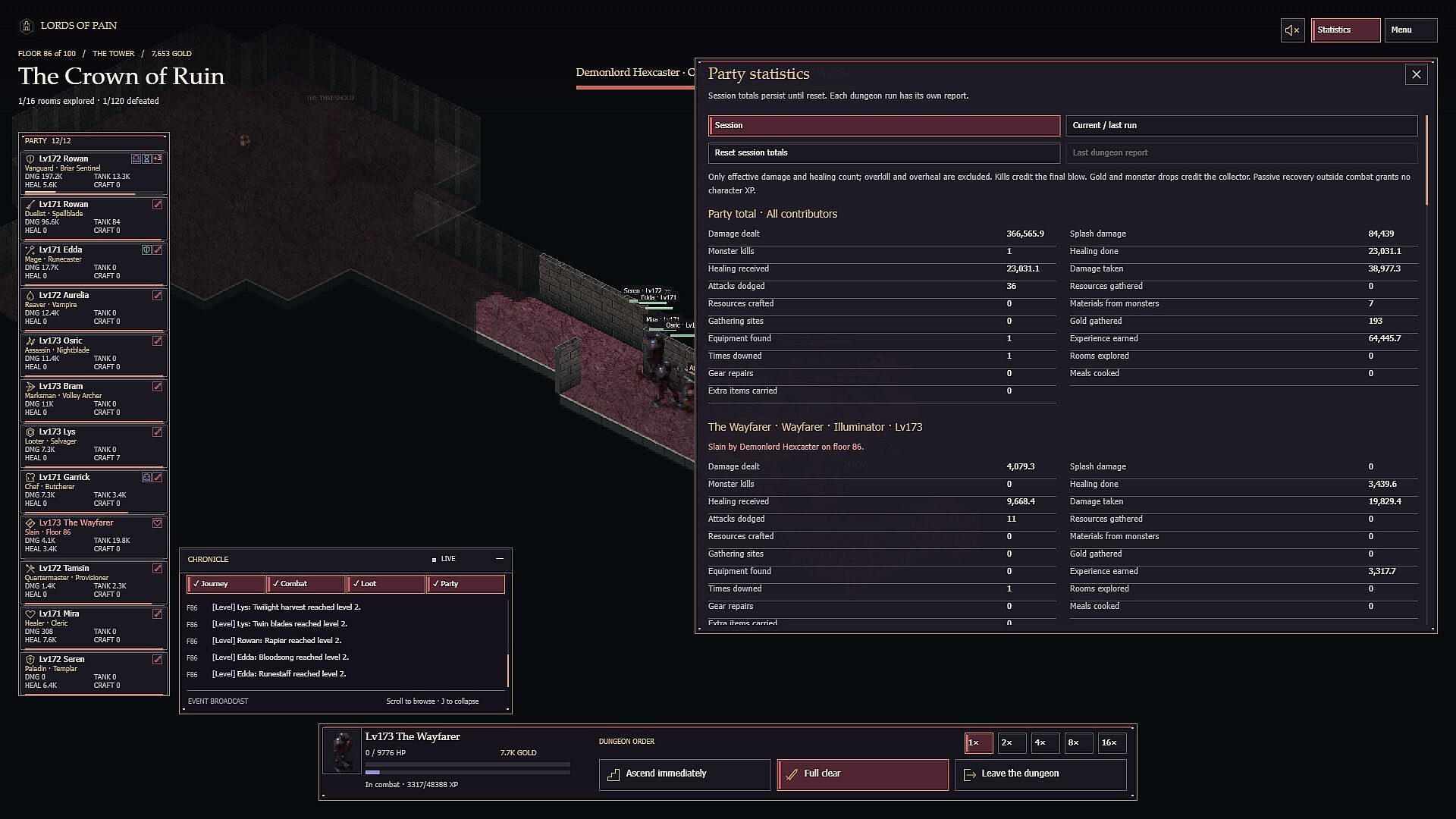
The central dungeon features multiple floors with winding corridors, fog of war, and chambers that hold monsters, treasure, and powerful guardians known as Wardens and Demonlords. Players navigate these spaces by choosing routes and deciding how much time to spend searching versus advancing. The climb culminates on floor 100 against the Lord of Pain. Victory opens the option to restart the ascent with improved preparation and compete on time-based leaderboards.
Is It Worth Playing?
Lords of Pain suits players who enjoy methodical party management and resource planning within a roguelike structure. The autonomous combat shifts focus to preparation and decision-making rather than moment-to-moment control, which appeals to those who prefer strategy and simulation elements over direct action. Repeated expeditions build familiarity with character synergies and supply needs, while the leaderboard adds a competitive edge for optimization. Availability on PC makes it accessible for those interested in indie strategy RPGs that emphasize long-term party development over fast-paced combat. The single-player design delivers a self-contained experience centered on incremental progress through the tower.