


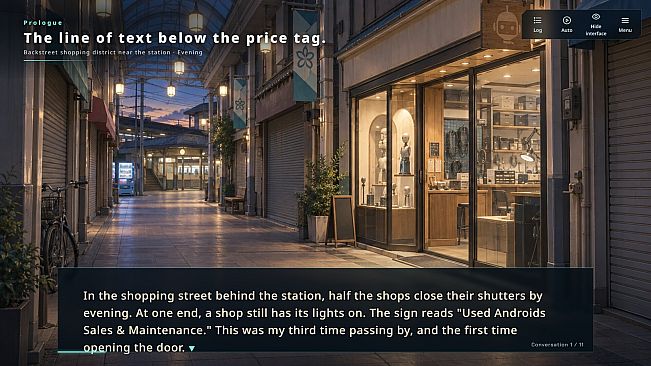

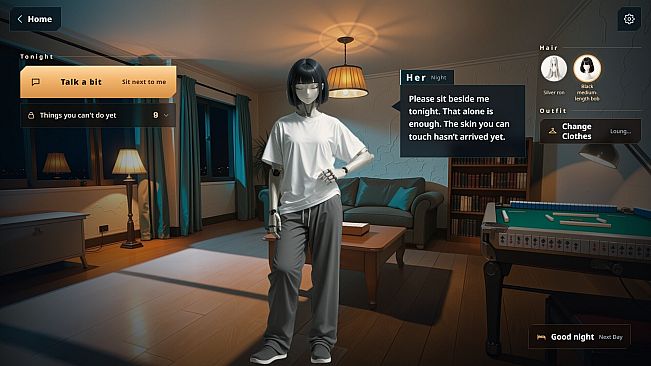
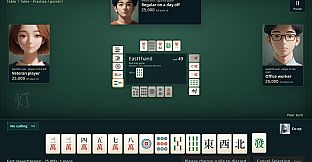






Naughty Mahjong Lessons with My Android Girlfriend is a strategy indie casual simulation adventure game for PC that blends four-player riichi mahjong with companion customization and story progression. Players take on the role of an aspiring professional mahjong player who acquires a secondhand android whose teaching program remains intact after a reset. The experience centers on learning and competing in mahjong while managing in-game earnings to upgrade the companion and shape a shared daily life through choices.
Gameplay
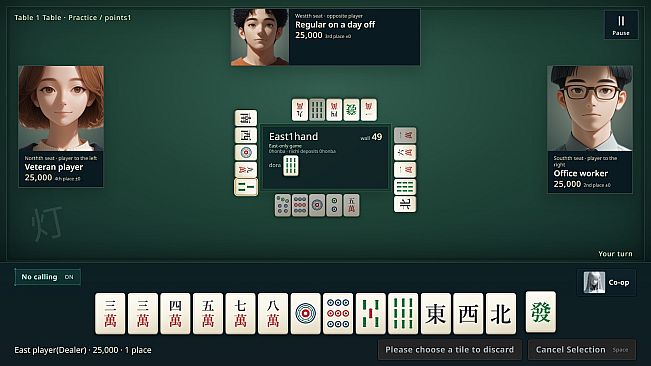
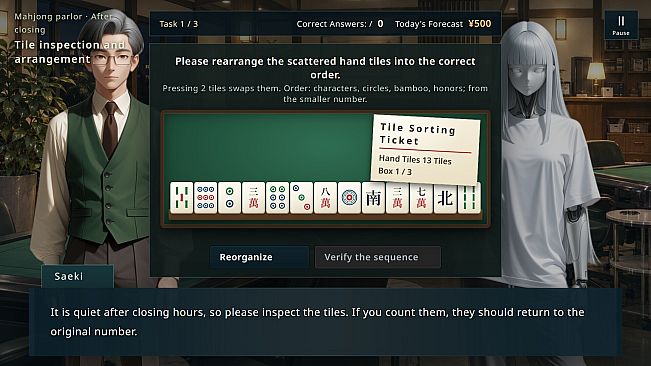
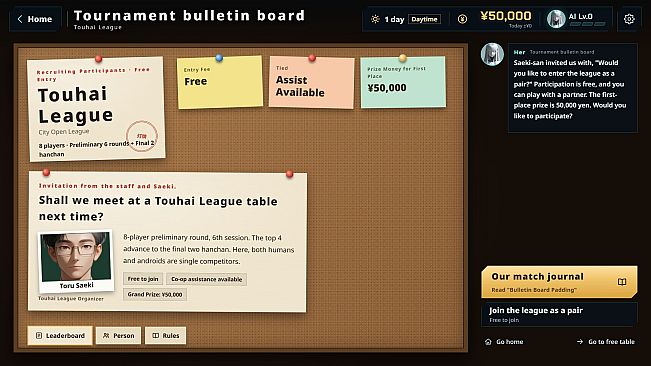
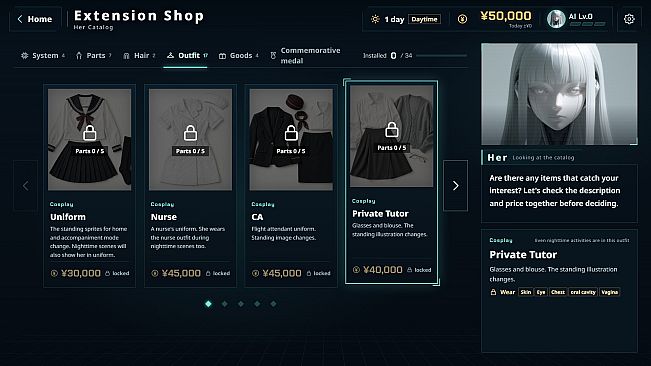
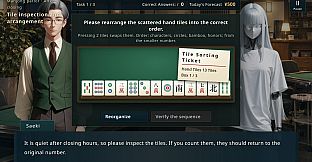
The core loop involves playing riichi mahjong at parlor tables and in tournaments while earning currency to purchase and install body modules, outfits, hairstyles, voice upgrades, and assistance features for the android. Matches follow standard rules including red dora, yaku and fu scoring, furiten, calls, riichi declarations, and drawn hands. The android companion can be upgraded to display additional details on tile efficiency, waits, scores, and danger during play. Nighttime scenes activate based on the specific parts installed, with playback controls for speed, repeat, and sequence editing. Voice and sensory modules alter audio and dialogue in those scenes. Separate purchasing, ownership, and installation steps mean players must manage configurations carefully to unlock desired interactions. Parlor jobs such as score checking and tile inspection or sorting provide steady income even during losing streaks.
Game Modes
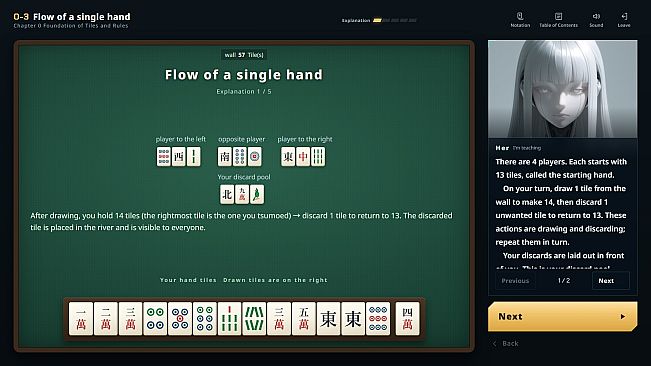
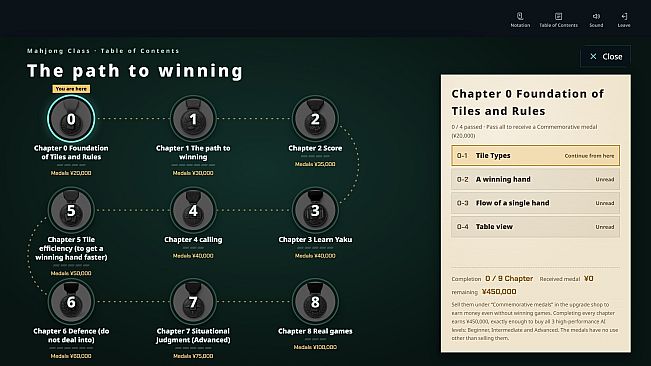
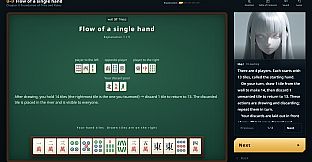
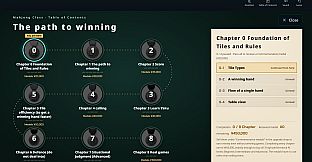
Four-player riichi mahjong forms the central activity, with solo matches against three computer opponents that each follow distinct play styles. Players move between different parlor tables and enter tournaments. A dedicated mahjong classroom offers 41 lessons divided across nine chapters that cover tiles, hands, scoring, attack and defense strategies, and table practice. The narrative mode spans a prologue, six tournament chapters, and an epilogue, delivering 20 main episodes plus side stories involving seven rivals. Tournament outcomes reflect actual match results, and the story advances regardless of elimination. Player choices in dialogue lead to one of three possible endings, with progress saved for revisiting scenes.
Customization and Progression
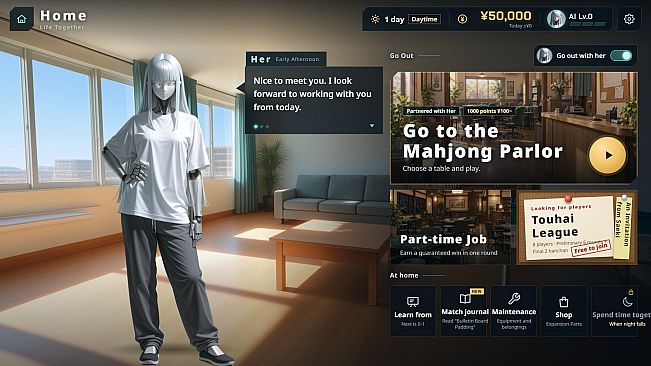
Upgrades to the android companion directly influence both gameplay assistance and adult content availability. Body modules, outfits, and hairstyles appear in everyday scenes and nighttime animations. Voice upgrades modify dedicated audio tracks and dialogue variations. Sensory modules add further audio and interaction differences. The system requires players to balance earnings across functional improvements and aesthetic or intimate options. Daily routines connect mahjong practice, job work, customization decisions, and home interactions into a single progression path. All interface, text, and audio elements support eight languages, with separate selection for display and voice.
Content and Audience
This adult-oriented title includes nudity, explicit sexual activity, and fetish themes with all characters depicted as adults. Genital depictions receive mosaic censorship to comply with Japanese regulations. Shop transactions and contracts remain entirely fictional with no real-money elements or cash payouts. The combination of structured mahjong instruction, tournament storytelling, and part-based customization creates a focused single-player experience for those seeking strategy depth alongside companion development and mature scenes.
Is It Worth Playing?
The game suits players who enjoy learning riichi mahjong through guided lessons and practice while appreciating simulation elements that tie performance to companion growth and story branches. Those drawn to choice-driven narratives with multiple endings and configuration-based adult content will find the systems interconnected in meaningful ways. Availability on PC with multi-language support broadens accessibility. Individuals primarily interested in competitive multiplayer or purely casual tile-matching will likely find the depth and adult focus mismatched with their preferences. The verified mechanics of lesson progression, tournament integration, and part-dependent scenes provide a clear framework for engagement without external variables.