




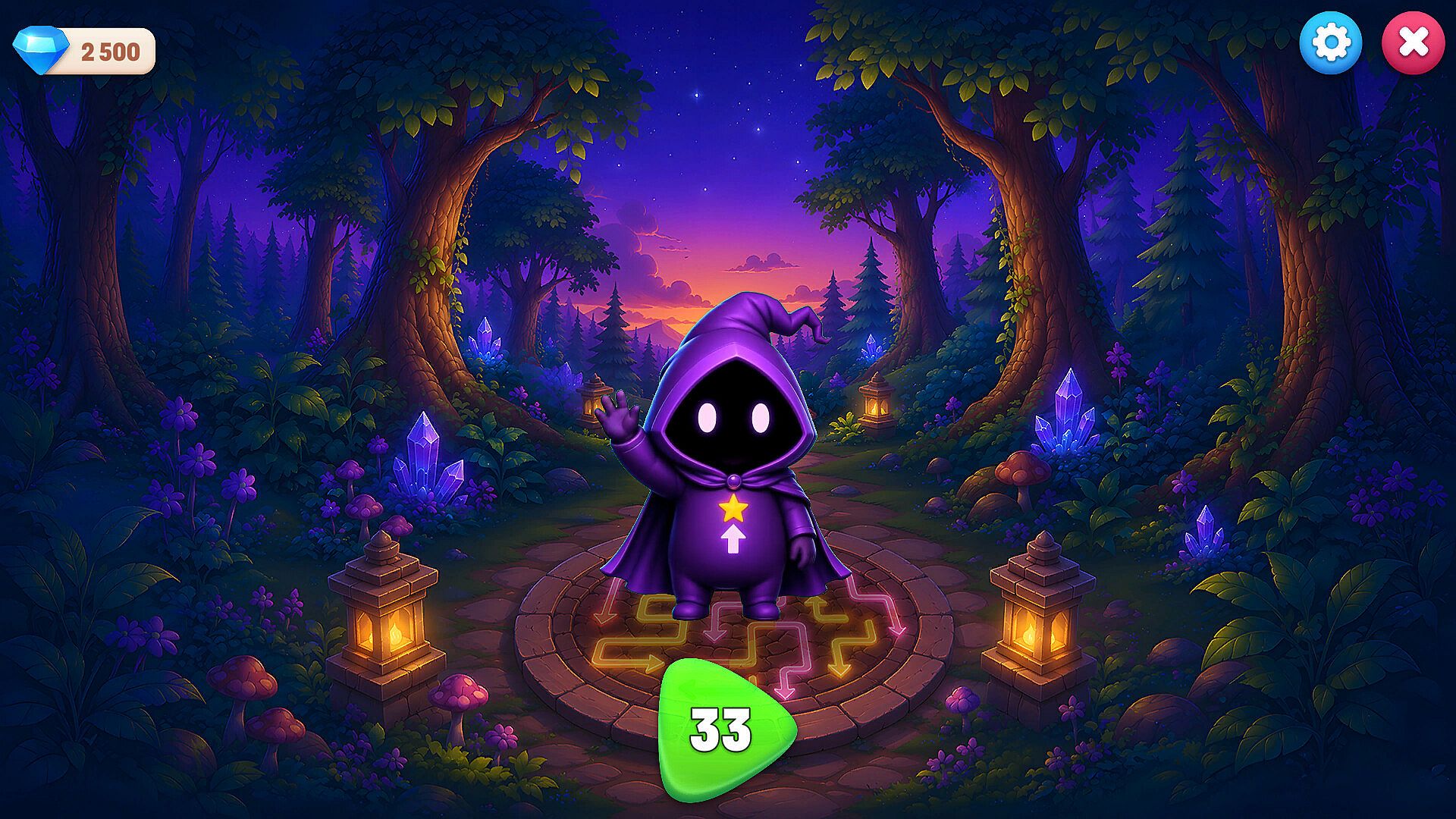




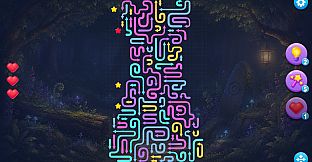
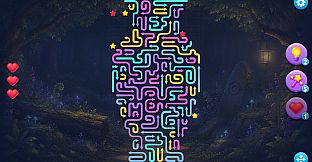



Pointaway is a casual puzzle game built around logic and spatial reasoning on PC. Players clear boards filled with arrows by determining the correct sequence to send each one sliding off the edge in the direction it faces. The experience emphasizes careful observation over speed, with mechanics that reward planning ahead and spotting how one successful removal can unlock paths for multiple others.
Gameplay
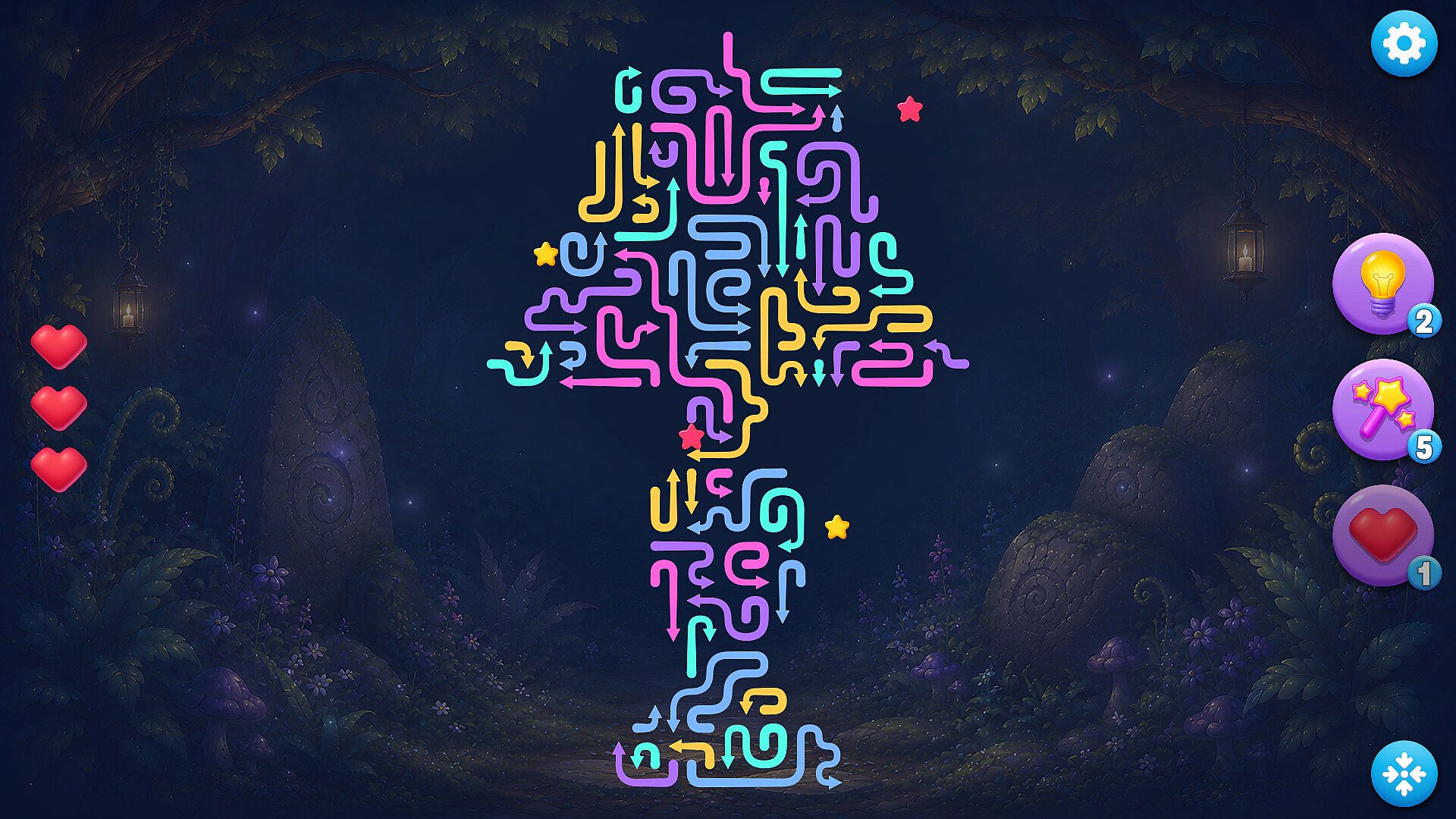
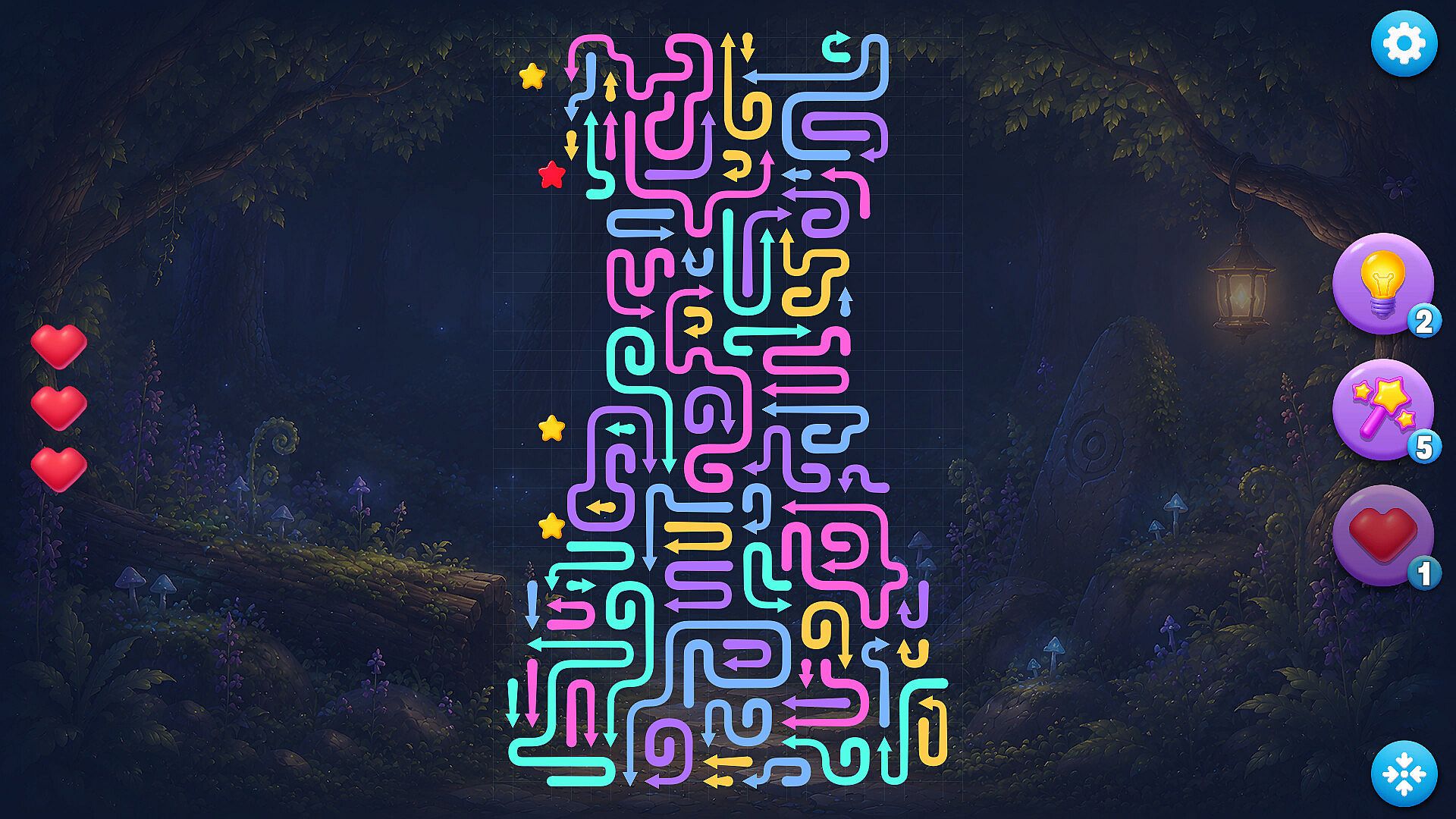
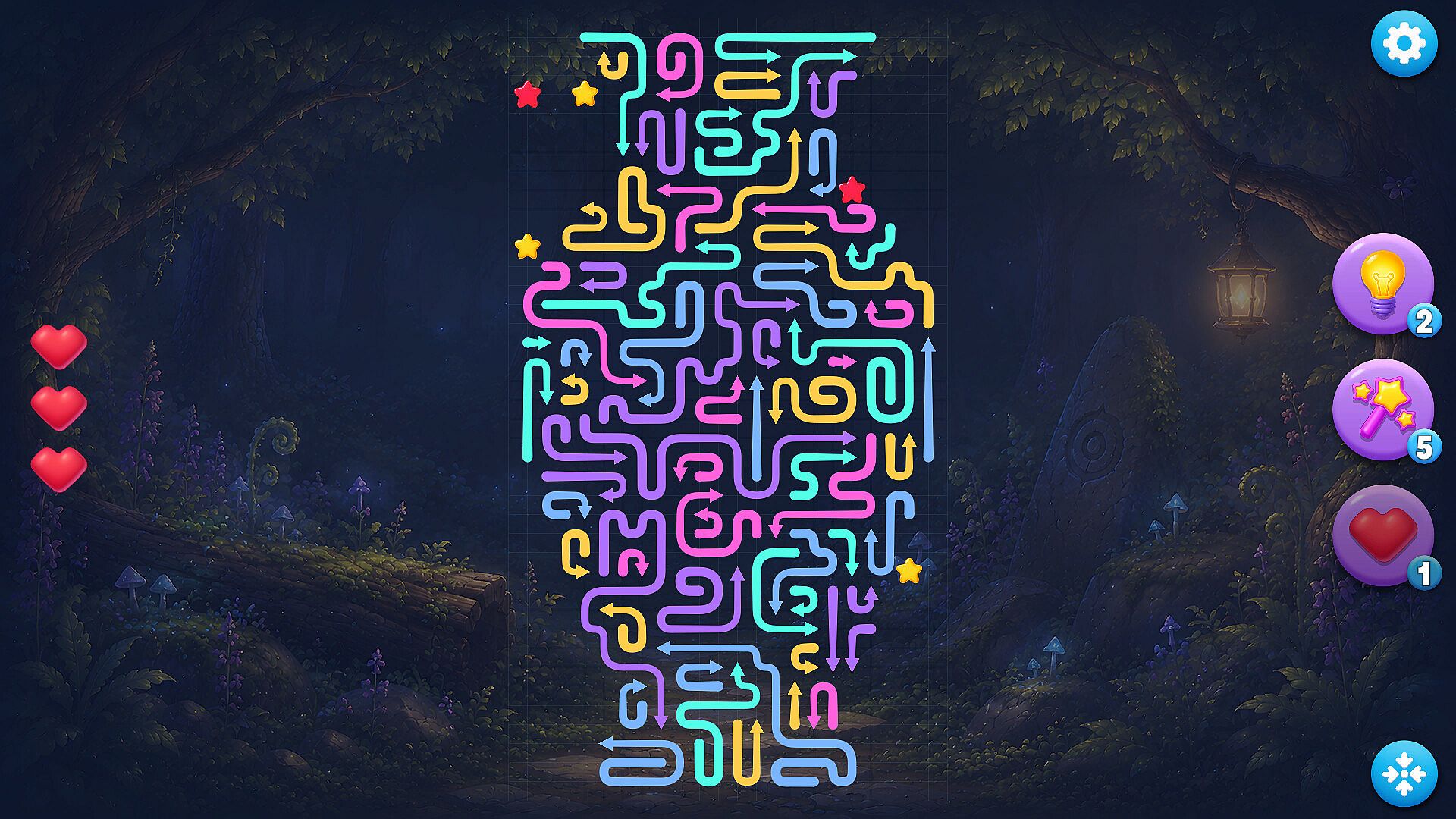
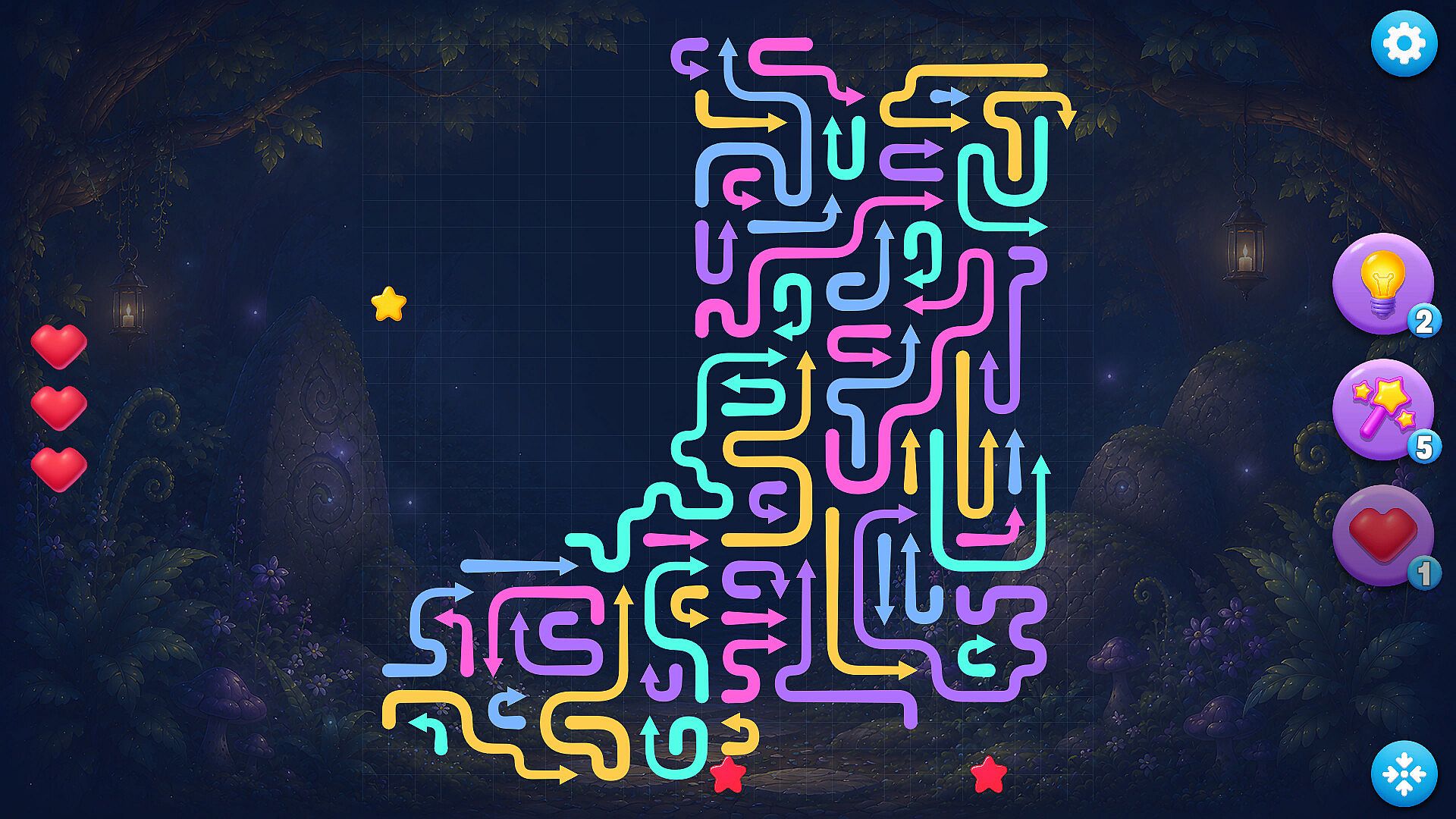
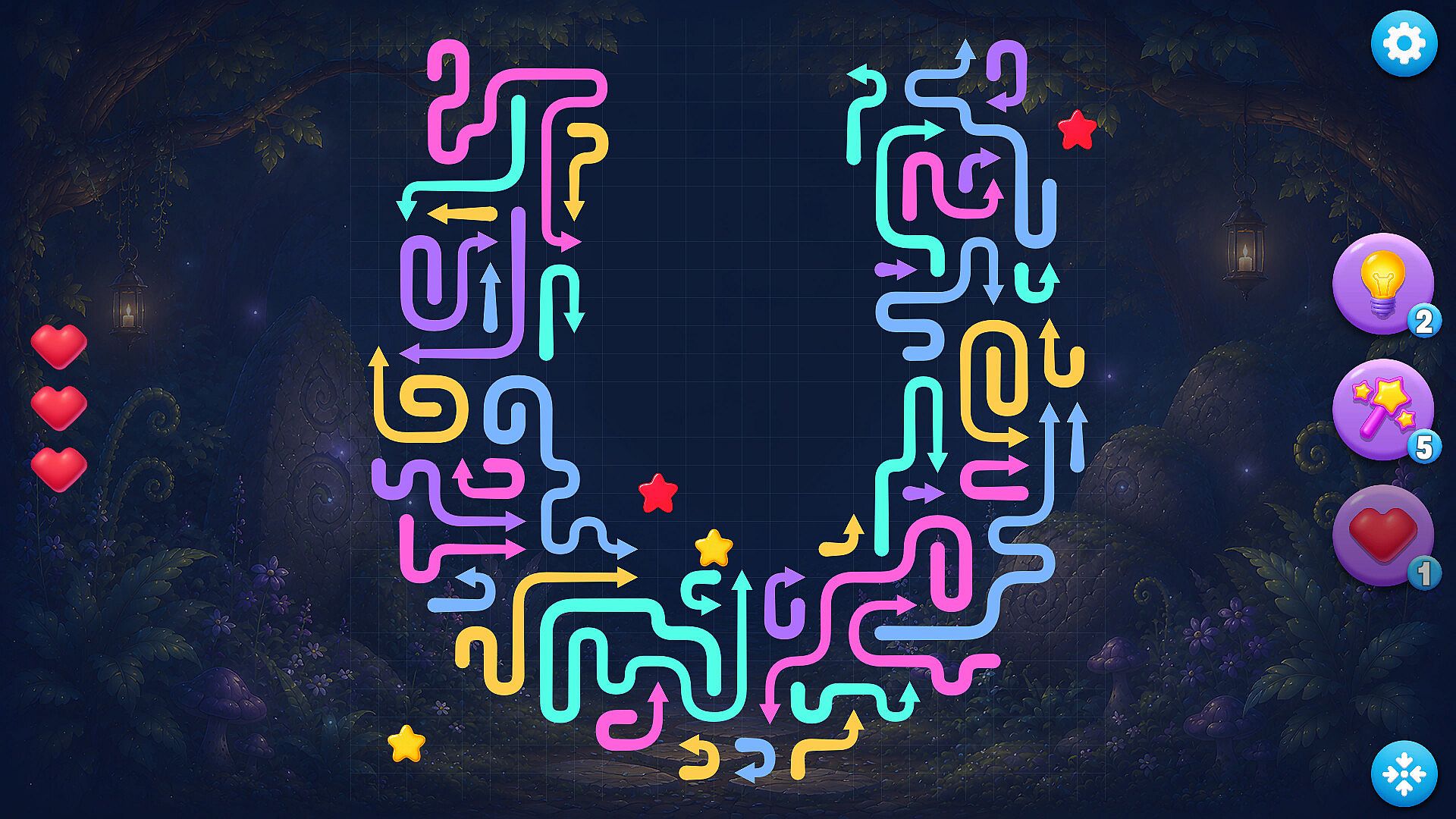
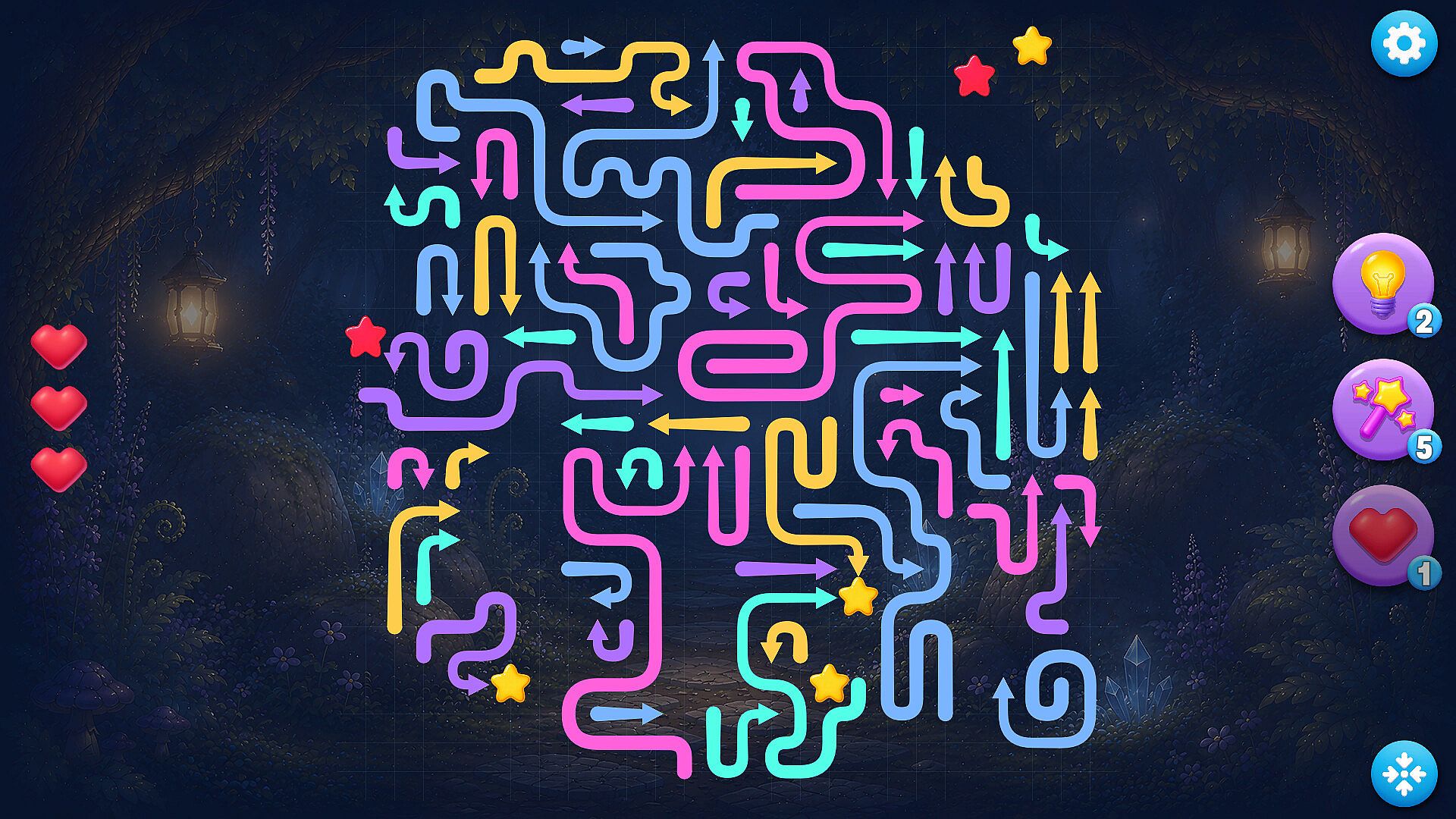
Every arrow on the board moves only in the direction it points. The core loop involves tracing potential routes to the edge while accounting for any arrows that might block the path. Selecting an arrow with a clear route removes it from the board, which often opens new options for the remaining pieces. A blocked move costs a life, so players must scan the entire layout before committing. Zoom tools help examine tight clusters of arrows in detail, and hints provide guidance on particularly dense sections without solving the puzzle outright. The final arrow cleared on a board reveals a hidden picture, adding a visual payoff to each completed challenge.
Difficulty scales through denser arrangements and more interdependent arrows rather than timers or external pressure. The absence of time limits allows players to study layouts at their own pace, focusing on logical deduction and pattern recognition. Controls remain straightforward, relying on point-and-click selection after path verification.
Game Modes
Pointaway centers on a single-player progression of individual puzzle boards. Levels increase in complexity as players advance, introducing tighter spaces, more arrows, and configurations where multiple pieces depend on one another. There are no separate named modes such as timed challenges or competitive variants. Instead, the game maintains a consistent focus on sequential clearing across hundreds of distinct boards, each functioning as a self-contained logic test.
Progression feels steady, with earlier boards serving as introductions to the movement rules and later ones layering additional constraints. Hints remain available throughout, supporting continued play even on tougher layouts without altering the fundamental rules.
Core Mechanics and Features
The sliding arrow system creates chain reactions where early choices directly influence later options. Players learn to prioritize arrows that free multiple paths at once, turning crowded boards into manageable sequences. Zoom functionality proves especially useful on PC for inspecting overlapping directions in crowded corners. Lives act as a gentle penalty system that encourages retries rather than frustration, while the picture reveal at the end of each board provides a consistent sense of completion.
Visual design stays clean and functional, directing attention to the arrows and their orientations. The free-to-play structure removes barriers to entry, letting players sample the logic puzzles without upfront cost. No multiplayer elements appear, keeping the focus squarely on solitary problem-solving sessions.
Is It Worth Playing?
Pointaway suits players who enjoy deliberate logic puzzles and spatial challenges without pressure from timers or opponents. Its straightforward rules combined with growing complexity make it accessible for casual sessions yet engaging enough for extended play. The availability of hints and the lack of time constraints lower the barrier for newcomers while still rewarding careful planning on harder boards.
Those who appreciate games centered on observation and sequential decision-making will find consistent satisfaction in clearing boards and uncovering the final images. The free-to-play model on PC supports trying the core experience directly, with progression through hundreds of puzzles providing ongoing content for fans of this style. If relaxing brain teasers that emphasize logic over reflexes appeal, the game delivers a focused and repeatable loop worth exploring.