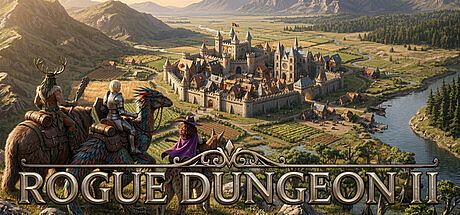


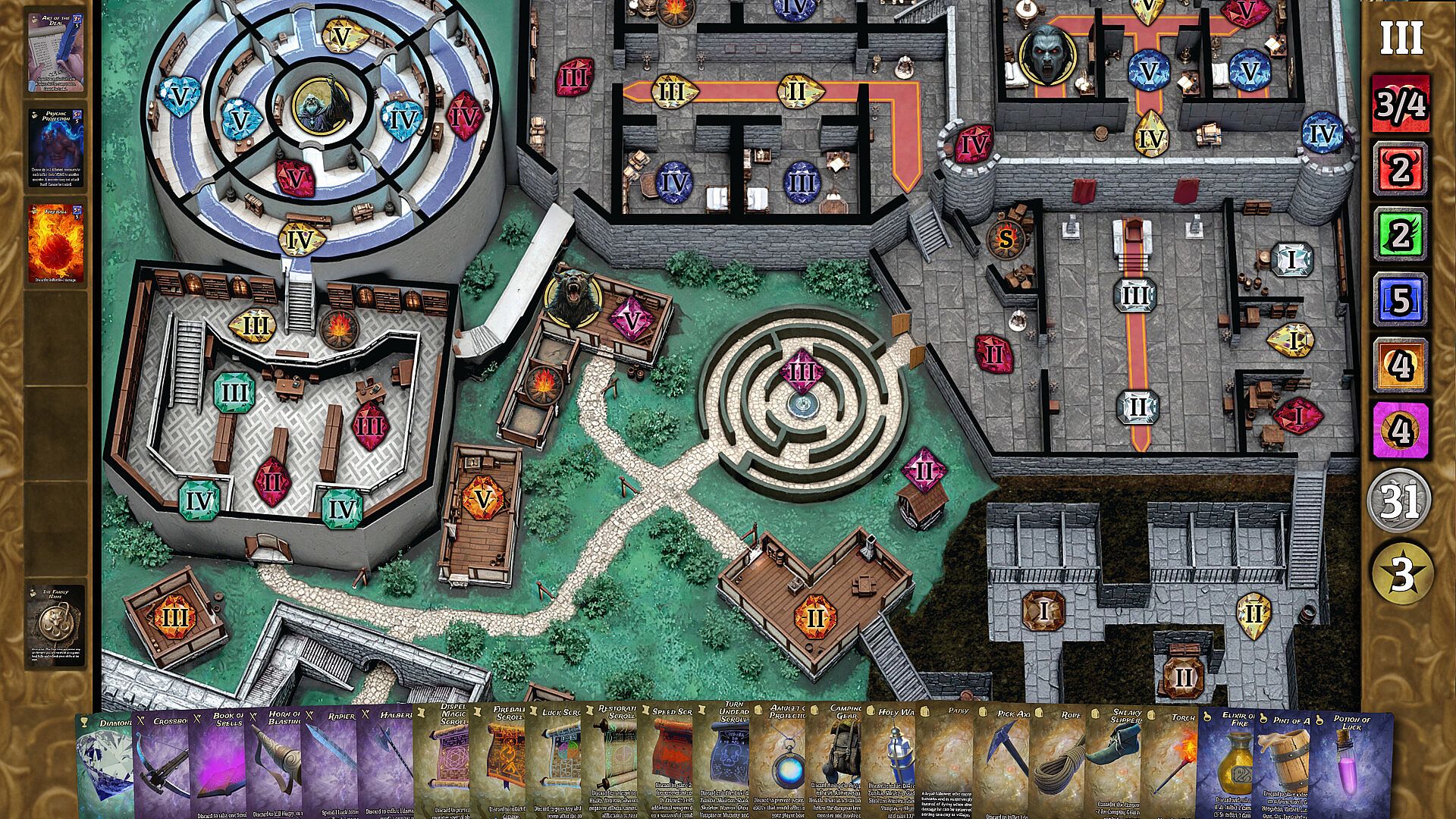
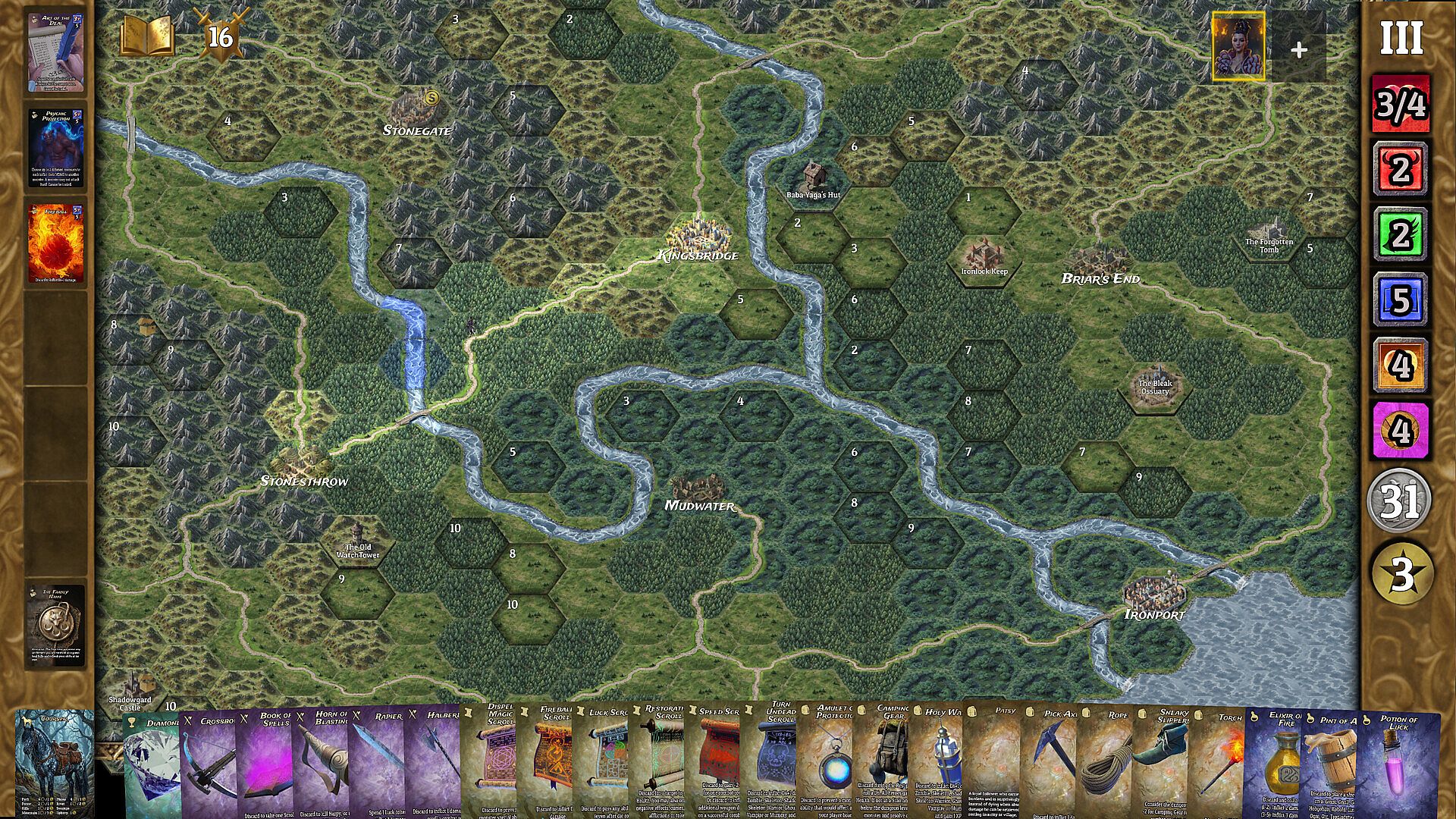
Rogue Dungeon 2 is a digital RPG dungeon crawler for PC that adapts the core systems of its board game origins into a compact, high-stakes experience centered on loot management and quick decision making. Players begin each session with minimal gear and must turn every discovered item into a weapon, shield, or bargaining chip while navigating procedurally arranged rooms across five levels. Runs typically last around thirty minutes, and the emphasis on clever card use rather than raw power creates a tense loop where a single well-timed trade or sacrifice can mean the difference between reaching the boss or ending in defeat.
Gameplay
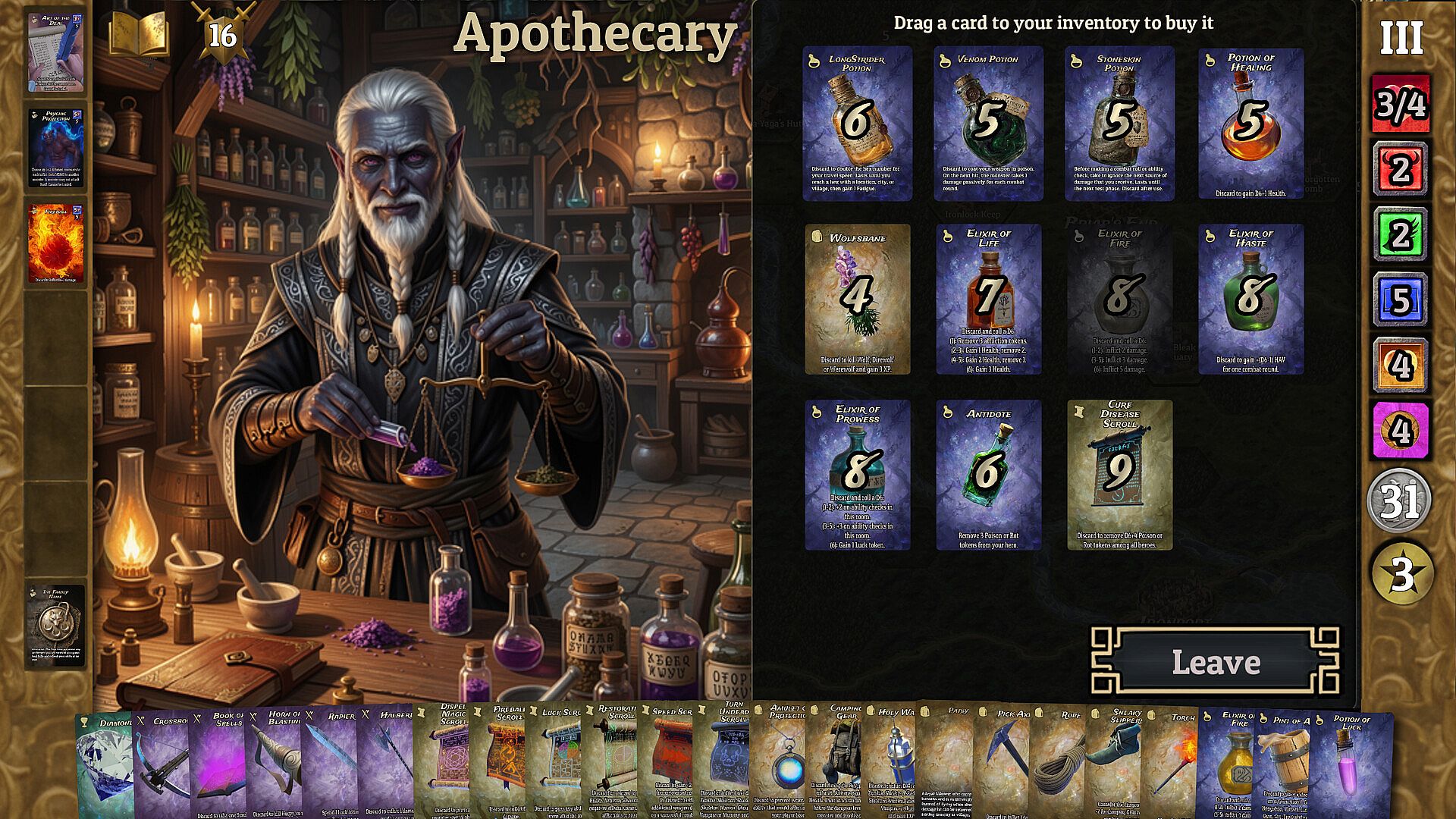
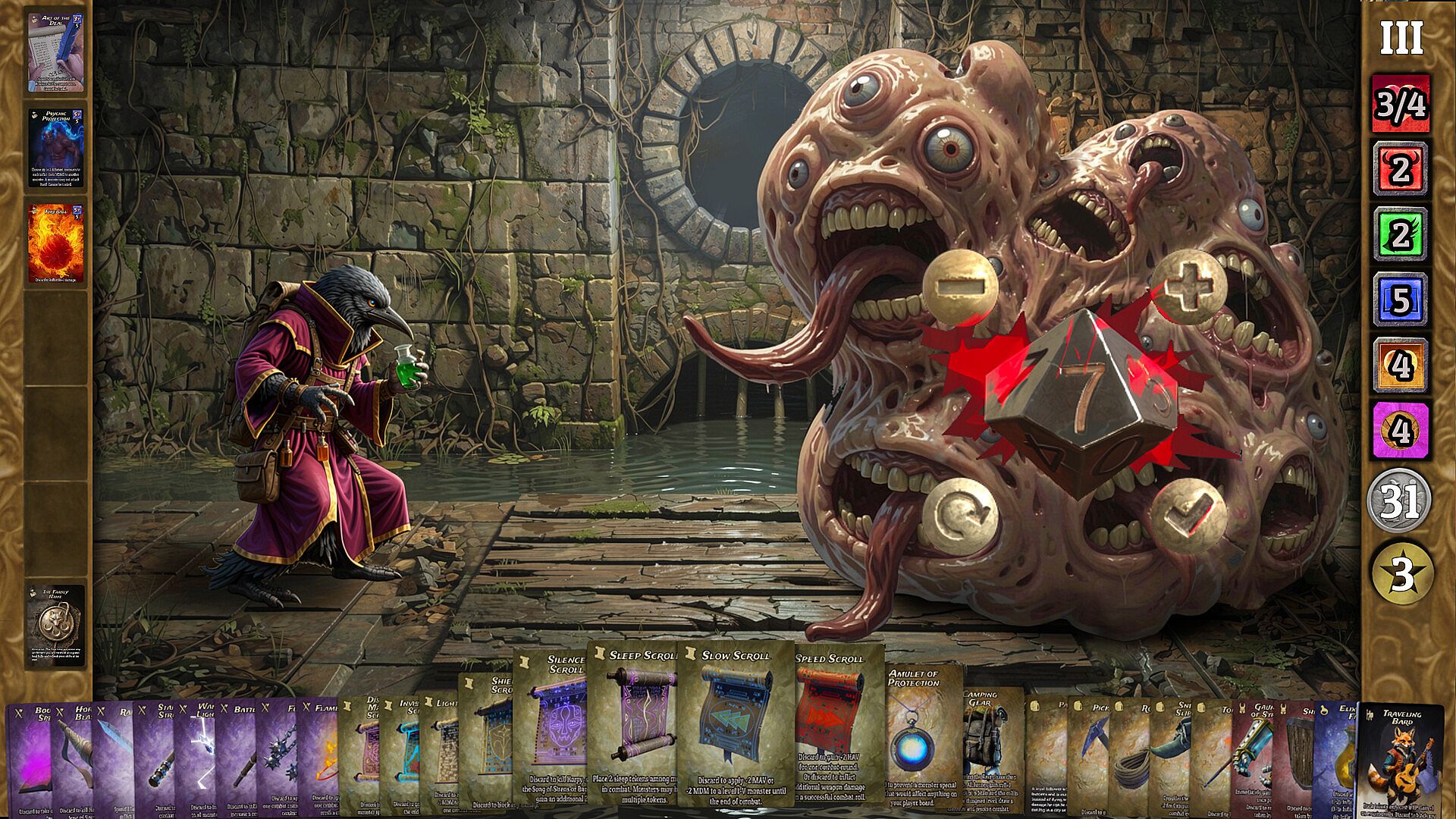
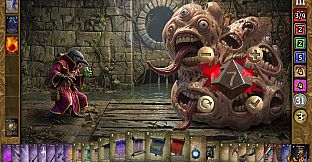
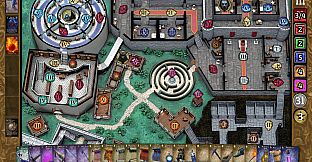
Exploration unfolds on maps marked by colored gems that represent different room types. Red gems trigger combat against monsters that often carry specific weaknesses, yellow gems activate traps, white gems open trader encounters, green gems grant boons, blue gems require a particular item to proceed, and purple gems offer weapons or power-ups. Combat resolves through a simple dice check where the hero's primary stat is added to a D10 roll and compared against the enemy. Ties cause mutual damage, while luck tokens allow rerolls or adjustments to the result. Difficulty settings alter the number of dice rolled, with easy mode granting three dice and the option to keep the best result.
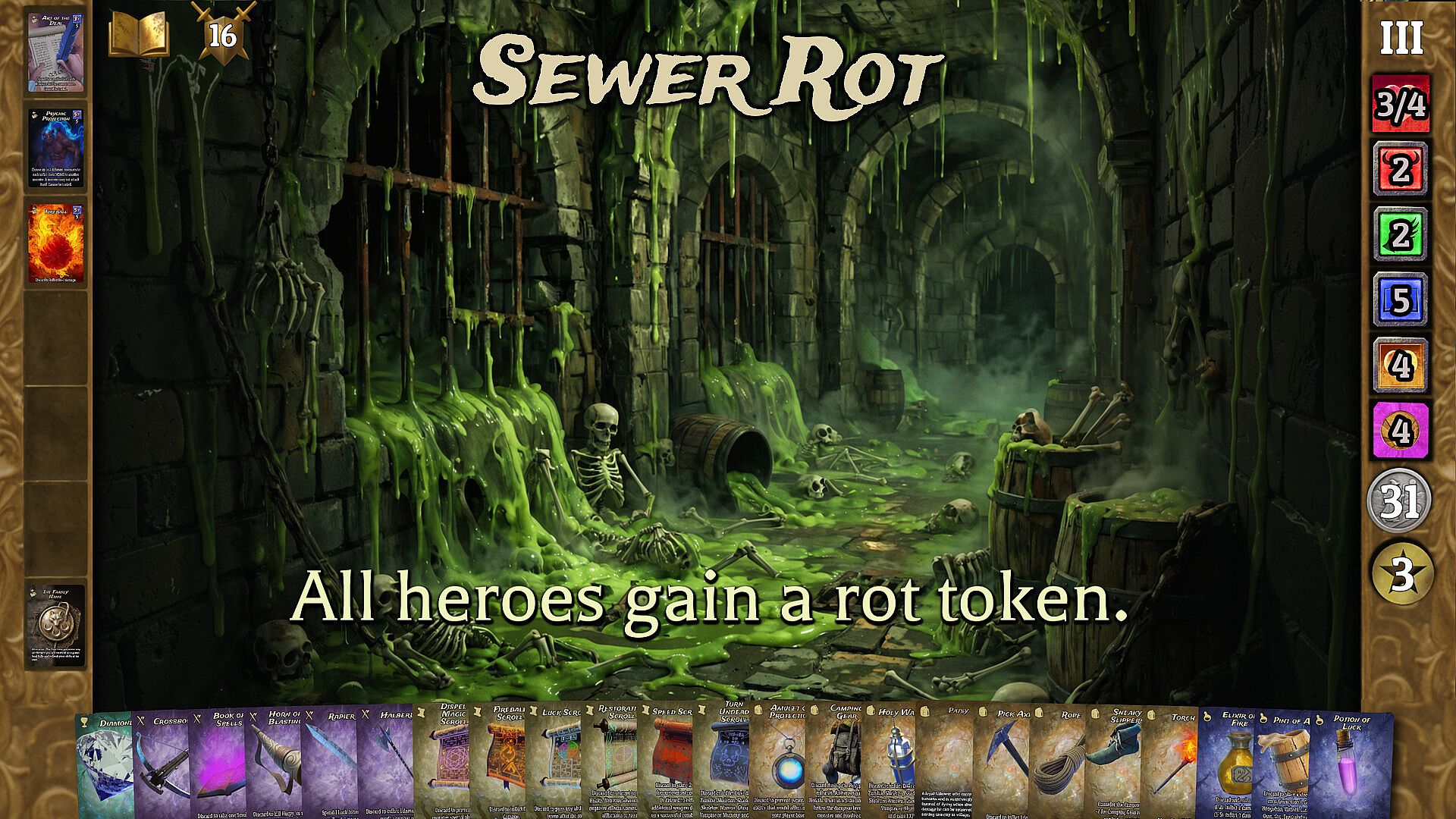
Loot forms the heart of every decision. There is no inventory limit, so players can hold dozens of cards and play them at any time, including during fights or negotiations. Experience points function as spendable currency that can be used mid-run to raise stats, vitality, or luck, or even to repurchase a used class skill. Many monsters possess special abilities that react to the player's roll, such as summoning reinforcements or draining levels, forcing constant adaptation. The four available dungeons each introduce distinct rules and hazards, from cursed treasure in the Tomb to mechanical traps and disease in the Sewers or multiple entry points in the Castle.
Game Modes
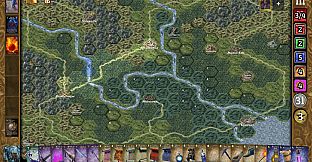
Single Run mode sends one hero or a small party through five levels to confront one of several bosses, including a Red Dragon, Lich King, Balrog, Cerberus, or Storm Giant. Players choose a starting hero with its own stat focus and kit, then decide the route through each level while the card draws determine the contents of each room. The campaign mode, A Rogue's Tale, expands the scope across a world map of Ilderia where heroes travel between dungeons, visit cities to hire help or learn skills, and manage reputation that affects prices and attracts bounty hunters if it drops too low. Quests and events branch based on prior choices, leading to one of nine possible endings that alter future attempts.
Recent updates introduced True Rogue Mode, an optional permadeath variant that locks difficulty to hard and permanently removes fallen heroes from the campaign. Additional systems include the ability to flee combat by rolling to evade each monster or sacrificing loot for better odds, plus automatic saving and cloud support for progress across devices.
Heroes and Progression
Sixteen heroes are available, each with a unique primary stat, starting equipment, and class talent. Examples range from the Crusader and Rogue to the Sorcerer, Monk, Aristocrat, Dwarf Miner, Elf Ranger, Barbarian, Gnome Machinist, Bard, and several others drawn from the Sewers and Castle settings such as the Bugbear Cleric, Kenku Alchemist, Fey Druid, Trickster, Vampire Hunter, and Warlord. Every hero appears in two visual variants. Progression carries forward in the campaign through prestige points earned across runs, allowing new heroes to begin with retained advantages while old gear remains recoverable at the site of a previous defeat.
Is It Worth Playing?
Rogue Dungeon 2 suits players who enjoy short, replayable sessions built around resourcefulness and risk assessment rather than lengthy campaigns or complex builds. The core loop of turning scavenged items into solutions rewards experimentation across dozens of runs, and the campaign adds meaningful long-term decisions through reputation, quest branching, and multiple endings. Community feedback on the underlying board game highlights its tight design and high replay value, with the digital version preserving those strengths while adding quality-of-life features such as autosave and cloud support. Those seeking a focused dungeon crawler that emphasizes hand management and dice-driven tension over open-world exploration will find the experience consistently engaging, particularly if they appreciate roguelike elements where failure teaches better play on the next attempt.