






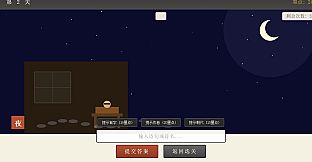
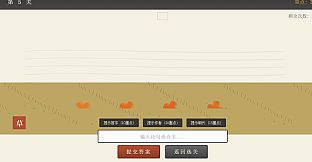

诗情画意 is a casual simulation puzzle game that turns classic Tang and Song dynasty poems into interactive visual challenges on PC. Players examine detailed ancient-style scenes and match them to remembered verses or titles through direct input, creating a quiet experience focused on observation and cultural recall.
Gameplay
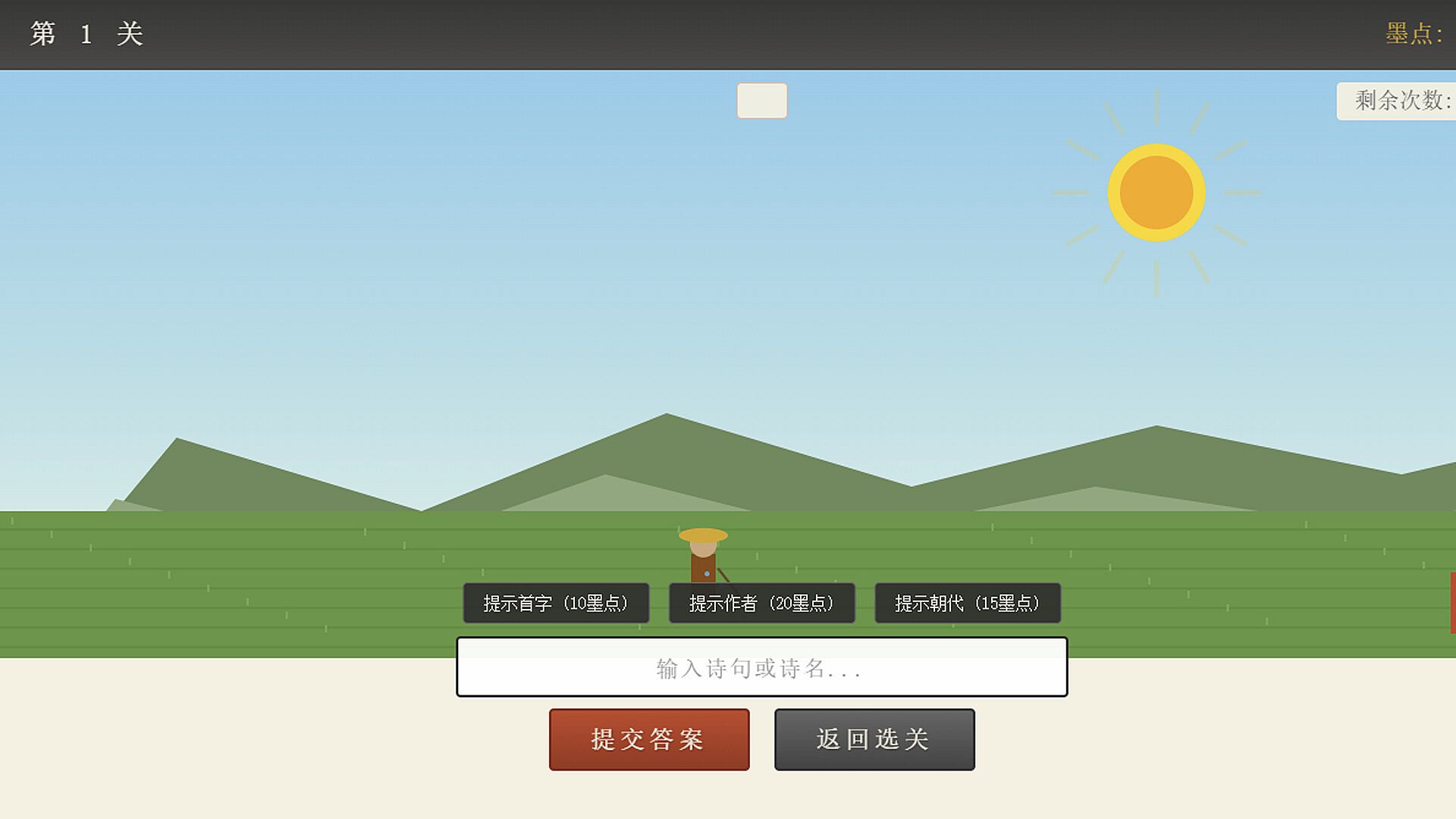
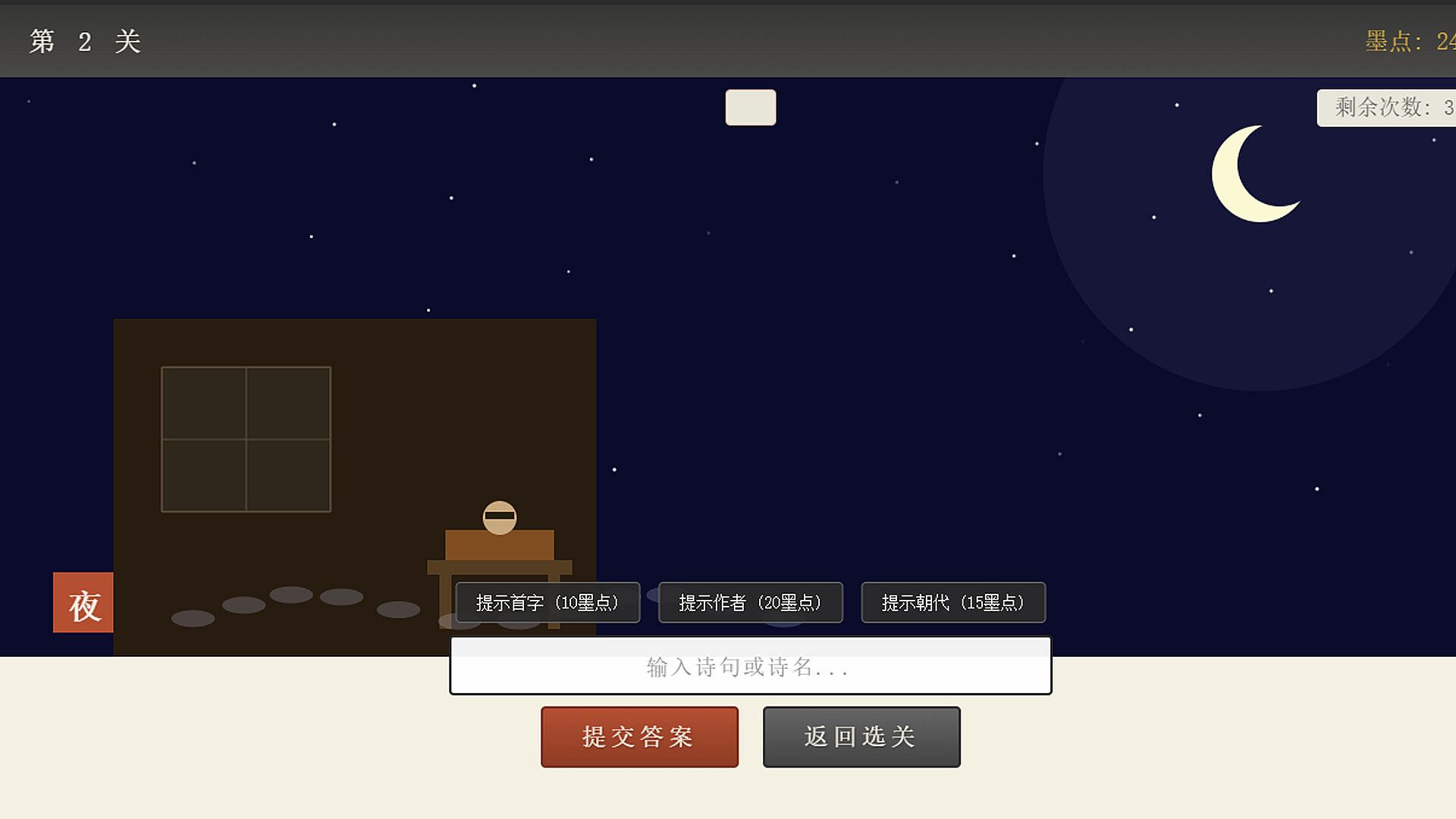
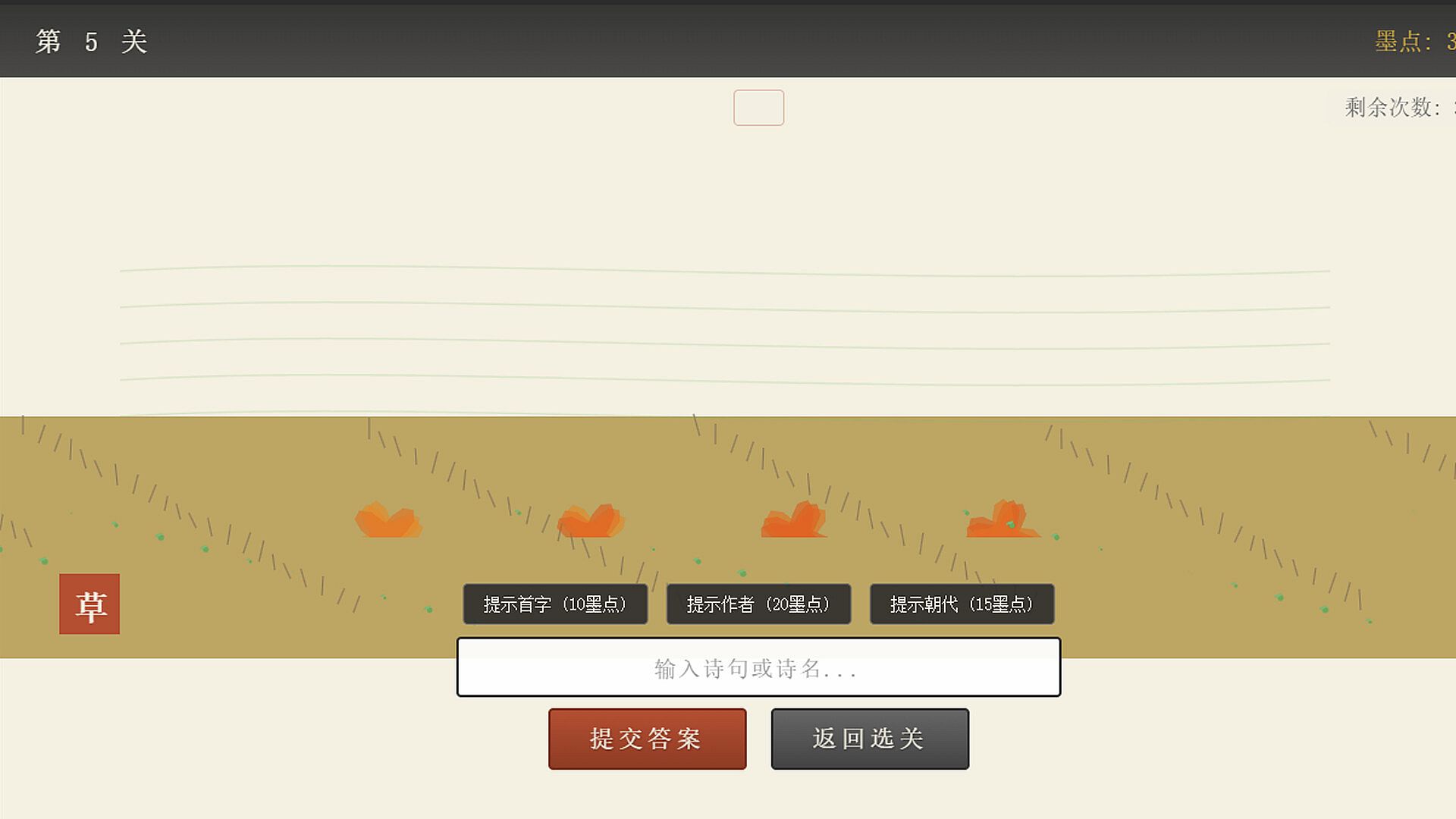
Each of the twenty levels presents a self-contained scene drawn from a well-known poem, such as moonlight casting shadows across a bed or birds calling at dawn. The artwork moves subtly with atmospheric details like falling snow or rippling water, but no text appears on screen to guide the player. Success depends on recognizing the visual elements and entering the corresponding poem line or full title. The input system accepts either option and applies flexible matching to account for minor variations in phrasing.
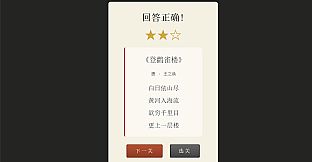
Progression follows a strict sequence where completing one level unlocks the next, with difficulty building gradually through more intricate scenes and less obvious references. Star ratings reward efficient solves: fewer attempts and minimal hint use lead to the maximum three stars. Hints remain available at any time for players who need assistance, though relying on them lowers the final score. After clearing a level, the full poem, author name, and dynasty information become available for review, turning each success into a moment of quiet appreciation.
Game Modes
The experience centers on a single continuous campaign of twenty hand-selected levels. There are no separate competitive arenas, time trials, or cooperative options. Instead, the structure emphasizes steady advancement through increasingly complex visual poetry associations, with each stage building directly on the skills practiced earlier. Players return to previous levels only to improve their star ratings or revisit completed poems for further reading.
Core Features and Progression
Twenty carefully chosen poems from poets including Li Bai, Meng Haoran, Du Fu, and Bai Juyi form the complete roster. Each receives its own dynamic artwork rendered in traditional ink-wash aesthetics with gentle animations that highlight key imagery. The absence of on-screen text forces reliance on personal knowledge and careful scanning of details such as boat positions, seasonal flowers, or architectural elements.
Smart matching in the answer field reduces frustration while still requiring accurate recall. Star-based scoring encourages repeated attempts at mastery, and the unlock gate ensures players tackle content in order of rising challenge. Post-completion access to the complete verses supports learning without interrupting the puzzle flow.
Is It Worth Playing?
诗情画意 suits anyone interested in traditional Chinese poetry or light visual puzzles. Students revisiting school classics, parents sharing cultural material with children, and casual players seeking a short, reflective session will find the format accessible. The game contains no multiplayer components, live service elements, or ongoing updates beyond the initial twenty levels. Its value lies in the focused blend of observation, memory, and appreciation rather than extended playtime or competitive depth. Those who enjoy piecing together cultural references from imagery alone will likely appreciate the deliberate pace and educational payoff after each solve.