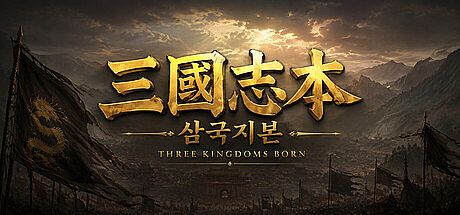


Three Kingdoms Born is a strategy game set during the turbulent Three Kingdoms period, where players build and lead a faction through careful officer management, city development, and decisive battlefield choices. The title places strong emphasis on individual officers as living characters with distinct abilities, traits, and loyalties rather than simple stat blocks. On PC in Early Access, the experience centers on single-player campaign play with optional competitive elements through global leaderboards.
Gameplay
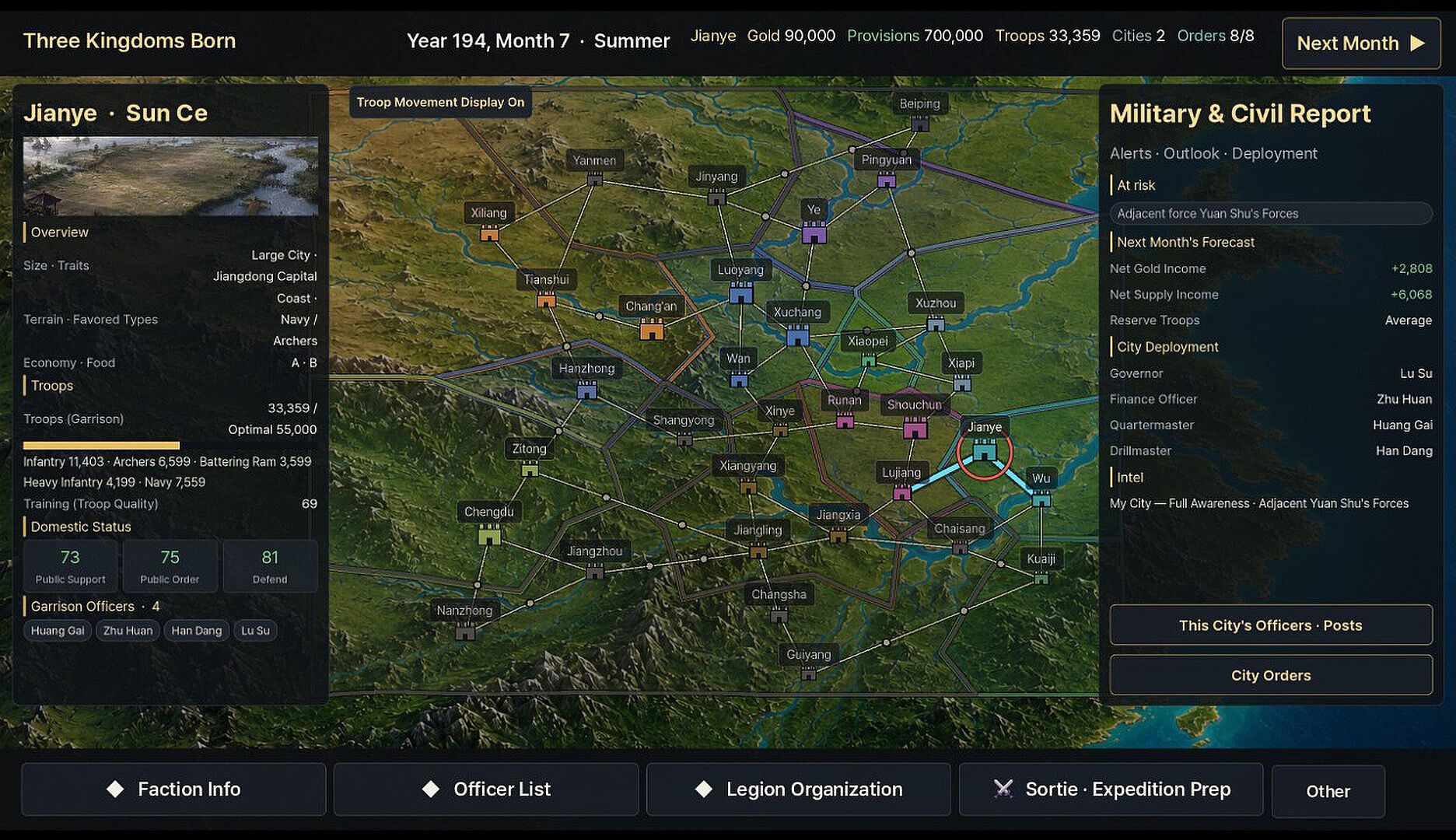
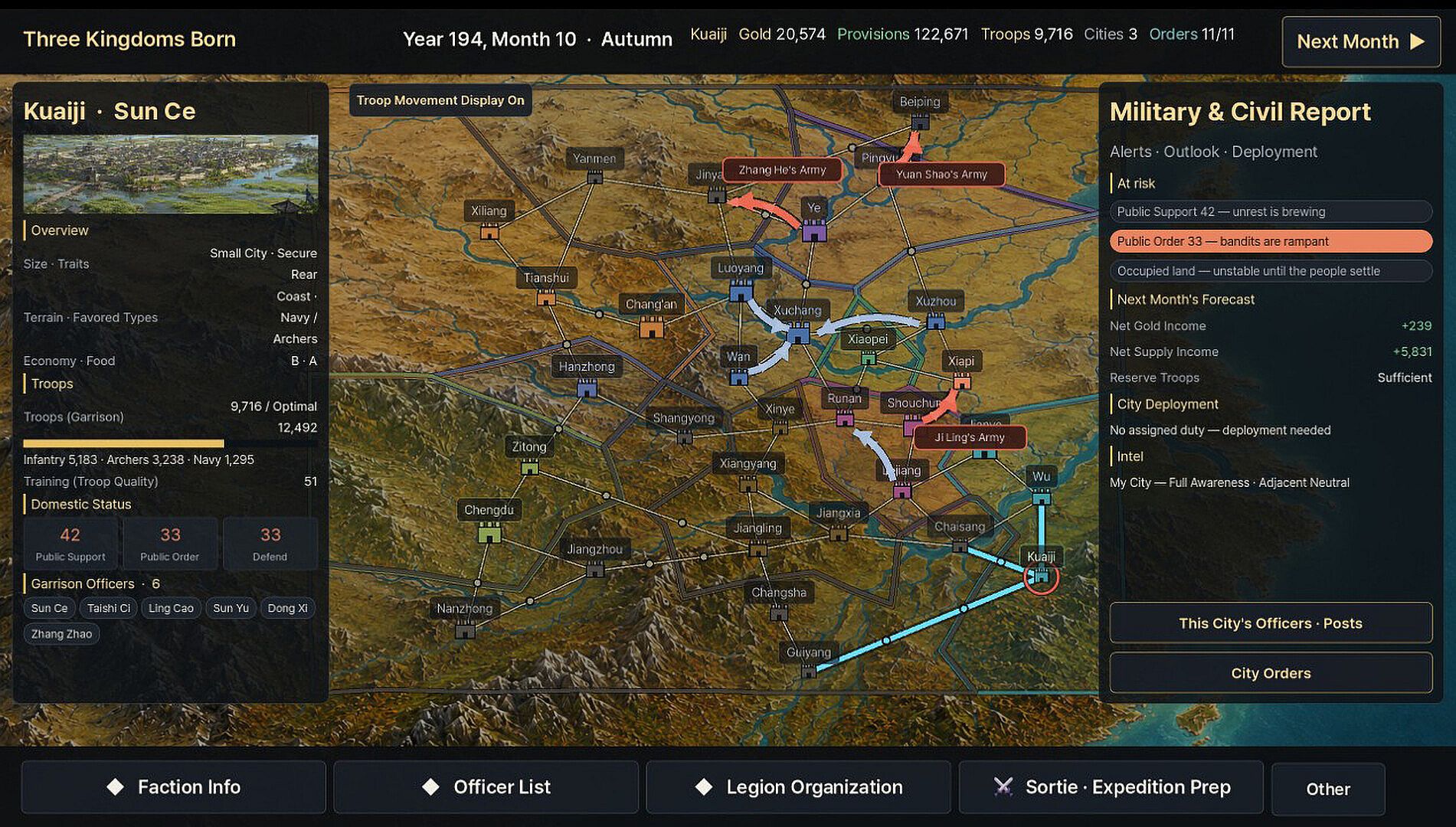
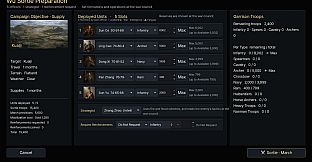
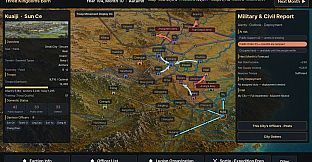
Core play revolves around recruiting and assigning historical officers to roles that match their strengths. Generals bring unique skills, unit preferences, personalities, and signature abilities that influence both administration and combat. Appointing the right officer to a government post or army command can shift the balance of power, while failing to maintain loyalty risks defection and loss of resources. City management involves balancing agriculture, commerce, troop conscription, public order, and policy choices tailored to each settlement. As territory grows, delegation to regional legions frees attention for priority fronts. Diplomacy options include alliances, non-aggression pacts, coercion, and gifts to influence rival factions without constant warfare.
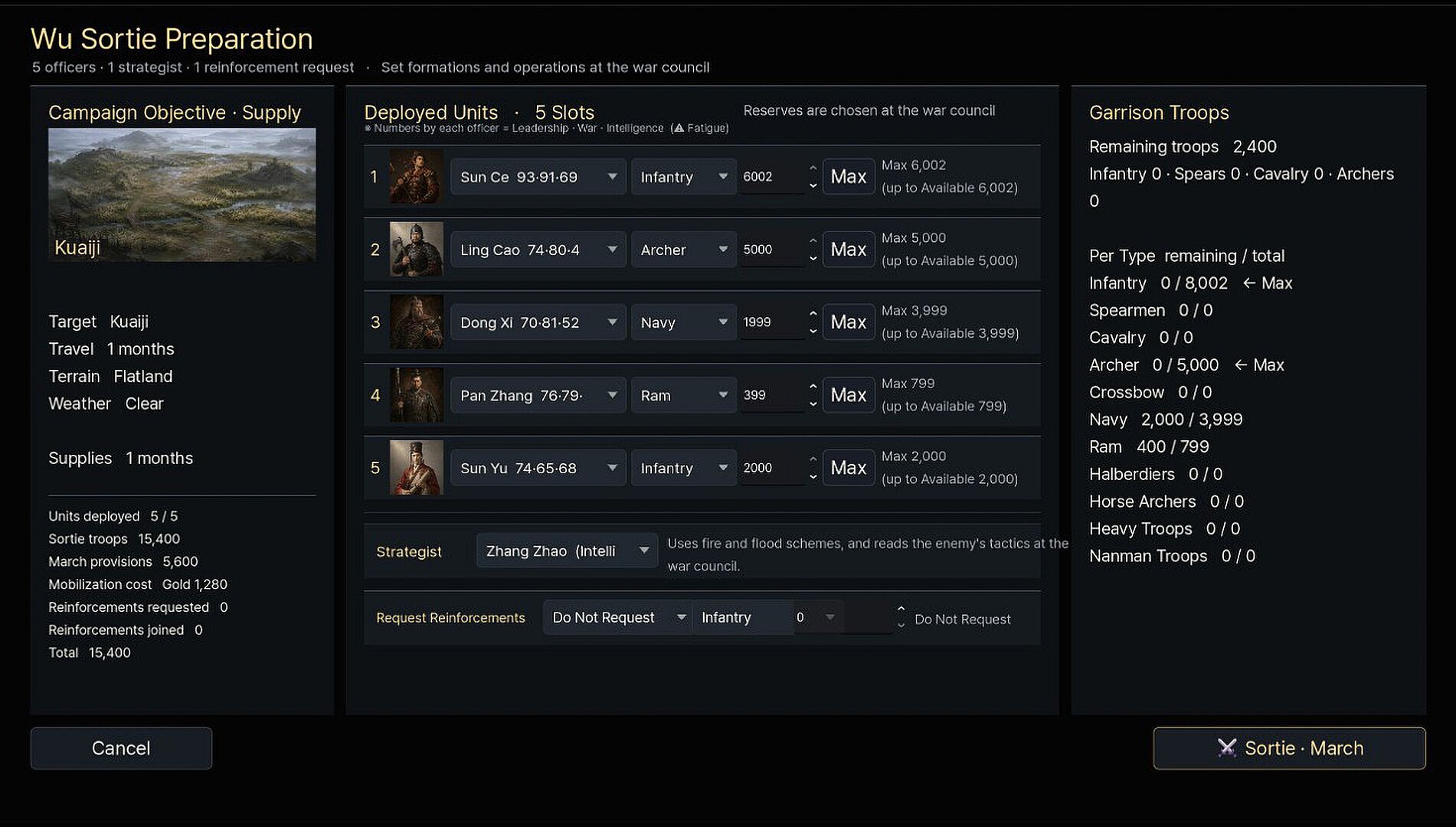
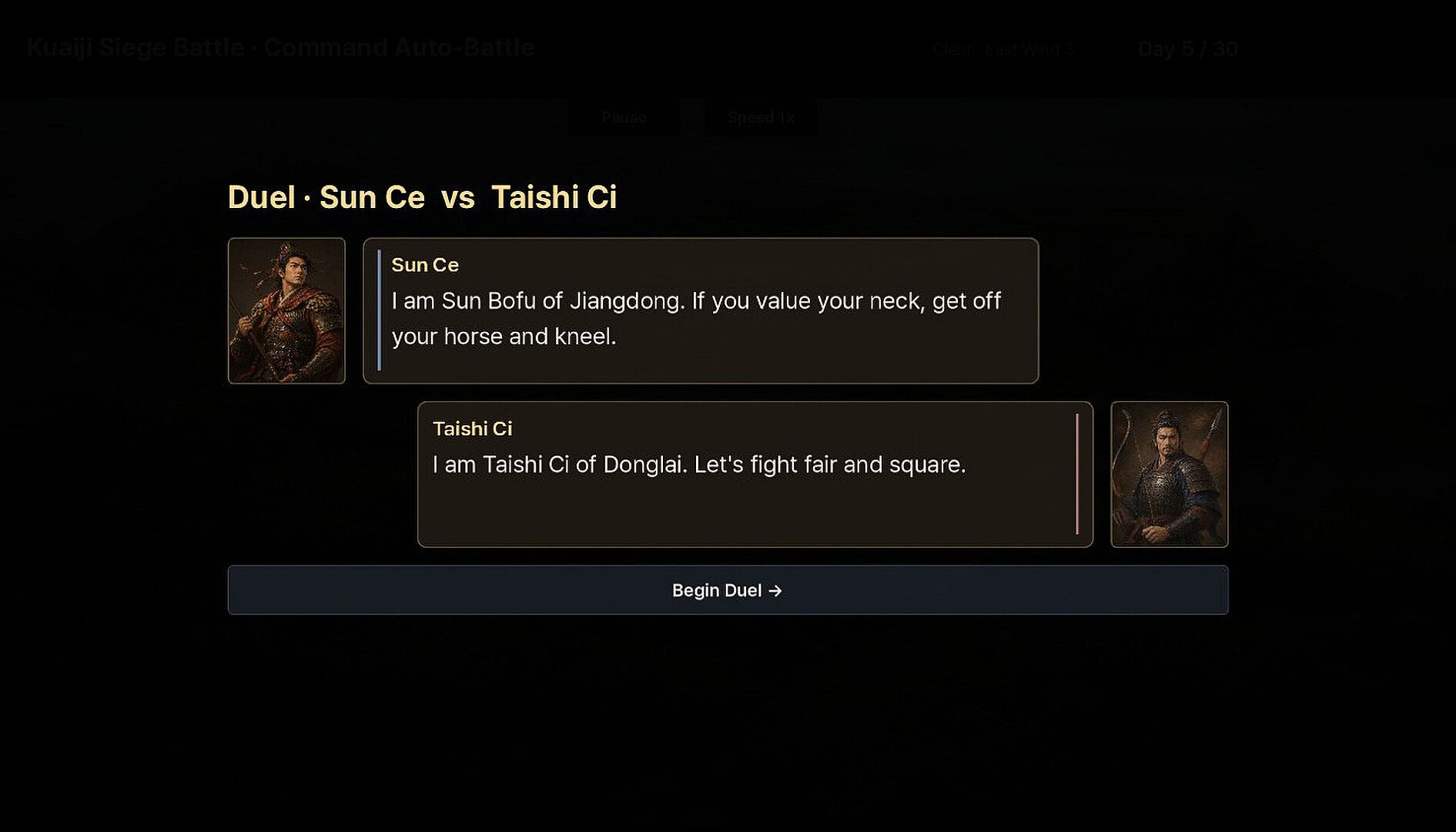
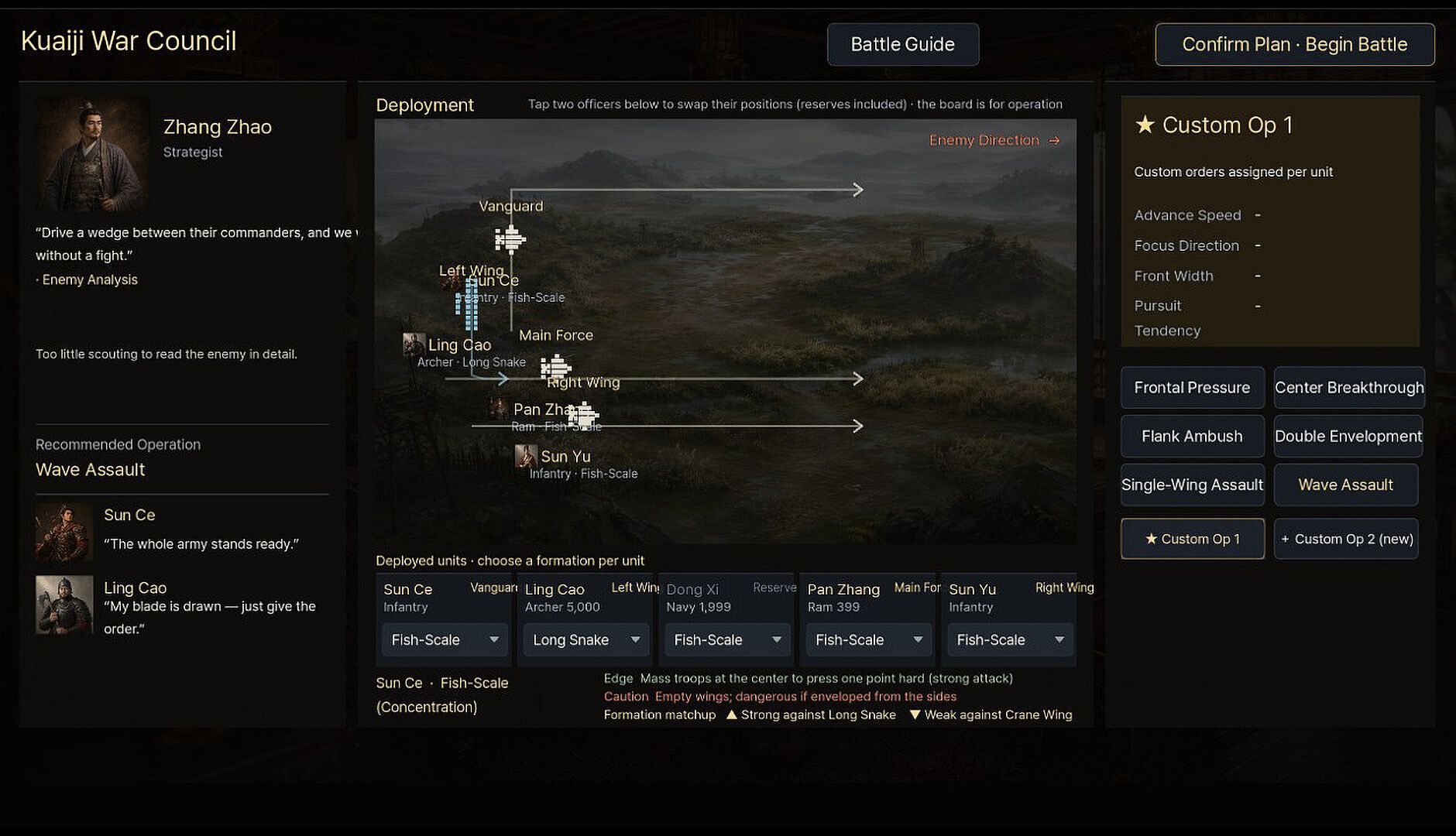
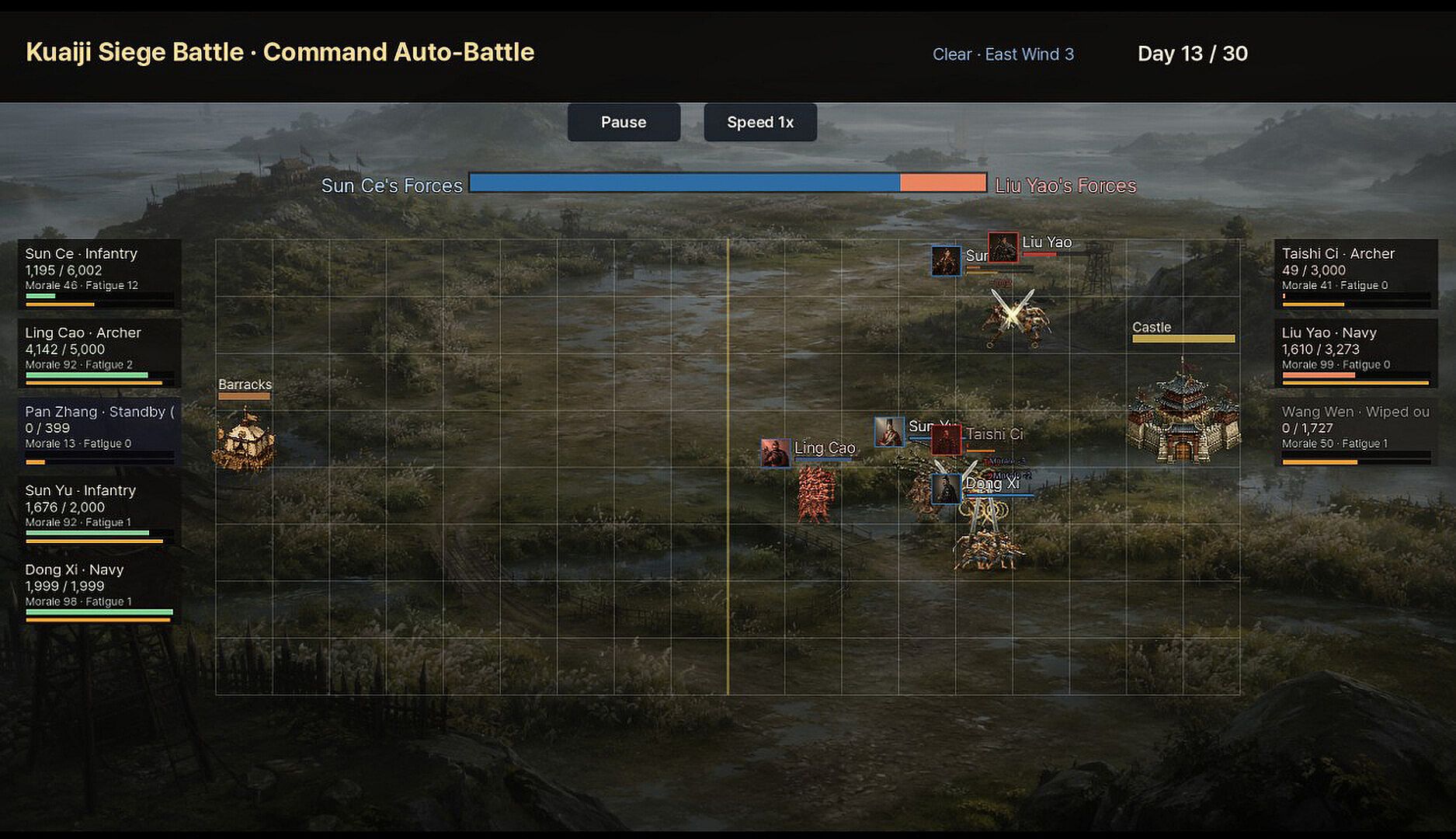
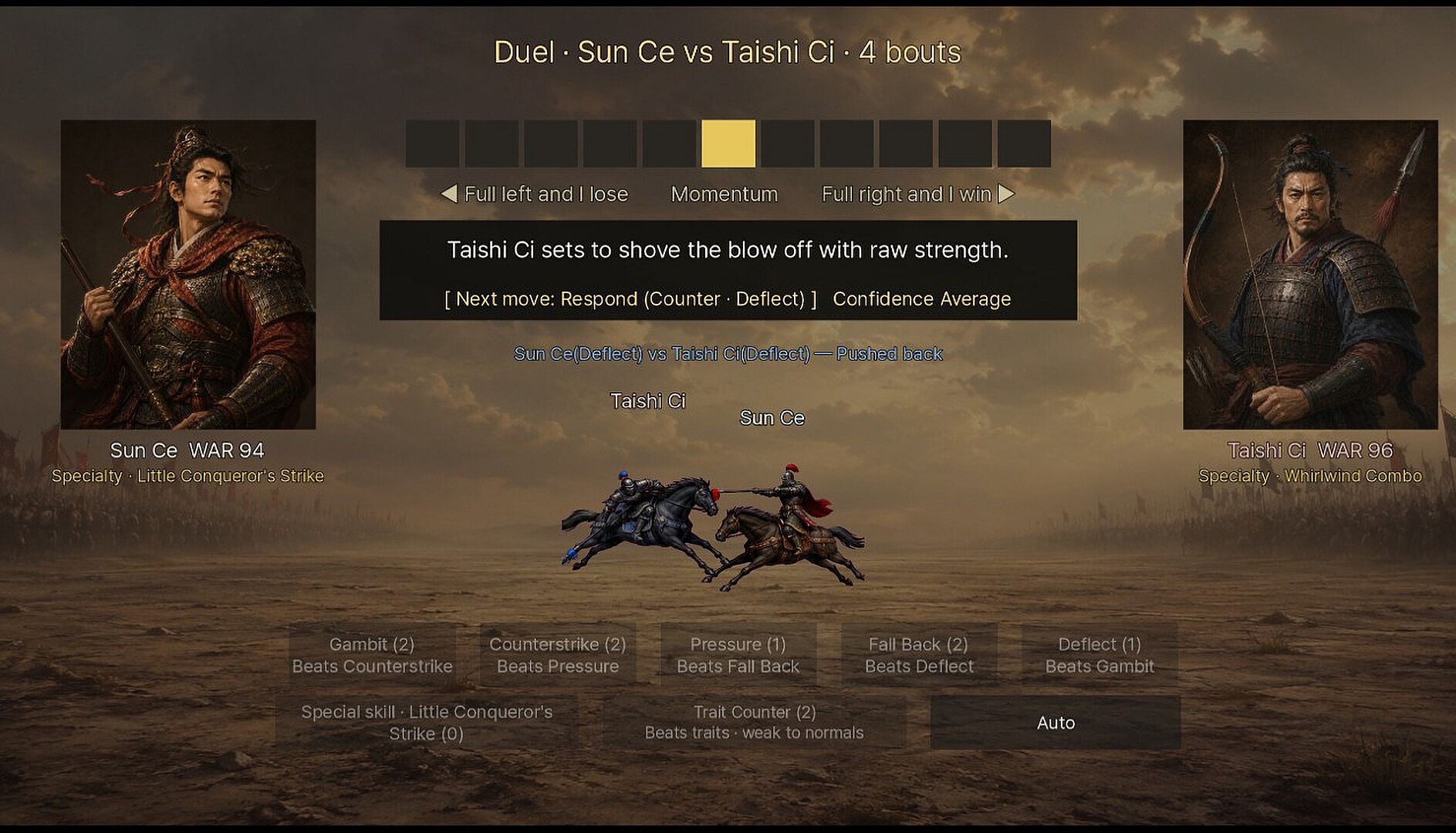
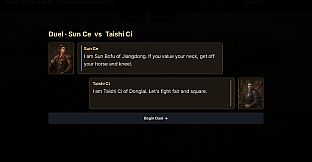
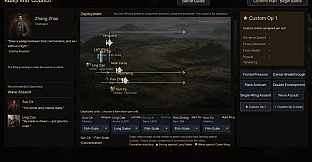
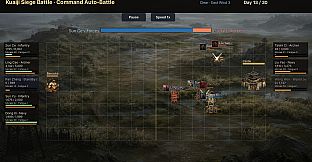
Combat emphasizes preparation over moment-to-moment unit control. Players organize armies, select formations and tactics, and assign commanders before battles begin. Once fighting starts, the action unfolds in real time, requiring timely interventions such as reinforcing a line, committing reserves, shifting focus, or exploiting gaps. Unit counters matter: spearmen blunt cavalry charges, ranged troops pressure formations, and siege engines break fortifications. When prominent generals clash, duels may occur, and clever strategists can trigger schemes that alter outcomes. The system rewards reading the battlefield and making high-impact decisions rather than micromanaging every soldier.
Game Modes
Three dynamic great campaigns form the heart of the experience. The Battle of Guandu, the Battle of Red Cliffs, and the anti-hegemon coalition evolve based on the current balance of power instead of following fixed scripts. Participating factions, multiple fronts, and successive skirmishes change according to player actions and realm conditions, creating varied paths through the same historical touchstones.
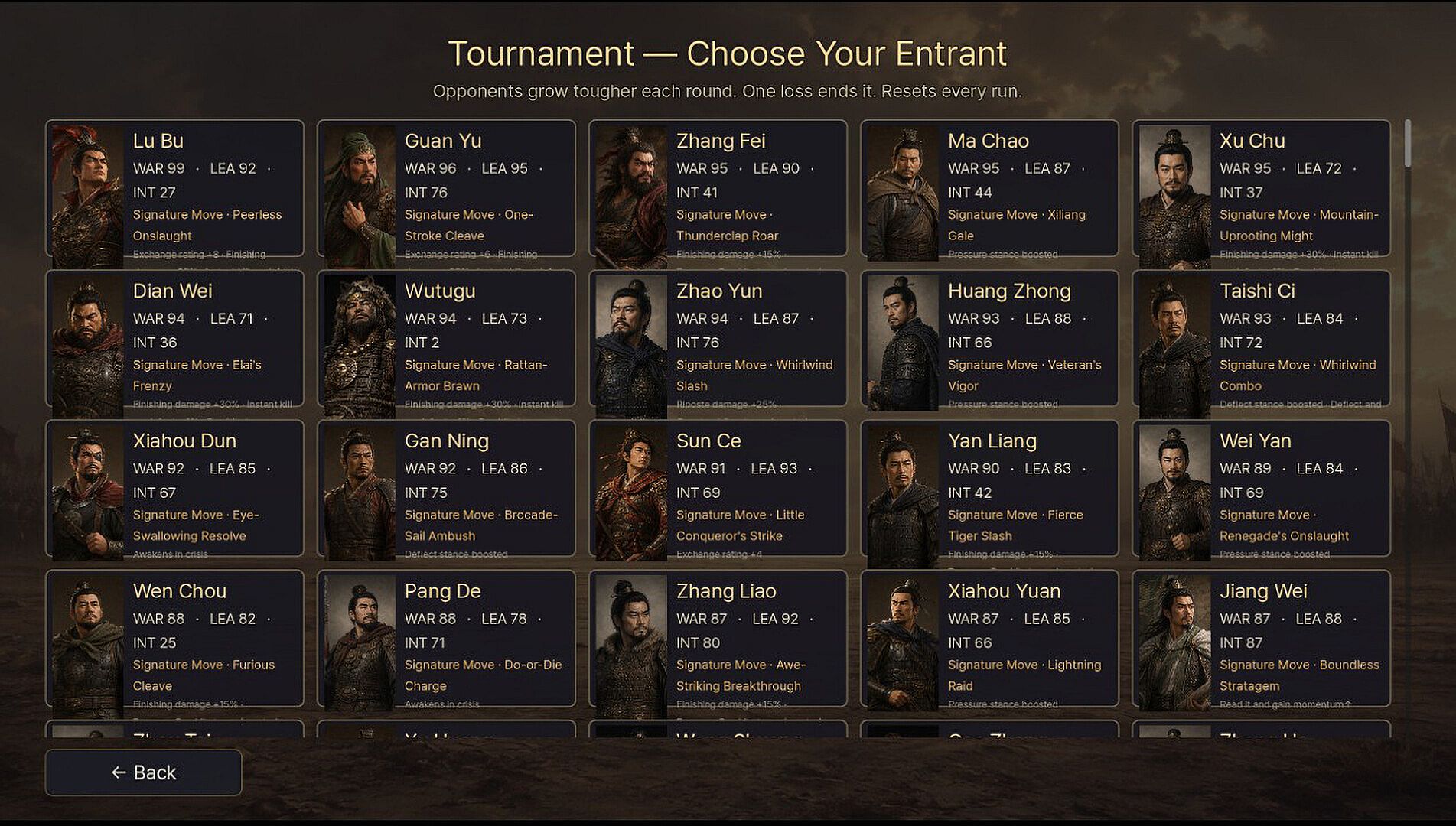
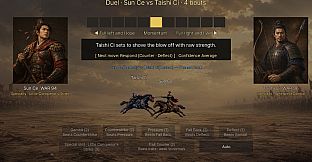
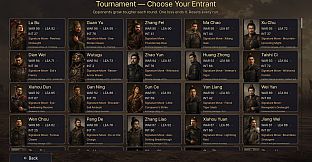
Duel Mode offers a standalone roguelike challenge focused on individual generals. Players select a warrior and attempt successive encounters, building runs that test how far one officer can advance. Achievements feed into global rankings, where scores on Duel Mode and the Unification leaderboard allow comparison against players worldwide. Early Access currently features the Sun Ce conquest of Jiangdong campaign alongside full access to realm management, officer systems, real-time battles, the three great campaigns, Duel Mode, and leaderboards.
Campaign Structure and Progression
Progression ties directly to faction growth and officer development. Expanding territory unlocks more cities to develop and more officers to recruit or promote. Policies and appointments shape each settlement's output and stability, while legion delegation helps manage larger domains. The dynamic campaigns respond to these choices, so the same historical events can unfold differently depending on alliances formed or cities captured. Replay value stems from experimenting with officer assignments, policy combinations, and diplomatic approaches across multiple runs.
Is It Worth Playing?
Three Kingdoms Born suits players who enjoy character-focused strategy with deep officer systems and real-time tactical decisions rather than pure turn-based empire building. The Early Access version already delivers complete core loops including officer loyalty mechanics, city development, formation-based combat, and evolving campaigns. Global leaderboards add a competitive layer for those interested in Duel Mode runs and Unification scores. As a solo-developed title, the game continues to receive updates based on feedback, with additional warlords, campaigns, and scenarios planned. Those drawn to the Three Kingdoms setting through its historical officers and layered management will find meaningful depth in the current build, particularly if they value preparation and battlefield judgment over constant unit micro. The experience rewards thoughtful faction building and adaptive tactics across its verified systems.