


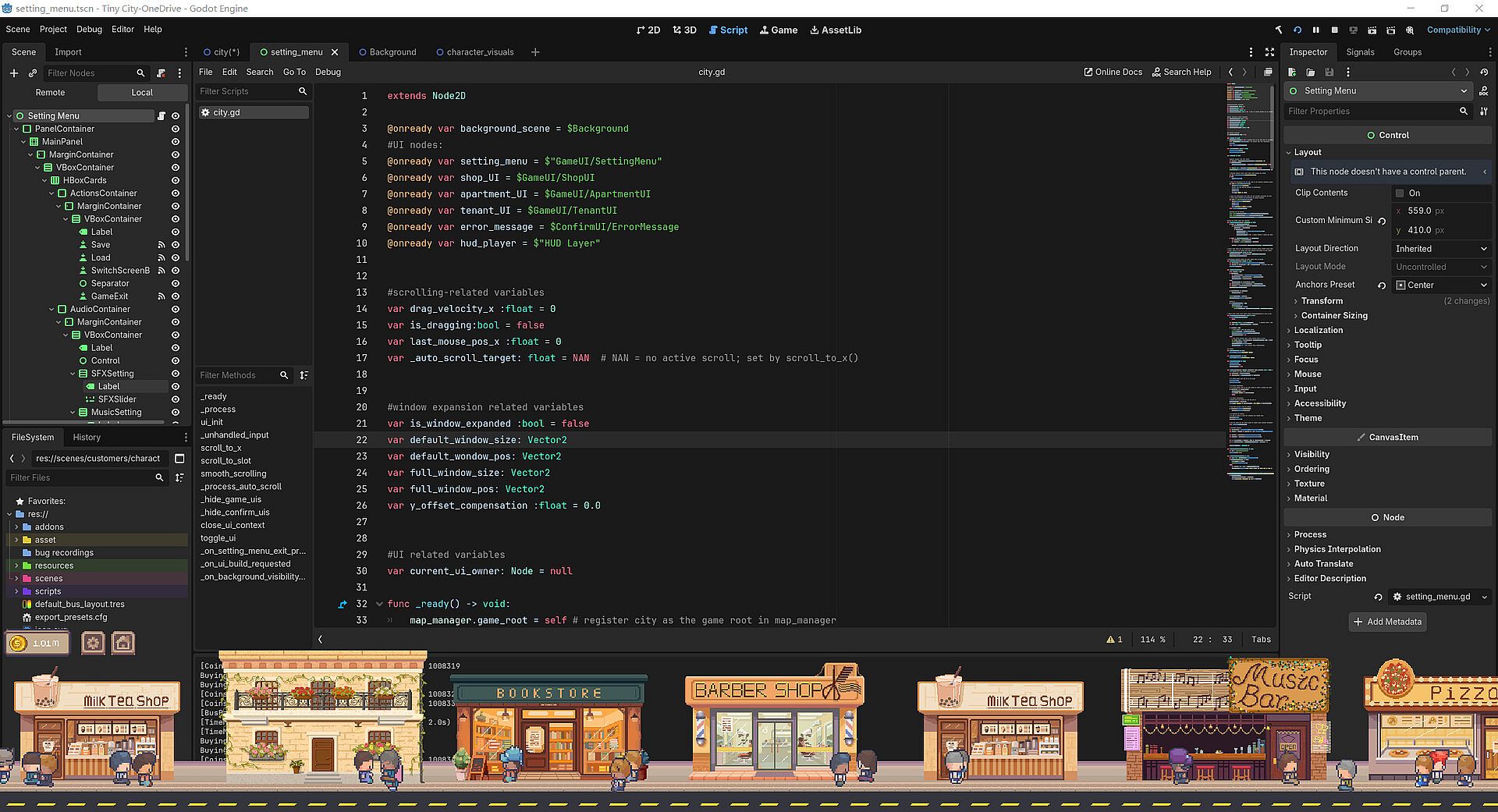
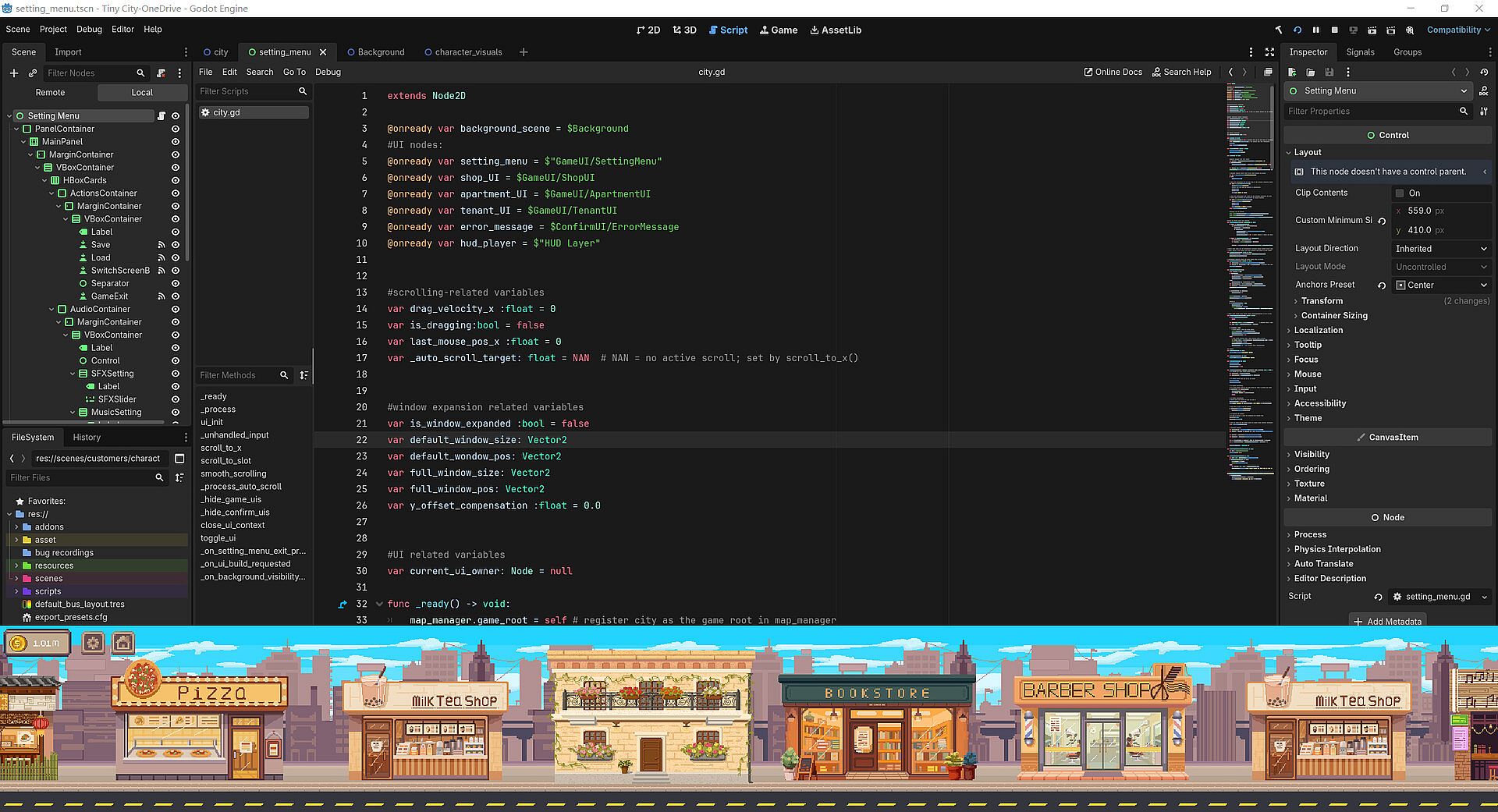
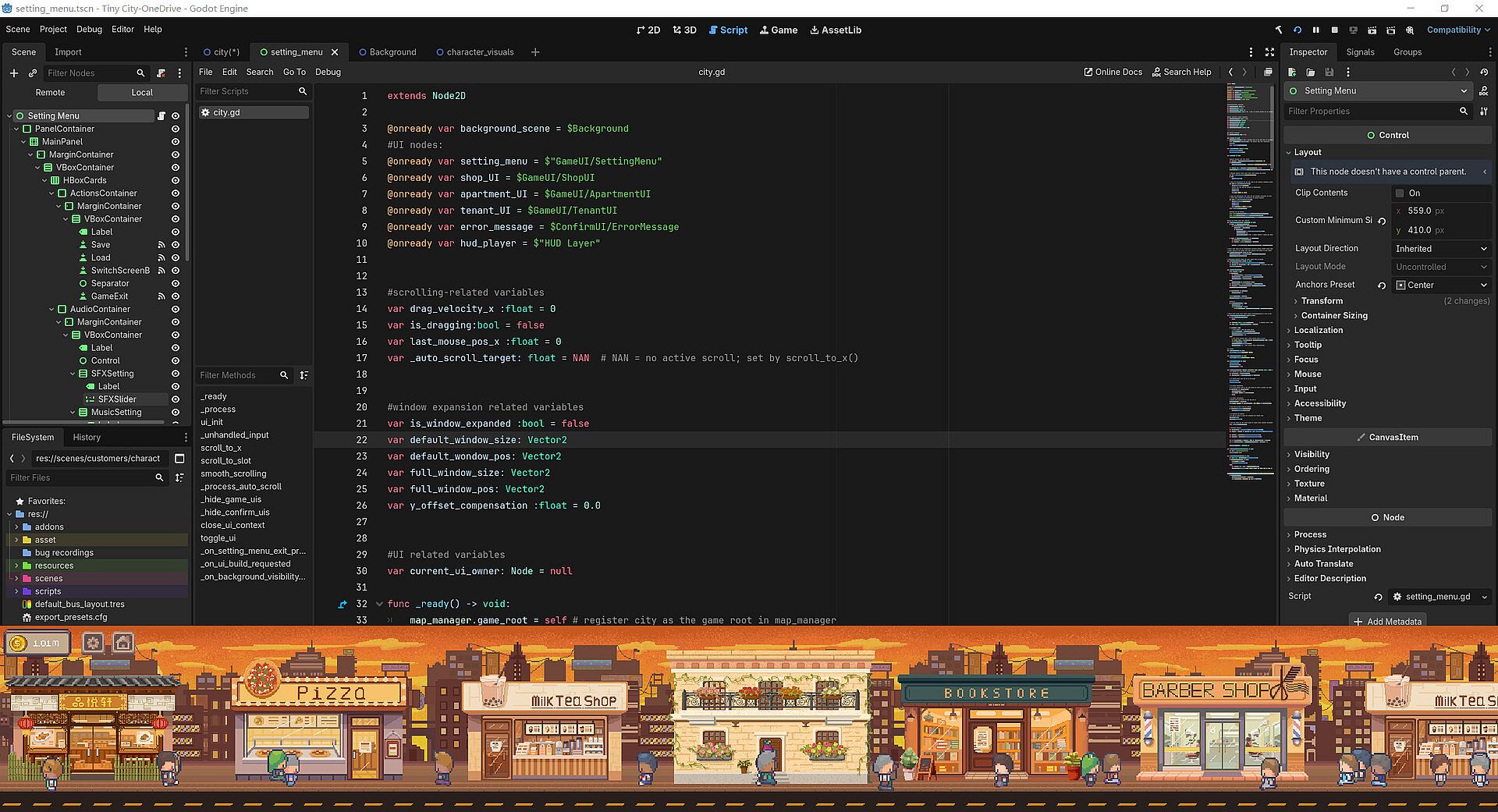
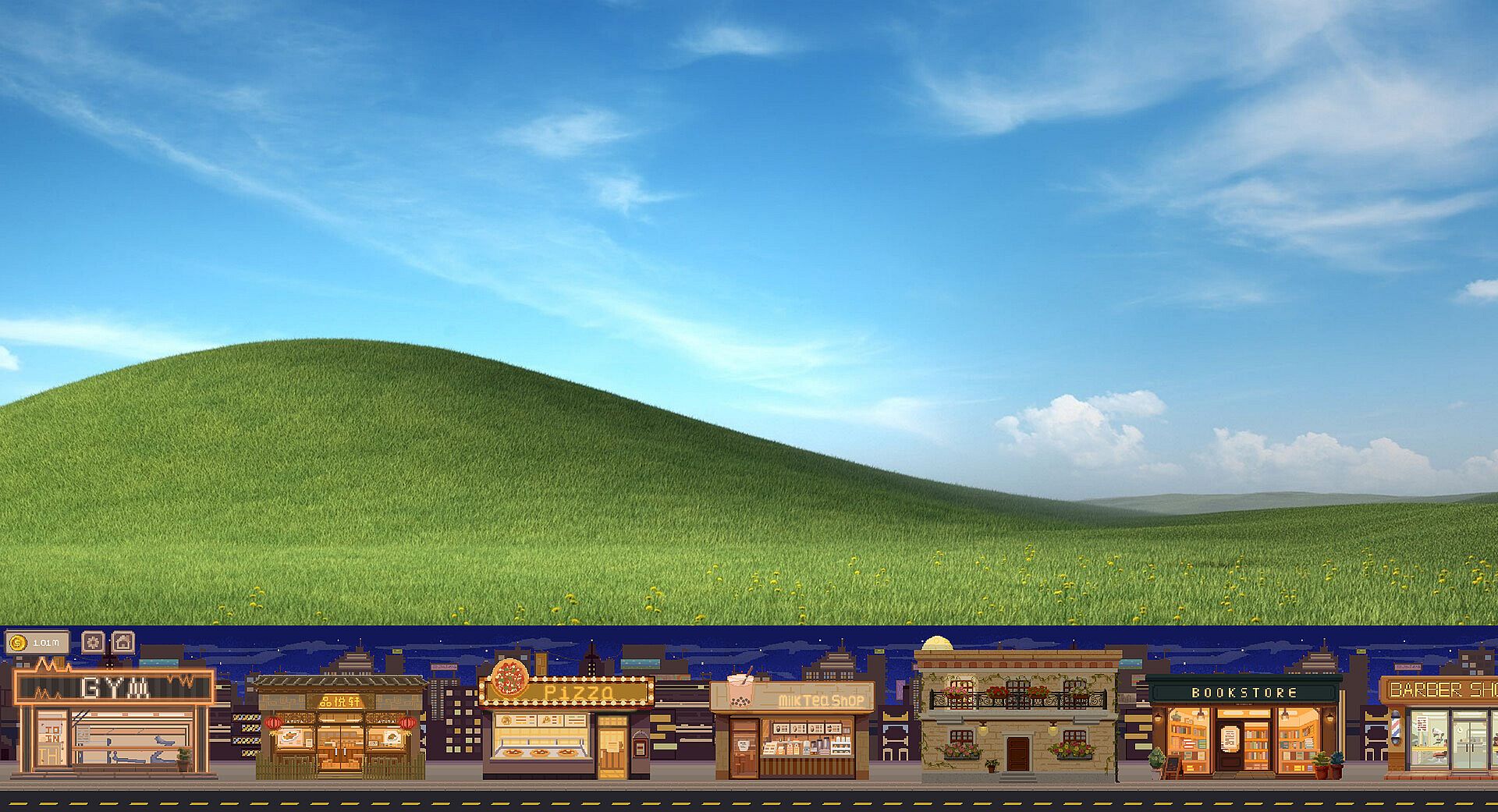
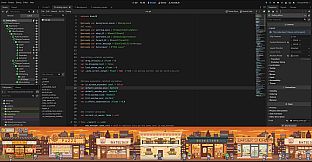
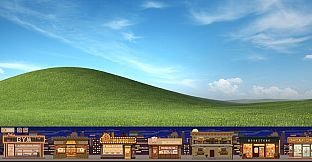
Tiny Street: Taskbar Tycoon is a taskbar idle simulation game that places a compact street of colorful shops directly on the Windows taskbar. Players build and manage a small economy as passerby characters stop to shop while the game runs in the background during work or other activities.
Gameplay
The core loop centers on expanding a horizontal strip of buildings along the taskbar. Passersby arrive at random intervals and enter stores to generate income. Players expand the street by purchasing new building slots and choosing between shops or apartments. Shops sell goods to visitors, while apartments house tenants who contribute to operations.
A real-time day and night cycle syncs with the player's local timezone. Transitions move smoothly through daylight, dusk, and nighttime hours, accompanied by looping lofi soundtracks that shift in mood across the two-hour cycle. This system keeps the visual and audio presentation aligned with actual time of day without requiring active input.
Economy growth continues passively. Rent from tenants collects automatically each morning, providing steady daily income even when the player steps away. Upgrades to shops increase sales rates, and special buildings add targeted boosts such as directing groups of visitors toward higher-profit locations.
Game Modes
The experience runs as a single continuous idle simulation. All progression occurs within this unified setup, with no separate competitive or story-driven modes. Players focus on long-term growth through shop management, tenant placement, and building upgrades while the street operates in the background.
Key Mechanics and Progression
Tenant recruitment begins once the hotel and apartments unlock. Tenants live in the buildings and can be assigned to run shops based on their individual preferences and attributes. These preferences influence how effectively each tenant boosts sales in specific store types. Upgrades allow further customization of tenant roles and automation levels for restocking and customer handling.
Special buildings provide strategic options. A bus stop, for example, funnels larger groups of visitors straight to selected shops, creating temporary sales surges. Other upgrades reduce costs for new slots or multiply earnings across the street. The system rewards steady expansion and smart allocation of limited space along the taskbar.
Everything stays lightweight enough to remain visible and functional alongside normal computer use. The game requires minimal direct interaction after initial setup, emphasizing passive income collection and occasional checks for new building opportunities or upgrades.
Is It Worth Playing?
This title suits players who enjoy idle and incremental simulation games that run alongside other tasks. The taskbar format keeps the street always visible without demanding full attention, and automatic rent collection plus background visitor traffic support true hands-off progression. Those who like cozy management loops with visual customization through day-night changes and lofi audio will find the presentation consistent with the genre. Availability on PC makes it accessible for anyone with a standard Windows setup. The combination of passive economy building and light active decisions around tenant assignments and special buildings creates a relaxed pace focused on gradual street growth.