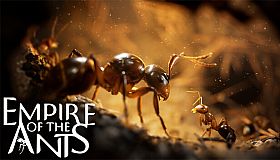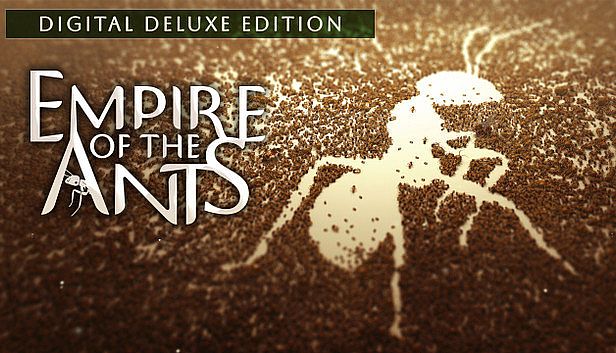











Empire of the Ants is a third-person real-time strategy game set in a photorealistic forest environment. Players take control of a single ant known as 103,683rd and lead colonies through a campaign of exploration and combat against rival insects and wildlife.
Gameplay
The core loop centers on moving through detailed 3D levels as the ant commander while directing groups of units called legions. These legions include basic types such as warriors for close combat, workers for resource gathering, and gunners for ranged attacks. A rock-paper-scissors dynamic governs their effectiveness, with each type countering another in direct confrontations.
Players manage resources like food and wood to upgrade nests, unlock stronger units, and construct defensive chambers. Support units such as aphids or snails provide healing or protection, while super-predator options like beetles add specialized power. Pheromone abilities allow the commander to influence battles directly by boosting allies, scattering enemies, or gathering information. Nest conquest forms the main objective in strategy-focused sections, requiring players to expand territory and adapt loadouts before engagements.
The single-player campaign mixes mission styles across roughly 20 hours. Some emphasize exploration and light platforming through the forest floor, while others focus on tactical setups with predefined forces or full strategic management of multiple nests and unit production. Day and night cycles affect visibility and creature behavior on the maps.
Game Modes
Multiplayer supports competitive online matches through ranked 1v1 ladders and three-player free-for-all battles. Participants customize their starting legions, support units, and pheromone selections ahead of each match on a variety of maps.
The Swarm Together update introduced additional options for solo and group play. Horde Mode challenges players to survive successive waves of enemies that increase in variety and strength, available alone or with a partner. Story Challenge Mode lets users replay selected campaign missions under a scoring system to refine approaches and compete for higher ranks. A 2 Players vs 2 AIs mode places two human commanders against artificial colonies on larger maps built for extended engagements.
Units and Progression
Legion composition changes through nest upgrades that grant access to advanced variants and new types. Support choices influence team durability or mobility, while super-predators deliver high-impact roles limited to one active legion at a time. Pheromone selections further tailor strategies for offense, defense, or reconnaissance without altering the underlying unit counters.
Campaign progression rewards experimentation with different nest chamber builds that prioritize economy, defense, intelligence, or power acquisition. These systems encourage repeated playthroughs of missions to optimize outcomes against increasingly capable opponents.
Is It Worth Playing?
Empire of the Ants appeals to players seeking an accessible entry into real-time strategy with a distinctive third-person viewpoint and strong emphasis on visual detail. The campaign provides a complete narrative experience focused on colony expansion and alliances with forest creatures, while the added co-op and challenge modes extend replay value for those who enjoy wave survival or score chasing.
Steam user reviews stand at Mostly Positive based on hundreds of ratings, with praise directed at the atmosphere and unit variety. Reviews note that the simplified mechanics suit newcomers but may feel limited to veterans of deeper strategy titles. The game runs on PC and receives ongoing updates that refine balance and introduce new content.
Those who value photorealistic environments, straightforward legion command, and a blend of exploration with tactical decisions will find the package engaging. Competitive players can test skills in the ranked modes, while casual participants benefit from the solo horde and challenge options. The overall structure supports both short sessions and longer campaigns without requiring prior series knowledge.