

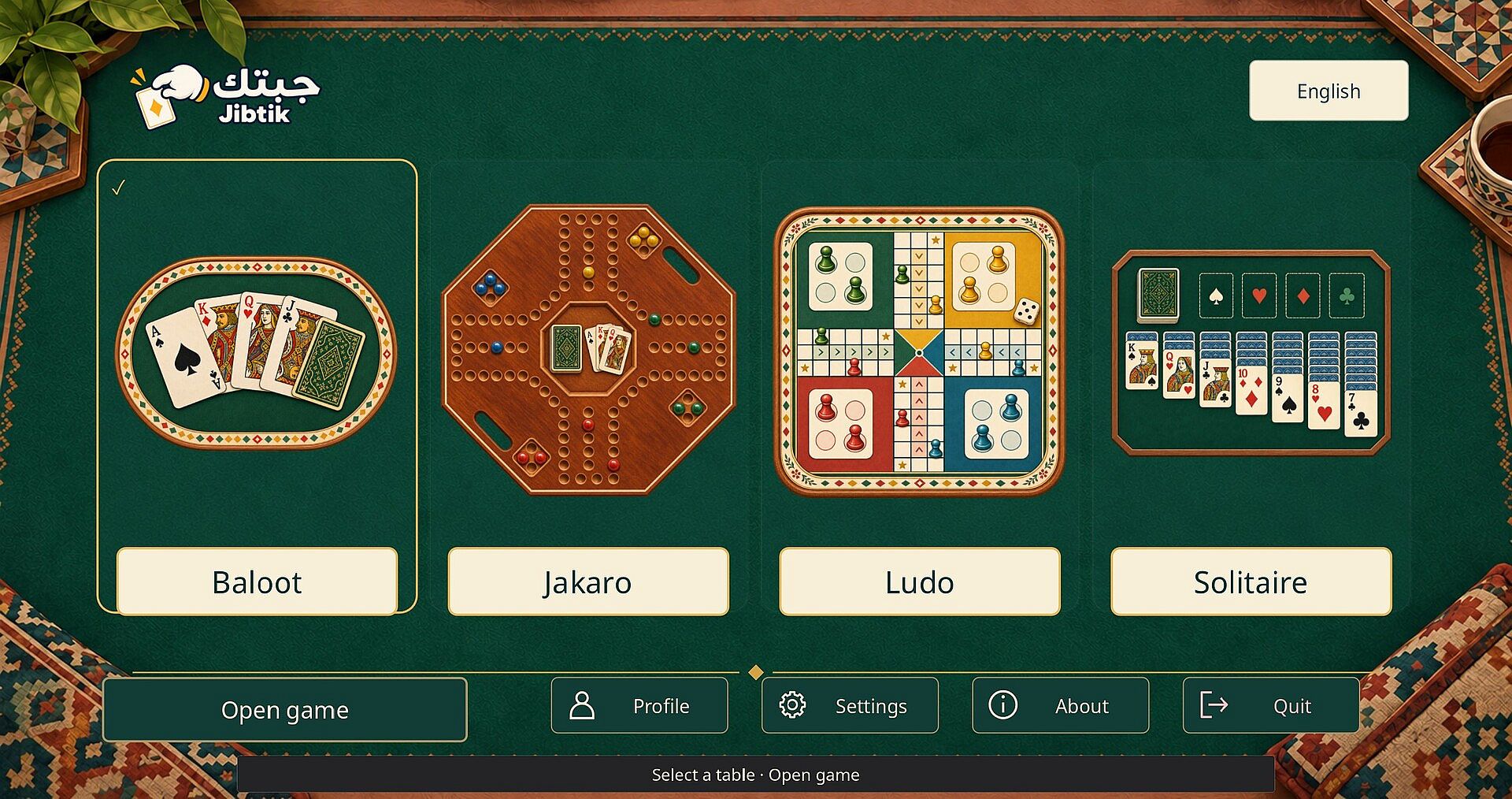
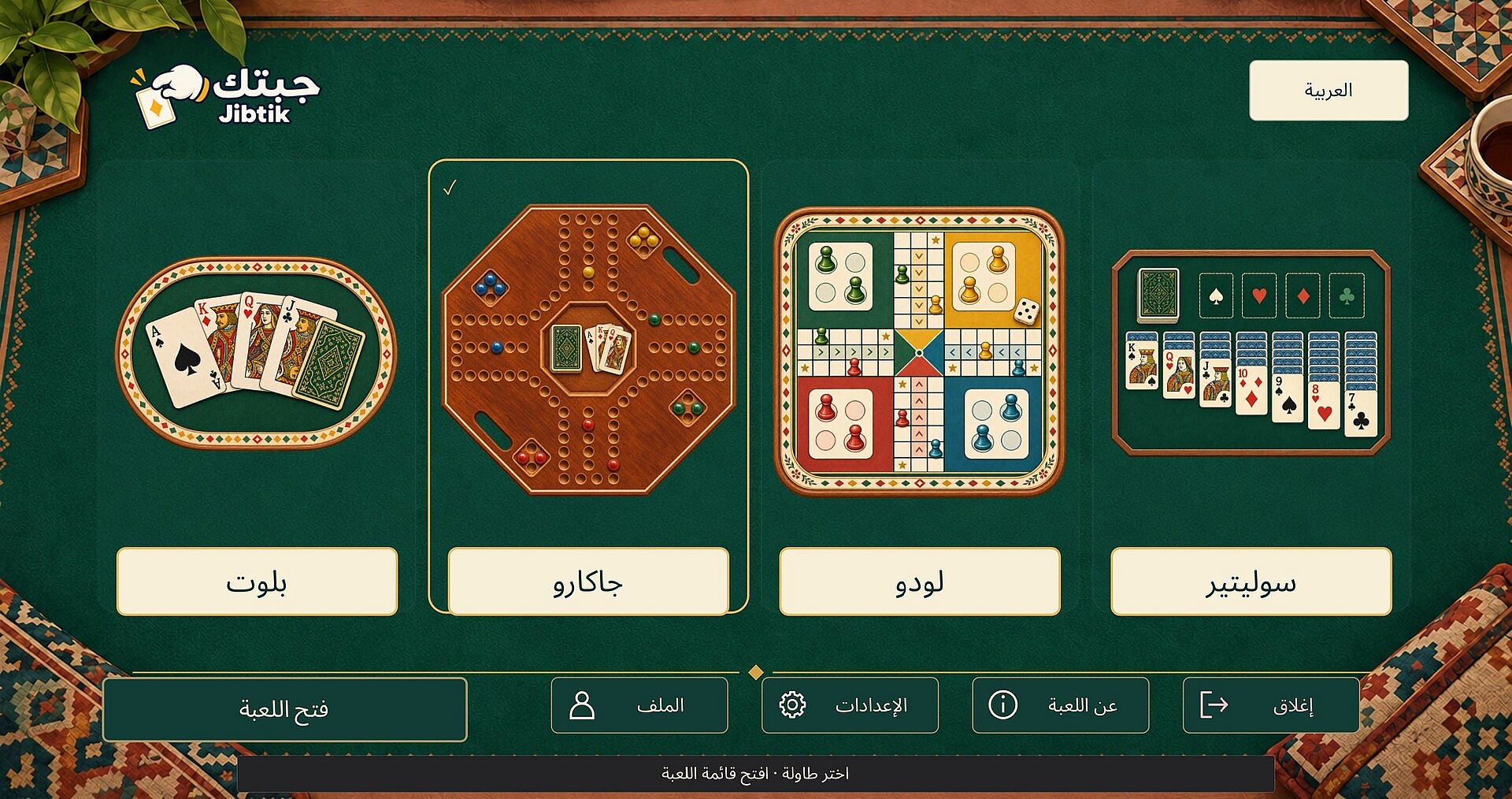
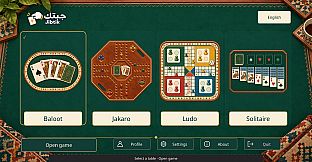
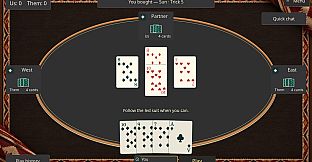
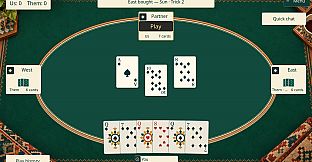
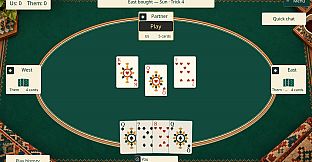
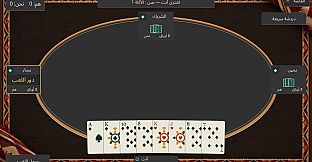
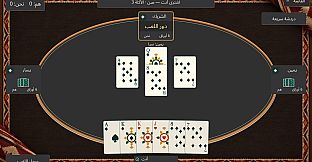
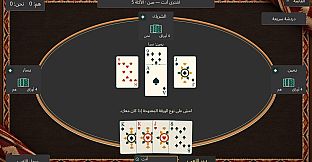
Baloot is a digital card game adaptation of the traditional partnership trick-taking game popular across the Arabian Peninsula. Players form two teams of two and compete through bidding, trick play, and point collection in a simulation that emphasizes strategy and careful decision making. The experience suits those who enjoy casual yet thoughtful card games with elements of simulation and partnership coordination.
Gameplay
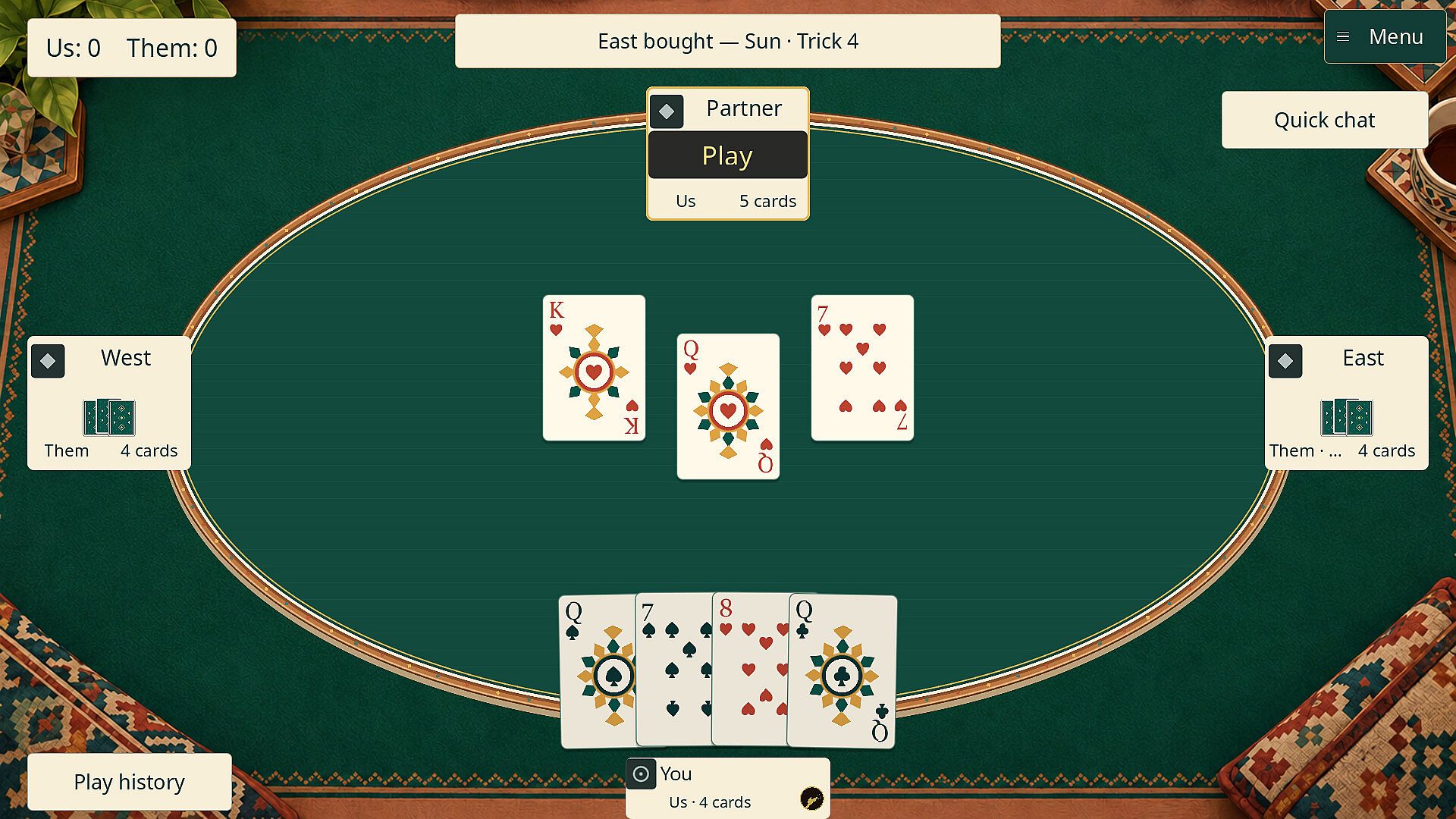
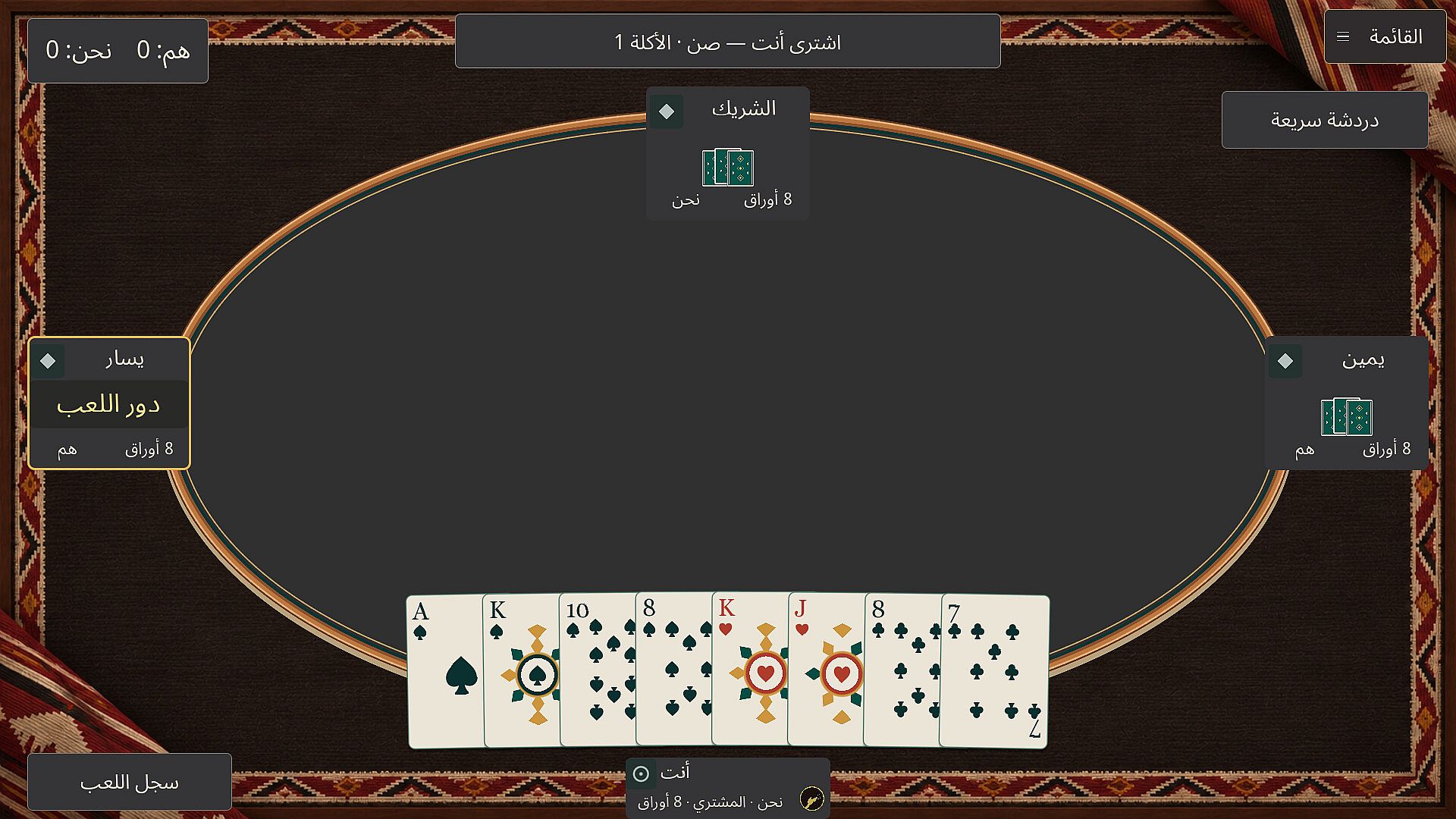
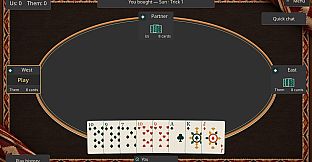
Four players sit at a virtual table in fixed partnerships, with partners positioned opposite each other. A 32-card deck is used, consisting of cards ranked from 7 to ace in each of the four suits. Each deal begins with an auction where participants bid on the contract by selecting either Sun, which plays without trumps, or Hokum, which establishes a trump suit based on the revealed card. The winning bidder takes the face-up card and additional cards to complete an eight-card hand for all players.
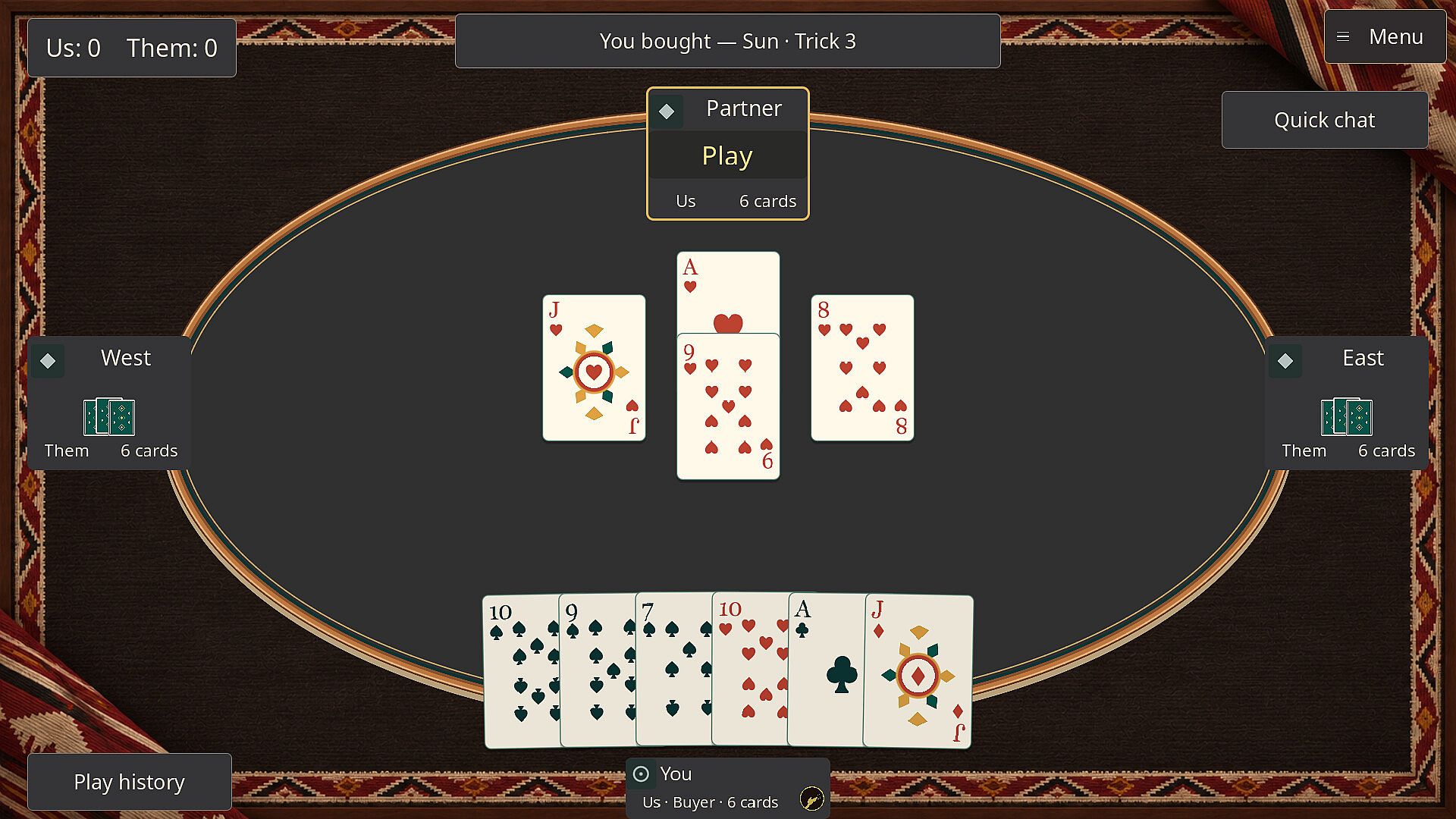
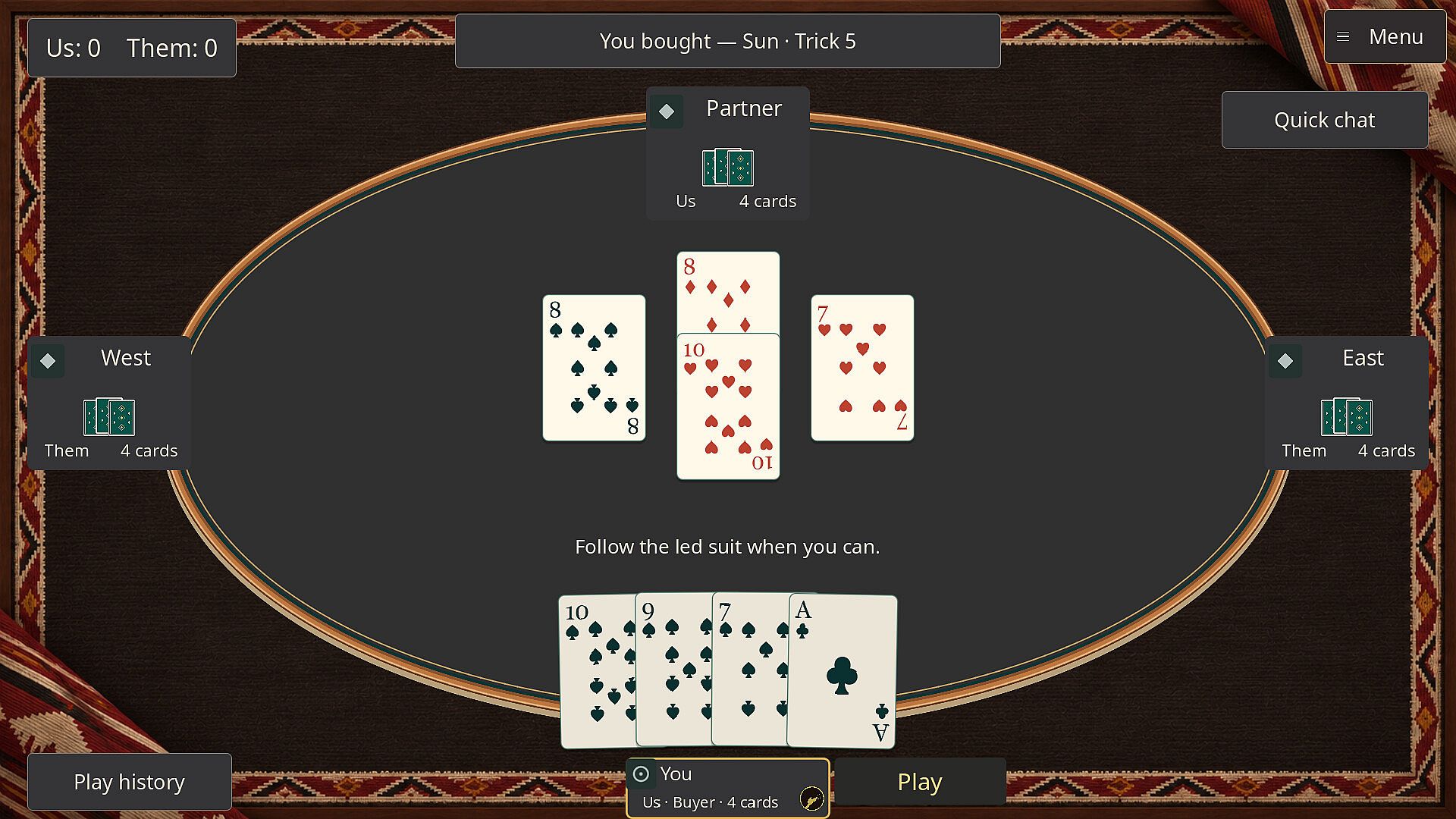
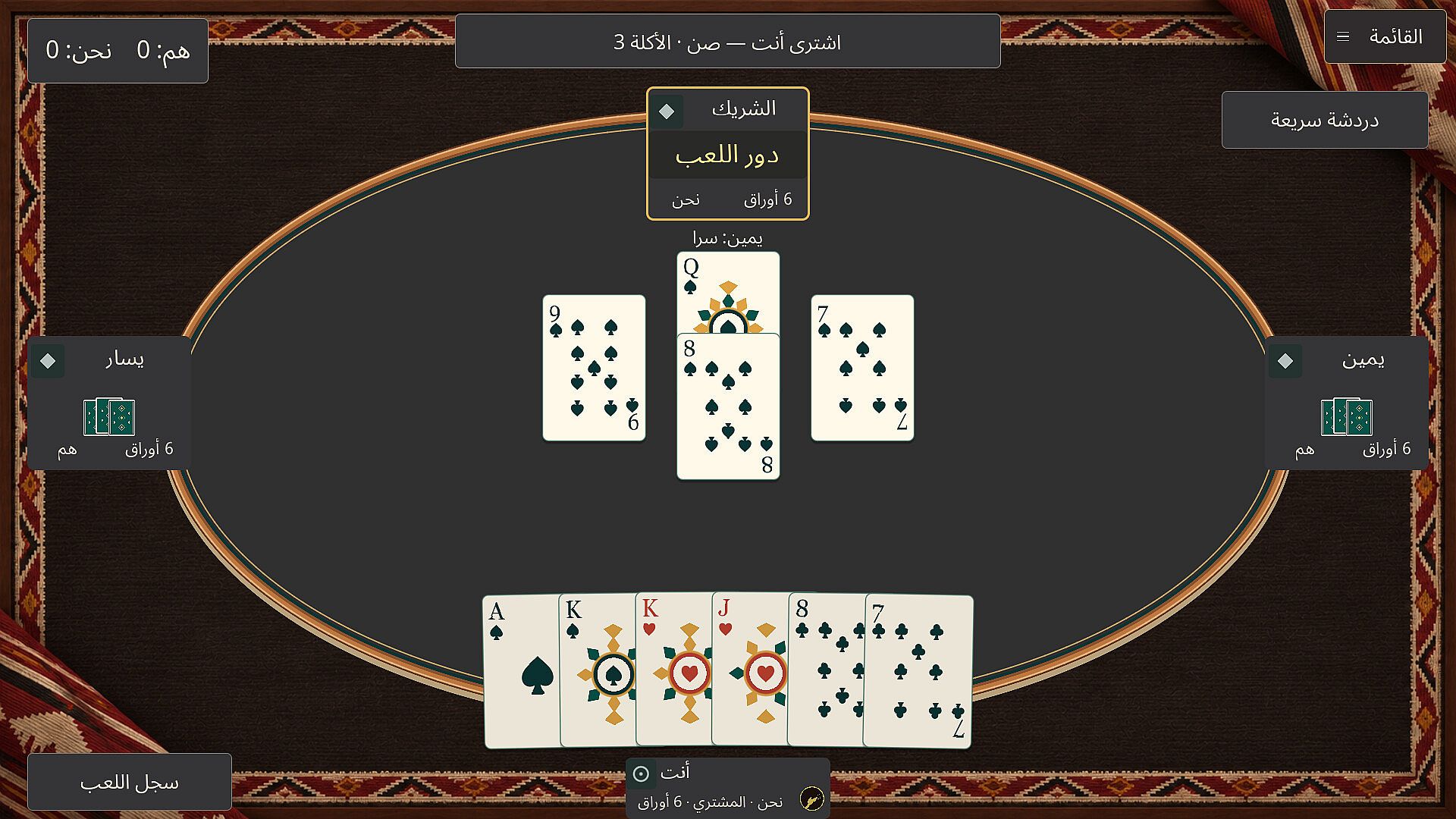
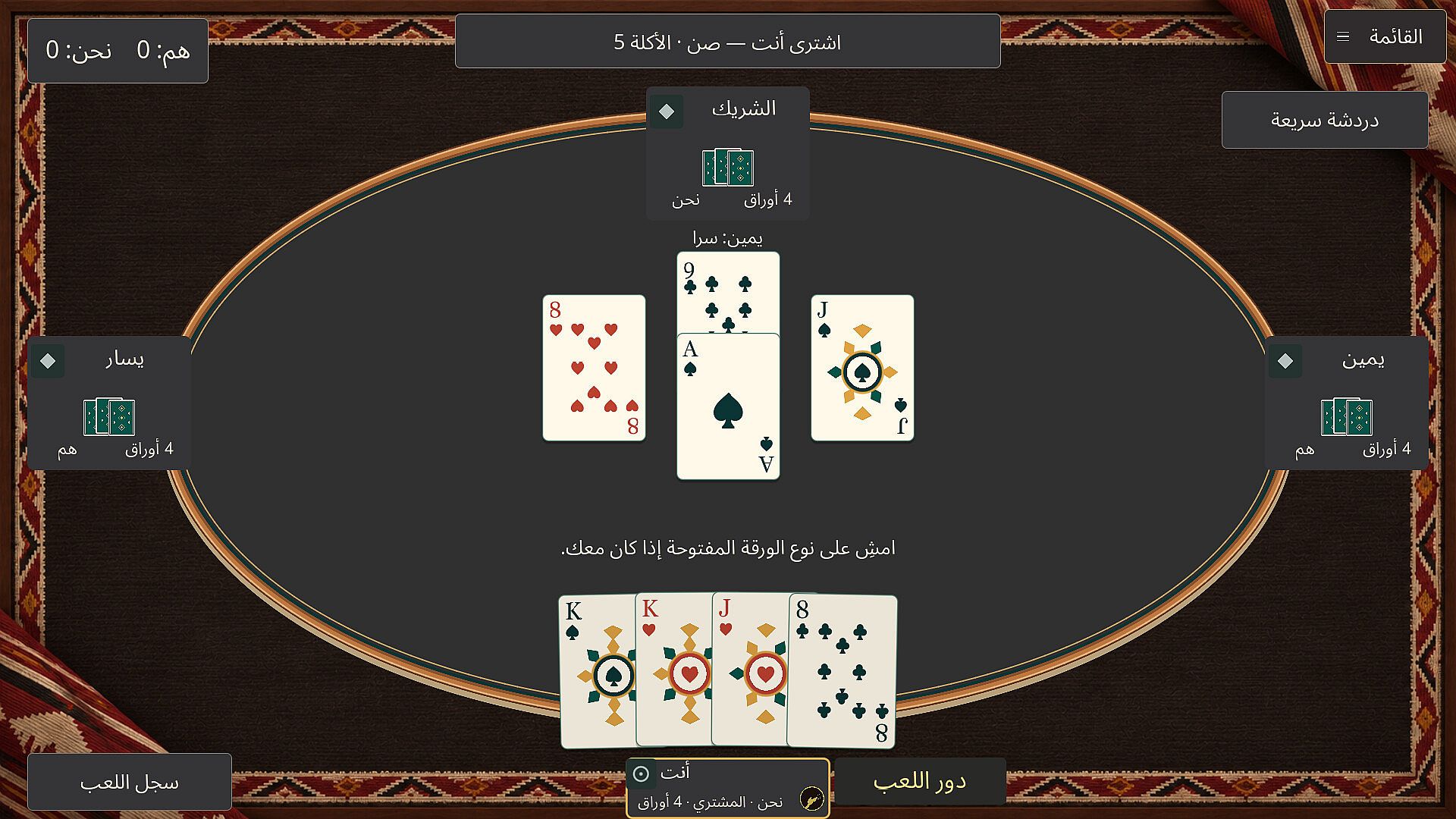
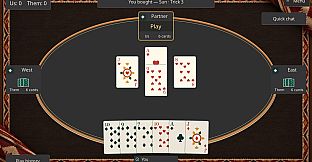
Trick play follows strict rules of following suit when possible, with trumps overriding in Hokum contracts. Card rankings shift depending on the contract: in Sun and non-trump suits the order runs ace high down to 7, while in the trump suit the jack ranks highest followed by the 9. Projects, which are specific combinations held in hand such as sequences or sets of high cards, are declared and scored by the team holding the highest-ranking one. Points accumulate from captured cards in tricks, with the last trick carrying a bonus, and the buying team must outscore the opponents to retain their points. Failure to do so transfers all points to the defending side. Matches continue across multiple deals until one team reaches the target score of 152 points.
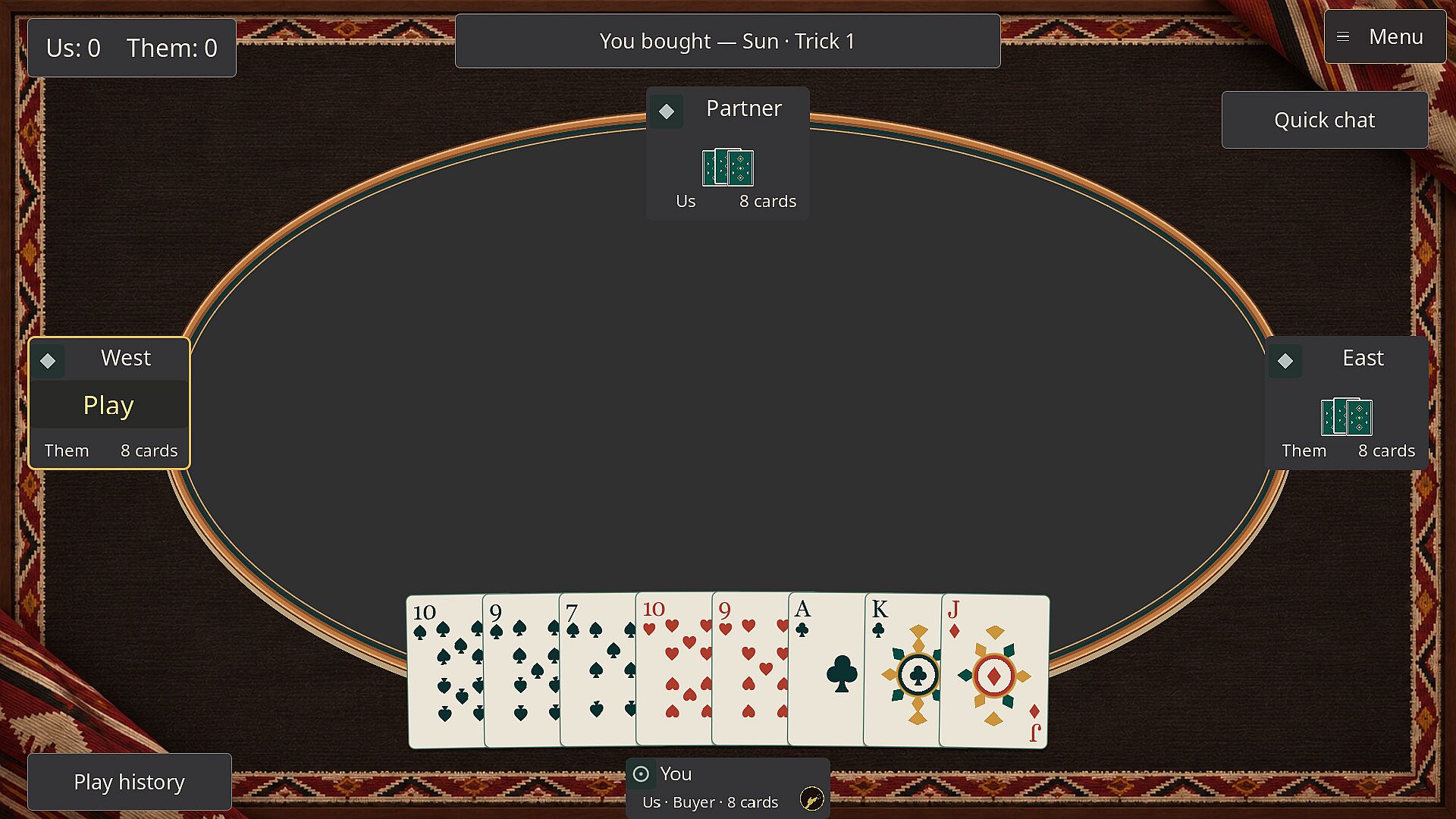
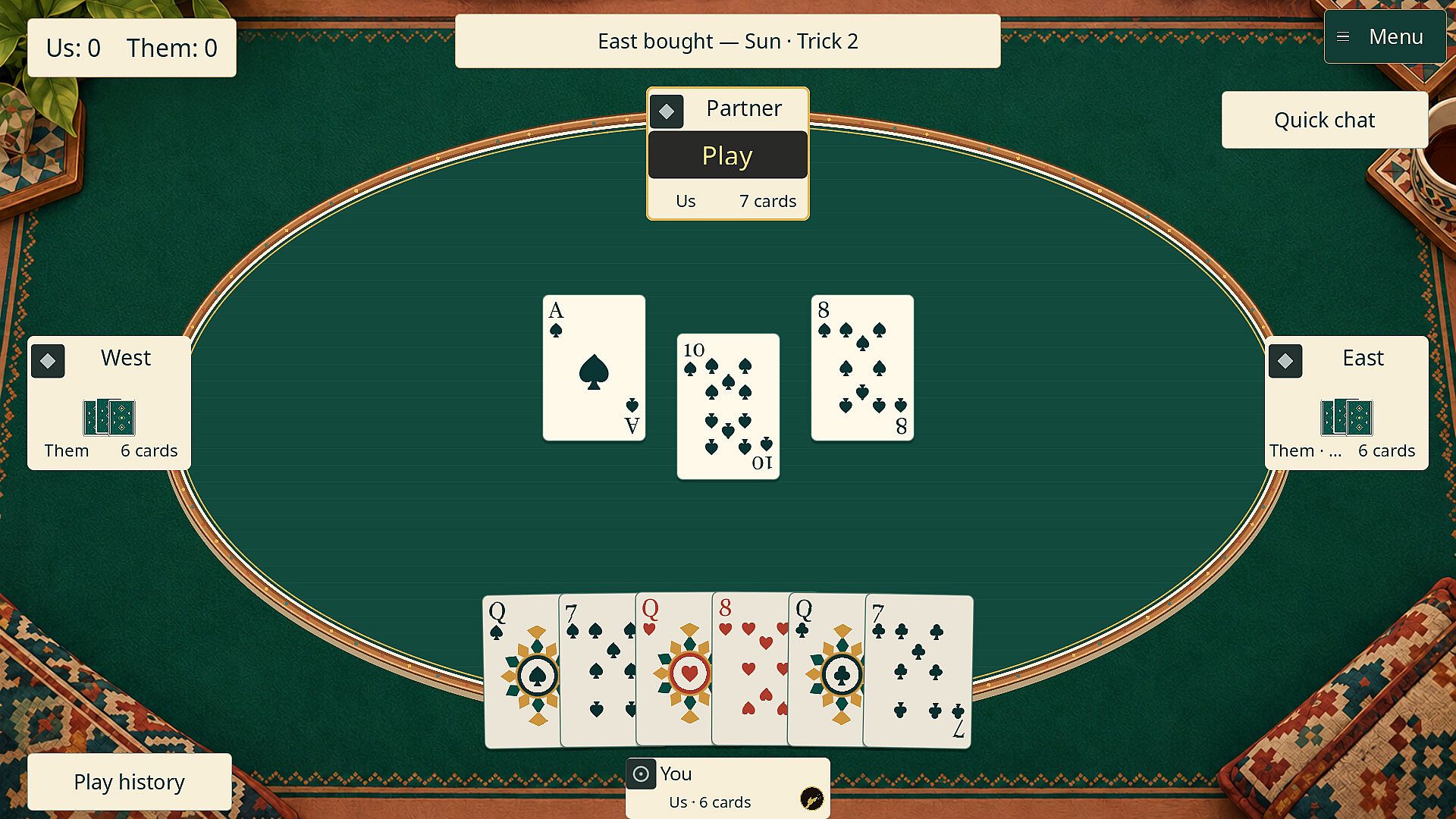
The simulation provides tools to track bidding decisions, cards played, and team scores throughout each hand. A built-in guide explains the implemented rules and available table options. Visual themes include Sadu or Majlas styles, and players can adjust text size for better readability during extended sessions. Practice occurs against computer opponents with selectable difficulty levels, allowing gradual improvement in bidding strategy and trick management.
Game Modes
The core experience centers on standard Baloot matches played against artificial intelligence opponents. Users select difficulty settings to match their skill level and engage in full games that replicate the complete ruleset, including auctions, projects, and scoring. No additional named variants or separate modes appear in the available features, keeping the focus on the authentic partnership format.
Single-player sessions emphasize repeated practice hands where players refine their approach to contracts and declarations. The setup supports ongoing matches that mirror traditional play without time limits or external interruptions.
Visual and Accessibility Options
Table presentation draws from cultural motifs with choices between Sadu and Majlas designs. These options alter the background and aesthetic while maintaining clear card visibility. Text scaling provides flexibility for different screen sizes or player preferences, ensuring comfortable viewing of scores, bids, and the in-game guide during play.
Controls remain straightforward, with clear indicators for bidding choices, card selection, and project announcements. The interface highlights relevant information such as remaining cards and current team standings to support focused decision making.
Is It Worth Playing?
Baloot appeals to players interested in strategy card games that reward partnership communication and precise bidding. The single-player focus against adjustable AI opponents makes it accessible for learning the mechanics without requiring other participants. Those who appreciate simulation-style card play with clear rule explanations and customizable visuals will find the experience straightforward and repeatable.
Because the title is a recent release with no accumulated player feedback available, suitability depends on individual interest in the underlying Baloot ruleset. Fans of similar trick-taking games may value the faithful implementation and practice tools, while casual players can use the difficulty options to build familiarity gradually.