

Lord of the Tiles Ithaca expands the core kingdom-building experience of Lord of the Tiles with legendary figures from the Odyssey. This strategy simulation title for PC lets players develop settlements through tile-based exploration and infrastructure planning. The added lords bring specialized bonuses that influence city growth and resource flow, while new visual options allow players to alter the appearance of their capital and other settlements.
Gameplay
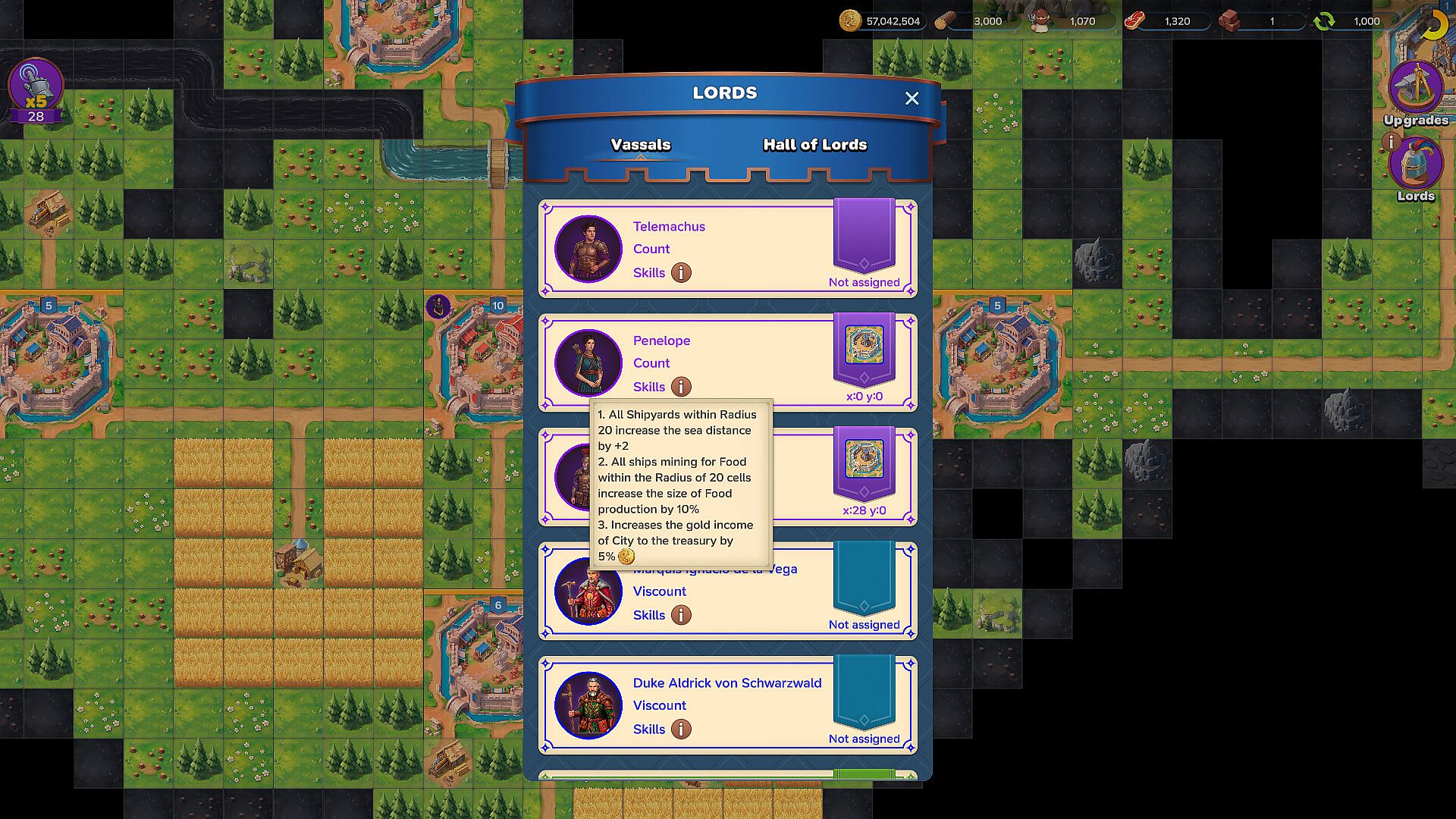
Players begin with a single city and gradually reveal adjacent tiles on the map. Each new tile may reveal resources or additional settlements that can be incorporated into the growing kingdom. Roads link these locations into a connected network, which supports faster development and resource movement across the territory.
Resource collection focuses on gold, wood, food, and stone. Production buildings convert these materials into further gains, while warehouses store surpluses for later use. Cities can be leveled up to unlock additional structures and improve output efficiency. The capital receives upgrades that introduce new mechanics over time, allowing the kingdom to scale from a modest settlement into a larger state.
Progress occurs at the player's chosen speed with no combat or external threats. Placement of roads and buildings rewards thoughtful organization, yet the system permits experimentation and adjustments without penalties for suboptimal choices. The loop centers on steady expansion, infrastructure refinement, and economic balancing.
Game Modes
The experience revolves around a single-player kingdom development loop. Exploration, connection of settlements, and economic management form the central activity, with no separate competitive or time-limited modes confirmed in the current version. Players advance through continuous map revelation and city integration rather than discrete stages or matches.
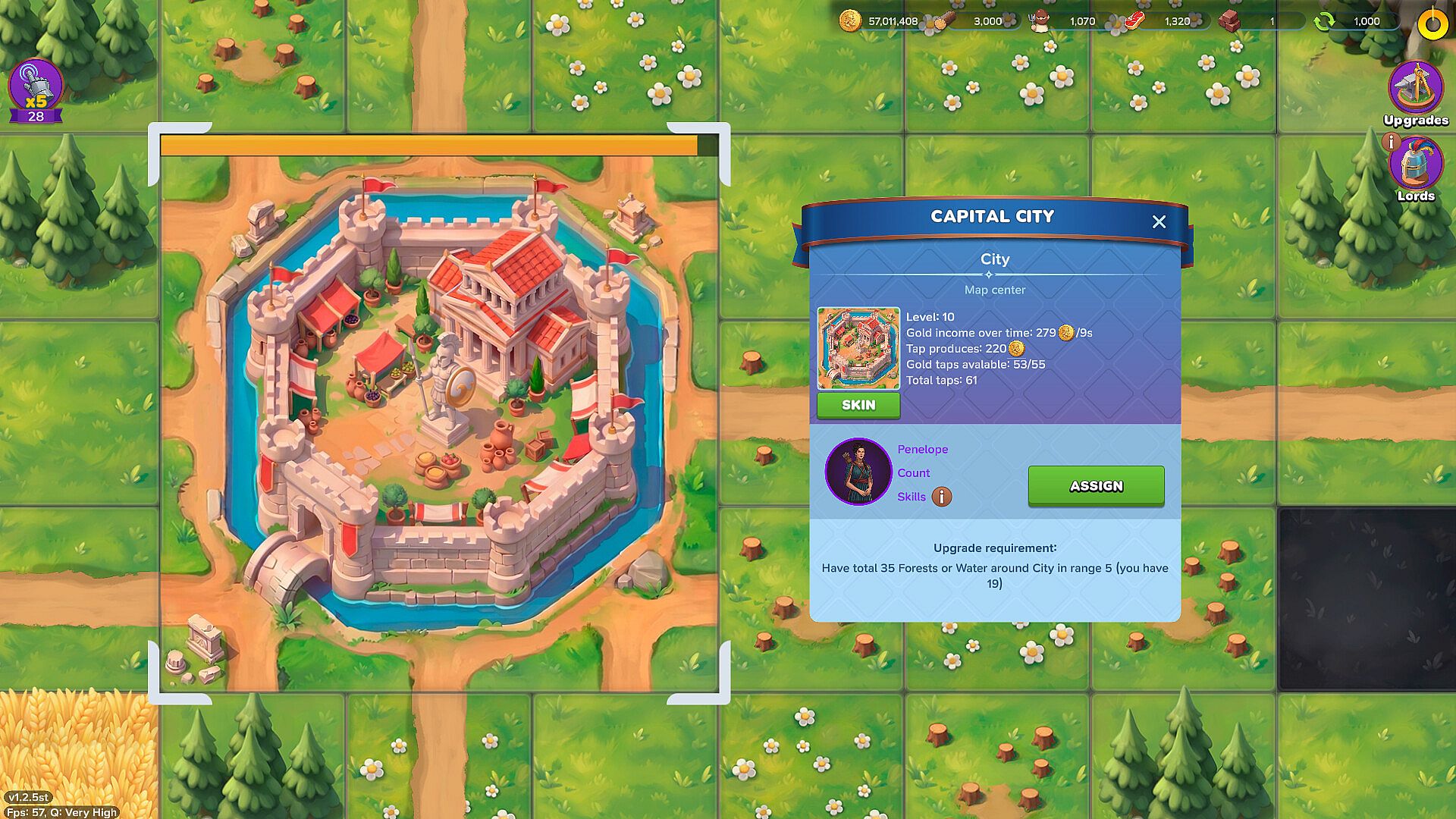
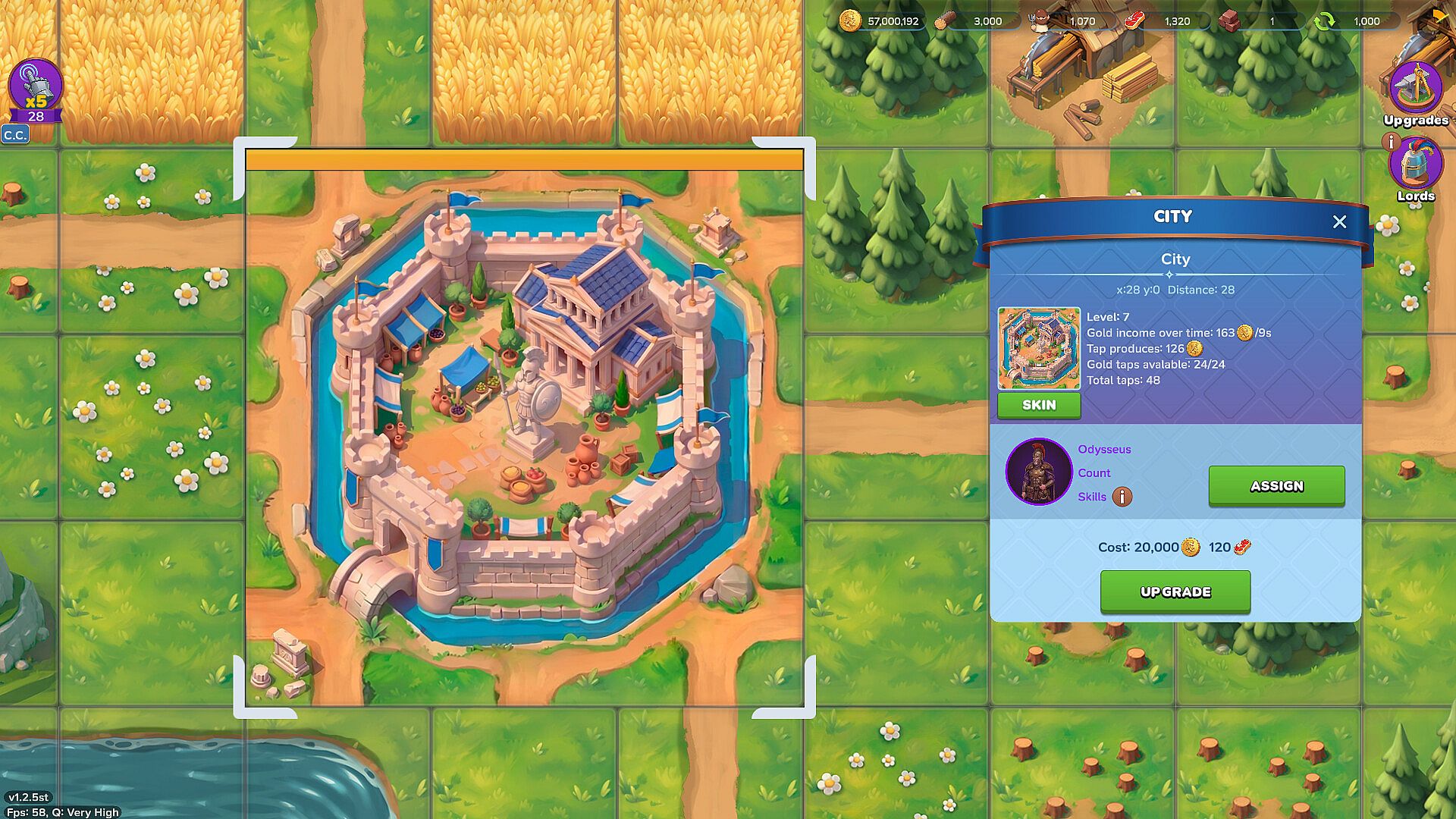
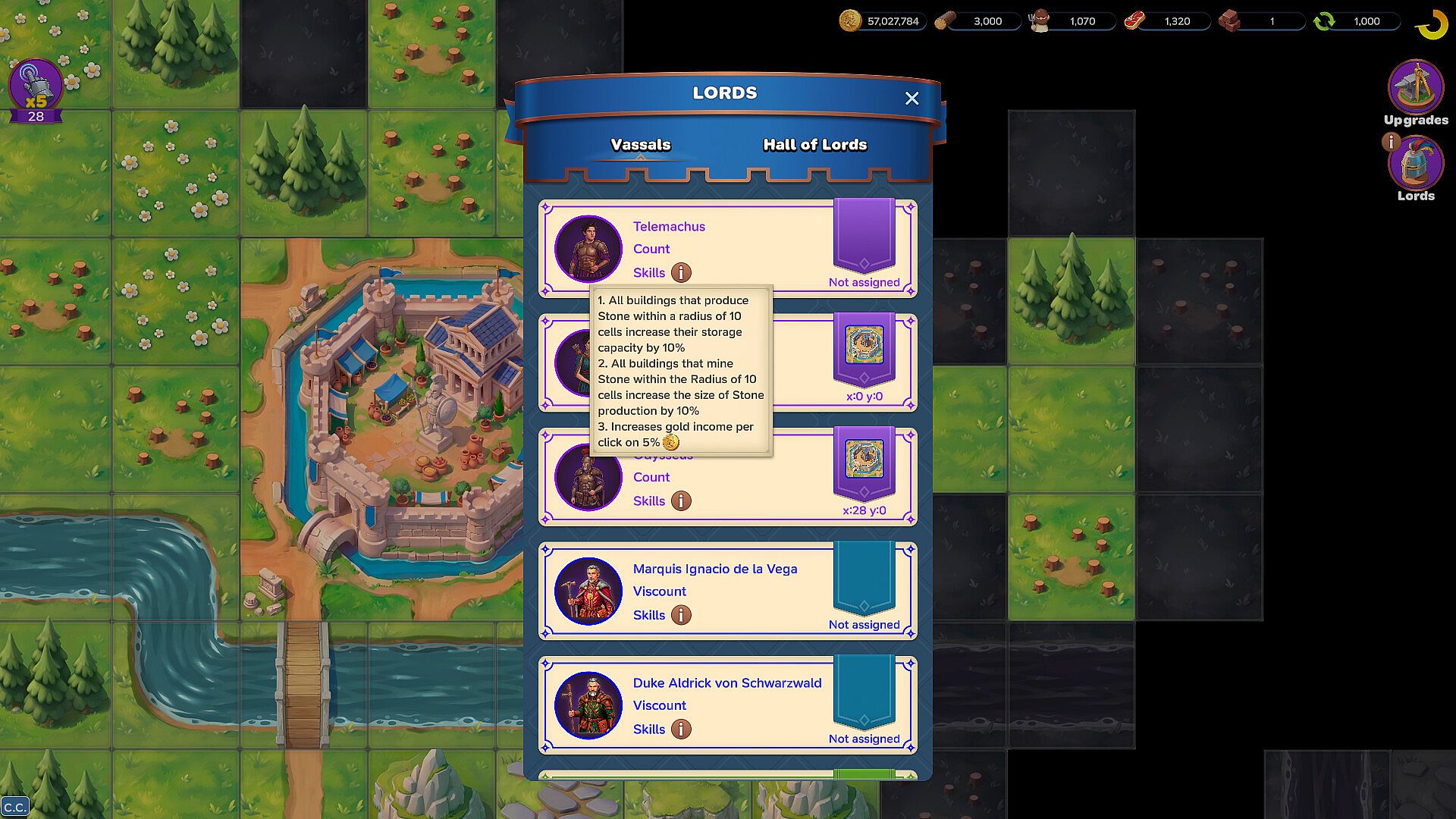
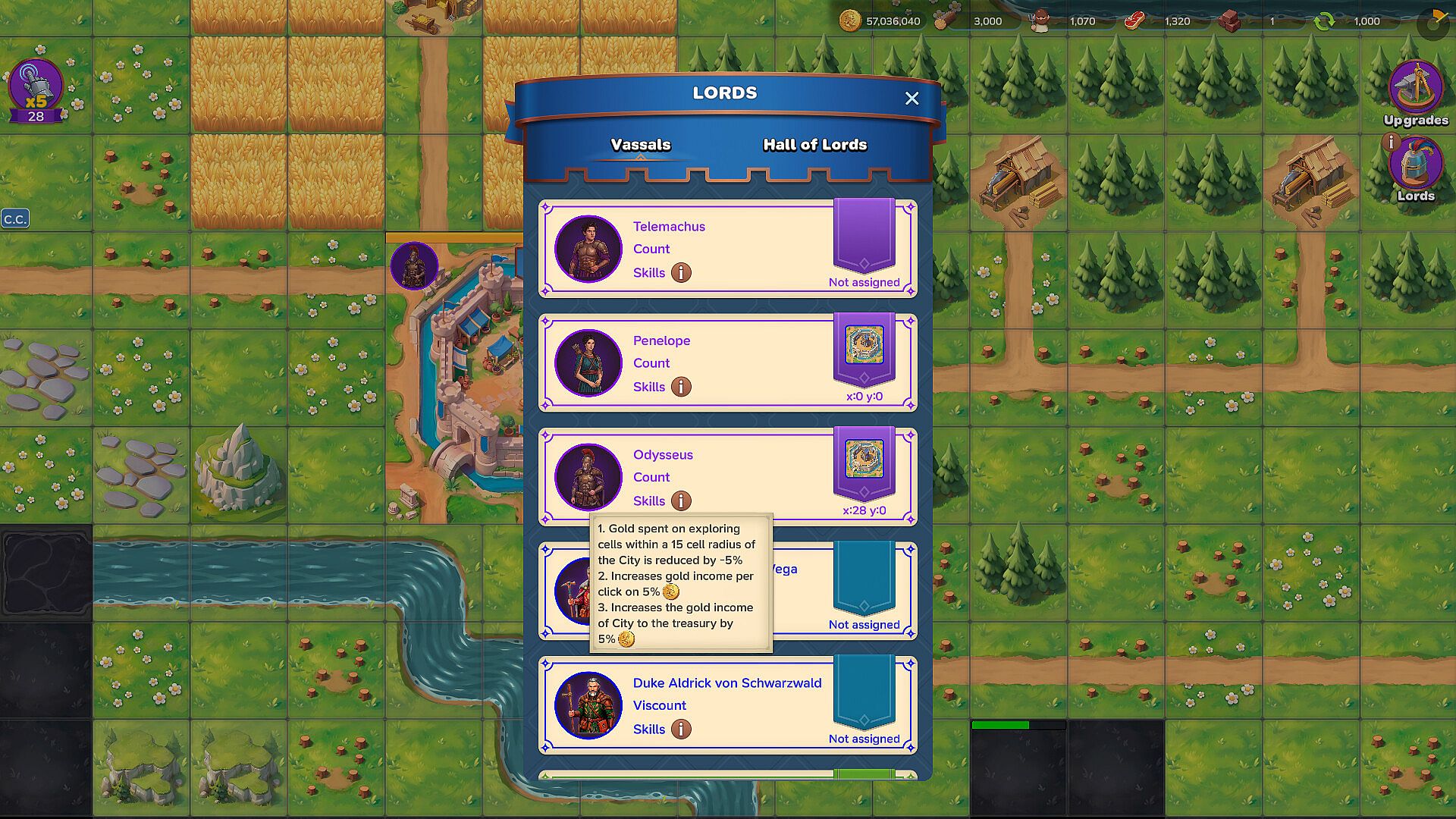
Customization elements integrate directly into this loop. Lords can be assigned to specific cities to apply their bonuses where they provide the most benefit, encouraging different placement strategies across multiple settlements. Visual changes to city appearances can be applied individually, supporting varied kingdom aesthetics without altering core mechanics.
Lords from the Odyssey
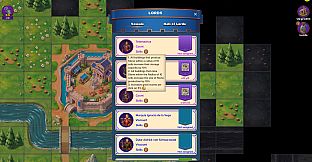
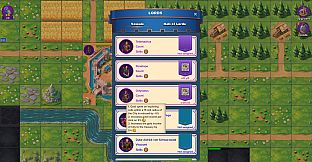
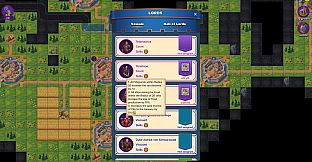
Three new lords join the roster: Odysseus, Telemachus, and Penelope. Each carries unique bonuses that affect city development when assigned to settlements. Players choose assignments to align these bonuses with particular needs, such as resource production or expansion speed, and can reassign them as the kingdom evolves.
These lords fit into the existing assignment system, adding strategic depth to city management. Combinations of the new lords with any existing options allow for varied approaches to kingdom growth and specialization.
Kingdom Customization
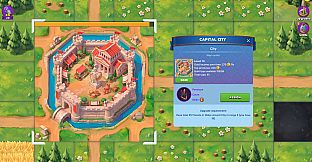
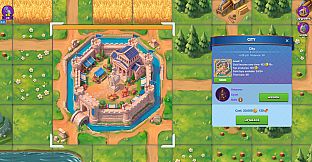
New skins provide visual variety for the capital city and regular cities. These appearances can be changed manually for individual settlements, enabling players to create distinct looks across the map. The options layer onto the core building systems without affecting resource or infrastructure rules.
City skins support personal expression in how the kingdom takes shape visually. Combined with lord assignments, they offer additional ways to differentiate settlements and reflect a preferred kingdom identity.
Is It Worth Playing?
Lord of the Tiles Ithaca suits players who enjoy relaxed strategy and simulation gameplay focused on exploration and steady progression. The peaceful pace, absence of combat, and emphasis on personal planning make it accessible for casual sessions or longer building projects. The new lords introduce meaningful assignment choices that reward experimentation within the established systems.
Current player feedback remains limited due to the recent release, with the base game showing a small number of reviews and no aggregated score yet available. The title receives ongoing support through its developer, and the DLC integrates cleanly with the core loop. Those seeking a low-pressure city builder with thematic additions from classical literature will find the expansion a natural fit for extended play.