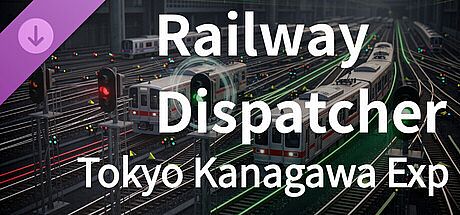



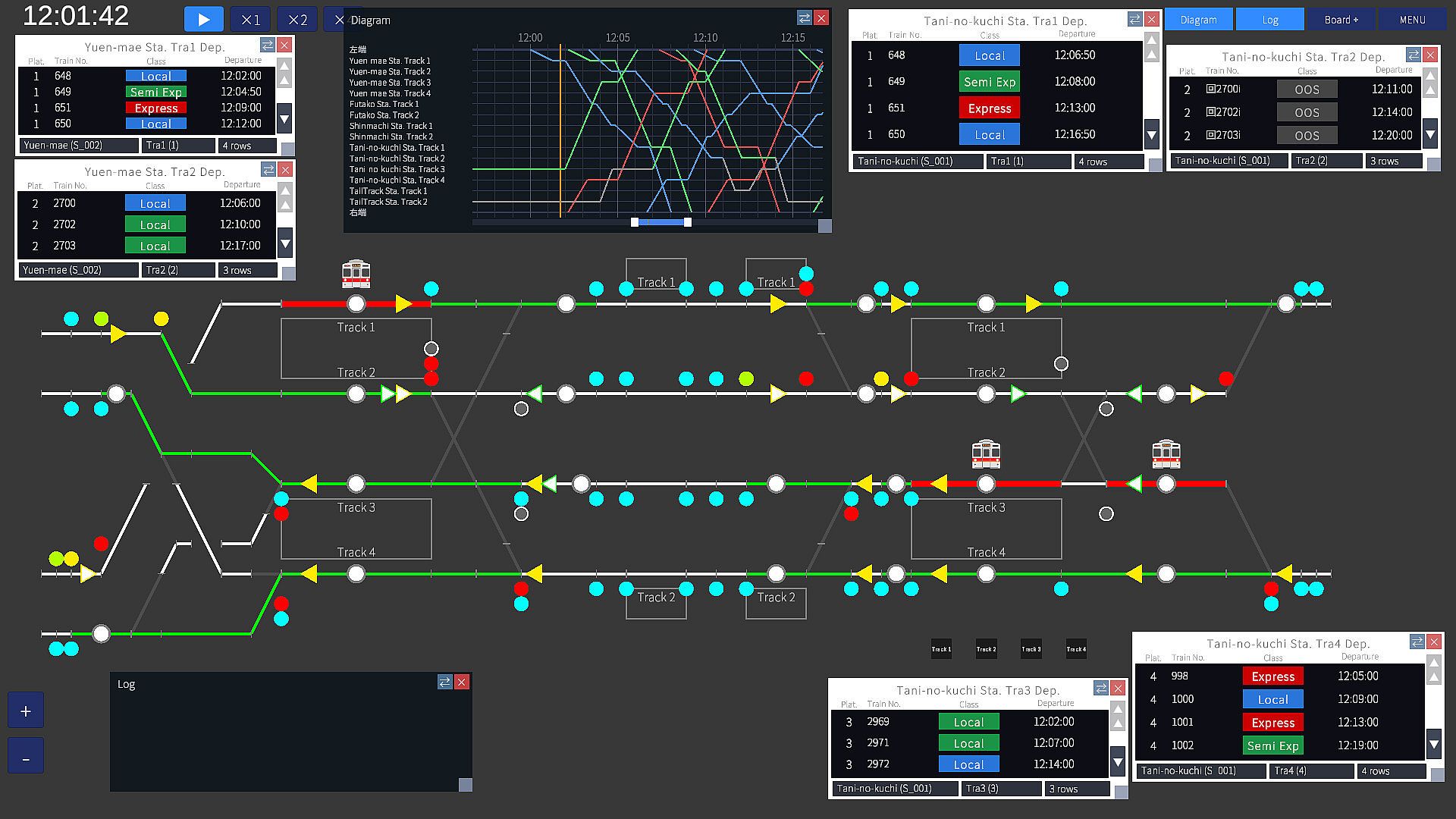
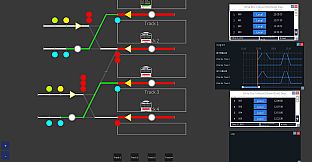
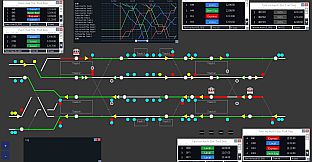
Railway Dispatcher ist eine Simulationserfahrung, bei der Spieler den Zugverkehr auf japanischen Schienennetzen steuern. Mit dem Tokyo-Kanagawa Express Scenarios DLC erweitert sich das Spiel um vier neue Bahnhofskarten, die auf einer stark frequentierten fiktiven Privatbahn angesiedelt sind. Dabei übernehmen Spieler die Steuerung von Signalen, die Festlegung von Fahrstraßen und die Feinabstimmung von Abfahrtszeiten, um den pünktlichen Betrieb auf vernetzten Gleisen und Bahnsteigen sicherzustellen.
Gameplay
Im Mittelpunkt steht die Echtzeit-Steuerung an komplexen Knotenpunkten und Endbahnhöfen. Mehrere Linien treffen an Bahnhöfen mit gemeinsamen Bahnsteigen aufeinander, sodass sorgfältige Planung nötig ist, um Konflikte zwischen ankommenden, abfahrenden und durchfahrenden Zügen zu vermeiden. Wendeanlagen ermöglichen das Wenden von Zügen, während eng folgende Verbindungen eine präzise Abstandsregelung erfordern. Neue Zugkompositionen mit fünf bis zehn Wagen stehen zur Verfügung, jeweils mit eigenen visuellen Symbolen für Express-, Semi-Express- und Limited-Express-Züge. Diese Unterschiede beeinflussen, wie die Züge in den Fahrplan eingefügt werden und an stark frequentierten Stellen miteinander interagieren.
Bahnhofsdurchsagen liefern akustische Hinweise zu Ankünften, Durchfahrten, Zielorten, Wagenzahlen und durchgehenden Verbindungen. Diese zusätzliche Ebene verstärkt die betriebliche Atmosphäre, ohne die grundlegenden Mechaniken zu verändern. Sämtliche Funktionen aus dem Basisspiel - einschließlich Signalsteuerung und Fahrstraßenverriegelung - bleiben erhalten, während die neuen Karten durch mehr Bahnsteige und komplexere Bewegungsabläufe für höhere Dichte sorgen.
Spielmodi
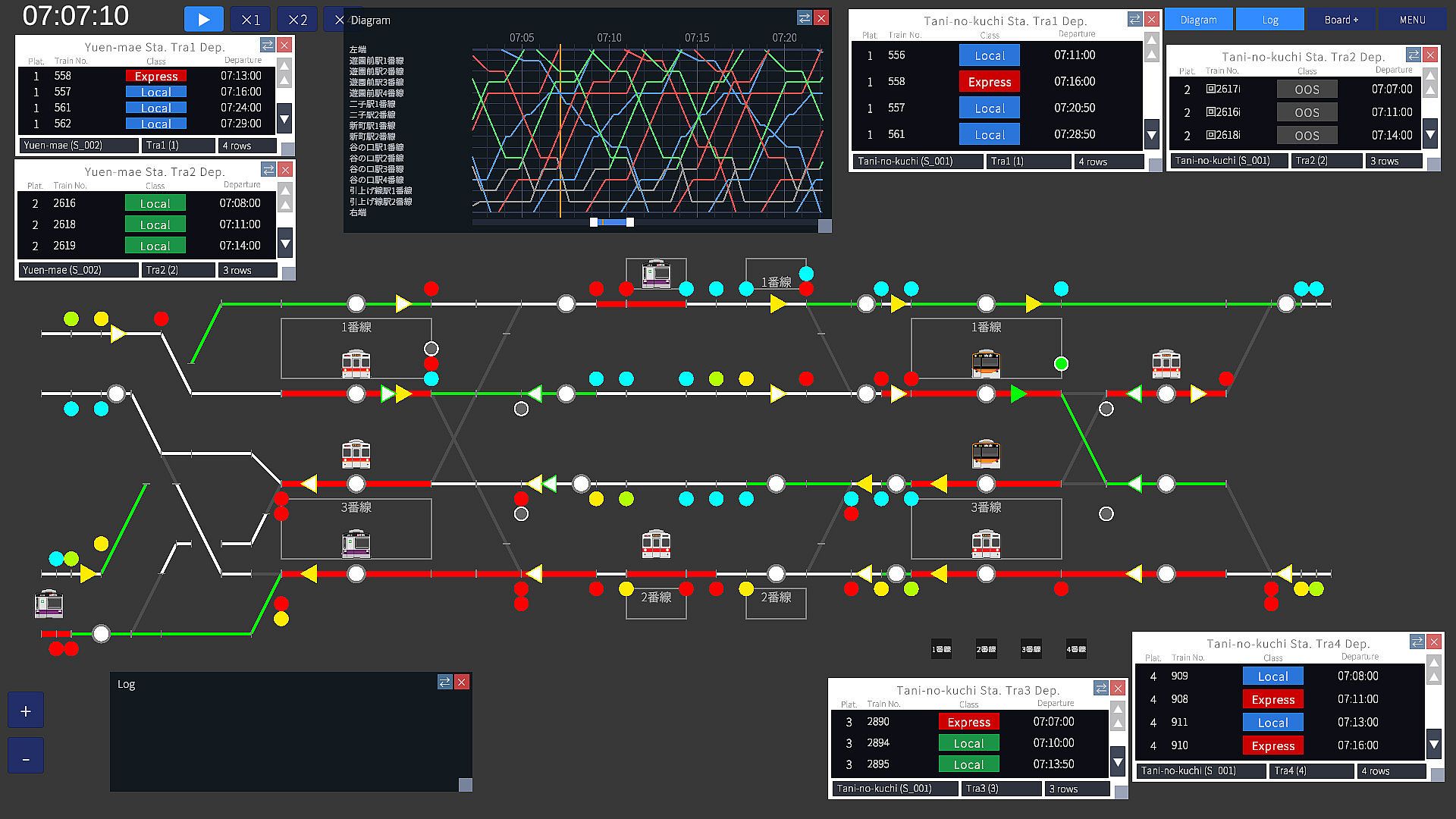
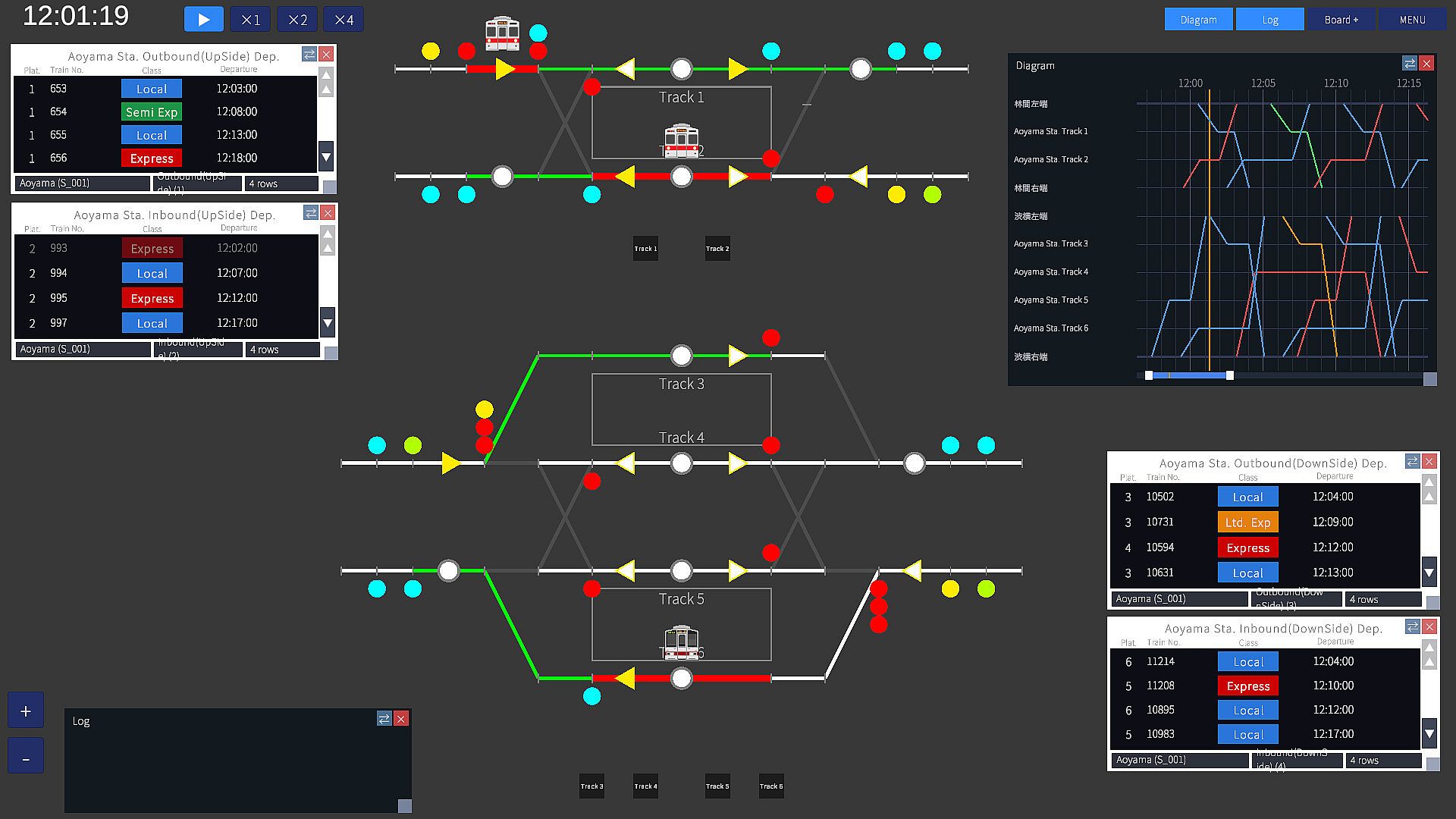
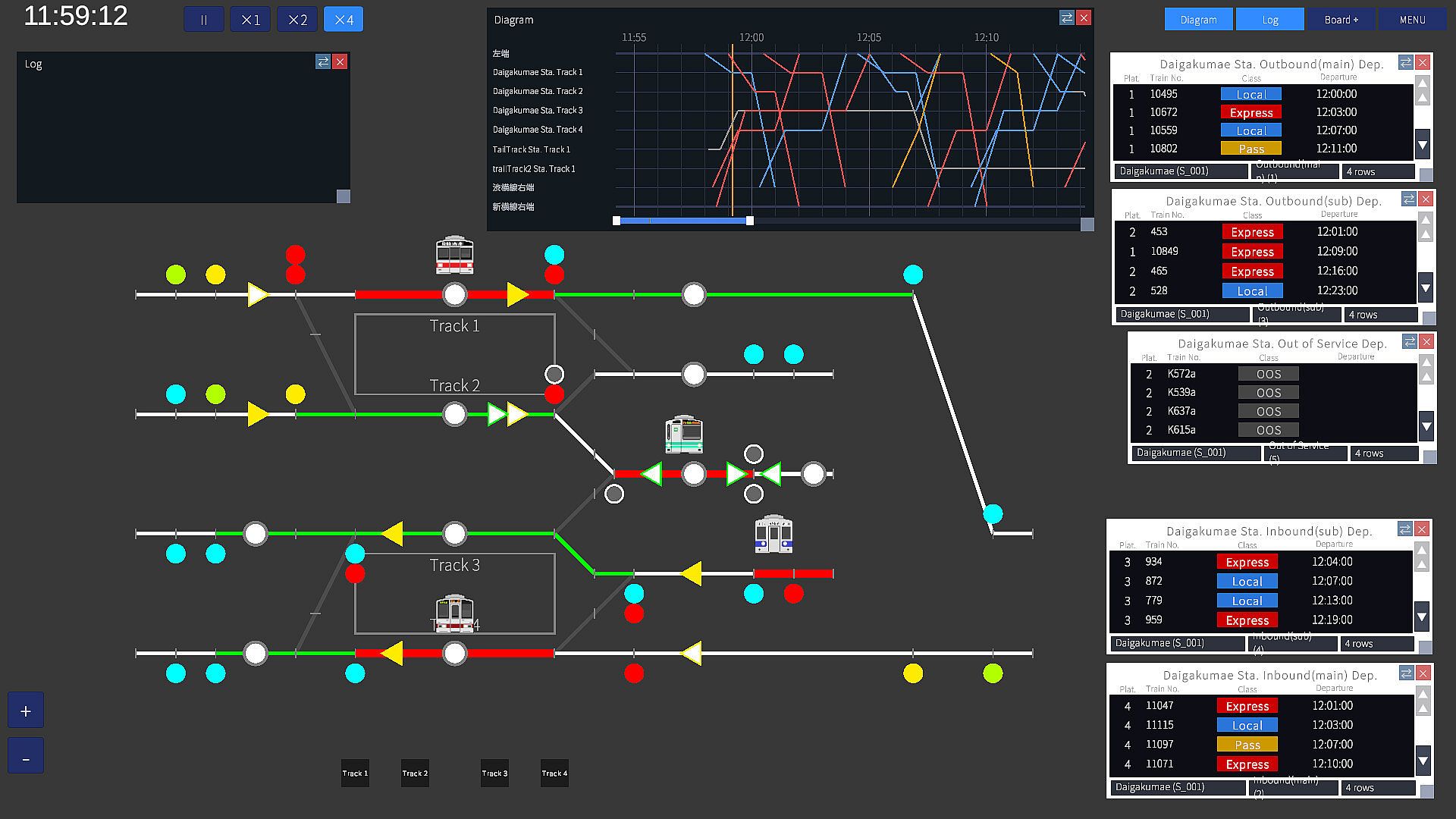
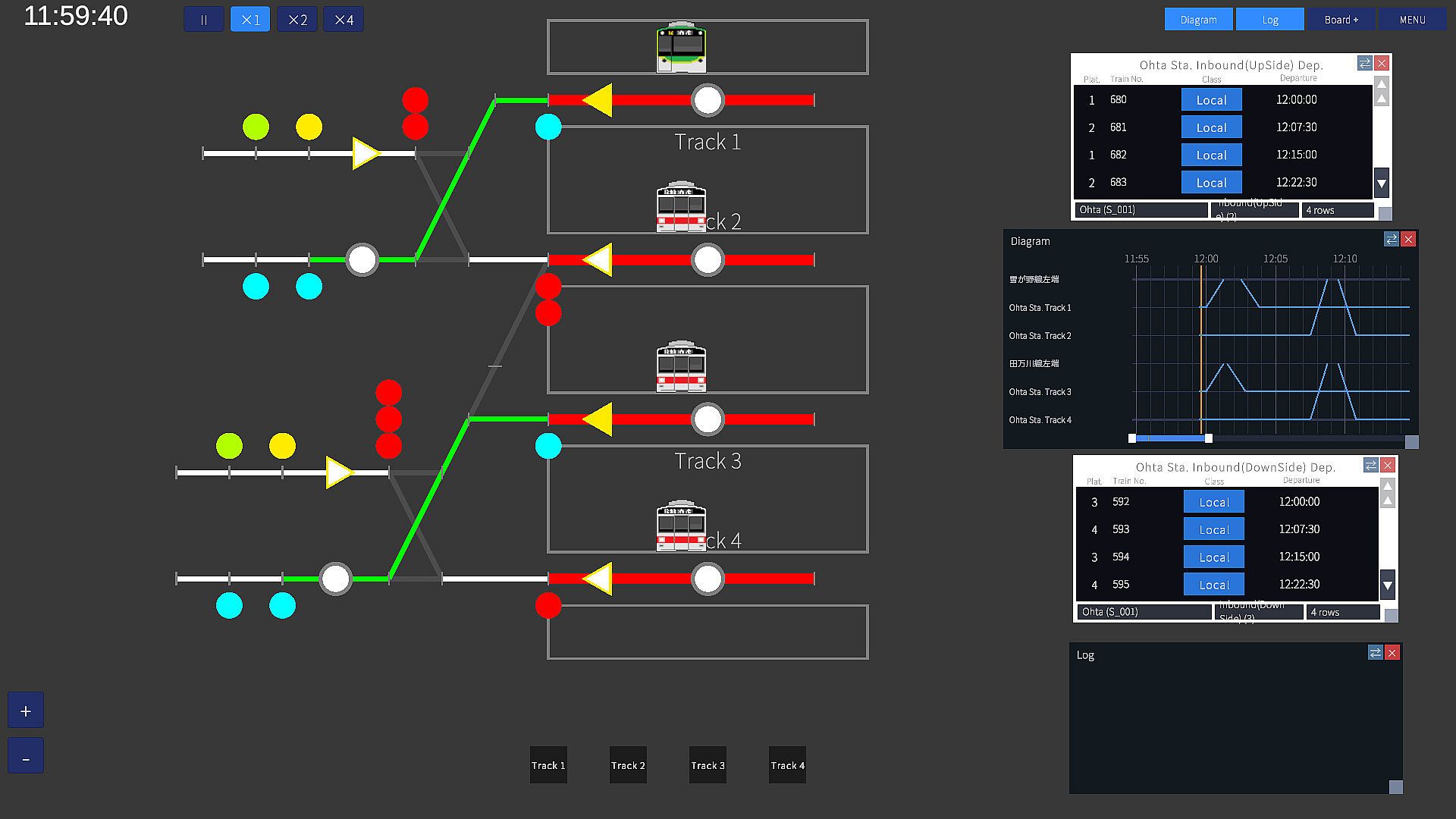
Jede der vier Karten bietet drei Fahrplanszenarien: Daytime, Morning Rush und Evening Rush. Die Daytime-Szenarien dienen als Einstieg, um sich mit den Bahnhofslayouts und Zugmustern vertraut zu machen. Die Rush-Hour-Varianten stellen dichtere Fahrpläne bereit, bei denen sich eine einzelne Verspätung schnell im gesamten Netz ausbreiten kann und schnelles Reaktionsvermögen sowie vorausschauende Planung erfordert. Die Karten umfassen Aoyama, einen großen Knotenbahnhof mit mehreren Linien und häufigen Wendevorgängen; Daigakumae mit einer zweigleisigen Anlage und einem Abstellgleis zur Verteilung auf unterschiedliche Zielstrecken; Ohta, einen Kopfbahnhof, an dem jeder Zug wenden muss; sowie Tani-no-kuchi, auf dem vier Bahnhöfe gleichzeitig dargestellt werden und Express- sowie Nahverkehrszüge einander überholen oder über Abstellgleise wenden.
Bahnhofslayouts und Herausforderungen
Aoyama fungiert als stark frequentierter Knotenpunkt, an dem zwei Linien aufeinandertreffen und ein ständiges Koordinieren von überkreuzenden Zügen und Wendevorgängen erforderlich ist. Daigakumae legt den Schwerpunkt auf flexible Routenführung über das Abstellgleis, um Züge zu alternativen Durchfahrstrecken zu leiten. Ohta verzichtet auf komplexe Gleisstrukturen, verlangt jedoch exaktes Timing beim Wenden am Streckenende. Tani-no-kuchi zeichnet sich durch seinen Umfang aus: Mehrere Bahnhöfe sind gleichzeitig im Blickfeld, und Überholvorgänge sowie Wendebewegungen von Express- und Nahverkehrszügen müssen parallel gesteuert werden.
Die Layouts bauen auf den Fähigkeiten aus dem Basisspiel auf und führen engere Verknüpfungen ein. In den Rush-Stunden steigt der Druck, da das höhere Zugaufkommen weniger Spielraum für Fehler bei Signal- und Fahrstraßenentscheidungen lässt.
Lohnt sich das DLC?
Dieses DLC richtet sich an Spieler, die methodische Einzelsimulation mit Fokus auf Fahrplantreue und Netzfluss schätzen. Die vier Karten und insgesamt neun Szenarien bieten umfangreichen neuen Inhalt für alle, die mit den Grundmechaniken von Railway Dispatcher vertraut sind. Neue Durchsagen und Zugdarstellungen erhöhen die Immersion bei längeren Sitzungen. Da das DLC kein Punktesystem enthält, basiert der Fortschritt auf der persönlichen Beherrschung jedes Fahrplans. Es setzt den Besitz des Basisspiels auf dem PC voraus. Durch die kürzliche Veröffentlichung sind weitere Updates möglich. Wer präzise Dispositionsaufgaben mit authentischen japanischen Bahnelementen sucht, wird die neuen Karten für wiederholte Durchläufe als lohnend empfinden.