









AI Mogul is a free-to-play strategy and simulation game that places players in charge of building an AI company from the ground up on PC. The experience centers on balancing compute resources, research priorities, model training, and commercial decisions while competing against other labs in a dynamic market.
Gameplay
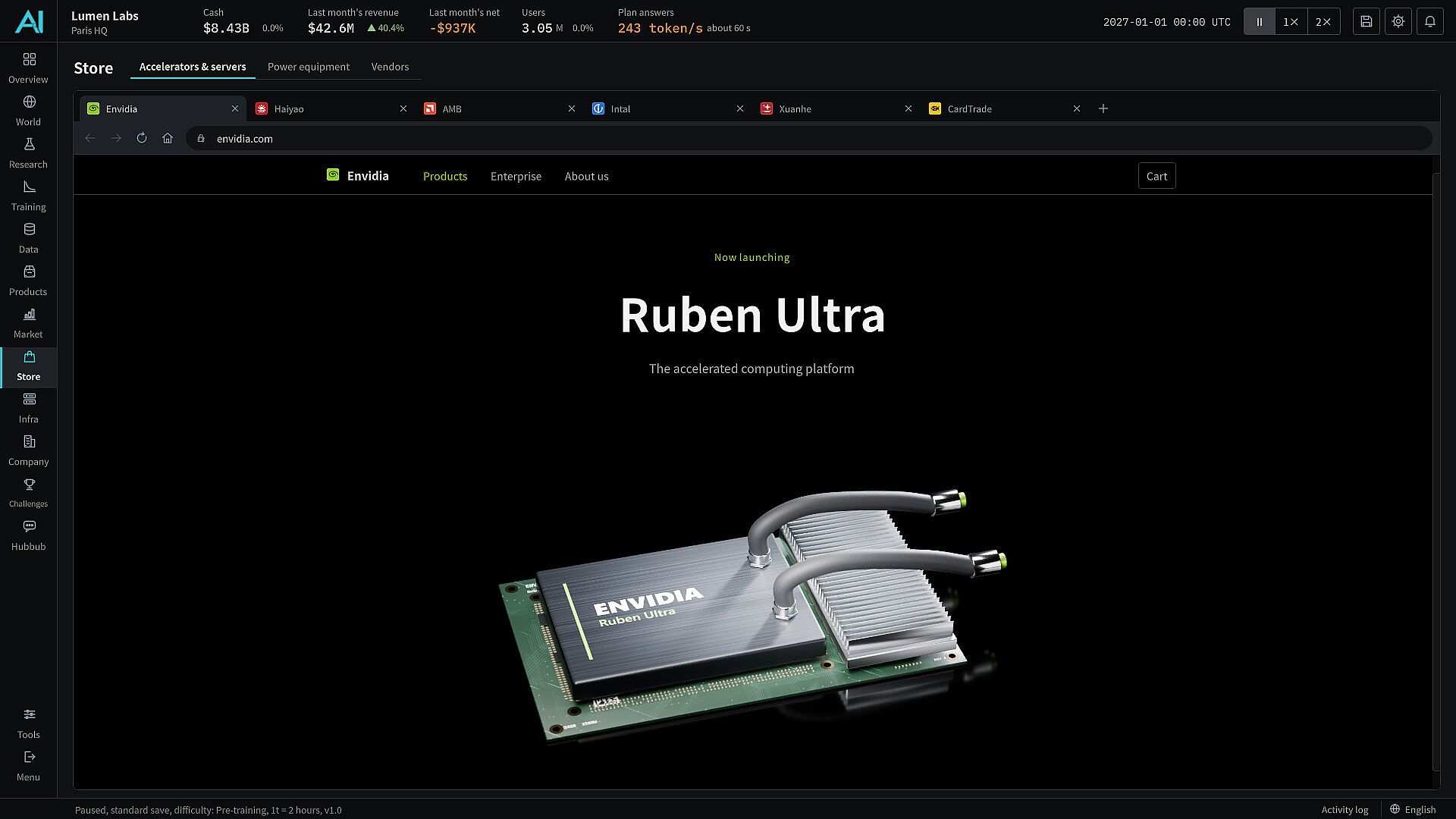
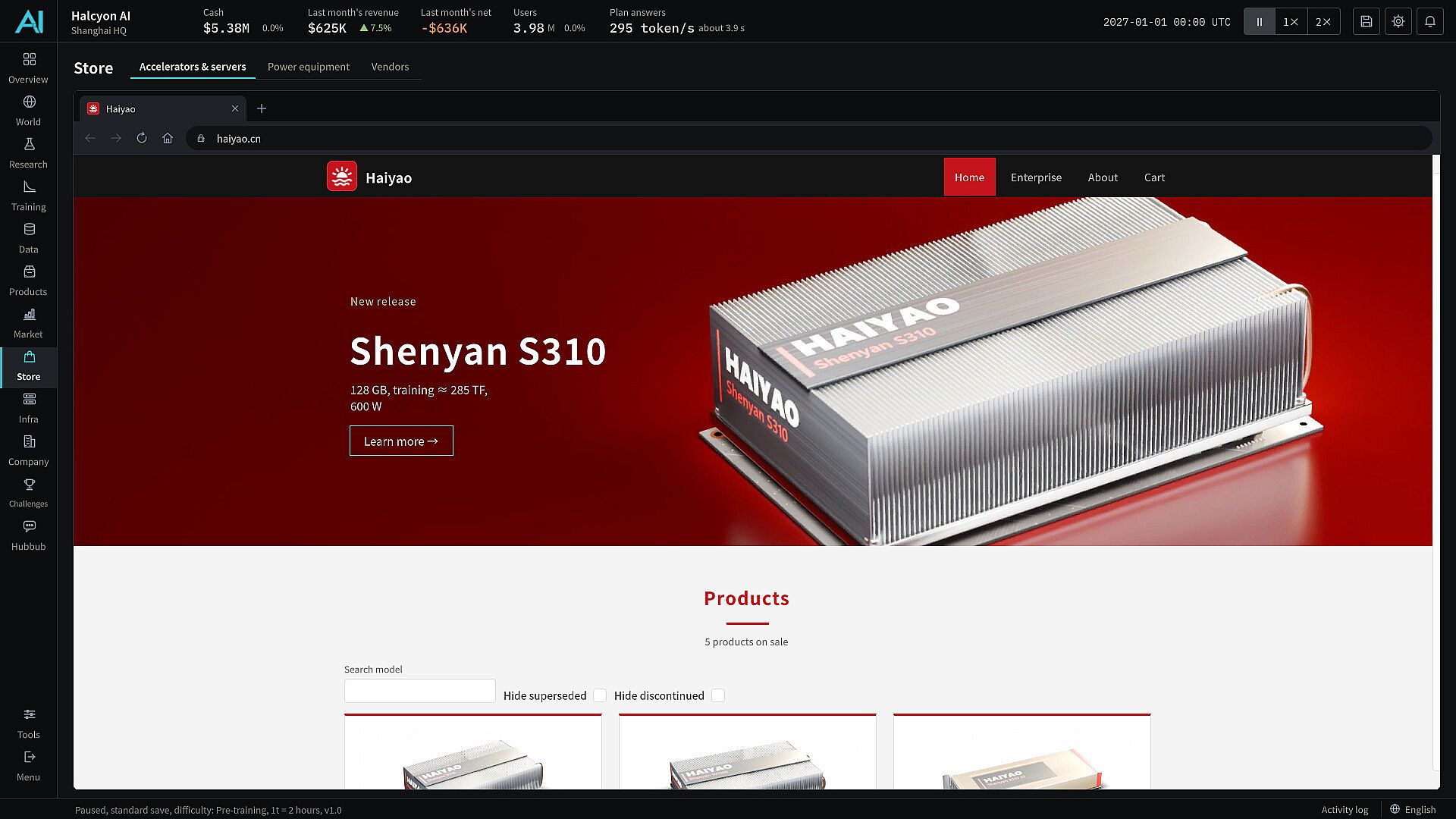
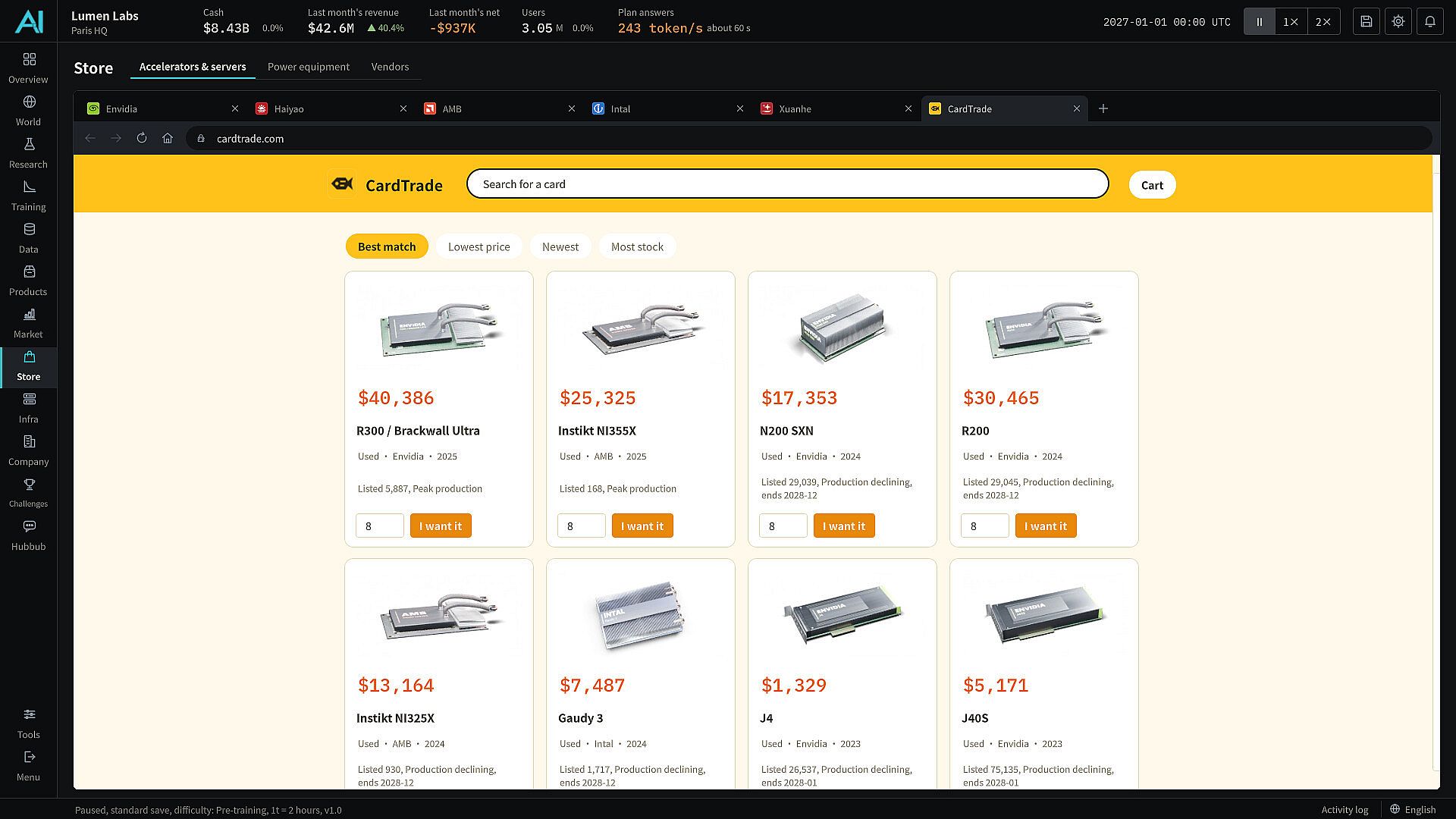
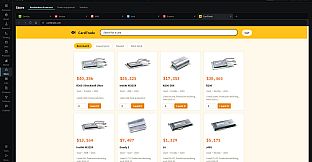
Players begin with limited resources and must decide how much compute to acquire and where to deploy it. The market offers 46 different accelerators, each with trade-offs in availability, cost, and risk. New hardware often requires waiting in queues, while shelf stock commands higher prices and used parts carry the chance of seizure during import. Servers are assembled and installed in data centers across 96 cities, drawing power either from the local grid or from dedicated plants constructed on site. Cloud options allow hourly rentals or longer reserved contracts, though providers themselves can expand, collapse, or change hands.
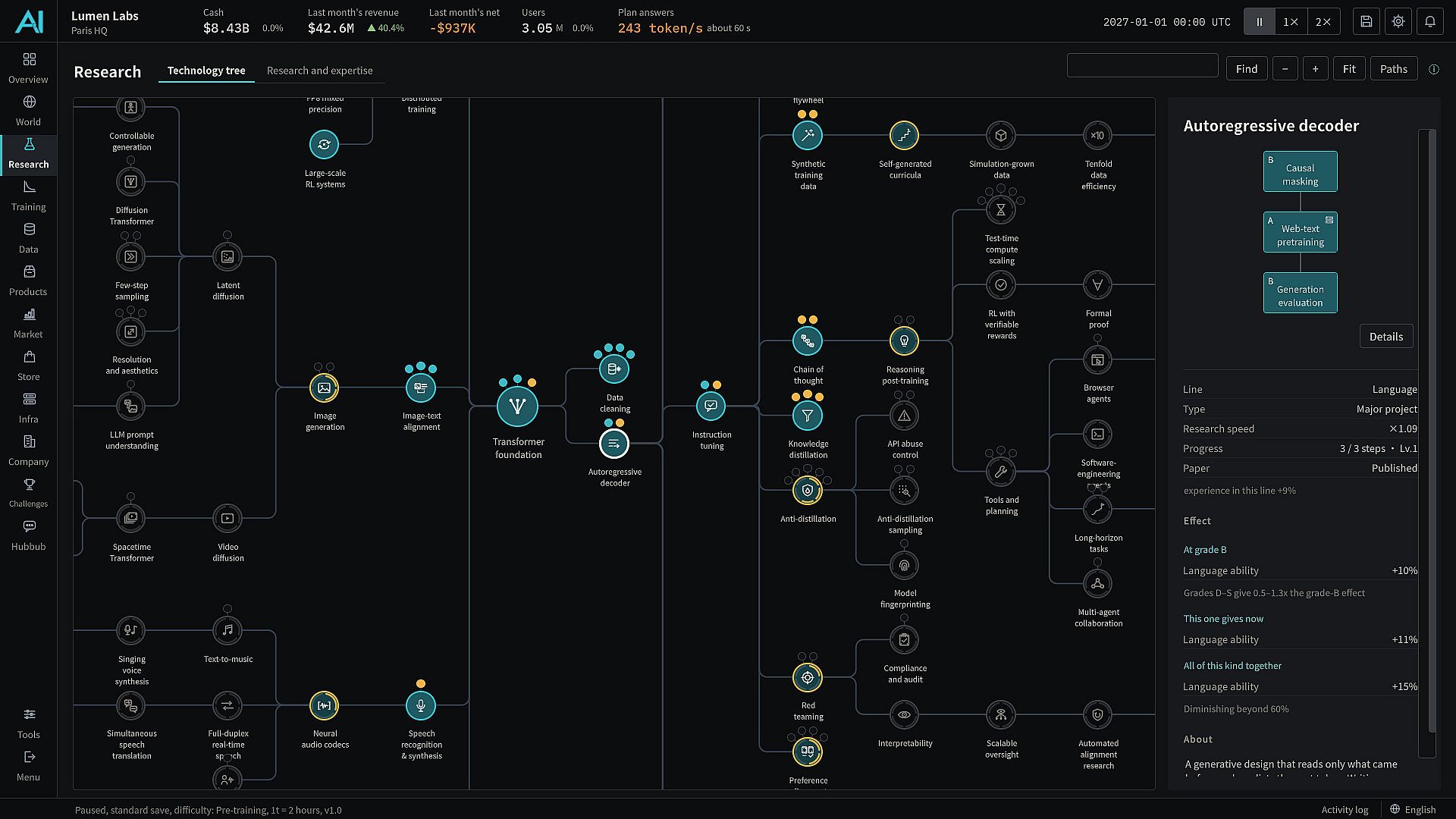
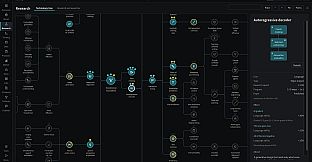
Research forms a central pillar with a technology tree containing 252 technologies spread across 13 lines. Decisions include whether to publish papers for reputation gains or retain proprietary advantages. Training covers language, image, video, and audio models, where parameter count, data volume, and compute allocation must align precisely. Excess parameters on insufficient data waste resources, while data collection, cleaning, checkpointing, and post-launch monitoring help identify issues before they affect users.
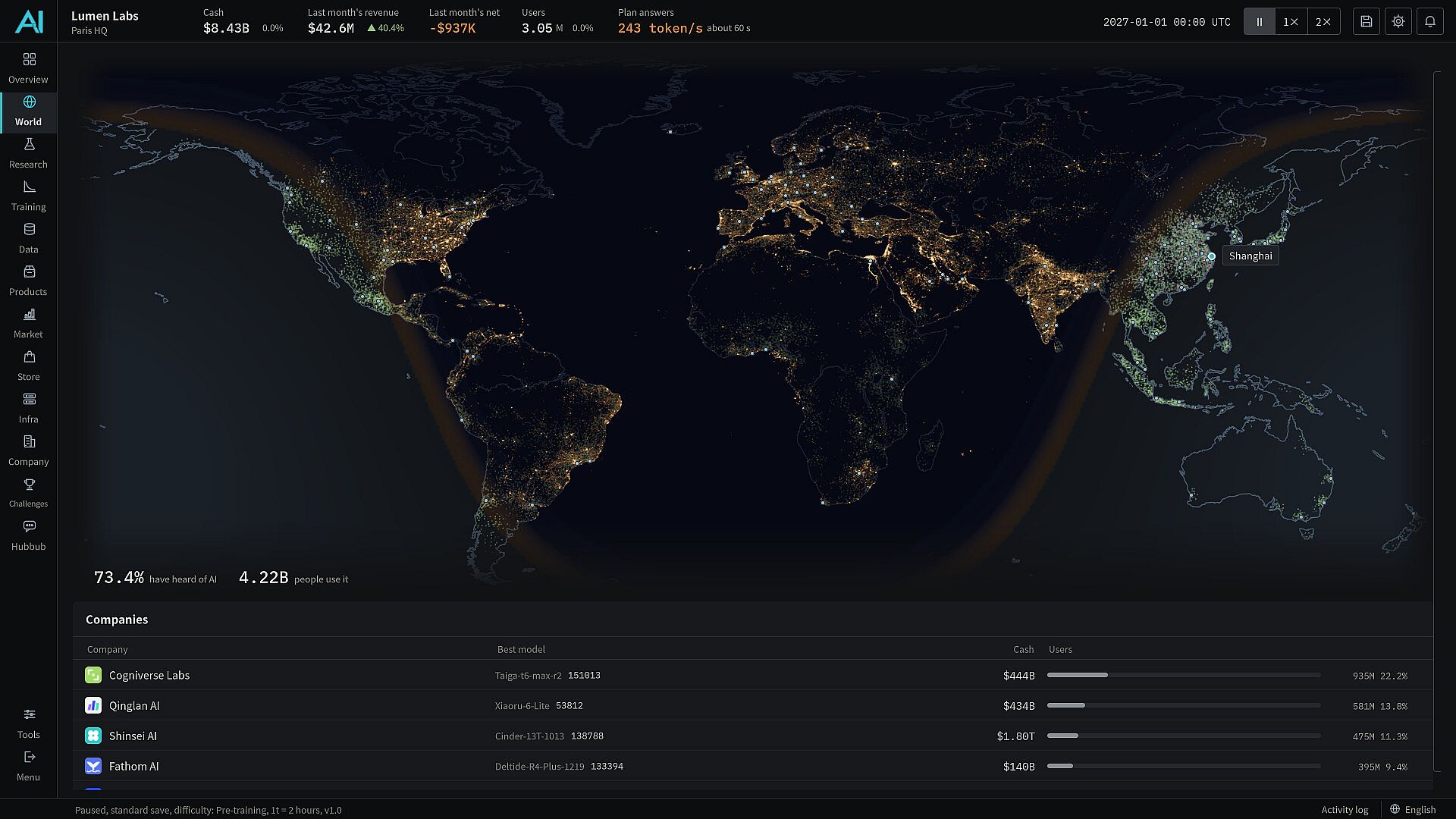
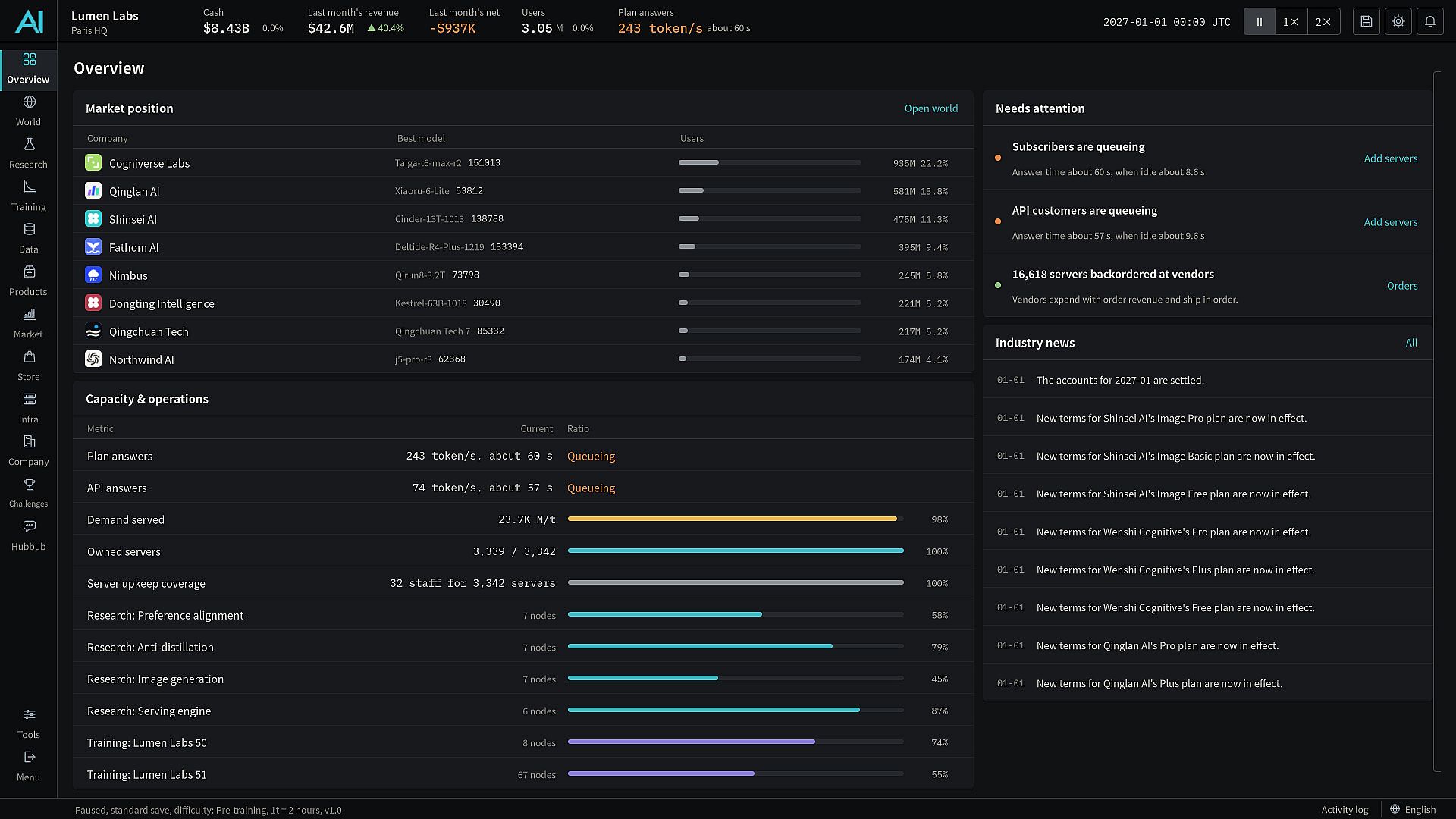
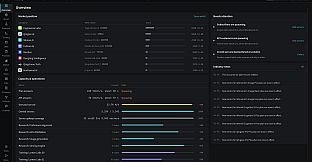
The market responds to player actions across five regions, with customers weighing capability, price, reliability, and geographic proximity when choosing providers. Revenue comes from chat subscriptions, API access, and enterprise contracts. Maintaining uptime is critical because slowdowns or outages drive users away. Rival labs actively raise capital, recruit talent, adjust pricing, and release competing models. Opportunities arise to purchase assets from failed competitors at auction or to pursue acquisitions.
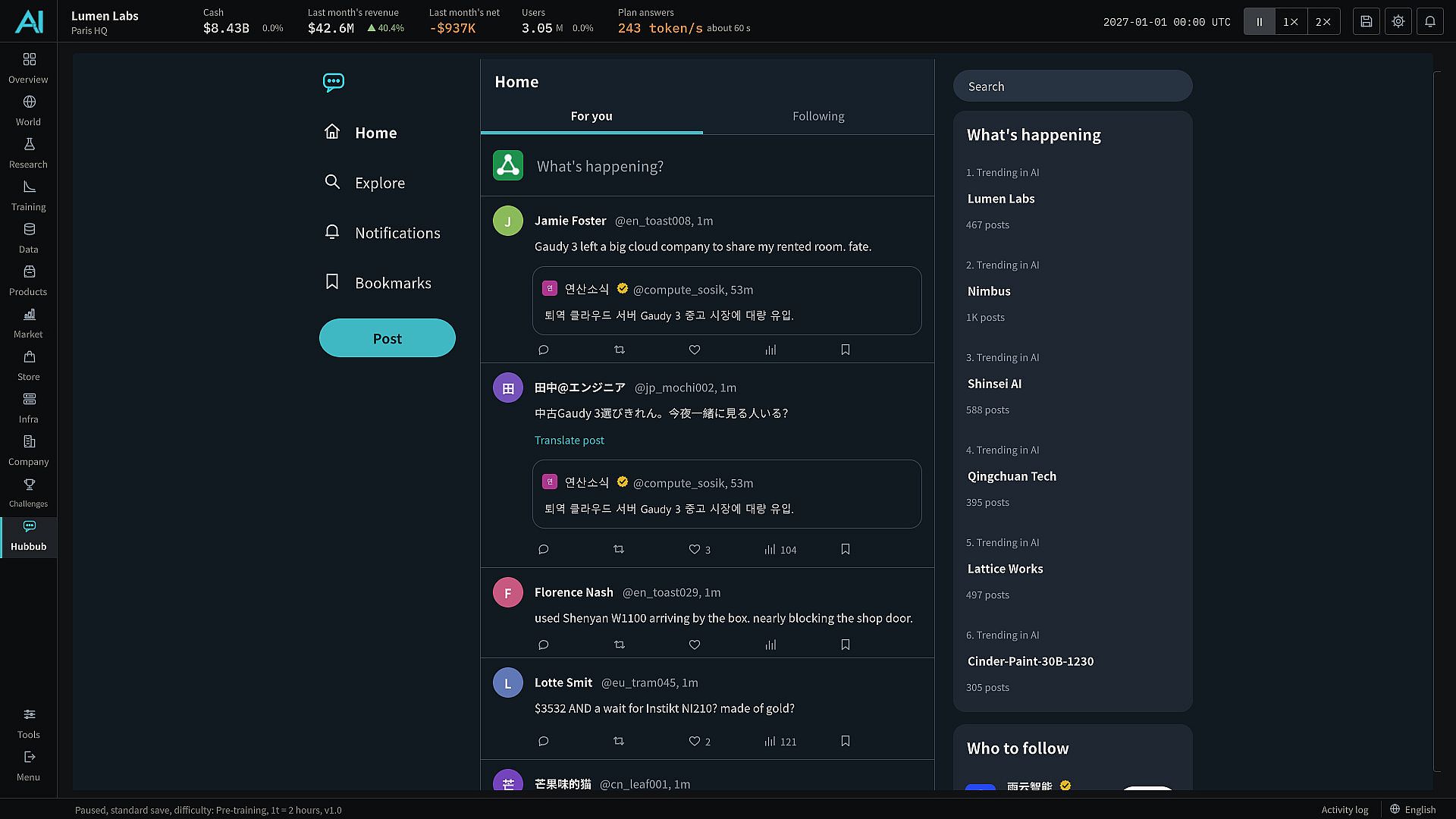
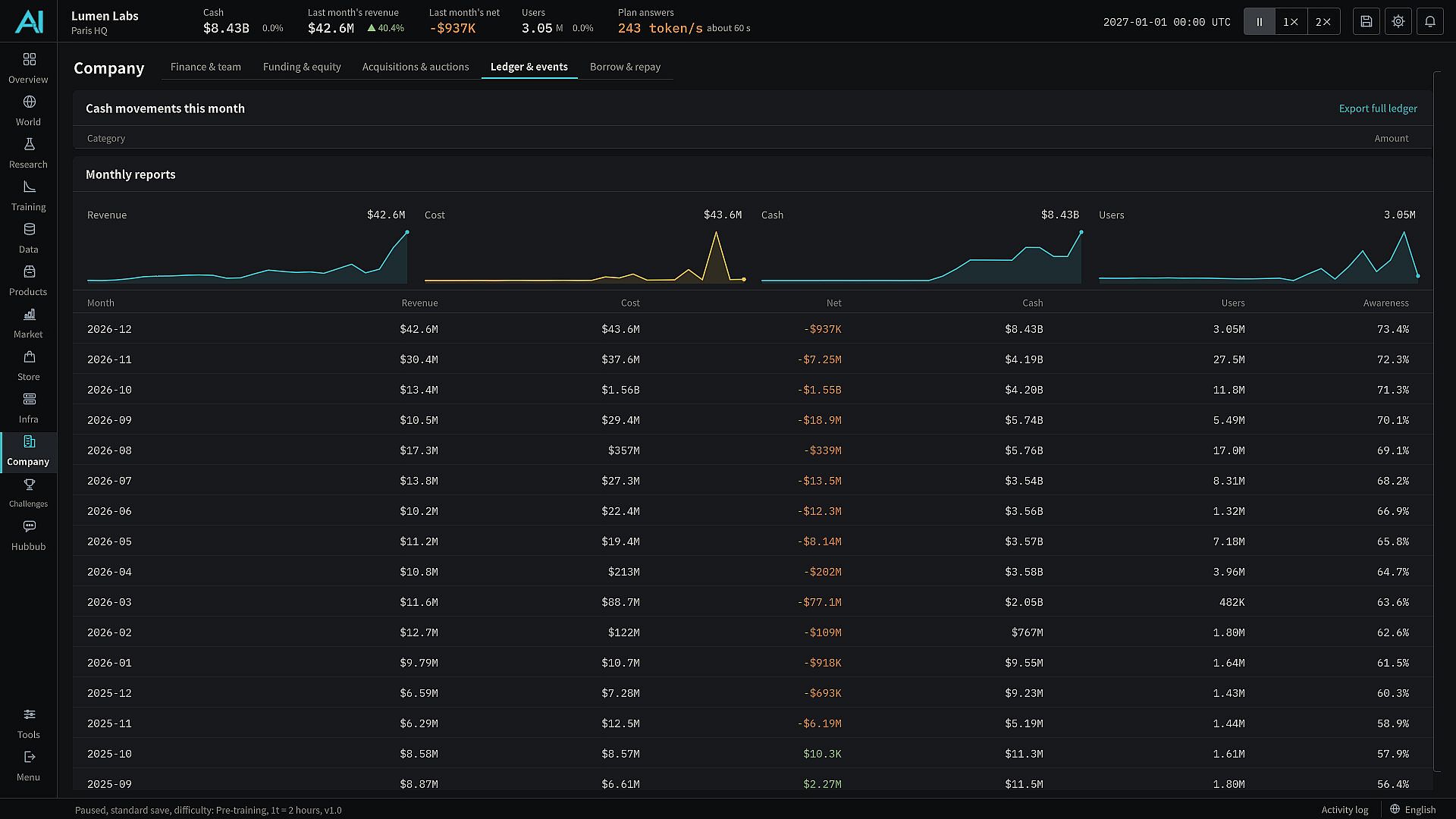
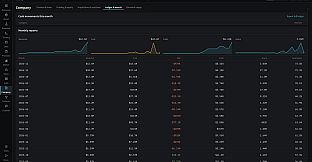
Team management involves overseeing research, data, systems, and business divisions. Star talent can be hired, funding rounds pursued, loans taken, and eventual public listings considered. Models can be directed toward 196 open problems spanning mathematics, computing, games, science, medicine, and ancient scripts. An in-game social network called Hubbub tracks community reactions to launches, outages, and pricing changes, with player posts leaving lasting impressions.
Game Modes
AI Mogul does not impose a single victory condition. Players define their own objectives, such as building the largest company by revenue or valuation, achieving the highest reputation, completing an initial public offering, or resolving multiple open problems. Campaigns can begin in either 2018 or 2022, allowing different technological and market starting points. Five difficulty levels adjust the challenge of resource management and competition. Time scaling lets one real-world second represent two hours of in-game time, with full pause support for deliberate planning.
Core Systems and Progression
Progression ties together hardware decisions, research choices, and market positioning. Early focus often rests on securing reliable compute and basic models, while later stages involve scaling data centers, optimizing training pipelines, and navigating rival responses. Funding and talent acquisition add layers of financial and personnel strategy. The fictional nature of all companies, products, and individuals keeps the focus on systemic interactions rather than real-world references.
Power management, cloud contracting, and data quality checks create ongoing trade-offs. A large model trained on limited data may underperform despite high parameter counts, prompting adjustments in data pipelines or hardware allocation. Reputation from published work can attract enterprise deals, yet keeping breakthroughs internal may preserve competitive edges in pricing or capability.
Is It Worth Playing?
AI Mogul suits players who enjoy detailed business and technology simulations with layered decision-making. The absence of a fixed win condition supports multiple long-term approaches, from aggressive expansion to focused problem-solving. Free-to-play access lowers the barrier for those interested in strategy titles centered on resource allocation, research trees, and market competition. The depth of systems around compute markets, model training constraints, and rival interactions provides sustained engagement for fans of simulation gameplay. Those seeking lighter experiences or real-time action may find the deliberate pace and planning requirements less appealing. Overall, the game delivers a focused simulation of running an AI lab with clear cause-and-effect mechanics across its core loops.











