

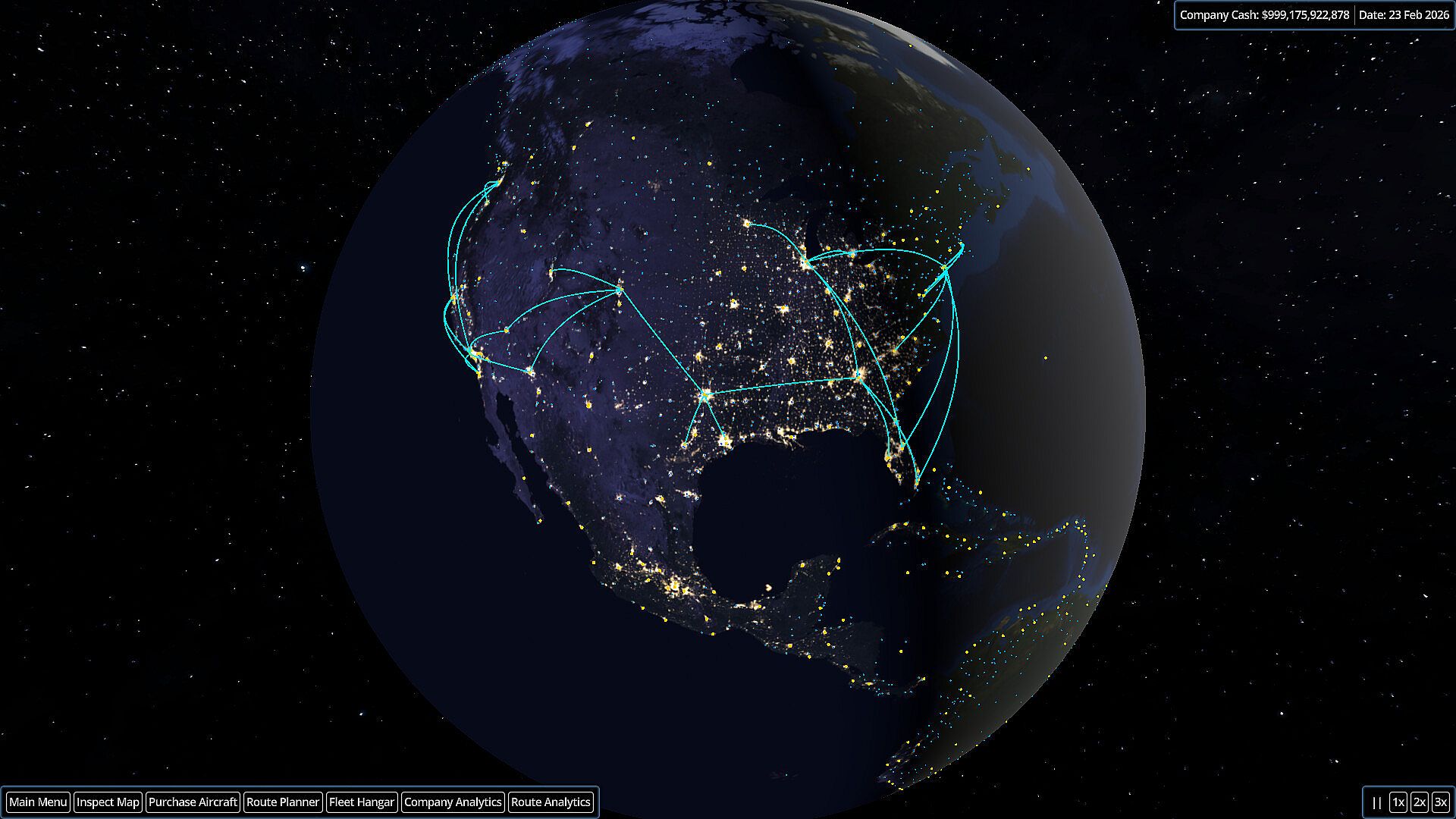
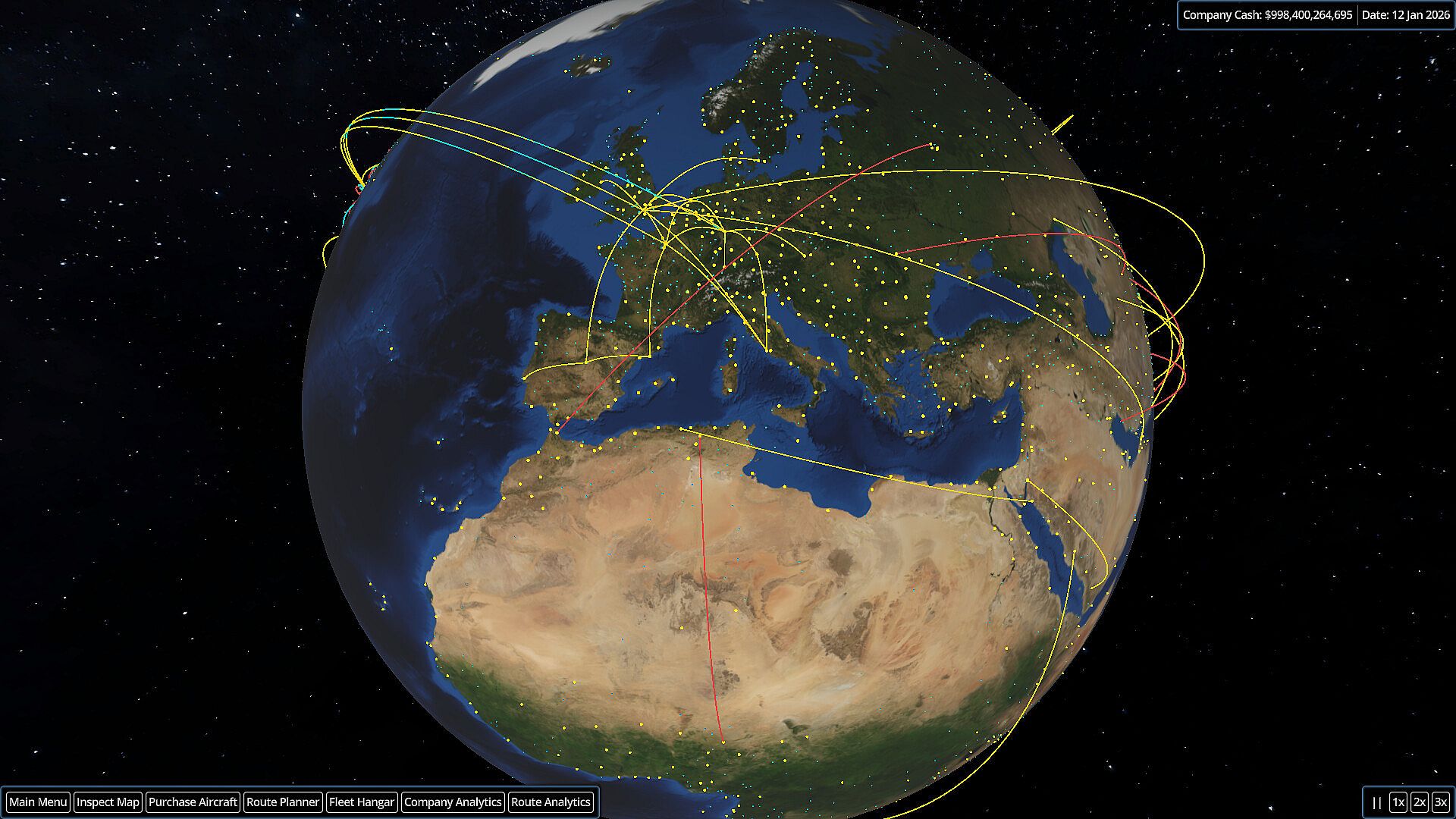
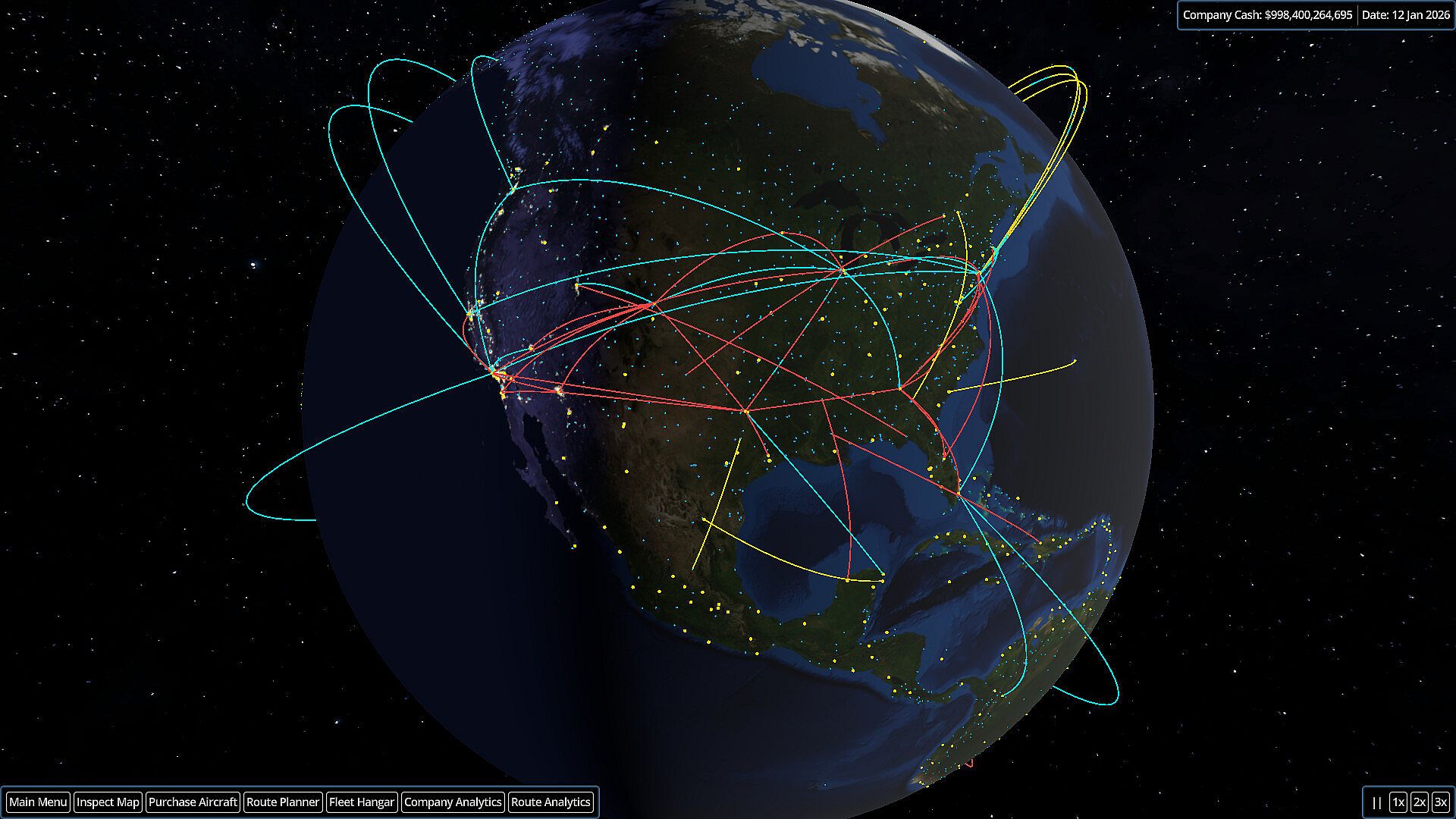
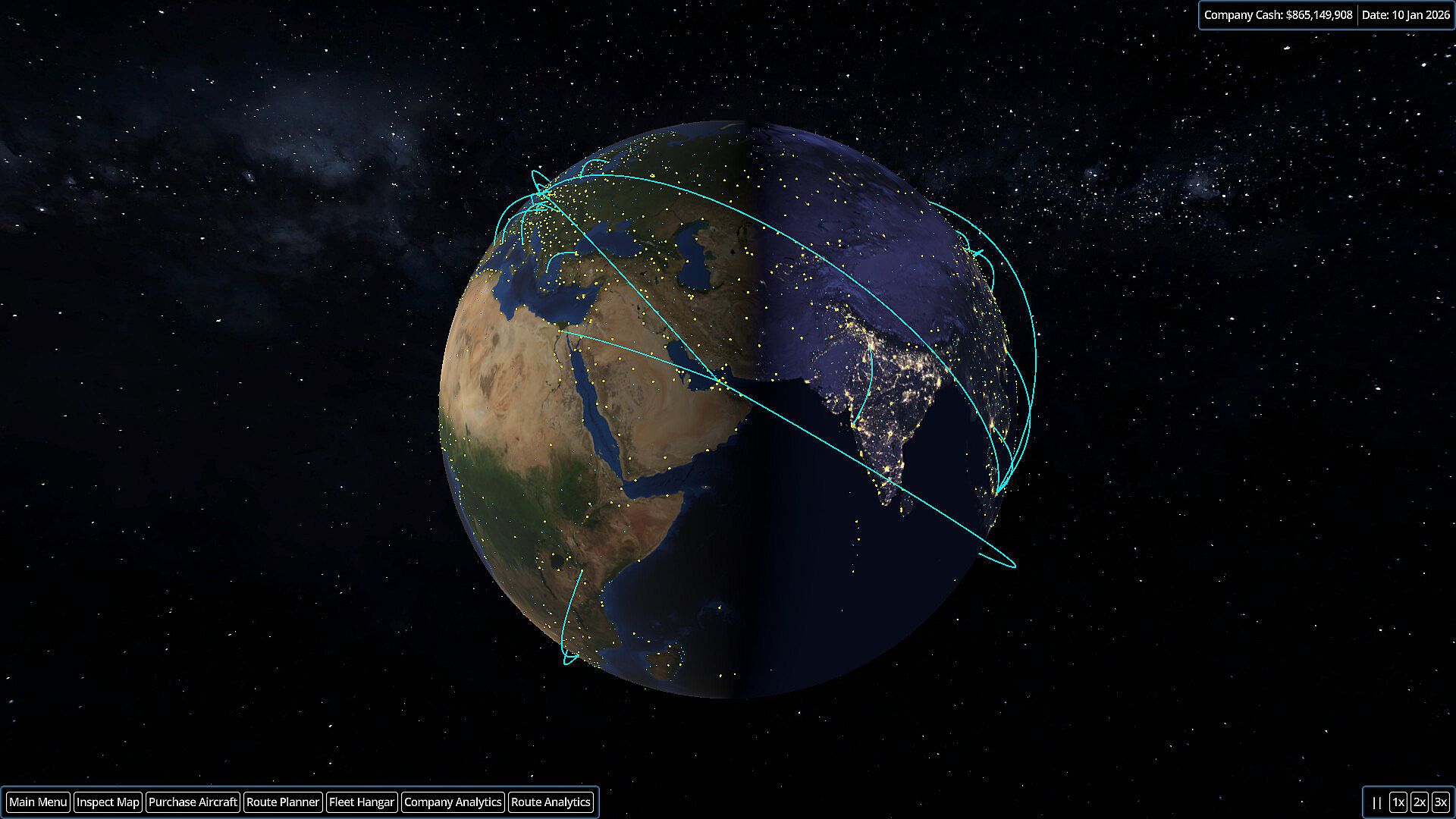

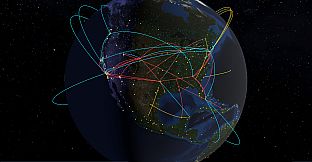

Airline Magnate is a strategy and simulation game for PC that places players in charge of building an aviation business from a regional startup into a worldwide network. The core experience revolves around managing routes, fleets, finances, and competition on a detailed 3D representation of Earth that includes day and night cycles along with thousands of real commercial airports.
Gameplay
The central loop involves planning and operating flights across an interactive globe featuring more than 8,000 authentic airports. Each location carries its own demand patterns, landing fees, and upgrade options that influence profitability. Players select aircraft from regional turboprops through narrowbody and widebody models, then adjust cabin configurations to balance economy seating against premium business and first-class options for higher yields.
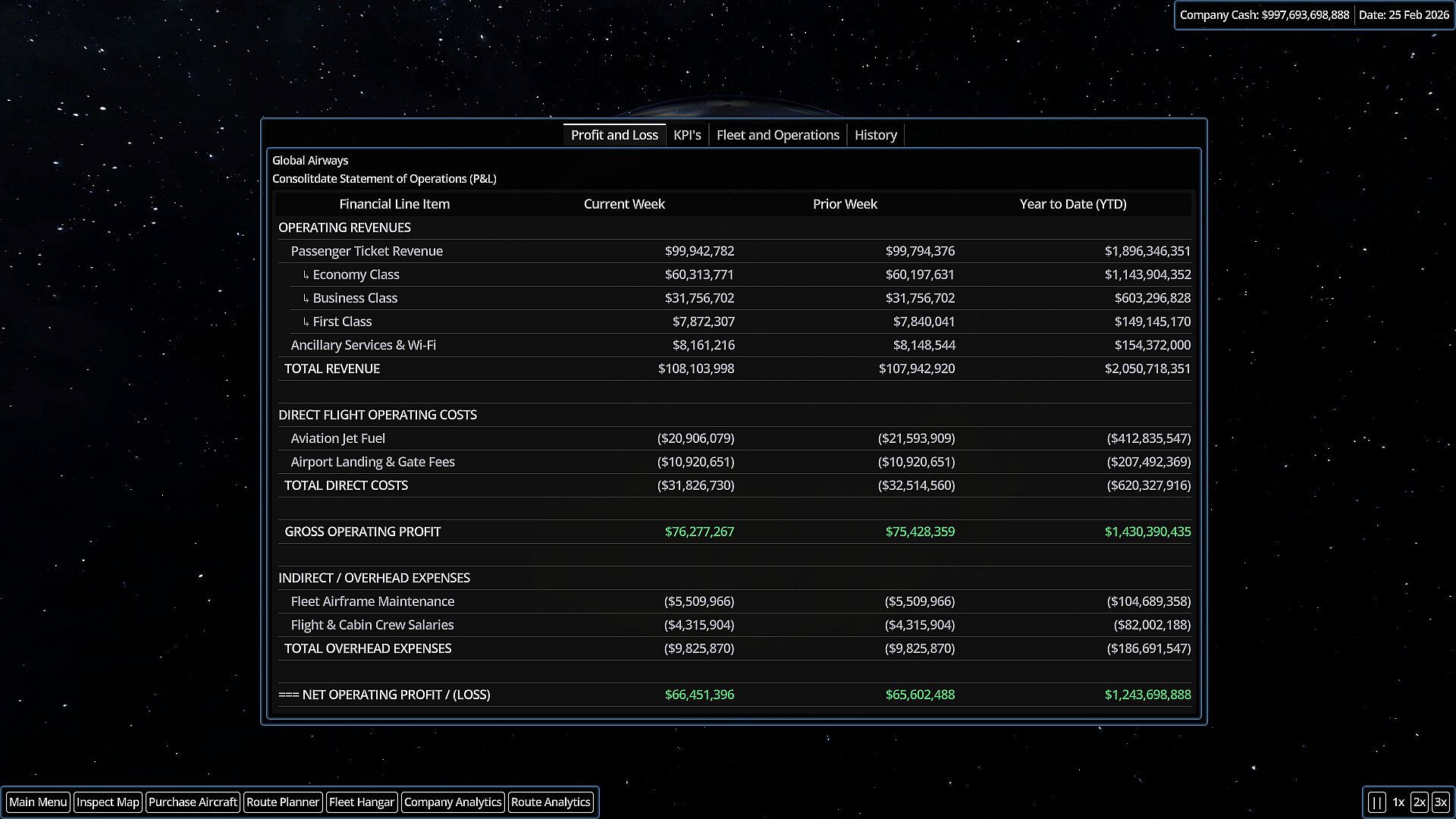
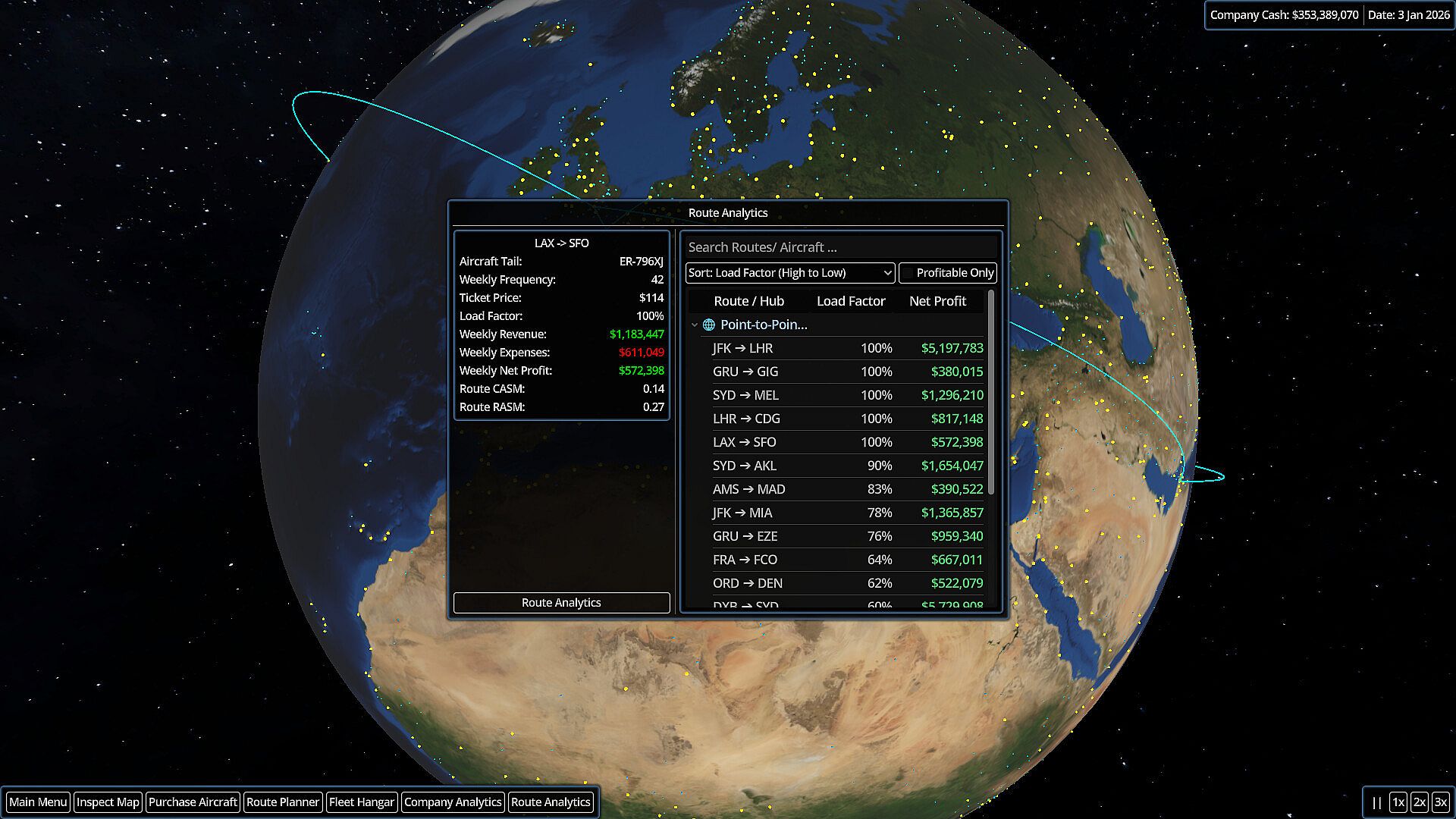
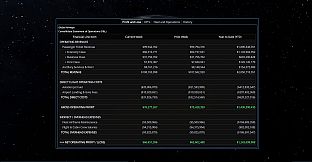
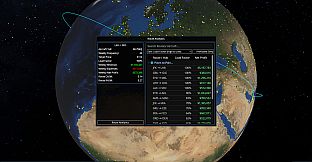
Route decisions extend beyond simple point-to-point travel. Passengers follow realistic multi-leg itineraries through hub systems, and fares respond to price sensitivity among leisure travelers versus the preferences of time-conscious business passengers. Financial oversight requires tracking detailed profit and loss statements that break down fuel consumption, navigation charges, maintenance, and other operating costs. Metrics such as load factors, available seat kilometers, and cost per available seat mile help evaluate performance over time through trend charts.
Fleet management adds another layer. Aircraft accumulate flight hours and cycles that trigger maintenance needs, and poor reliability can lead to groundings. Airframe choices must match route distances while considering fuel efficiency and speed. Competition from AI-controlled carriers forces ongoing adjustments to pricing and slot acquisition at busy airports.
Game Modes
Players shape their airline identity through distinct strategic approaches rather than separate named modes. One path emphasizes ultra-low-cost operations that prioritize tight cost control and high-frequency service on price-sensitive routes. The alternative focuses on legacy carrier structures that build complex international networks centered on major hubs to capture connecting traffic and premium revenue.
Hub-and-spoke setups reduce connection penalties and concentrate high-volume flows across continents. Headquarters and secondary hubs can be established to support these networks. All decisions occur within a single-player management framework where the goal remains long-term survival and growth against rival operators.
Key Systems and Mechanics
Passenger behavior incorporates price elasticity and demographic differences, requiring dynamic fare adjustments. Executive analytics provide granular visibility into revenue streams and expenses, supporting informed choices on route frequency and capacity. The living global airspace includes realistic operational constraints at major hubs such as slot limitations and distinct business versus tourism demand profiles.
Customization extends to individual aircraft through modular cabin layouts and ongoing lifecycle monitoring. Upgrades at airports can further tailor operational advantages. These elements combine into a data-driven simulation where small efficiencies in fuel burn or connection times accumulate into meaningful competitive edges.
Is It Worth Playing?
Airline Magnate suits players who enjoy detailed management simulations focused on economics, logistics, and long-term planning. The emphasis on real-world airport data, passenger routing realism, and financial metrics delivers depth for those interested in aviation business strategy. Different approaches to carrier type and network design provide replay variety without requiring separate campaigns.
Those seeking fast-paced action or direct control over aircraft will find the experience more abstract and spreadsheet-oriented. The single-player format against AI opponents supports focused sessions centered on optimization and growth. Current support details remain limited in available information, so prospective players should evaluate the core systems against their preference for methodical simulation gameplay.