


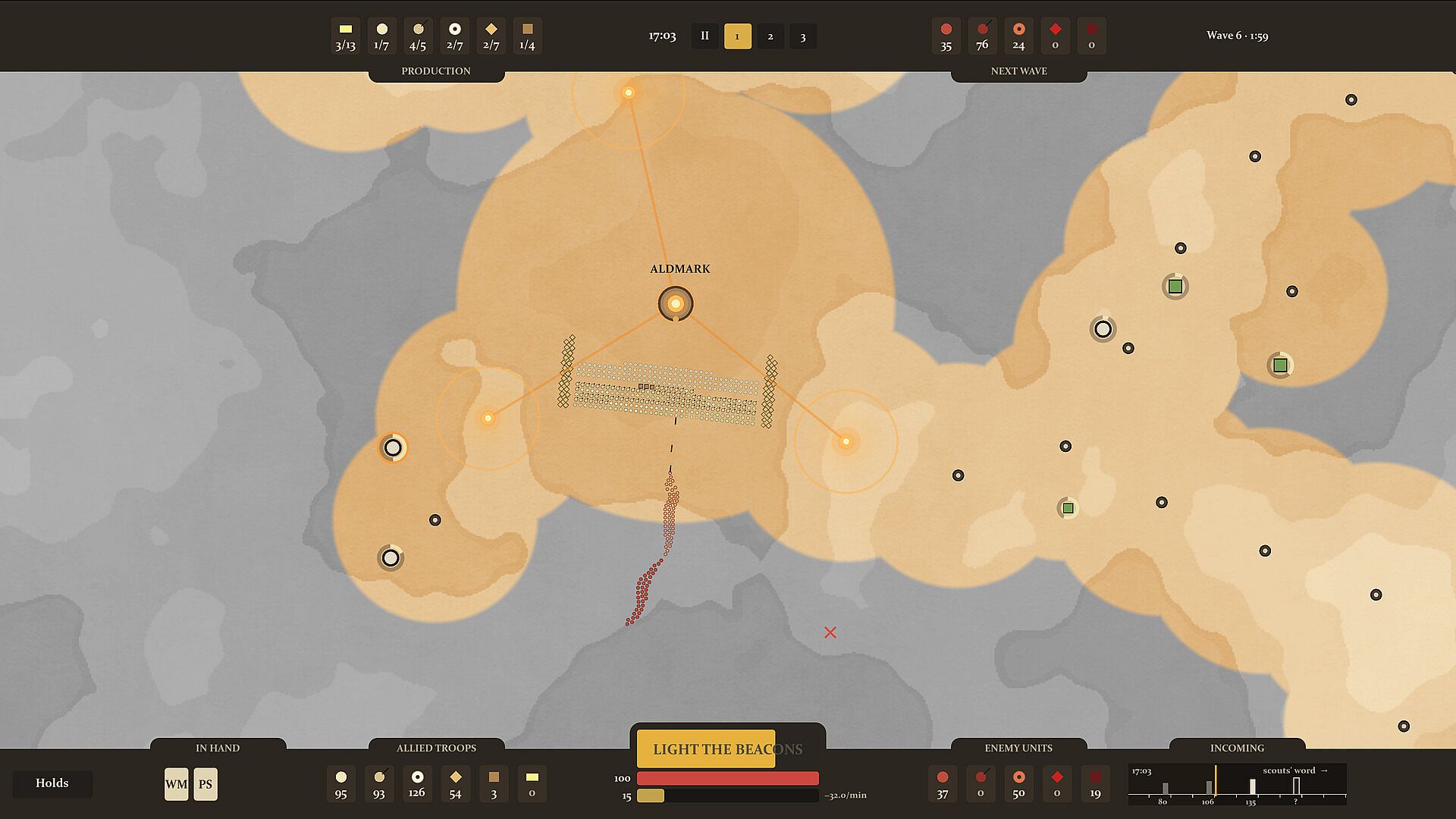
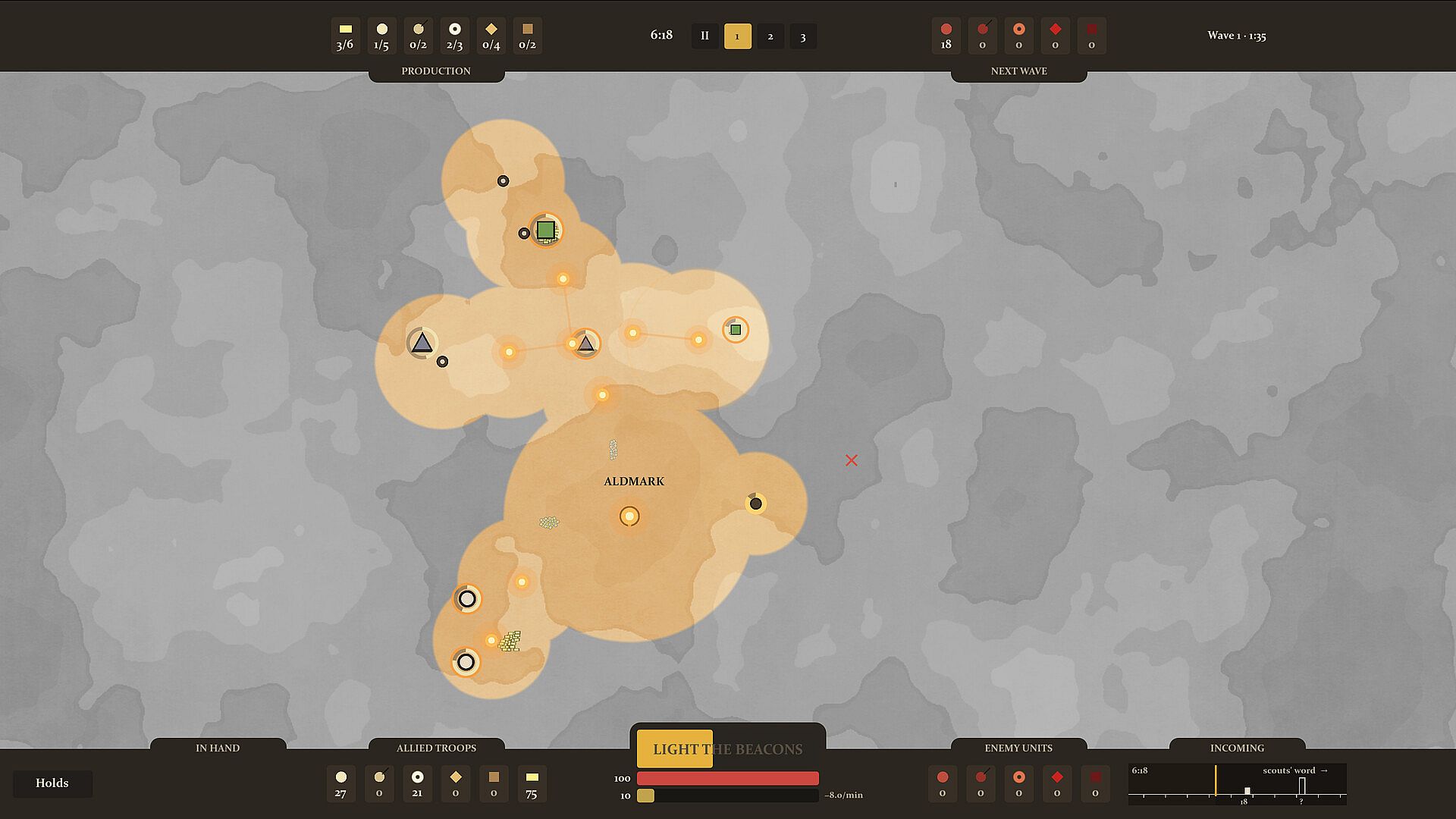
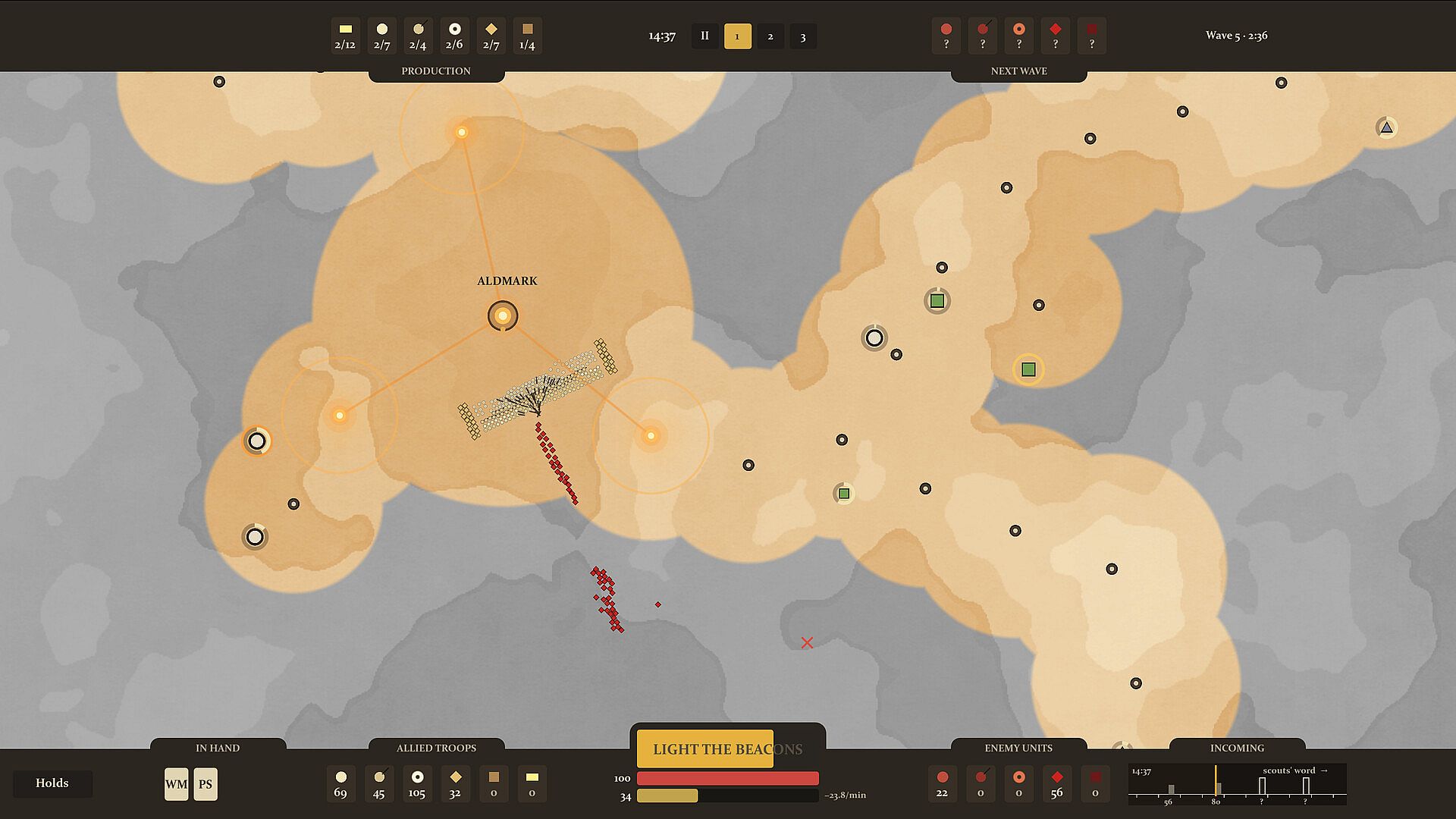
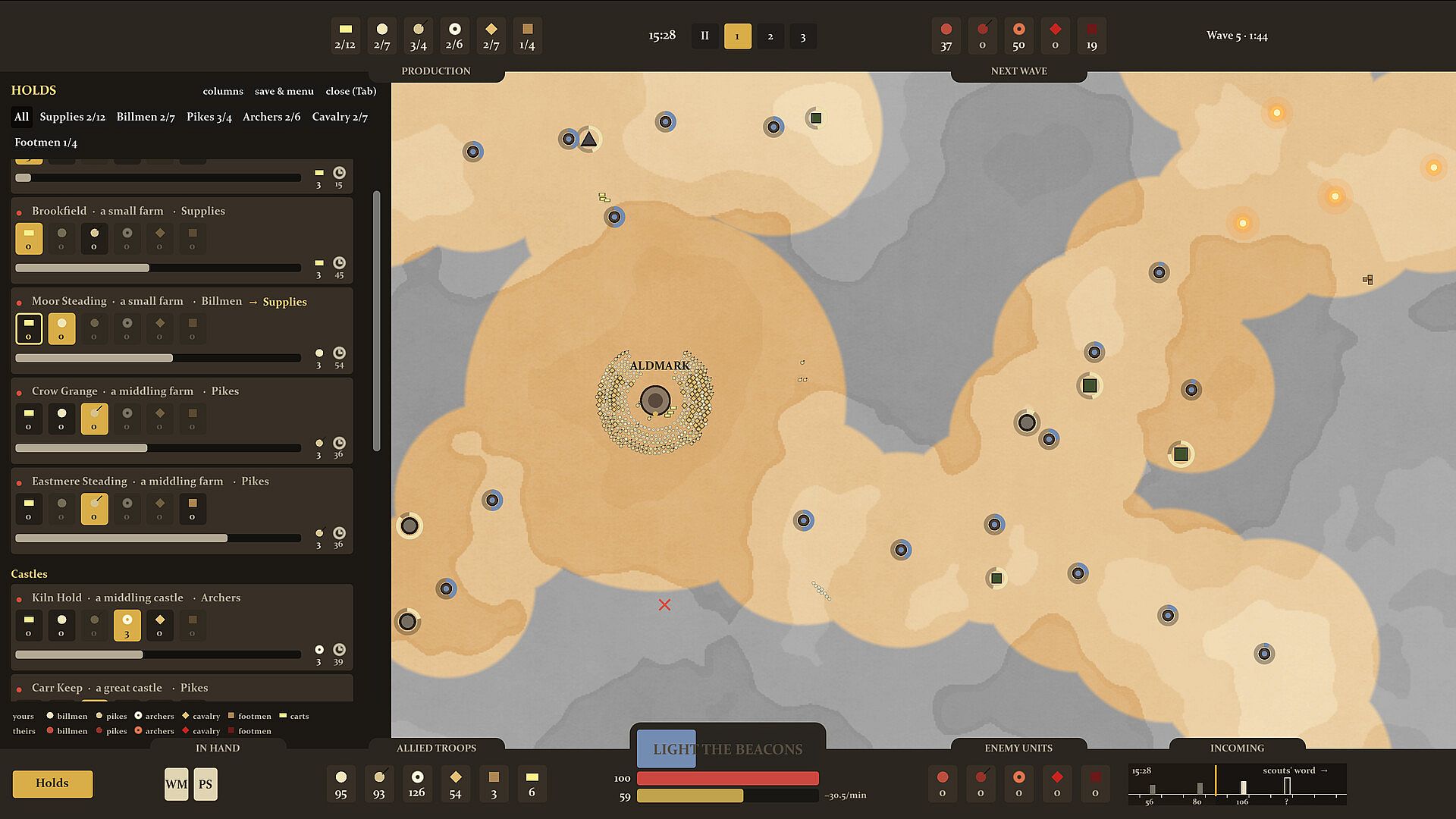
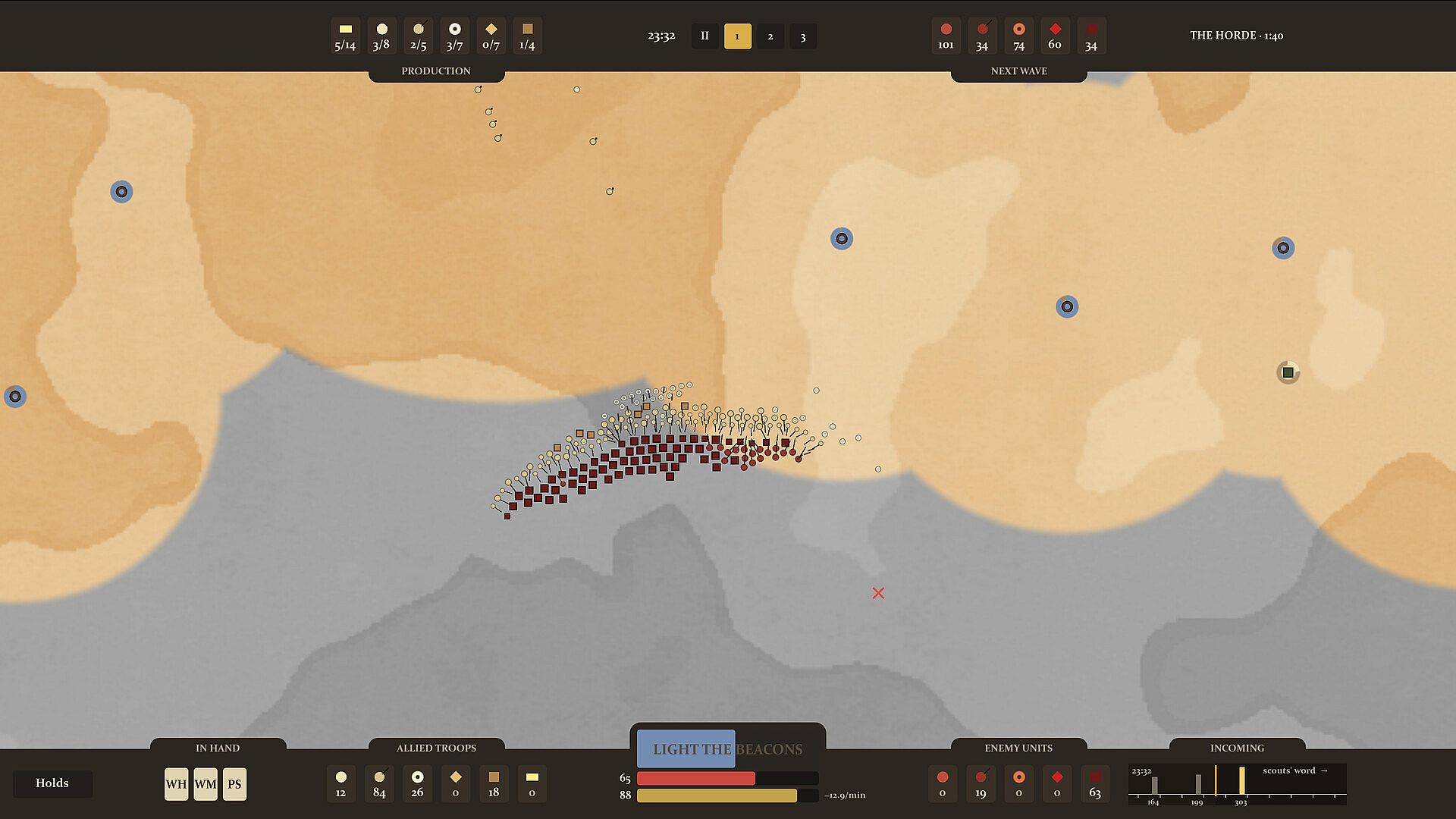
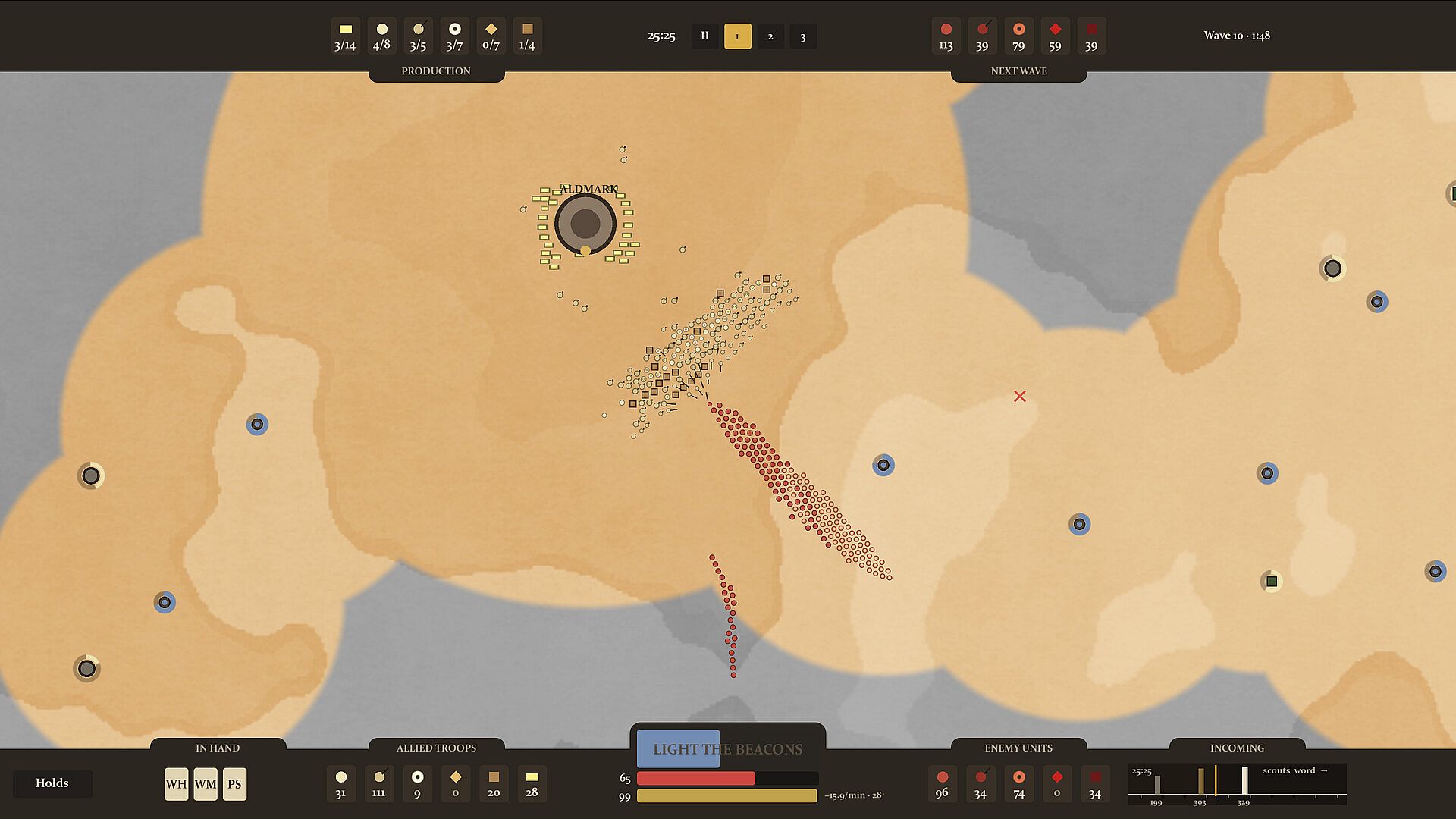

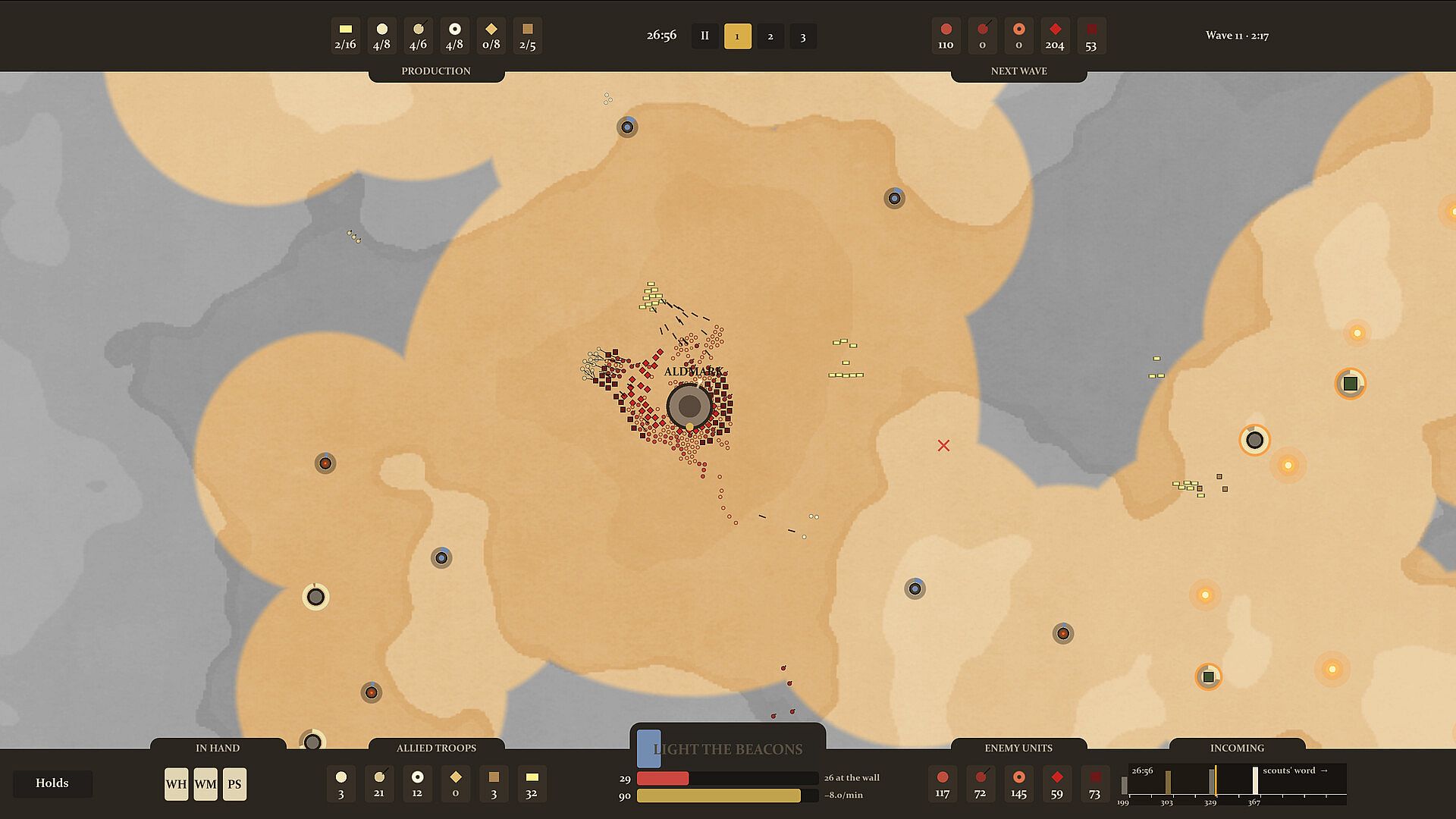
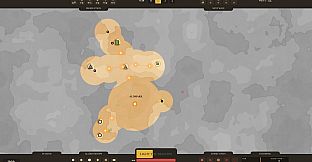
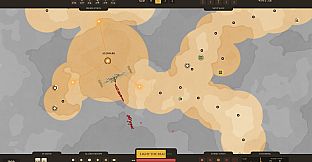
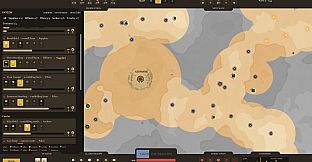
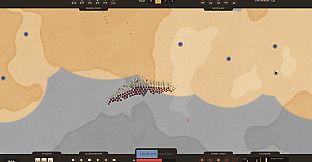
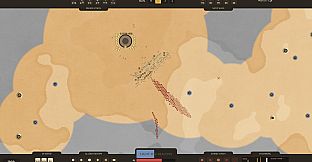
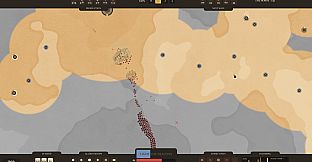
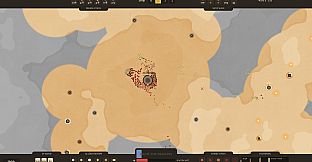
Aldmark Calls for Aid is a medieval kingdom-defence strategy game developed for PC. Players focus on establishing a network of beacons to summon allied forces rather than issuing direct orders to troops on the battlefield. The core loop revolves around exploration, resource allocation, and timed reinforcement calls to protect a city from incoming enemy armies.
Gameplay
The central mechanic involves placing signal fires across the map by hand. These beacons clear sections of the fog of war and locate hidden holds that can provide support. Farms, towns, and castles appear in the revealed areas, each offering different strengths depending on their type and distance from the defended city. Farther holds deliver more powerful aid but require more time to arrive once summoned.
Once holds are discovered, players assign them roles to produce either troops or supplies. Five distinct troop types exist: billmen, pikes, archers, cavalry, and footmen. Each type has advantages against certain enemies and weaknesses against others, requiring careful matching during preparation. Ruins and barrows scattered on the map contain artefacts that function as single-use items, activated at chosen moments and locations for tactical effect.
When the player issues the call, the signal travels visibly along the chain of fires. Every hold connected to a lit beacon dispatches its accumulated forces. Reinforcements move in real time across the map and remain vulnerable to attack while en route. After the fires extinguish, the entire network must be reset before another call can be made. Scouts provide advance warnings about approaching enemy armies and reveal composition details once the threat draws near. The defender's role centres on positioning allied units to prevent wall breaches. The battle itself plays out automatically, though the player can pause at any time to review exact figures for build times, muster counts, and the timing of the next assault. Playback speed options include 1x, 2x, or 3x.
Game Modes
The game presents a single cohesive experience built around successive defensive stands. Each encounter follows the same structure of beacon placement, ally management, and timed reinforcement calls, with increasing pressure from enemy forces. No separate named modes appear in the design; instead, the challenge scales through map layout, enemy variety, and the need to adapt hold assignments between waves. Players progress by learning optimal beacon networks and troop compositions that counter the specific threats revealed by scouts.
Core Mechanics and Strategy
Success depends on balancing the trade-offs inherent in the beacon system. Closer holds respond quickly but may offer limited power, while distant castles provide stronger units at the cost of longer travel times. Switching a hold's production focus mid-preparation allows responses to changing intelligence from scouts. Artefacts add another layer of decision-making, as their one-time use must be timed to disrupt key enemy advances or bolster a critical section of the defence. The real-time movement of reinforcements introduces risk, since unprotected columns can be intercepted before reaching the walls. Pausing the simulation to analyse numbers helps refine future calls without altering the automatic resolution of combat.
Is It Worth Playing?
Aldmark Calls for Aid appeals to players who enjoy deliberate planning and indirect control in strategy games. The emphasis on building infrastructure for reinforcements rather than micromanaging units creates a distinct rhythm focused on preparation and timing. Those who appreciate systems where choices about networks and production priorities determine outcomes will find depth in adapting to scout reports and enemy compositions. The automatic battle resolution keeps attention on the strategic layer while still allowing detailed inspection of forces. Availability on PC makes it accessible for solo sessions that reward repeated attempts to optimise beacon placement and ally assignments. The game suits fans of indie strategy titles that prioritise thoughtful setup over constant direct commands.