




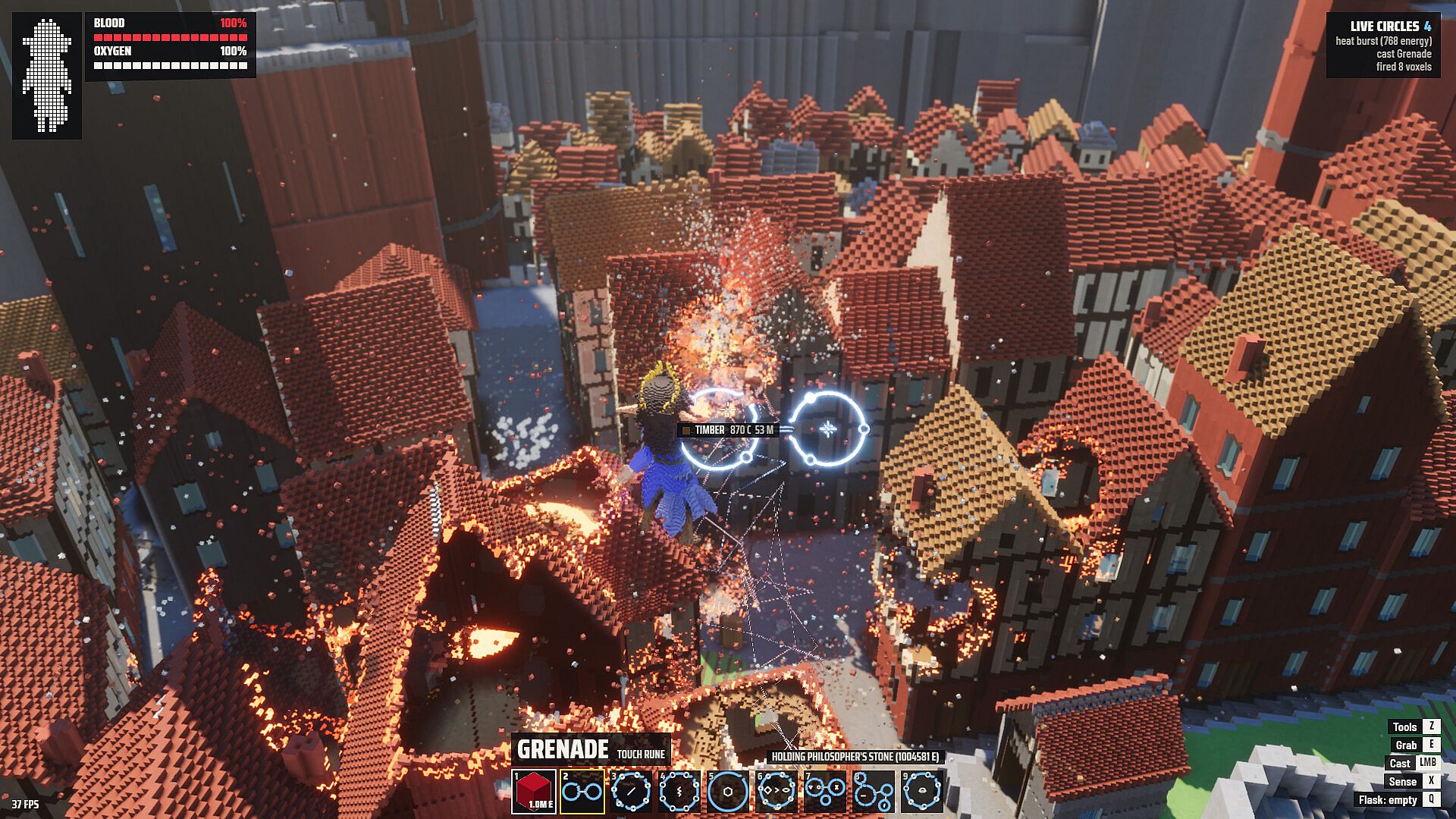
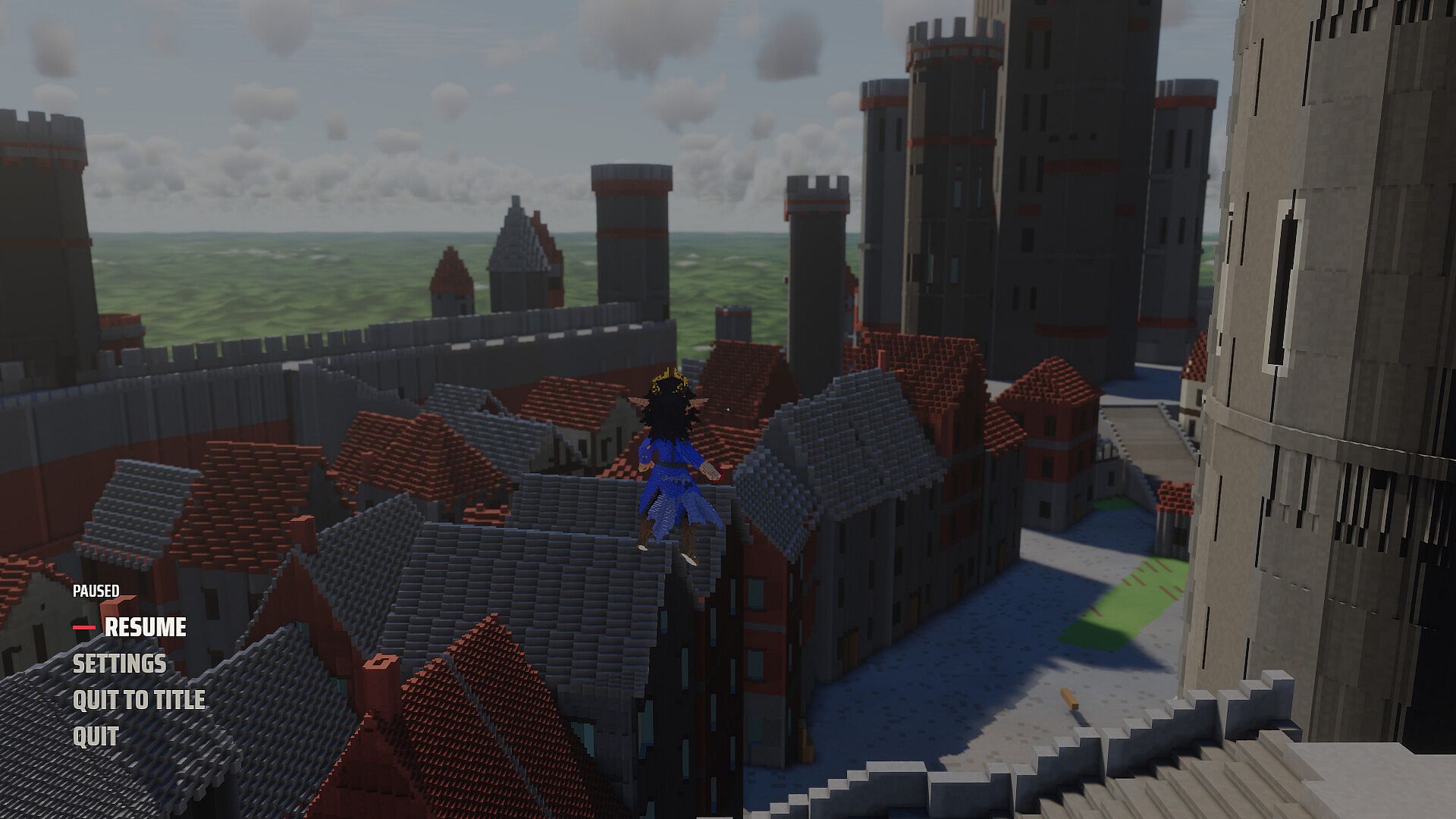
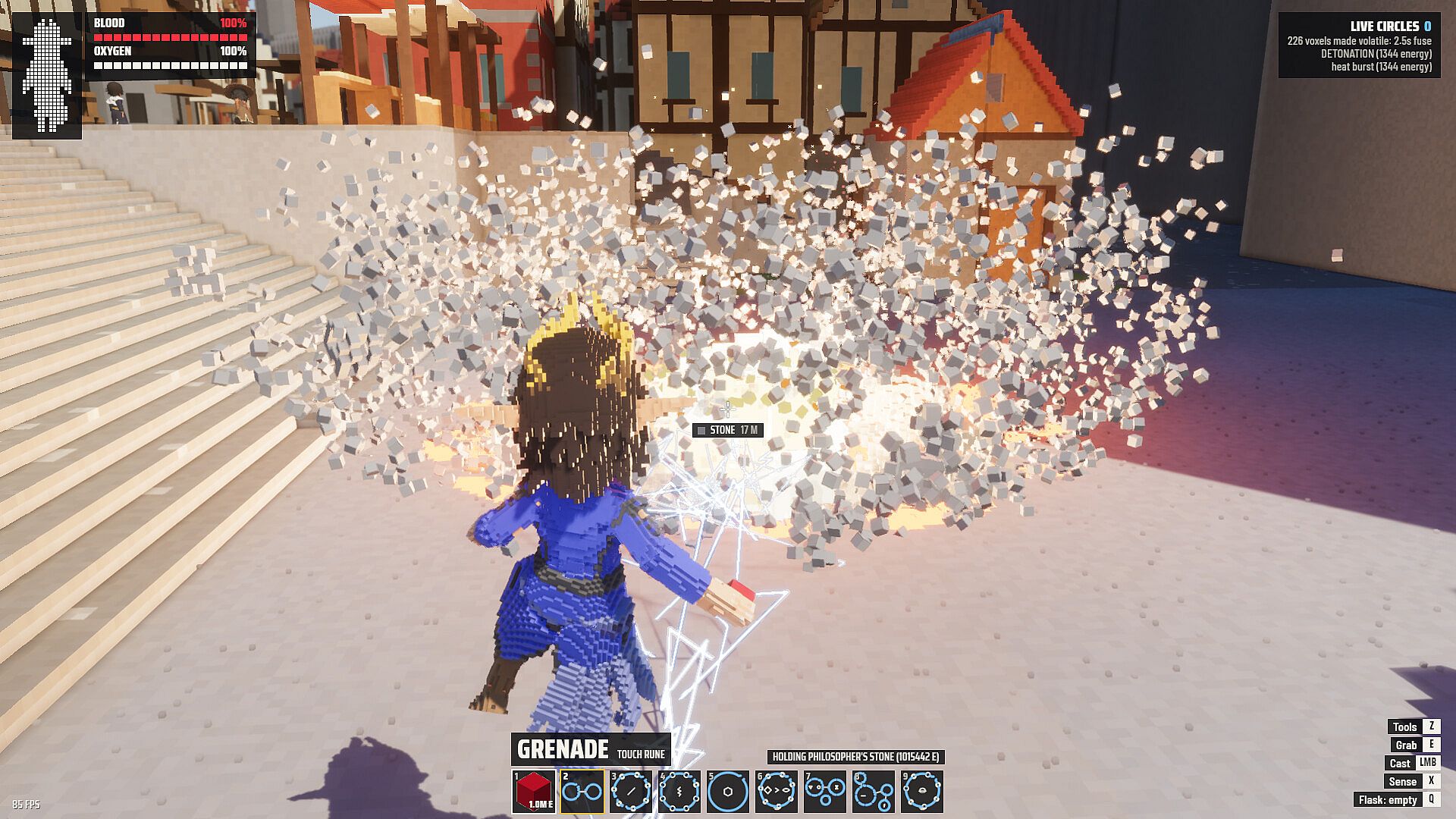
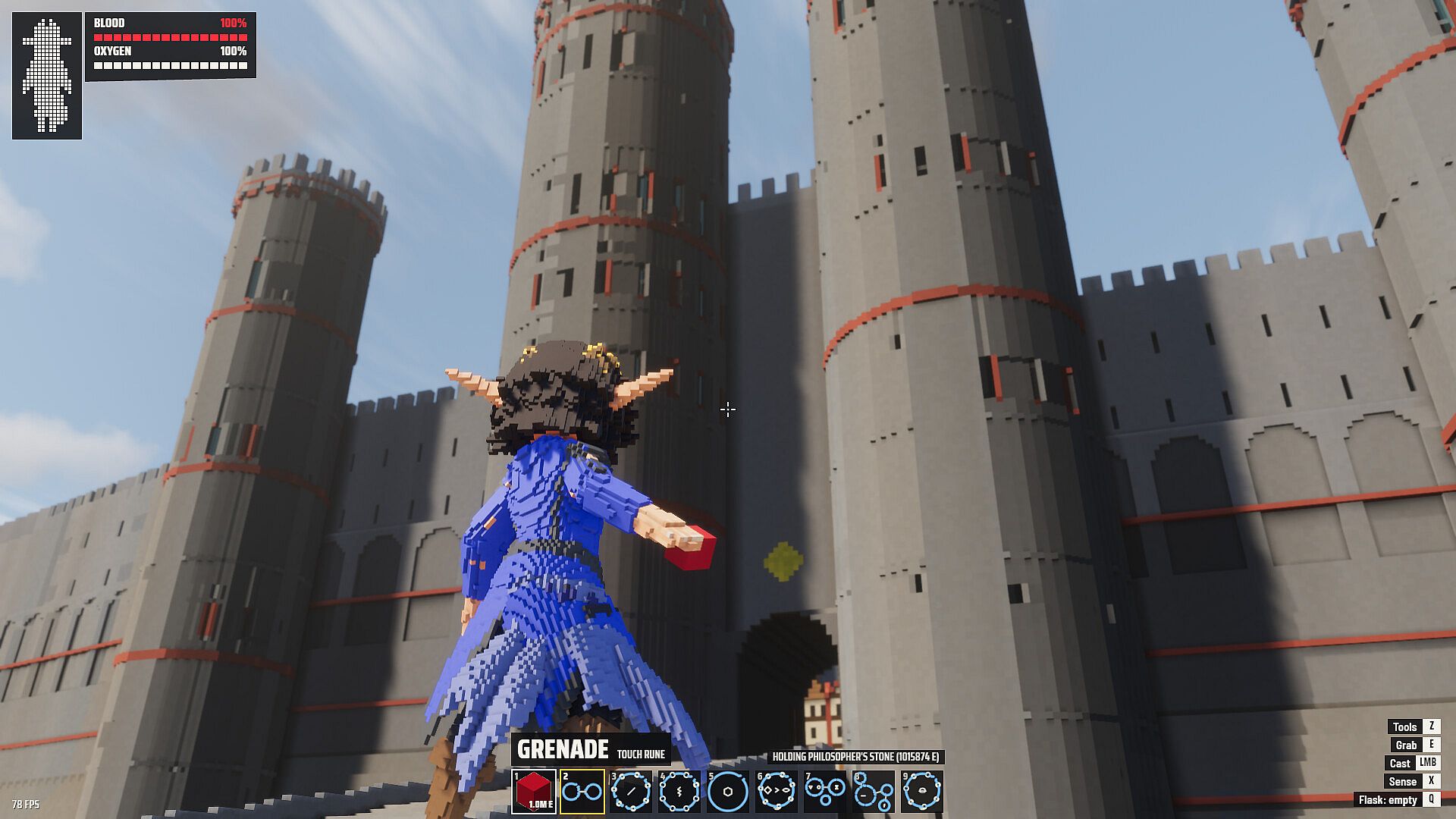
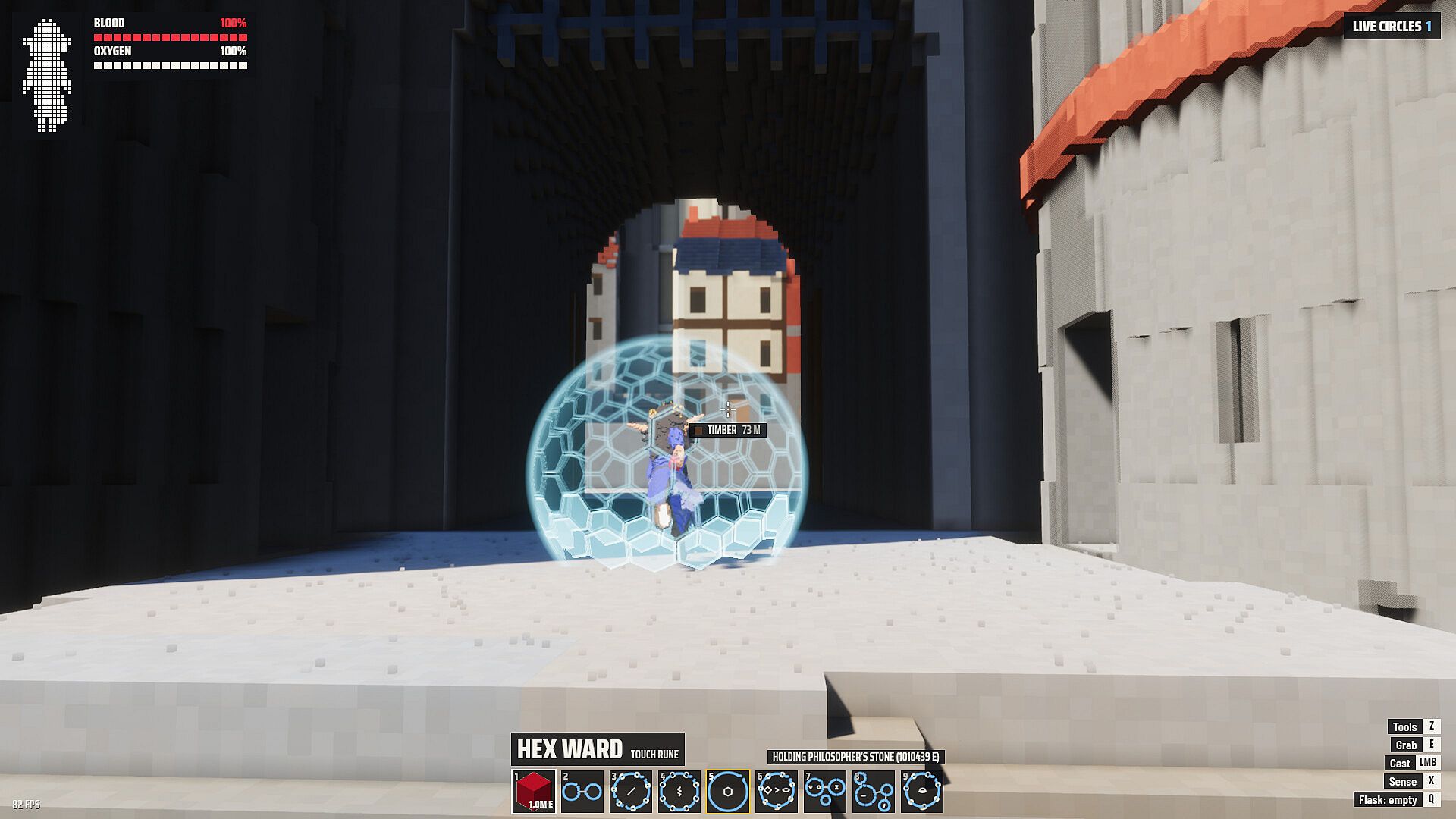
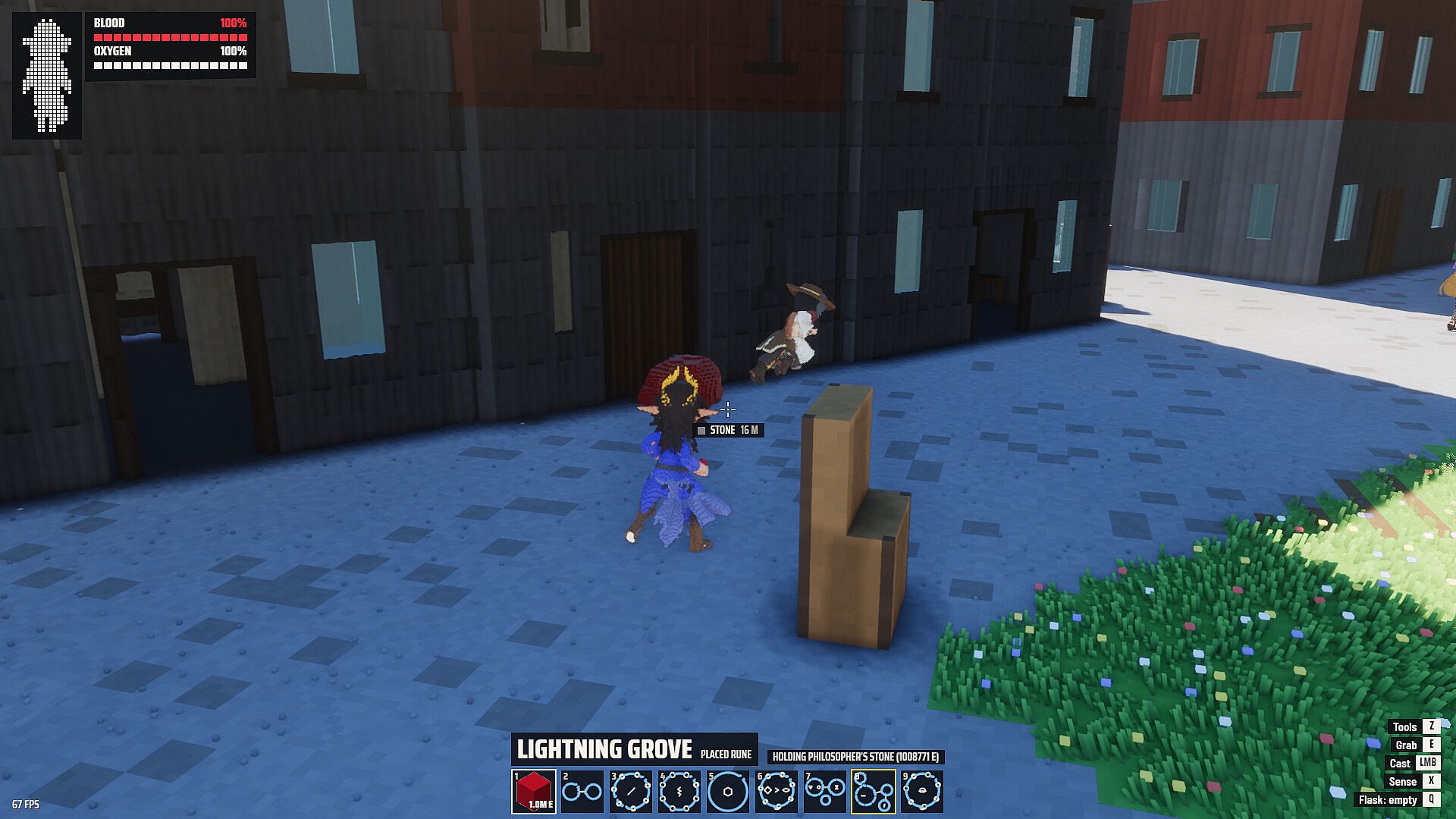
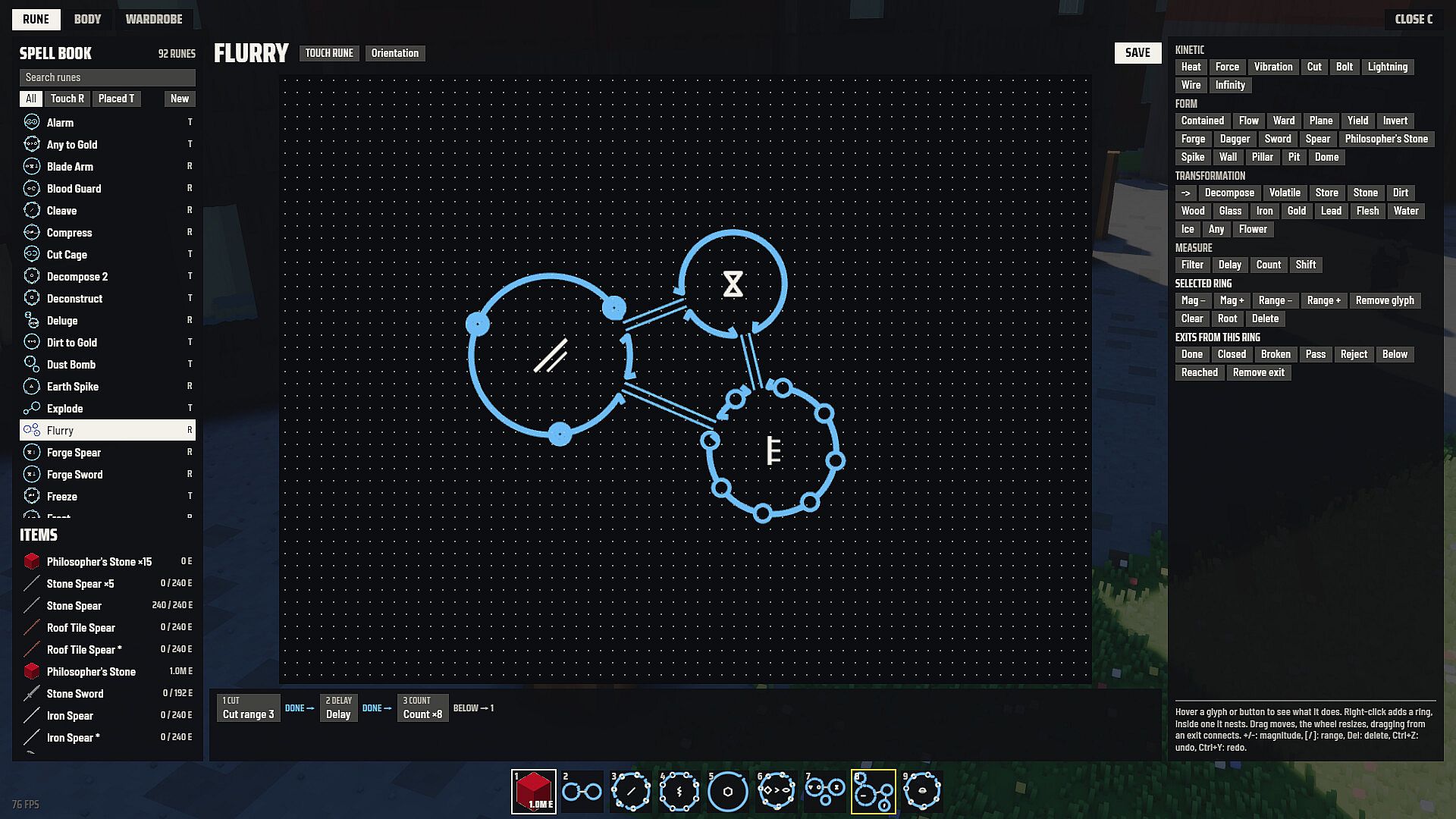
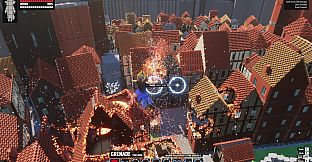
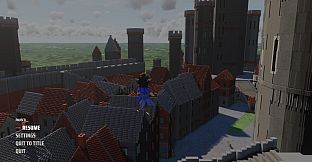
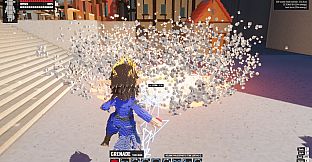
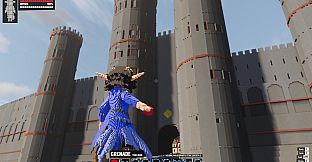
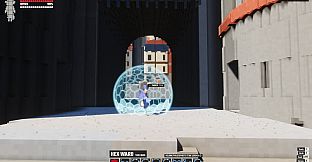
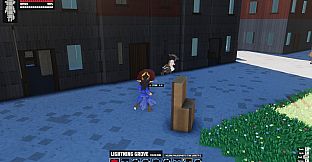
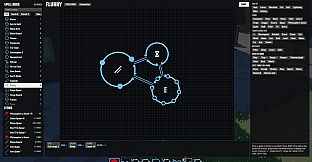
Alkahestry is an action simulation game set on PC where every element of the environment and player experience receives detailed simulation treatment. The air, blood flow, city structures, and magical effects all operate under consistent physical and energetic rules. Players construct custom runic circles that can be positioned freely in the world, drawing power from glyphs collected through combat against other players and by looting grimoires. This system allows for the creation of varied magical effects without reliance on traditional resource pools.
Gameplay
The core loop centers on gathering glyphs to expand available symbols for circle construction. Each glyph contributes specific properties that combine into spells or effects. Combat emphasizes careful energy management because the game replaces mana with an energy system governed by equivalent exchange. Simple actions such as converting dirt into gold demand substantial energy input, and insufficient nearby valuable matter causes the spell to draw directly from the caster instead. This creates constant risk assessment during encounters, where overextending on minor effects can leave a player vulnerable.
Spellcasting feels deliberate rather than spammy. Basic projections like hurling stone bolts require little energy and carry low personal risk, yet they often prove insufficient against opponents who have accumulated energy from surrounding materials. Stronger spells become possible only after siphoning sufficient energy from the environment, turning fights into tense exchanges where positioning and timing matter as much as the chosen glyphs. The simulation extends to physical consequences, so environmental interactions and personal energy reserves directly influence survival.
Game Modes
Alkahestry supports player-versus-player encounters as a primary focus, where participants compete for glyphs and grimoires through direct conflict. The absence of a separate mana resource means every engagement carries the potential for self-inflicted harm if energy balance tips too far. Circle placement occurs in real time during these confrontations, rewarding players who adapt their runic designs on the fly based on available glyphs and local matter sources.
Exploration and looting integrate into the competitive structure, as grimoires provide new glyphs that alter available options for future circles. The simulation of environmental factors encourages players to consider surroundings when planning engagements, since nearby objects can serve as energy reservoirs or obstacles. No dedicated single-player campaign or cooperative modes receive mention in available details, keeping emphasis on the multiplayer dynamics of glyph acquisition and spell crafting under equivalent exchange constraints.
Core Magic System
Magic in Alkahestry operates through equivalent exchange rather than free casting. Every transmutation or projection consumes energy drawn from either external matter or the caster's own reserves. Turning common materials into valuable ones remains possible but exacts a high cost, forcing players to weigh immediate gains against long-term survival. Glyphs earned from eliminated opponents expand the symbol library, enabling more complex circle designs that combine multiple effects into single activations.
The system rewards understanding of basic energetic principles. Players who master efficient energy sourcing and glyph synergy gain advantages in prolonged fights, where opponents relying on low-cost projections eventually deplete their options. Environmental simulation adds layers, as walls, air currents, and biological factors can influence spell trajectories or energy availability in subtle ways.
Is It Worth Playing?
Alkahestry appeals to players who enjoy systems-driven action with heavy emphasis on resource management and creative spell construction. The equivalent exchange mechanic introduces meaningful trade-offs absent from many magic-focused titles, while the simulation of physical elements adds depth to both combat and exploration. Those seeking straightforward power fantasies may find the energy costs and self-harm risks frustrating, yet the depth suits individuals interested in experimenting with runic combinations and adapting to opponent strategies in player-driven encounters.
Current information shows no large-scale updates or seasonal content cycles, leaving the experience centered on the foundational mechanics of circle building and glyph collection. Availability remains limited to the PC platform, and the focus on multiplayer conflict suggests strongest engagement for those comfortable with competitive environments. Overall, the title suits simulation enthusiasts who value logical consistency in magical systems over traditional progression loops.











