

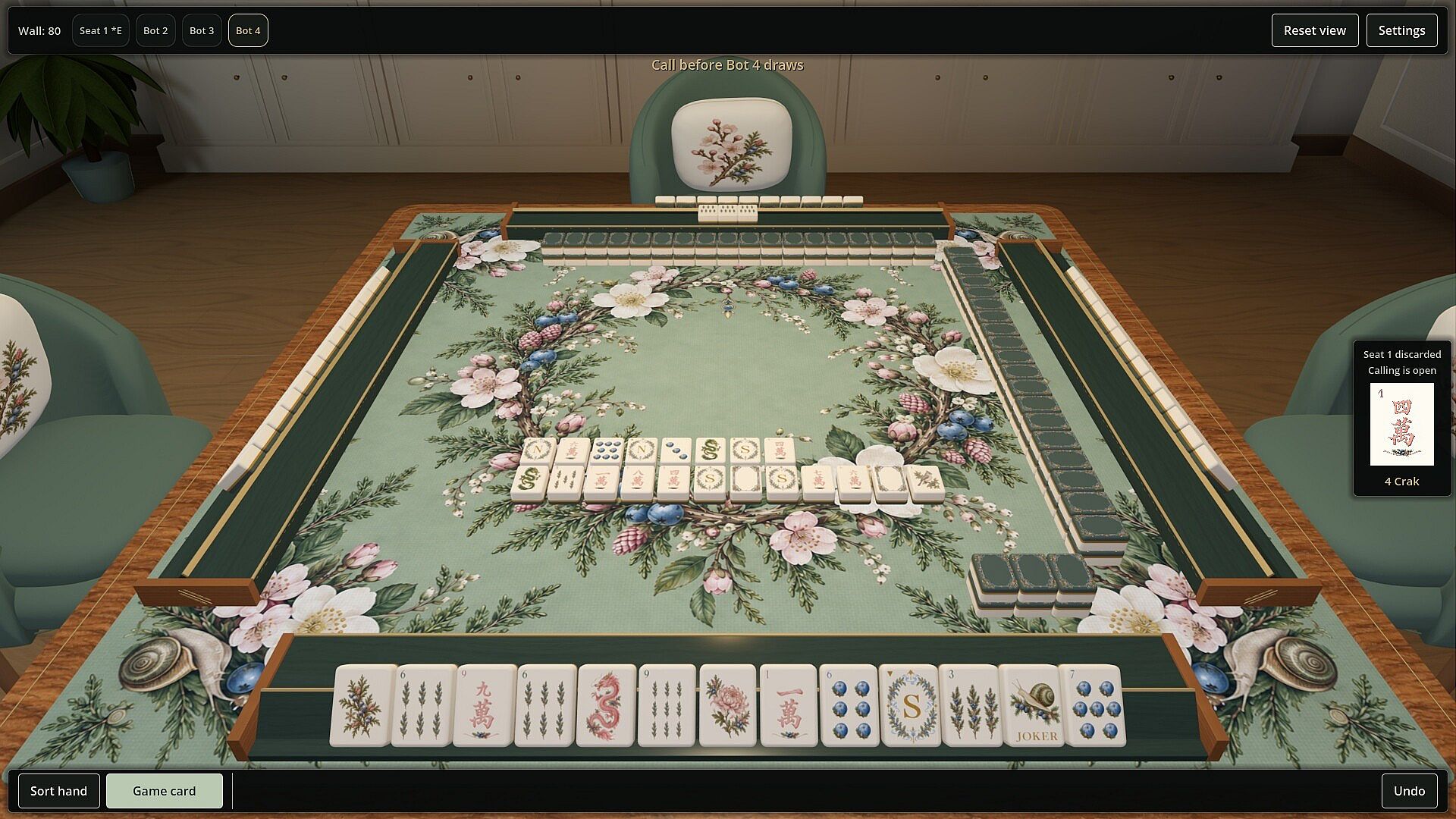
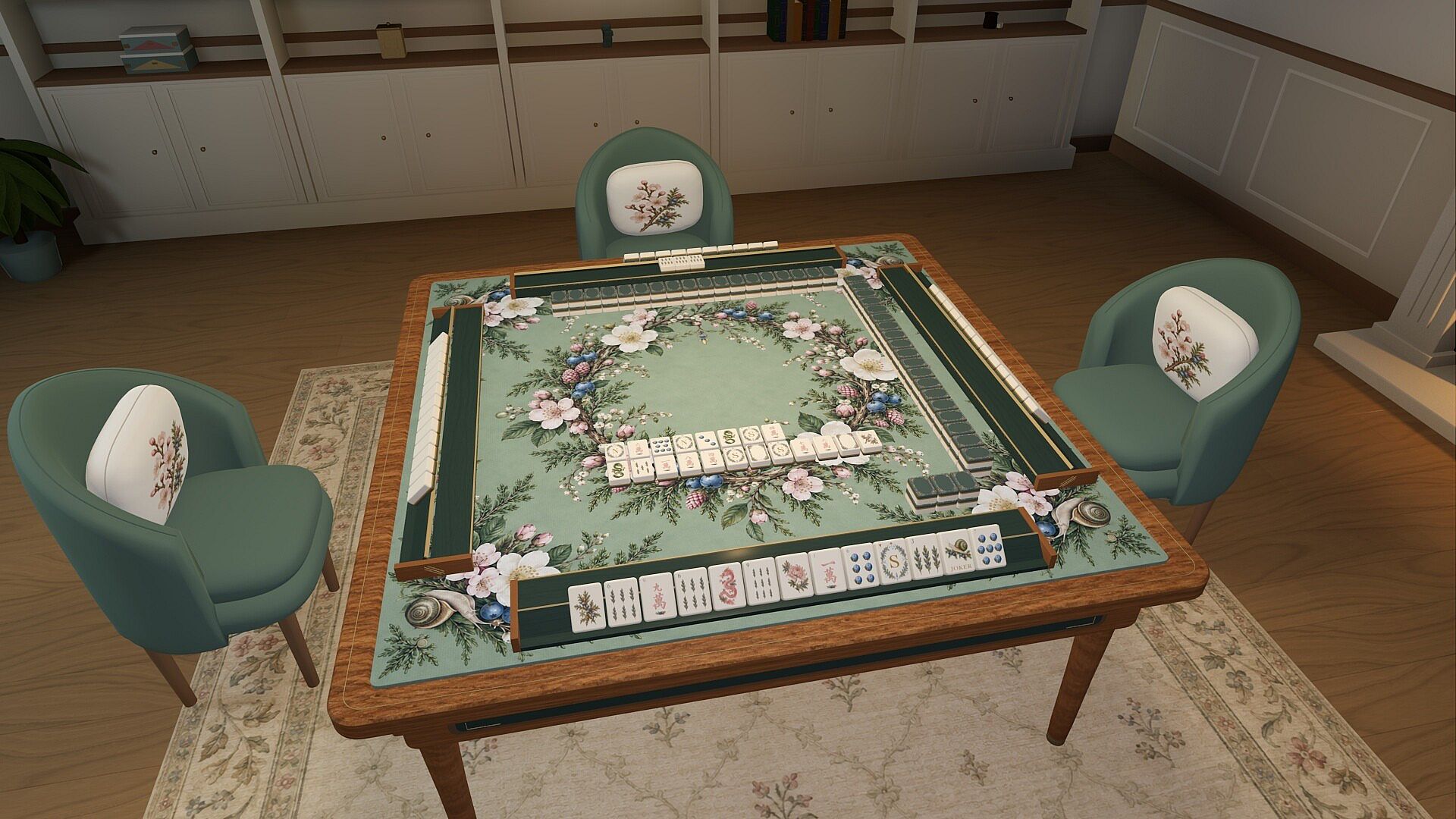

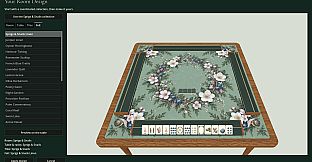

American Mahjong is a strategy and casual title developed for PC that recreates the American variant of the classic tile game in a furnished 3D setting. Players arrange tiles on a rack, participate in the Charleston exchange, monitor discards, and aim to complete a winning hand drawn from an included original game card. The experience emphasizes both solitary practice and shared sessions, with tools for learning rules and customizing play options.
Gameplay
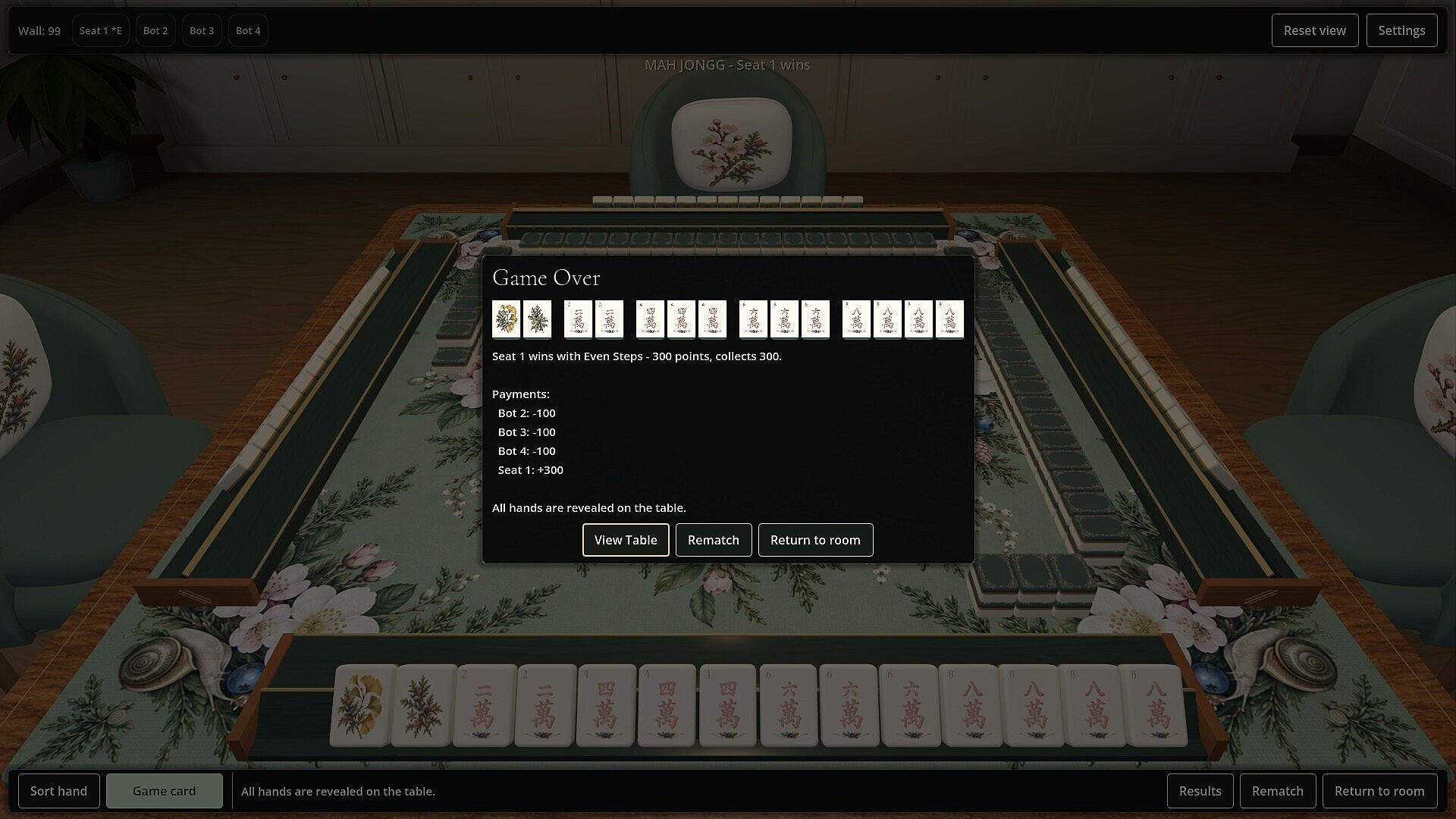
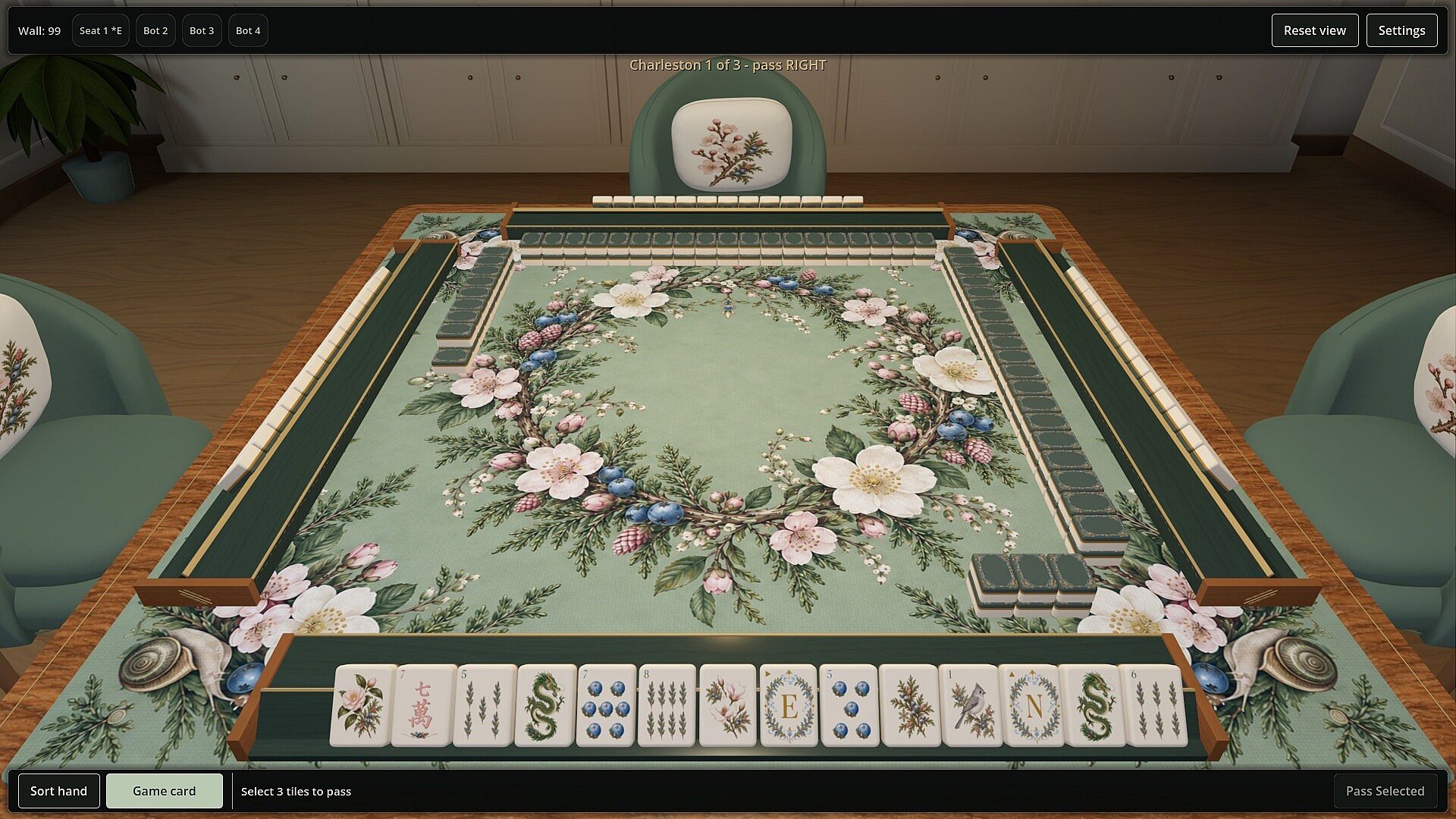
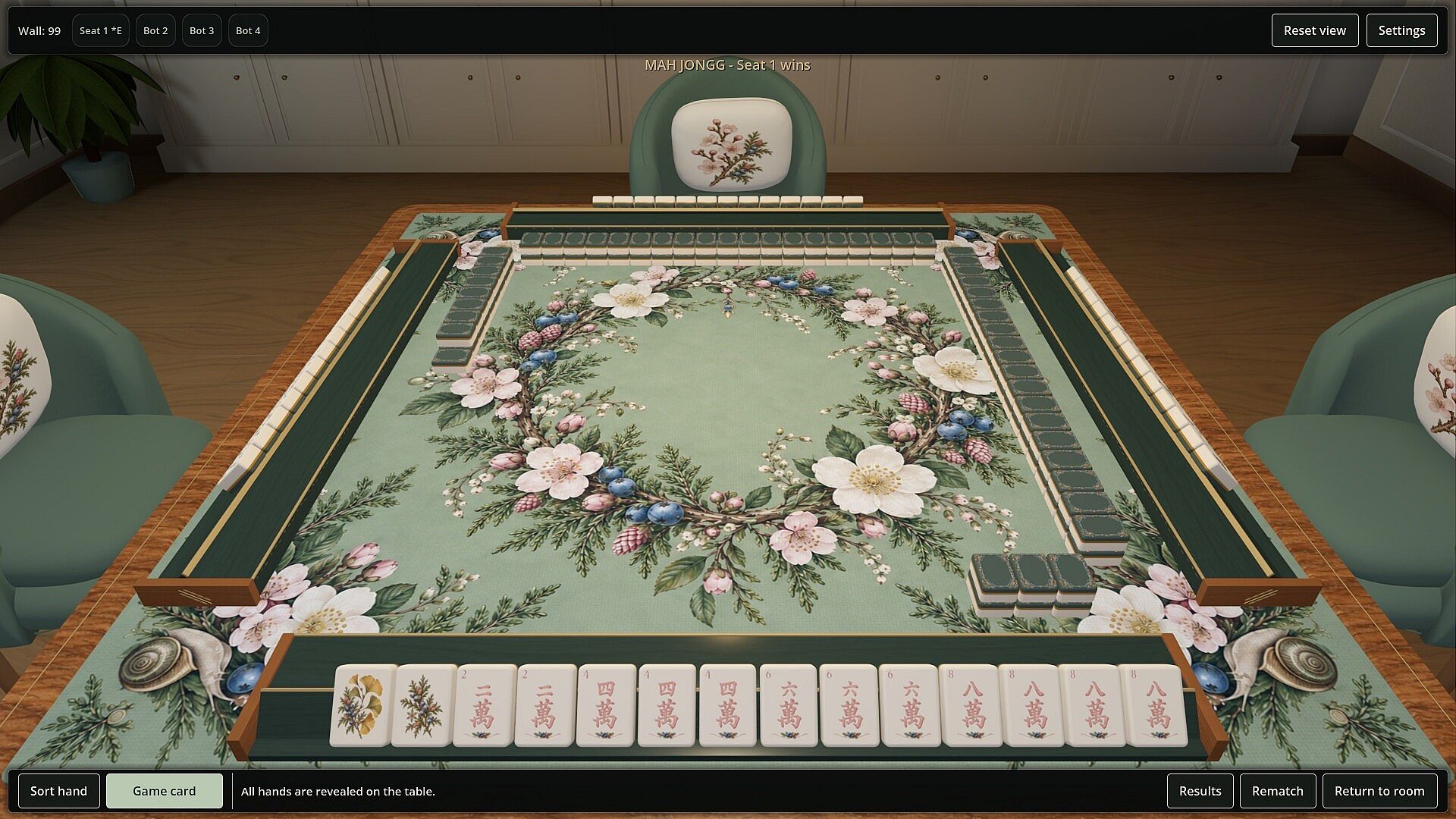
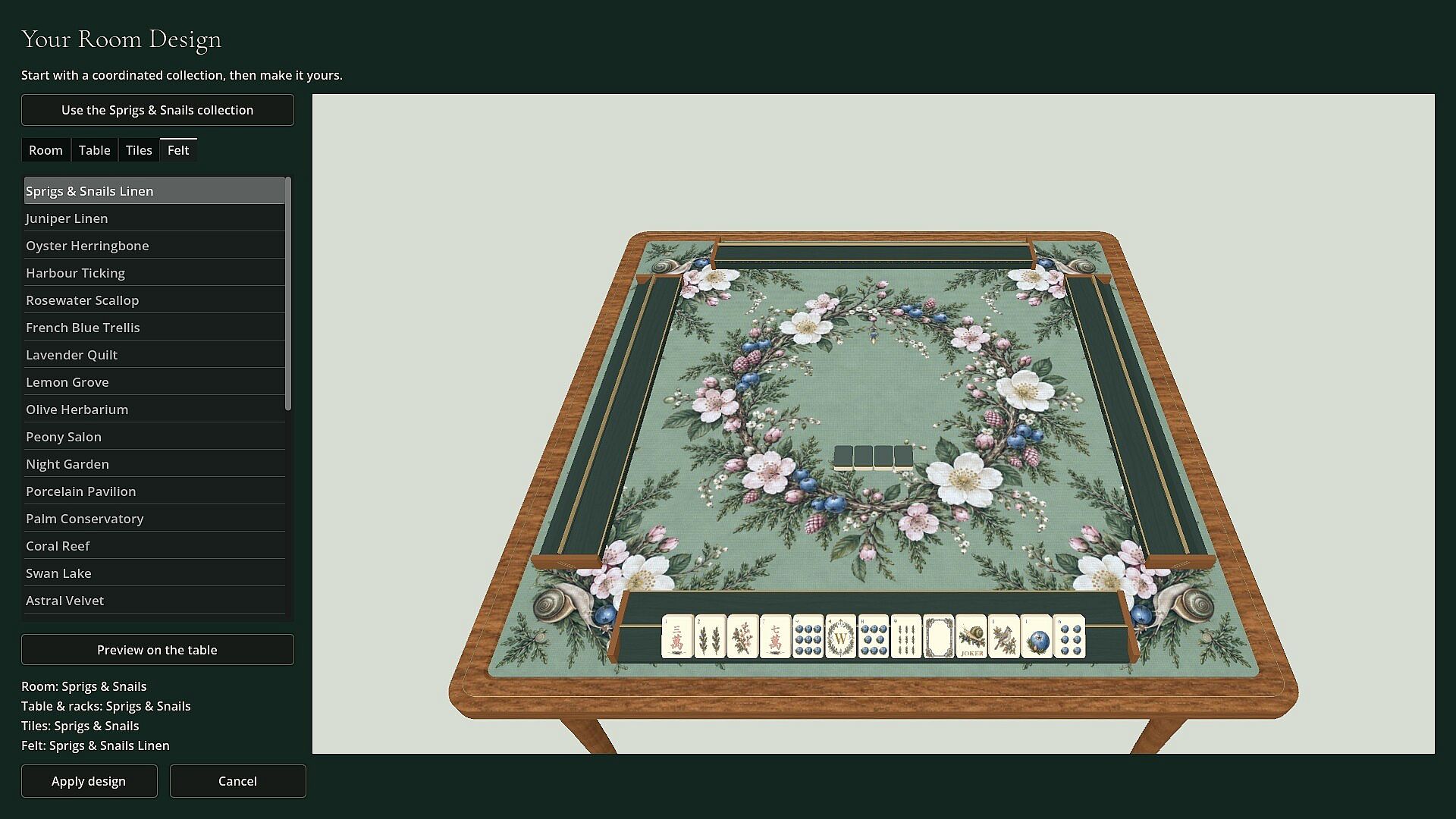
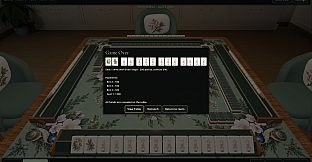
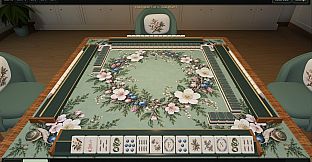
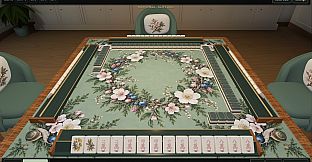
The core loop centers on building a 14-tile hand that matches one of the patterns listed on the current card. Each round begins with the Charleston, a structured passing of tiles among participants to improve individual hands before drawing and discarding starts. Players draw from the wall or claim discards when they complete a set, then discard one tile while announcing it. Jokers serve as wild cards that substitute for needed tiles in pungs, kongs, or other groups, adding flexibility to hand construction. The botanical room features the Sprigs and Snails tile set, which pairs illustrated flowers, berries, birds, and snails on layered green backs, alongside customizable tables and felts for visual variety.
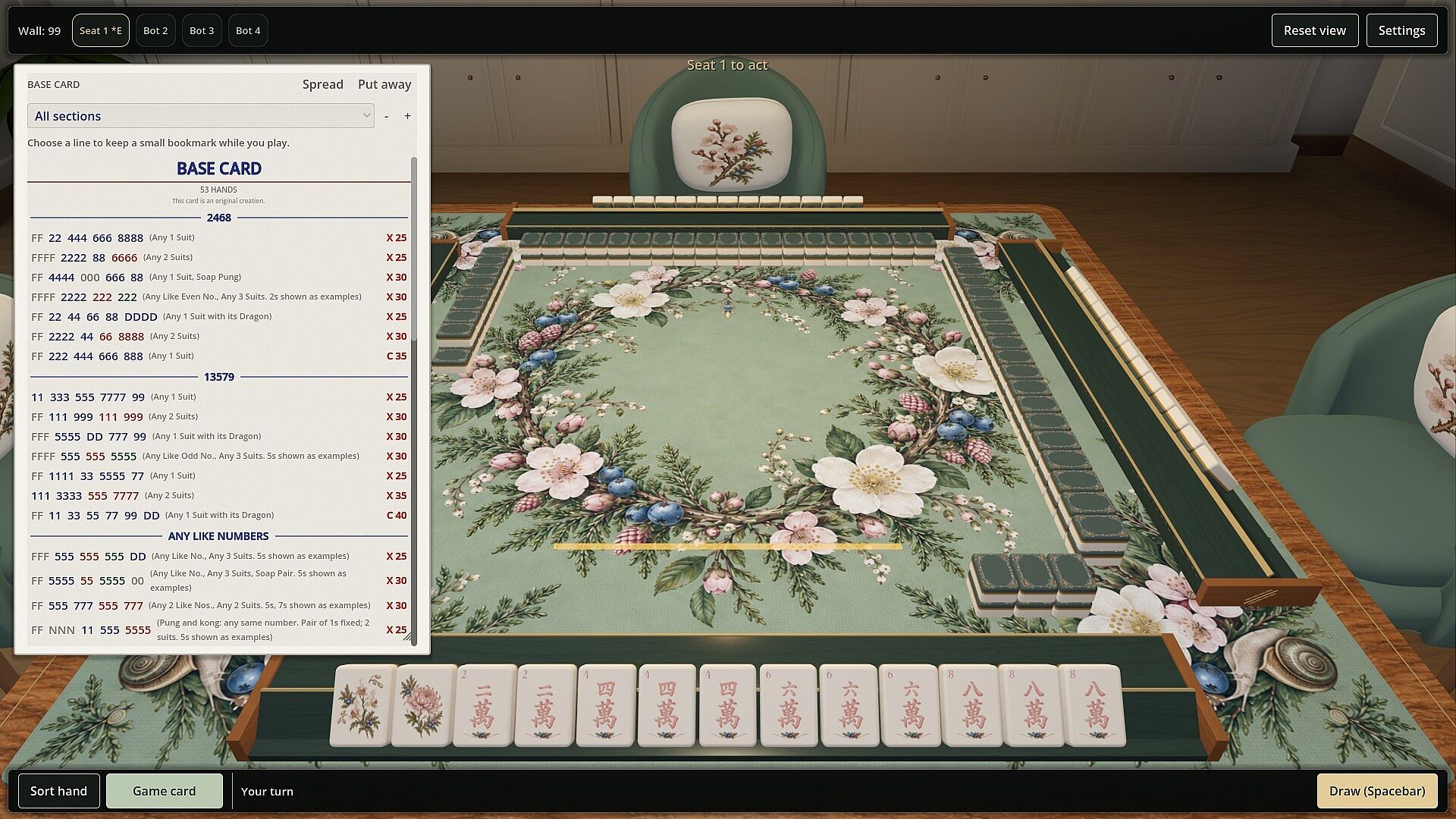
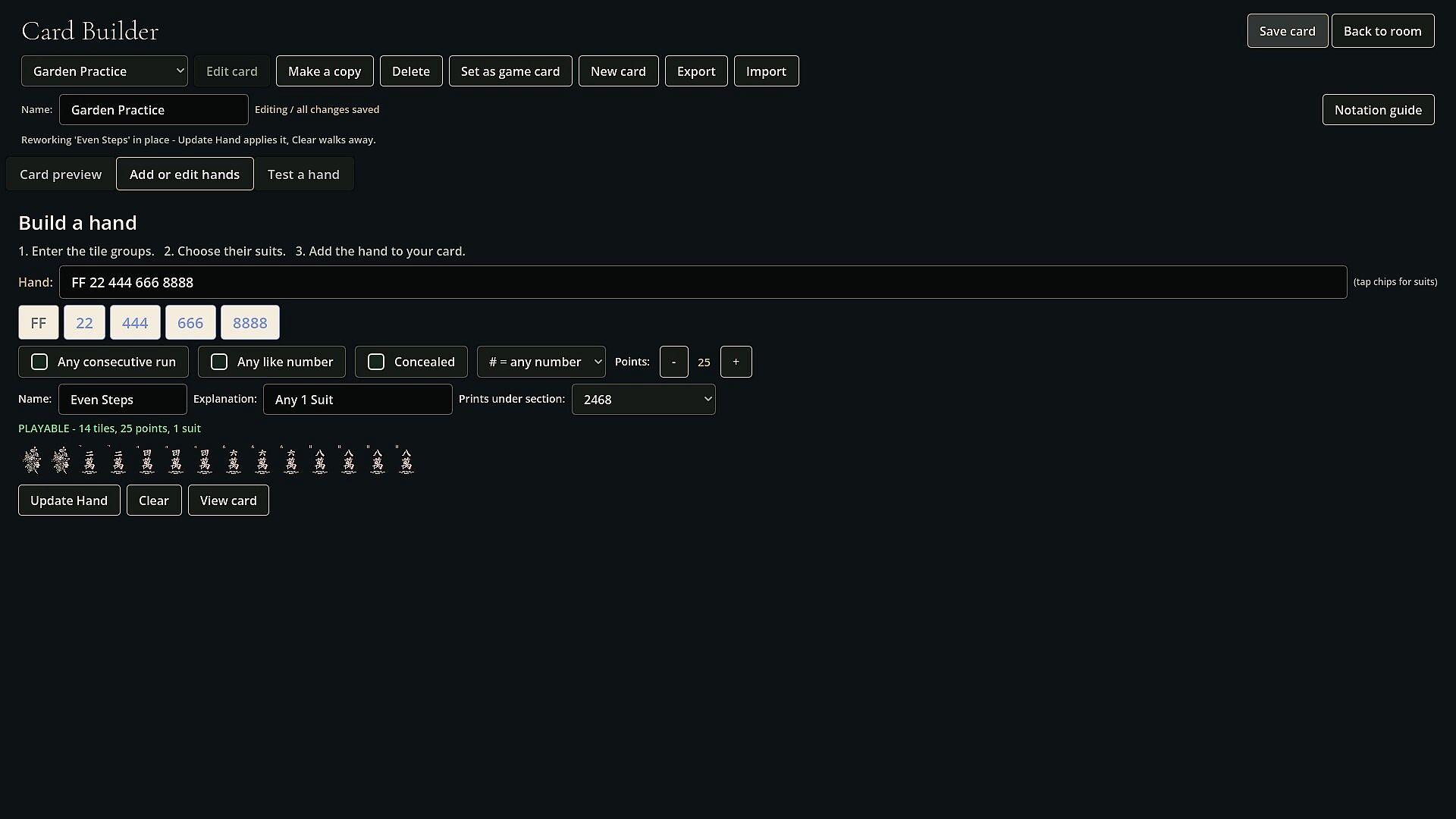
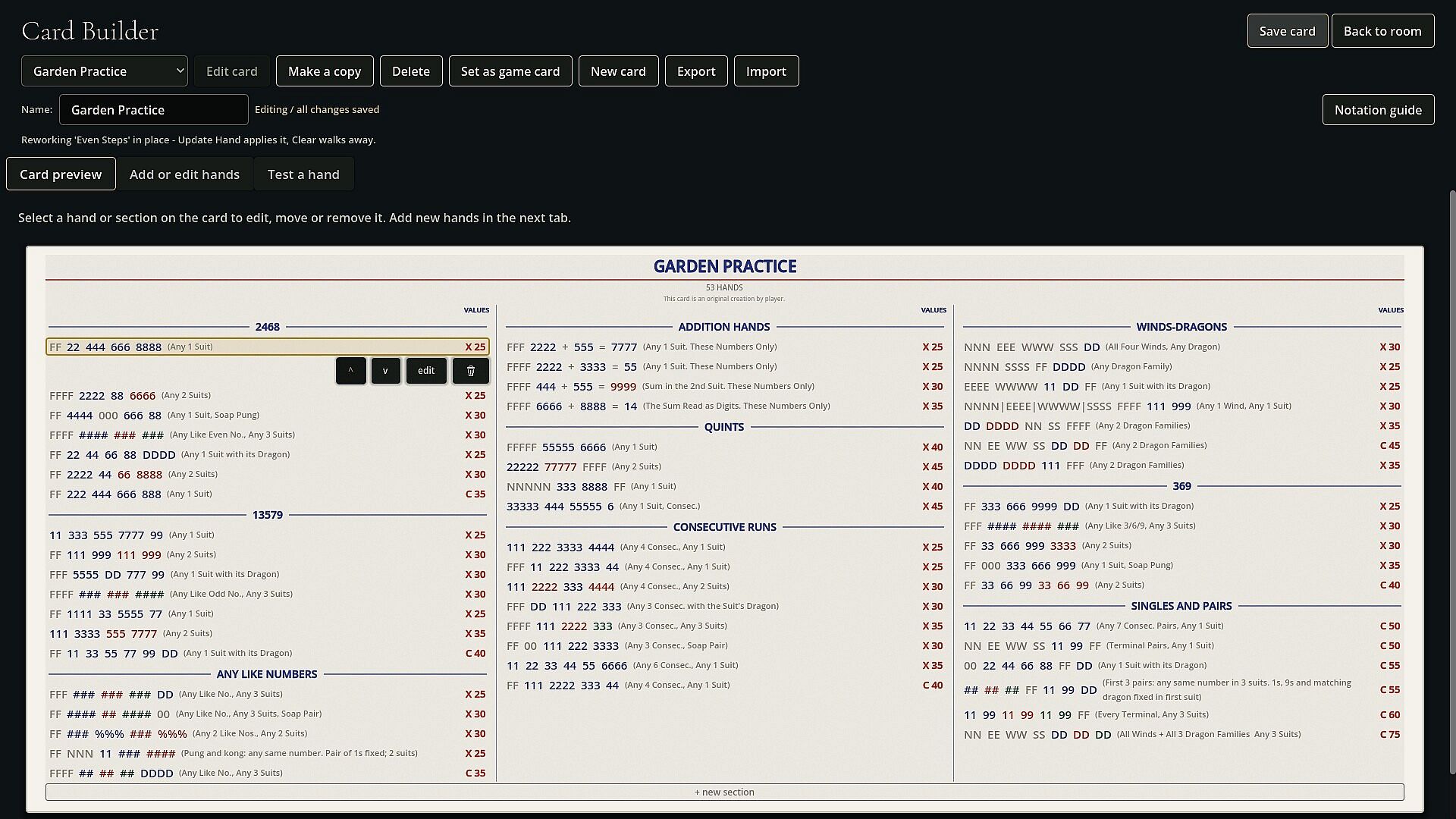
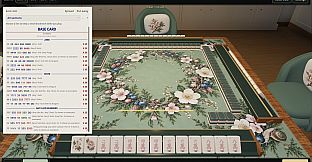
An on-screen card can be opened, resized, and positioned beside the table for reference, with an optional helper that highlights viable lines. Hosts control whether the helper appears for the group. The Card Builder allows creation, naming, validation, and saving of custom cards for use in matches. Lessons in the dedicated Learning Room cover tile identification, card reading, Charleston procedures, calling rules, and hand completion requirements.
Game Modes
Several play options support different group sizes and experience levels. Solo practice pits players against computer opponents. Pass-and-play enables local sharing of a single screen for turn-based sessions without online requirements. Online hosting connects friends through private lobbies or public tables, where participants select cards, seating, and table settings before starting. Two-player Siamese mahjong provides each participant with two racks for simultaneous hand building. Voice chat and camera sharing are available during online matches, with host controls to mute individuals, hide video feeds, or disable these features entirely for a lobby.
Tables can be saved for quick return visits. Graphics, music, and room animations adjust to suit hardware and preferences. Mouse and keyboard input drives all interactions, and an internet connection is necessary for any online components.
Customization and Learning Tools
The Card Builder stands out as a dedicated system for designing original hands. Users name their creations, validate them against game rules, and store them for repeated use across sessions. The in-game card display supports resizing and positioning to keep reference material visible without obstructing the table view. Hosts decide on the availability of the card helper, which can highlight potential matches based on current tiles. These features cater to both newcomers refining their understanding and experienced players experimenting with new patterns.
Room customization extends beyond tiles to include selections of tables and felts within the botanical environment. Additional tile collections appear as previews but remain unavailable for purchase or equipping at launch.
Is It Worth Playing?
This title suits players seeking a faithful digital version of American Mahjong that supports both independent study and social gatherings. The combination of structured lessons, bot opponents, local pass-and-play, and online lobbies with voice and video options addresses a range of preferences from quiet practice to group competition. Custom card creation and the persistent card reference tool add depth for those who enjoy tailoring rules or tracking progress against specific hands. Because the game remains in a pre-release state with no player reviews available yet, its value depends on interest in the verified mechanics such as the Charleston, joker usage, and card-based winning conditions. Those who value clear learning resources alongside flexible multiplayer formats will find the feature set aligned with sustained engagement. Mouse and keyboard controls plus the requirement for a Steam account and internet for online play define the technical scope.