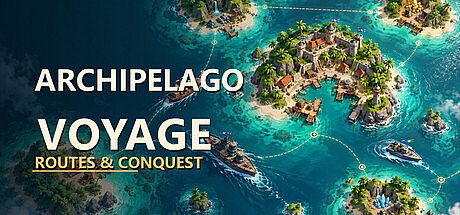


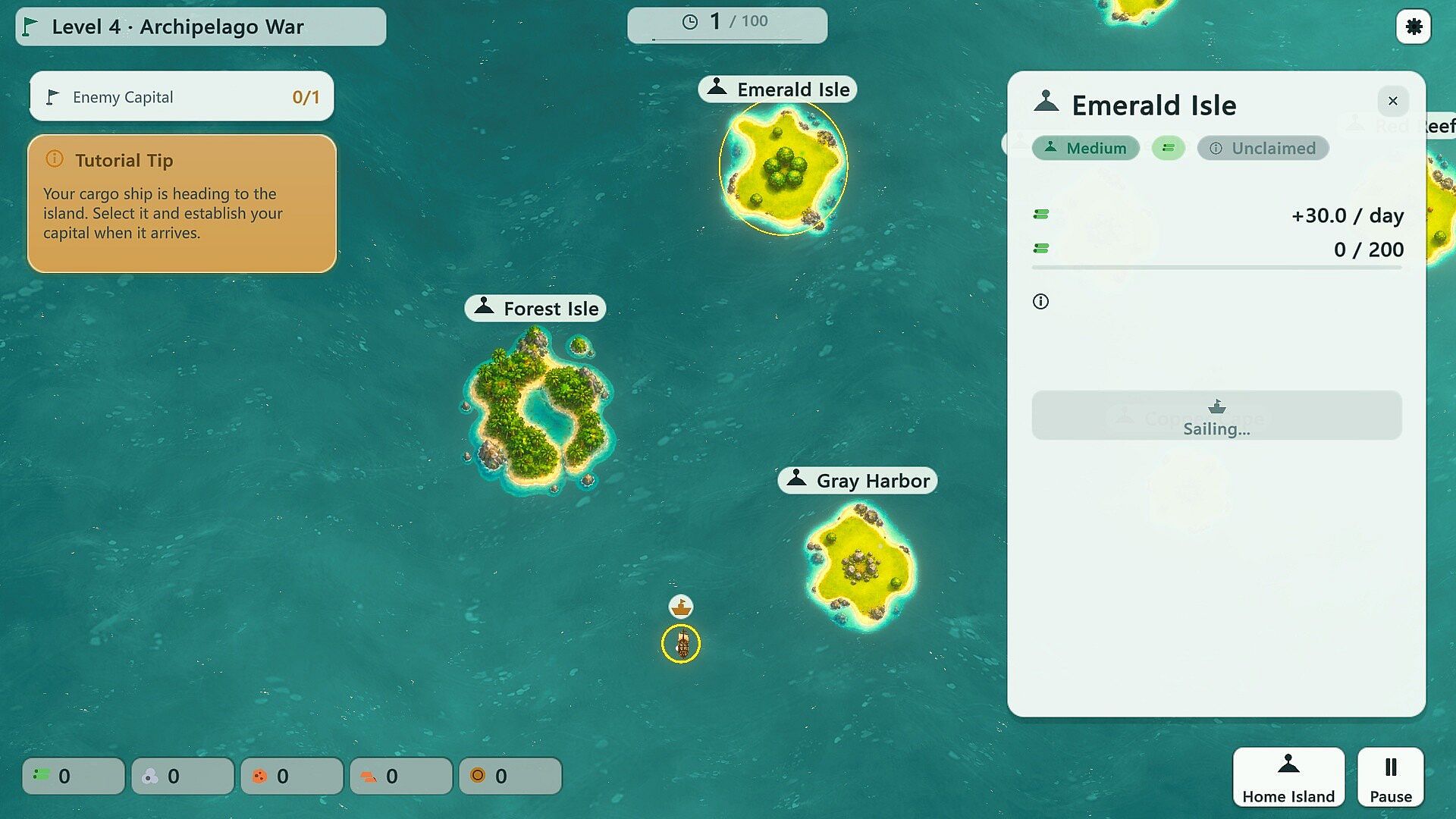
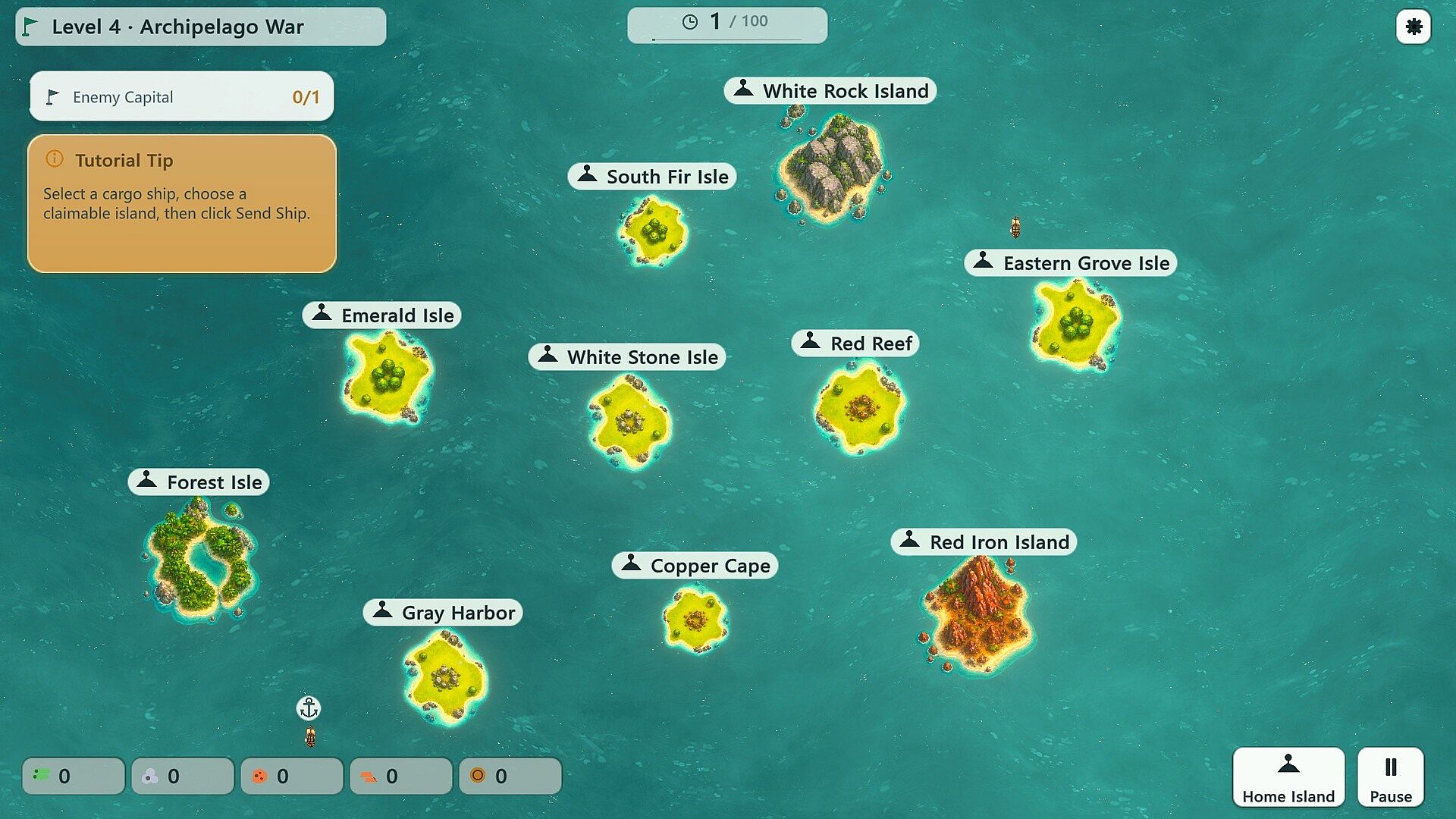
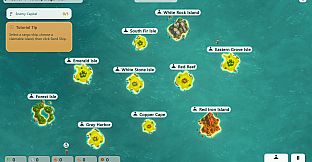
Archipelago Voyage: Routes & Conquest is a single-player real-time strategy game developed for PC. Players begin with a supply ship and must establish an economy across scattered islands while commanding naval forces to secure routes and defend key locations. The core loop centers on resource collection, base development, fleet management, and mission objectives that blend economic growth with tactical combat against pirates and rival fleets.
Gameplay
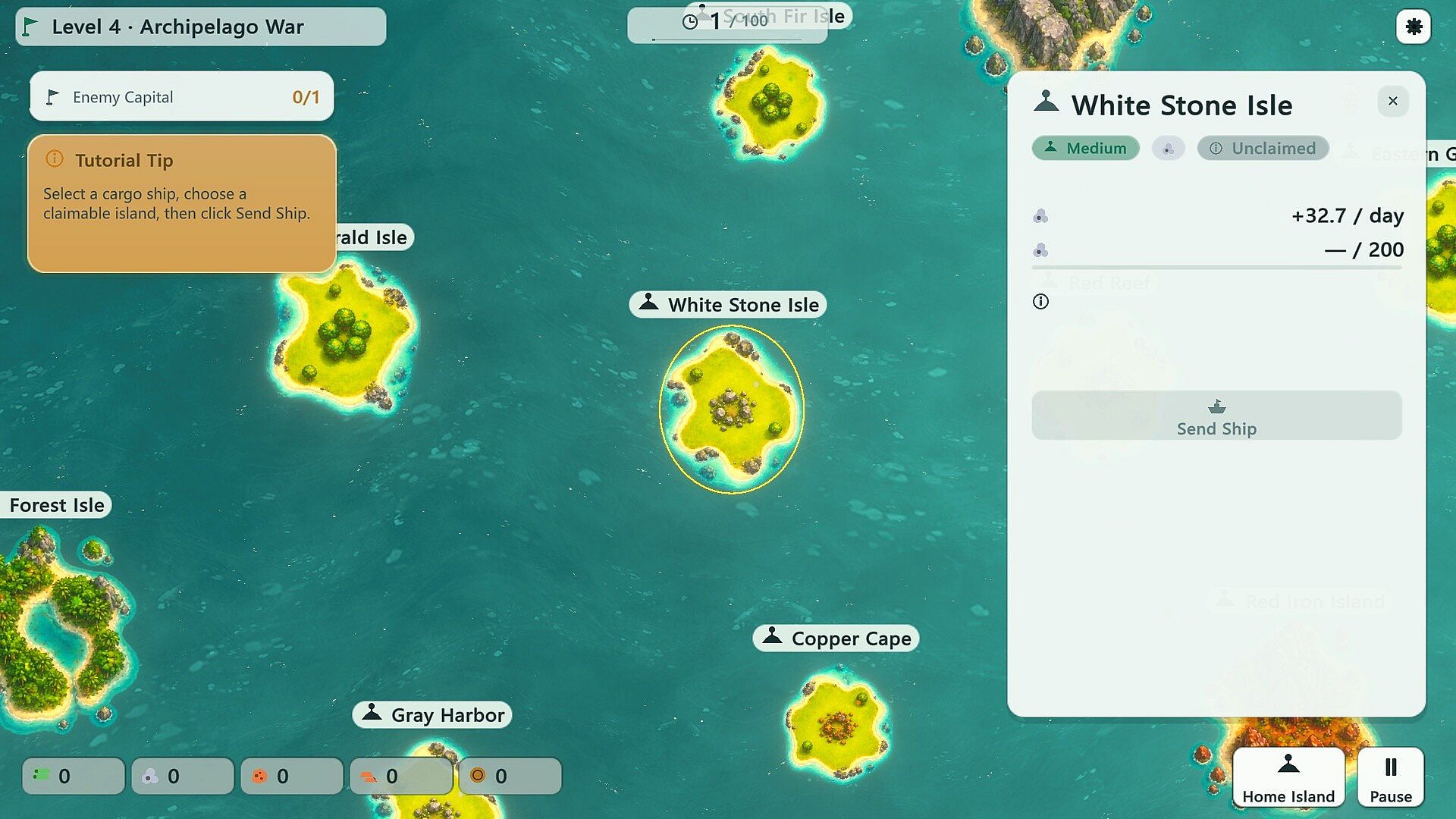
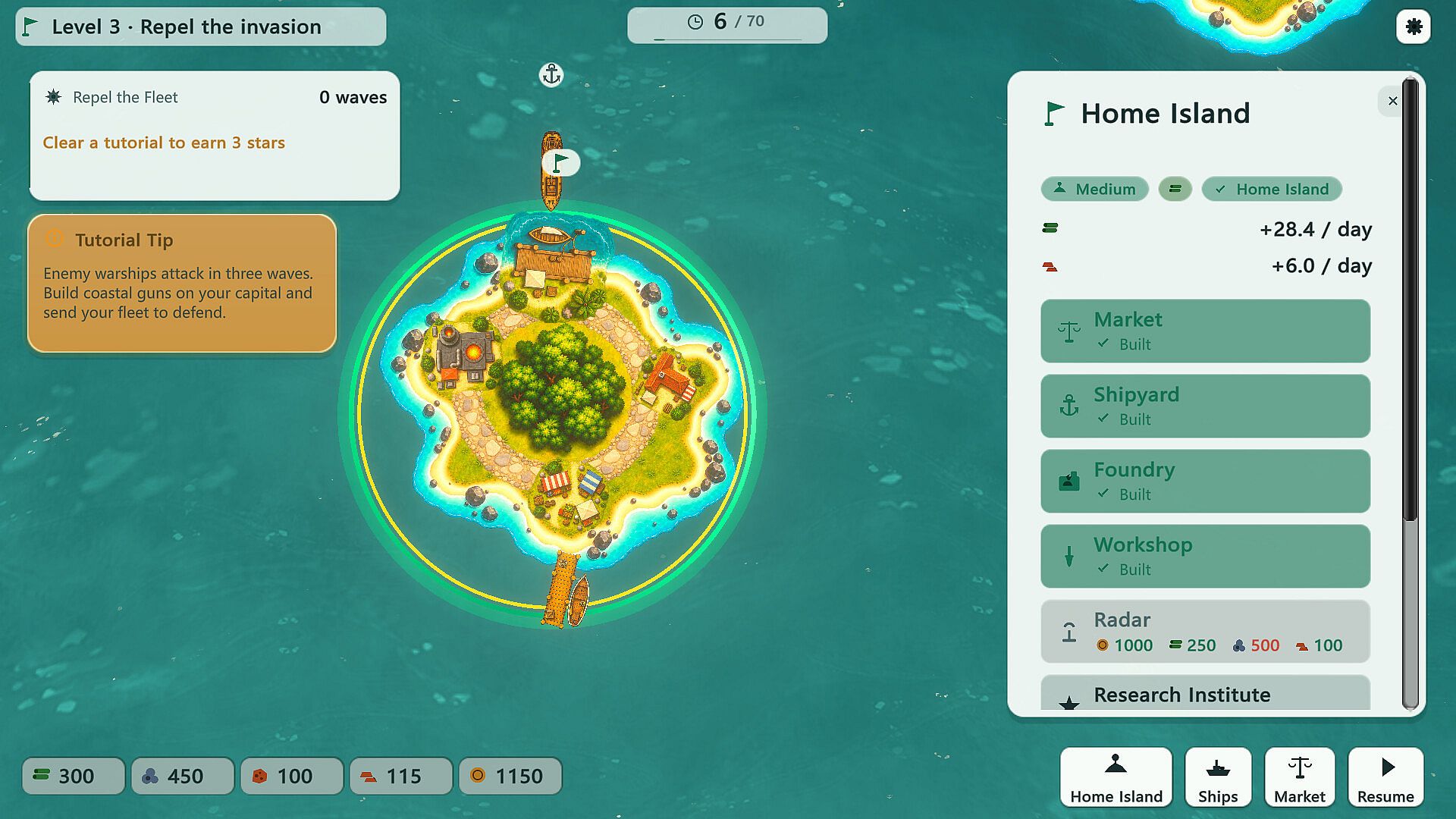
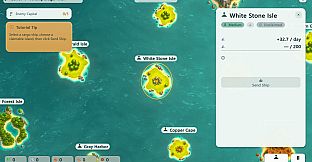
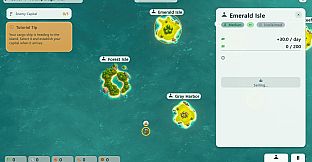
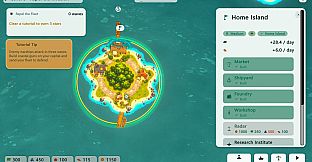
Resource management forms the foundation of each expedition. Transport ships ferry wood, stone, and iron from outlying islands back to a central home base. Players construct markets, shipyards, and foundries to process materials into steel and other goods. Radar stations extend visibility, while claimed resource islands provide steady income streams. Surplus production can be sold to finance expansions or ship upgrades.
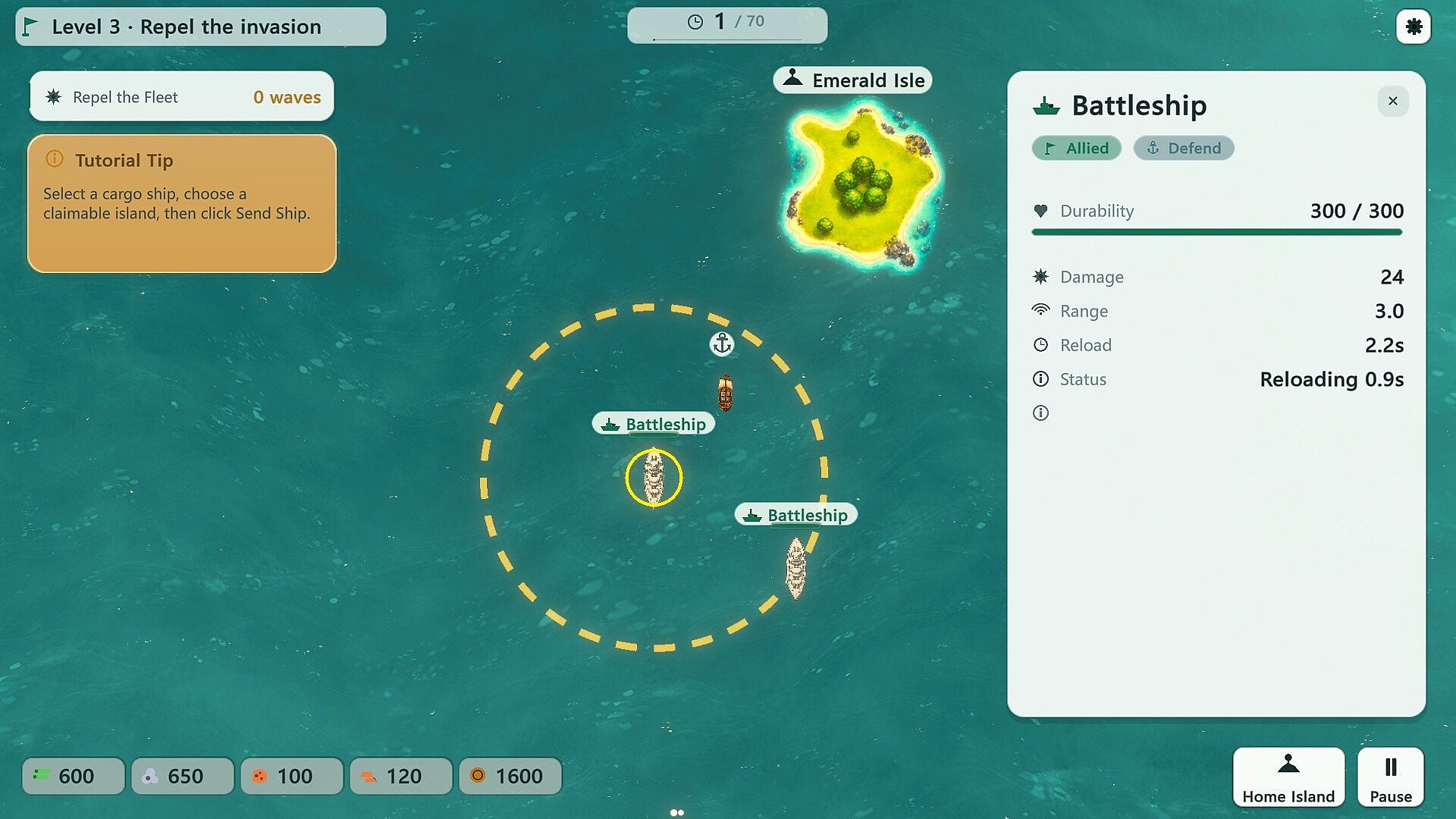
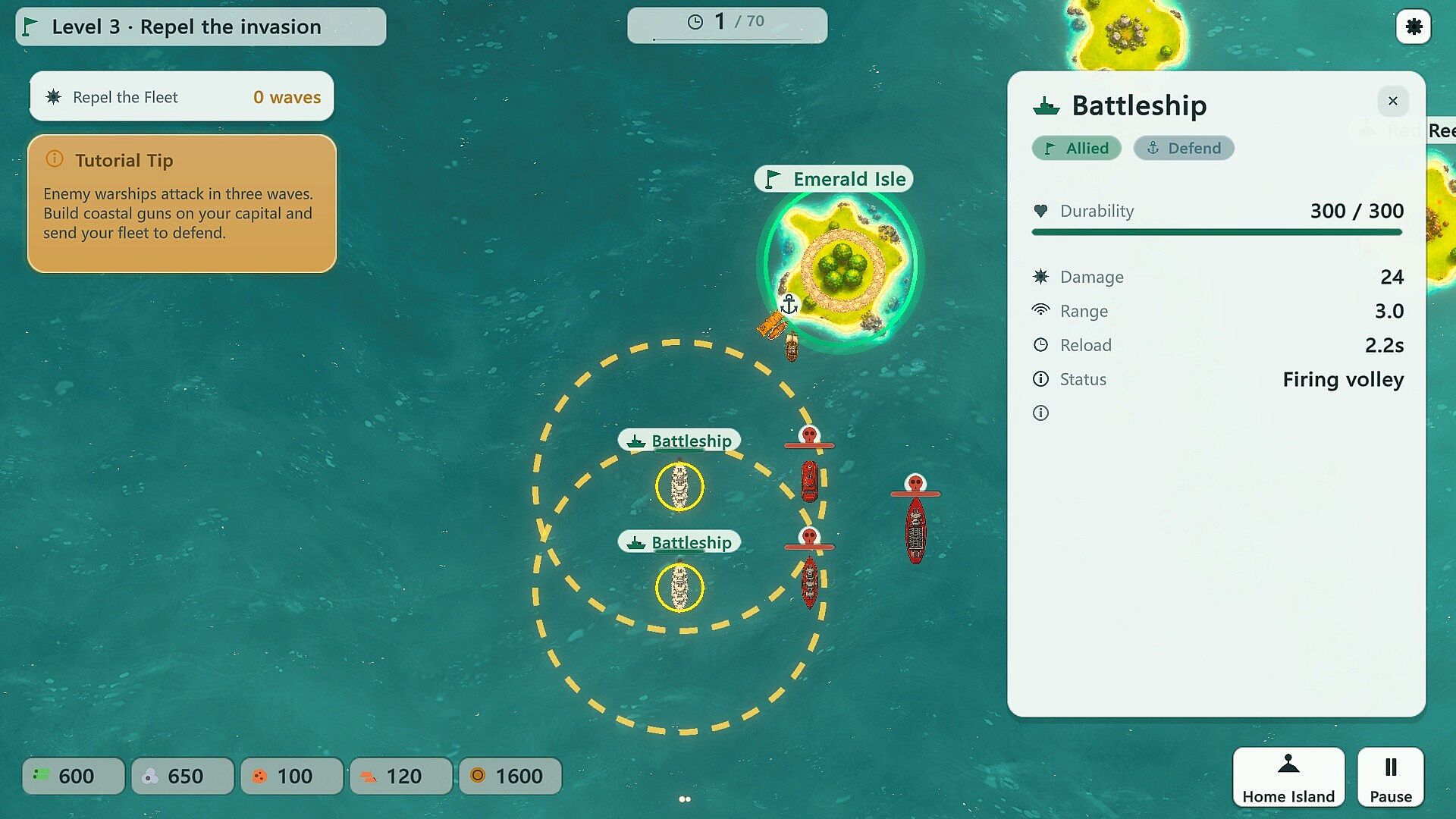
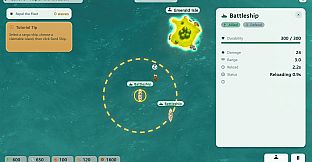
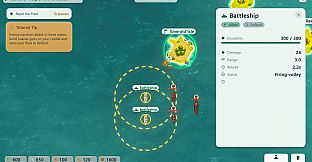
Fleet operations require careful coordination. Ironclads form the frontline defense, battleships provide ongoing firepower support, and missile ships deliver concentrated strikes. Ships can be directed individually or grouped into fleets for efficient movement. Transport convoys must be protected from pirate raids, and seawalls combined with coastal gun emplacements strengthen island holdings once developed.
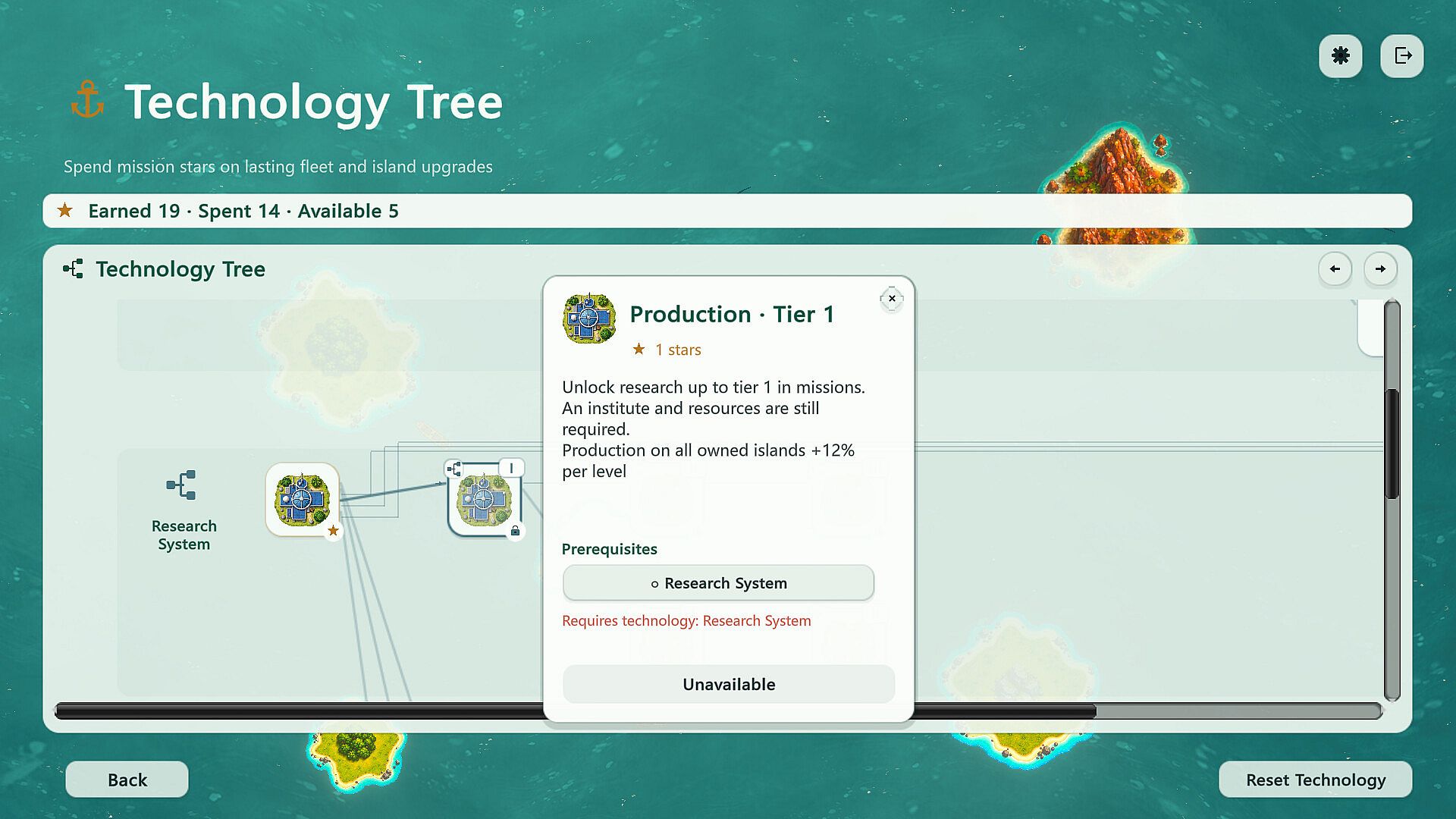
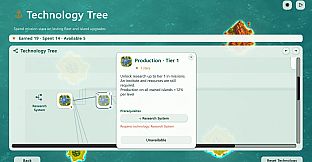
Technology progression adds depth through a branching tree. Stars earned from level completion unlock improvements in shipping capacity, hull durability, weapon effectiveness, and production efficiency. Each mission allows construction of a research institute where local resources fund temporary upgrades. Global technology selections can be reset between play sessions to explore different strategies.
Game Modes
The game emphasizes a structured single-player experience. Four tutorial missions introduce core systems including construction, resource gathering, pirate encounters, fleet defense, and island conquest. These lead directly into a story campaign consisting of ten missions in the opening chapter. Players assume the role of a supply fleet commander tasked with reconnecting isolated islands, safeguarding civilian ports, and investigating a blockade linked to a missing convoy.
Story missions often place civilian harbor cities at risk, requiring simultaneous management of gold shipments and enemy repulsion. Failure to protect these locations ends the expedition. No additional modes such as skirmish or multiplayer options appear in the current design.
Core Mechanics and Progression
Island control decisions drive variety across expeditions. Each new landmass presents choices between immediate resource extraction, outpost establishment, defensive reinforcement, or ship investment. Home island infrastructure grows through market and shipyard builds, while foundries convert raw iron into usable steel. Regular income from secured islands supports sustained operations without constant manual collection.
Naval combat integrates with economic goals. Warships must hold defensive positions around vulnerable ports while transports complete their routes. Distinct ship roles encourage mixed fleet compositions tailored to threats. Coastal defenses extend protection to developed islands, reducing the need for constant fleet presence.
Is It Worth Playing?
Archipelago Voyage: Routes & Conquest targets players who enjoy deliberate strategy games that combine economic planning with naval tactics. The campaign structure provides guided progression through tutorials into narrative missions, making it accessible for those new to the genre while offering replayability through technology resets. The focus on protecting supply lines and managing island economies creates a cohesive loop where every decision influences fleet sustainability and mission success. As a single-player indie title on PC with no confirmed release date or player feedback yet available, it suits those seeking a self-contained experience centered on fleet command and archipelago control rather than competitive or open-ended formats. Those drawn to real-time resource flows, ship specialization, and story-driven expeditions will find the mechanics align closely with the described systems.