




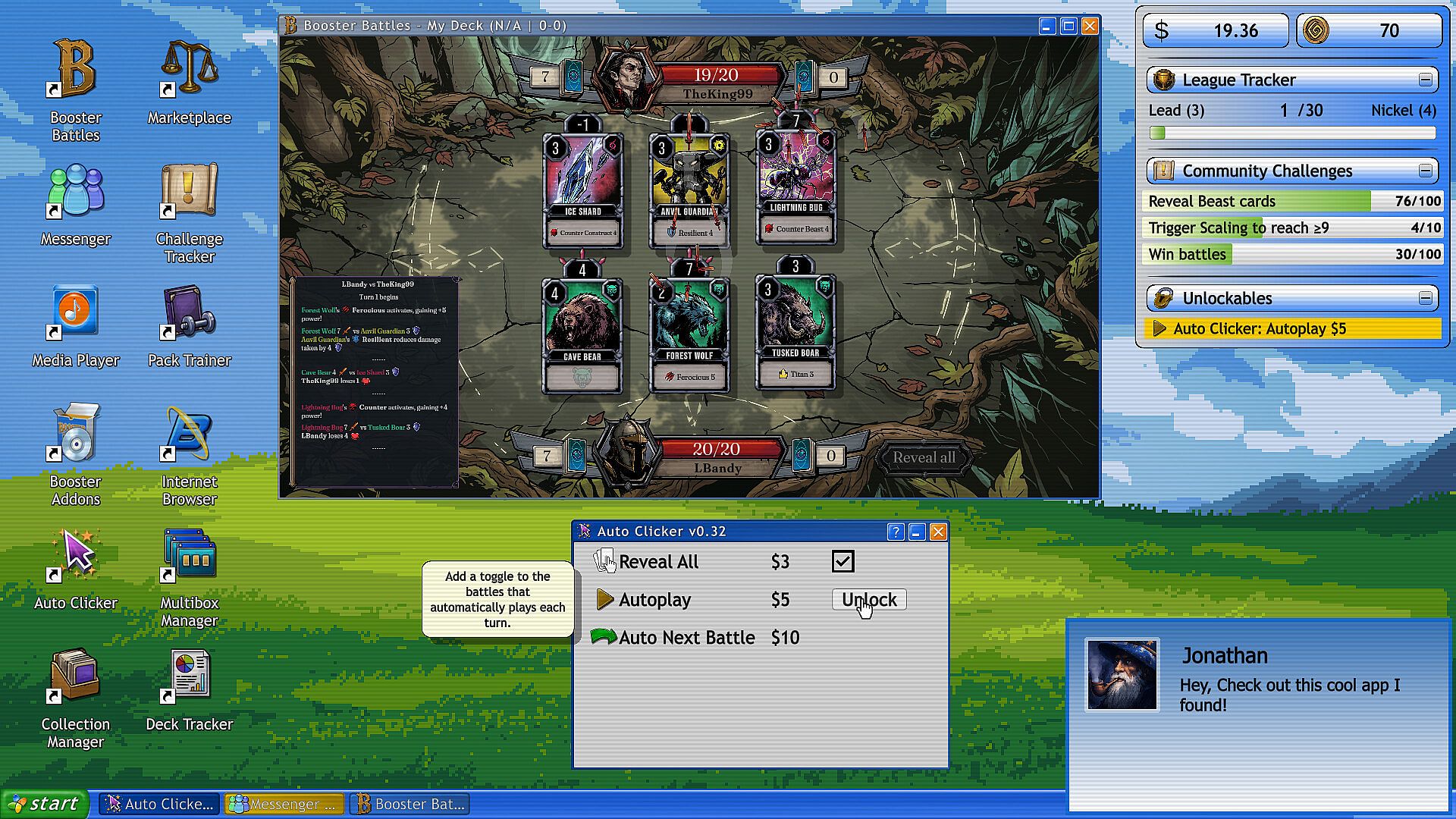
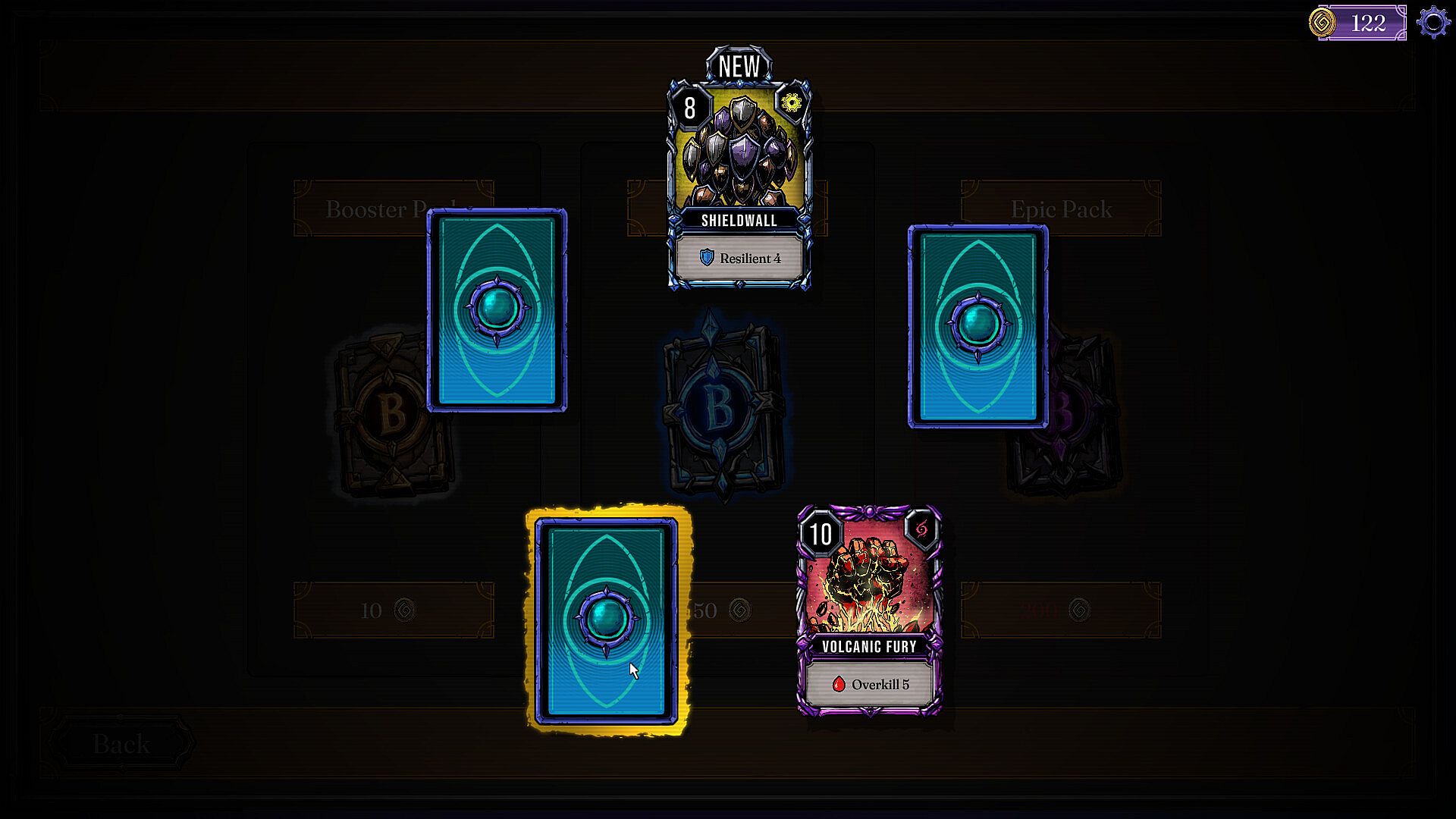
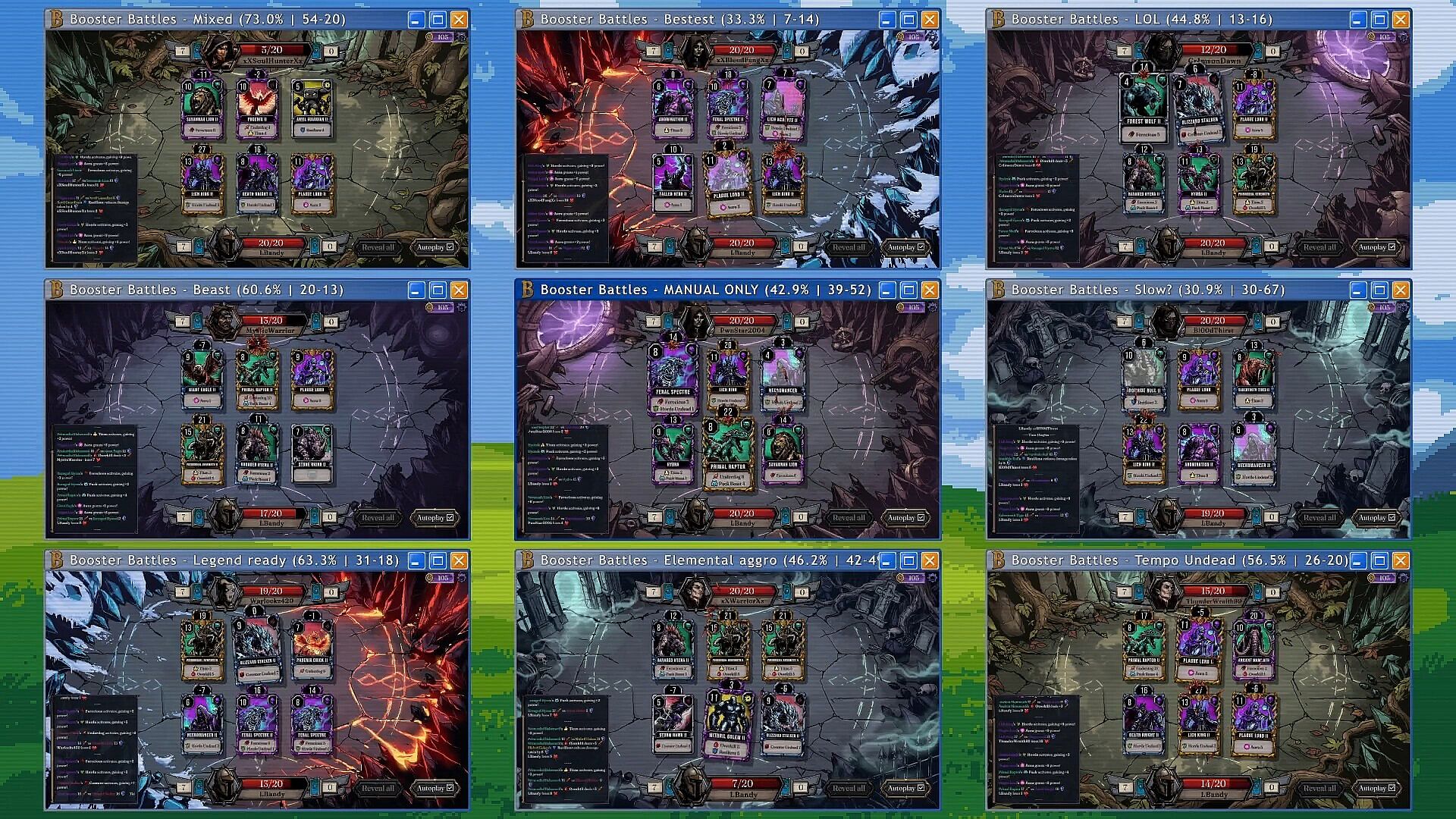
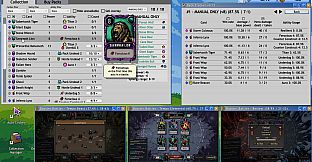
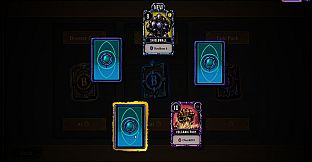

BoosterWare puts players in the role of a dedicated fan of Booster Battles, an online card game set in the early 2000s. This deckbuilding autobattler blends action, strategy, indie, RPG, casual, and simulation elements on PC. The core loop involves cracking packs of five cards each, assembling decks around unique faction abilities, and sending those decks into three-lane autobattles. Wins generate resources for more packs while a ranked ladder runs from the lowest tier all the way to Legend. The twist comes from the ability to install sketchy programs that automate battles, tamper with match outcomes, and run multiple instances simultaneously, turning the experience into one of gradual escalation through desktop tools rather than manual grinding.
Gameplay
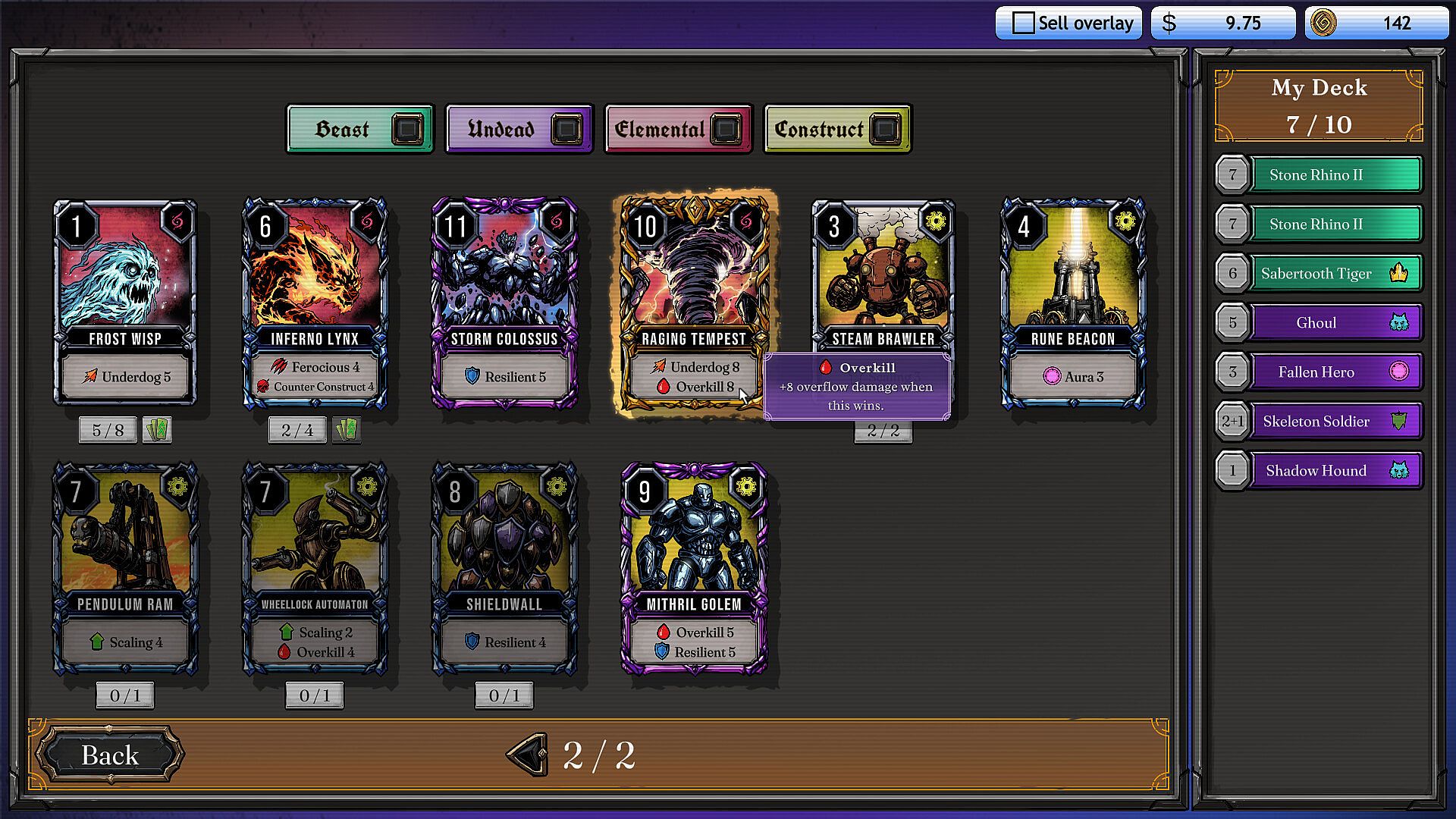
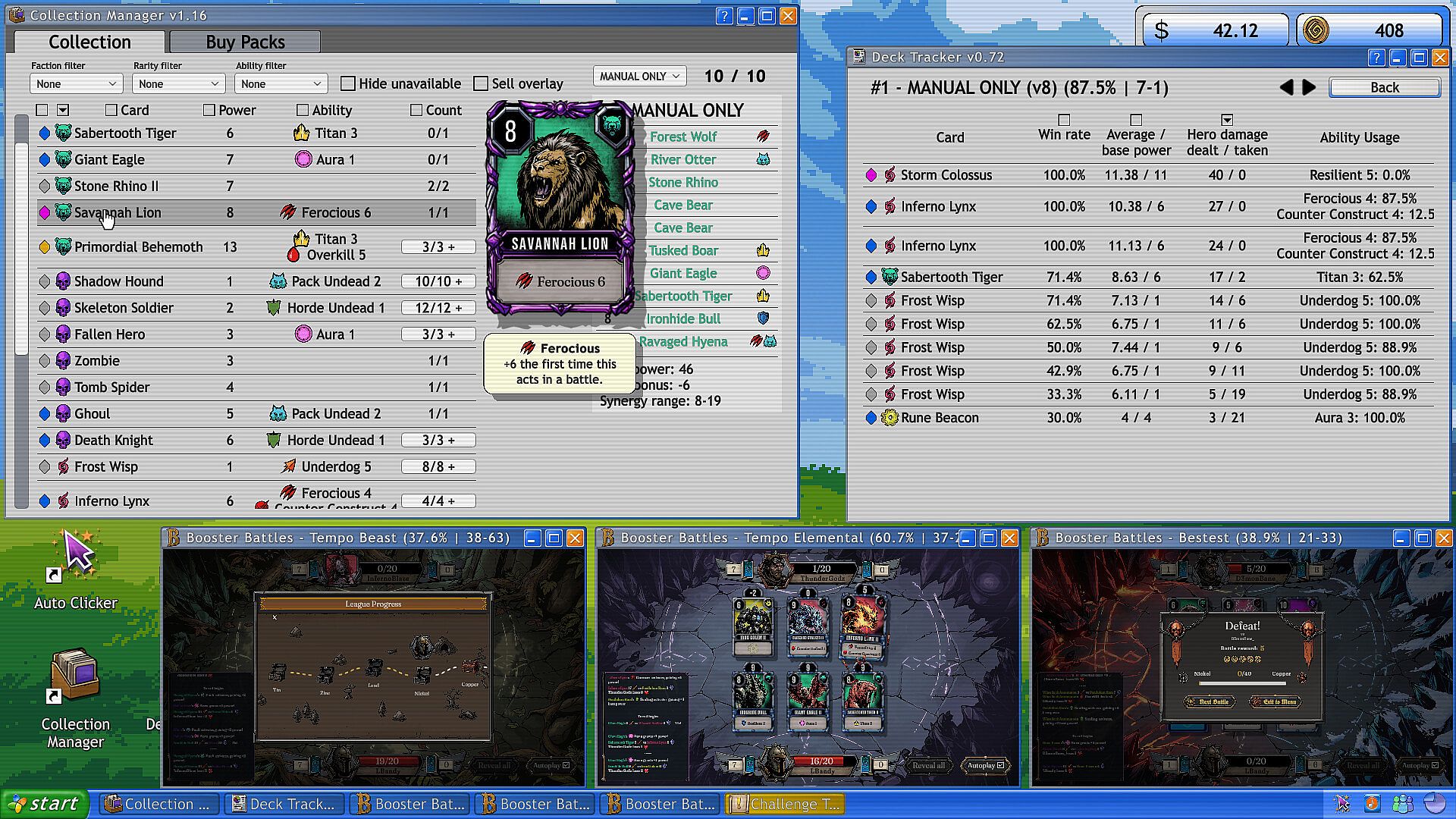
The gameplay centers on building and refining decks from more than 200 cards spread across 13 factions. Each faction features its own distinct ability that shapes deck construction and combat flow. Thirty heroes further modify strategies by altering how cards interact or perform in battle. Autobattles handle most of the fighting once decks are set, though manual play remains available for critical moments where the order of card reveals can swing the result. Duplicates merge into upgrades so every pull contributes to long-term collection growth. The desktop interface recreates the feel of an early-2000s computer, with programs accumulating as progress continues and each new tool expanding options for automation or manipulation.
Marketplace trading adds another layer. Spare cards sell for funds that purchase additional software from questionable sources. Forum posts supply deck codes for import into the builder, while meta shifts influence card values and encourage timely buys or sells. Patches arrive during play, unlocking new features and sparking community discussion. The single-player focus places the player amid a fictional scene of rivals, regular forum users, and ongoing drama that reacts to in-game events.
Game Modes
Five game modes form the structure of play. Most unlock through live patches that appear as the player advances through the ladder and collection. The primary experience remains single-player, centered on climbing ranks and expanding the collection with automated assistance. Later support for optional async multiplayer allows confrontation against decks created by other players and participation on online leaderboards. Mode variety expands naturally with each patch, keeping the focus on incremental discovery rather than a fixed set of options from the start.
Progression and Atmosphere
Progression rewards consistent pack opening and deck tweaking. Every tool installed on the virtual desktop adds new automation or alteration capabilities, gradually shifting the player from participant to someone who rewrites aspects of the underlying game. The early-2000s aesthetic extends to forum threads, messenger chats, and marketplace fluctuations that mirror real-world card game communities of that era. Meta changes and patch reactions create a living backdrop where prices rise and fall and arguments flare over optimal builds.
Is It Worth Playing?
BoosterWare suits players who enjoy deckbuilding combined with automation mechanics and a nostalgic desktop simulation. The single-player campaign delivers steady collection growth and ladder climbing through both manual and assisted play. Those drawn to strategy games with RPG-style progression and casual simulation elements will find the faction variety and hero skills provide meaningful choices. The optional async multiplayer layer adds a competitive outlet once the core systems feel familiar. Because the game emphasizes incremental unlocks and community-flavored single-player content, it appeals most to fans of patient progression over fast-paced action. The demo offers a direct way to test the pack-cracking and autobattle loop before committing further.












