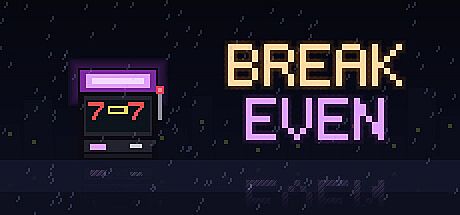


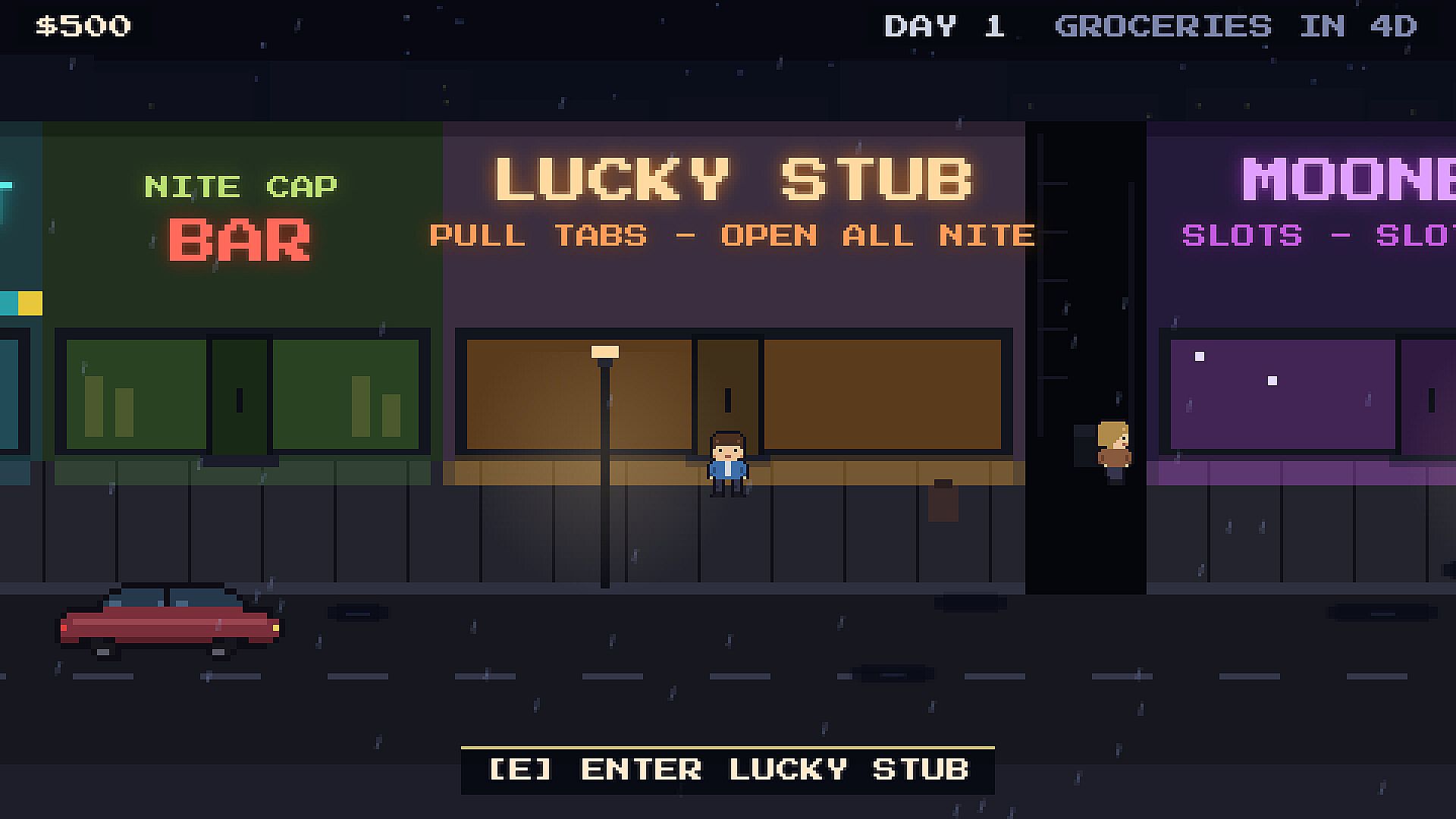
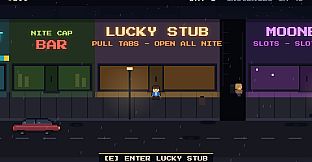
Break Even: The Grind is a free-to-play indie simulation game set in a single rainy city block where a player starts with five hundred dollars and a rented room. The experience centers on the daily pressures of cheap gambling and recurring bills, rendered in a top-down pixel style with flat colors and chunky sprites that evoke 1990s computer games. Rain falls constantly outside, and every visual element and sound effect generates in real time rather than loading from pre-made files.
Gameplay
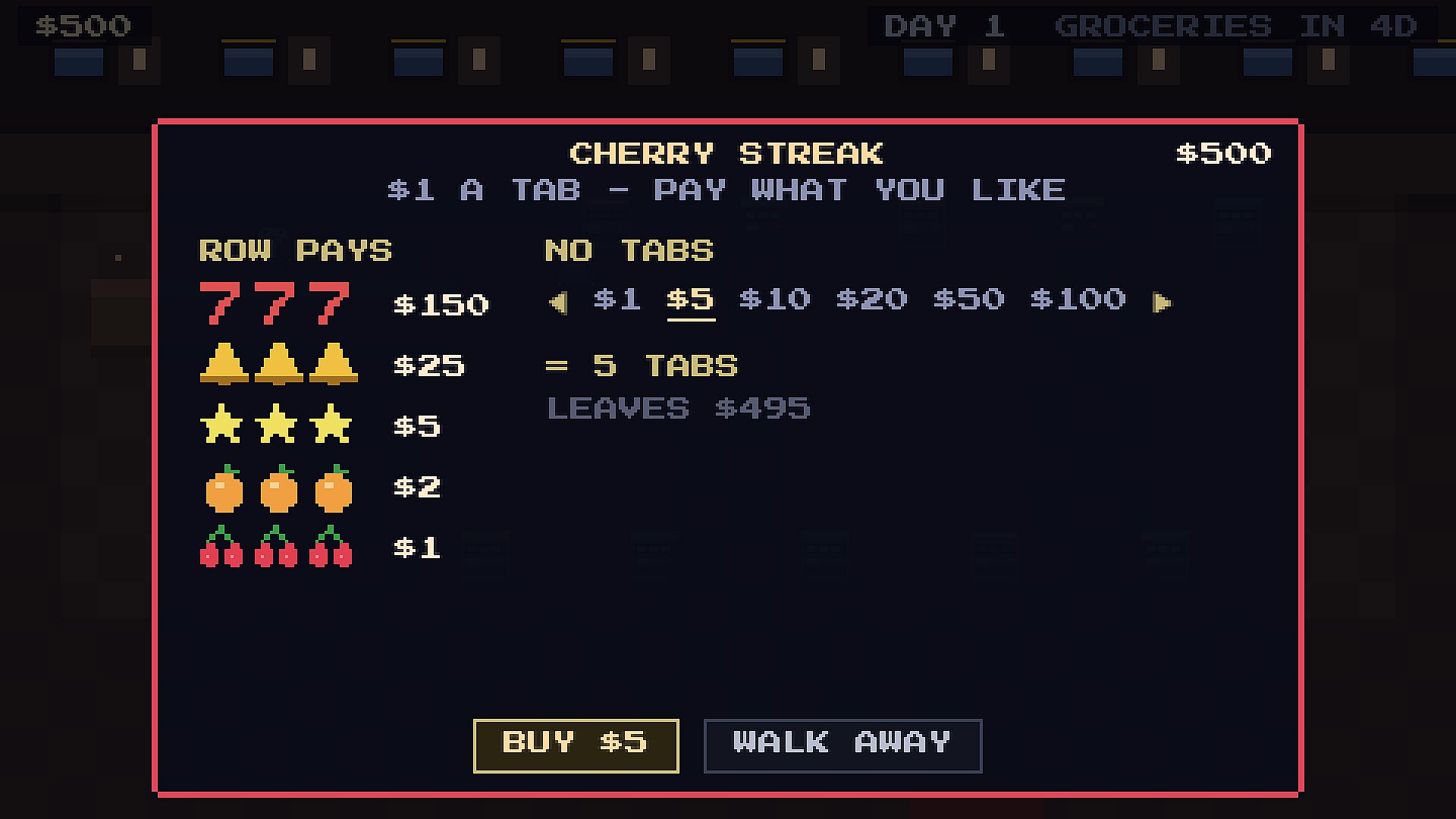
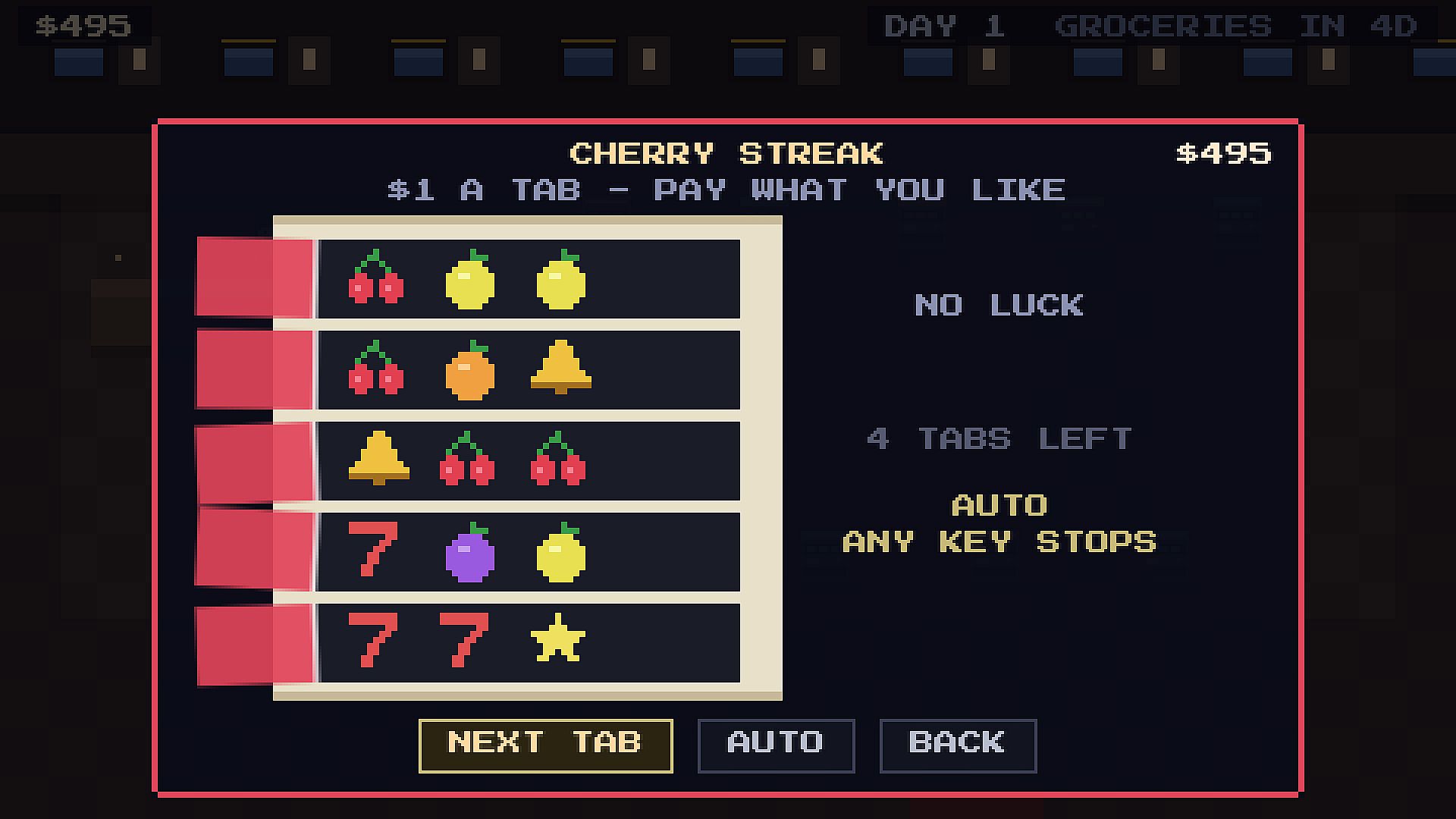
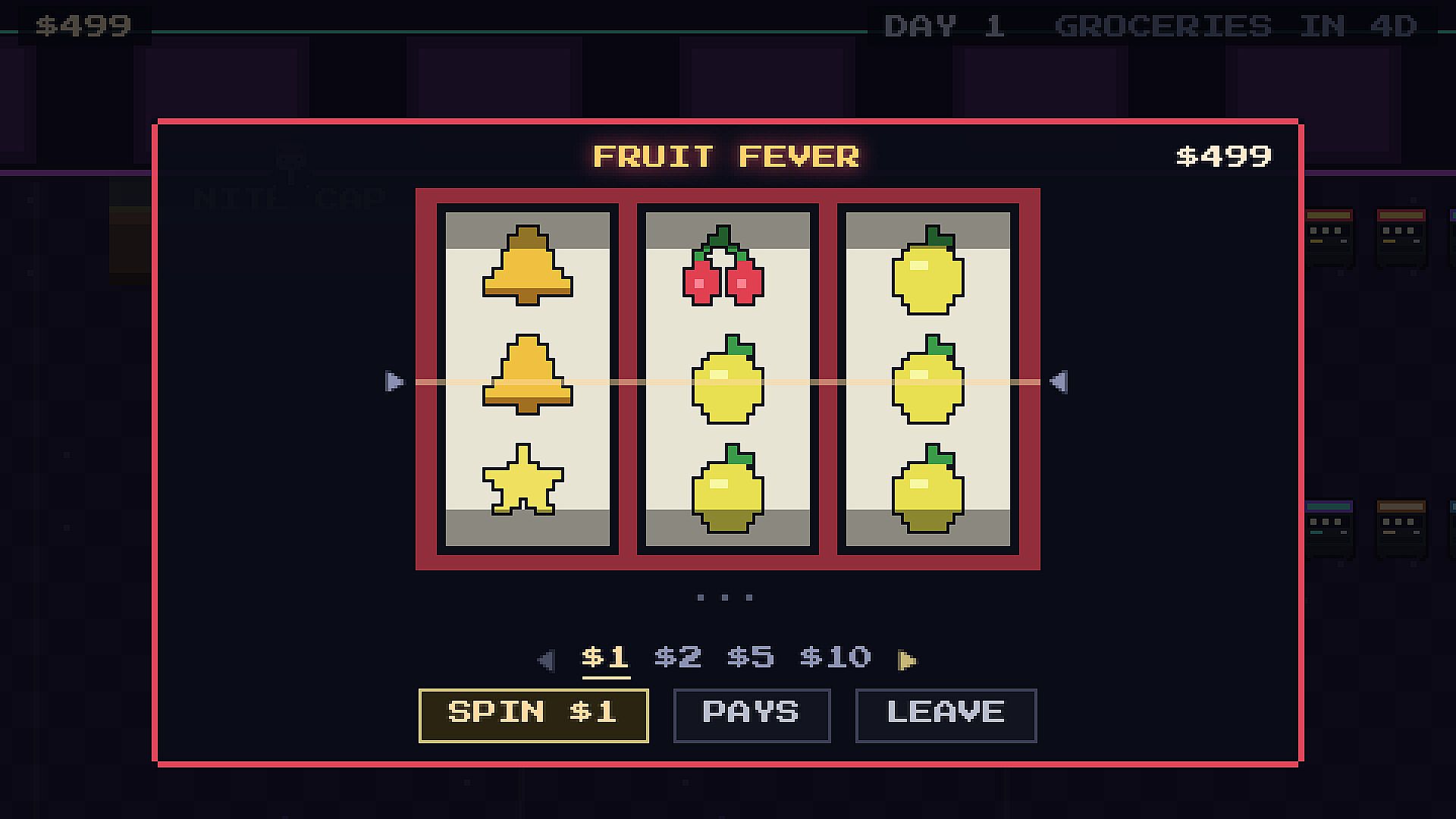
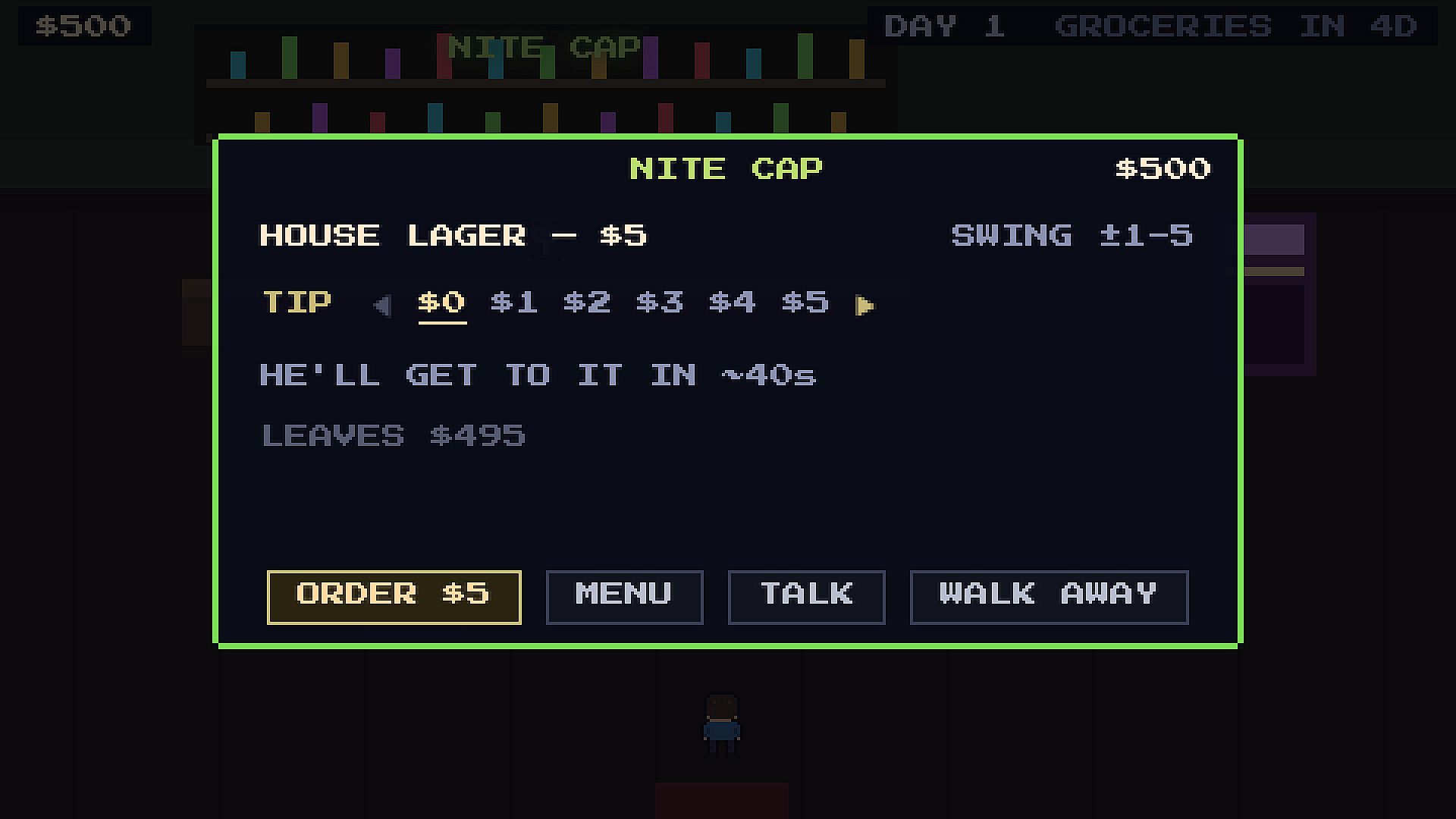
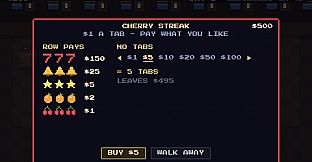
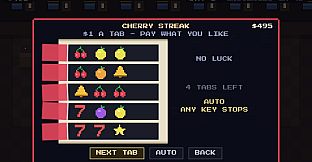
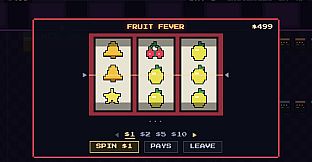
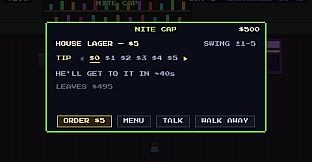
The core loop revolves around managing limited cash against fixed expenses while spending time at local gambling spots. Players move through the block on foot, visiting the LUCKY STUB to purchase pull-tab sheets and MOONBEAM SLOTS for machine play. Each pull-tab requires buying a sheet, then peeling open windows one by one to reveal results, creating a deliberate, tactile rhythm with audible crackling sounds. Slot machines offer another avenue for small bets, and a bar pour can temporarily shift odds in the player's favor. Additional stops include a pawn counter and a title-loan window for quick cash options when funds run low.
Bills arrive on schedule regardless of winnings or losses. Rent totals six hundred fifty dollars on the first of the month, utilities come due on the fifteenth, and groceries repeat every five days. The only action that advances the calendar is sleeping, which resets the day while leaving all other financial pressures intact. Money moves through wins, losses, and necessary spending, but the game tracks every transaction without external connections or cloud features beyond optional Steam Cloud saves.
Game Modes
Five distinct pull-tab games form one set of activities, each with its own sheet layout and payout structure that players discover through repeated play. Five slot machines at MOONBEAM SLOTS provide a separate mechanical focus, where repeated spins test short-term bankroll management against the house edge. A bar pour mechanic introduces temporary adjustments to odds during visits, creating brief windows of altered risk. Pawn and title-loan interactions serve as emergency financial tools rather than primary play, allowing players to convert possessions or future income into immediate cash when other options dwindle.
These activities combine into a single continuous session on one block, with no separate campaign or competitive layers. The simulation runs entirely locally on the player's computer, generating art and audio on the fly to maintain the minimalist aesthetic throughout every run.
Financial Pressure and Run Endings
Bills continue to accumulate even when gambling results turn cold, forcing decisions about how far to push available funds before the next due date. Groceries and utilities cannot be ignored indefinitely, and the game enforces these deadlines without pause. Multiple endings exist depending on the choices made near zero balance, such as continued play at the machines, use of pawn or loan services, or other available actions. Each ending reflects the specific path taken rather than a single predetermined outcome.
Is It Worth Playing?
The game delivers a focused simulation of low-stakes gambling and bill management without any real-money elements, in-app purchases, advertisements, or external accounts. All progress saves locally, with optional Steam Cloud support for those who enable it, and the title makes no network requests on its own. This setup suits players who enjoy deliberate, atmospheric pixel experiences from earlier eras and who want to explore the quiet tension between gambling sessions and unavoidable expenses. Those drawn to 1990s-style presentation and systems that emphasize personal financial tracking over action or competition will find the mechanics consistent and self-contained. The absence of multiplayer or additional content layers keeps the scope narrow, matching the single-block setting and generated assets described in the design.