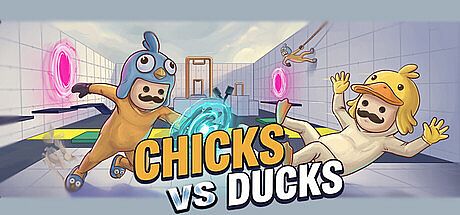




Chicks vs Ducks is an action, indie, and casual parkour party game for PC that supports online multiplayer sessions for 2 to 10 players. Matches take place across varied arenas where participants use fluid movement to complete objectives as teams, in solo play, or through co-op setups. The core loop revolves around fast-paced navigation combined with competitive or cooperative goals that reward quick thinking and teamwork.
Gameplay
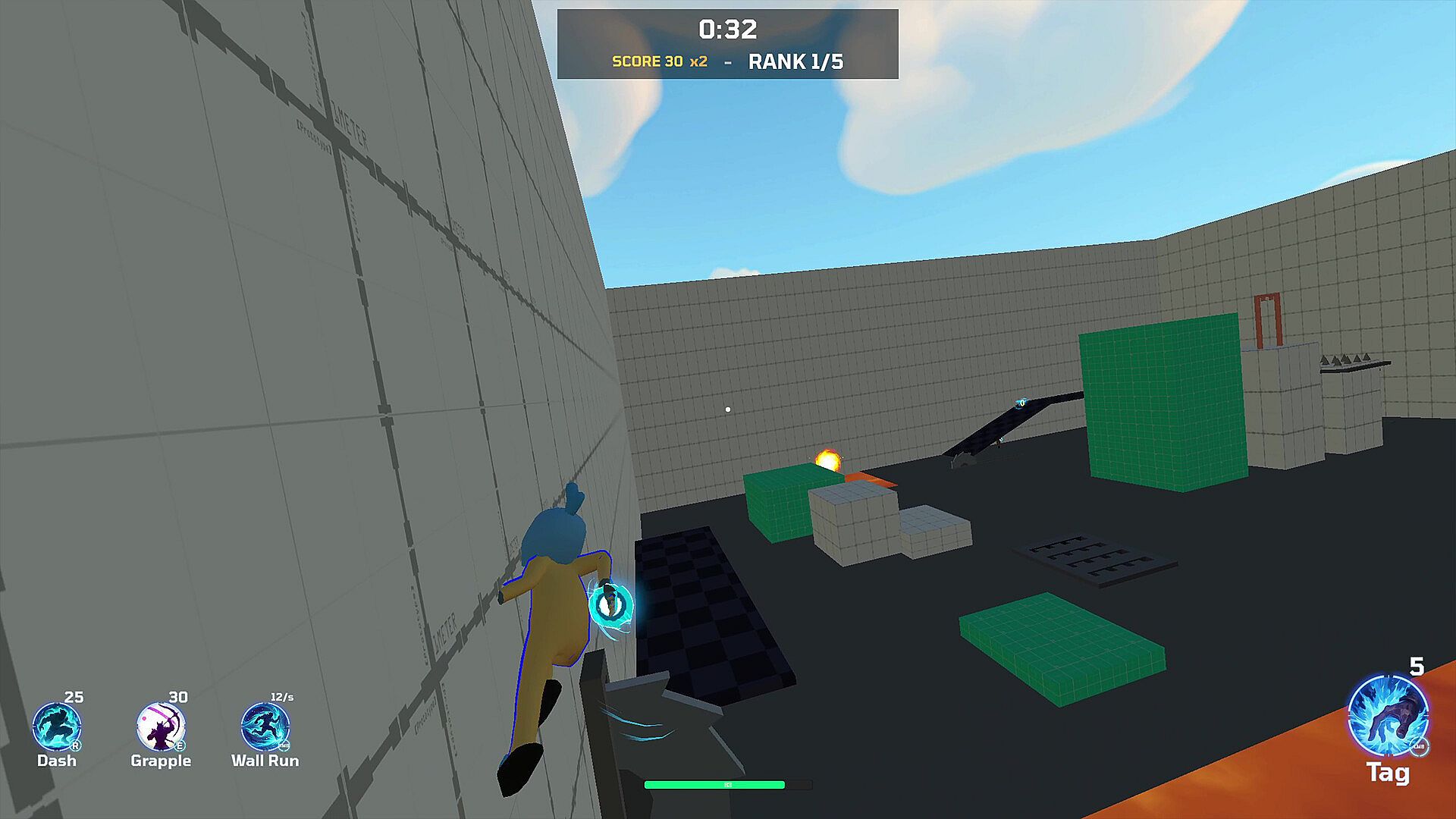
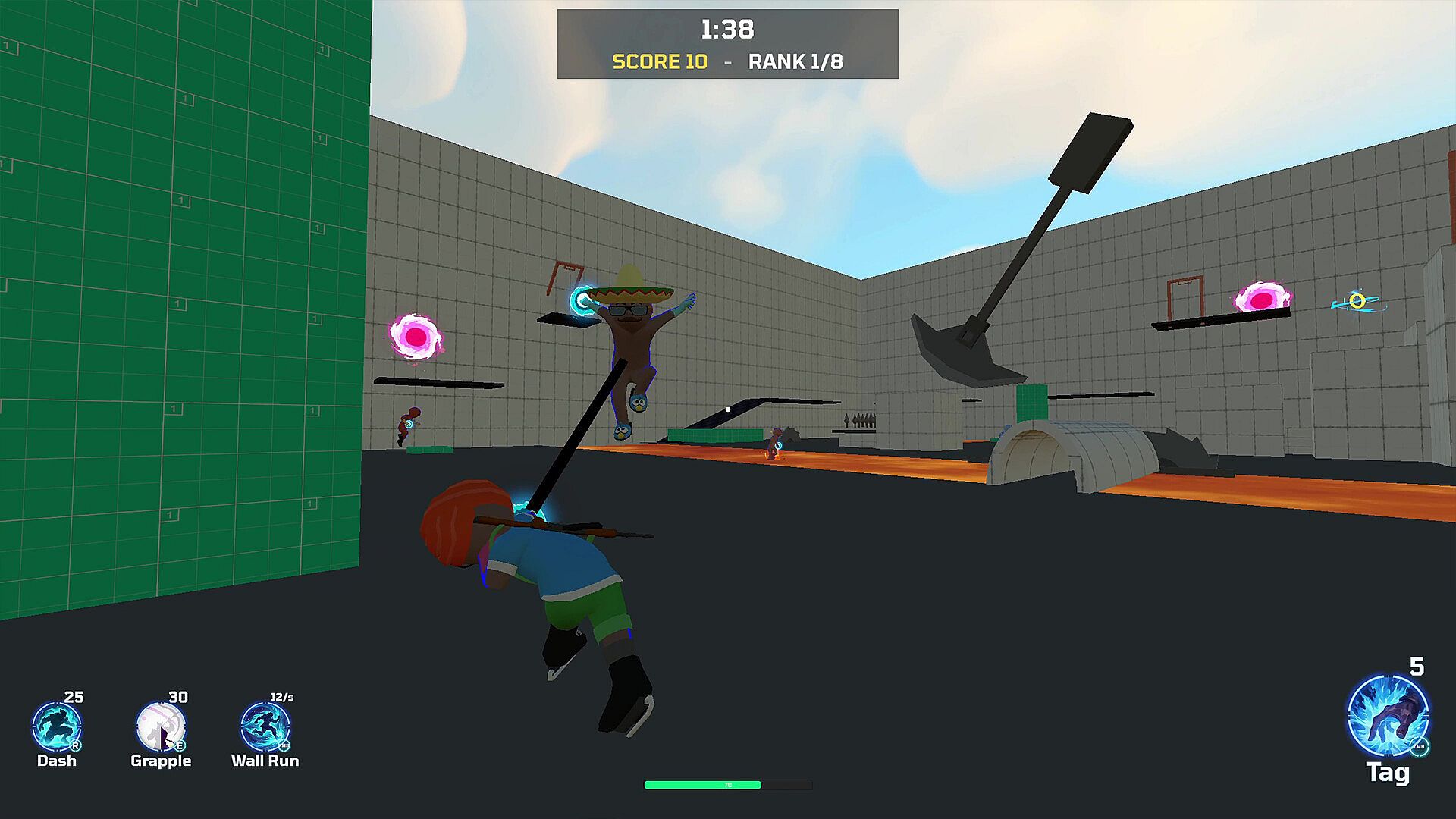
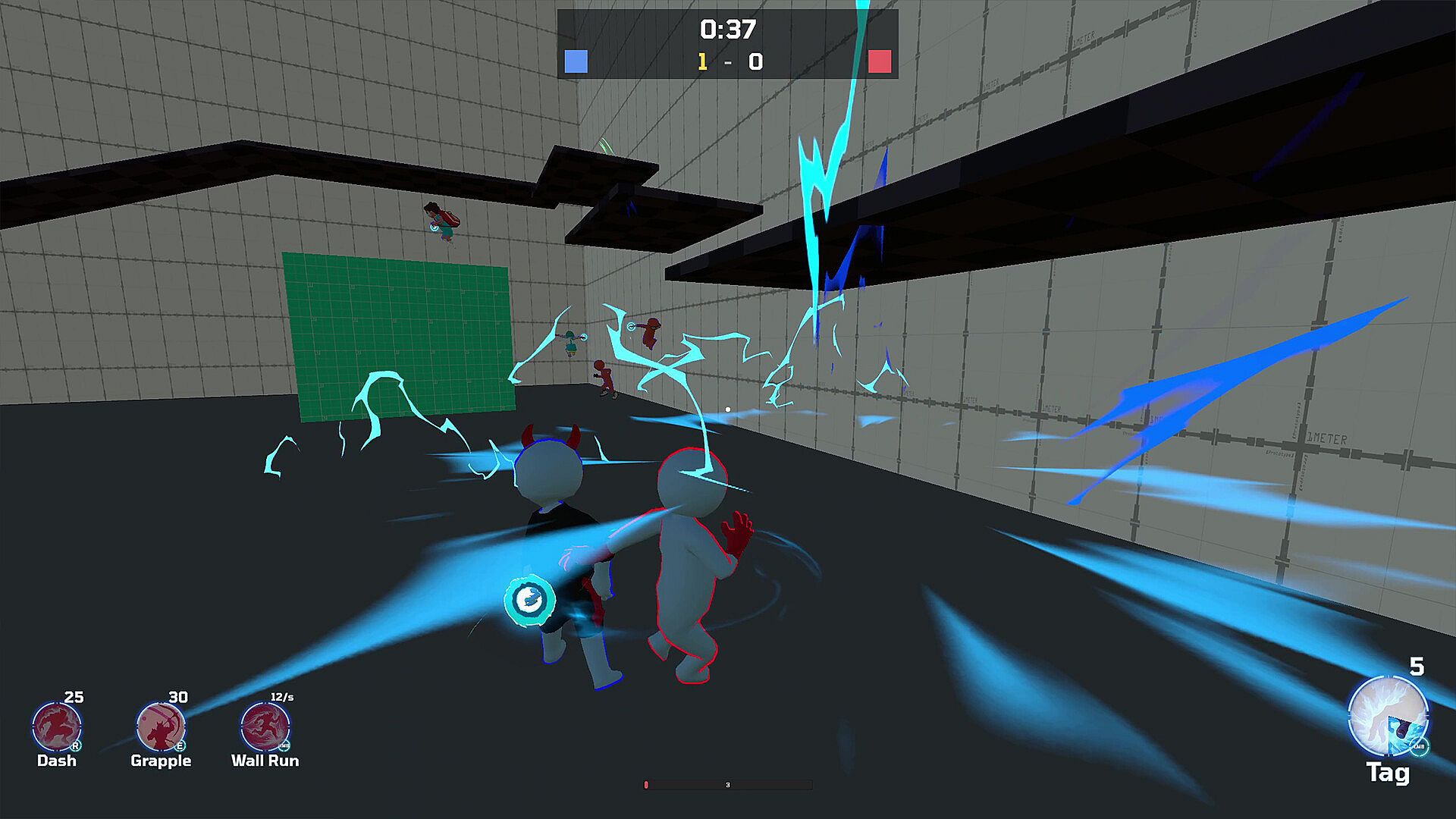
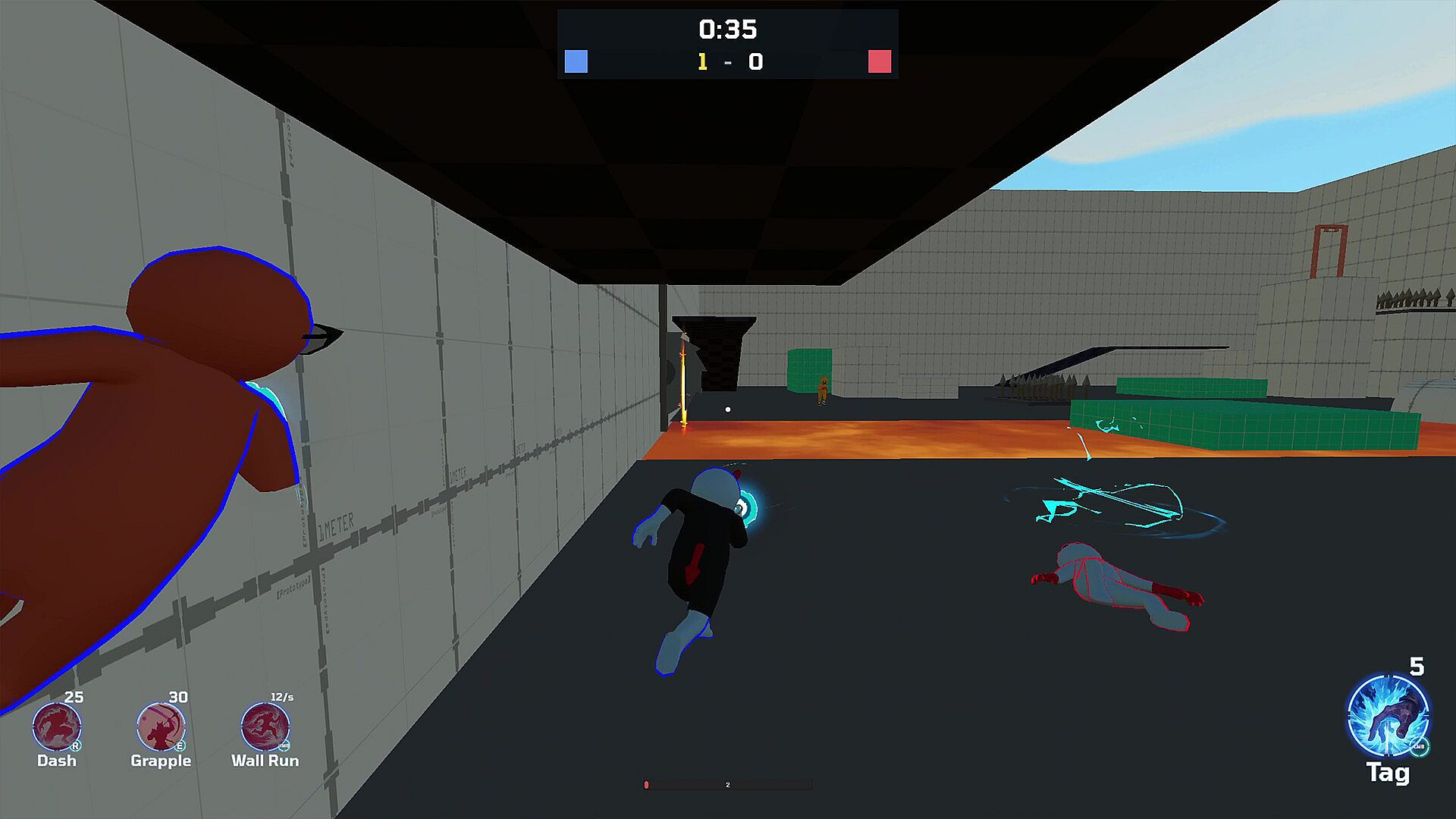
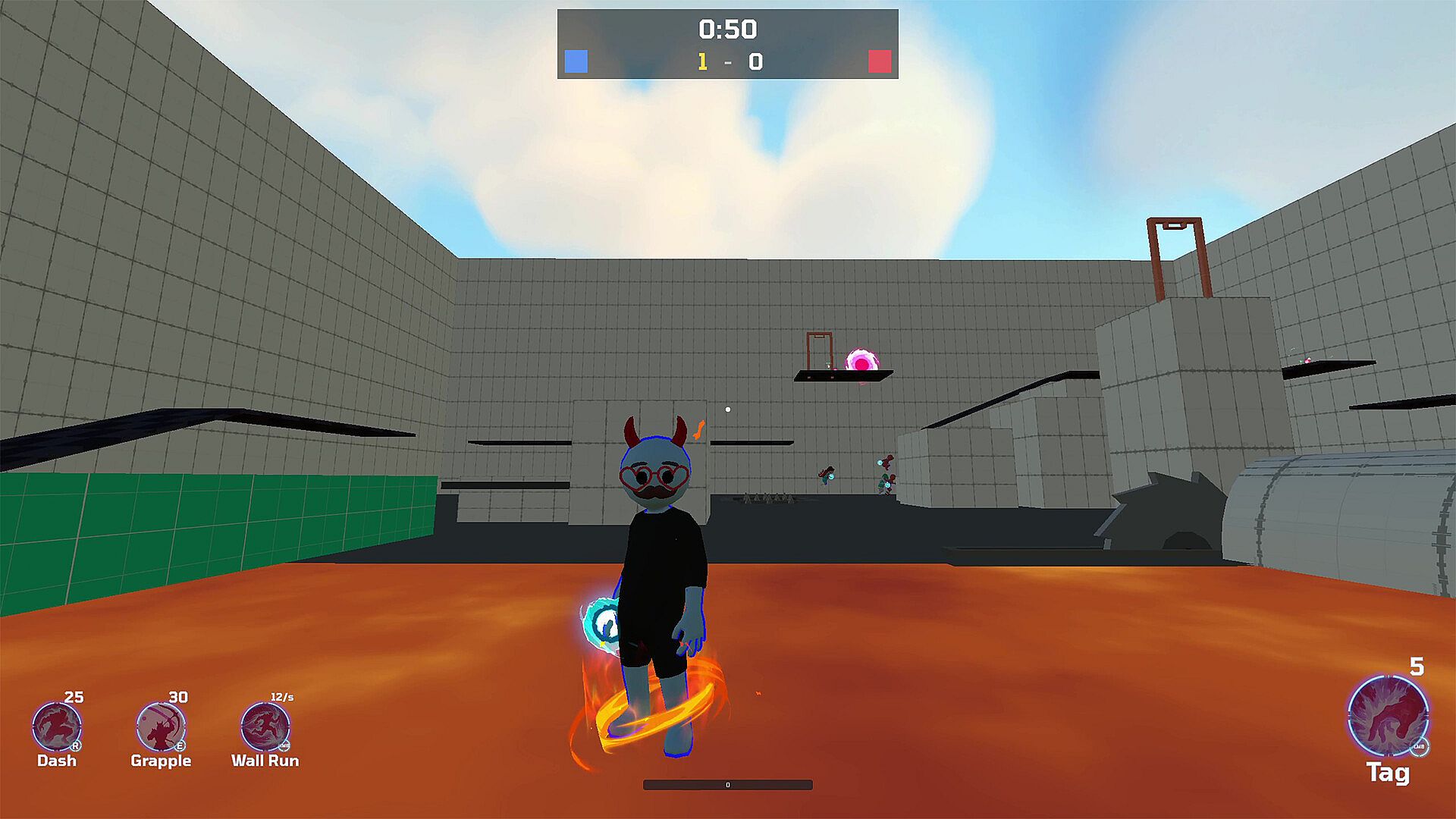
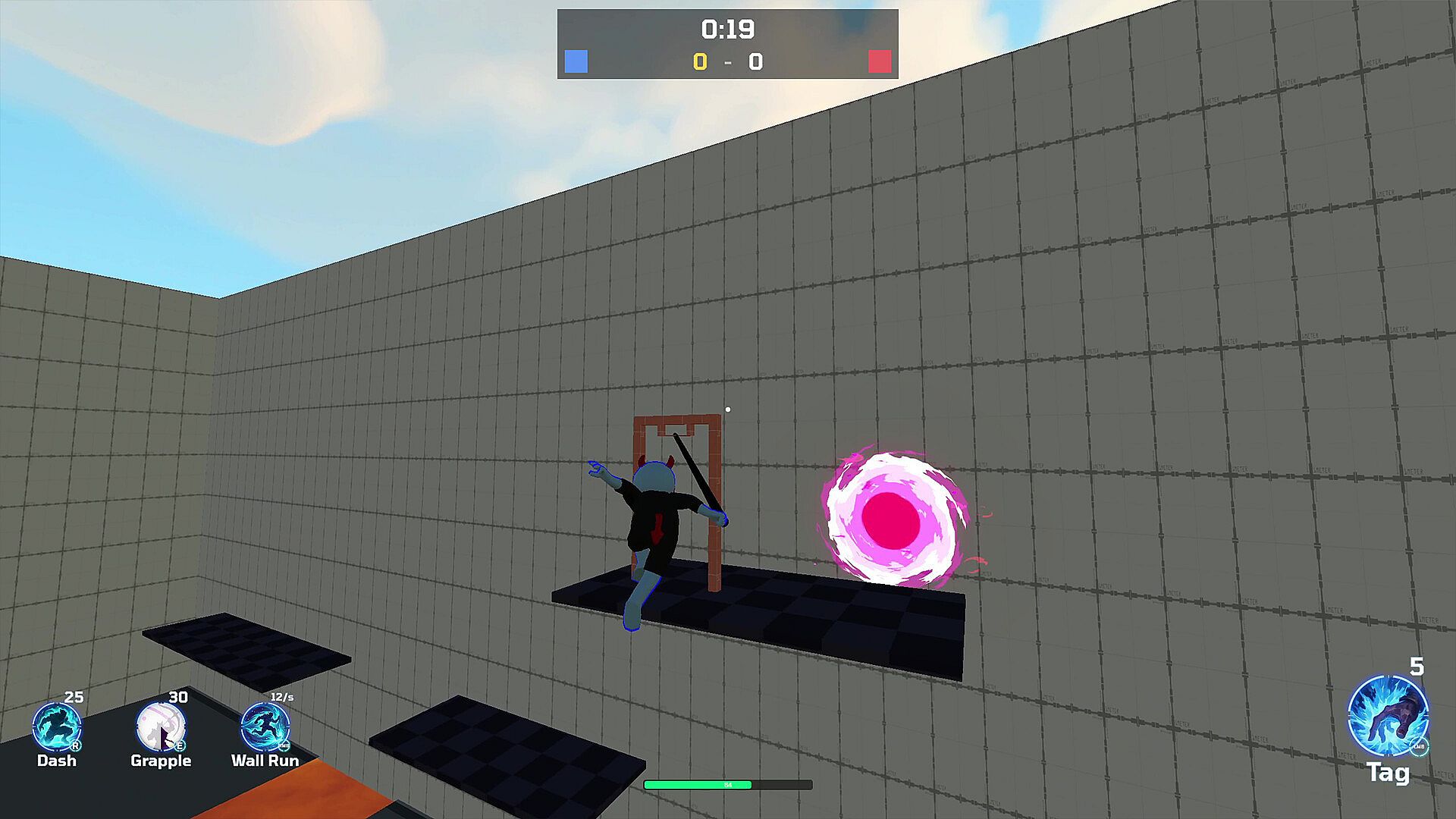
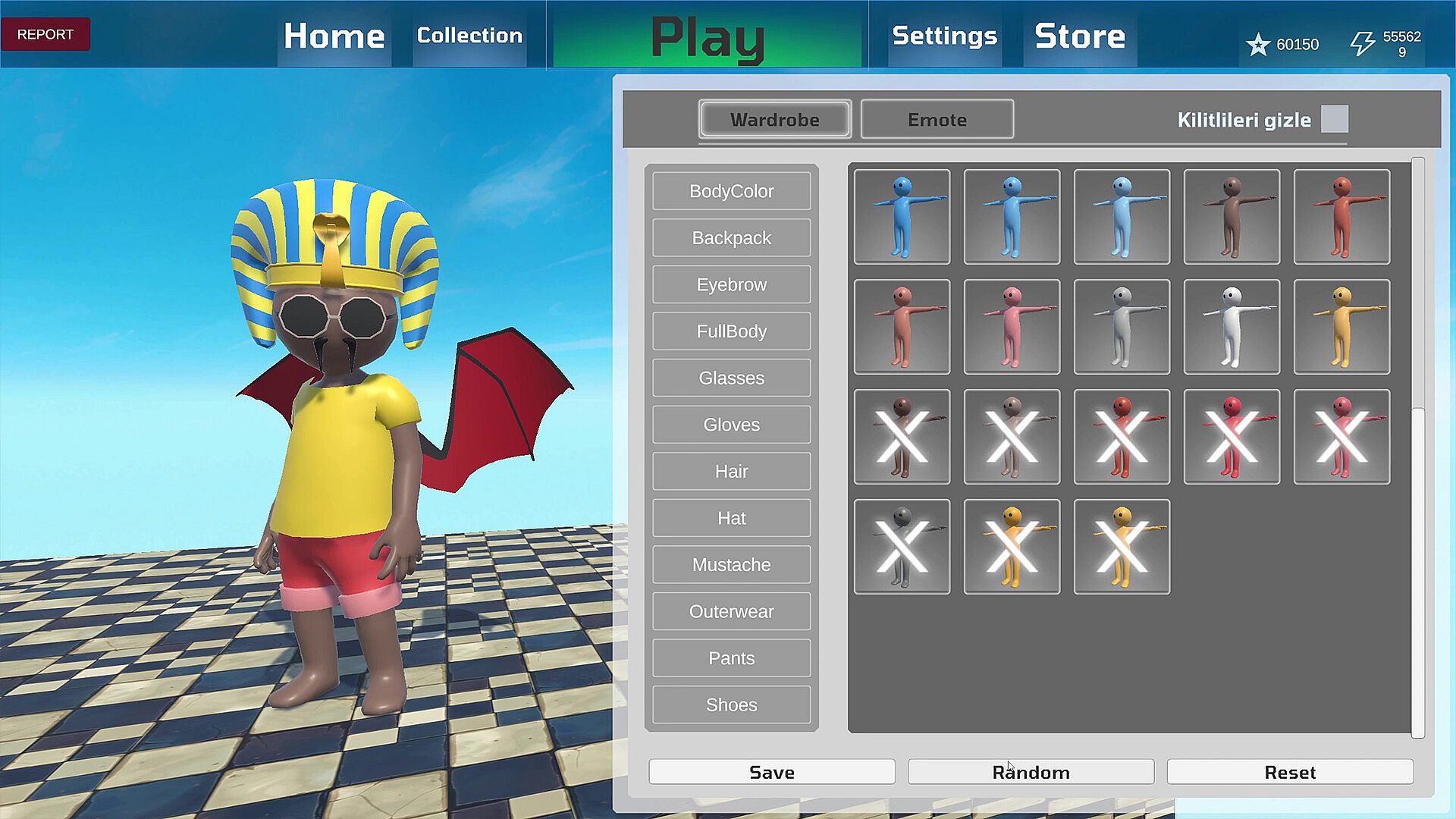
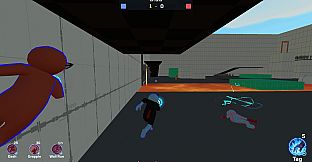
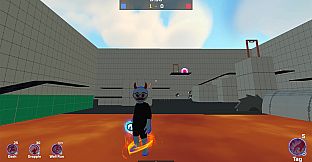
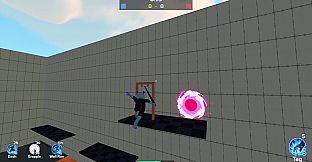
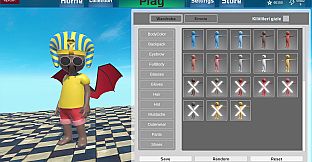
Players control characters equipped with parkour abilities that emphasize smooth traversal. Core movements include wall-running along surfaces, dashing forward for bursts of speed, executing double jumps to reach higher platforms, and rolling to recover momentum after falls. A grappling hook adds versatility by latching onto level geometry or other players, allowing saves for allies or disruptions against opponents. One successful tag sends a character to the floor, requiring a teammate to perform a stationary revive to bring them back into action. This revive mechanic creates tense moments where standing still leaves the helper vulnerable to incoming attacks. Power-ups appear during matches, such as cloning a player as a decoy to mislead rivals or slowing the entire lobby temporarily to gain an edge. Customization options cover hats, hair, glasses, gloves, and a range of outfits, while an emote wheel and in-game chat support social interaction. Viewpoint selection allows switching between third-person and first-person perspectives at any time.
Game Modes
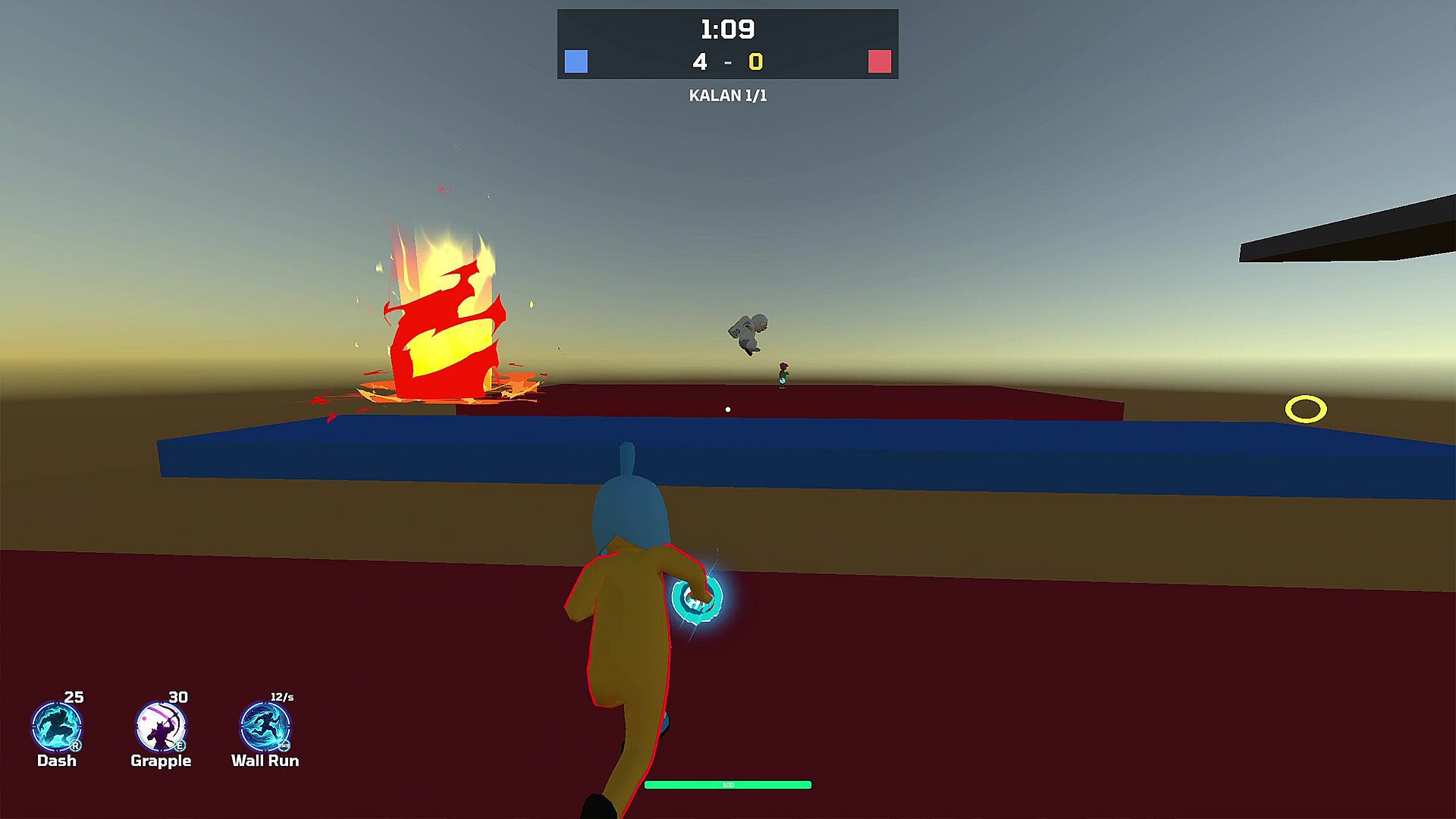
Three distinct modes provide variety in pacing and strategy. Runner Hunt pits two teams against each other with 2 to 10 players total. Half the group acts as taggers with 60 seconds to floor every runner, while runners win by keeping at least one member upright when time expires. Roles reverse each round. Checkpoint Madness operates in solo or team formats where checkpoints spawn sequentially around the arena. Capturing them in succession builds a combo multiplier, and tagging opponents ends their streak without transferring points. A tied score at the three-minute mark triggers a single golden checkpoint that decides the winner for the first player or team to reach it. Dodgeball supports competitive or co-op play. In the competitive version, one team throws from side platforms while the other dodges on a narrow central strip and collects checkpoints. Hits or falls eliminate players for the round, with throwers winning by clearing all dodgers or dodgers prevailing by surviving the clock. Roles swap each round in a best-of-five format. The co-op variant replaces human throwers with automated turrets on both sides, tasking the shared middle group with surviving escalating waves through checkpoint collection and timed survival segments.
Multiplayer and Customization
Sessions emphasize direct online play where friends join lobbies without additional barriers. The 2 to 10 player scale suits small groups seeking quick matches or larger parties filling arenas for chaotic encounters. Parkour flow encourages creative routes through each arena, while the grappling hook introduces player interaction beyond pure movement. Deep customization lets individuals express style through accessories and clothing choices, paired with emotes and chat for ongoing engagement during downtime or between rounds. No single mode dominates, as the rotation across runner hunts, checkpoint scrambles, and dodgeball variants keeps sessions fresh for repeated play.
Is It Worth Playing?
Chicks vs Ducks suits players who enjoy short, replayable multiplayer experiences built around movement skill and light competition. The parkour systems reward practice in navigation and timing, while the three modes deliver distinct challenges from pursuit-based hunts to objective control and survival waves. Co-op elements in Dodgeball add a cooperative layer for groups preferring teamwork over pure opposition. Availability centers on direct PC multiplayer without single-player campaigns or additional modes beyond those described. Those drawn to casual party games with physical mechanics and role-swapping rounds will find consistent appeal, particularly in sessions that mix competitive tension with cooperative revives and power-up moments. The emphasis on flowing movement over complex systems makes it accessible for varied skill levels within the supported player counts.