

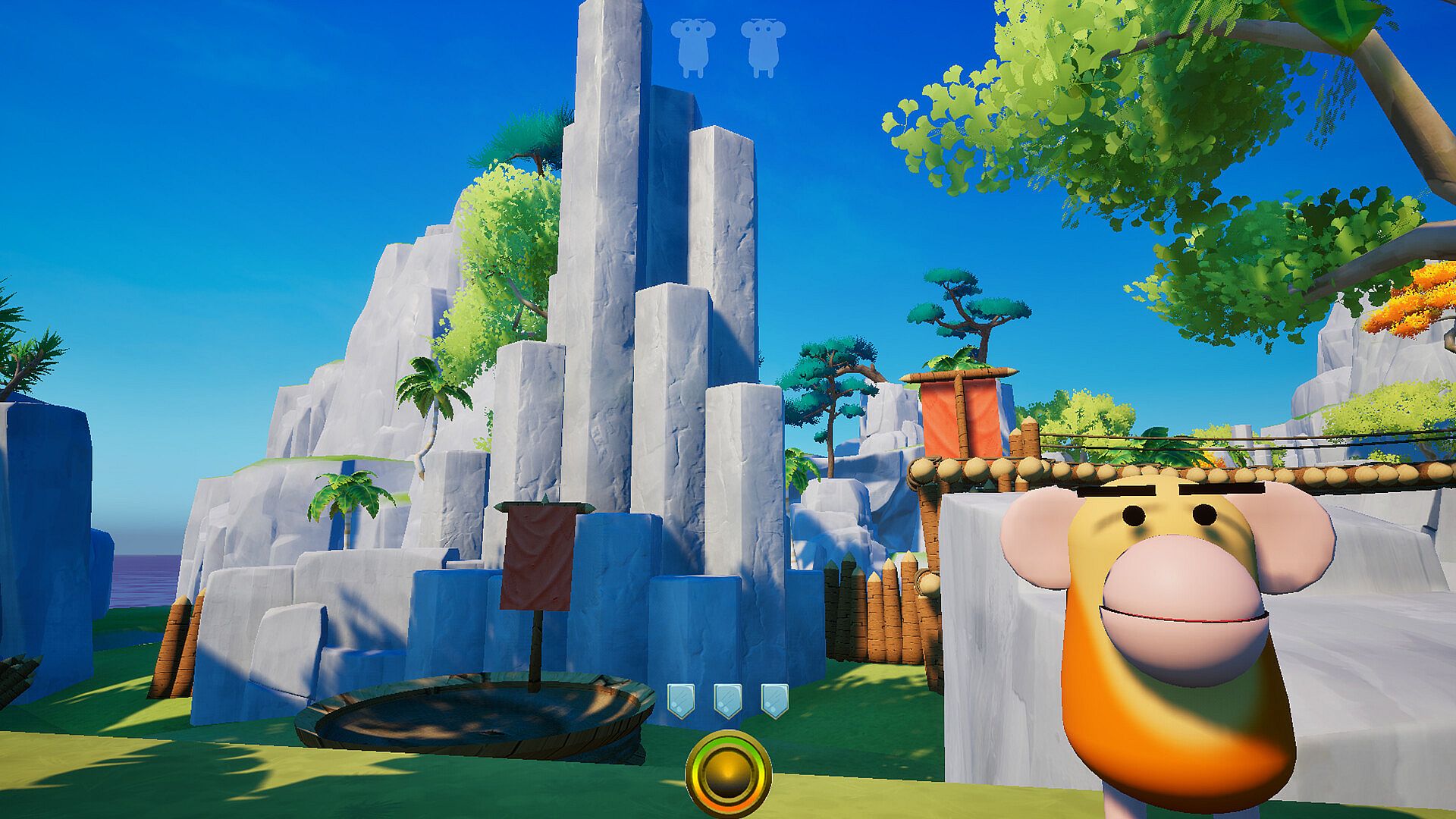
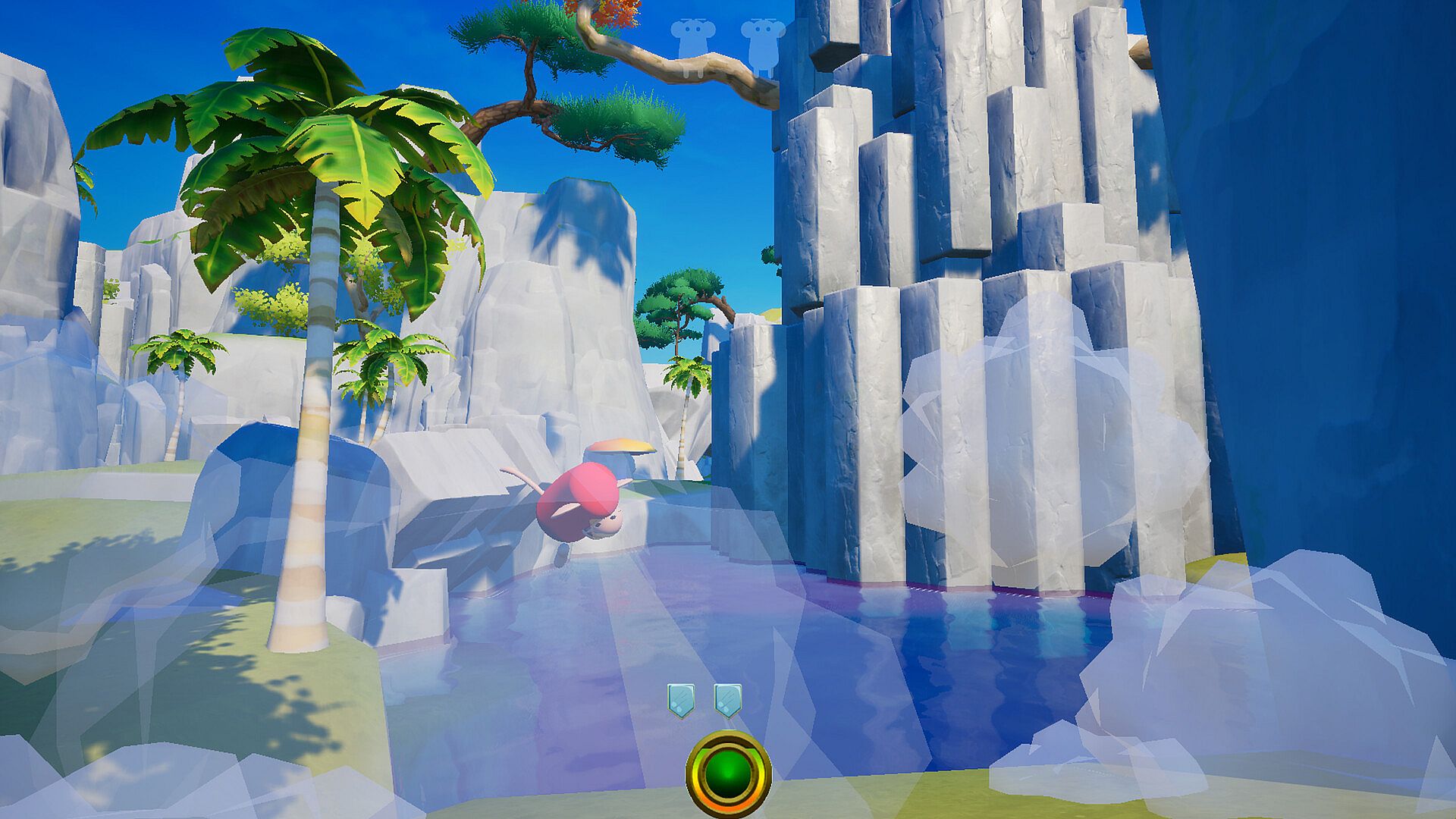
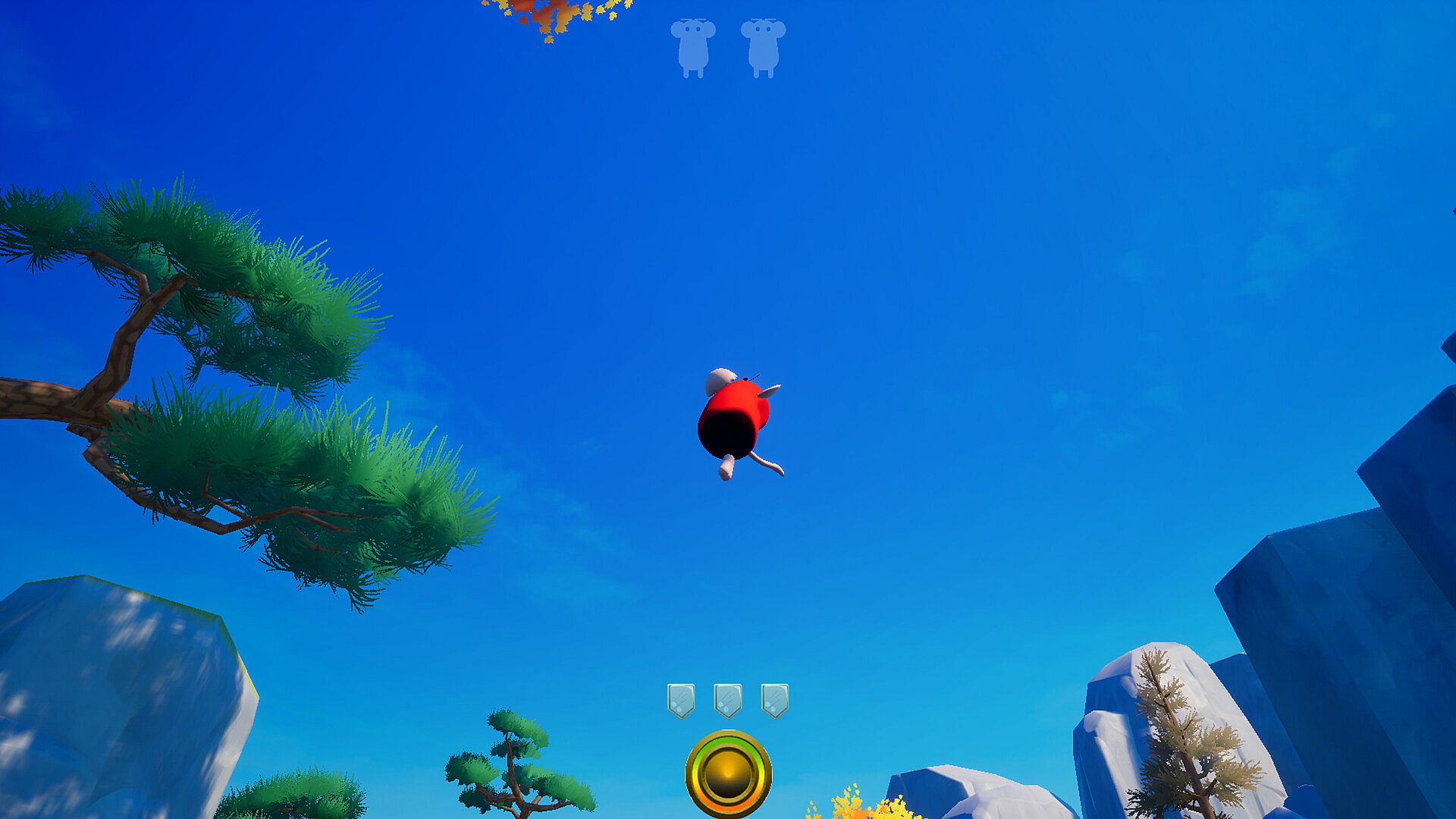
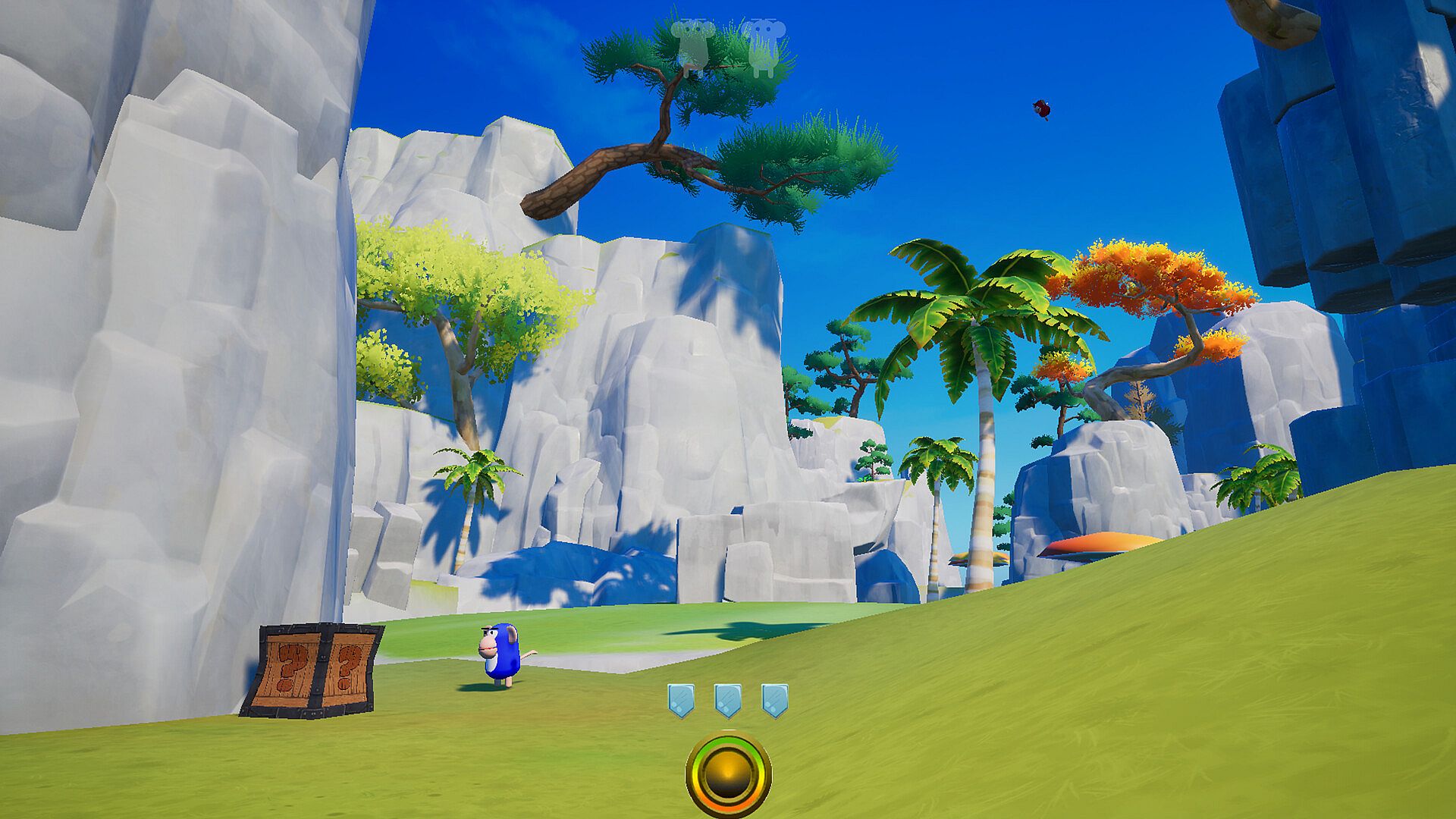
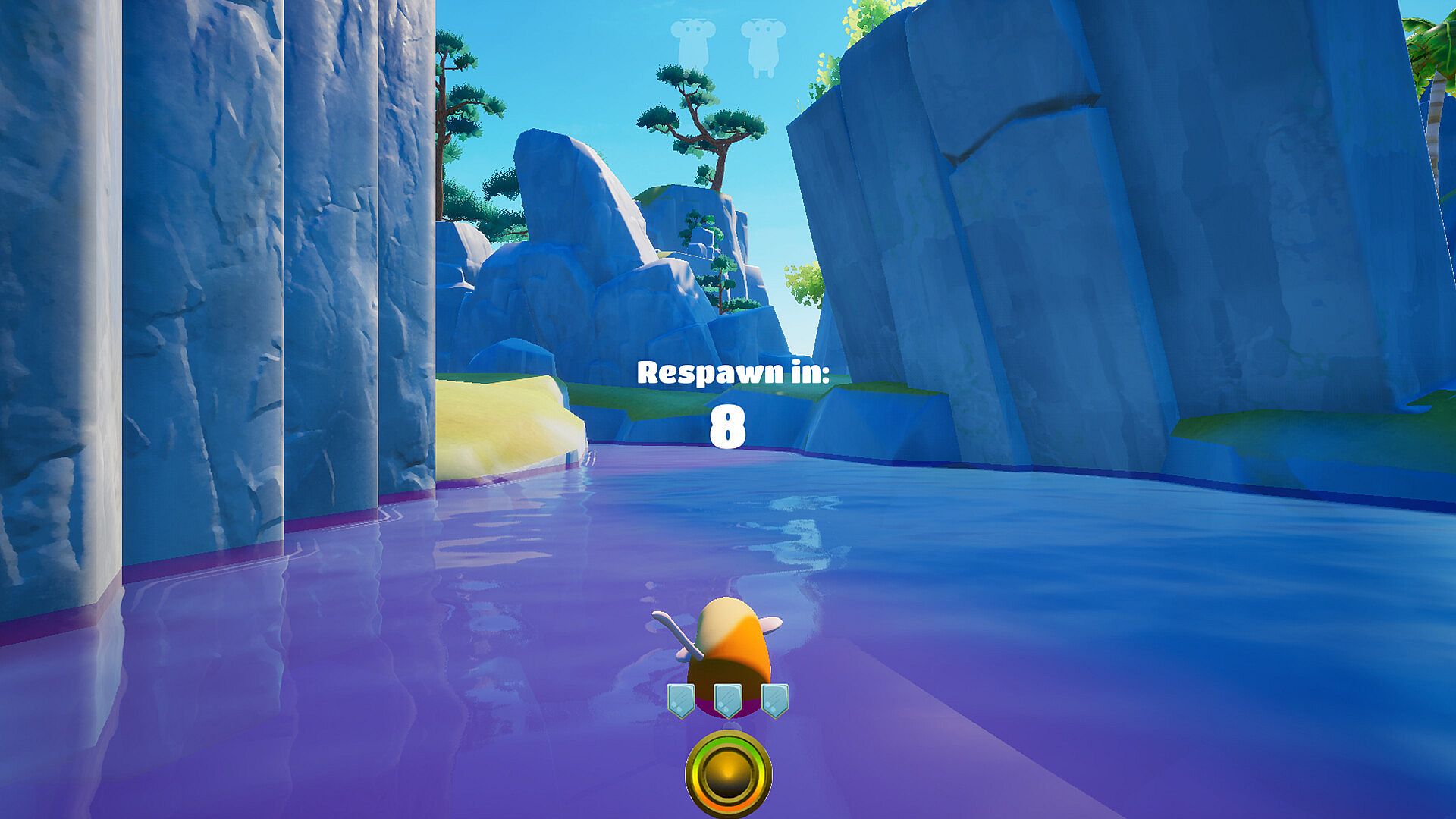
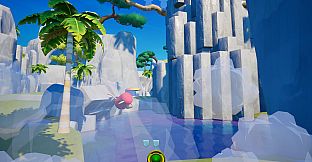
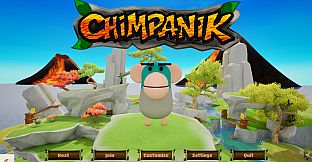

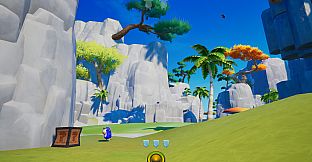

Chimpanik ist ein FPS, bei dem Schreie das zentrale Gameplay-Element bilden. Spieler steuern armlose Cartoon-Affen im Dschungel und erzeugen mit Mikrofon-Lauten Schockwellen, die Objekte und Gegner in verschiedene Richtungen schleudern. Zwei bis sechs Teilnehmer treten in Zwei- oder Dreier-Teams gegeneinander an und verzichten komplett auf klassische Schuss- oder Zielmechanismen.
Gameplay
Im Mittelpunkt steht die Interaktion mit der Umgebung und anderen Spielern durch Schreie. Ein gezielter Schrei erzeugt eine Kraft, die Gegner zurückstößt oder Gegenstände über die Karte schleudert. Nach unten schreien katapultiert den Affen in die Höhe und ermöglicht schnelle Positionswechsel ohne herkömmliche Sprungmechanik. Früchte sammeln ist das Hauptziel: Spieler lösen Bäume mit gezielten Schreien, transportieren die Früchte im Maul und liefern sie zur Team-Basis. Wer beim Tragen spricht, spuckt die Früchte wieder aus - eine Möglichkeit, Angriffe oder Verteidigung während des Transports einzusetzen. Präzises Timing und Lautstärkekontrolle sind entscheidend, da zu viel oder zu wenig Lärm den Teamfortschritt stören oder die eigene Position verraten kann.
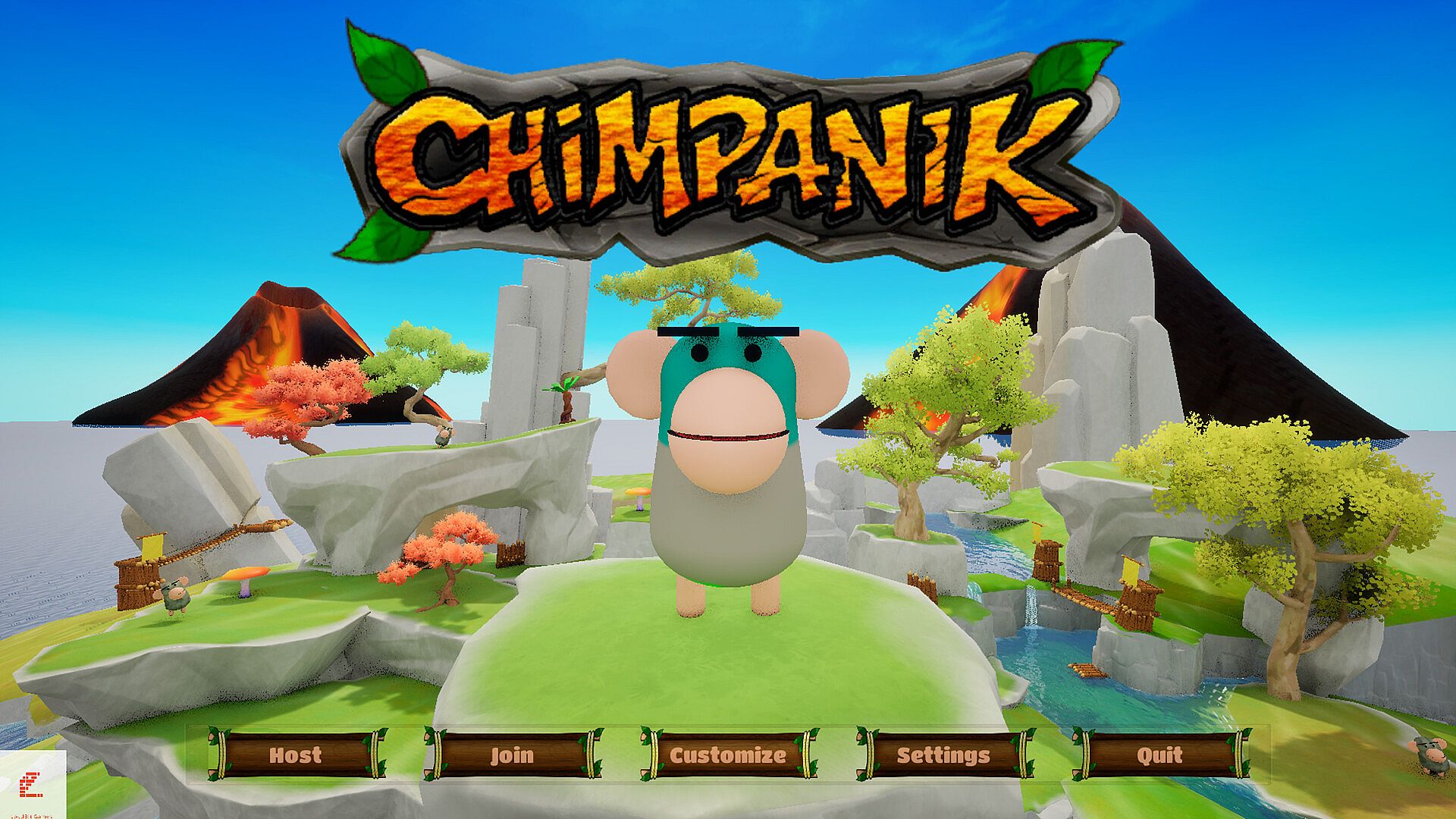
Über ein integriertes Malwerkzeug lassen sich Farben und Muster direkt auf das Affen-Modell auftragen. So entstehen einzigartige Looks, die jeden Spieler ohne vorgefertigte Vorlagen erkennbar machen.
Spielmodi
Fruit Rush ist während der Early-Access-Phase der einzige verfügbare Modus. Teams sammeln und liefern möglichst viele Früchte, während sie Gefahren umgehen und gegnerische Träger abfangen. Kooperative Ernte und gezielte Diebstähle von Gegnern sind gleichermaßen gefragt. Die Karten entstehen prozedural aus sechs sechseckigen Tiles rund um einen zentralen Tempel. Jedes Tile bringt eigene Biome, Baumstellungen und Fallen mit, die sich jede Runde neu kombinieren. Weitere Tile-Module sollen später hinzukommen.
Ein separates Koop-Abenteuer-Modus ist für die Vollversion 1.0 geplant und derzeit nicht spielbar. Weitere Modi oder Fraktionen gibt es in dieser Entwicklungsphase nicht.
Prozedurale Karten und Systeme
Die Karten entstehen aus modularen Hex-Tiles, die sich jede Runde neu drehen und kombinieren. Dadurch entstehen wechselnde Layouts mit unterschiedlichem Gelände, Ressourcen und Hindernissen. Über die Tiles verteilte Fallen erfordern Aufmerksamkeit, da sie Bewegungen oder Fruchttransporte stören können. Der zentrale Tempel dient als fester Orientierungspunkt inmitten der wechselnden Umgebung und sorgt für Abwechslung bei wiederholten Matches.
Early Access und zukünftige Updates
Chimpanik startet im Early Access mit vollständigem Fruit-Rush-Modus und implementierter Schrei-Mechanik. Der Entwickler plant, über Community-Kanäle Feedback einzuholen, um Balancing und Inhalte zu verbessern. Geplant sind zusätzliche Karten-Module, erweiterte Anpassungsmöglichkeiten und der Koop-Abenteuer-Modus mit Version 1.0. Die Early-Access-Phase soll etwa anderthalb Jahre dauern.
Lohnt sich das Spiel?
Chimpanik richtet sich vor allem an Spieler, die stimmgesteuerte Mechaniken und chaotisches Mehrspieler-Erlebnis im Cartoon-Stil mögen. Ein funktionierendes Mikrofon und präzises Timing beim Schreien schaffen ein Erlebnis, das sich deutlich von klassischen FPS-Titeln unterscheidet. Wer gerne mit Sound-Eingaben experimentiert und kurze, wiederholbare Matches sucht, wird im aktuellen Fruit-Rush-Modus fündig. Wer auf ein poliertes Einzelspieler-Erlebnis oder eine vollständige Modus-Auswahl wartet, sollte die Vollversion abwarten. Das Spiel ist derzeit nur für PC verfügbar und verfügt zum Launch über keine Nutzerbewertungen.