


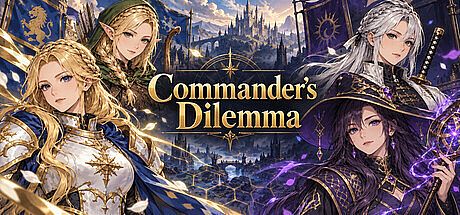


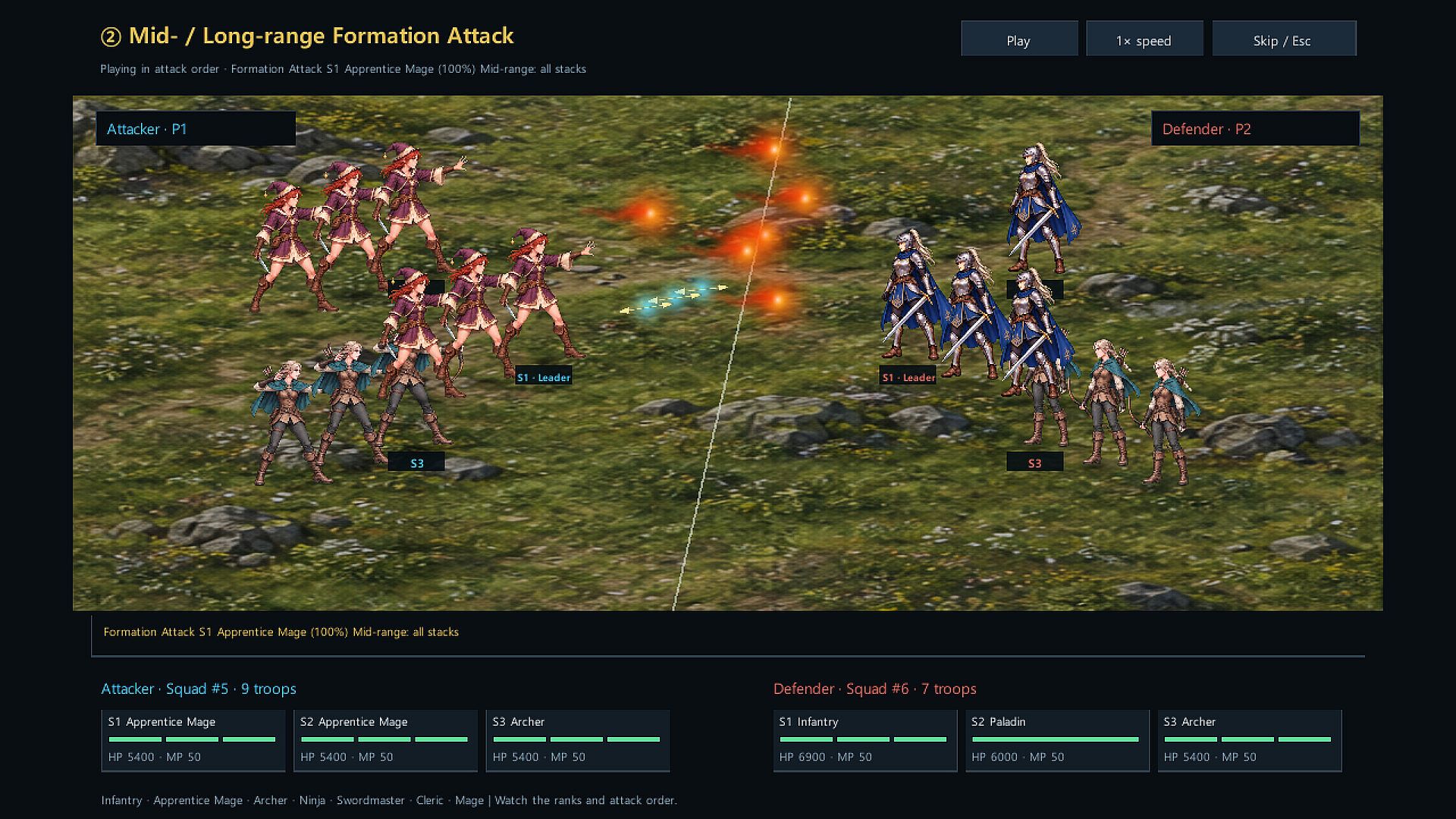
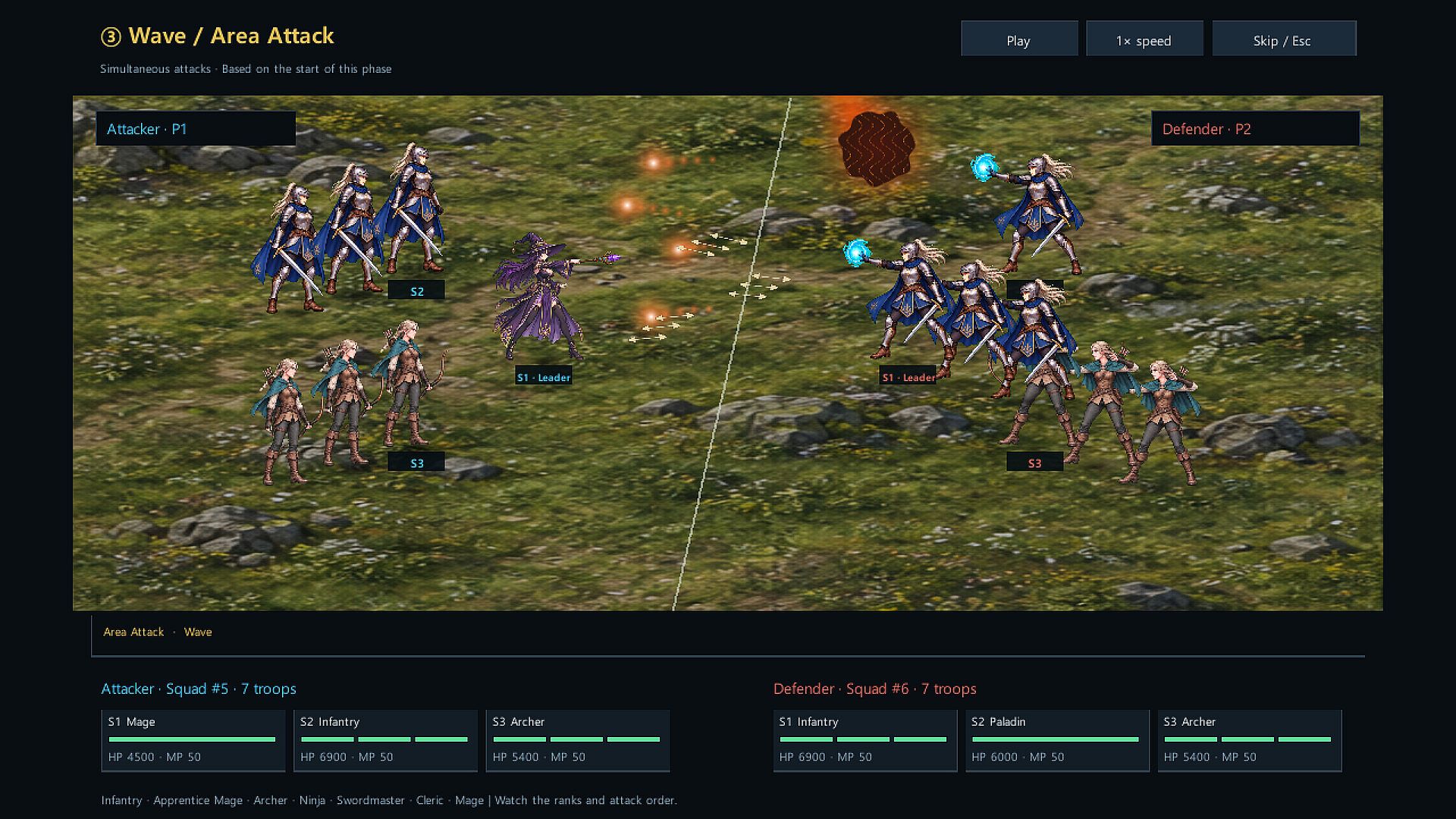

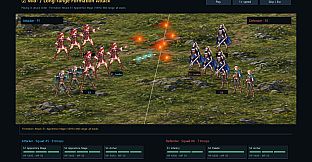
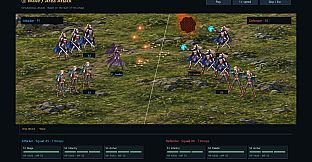
Commander's Dilemma is a turn-based tactical strategy game that blends elements of RPG and simulation on PC. Players engage in 1v1 battles on a hex-based battlefield, where squad composition, positioning, and responsive decision-making determine the outcome rather than chance.
Gameplay
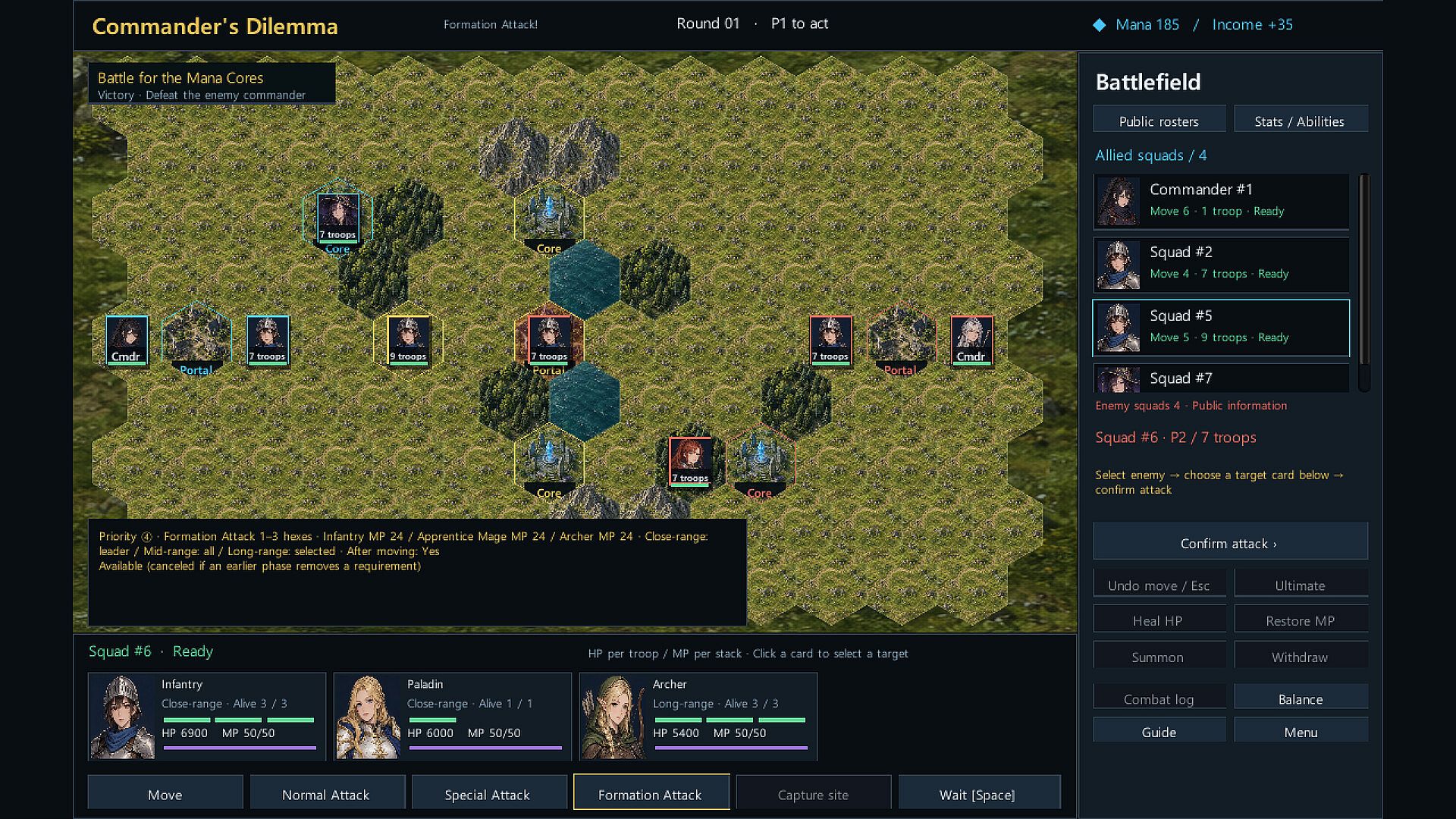
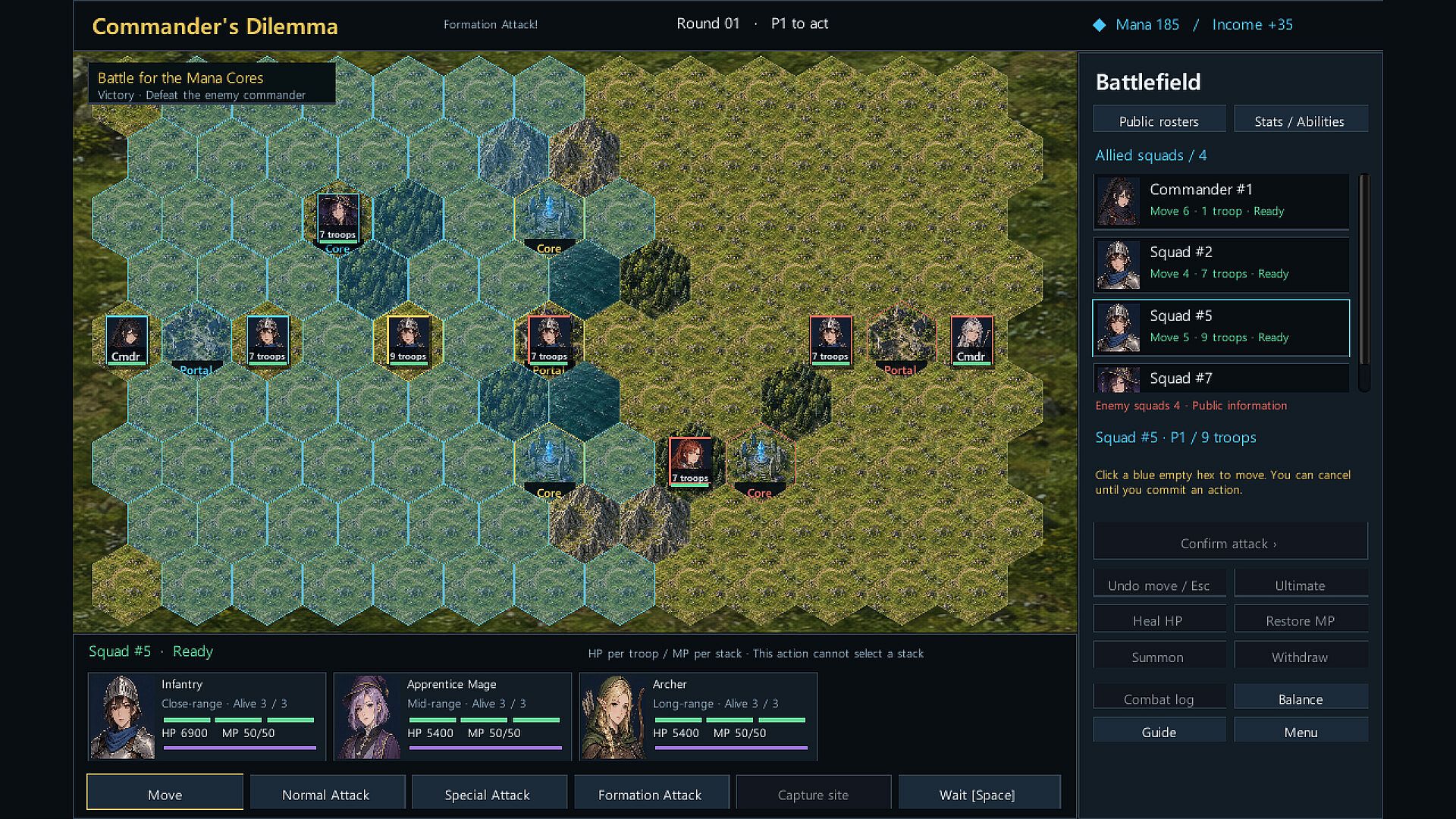
The core loop revolves around assembling squads from ten distinct unit classes including Infantry, Archers, Apprentice Mages, Cavalry, Swordmasters, Paladins, Priests, Sorcerers, Ninjas, and Scouts. Each squad can consist of multiple soldiers or powerful individual units, and the specific mix influences movement range, attack range, target selection, and the availability of Formation Attacks after moving.
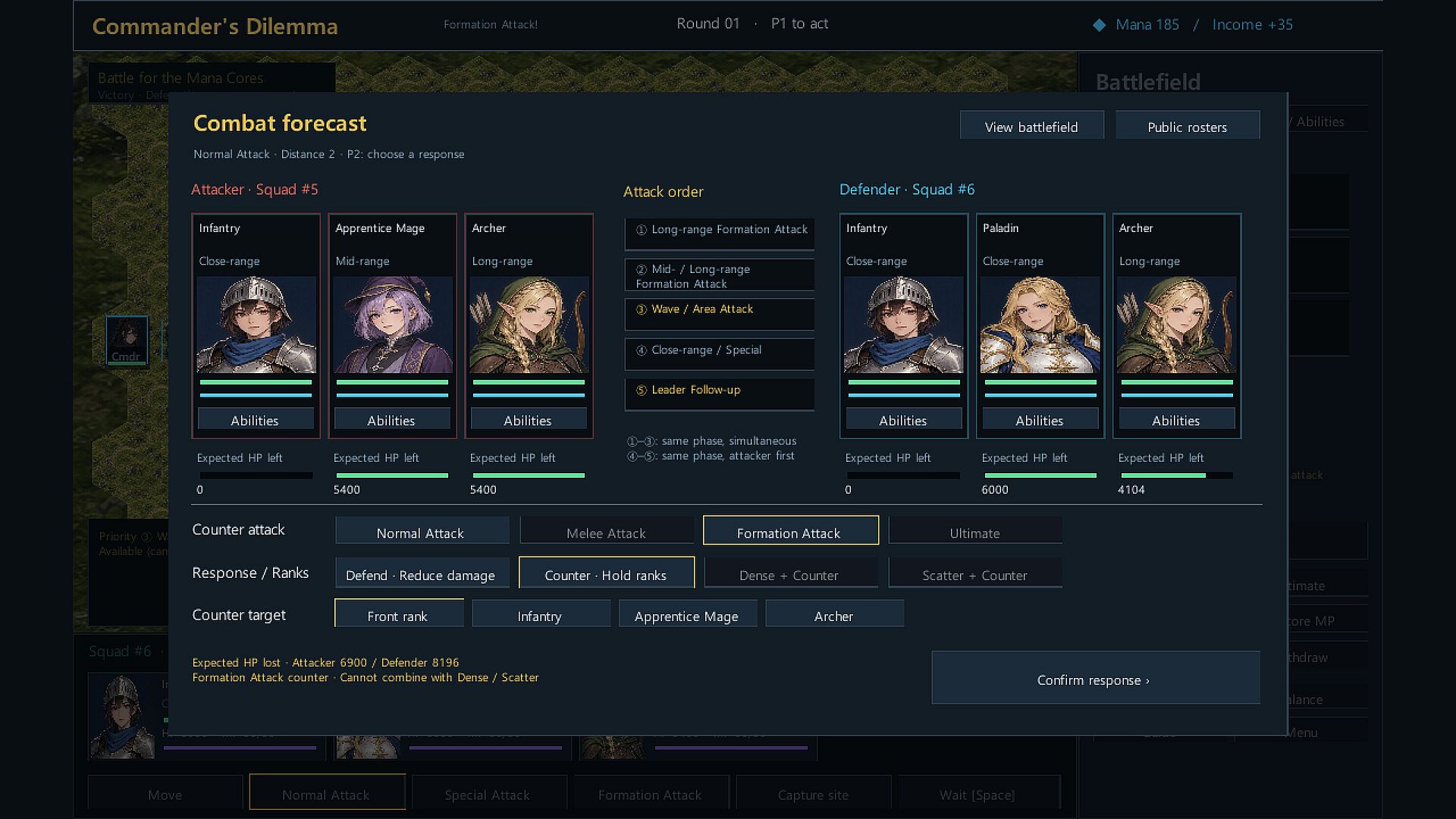
Turns alternate between players, with each side activating one squad per turn. When an attack is declared, the defending player must choose a response such as defending to reduce damage, launching a counterattack, concentrating the formation, or spreading out. These choices occur after examining predicted damage values, creating a layer of anticipation and resource management around mana expenditure.
Damage calculations remain deterministic by folding accuracy and evasion directly into the formulas instead of relying on random hit or miss rolls. Success depends on evaluating troops, terrain effects, formations, mana reserves, and activation order to forecast results accurately. Capturing mana points on the map allows summoning reinforcements or deploying hidden reserve forces through teleportation gates, though issuing a summon command ends that squad's action for the turn.
Commanders operate independently and gain special finishing abilities based on unit-class combinations. They represent high-value assets that can turn the tide but also end the match if eliminated, forcing players to weigh aggressive frontline use against protective positioning.
Game Modes
Commander's Dilemma supports two dedicated 1v1 multiplayer formats. Local Multiplayer lets two players share the same PC and alternate turns controlling their respective forces in the same session. Direct Connection Multiplayer requires players to establish a link using an IP address, port number, and room code, which demands a compatible network setup that permits the client to reach the host.
These modes emphasize direct head-to-head competition without automated matchmaking or additional variants. The focus stays on tactical depth through squad building and in-the-moment defensive responses during each engagement.
Strategic Depth and Unit Interactions
Unit combinations create meaningful trade-offs because squad makeup alters not only mobility but also how effectively a formation can execute attacks after repositioning. Stacks of soldiers offer volume while lone powerful units bring specialized capabilities, and players must balance these elements against the opponent's likely responses.
Mana serves as the key resource for both powerful abilities and reinforcements. Spending it to blunt an incoming threat or eliminate a dangerous squad requires careful timing, since conserving it might leave a player exposed later. The hex grid further shapes decisions by dictating line-of-sight, movement costs, and control of mana points.
Is It Worth Playing?
Commander's Dilemma appeals to players who enjoy deliberate, information-driven tactical combat in a 1v1 setting. Its emphasis on defender choices and predictable outcomes rewards careful analysis over luck, making it suitable for those who appreciate strategy games that reward foresight and adaptation during the opponent's turn.
The game remains in active development with a Steam Playtest build under review, so interested players can monitor progress toward formal release. Availability centers on the two verified multiplayer modes, which support both shared-screen and networked play for direct competition.
Those seeking a focused experience centered on squad assembly, formation tactics, and responsive defense will find the systems align closely with that preference. The absence of random elements in combat resolution further narrows the audience to participants comfortable with deterministic outcomes shaped entirely by visible information and prior choices.












