




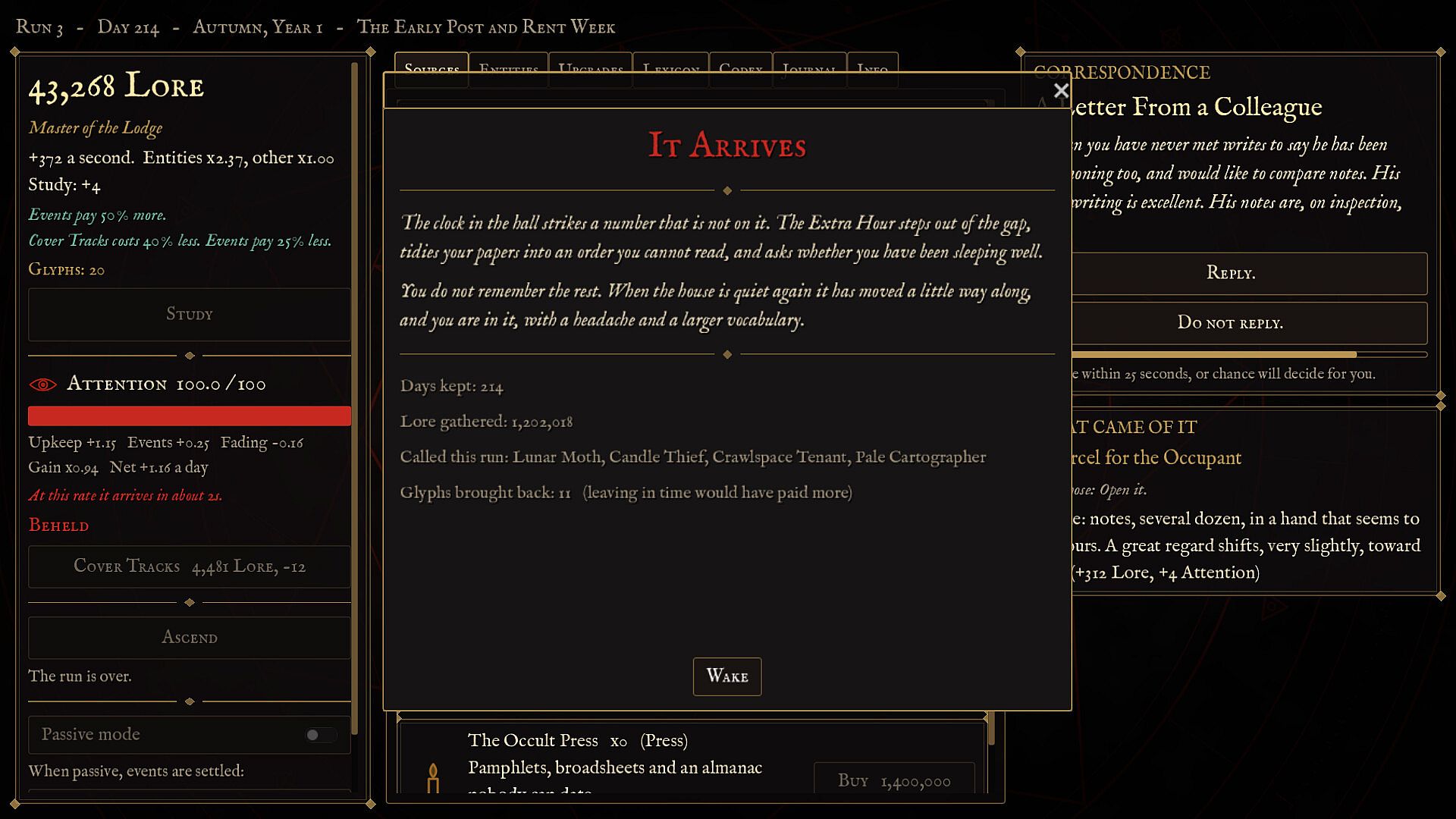
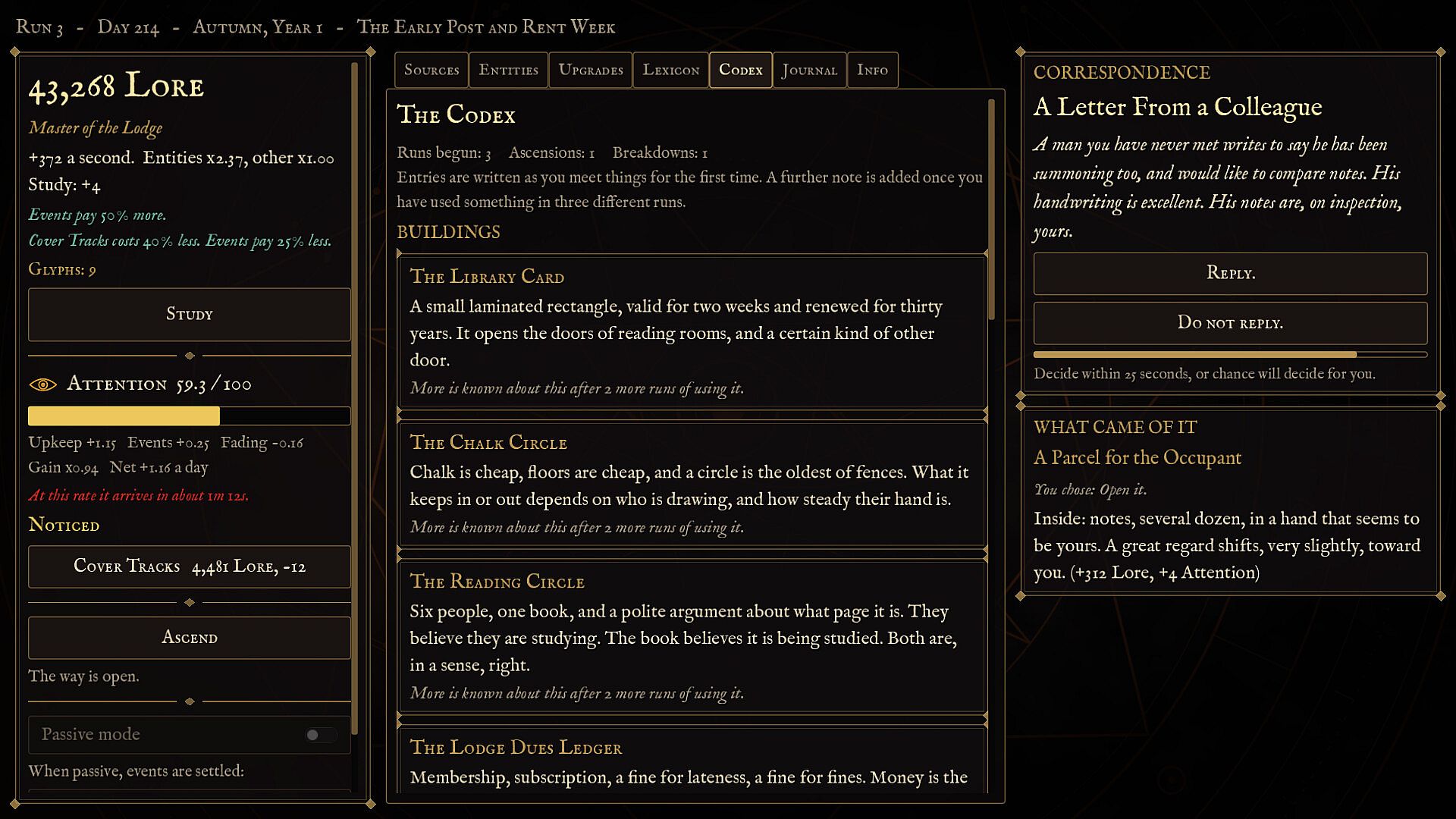
Dear Occupant is an indie RPG simulation game built around incremental progression and single-player occult management. Players start as a bedroom occultist and expand operations through repeated runs, summoning entities while balancing attention from an unseen watcher. The core loop mixes active decision making with idle production, all wrapped in dry cosmic horror delivered through short vignettes and handwritten notes.
Gameplay
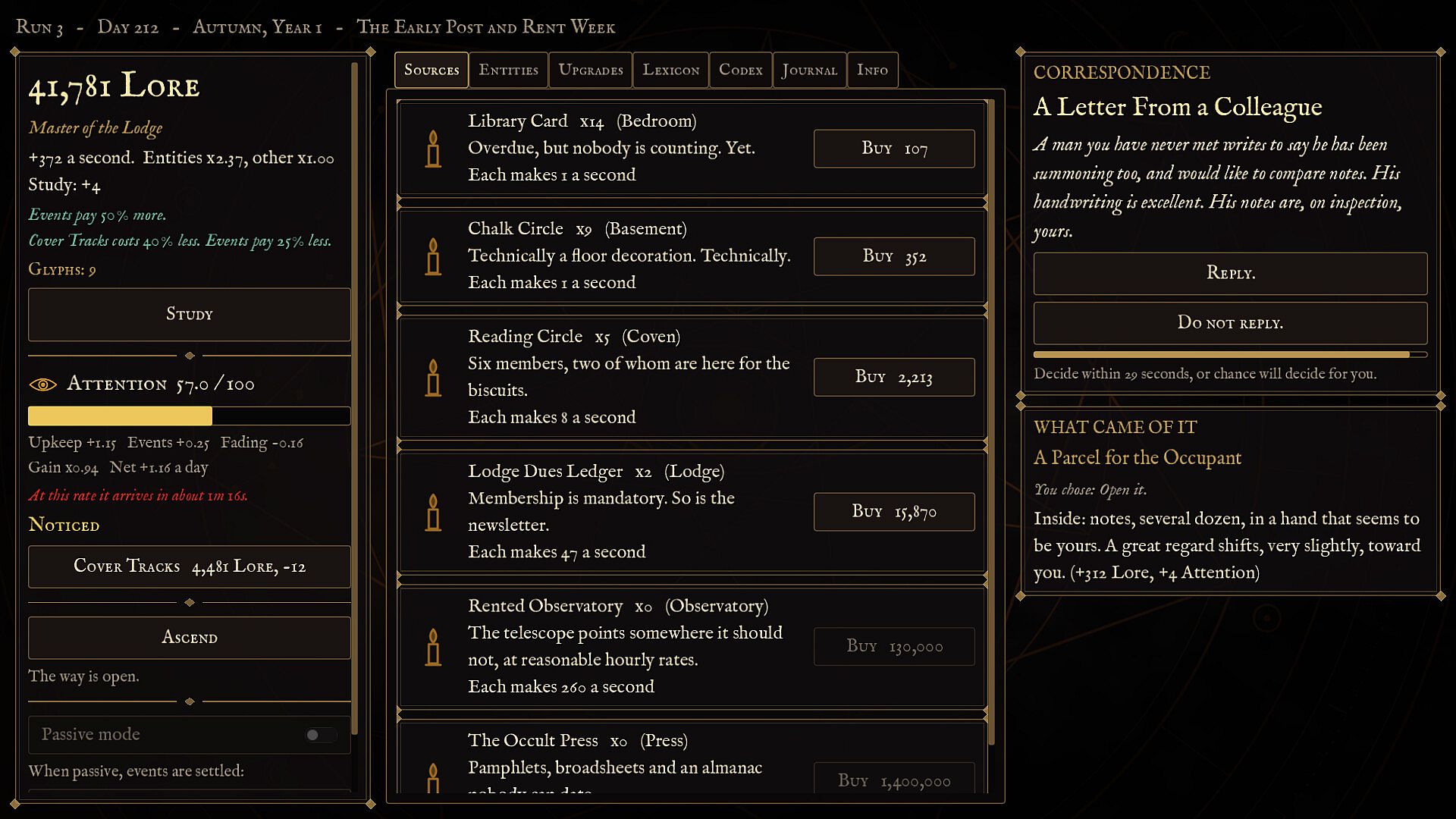
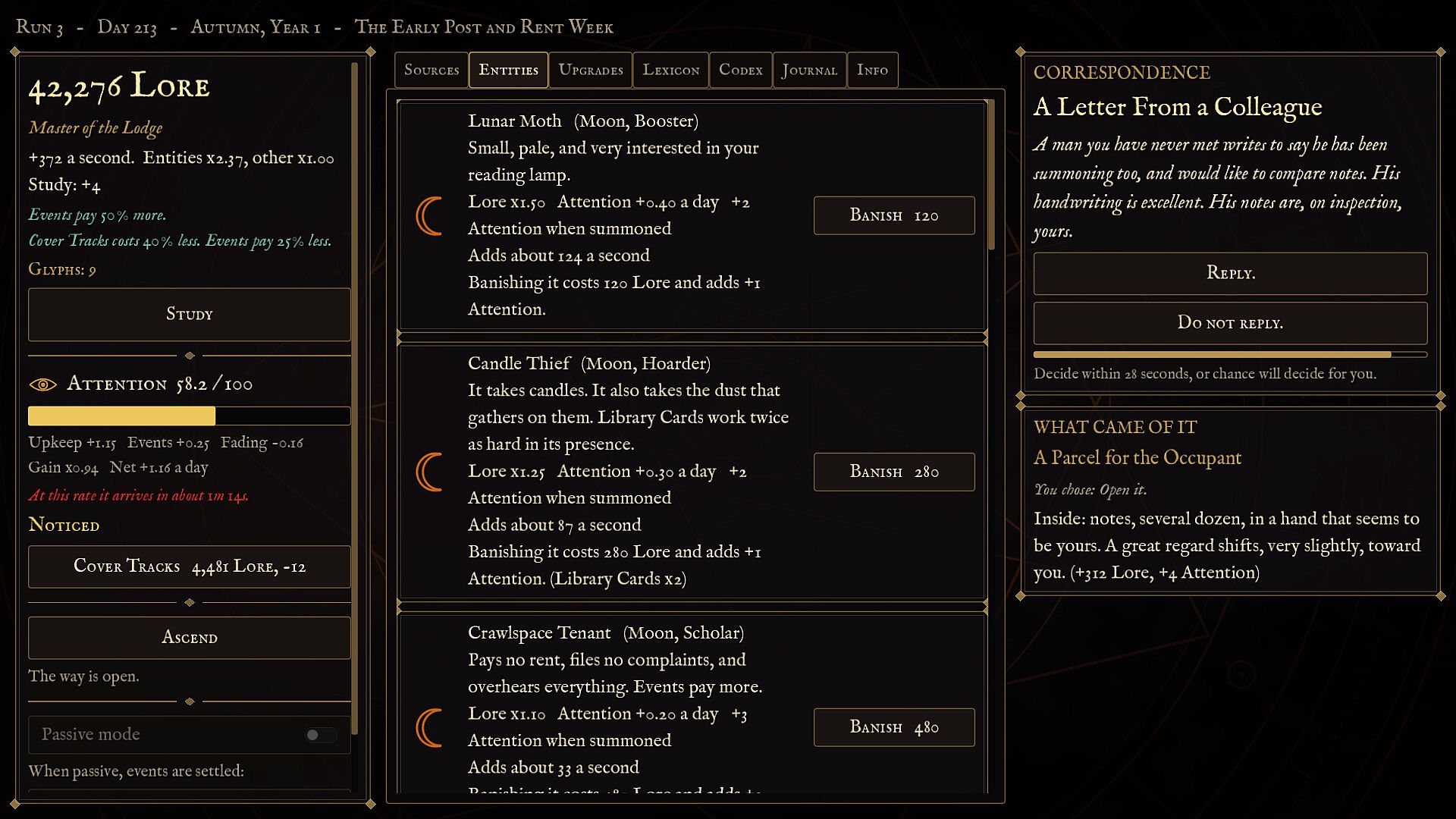
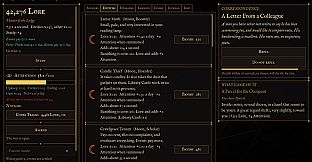
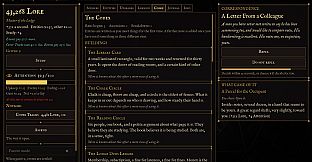
The experience begins with basic tools like a library card and chalk to draw circles. From there, players construct buildings that generate Lore automatically, scaling from simple setups to larger institutions such as a press, department, foundation, embassy, and ministry. Summoning forms the heart of advancement, with sixteen or more beings drawn from the Moon, Planets, and Stars. Each entity boosts Lore output but carries a cost in Attention that must be managed carefully to avoid early termination of a run.
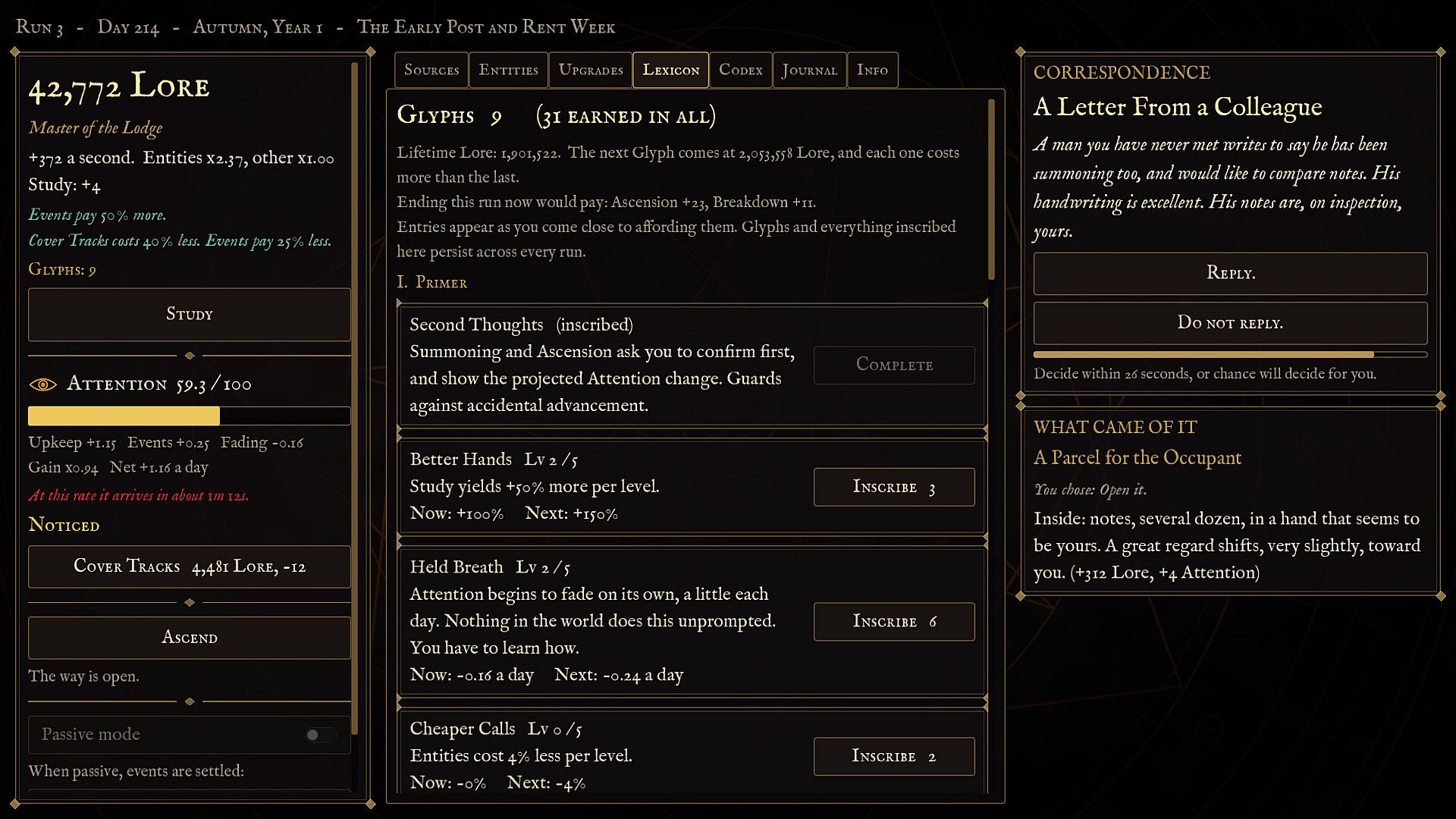
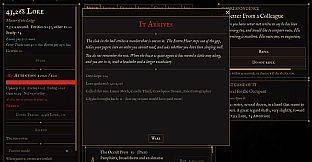
Events arrive as letters, visitors, or minor disasters presented in brief, understated text. Decisions must be made quickly or left to chance. Permanent progress comes through the Lexicon, where earnings between runs unlock upgrades across five categories that reduce Attention gain, lower summoning costs, or add automation. A Codex provides flavor text for every building, being, and upgrade encountered for the first time. Shifting alignments on a calendar alter numerical values each run, while over one hundred hand-written events and story arcs unfold across multiple attempts. Active play allows direct intervention, yet the system pauses safely during idle periods before danger escalates.
Game Modes
The game operates as a single-player incremental experience with no separate multiplayer or competitive modes. Runs follow a consistent structure of building production, summoning, event handling, and escape or confrontation. Permanent upgrades and the Lexicon create long-term progression outside individual runs, while the calendar introduces variability without changing the fundamental loop. Passive elements support extended sessions away from the screen, and a passive mode appears among the forty or more upgrades available through the Lexicon.
Core Mechanics and Progression
Attention serves as the primary risk meter. Players cover tracks and time summons to keep the watcher at bay, but full attention triggers an end to the current run. Successful ascents before detection yield better rewards, while being found allows limited carryover. Ten buildings support Lore generation, and three additional entities appear only on failed escapes. Everything summoned contributes to production yet draws notice, creating constant tension between growth and concealment. The Lexicon system rewards repeated play by purchasing lasting advantages that carry across attempts, including wards, automation tools, and options for steadier hands or cheaper summons.
Is It Worth Playing?
Dear Occupant suits players who enjoy incremental games with narrative depth and deliberate pacing. The dry, understated writing and focus on management under pressure appeal to those who appreciate simulation elements mixed with light RPG progression through permanent unlocks. Since the title remains unreleased with no player reviews available, expectations rest on the described systems of building, summoning, and event response. Fans of single-player experiences that blend active choices with idle growth may find the combination of ten buildings, sixteen beings, and extensive event writing worth exploring once it launches on PC.












