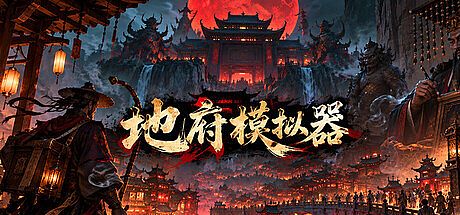


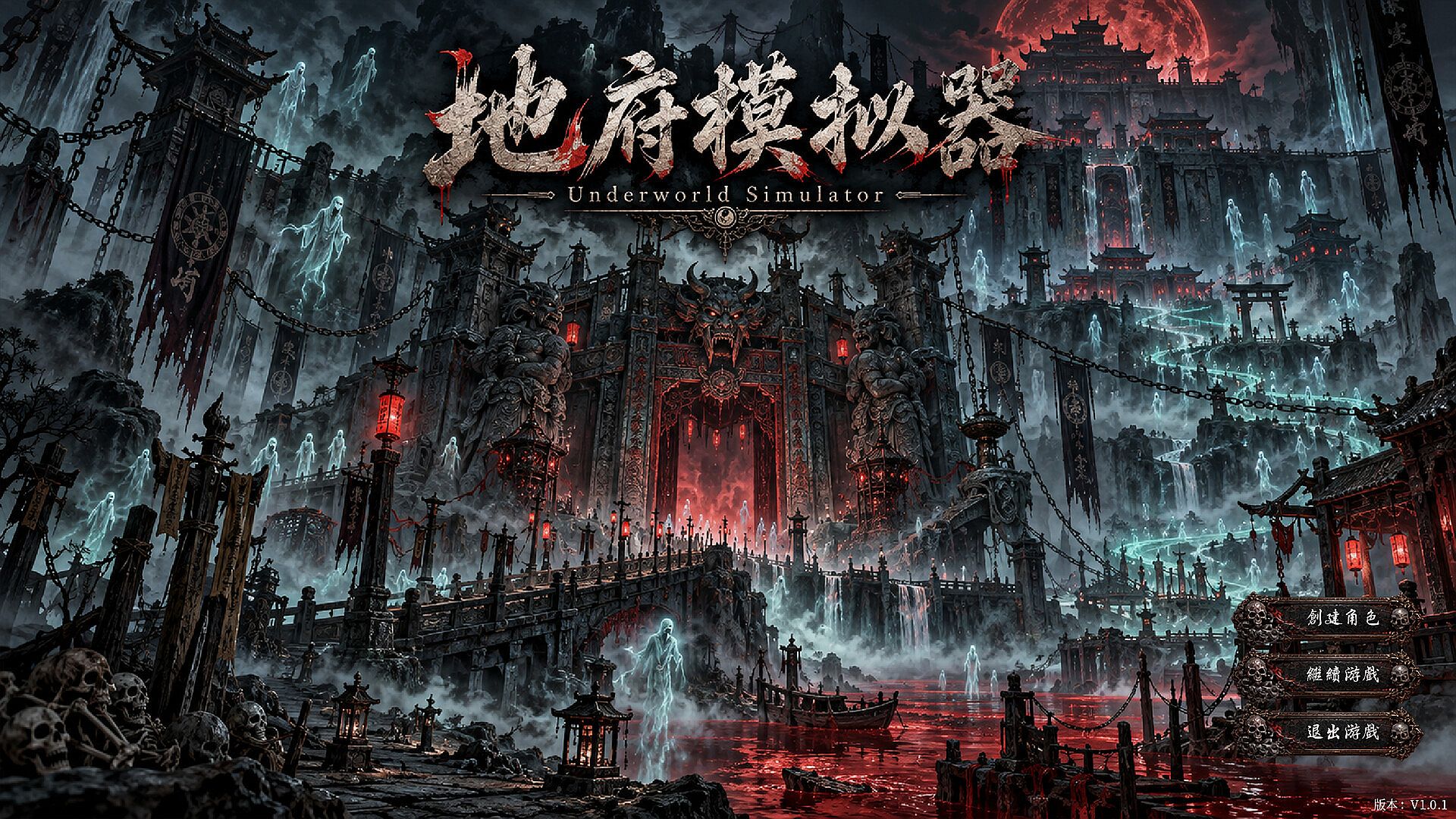
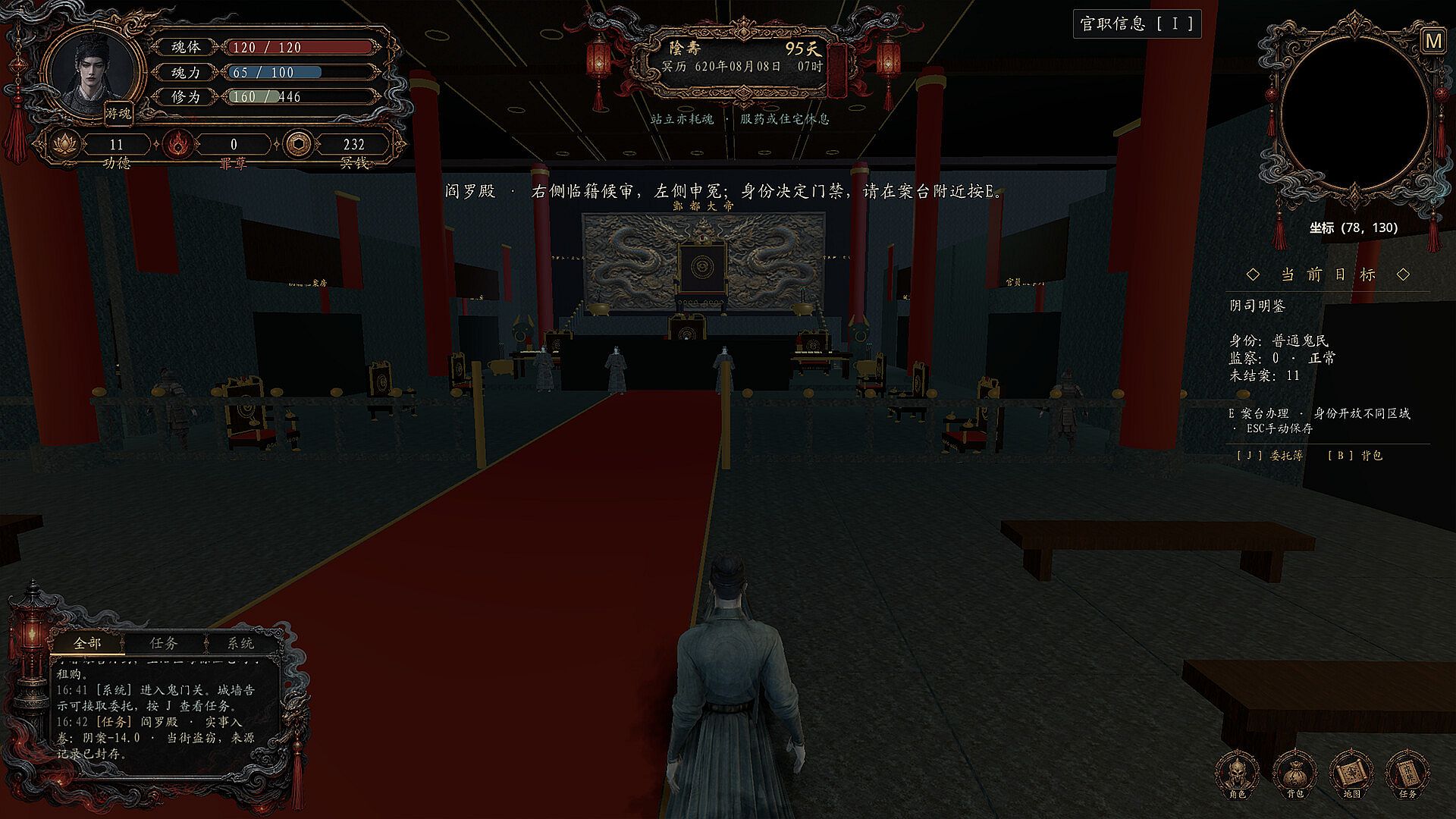
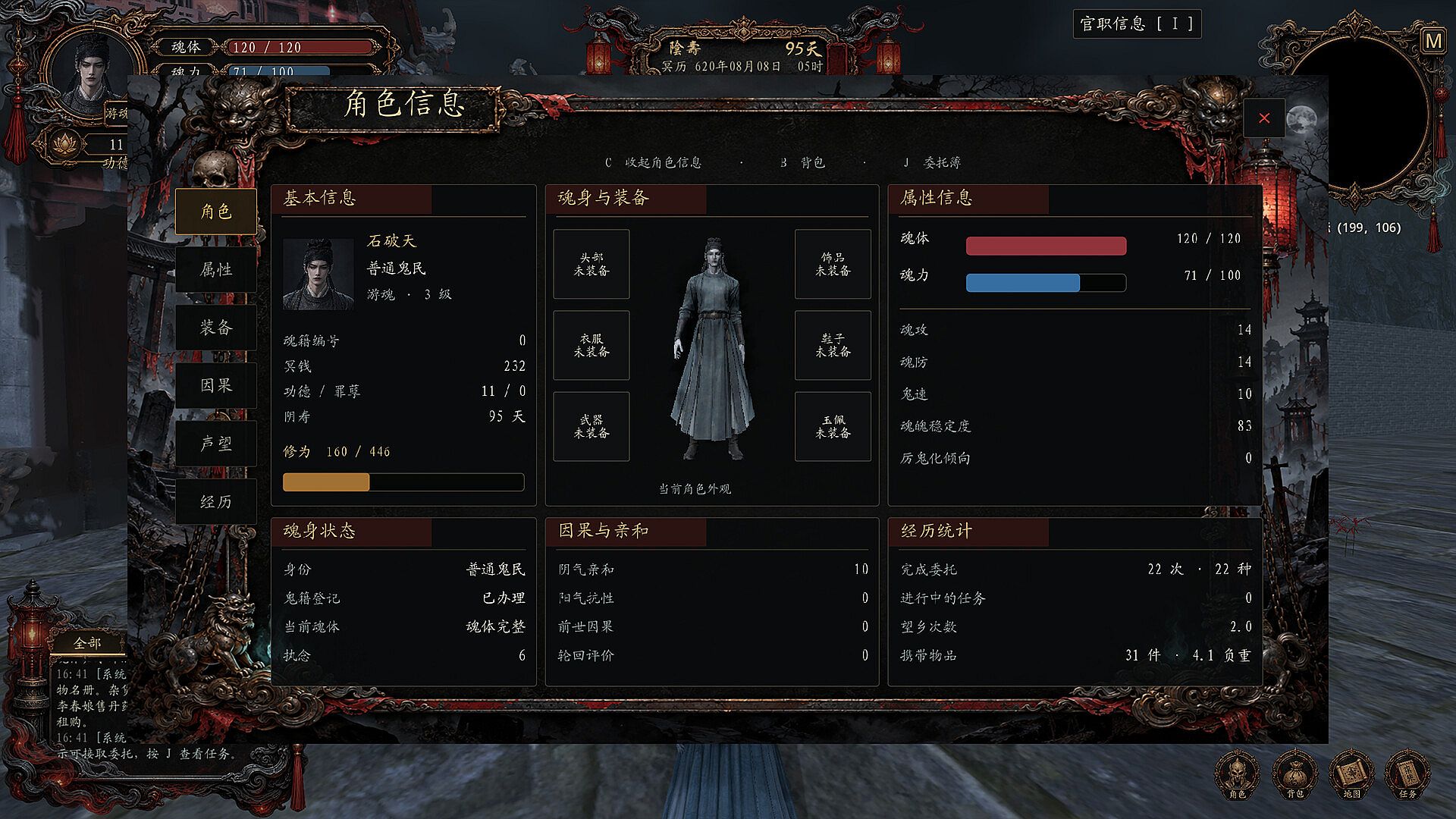
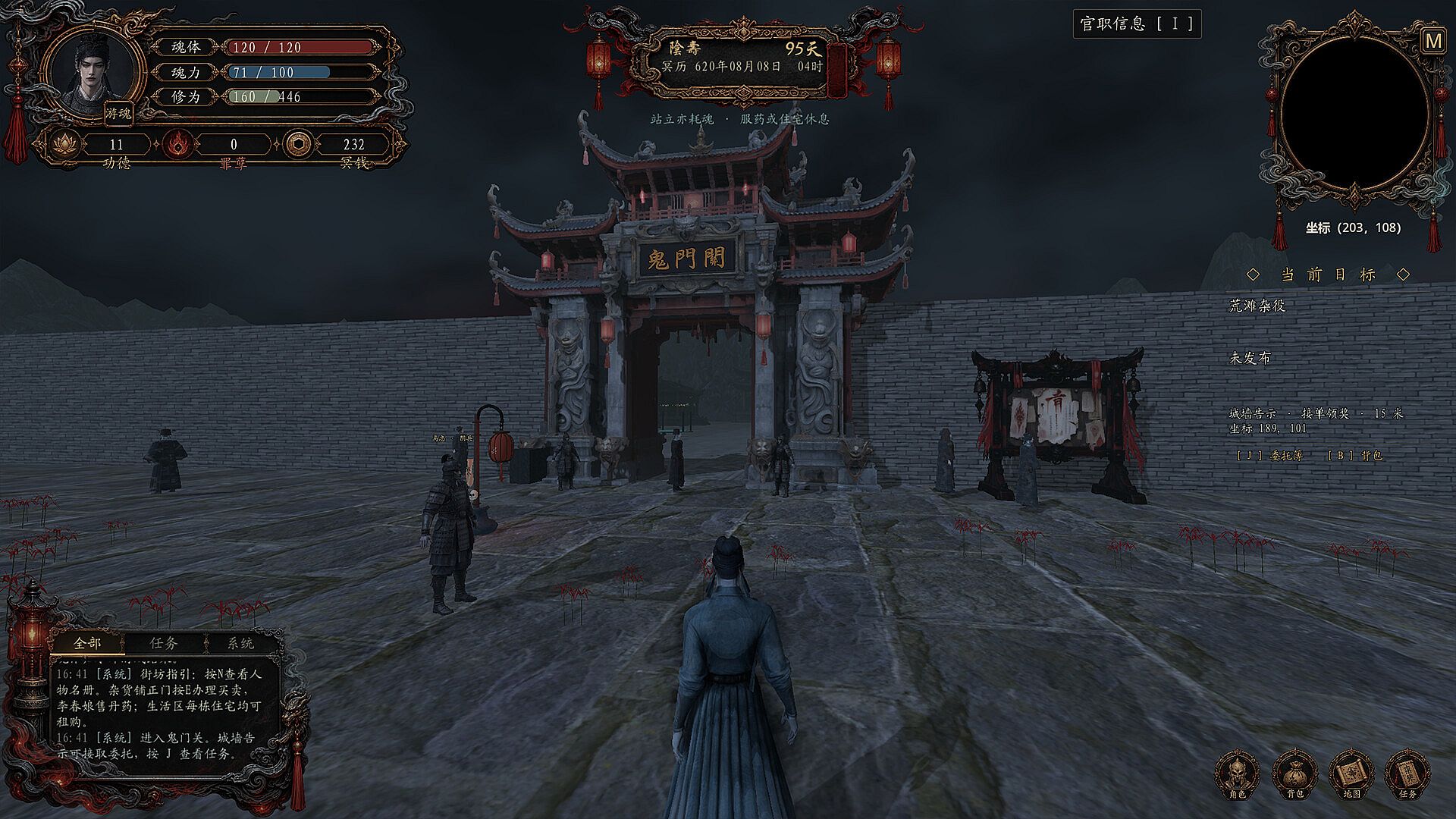
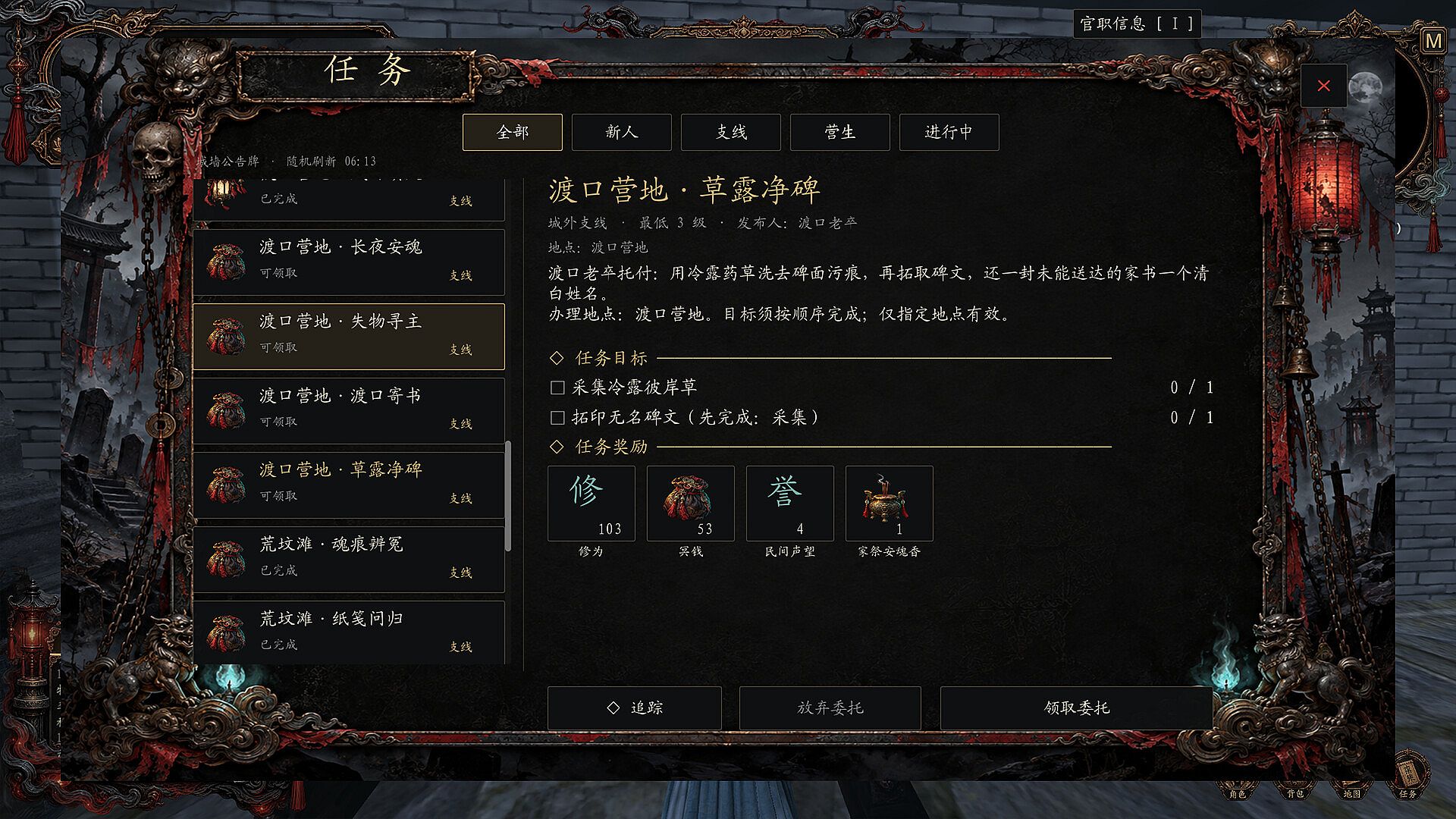
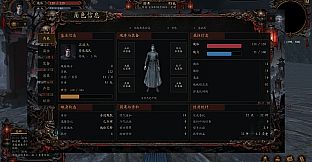
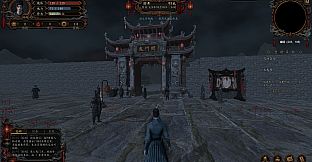
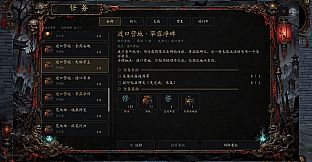
地府模拟器 is a single-player simulation game with RPG, action, adventure, and casual elements set in a detailed Chinese underworld. Players begin as an ordinary ghost in the city of Fengdu and build a second life through housing, work, social interactions, and optional advancement in the bureaucratic system.
Gameplay
The core loop centers on survival and progression in a living city. Players start without property or resources and must secure lodging, earn currency through various jobs, and expand their holdings over time. Housing serves multiple purposes beyond rest, including storage, crafting, cultivation, and hosting visitors. Properties can be upgraded, furnished freely, rented out, or defended against events like theft and inspections.
The city features functional locations such as banks for loans and transactions, blacksmiths for equipment crafting with special materials, incense workshops for creating effects through material combinations, and markets with fluctuating stock. A hidden ghost market adds layers of complex trading and potential risks. Daily activities involve interacting with NPCs who maintain their own wealth, relationships, reputations, merits, and sins, leading to organic events like disputes or crimes that trigger investigations and judgments.
Advancement offers two main paths. One focuses on civilian life as a merchant or resident, buying shops, investing, and managing businesses. The other involves joining the underworld administration, starting from entry-level roles and rising through ranks. Each promotion alters available areas, NPC interactions, and decision-making authority, turning the same locations into different gameplay experiences based on status.
Game Modes
Players shape their experience through lifestyle choices rather than fixed scenarios. A civilian path emphasizes steady income, property management, and personal cultivation without official duties. Entering the bureaucracy introduces procedural elements like patrols, arrests, evidence gathering, and case trials where players question witnesses, review records, and weigh testimony that may include lies or incomplete information.
High-ranking positions expand influence over policies, major cases, and even hell facilities. Criminal actions by the player or NPCs activate a full justice system involving reports, probes, trials, sentencing, and potential imprisonment. Jail time allows continued play through labor, informant work, or escape attempts, which then affect future pursuits and records. Merit and sin systems track choices, influencing reputation across factions and opening or closing opportunities.
Progression and Systems
Identity changes create meaningful shifts. Low-level ghosts focus on basic needs and small-scale dealings, while officials handle investigations, sentencing, and enforcement across the city and its eighteen layers of hell. Each hell layer presents unique hazards and rules that players encounter differently depending on their role, such as escorting prisoners or probing internal corruption.
Soul-retrieval tasks require locating targets using specific details and handling complications like lingering attachments or errors in orders. Evidence-based judgment replaces simple selections, with options to request further inquiry or correct past mistakes. The world responds dynamically to player actions, including bribery or collusion, which can lead to later consequences through oversight mechanisms.
Is It Worth Playing?
This title suits players interested in deep simulation and role-playing within a single-player Chinese mythology setting. The detailed systems for housing, economy, crime, and career progression provide substantial replay value through different life paths and status levels. Since the game remains unreleased with a planned launch in August 2027 and no reviews available yet, interest depends on preference for narrative-driven underworld management over action-focused combat. Those drawn to the described mechanics of building status, navigating bureaucracy, and living out consequences in a reactive society will find the concept aligned with their tastes.