


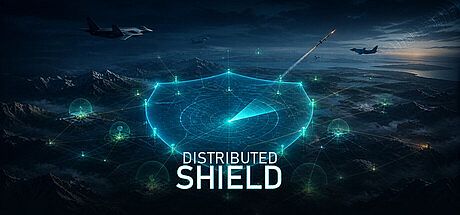



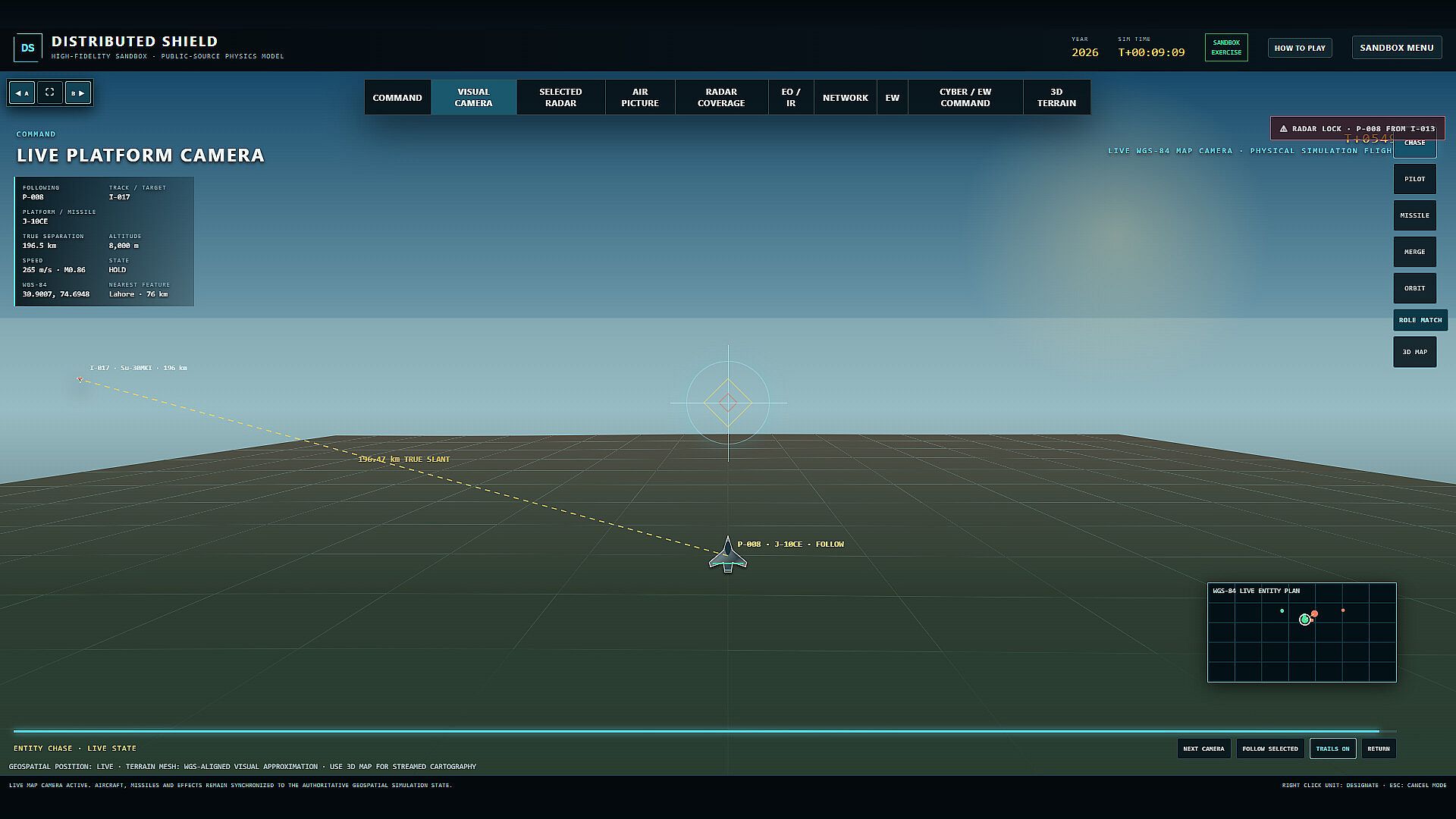
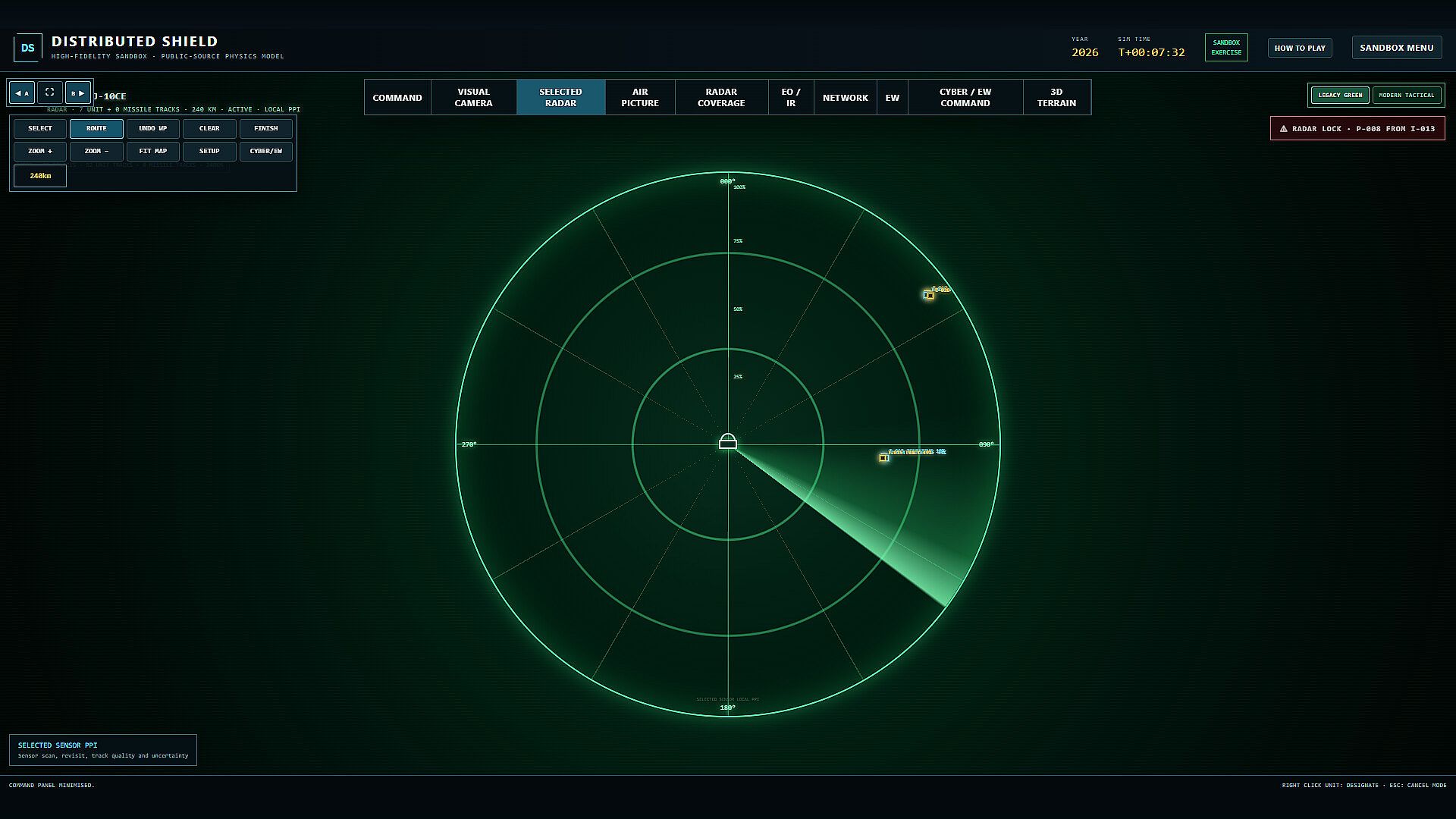
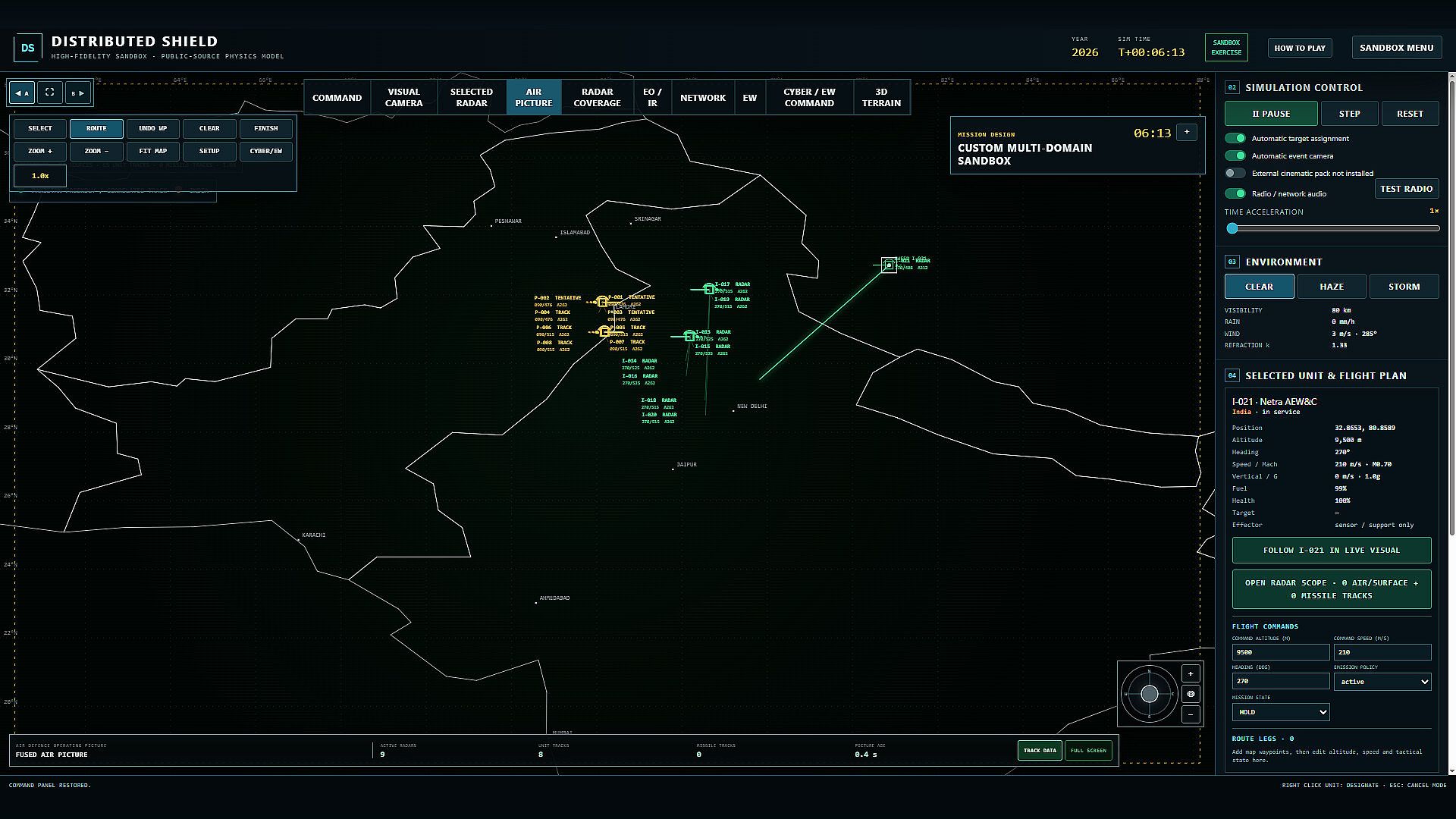

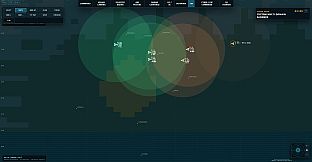
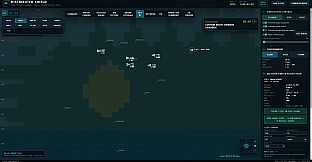
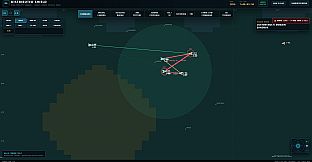
Distributed Shield is a strategy and simulation game set in Early Access on PC. It places players in the role of designing and commanding both sides of a fictional near-future air and missile exercise across a georeferenced South Asian theatre. The experience centers on constructing forces, planning operations in detail, and then observing outcomes through a shared simulation state rather than scripted events.
Gameplay
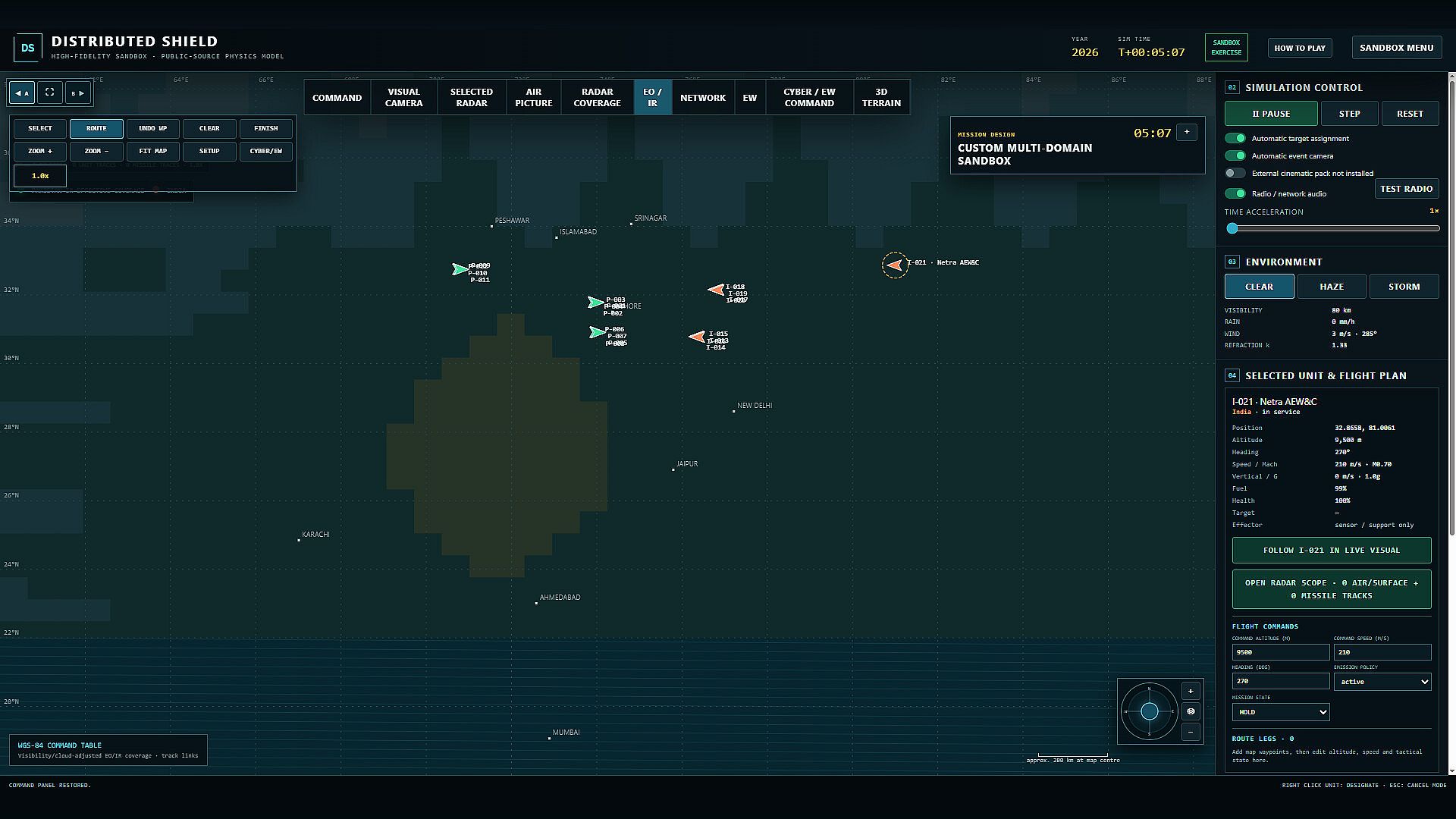
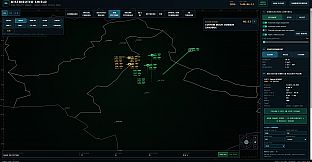
The core loop involves building opposing forces from catalogues of Pakistan and India equipment drawn from public-source, reported, contracted, and scenario-only entries. Players position aircraft, radars, command nodes, and air-defence components on the map before defining routes with specific waypoint instructions for altitude, speed, and recovery status. Formations range from pairs of aircraft to larger drone swarms, with choices for payloads, sensor emission policies, and launch rules that can be automatic or operator-controlled.
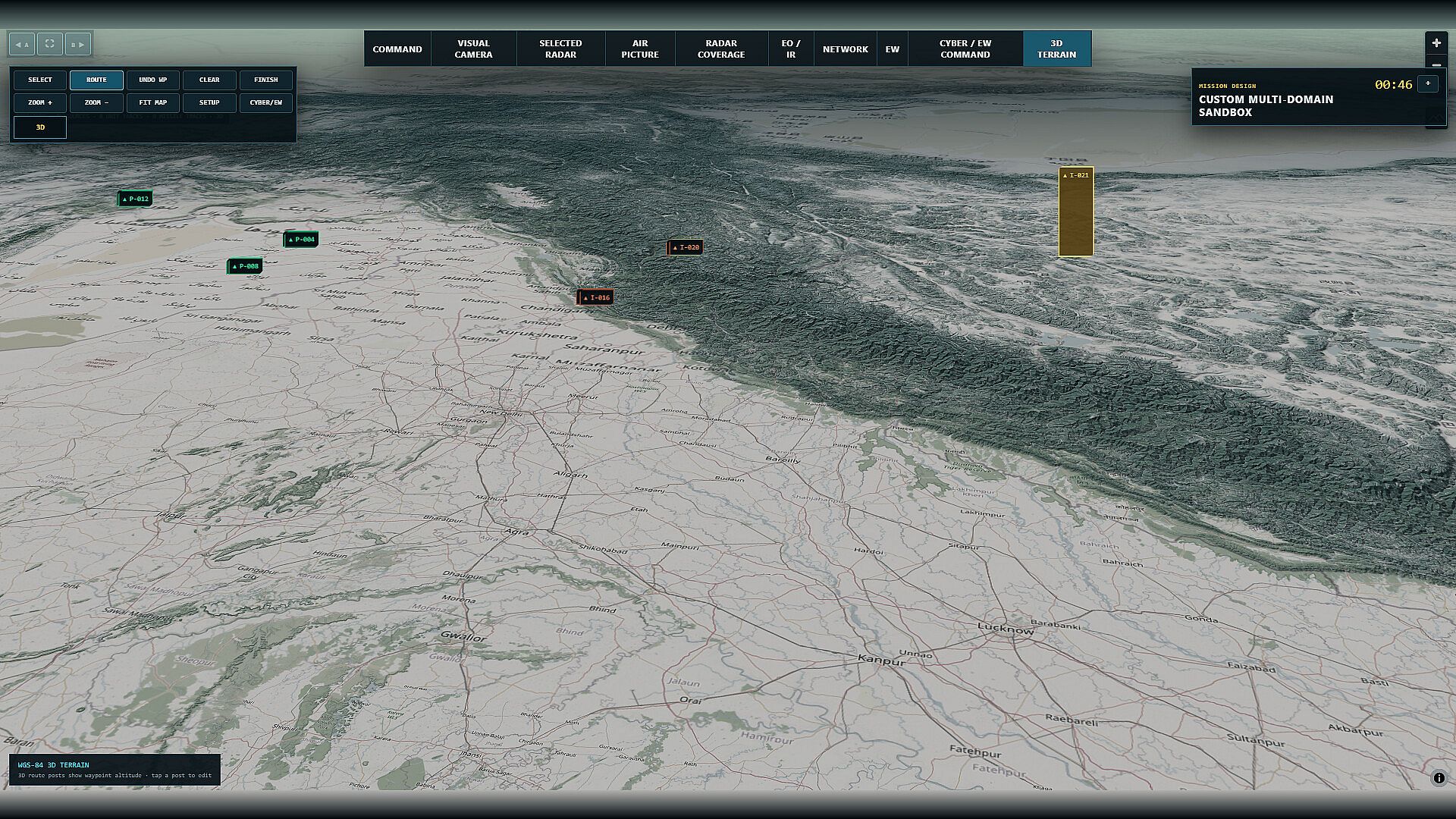
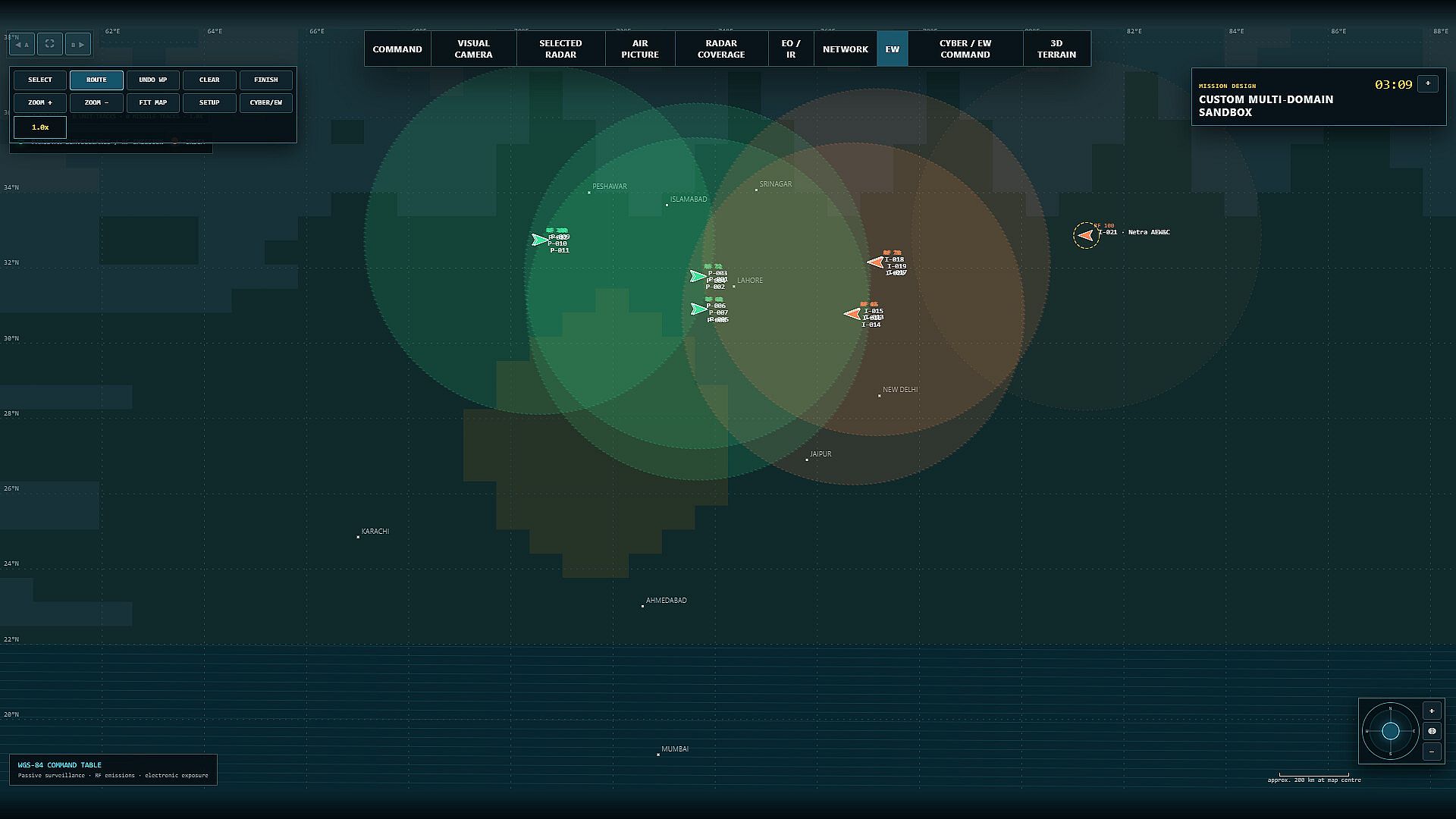
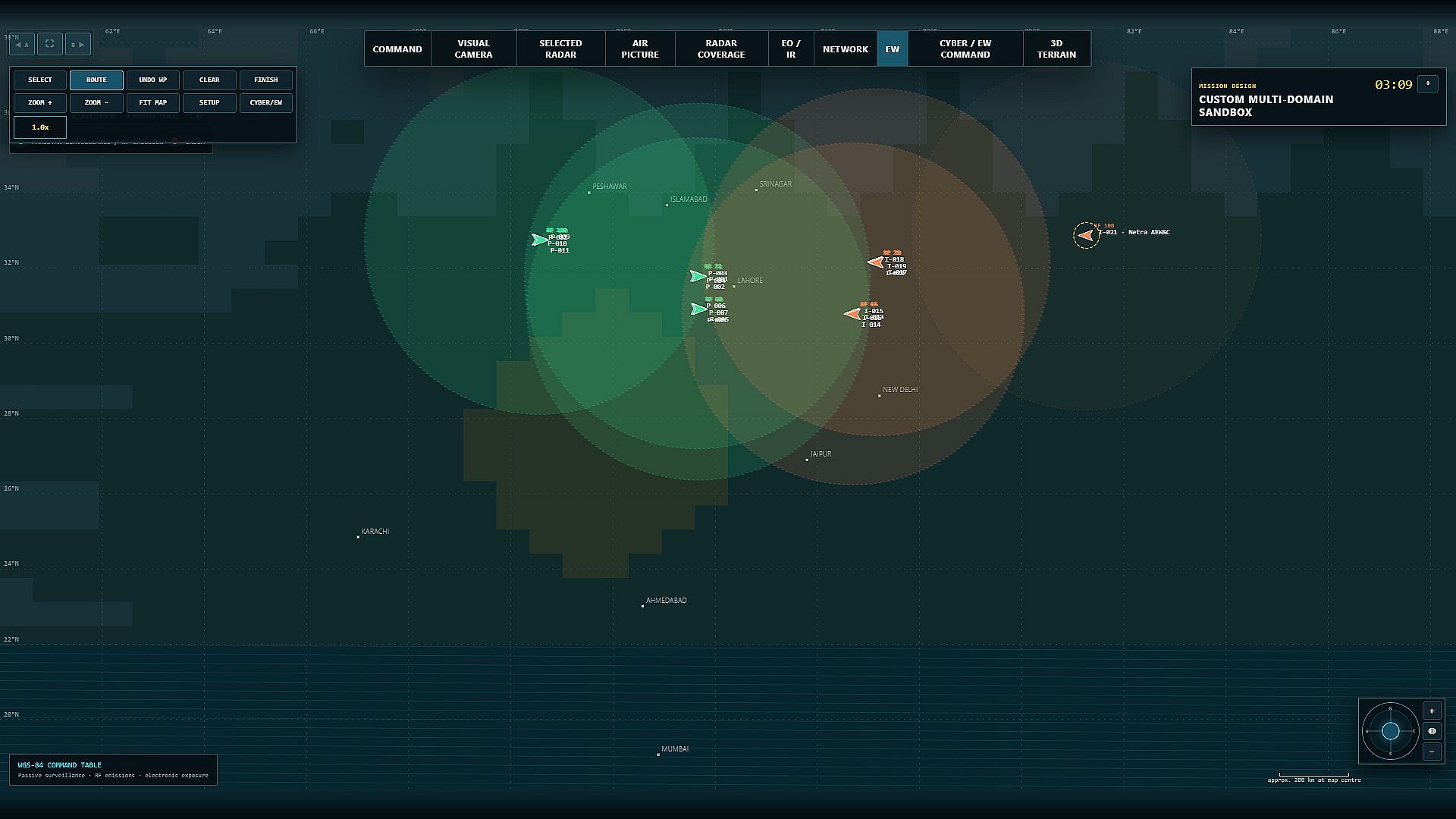
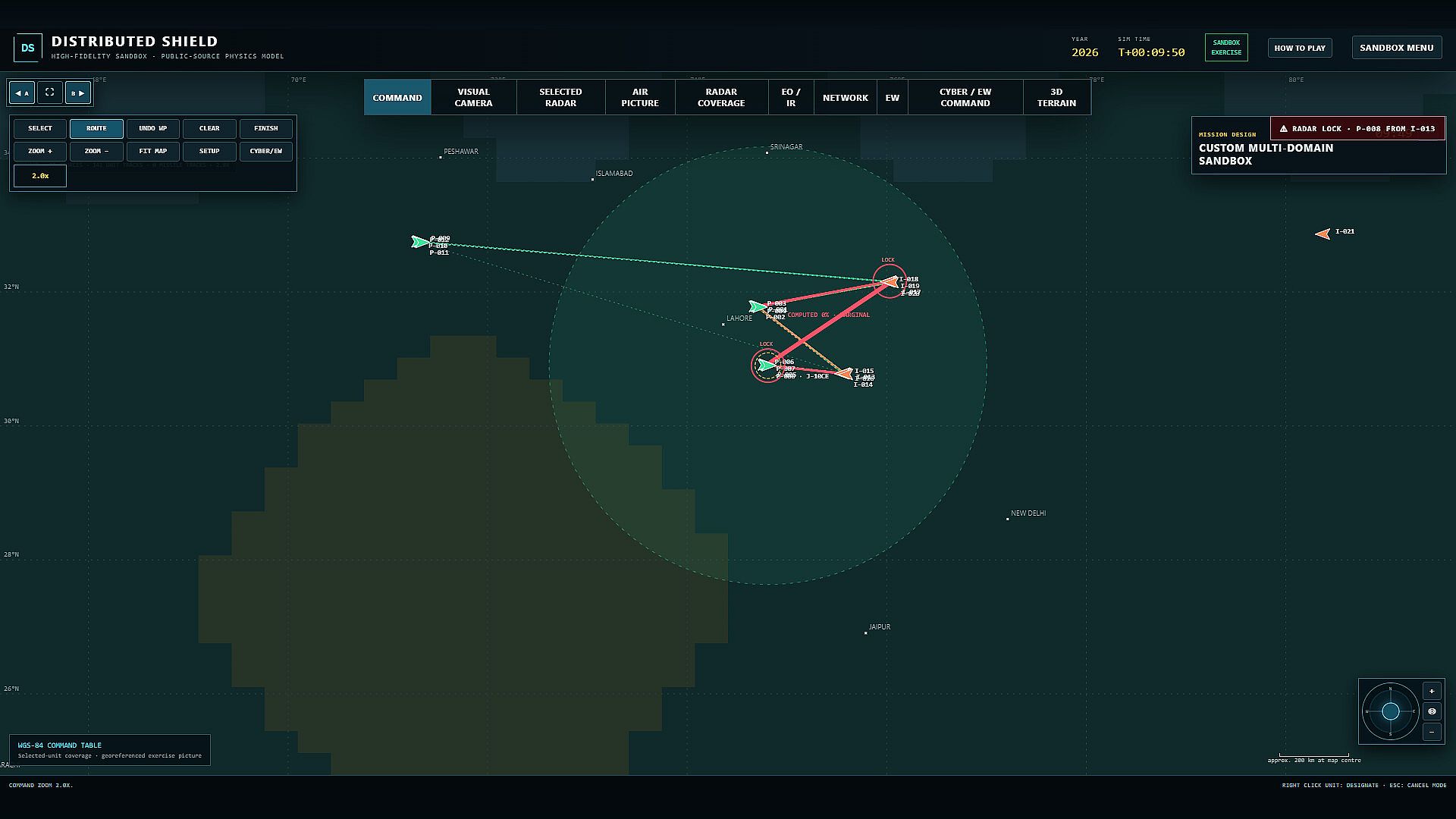
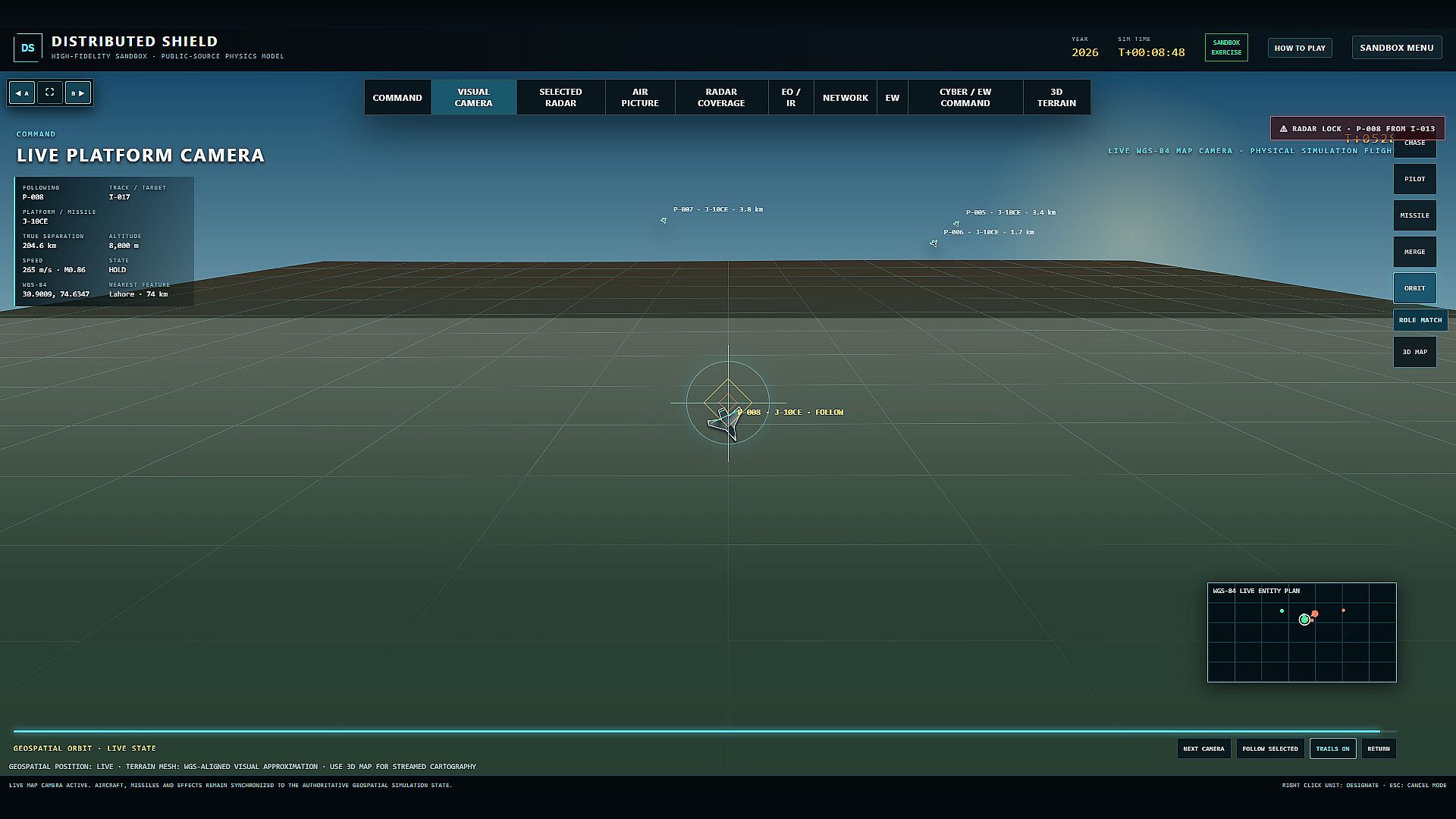
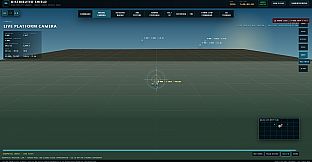
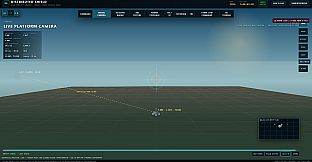
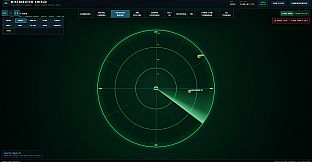
Once the simulation clock starts, every display draws from the same underlying state. Detections evolve into uncertain tracks influenced by line of sight, Earth curvature, altitude, aspect angles, signature bands, weather, clutter, and network factors. Players can switch between command overviews, selected-radar feeds, coverage maps, EO/IR views, network status, electronic-warfare panels, and live event cameras. Missiles follow a time-stepped point-mass model that accounts for boost, sustain, energy decay, lead pursuit, seeker activation, and closest-approach calculations. The launch interface displays estimated probabilities based on energy, geometry, weather, and track quality instead of fixed zones.
An after-action board logs events and results for review. The simulation remains deliberately bounded to public-source game profiles, emphasizing transparency over classified data or predictive accuracy for real operations.
Game Modes
Play revolves around a flexible sandbox environment where users construct custom exercises from scratch or begin with balanced fictional demonstration forces. The setup supports iterative design: routes and formations can be adjusted, the simulation paused for retasking, and entire scenarios saved for later scoring or comparison. Exercises run in real time once initiated, with the ability to observe outcomes across multiple synchronized views without altering the underlying state mid-run.
This approach allows repeated testing of different configurations, such as varying emission policies or engagement rules, while maintaining consistency in how sensors and weapons behave. No separate campaign or competitive multiplayer structures are defined; the focus stays on single-exercise construction and execution within the sandbox framework.
Is It Worth Playing?
Distributed Shield suits players who value detailed, transparent military simulation over fast-paced action or narrative-driven campaigns. Its strength lies in the ability to design both sides of an engagement and then watch realistic sensor and weapon interactions unfold through shared data rather than abstracted rules. The emphasis on line-of-sight limitations, track uncertainty, and energy-based missile modeling rewards careful planning and repeated testing in the sandbox.
Because the game remains in Early Access, its feature set continues to develop around the core exercise builder. Those drawn to strategy titles that prioritize verifiable mechanics and post-run analysis will find the current implementation aligns closely with that interest. Players seeking polished single-player stories or large-scale multiplayer competition may prefer titles with established modes in those areas. Overall, the game delivers a focused simulation experience for enthusiasts of air and missile command modeling who appreciate the ability to iterate on custom scenarios without external constraints.












