




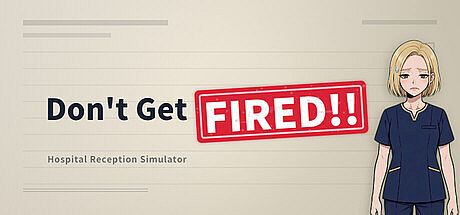



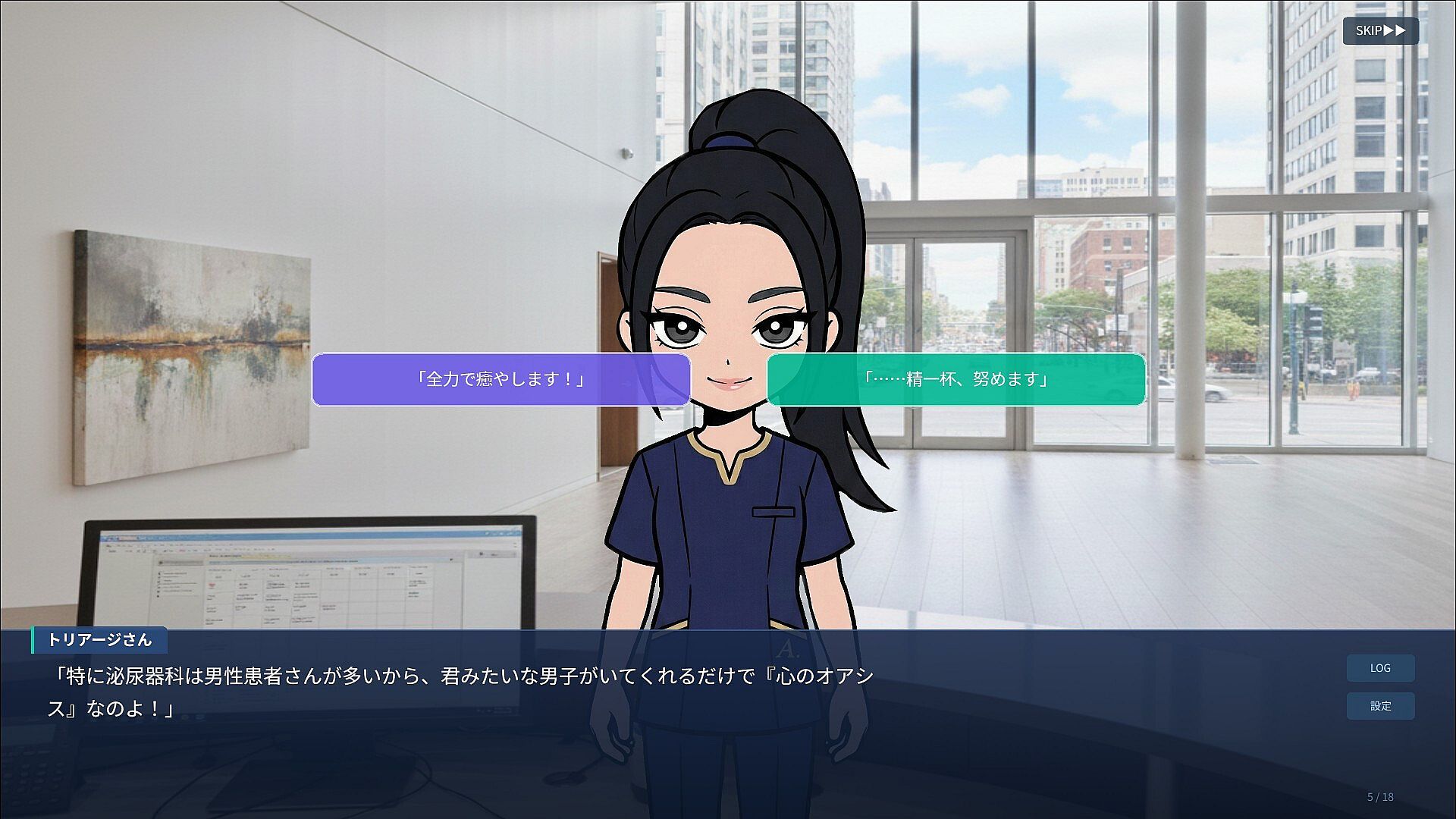
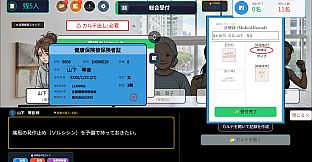
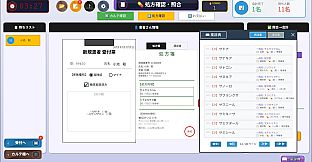
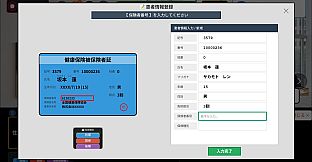
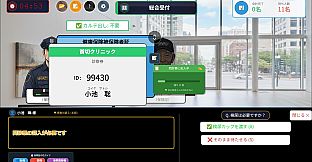
„Don't Get Fired!! ~Hospital Reception Simulator~" ist ein unabhängiges Casual-Simulationsspiel für den PC, in dem man an der Rezeption eines belebten Krankenhauses sitzt. Die zentrale Aufgabe besteht darin, eintreffende Patienten zügig und korrekt zu bearbeiten und gleichzeitig die Ressourcen so einzuteilen, dass man nicht gefeuert wird. Erfolg hängt davon ab, Versicherungsarten richtig zuzuordnen, die Zufriedenheit der Patienten aufrechtzuerhalten und zwischen Arbeitsleistung und privaten Finanzentscheidungen in der Freizeit zu balancieren.
Gameplay
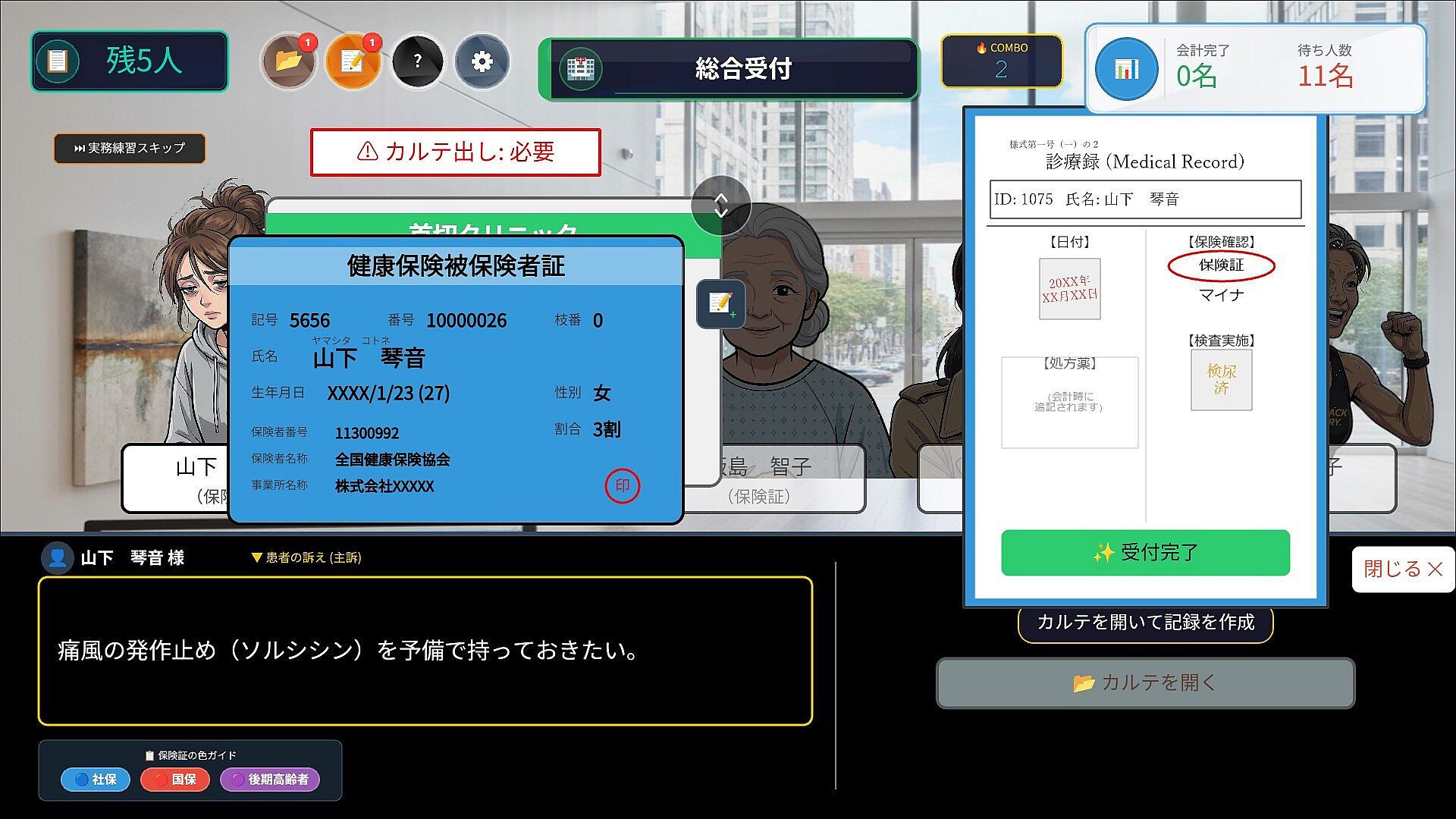
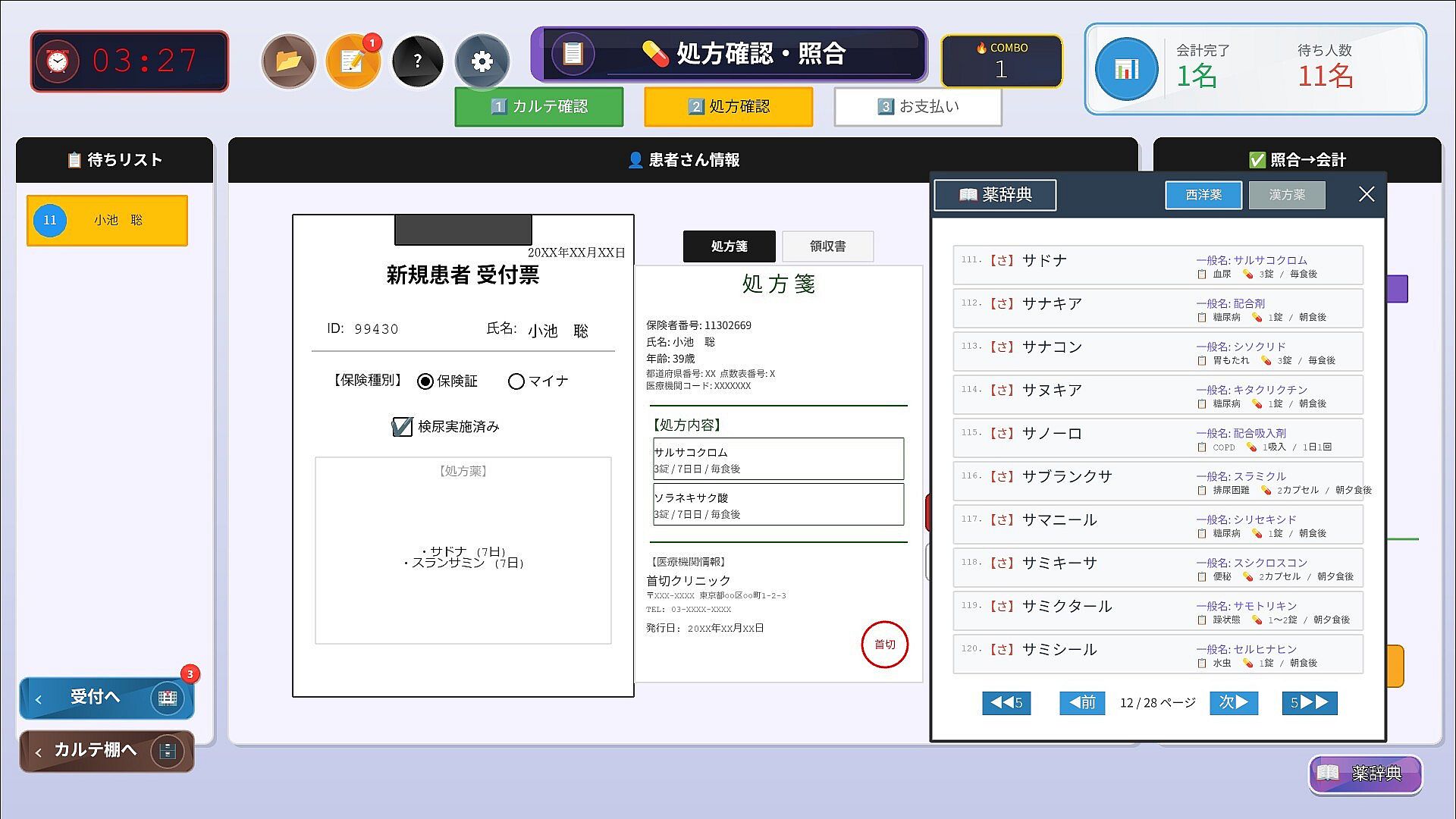
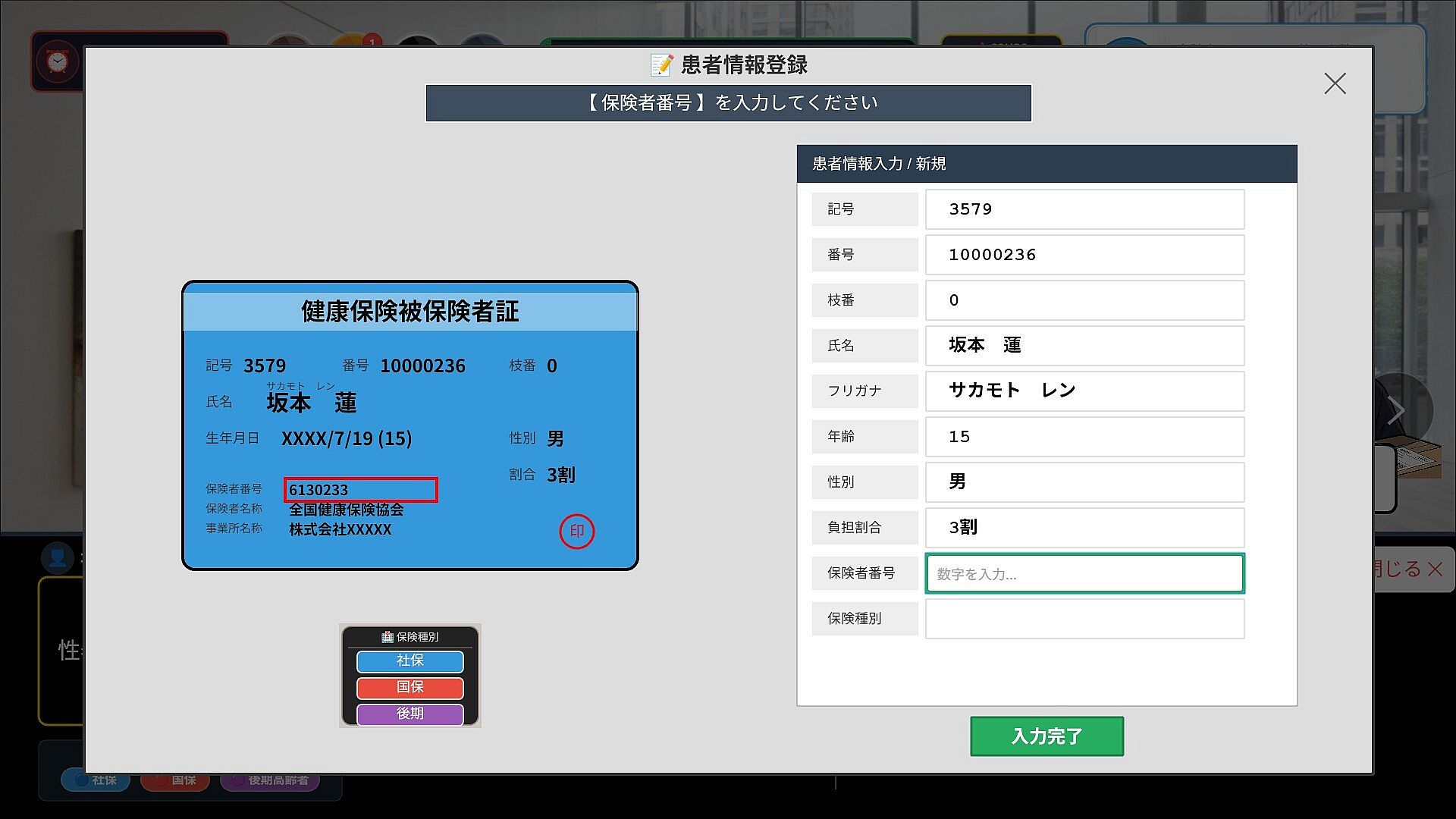
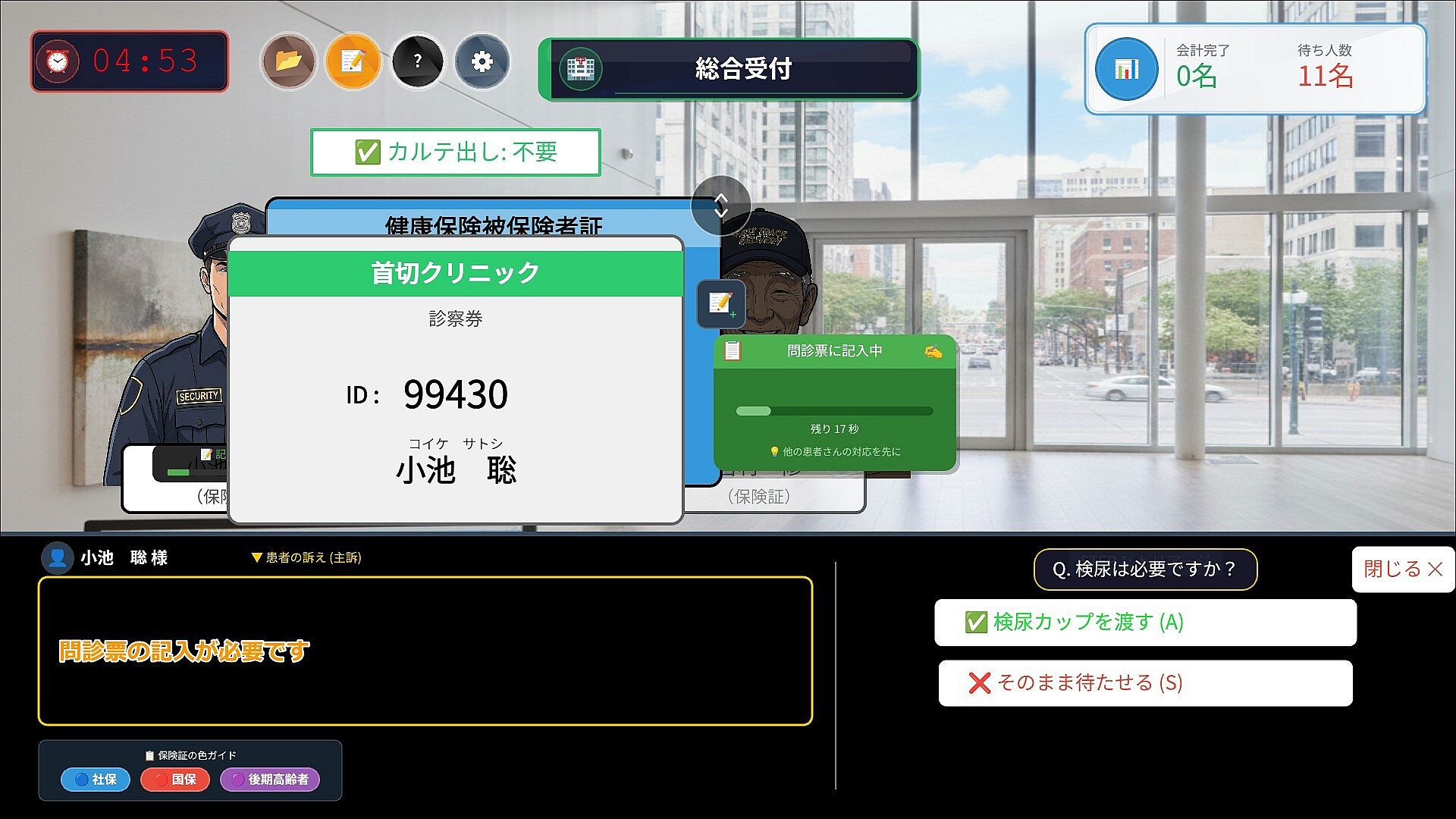
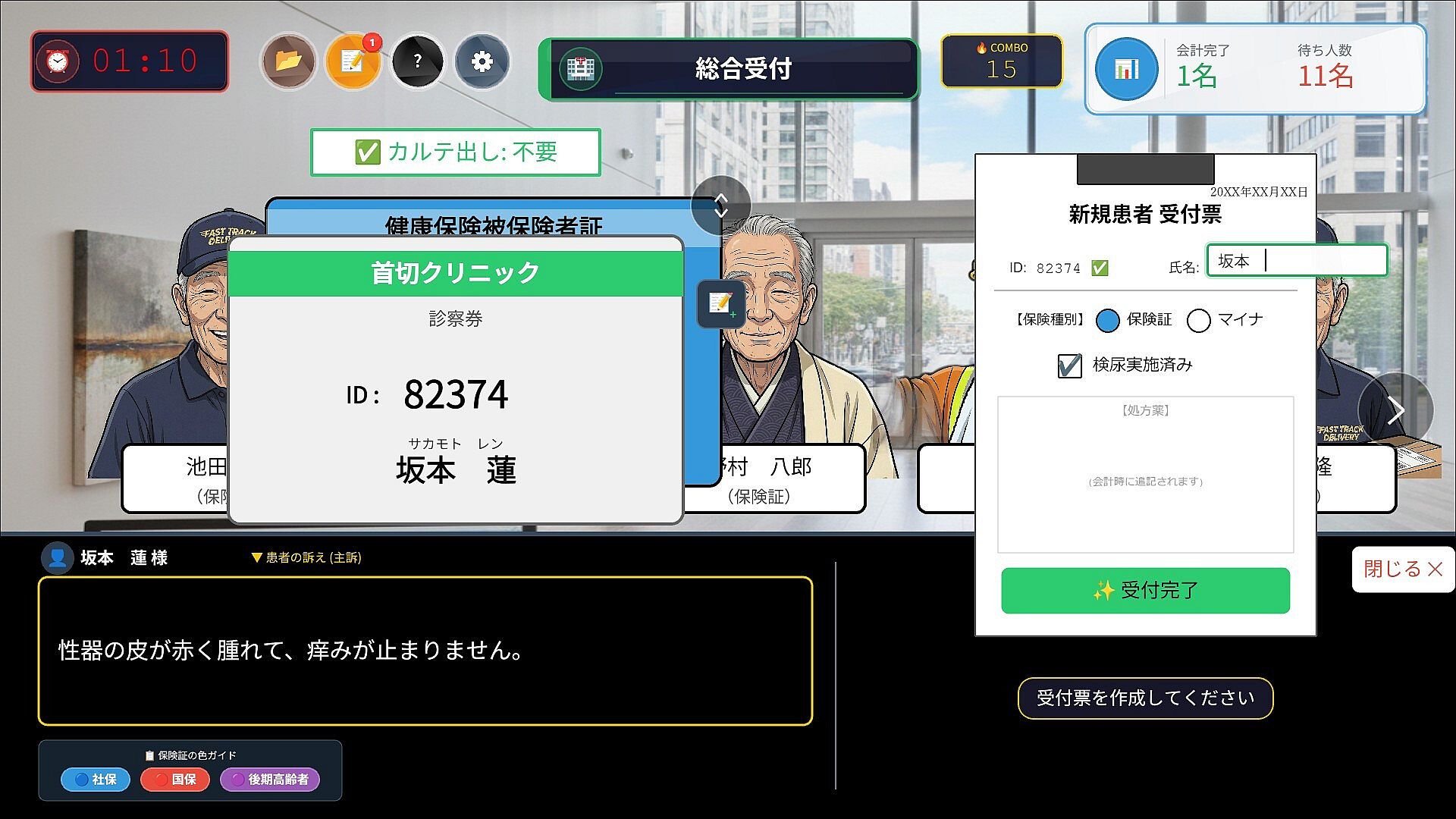
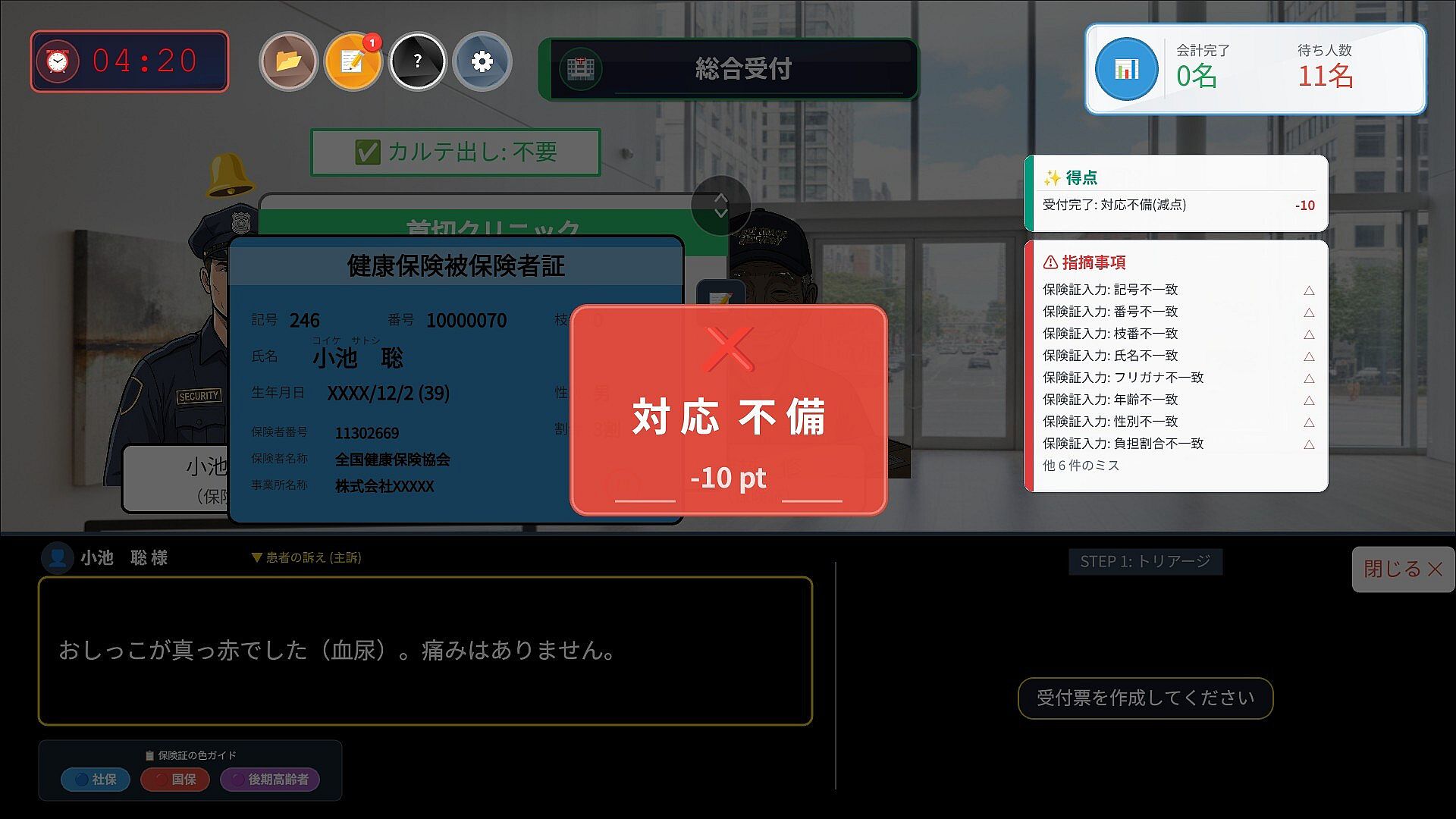
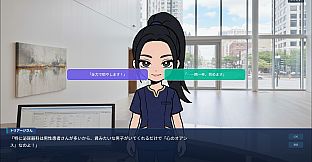
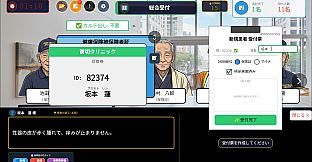
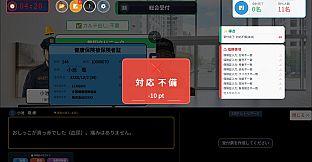
Im Mittelpunkt steht der Arbeitsalltag an der Anmeldung. Patienten strömen ununterbrochen herein, und für jeden muss die Versicherungskarte geprüft werden - ob Angestelltenversicherung, gesetzliche Krankenversicherung, Seniorenversicherung oder Papierbescheinigung. Eine korrekte Anmeldung und Abrechnung steigert die Zufriedenheit und senkt das Risiko einer Kündigung. Verzögerungen oder Fehler erhöhen dagegen die Gefahr, den Job zu verlieren, und sorgen so für ständigen Zeitdruck bei hohem Patientenaufkommen.
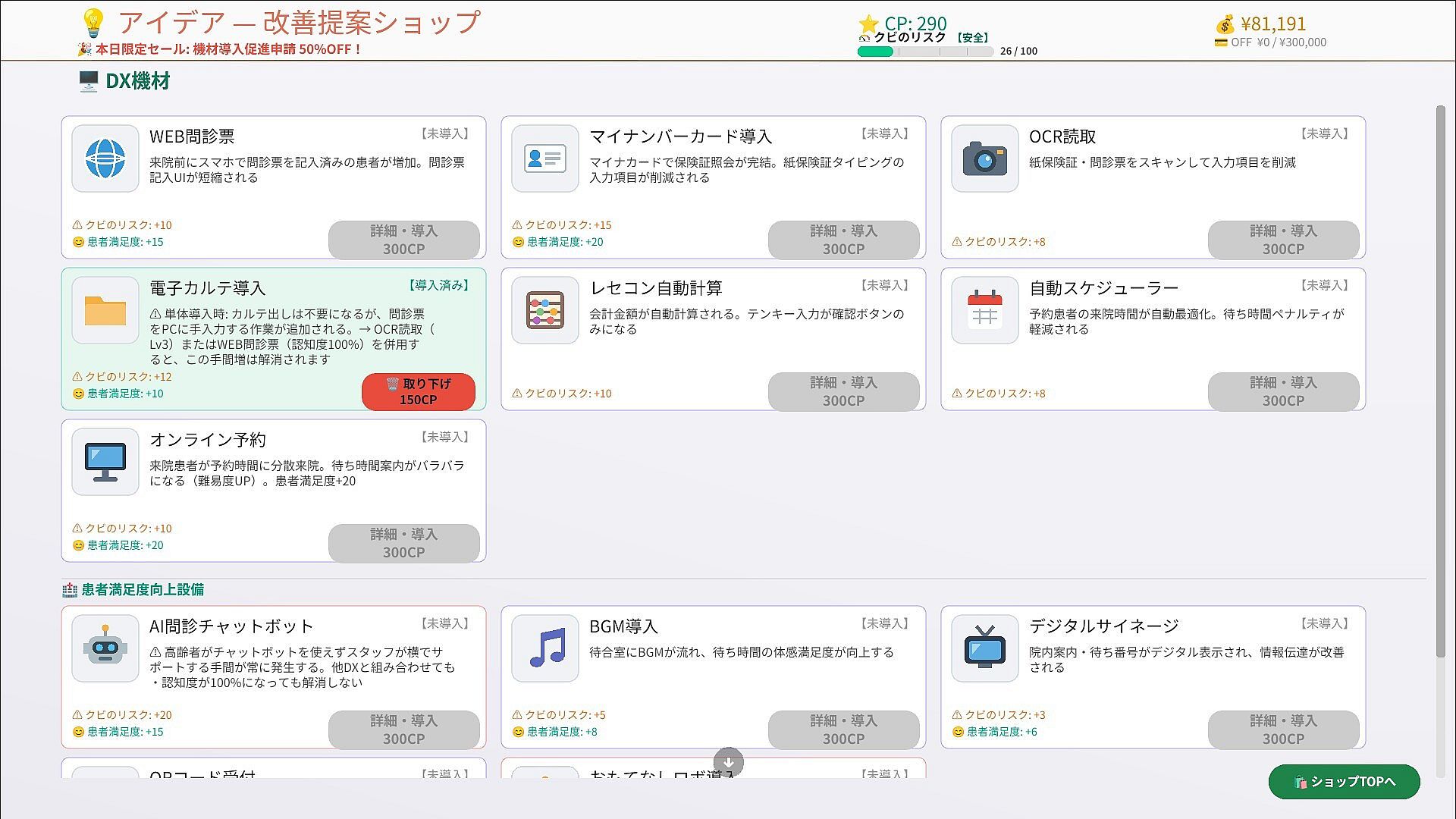
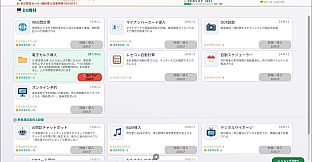
Die durch die Rezeptionstätigkeit erworbenen Contribution Points und das Gehalt lassen sich im eigenen Shop in Verbesserungen umsetzen: zusätzliche Wartezimmerstühle, ein Ticket-Automat oder barrierefreie Zugänge sind nur einige Beispiele. Auch digitale Geräte können angeschafft werden, funktionieren jedoch nicht immer wie erwartet. Weitere Investitionen fließen in Werbemaßnahmen wie Flyer, Social-Media-Kampagnen oder TV-Spots, um das Ansehen des Krankenhauses zu steigern. Bestimmte Titel, die man auf diese Weise erhält, erleichtern den Arbeitsalltag und verbessern die Überlebenschancen.
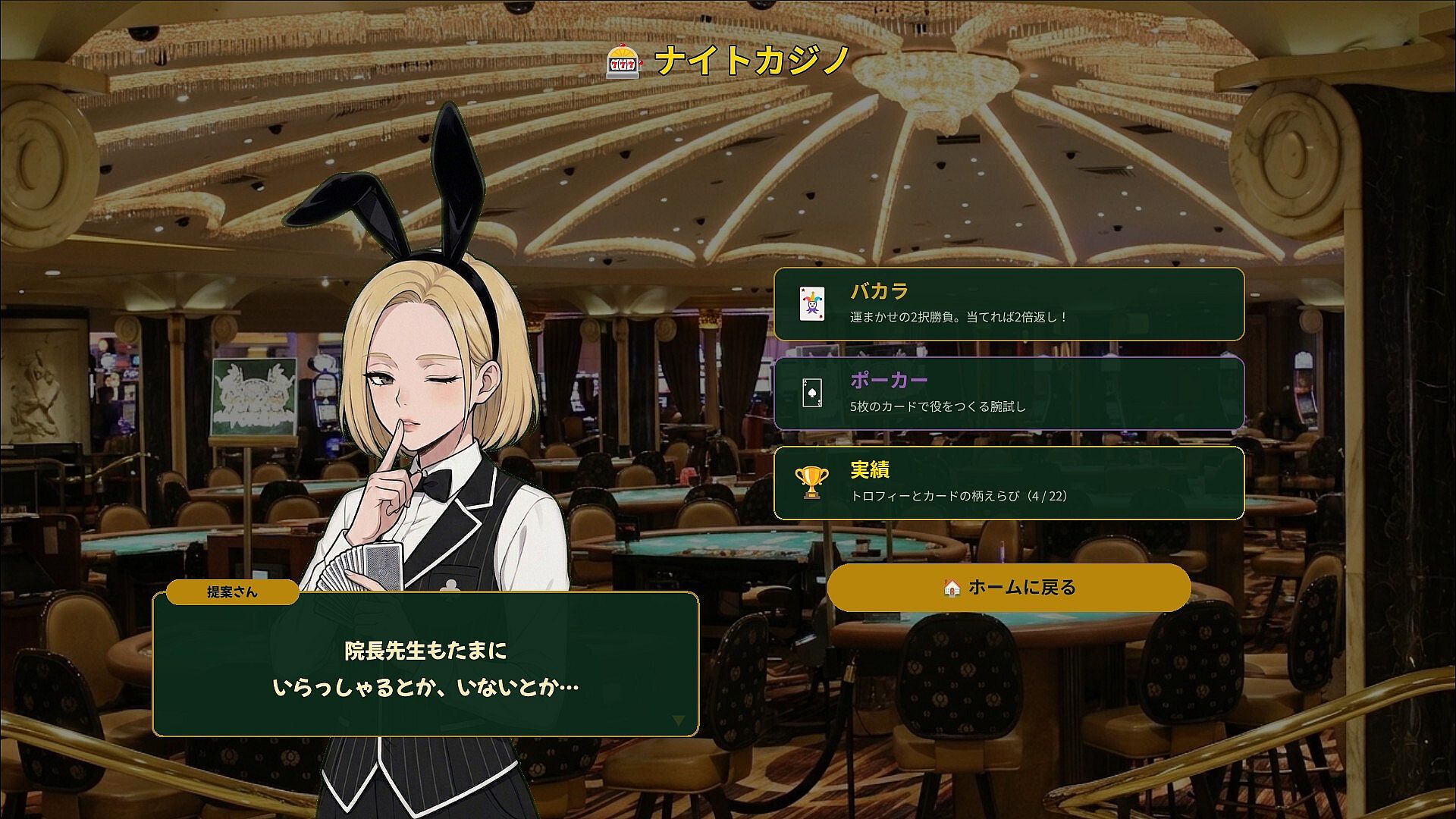
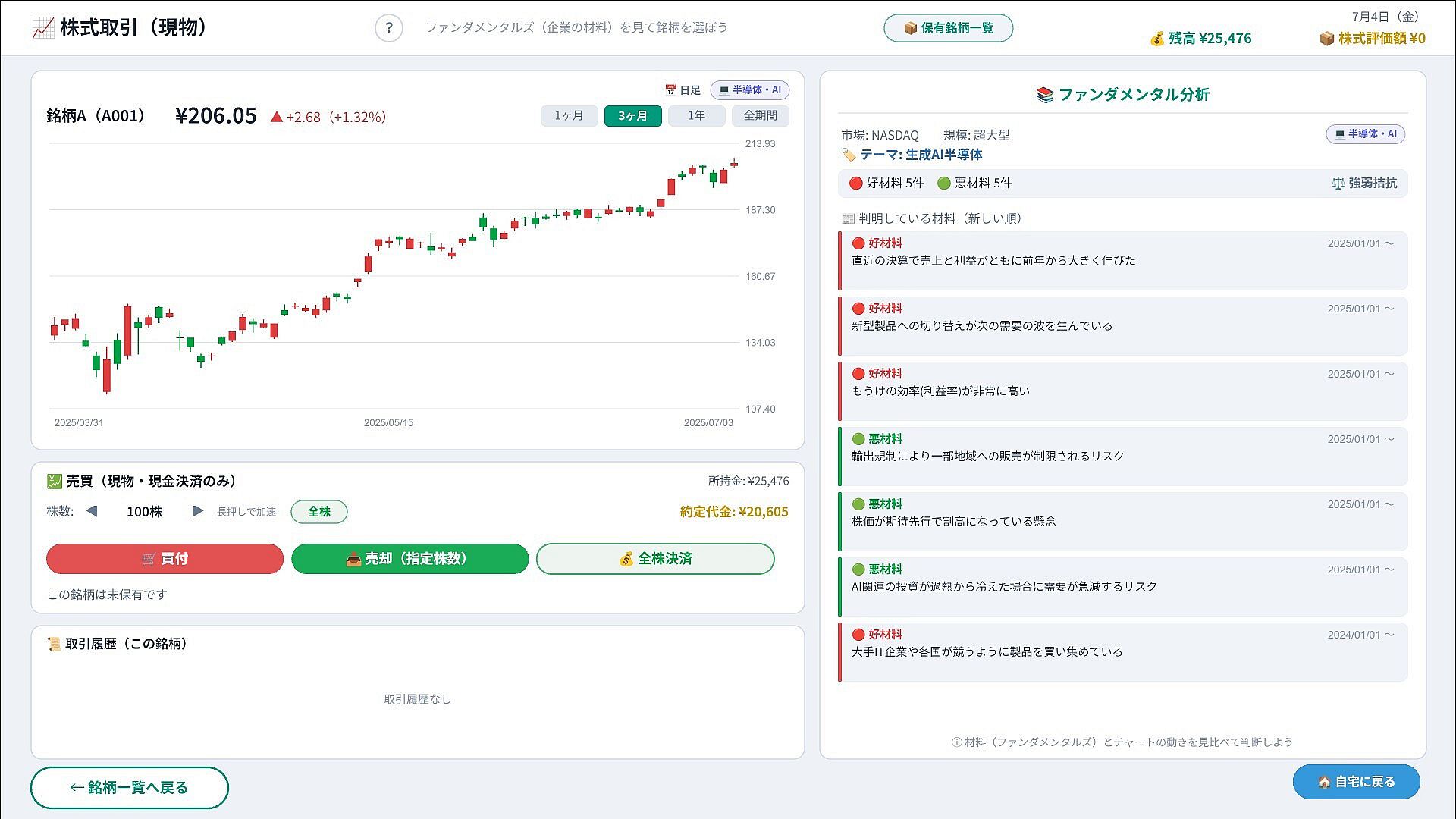
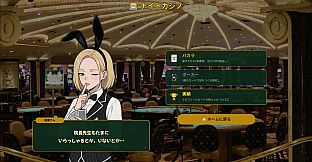
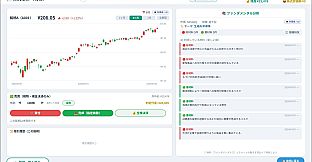
In den Pausen zwischen den Schichten geht es darum, das eigene Vermögen zu mehren. Beim Aktienhandel analysiert man Unternehmensberichte und Nachrichten, um gezielt zu kaufen und zu verkaufen. Devisenhandel erfordert die Beobachtung von Wechselkursen in Echtzeit. Im Casino bieten Spiele wie Baccarat oder Dealer-versus-Player-Poker risikoreiche Möglichkeiten. Gewinne können den Fortschritt beschleunigen, Verluste hingegen die finanzielle Stabilität gefährden.
Spielmodi
Je nach Leistung über die Schichten hinweg erreicht man eines von mehreren Enden, sofern man den letzten Tag übersteht. Verpasst man auch nur eine Schicht, endet das Spiel sofort. Der Hard Mode stellt nach dem ersten Durchlauf eine deutlich größere Herausforderung dar. Erfolge werden über Achievements festgehalten und laden dazu ein, die Überlebenszeit und Punktzahl weiter zu steigern.
Die hohe Wiederspielbarkeit ergibt sich aus unterschiedlichen Investitionsentscheidungen im Shop und variablen Finanzstrategien. Jeder Durchlauf prüft, wie gut es gelingt, Genauigkeit an der Rezeption mit klugen Geldanlagen zu verbinden - mit jeweils anderen Konsequenzen.
Kernmechaniken und Fortschritt
Die Patientenbearbeitung bildet das Fundament: Geschwindigkeit und Präzision entscheiden direkt über den Fortbestand des Jobs. Der Shop ermöglicht die Anpassung des Arbeitsplatzes und des Krankenhaus-Rufs, wodurch bessere Ausstattung wiederum höhere Patientenzahlen ermöglicht. Das Asset-Management erweitert die Strategie über die eigentliche Arbeit hinaus, indem verdiente Mittel in volatile Märkte oder Glücksspiele investiert werden können. Titel, die durch Contribution Points freigeschaltet werden, bringen dauerhafte Vorteile, sobald sie ausgerüstet sind.
Entscheidungen wirken sich über mehrere Tage aus: frühe Verbesserungen erhöhen die Effizienz späterer Schichten, und finanzielle Multiplikatoren beeinflussen die langfristige Überlebensfähigkeit. Das System legt den Fokus auf sorgfältiges Ressourcenmanagement in Beruf und Privatleben, ohne zusätzliche, themenfremde Elemente einzuführen.
Lohnt sich das Spiel?
Die Simulation richtet sich an Spieler, die gerne Managementaufgaben mit Risikoabwägung in einem Singleplayer-Setting kombinieren. Die Mischung aus Rezeptionsarbeit, Einrichtungs-Upgrades und Finanzgeschäften ergibt ein fokussiertes Erlebnis, bei dem Überleben von konstanter Leistung und klugen Entscheidungen abhängt. Wer Casual-Indie-Titel mit klaren Zielen und mehreren möglichen Ausgängen schätzt, findet hier sowohl kurze als auch längere Sessions. Hard Mode und Achievement-Jagd erhöhen den Reiz für Completionists. Das Spiel eignet sich für alle, die mit zeitkritischen Entscheidungen und variablen finanziellen Ergebnissen umgehen können - weniger jedoch für reine Entspannung oder kampflastige Genres.












