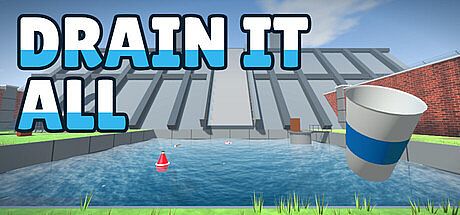




Drain It All is an indie casual simulation game for PC that puts players in charge of draining a massive dam one cup at a time. The core premise involves starting with basic tools and scaling up operations to extract and sell water while uncovering what lies at the bottom of the reservoir. This first-person incremental experience emphasizes steady progression through manual labor that gradually gives way to automated systems.
Gameplay
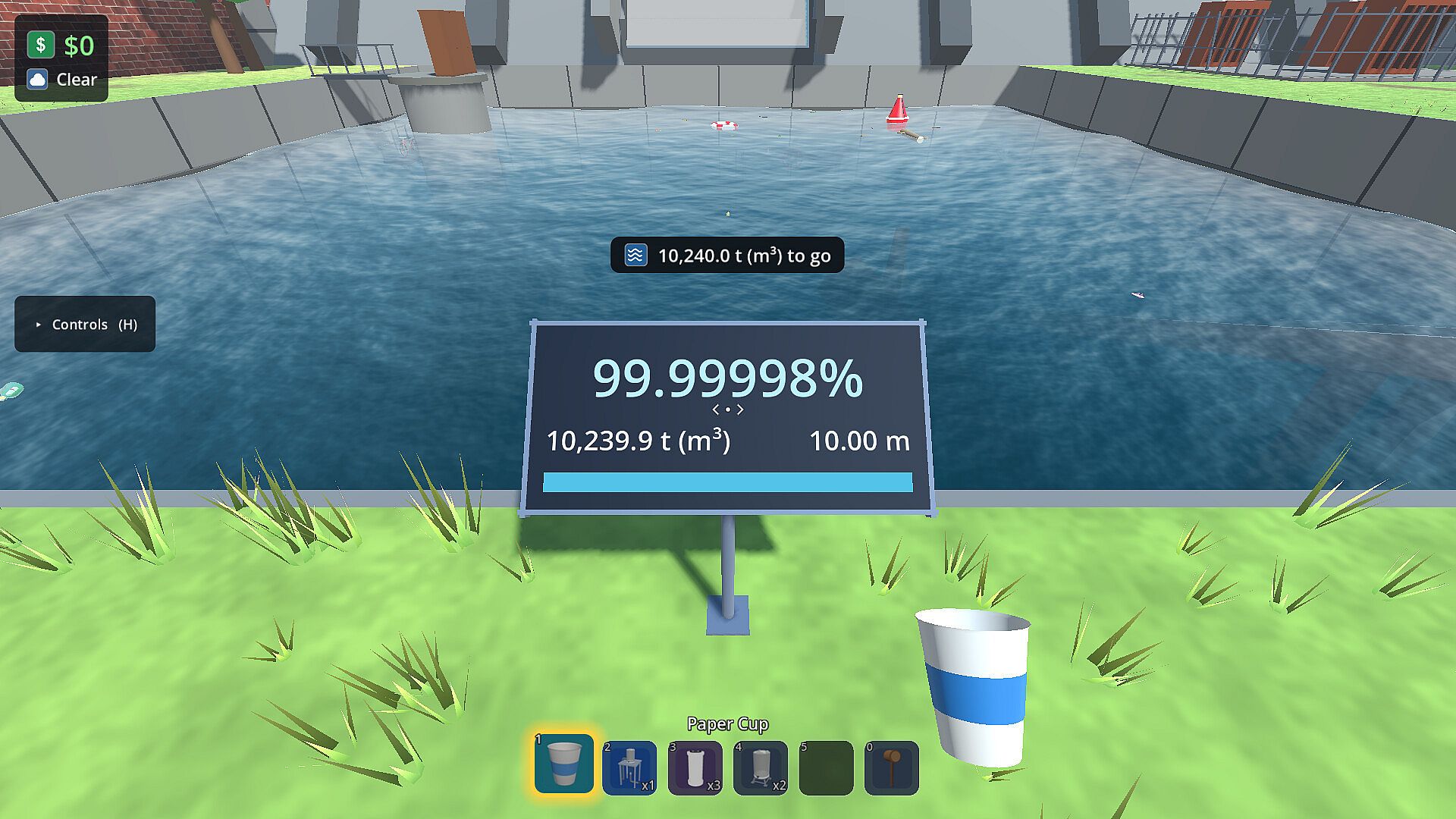
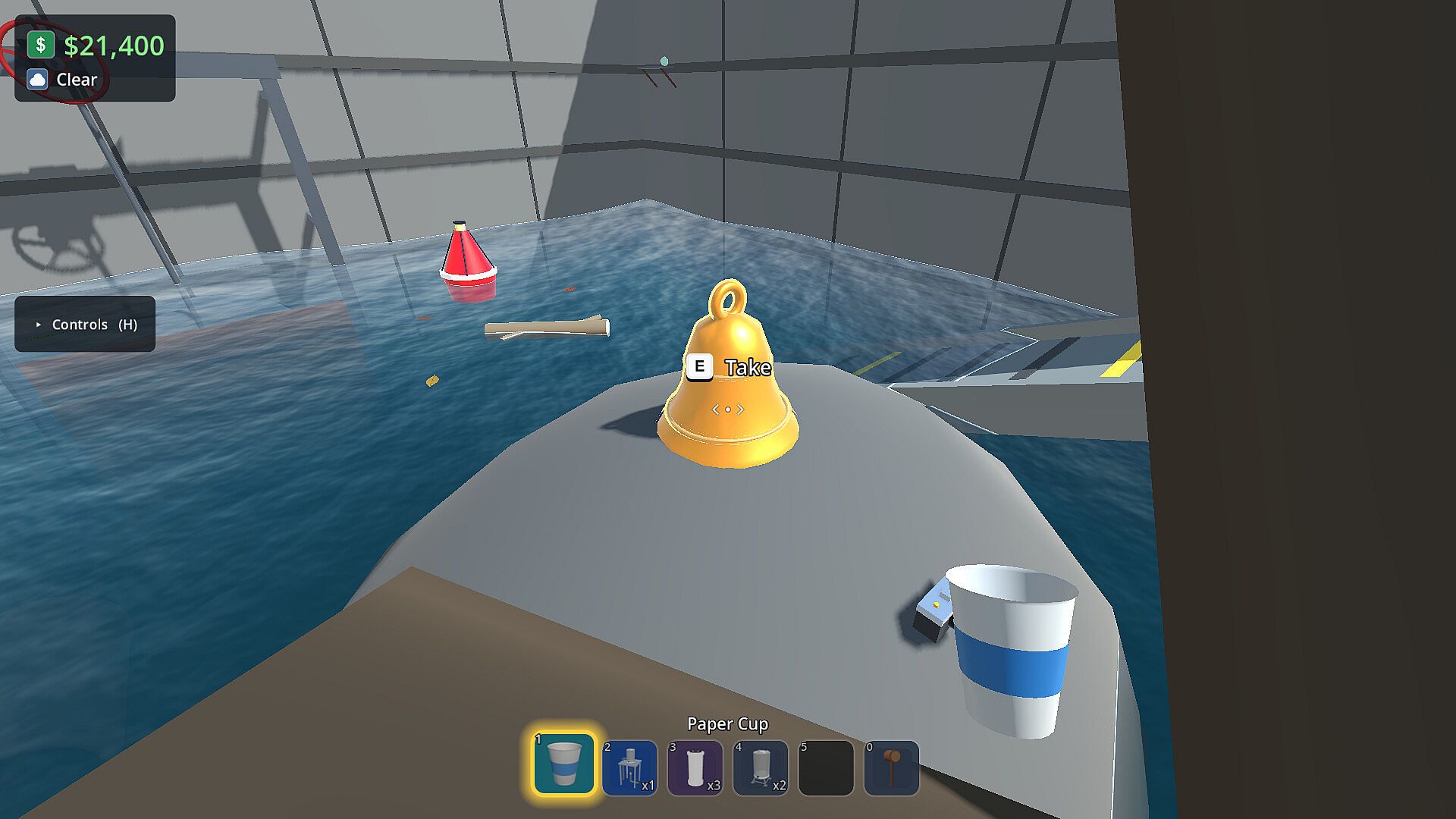
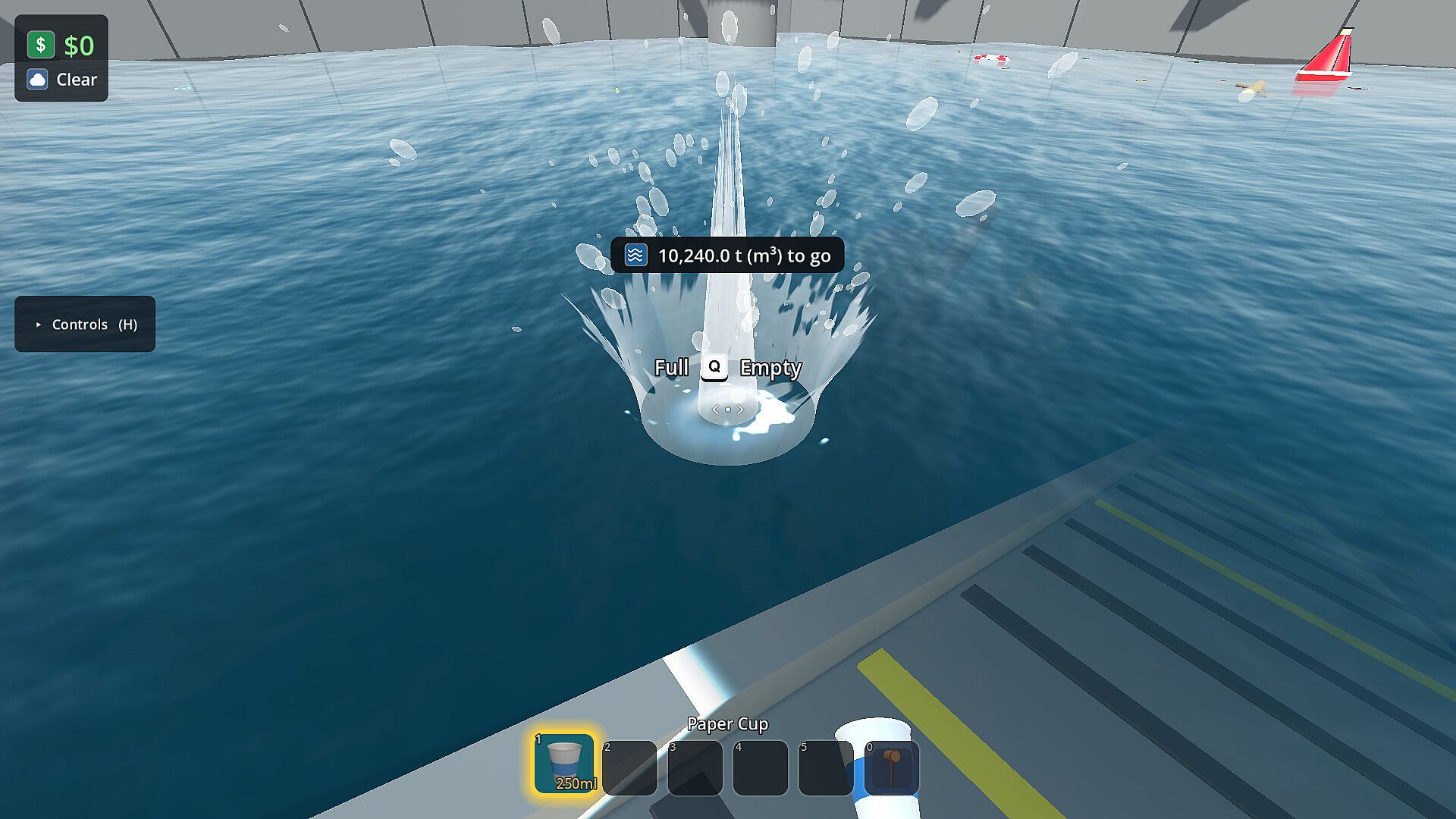
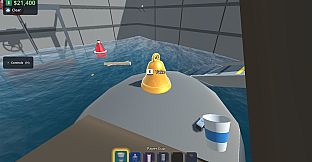
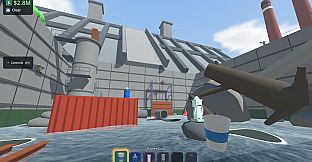
The gameplay centers on a straightforward yet expanding loop of collection, transport, and sales. Players begin by walking to the water's edge with a paper cup, scooping small amounts, returning to sell each unit for a cent, and repeating the process. The dam contains a fixed volume of water measured in tons, which translates into millions of individual cups available for sale. Early stages focus on physical effort, with upgrades addressing fatigue and efficiency such as switching from cups to bottles, jugs, buckets, and eventually a hand pump.
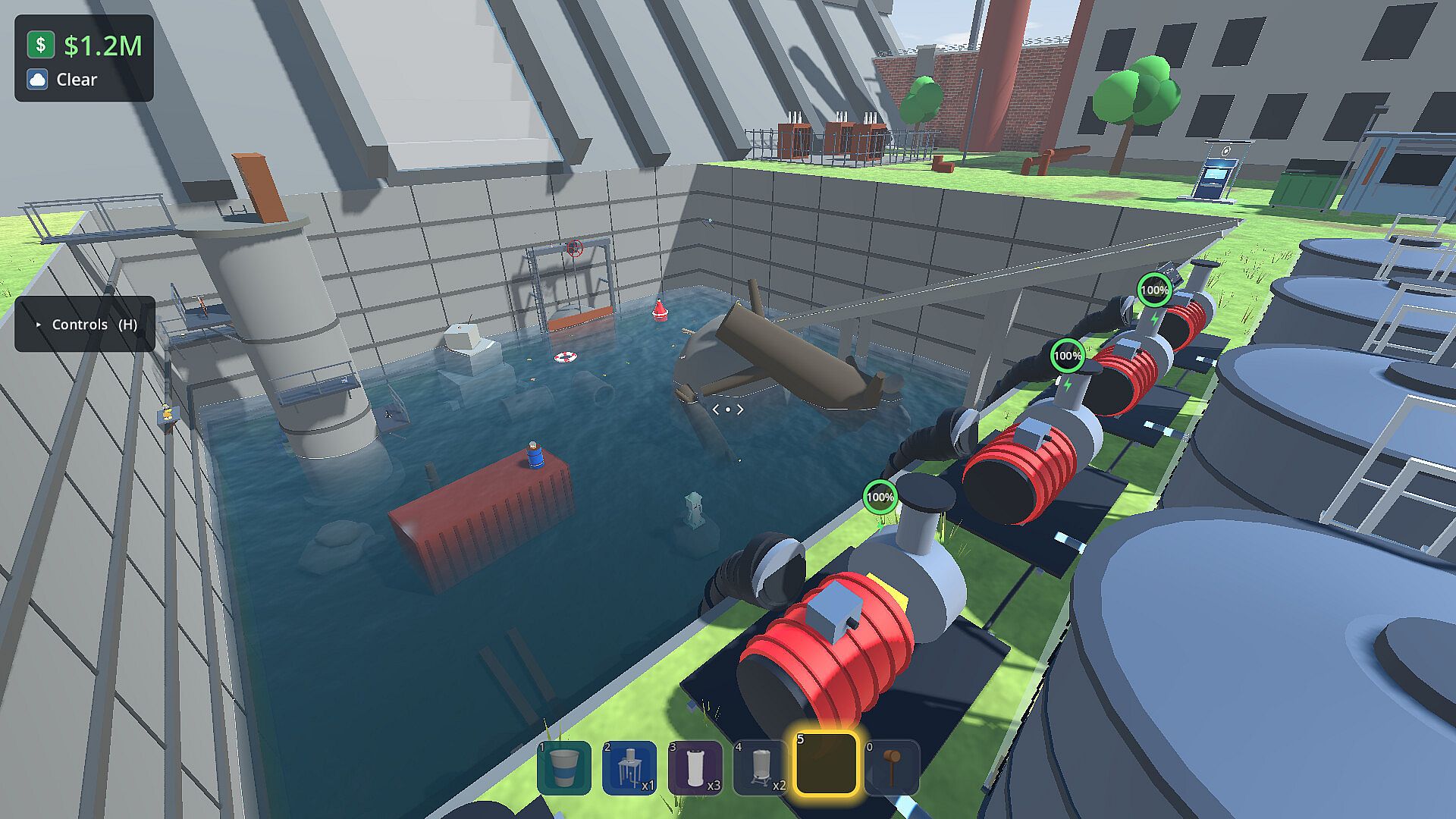
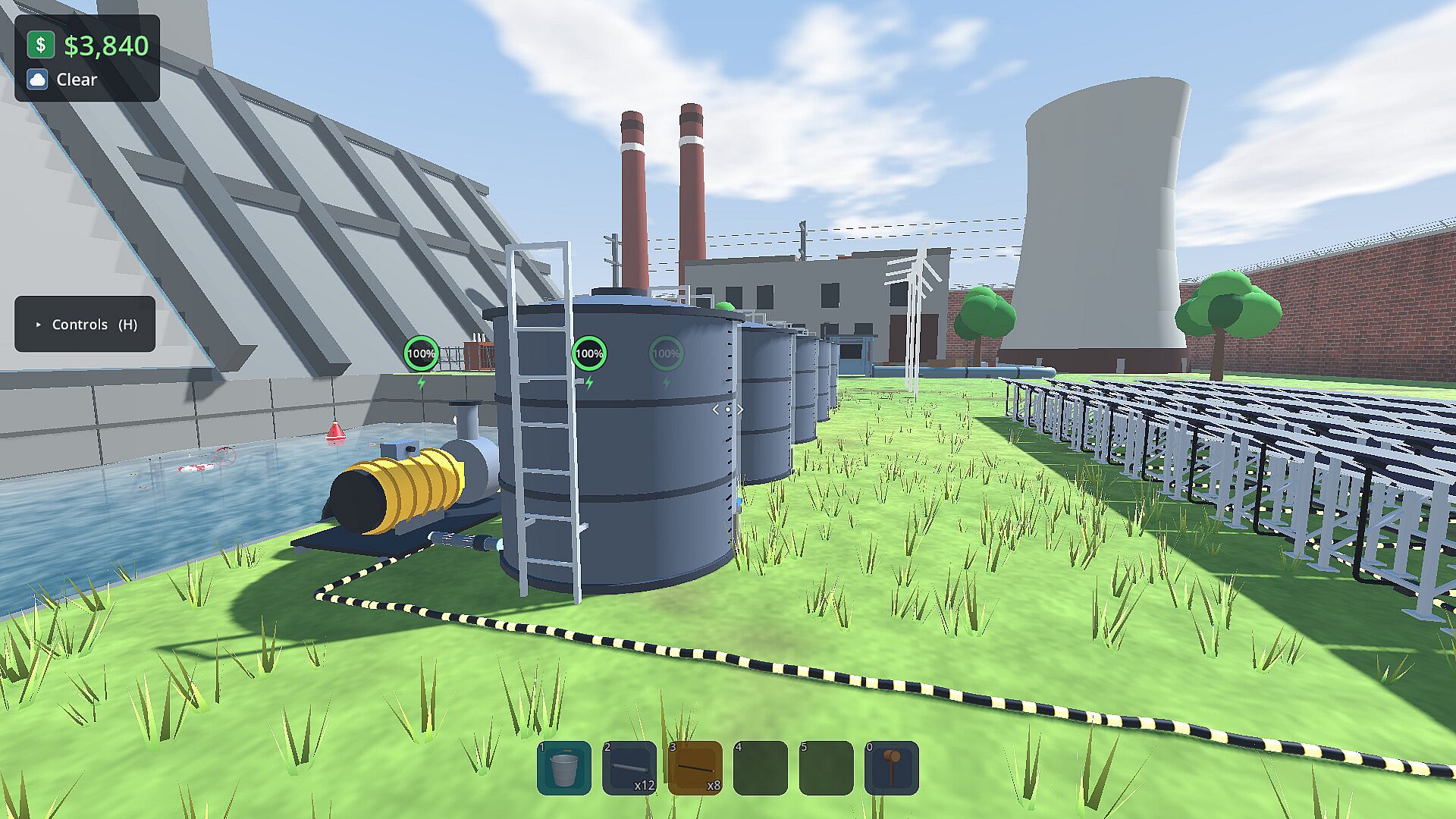
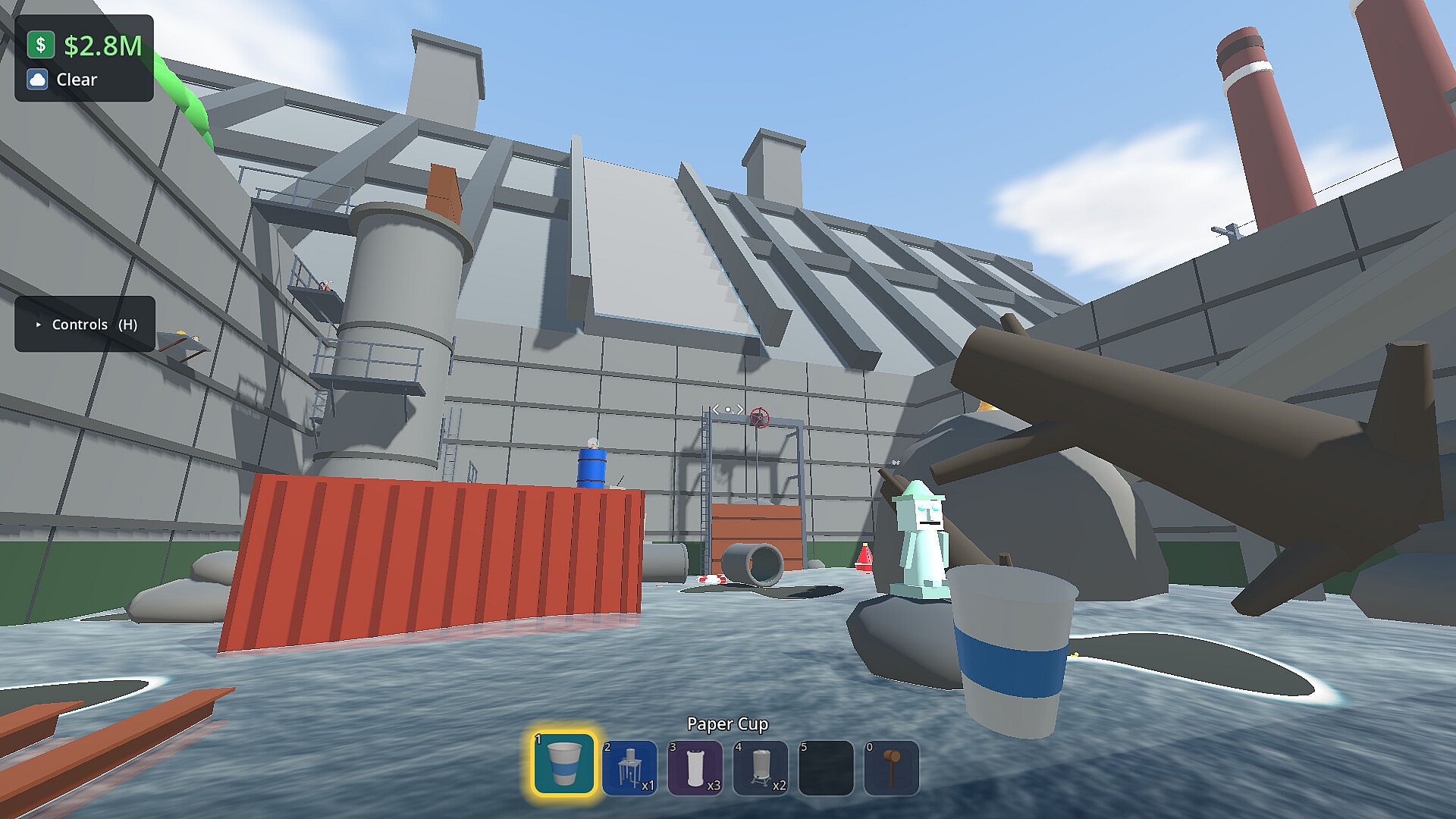
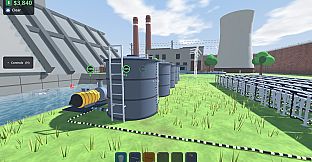
Once basic sales generate enough capital, attention shifts to infrastructure. Players lay pipes, run wiring, and position tanks to support larger operations. Pump options range from manual models to high-capacity siphon arrays capable of moving 100 liters per second. Filtration upgrades improve water quality from basic lake water to cleaner grades that command higher prices. Bottling lines introduce automation that routes production directly to a sales kiosk. Power systems keep everything running, though weather events like rain can replenish the dam and affect energy budgets. The first-person perspective keeps players actively involved in placement and management decisions throughout the build process.
Game Modes
Drain It All operates as a single-player incremental simulation without separate named game modes. The entire experience unfolds in one continuous campaign that begins with manual scooping and evolves into a full-scale water processing facility. Progression remains linear in structure, driven by resource accumulation and upgrade purchases rather than branching paths or competitive elements. Players advance at their own pace through repeated cycles of extraction and reinvestment, with no multiplayer components or alternate scenarios confirmed.
Progression Systems
Advancement relies on a clear sequence of equipment and facility improvements. Early purchases focus on portable containers and basic pumps to increase carrying capacity and reduce travel time. Mid-stage development introduces piping networks and power infrastructure that enable continuous operation. Later upgrades center on quality control through advanced filters and automated bottling equipment that multiplies output without constant manual intervention. Environmental factors such as occasional rainfall add a layer of variability that influences both water levels and power management. The goal of revealing the dam's base provides a long-term objective that encourages full completion of the upgrade chain.
Is It Worth Playing?
Drain It All targets players who enjoy incremental games built around resource management and gradual automation. The concept delivers a focused single-player loop that rewards consistent effort with visible facility growth and increased sales efficiency. Because the title remains unreleased with a planned launch in January 2027, no player reviews or completed playthrough data exist yet. Those drawn to casual simulation titles centered on building and optimization may find the described mechanics appealing once it becomes available. The absence of multiplayer or additional modes keeps the experience streamlined for solo sessions focused on the central dam-draining task.