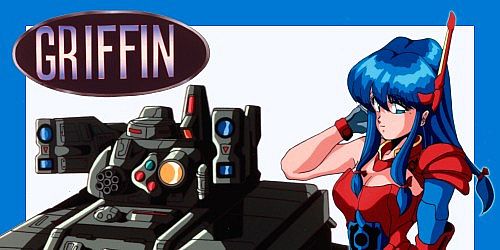



Griffin is an action shooter that places players in control of a powerful battle tank on the Nintendo Switch. This re-release brings a 1991 Game Gear title to modern hardware with a focus on tank combat against enemy forces in a rescue operation.
Gameplay
The core loop centers on guiding the Griffin tank through vertical stages while engaging enemies with a selection of weapons and bombs. Players direct the tank in eight directions, firing the primary weapon forward or angled as needed and deploying secondary or special armaments switched via the pause menu. Bombs provide area damage to clear clusters of threats or tougher targets. Progress involves advancing carefully through preset enemy placements, using positioning to avoid fire while targeting weak points. The tank handles with deliberate weight, rewarding measured movement over rapid dodging in open areas.
Modern additions enhance accessibility without altering the original structure. Rewind and fast-forward options let players correct mistakes or accelerate slower sections. Save states allow resuming from any point, and screen filters adjust the visual style to mimic retro displays or apply black-and-white effects. Cheats such as infinite lives or invulnerability can reduce frustration during repeated attempts. A jukebox plays the five available music tracks independently, and an art gallery displays original manual and packaging images.
Game Modes
The experience consists of a single campaign structured around four stages. After completing the initial sequence, players loop through stages one, two, and four before facing a final challenge. This format extends playtime modestly while testing consistency against familiar layouts and escalating boss encounters. No separate multiplayer modes or alternate campaigns appear in the verified details of the release.
Progression remains linear within each stage, with enemies spawning in fixed positions as the tank advances. Boss fights at stage ends introduce distinct patterns that demand precise weapon selection and bomb timing. The overall structure keeps sessions brief, allowing completion in a short sitting even on a first playthrough.
Visuals and Presentation
Graphics retain the chunky pixel art of the original Game Gear release, scaled for the Switch screen with optional filters that soften or stylize the output. The tank and enemy sprites stand out clearly against varied stage backgrounds, though the limited color palette reflects the hardware constraints of the era. Sound design features the five looping tracks accessible at any time, providing a consistent retro audio backdrop without additional voice or effects layers.
Interface elements focus on straightforward navigation through the new menu system. Players access options for controls, aspect ratios, and frame skipping directly from the title screen, supporting both handheld and docked play without requiring external adjustments.
Is It Worth Playing?
Griffin suits players interested in short, straightforward retro tank shooters who value quality-of-life features over extended campaigns. The low price point and quick completion time make it approachable for those exploring obscure 1990s titles or seeking a lightweight action experience on the Switch. Reviews note the simplicity of the core combat and the benefit of rewind and cheat functions in smoothing out difficulty spikes, though some find the brevity and repetition limit long-term appeal.
Those seeking deeper progression systems or varied modes may find the package limited, while fans of top-down shooters appreciate the preserved mechanics and the ability to experiment with weapon loadouts across the looped stages. The release stands as a preserved curiosity rather than a polished modern title, best approached with expectations aligned to its origins.