


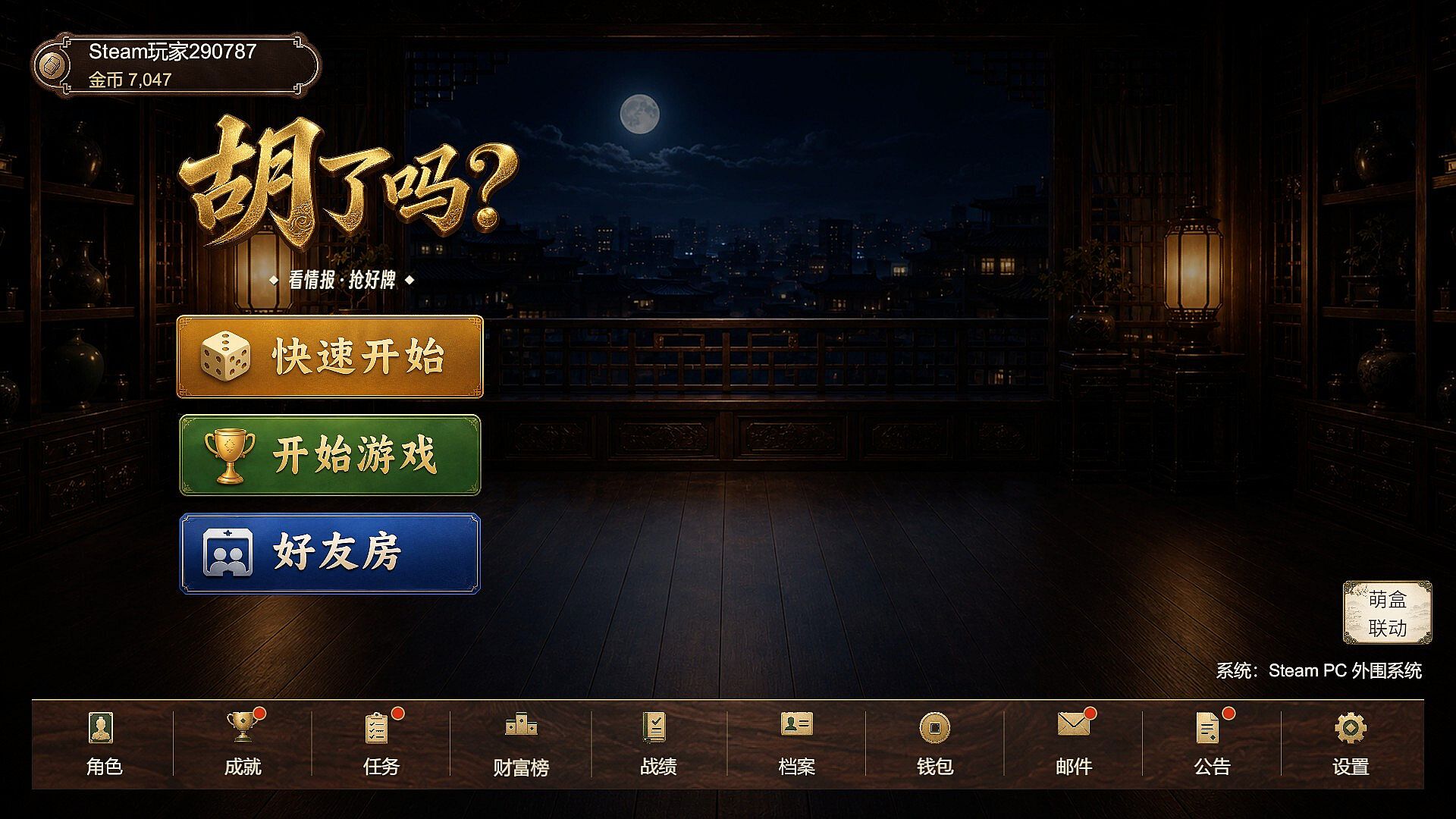

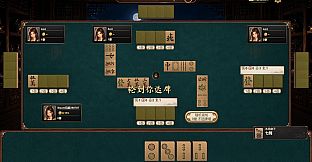
胡了吗? is a four-player bidding mahjong strategy game available on PC. Players select characters with unique abilities, read private clues about tile piles, and bid to claim tiles that fit their developing hands in this indie title focused on decision-making and hand construction.
Gameplay
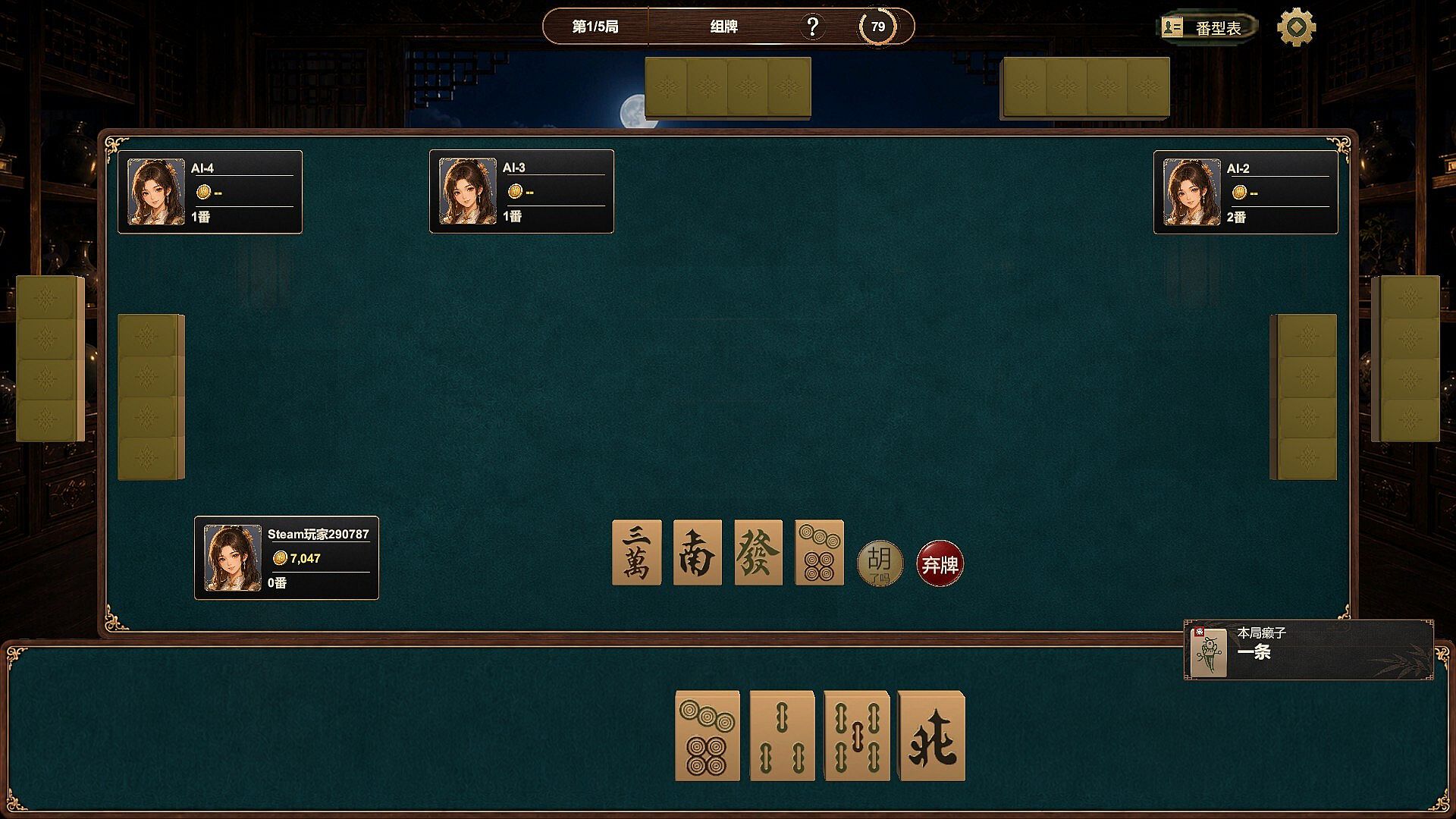
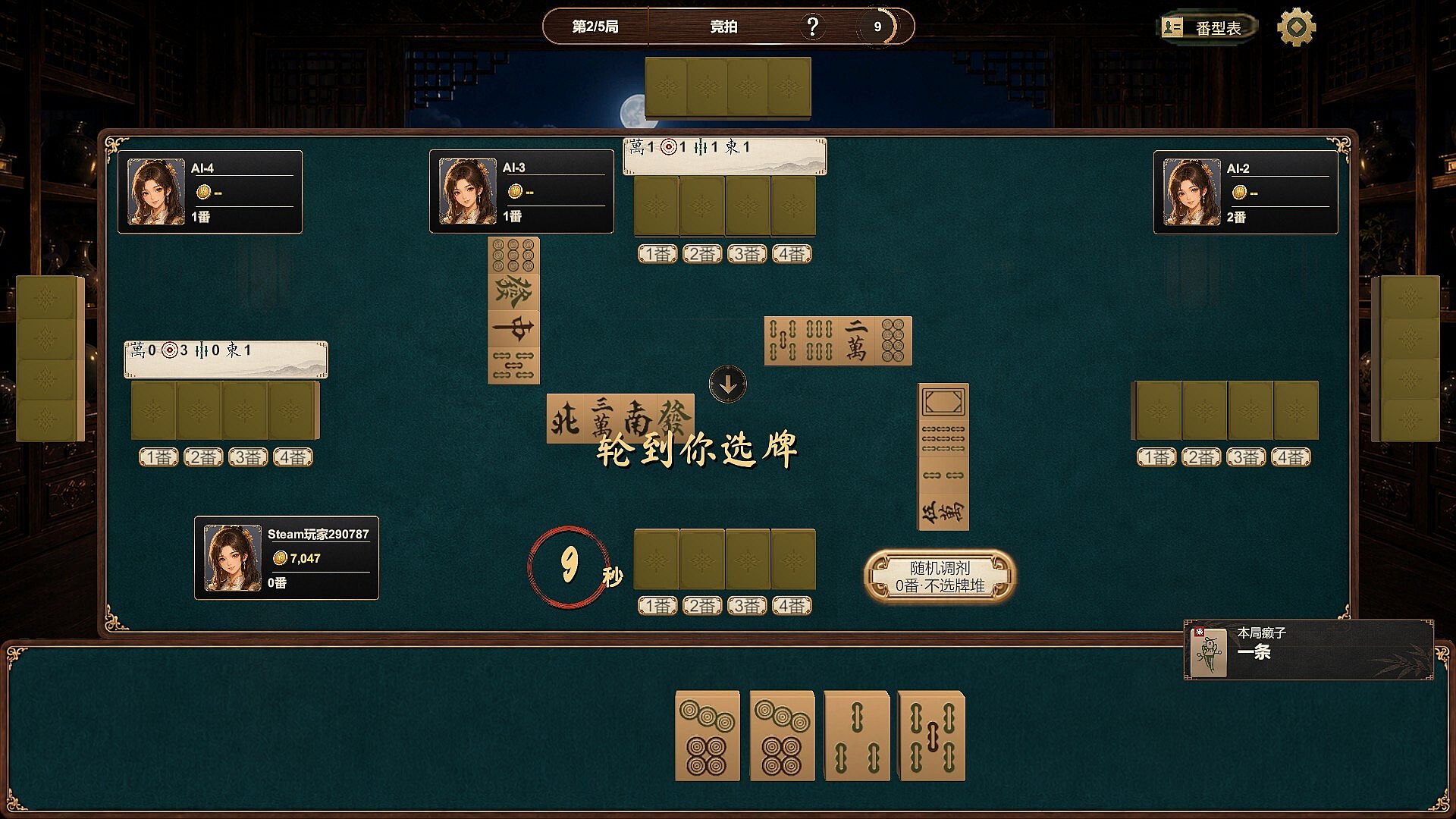
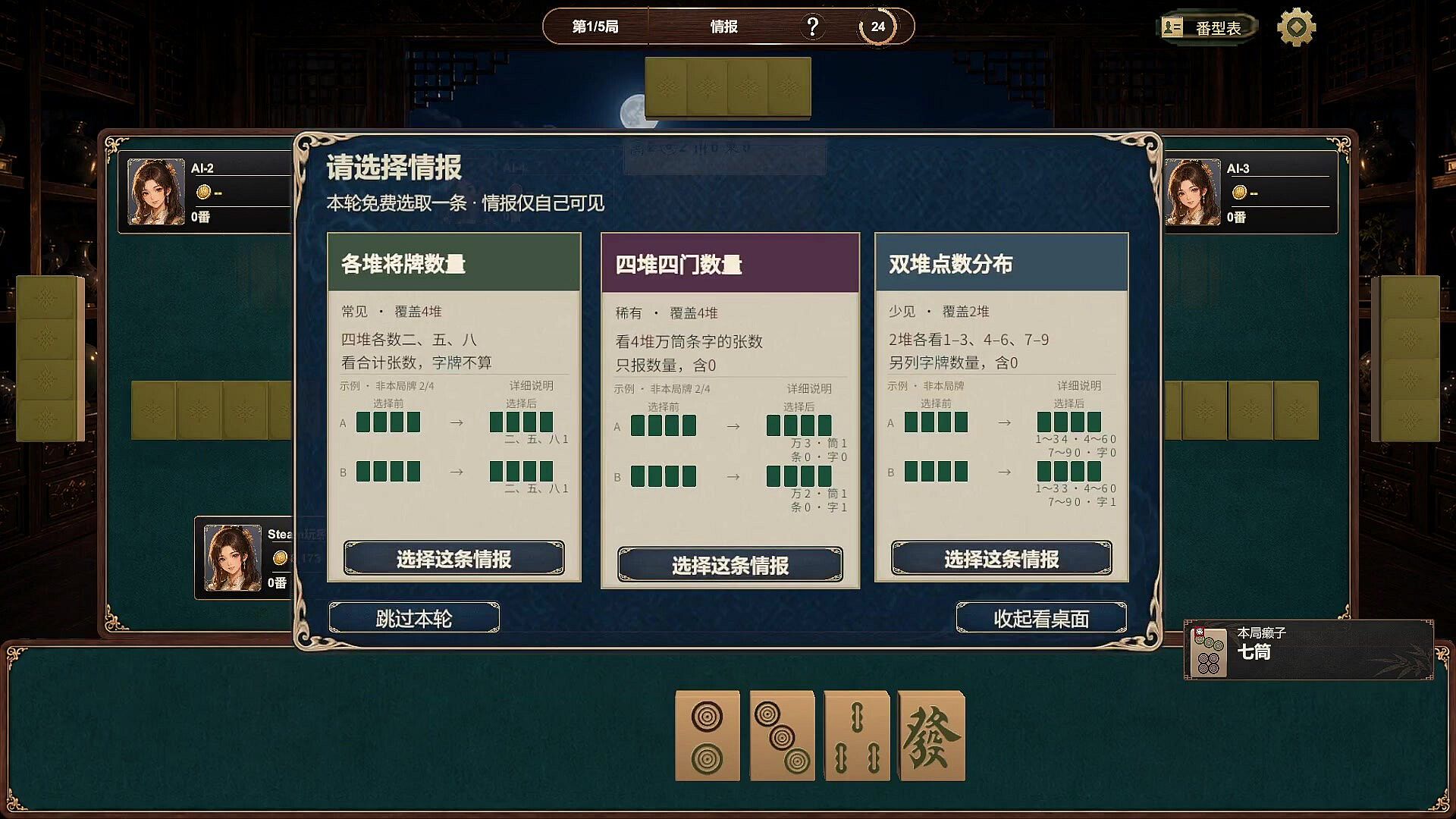
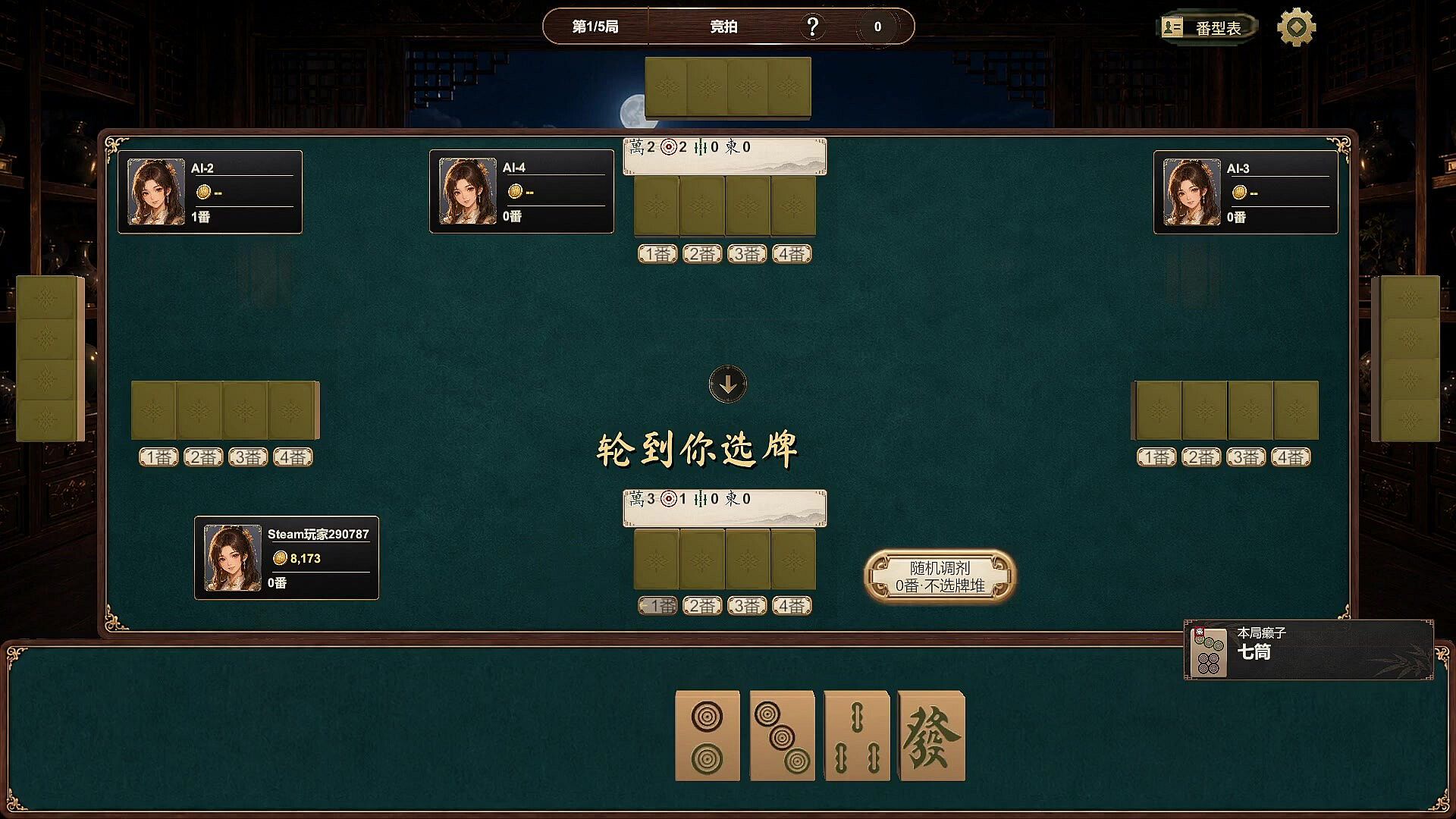
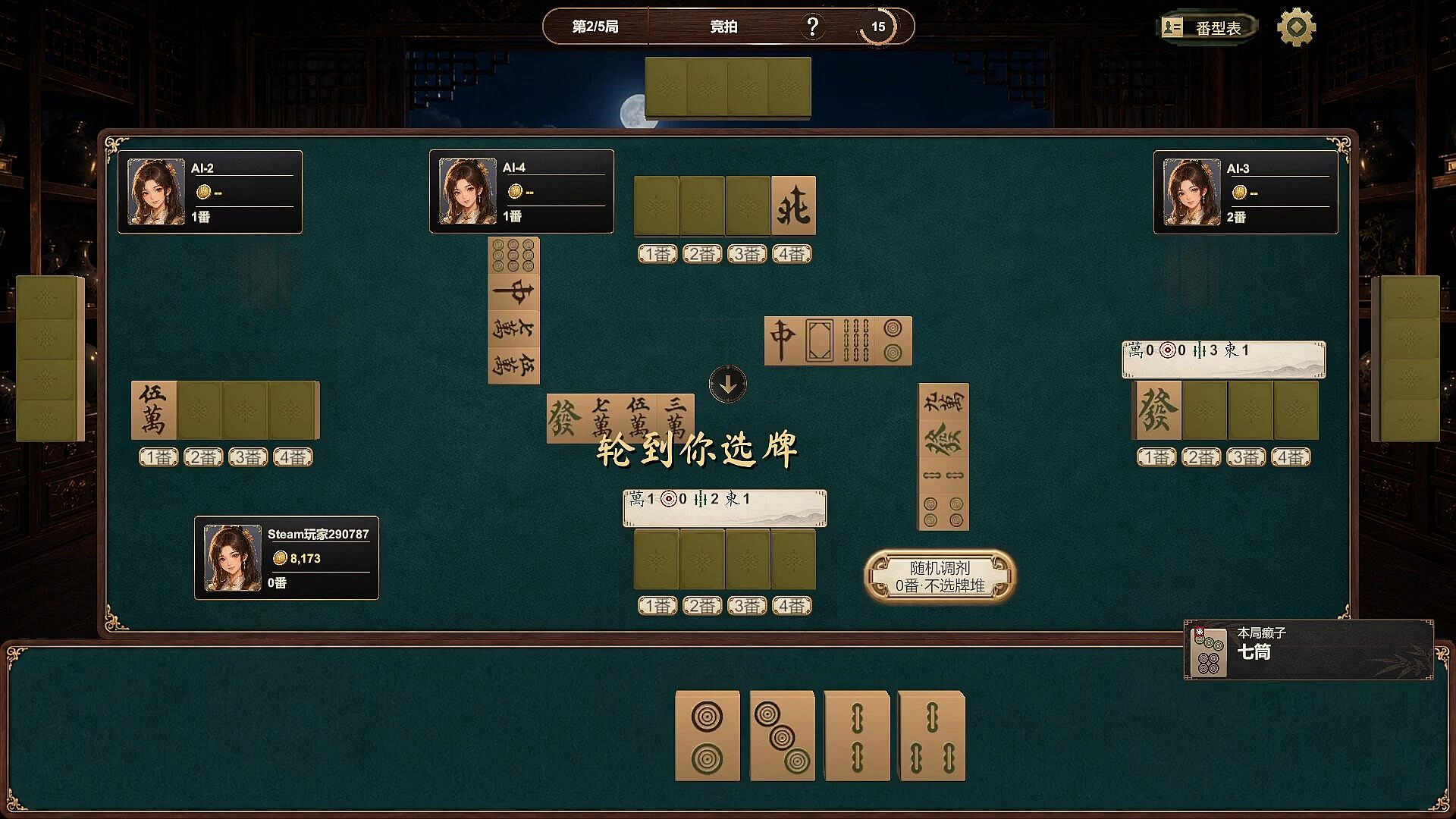
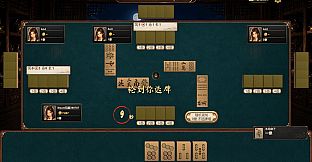
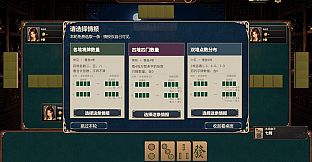
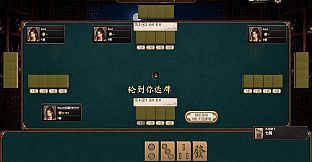
Each round begins with four tile piles and three private clues per player. Clues disclose information such as tile counts, suits, or specific tiles. On a turn, a player bids between one and four on a pile or opts for random allocation. Bids must exceed the current highest offer, and a bid of four immediately secures the pile. Selecting a clue and placing a bid consume no coins.
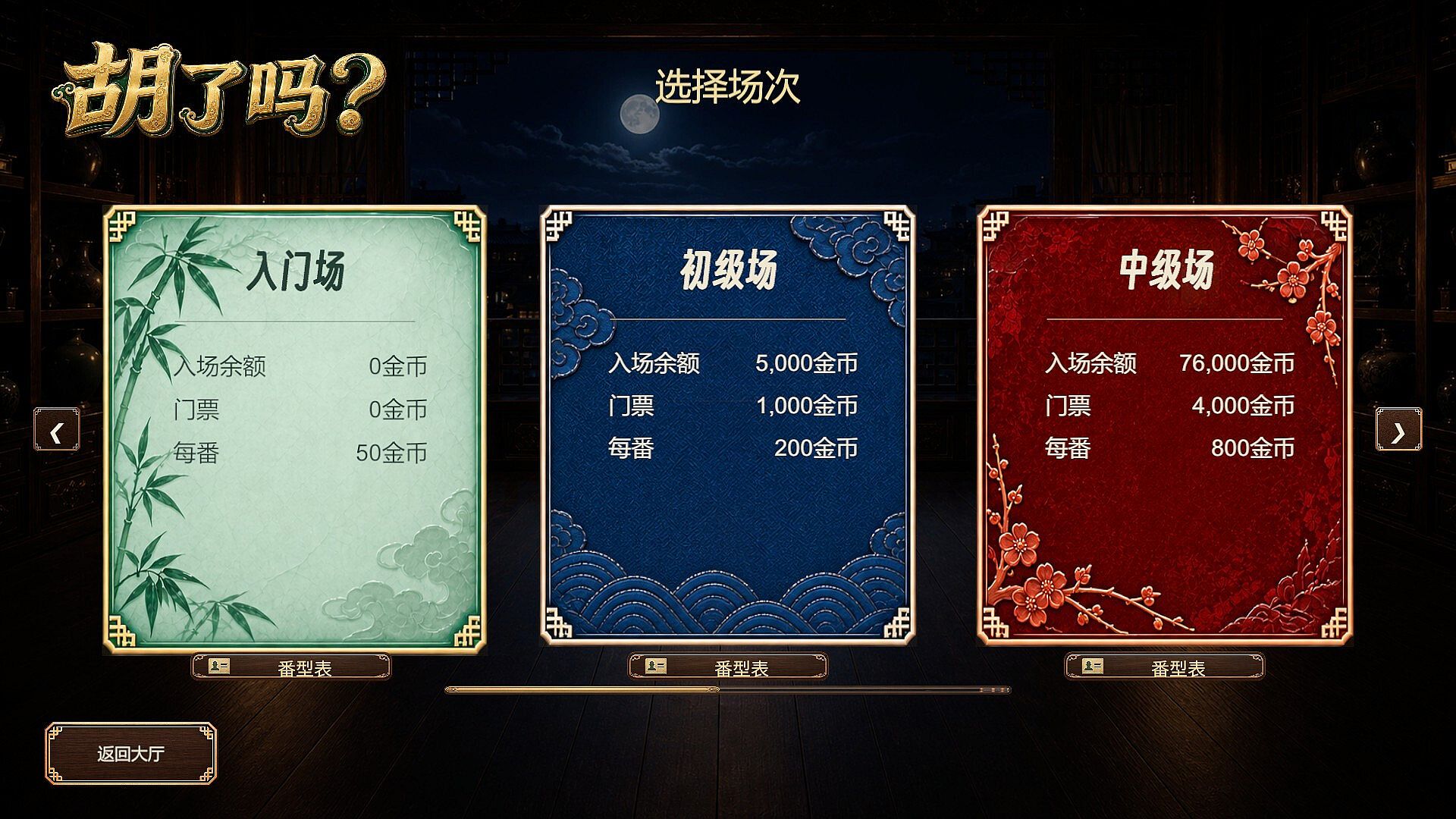
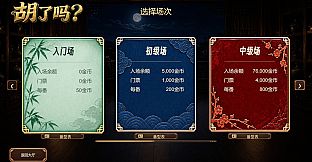
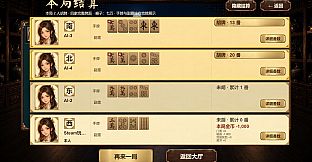
After acquiring tiles, players arrange their hands and choose combinations to retain. Standard actions like Chow, Pung, and Kong apply as opportunities arise. Entry, Junior, and Intermediate tables set different starting hand sizes. Characters grant varied clue insights and hand-building strengths. A tutorial sequence covers clue interpretation, bidding, tile claiming, hand arrangement, and declaring Hu.
Hand building emphasizes careful selection and timing. Players weigh the value of each pile against their current tiles and character strengths. The process repeats across rounds until a player attempts to declare Hu.
Game Modes
Entry and Junior tables include win assistance to guide newer players through valid declarations. Intermediate tables and beyond remove this support. At these levels, players must independently assess tile count, winning patterns, and character requirements before declaring Hu during the hand-arrangement phase.
Online matches allow casual play through server-based matchmaking. Friends can create private rooms using shareable room codes. These rooms operate separately from the main online system and do not track coins, tasks, or match history. A valid Steam license and internet connection are required for all online features. Local and trial profiles remain distinct from server-stored online profiles.
Daily and weekly tasks, a wealth leaderboard, and summaries of the most recent fifty matches provide ongoing structure for regular play. In-game coins stay within the game economy and cannot be exchanged or transferred outside it.
Core Mechanics and Progression
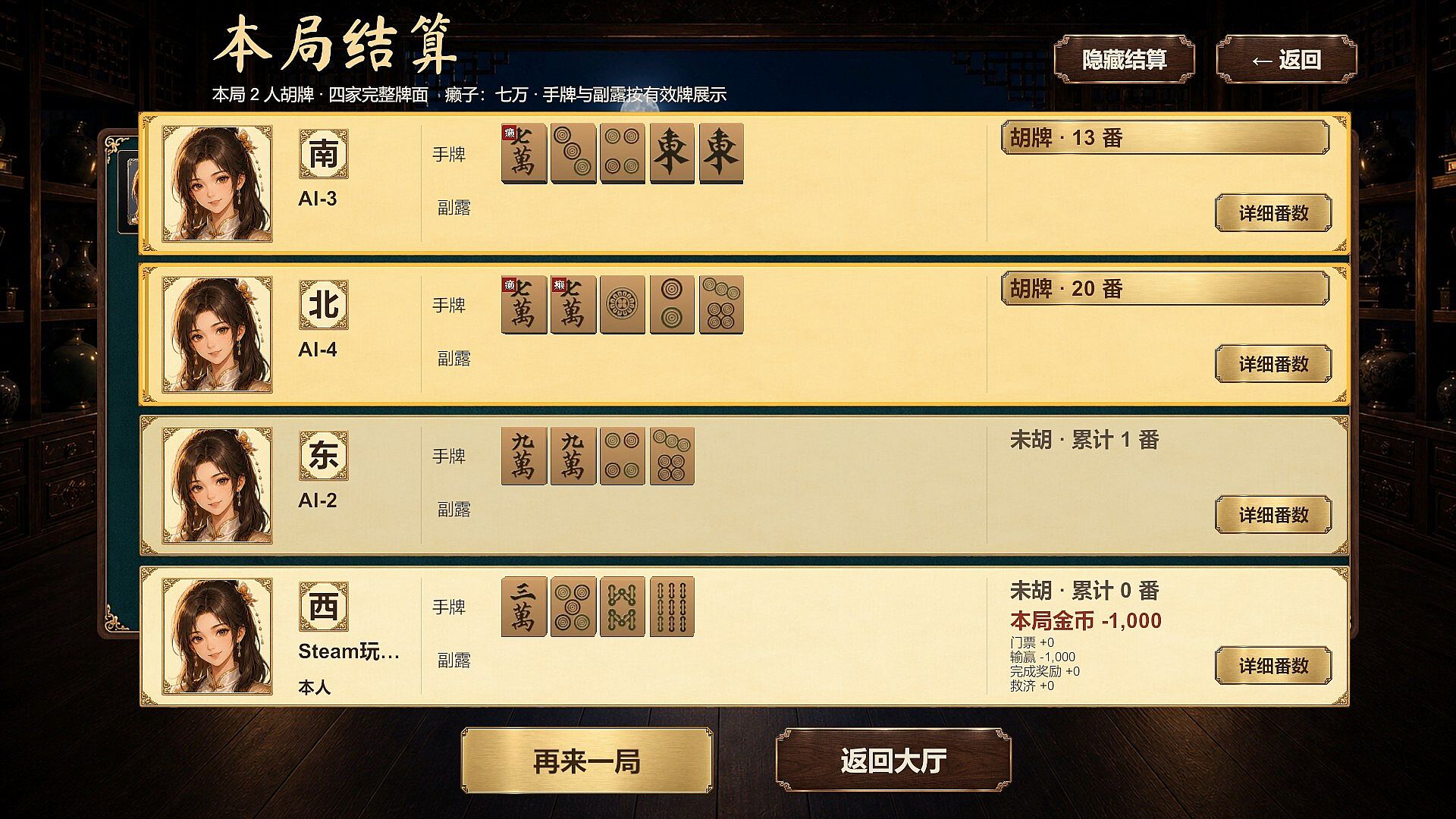
Declaring Hu carries significant risk at higher tables. A declaration with no tiles selected, an incorrect tile count, or an invalid pattern counts as a false Hu. The match ends immediately, and the player pays in-game coins to the other three participants. Players cannot declare Hu in any round that includes a Chow or Pung action.
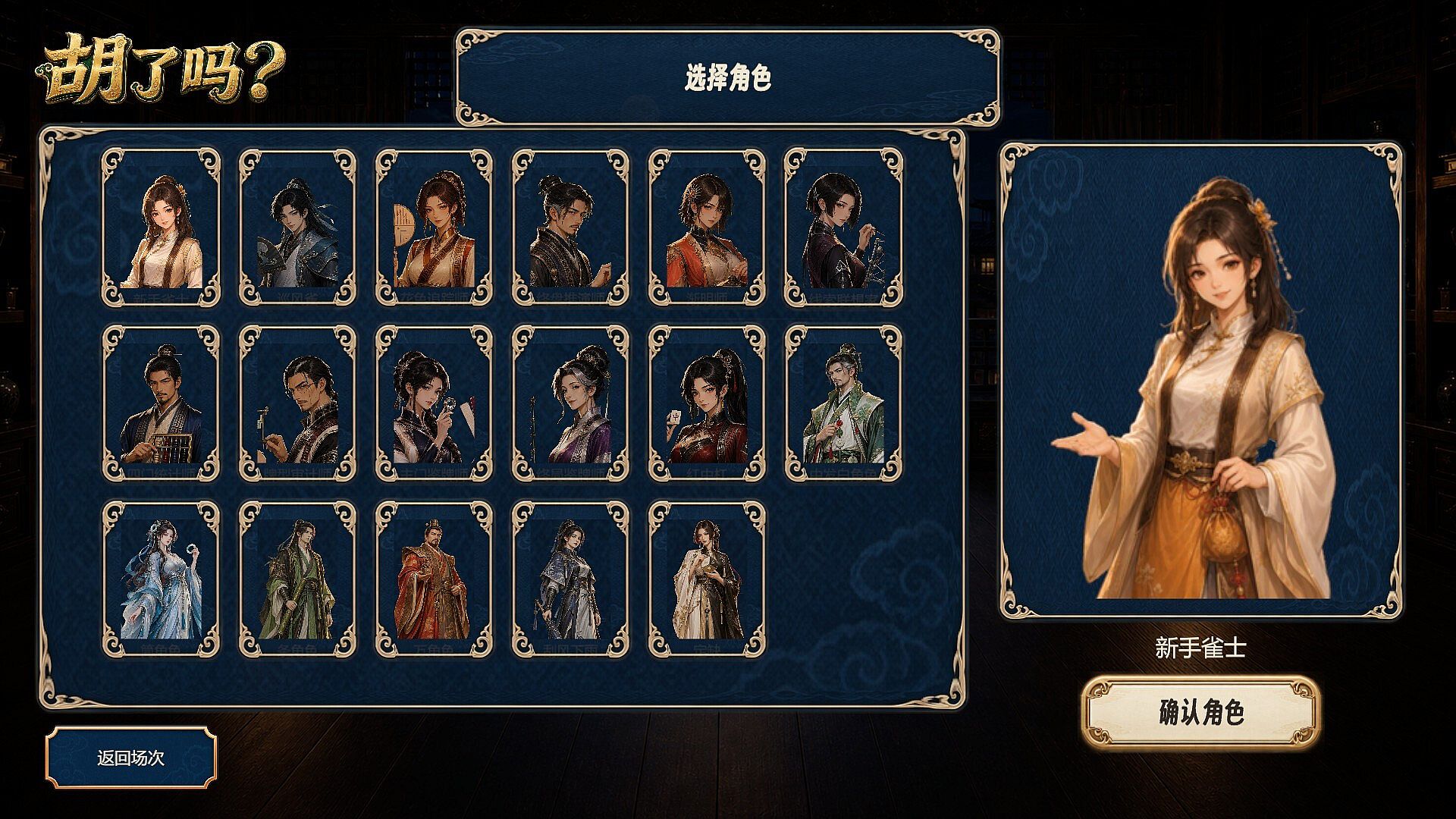
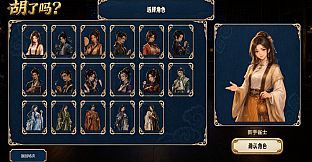
Character selection influences both clue quality and hand-building options. Different characters alter how information is revealed and how tiles combine effectively. This variety encourages repeated play to explore synergies across multiple sessions.
Progression centers on completing tasks and climbing the wealth leaderboard. Match summaries help track performance over time. The system supports both quick online sessions and longer private games with friends.
Is It Worth Playing?
胡了吗? suits players who enjoy strategic bidding, information management, and precise hand evaluation in a four-player mahjong framework. The bidding phase adds tension as participants compete for limited piles while managing limited information from clues. Hand arrangement and the high-stakes Hu declaration create moments of careful calculation, especially once assistance features are removed at Intermediate tables.
The game supports both public online matches and private rooms, making it accessible for solo queue players or groups seeking coordinated sessions. Daily and weekly tasks plus the leaderboard offer reasons to return regularly. Because the title remains in a pre-release state with no user reviews available, potential players should consider whether the core loop of clue reading, bidding, and risk-managed declarations aligns with their preferences for strategy games. Those drawn to mahjong variants that emphasize decision points over pure luck will find the most direct appeal here.