




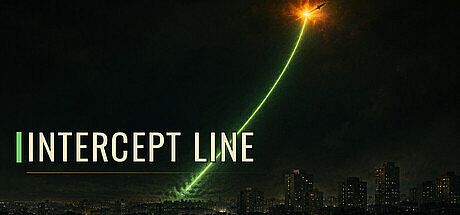


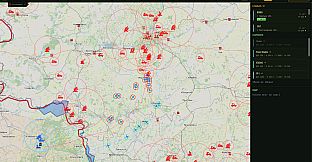
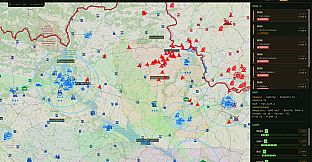
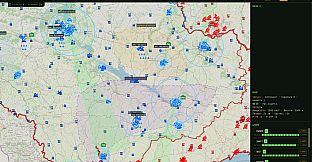
Intercept Line is a strategy simulation game set on a detailed map of Ukraine. Players manage air defense forces against incoming threats while planning counter strikes in a cycle of night defense and daytime offense. The title emphasizes resource scarcity and split-second decisions in a single-player experience focused on real-time command and occasional direct control.
Gameplay
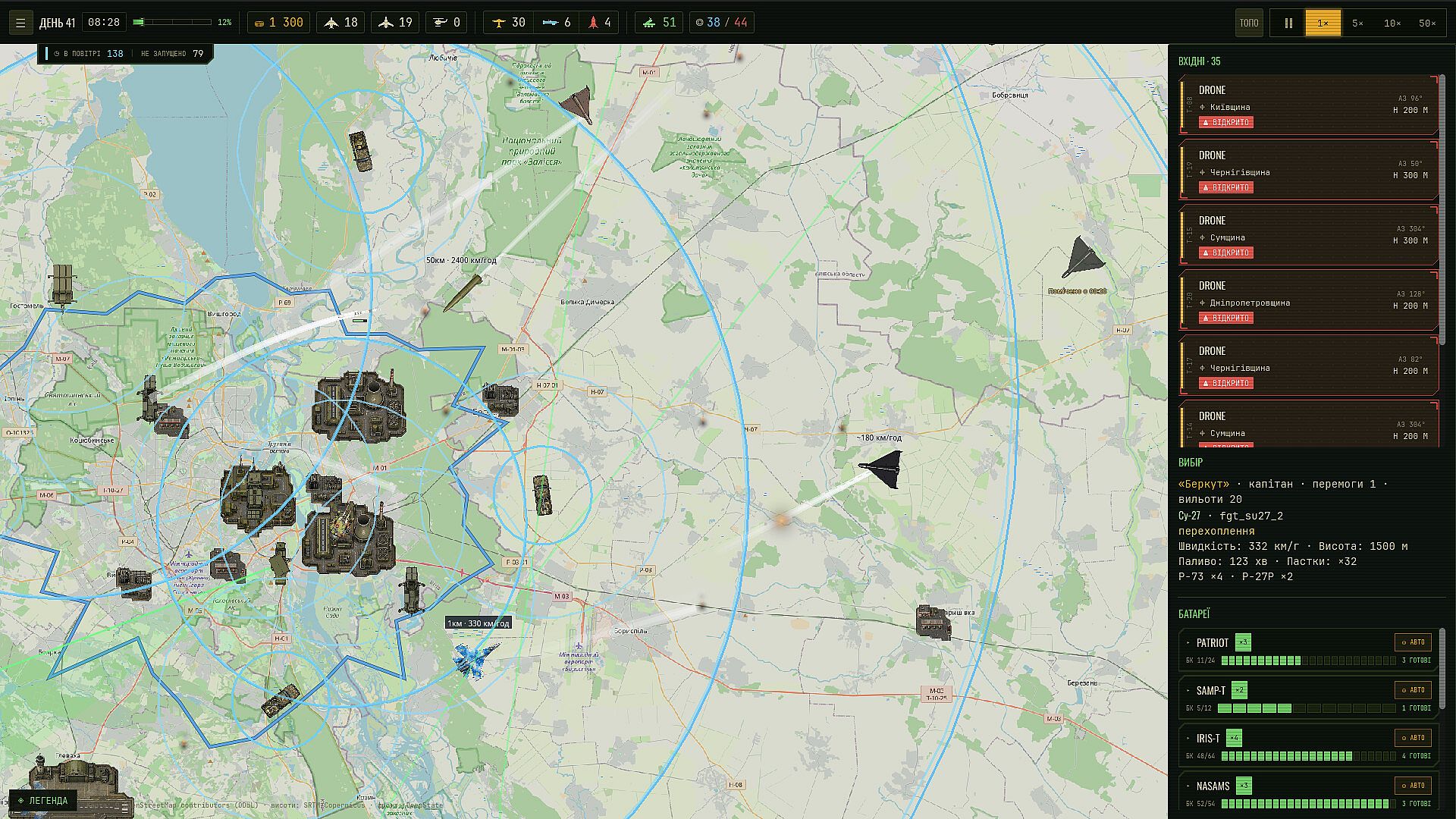
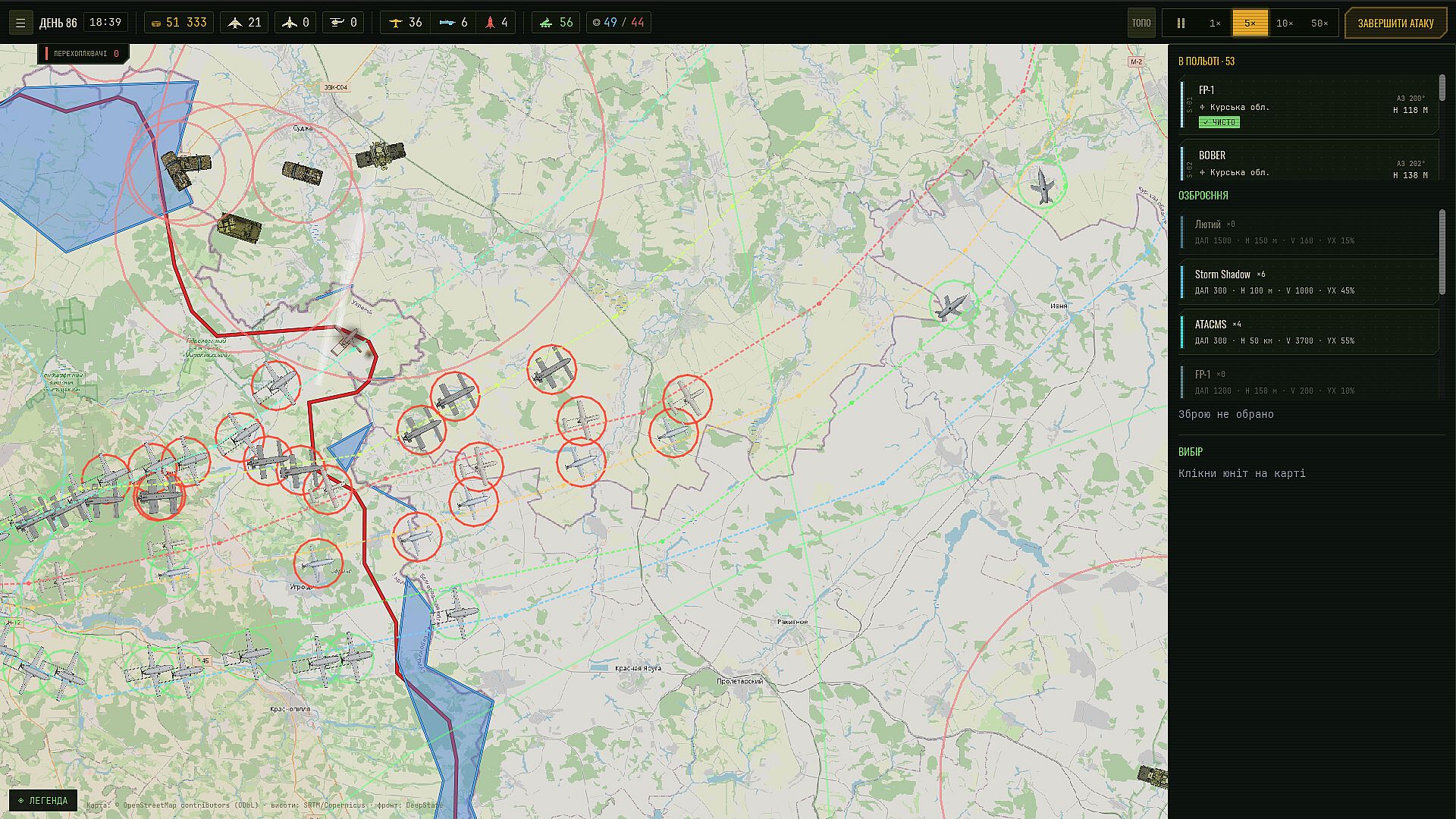
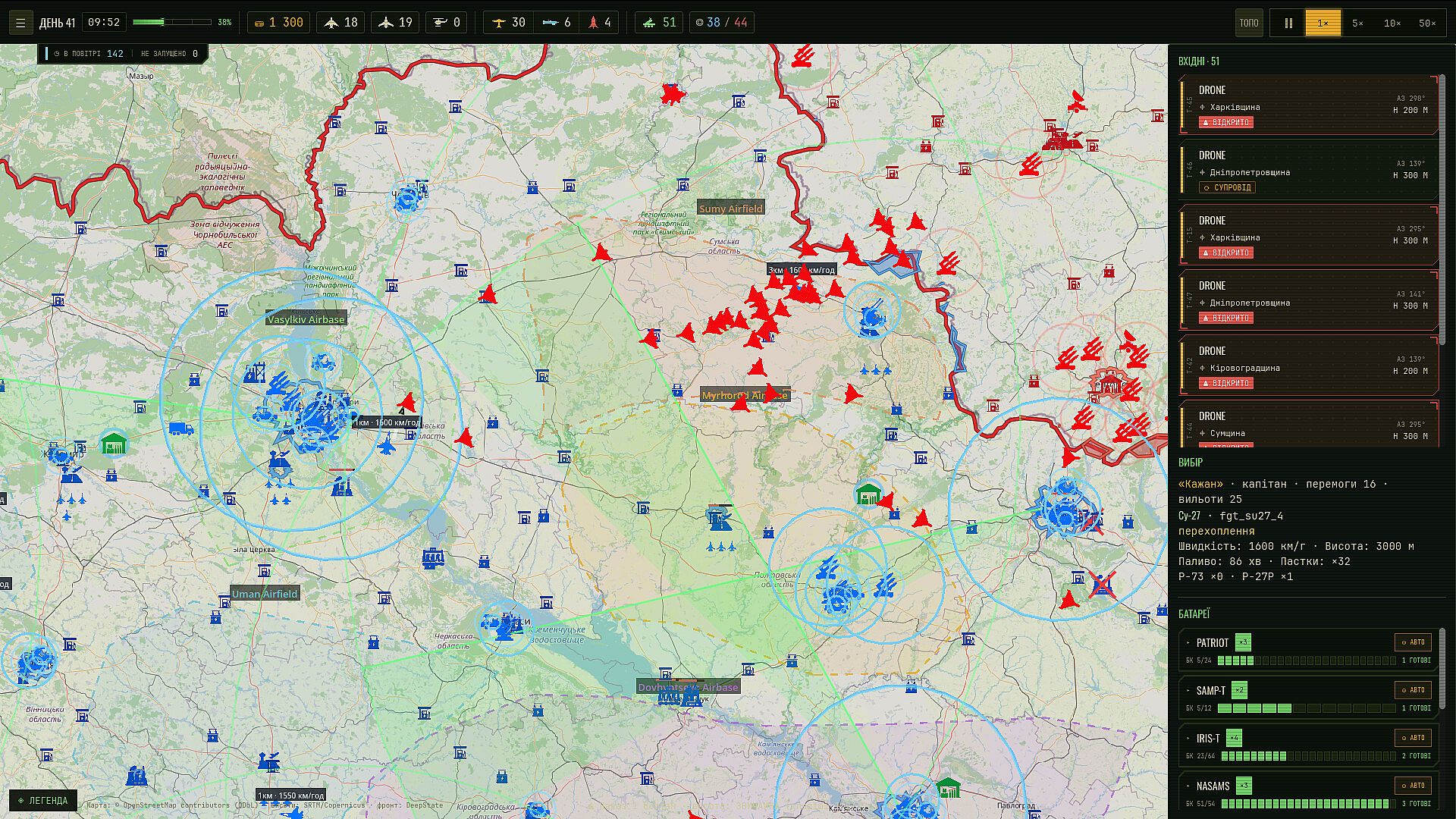
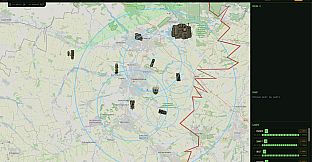
The core loop alternates between defensive and offensive phases. At night, incoming drone swarms approach at low altitude while cruise missiles follow terrain and ballistic threats close in rapidly. Commanders position surface-to-air missile battalions and radars to protect key sites such as power plants and factories. Limited interceptors force choices about which targets to prioritize and when to expend ammunition.
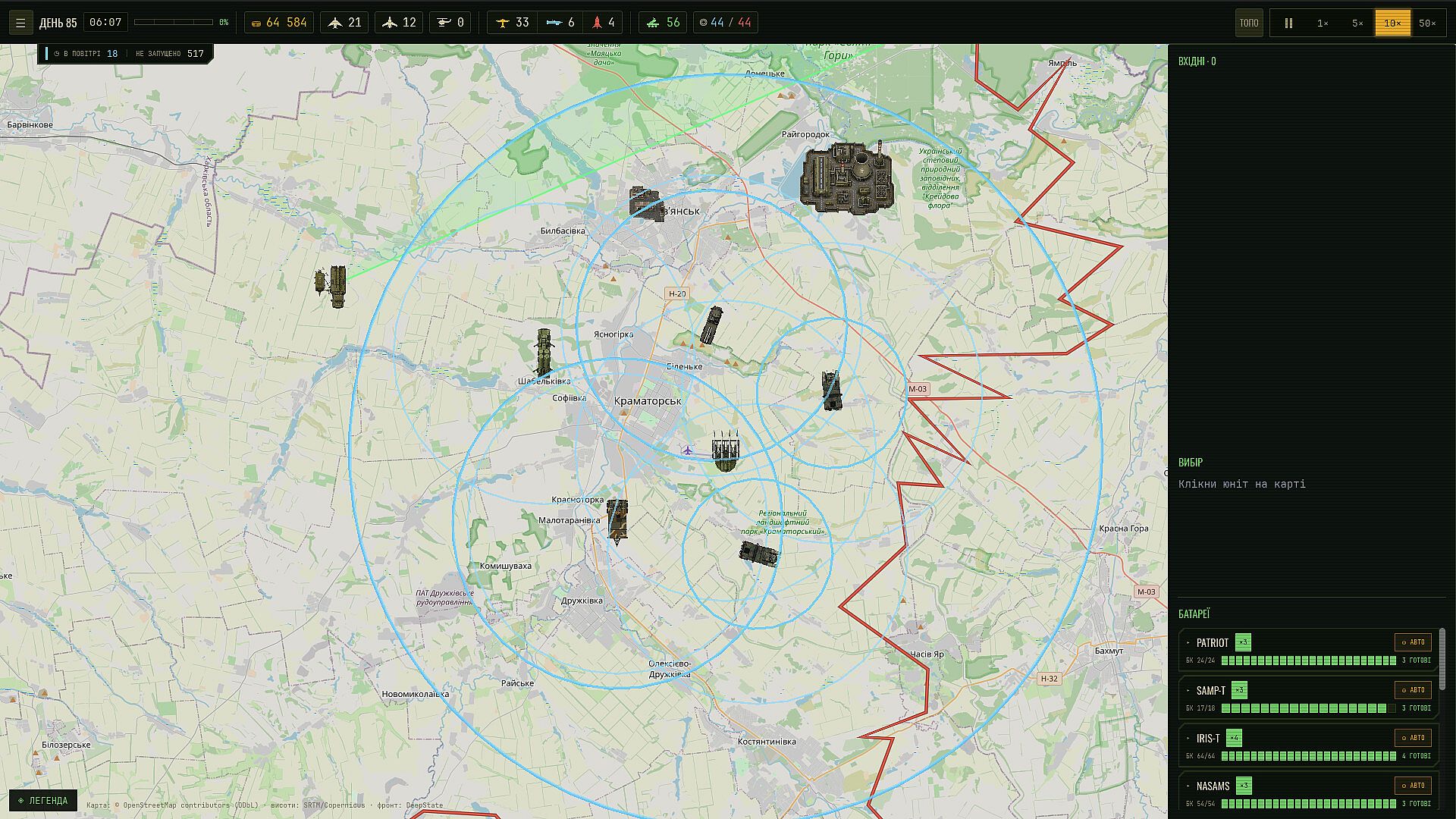
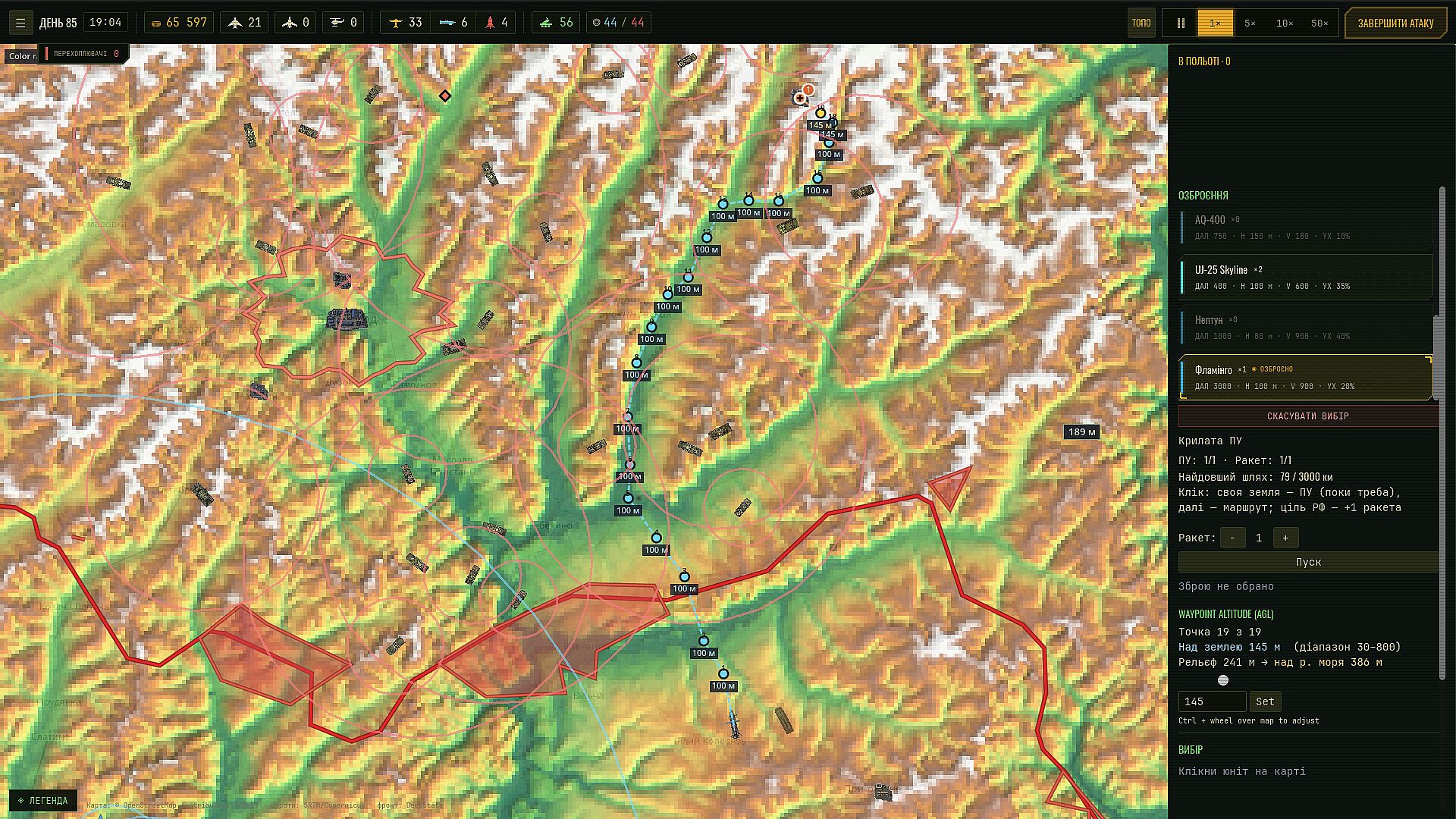
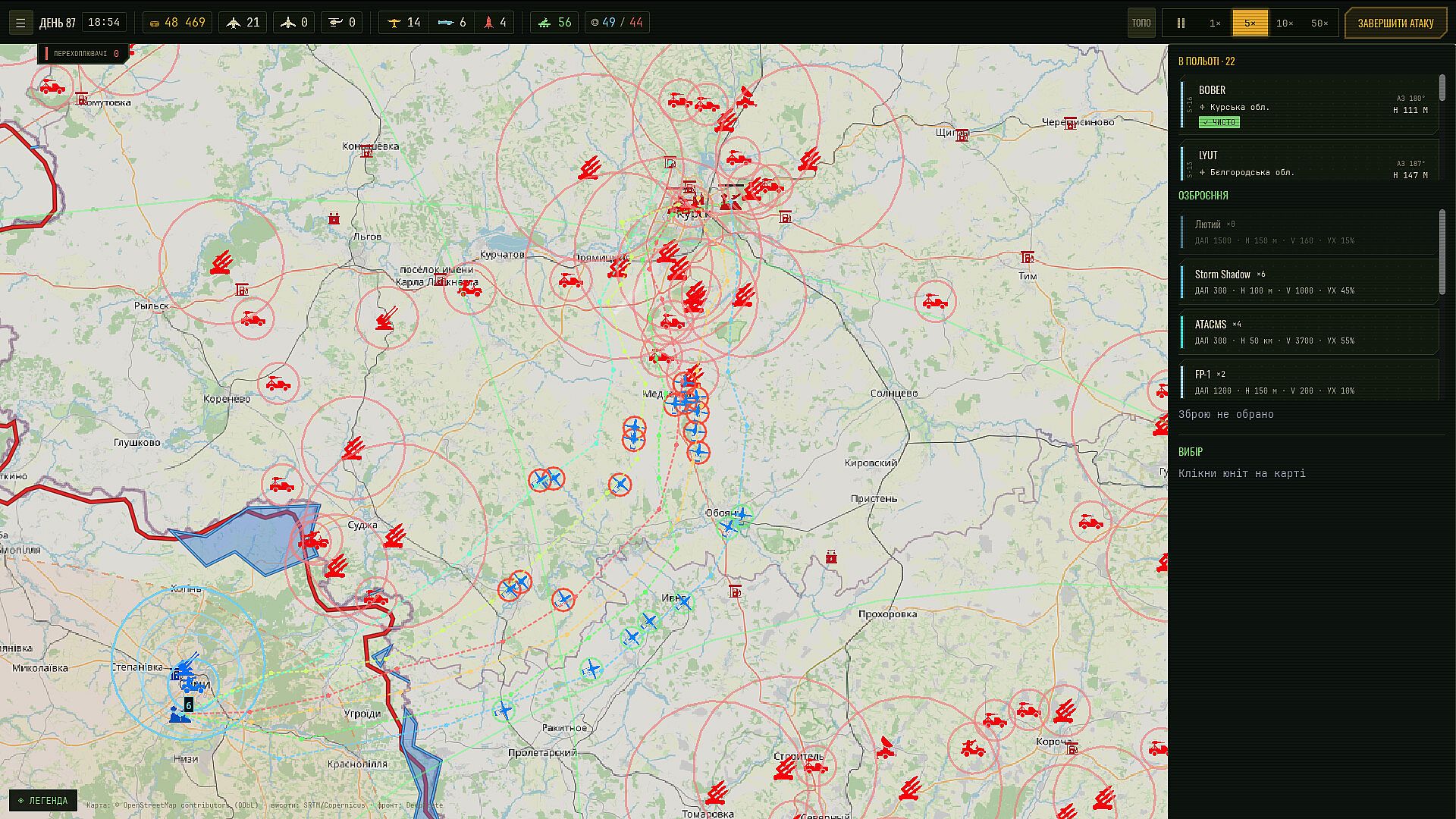
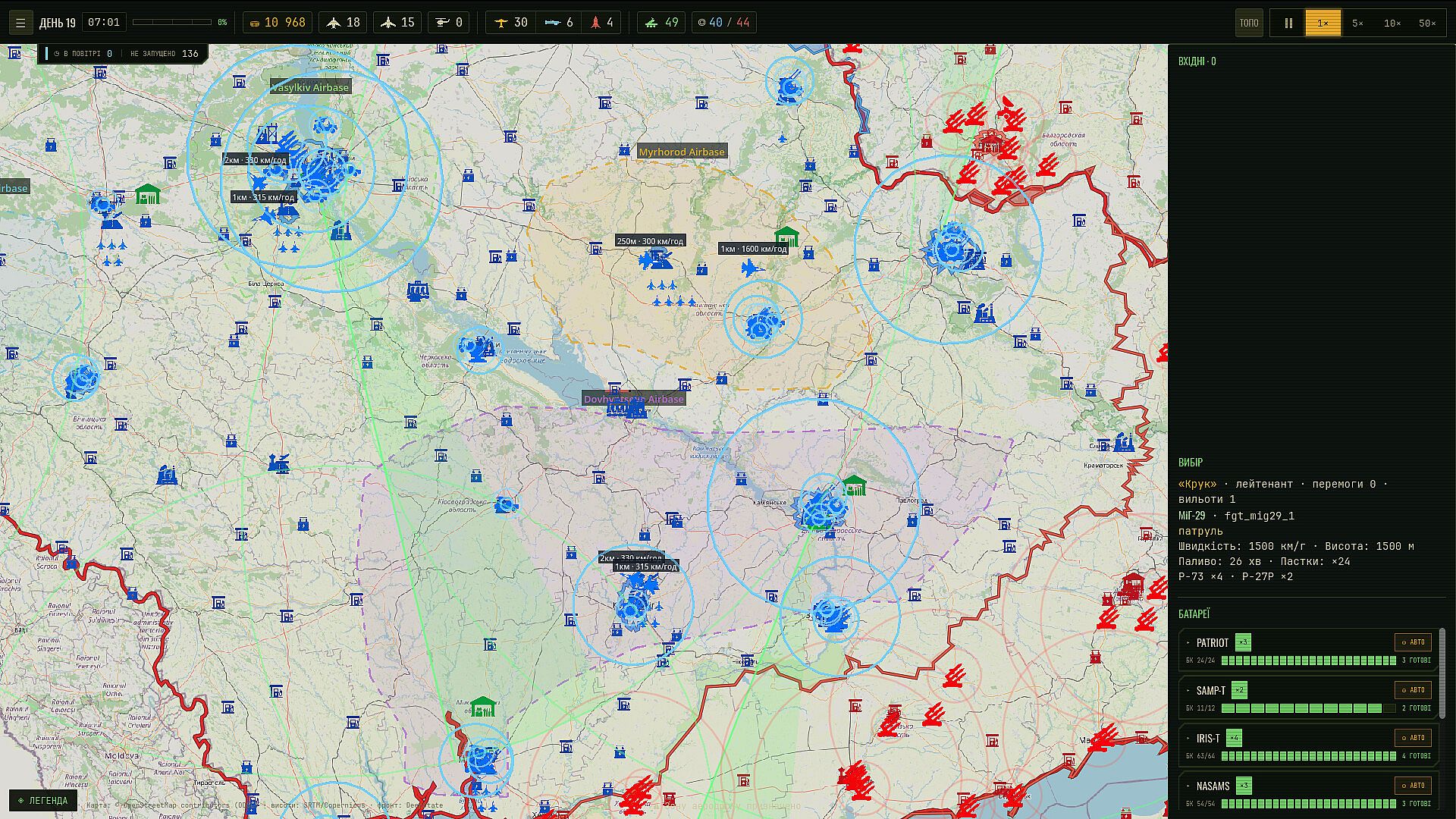
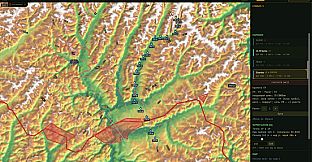
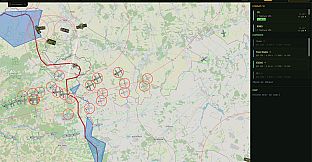
Daytime shifts focus to planning strikes. Routes for drones must avoid enemy radar coverage, and players can create openings by suppressing defenses to allow follow-up waves to penetrate. The map reflects actual Ukrainian geography with numerous real-world locations serving as objectives or assets.
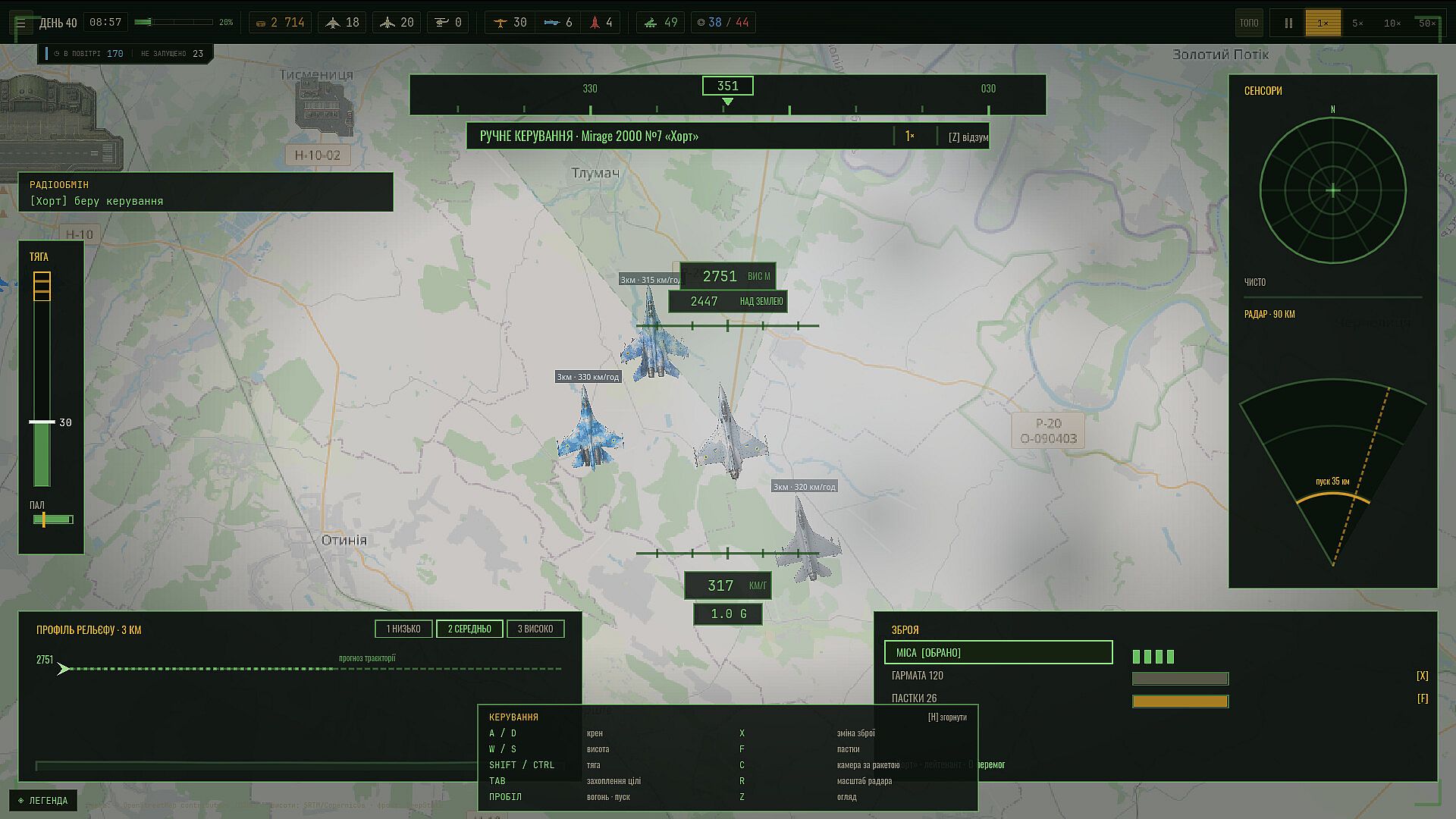
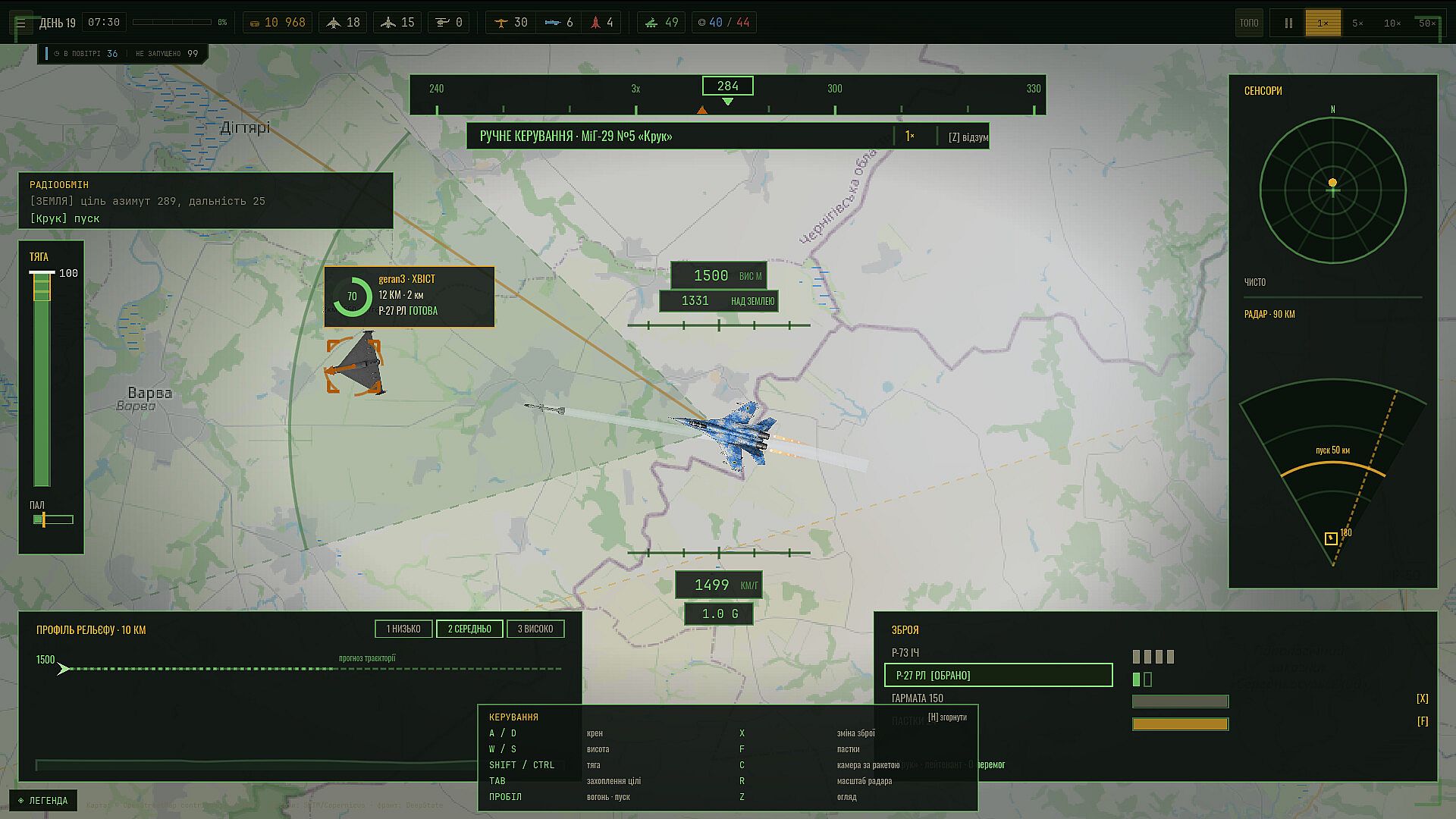
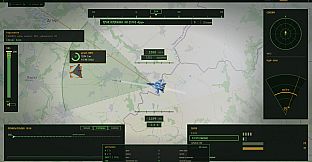
At any point, direct control of a fighter becomes available. Pilots can patrol sectors, pursue cruise missiles, or engage drones near rooftops before returning to the strategic map. This hybrid approach blends high-level planning with hands-on interception when automated systems fall short.
Game Modes
The primary experience revolves around the repeating defense and attack cycle on the Ukraine map. Night phases center on interception and protection of civilian and military infrastructure under sustained pressure. Day phases emphasize route planning and disruption of opposing air defenses to enable deeper strikes.
Single-player progression ties these phases together into ongoing campaigns where prior decisions influence available resources and enemy responses. No additional named modes appear in current information, though future multiplayer elements have been noted as planned.
Key Mechanics and Systems
Resource management forms the backbone of play. Fewer interceptors than threats create constant trade-offs between immediate survival and long-term capability. Radar placement and battalion positioning determine coverage arcs, while terrain masking affects missile paths.
Planning tools allow adjustment of drone corridors around known enemy positions. Suppressing specific radars opens temporary windows for attacks that were previously denied. The system rewards observation of patterns across multiple nights and days.
Manual fighter control adds precision when volume of threats overwhelms automated responses. Pilots navigate at rooftop level for drone hunts or pursue faster cruise missiles across open terrain before handing control back to the map overview.
Is It Worth Playing?
Intercept Line targets players who enjoy deliberate strategy simulations with asymmetric pressure and limited resources. The real map and specific threat types create a grounded setting for repeated decision-making under time constraints. Those drawn to air defense themes or hybrid command-and-control gameplay will find the night-to-day cycle distinctive.
The game remains in development with a planned release in September 2026 and currently lists no user reviews. Its single-player focus and emphasis on scarcity suggest strong appeal for fans of thoughtful indie strategy titles rather than fast-paced action. Availability on PC through standard digital platforms will determine accessibility once launched.











