




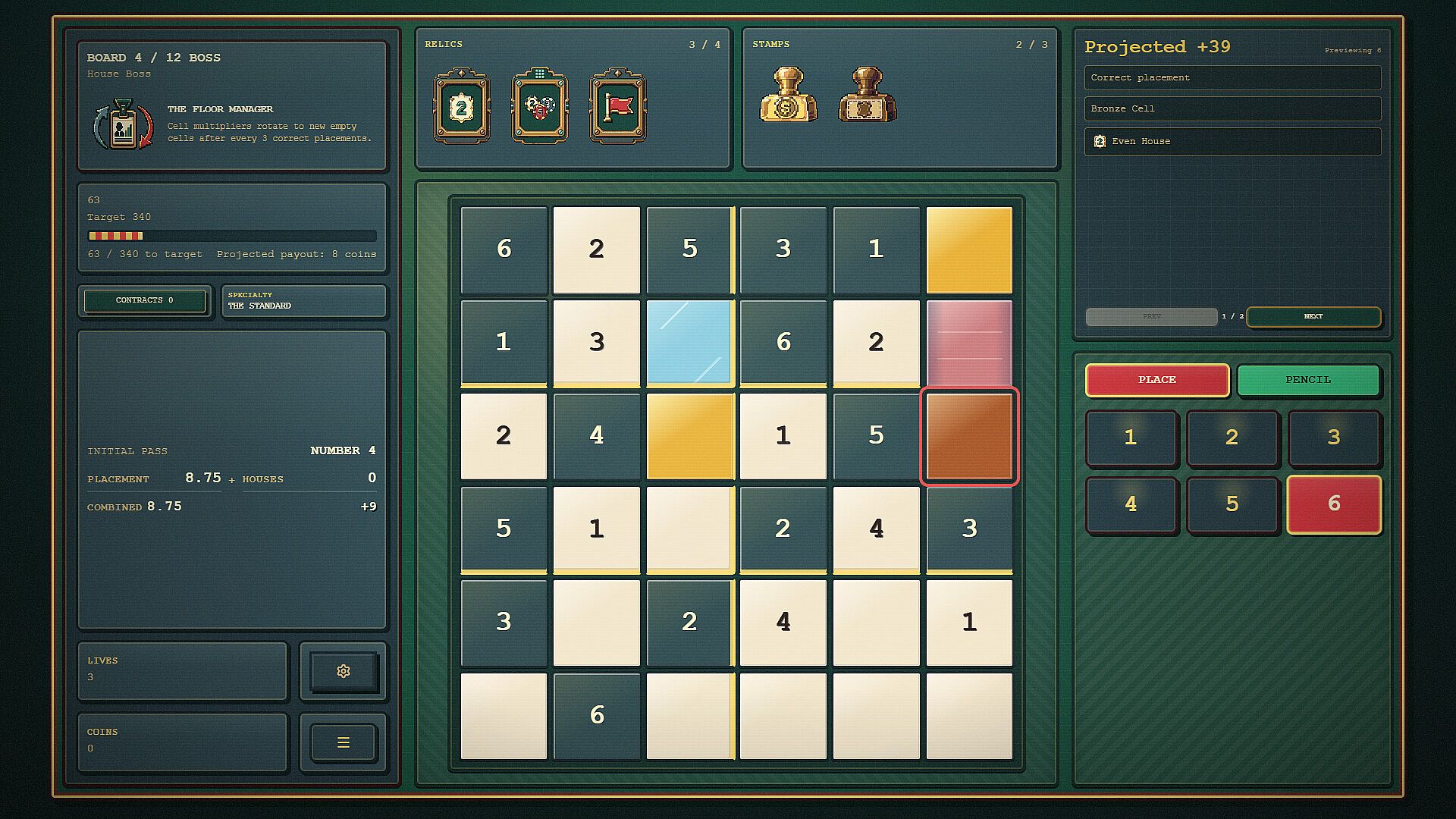
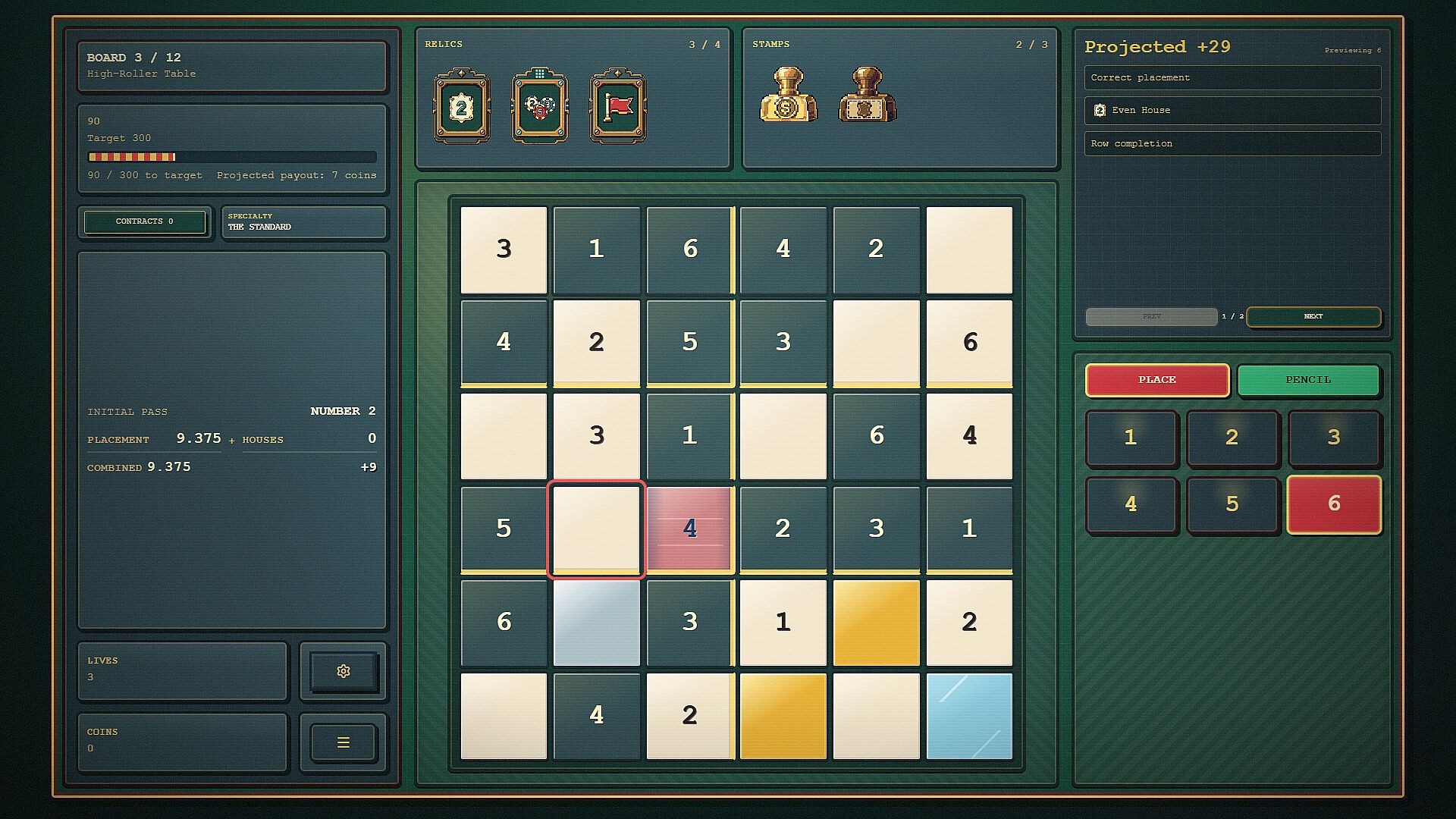
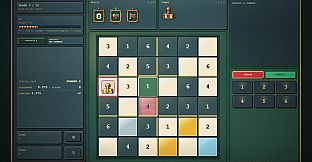

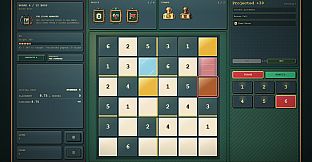
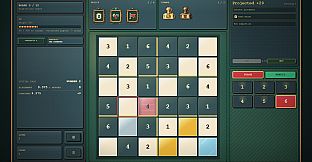
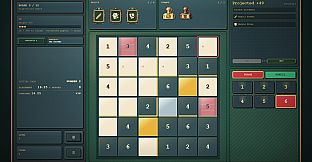
Kusino is a strategy indie casual game for PC that combines the logic of 6x6 Sudoku with casino-style scoring and risk management. Players solve puzzles on a grid where every board has exactly one solution, yet the final score depends on the sequence of moves and the timing of completions. The core appeal lies in planning ahead while adapting to relics and other modifiers that alter how points accumulate.
Gameplay
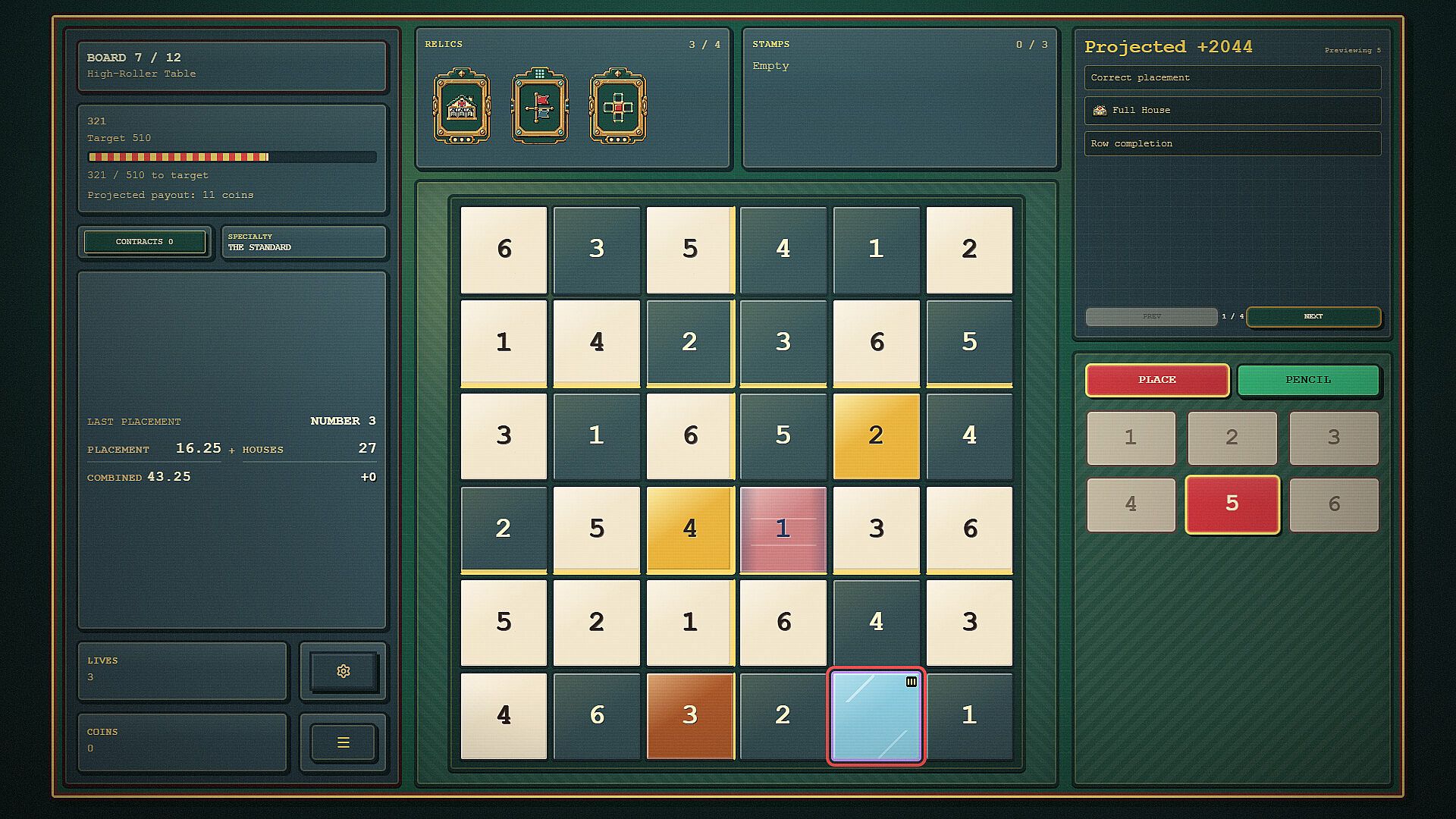
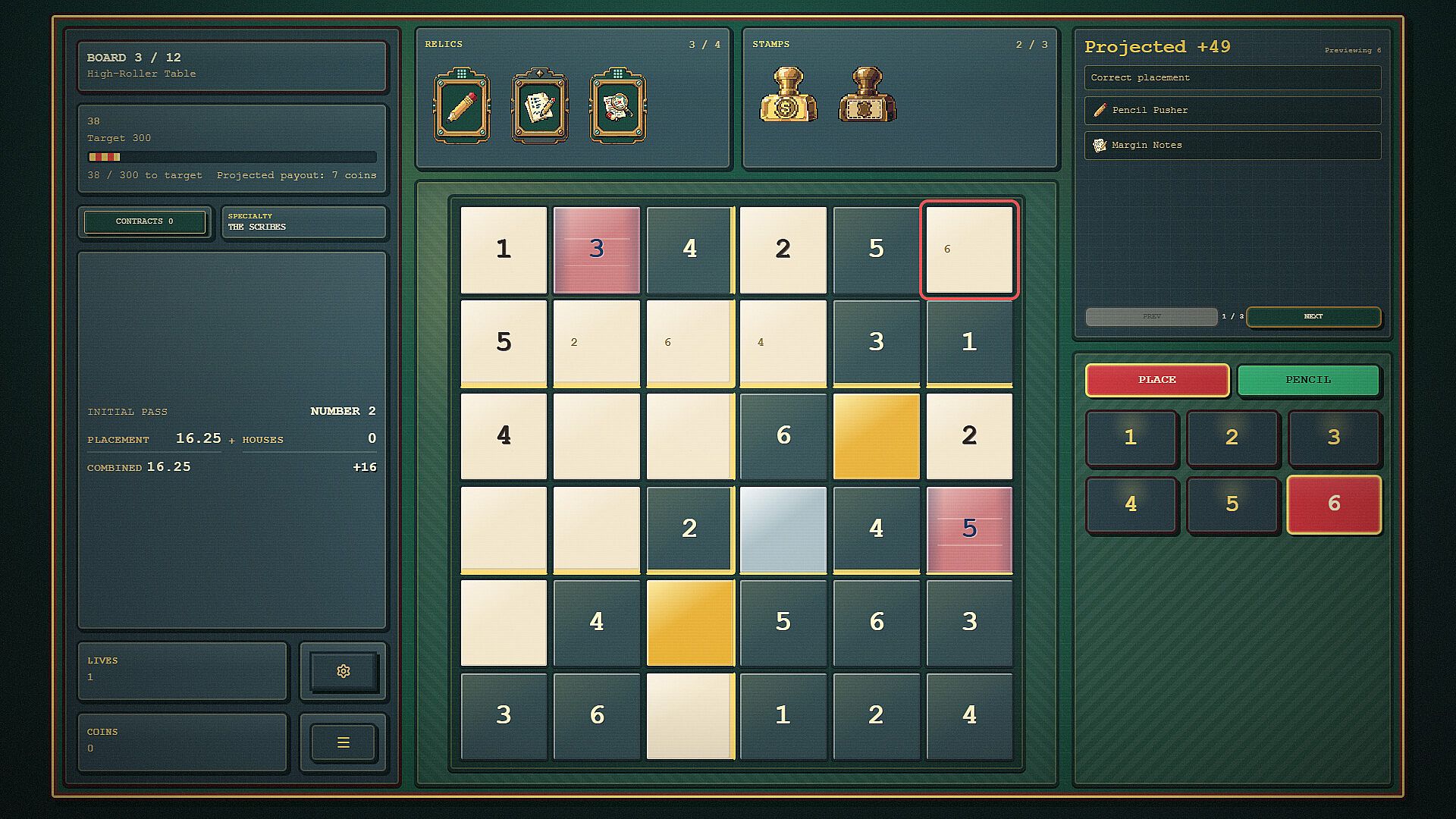
The central loop revolves around filling a 6x6 grid while managing score multipliers and special effects. Each puzzle presents a unique layout with some numbers already placed. Players decide the order of placement, using known numbers strategically to set up larger payouts later. Score previews appear before committing a move, allowing informed choices between immediate gains and future setups. Pencil marks help track possible numbers without committing to a cell.
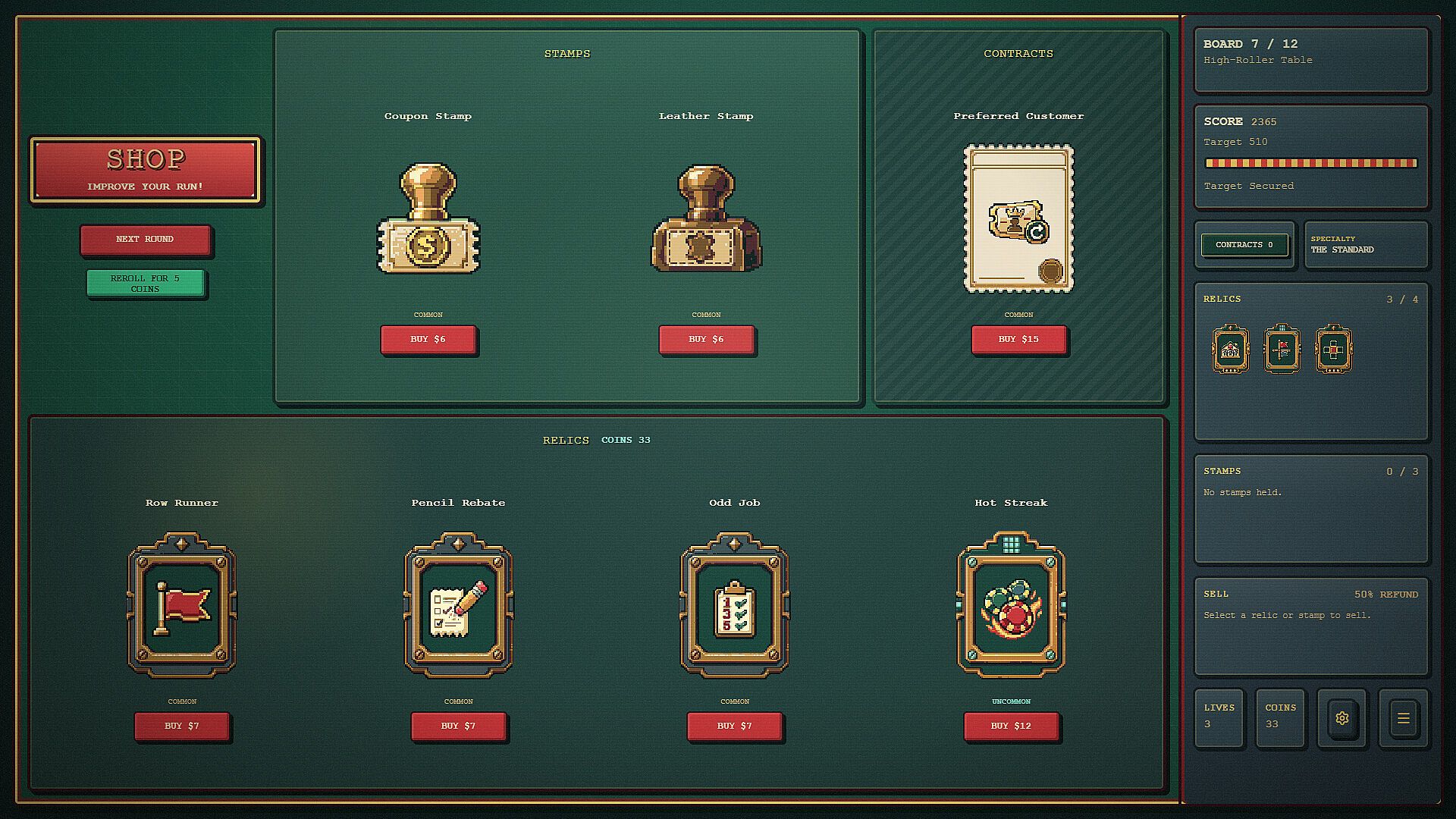
Relics appear during play and reward specific habits, such as favoring particular numbers or maintaining detailed notes. Between boards, winnings can be spent in a shop to acquire new relics or effects that combine for stronger synergies. Contracts provide additional options, such as expanding relic capacity, improving shop selections, or adjusting the balance of risk and reward on future boards.
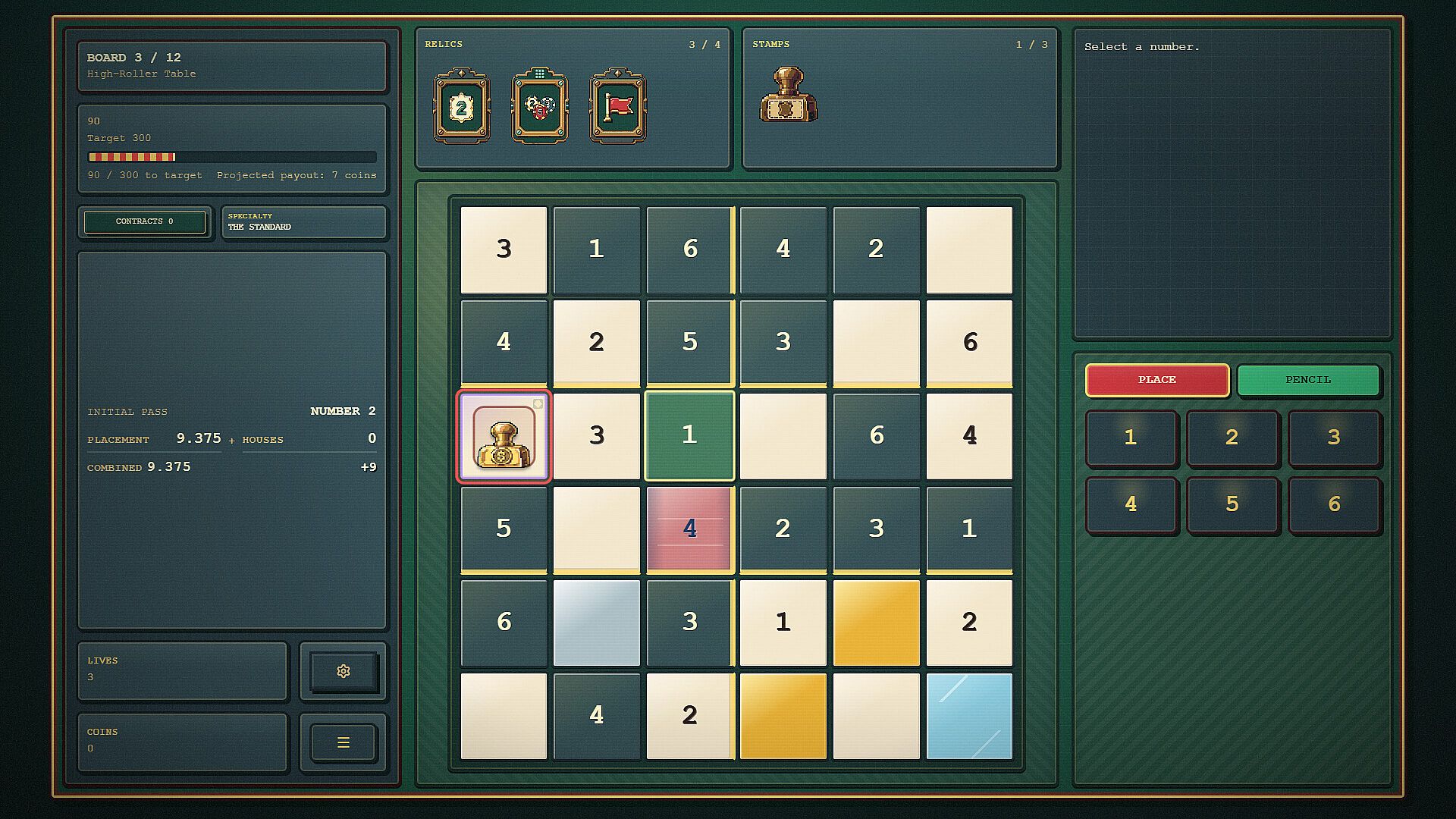
Stamps offer another layer of control by modifying a cell before it is filled. Placing a multiplier in a high-impact position and then saving that cell for a valuable completion can transform an ordinary move into the highest-scoring action on the board. This system encourages experimentation with timing and positioning.
Game Modes
Kusino features a single-player campaign structure built around twelve boards divided into three stages. Each stage increases the score targets, requiring more efficient planning and better use of relics and stamps. The final board of each stage serves as a boss encounter that introduces rule changes, forcing players to adjust their established strategies on the fly.
Progression emphasizes adaptation. A starting specialty chosen at the beginning influences available options throughout the run. Clearing all boards while meeting the escalating targets keeps the run active, with failure possible if score goals are missed. The design rewards consistent decision-making across the full sequence rather than isolated puzzle solutions.
Key Mechanics and Progression
Planning the payout forms the heart of every decision. Saving a known number for a high-value completion later can outperform playing it immediately, but only if the board layout supports the delay. Relics and shop purchases create branching paths, where different combinations suit varied play styles. Some players may focus on aggressive scoring through early placements, while others build around precise note-taking and relic synergies.
The stamp system adds tactical depth by allowing preemptive changes to cells. A well-placed multiplier can elevate the final number in a row, column, or box into the standout move of the entire board. Combined with the contract system, these elements let experienced players customize their approach between stages.
Is It Worth Playing?
Kusino suits players who enjoy logic puzzles with an added layer of strategic scoring and resource management. The campaign structure provides a clear progression path through twelve boards and three boss encounters, with increasing demands on planning and adaptation. Those who appreciate weighing short-term versus long-term gains in puzzle games will find the score preview and relic systems rewarding.
The game emphasizes thoughtful play over speed, making it accessible for casual sessions while offering depth for repeated attempts. Shop upgrades and contract choices encourage experimentation across multiple runs. If the blend of Sudoku logic with casino-inspired risk and reward appeals, the title delivers a focused experience centered on these mechanics.












