








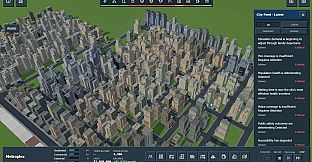
Metroplex is a strategy and simulation game focused on building and managing a metropolitan region through interconnected transportation networks and land use decisions on PC.
Gameplay
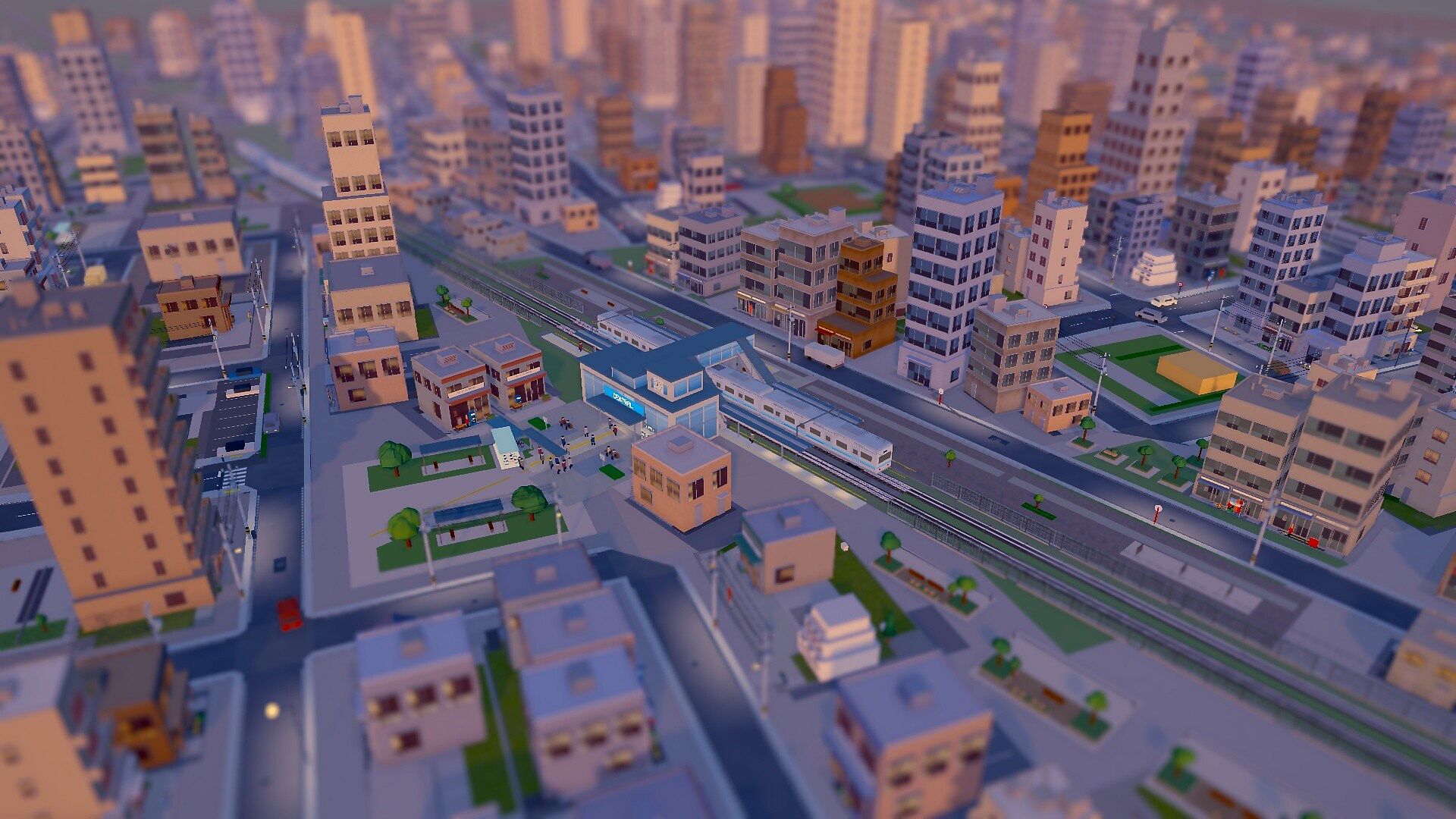
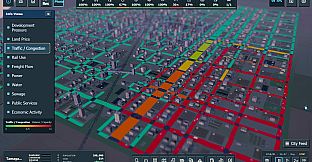
The core loop centers on laying roads and railways, placing stations, and running local and express services while shaping housing, jobs, and infrastructure across a growing region. Early decisions involve fixing intersections or adding stations in smaller settlements, but as the population scales toward millions, the focus shifts to regional questions such as commuter flows, center capacity, and the emergence of new urban districts. Population directly influences transportation demand, housing costs, employment patterns, congestion levels, and land values, creating interconnected systems where one change ripples through others over simulated decades. The low-poly presentation keeps the layout readable whether viewing a single neighborhood or the full regional scale.
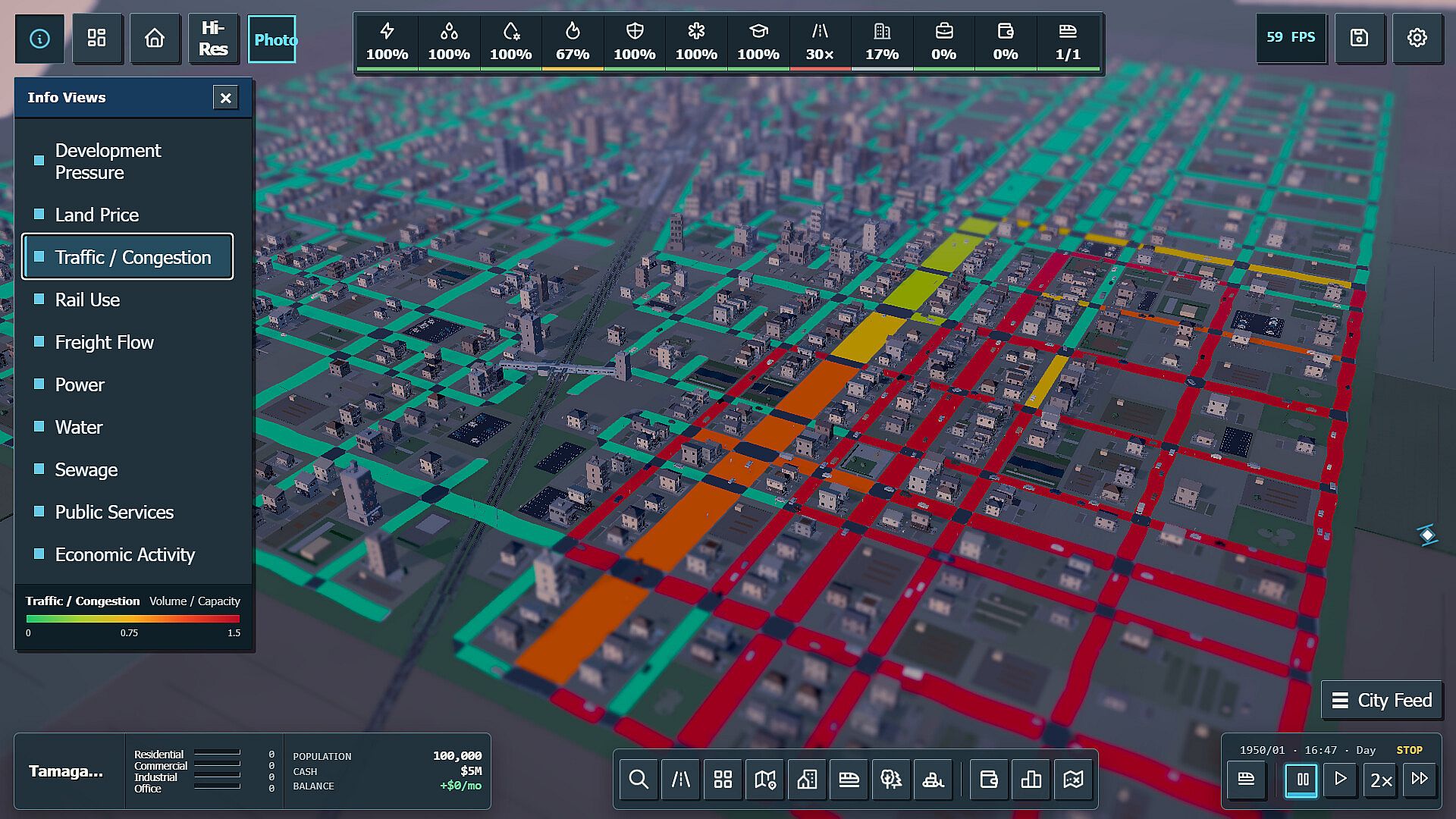
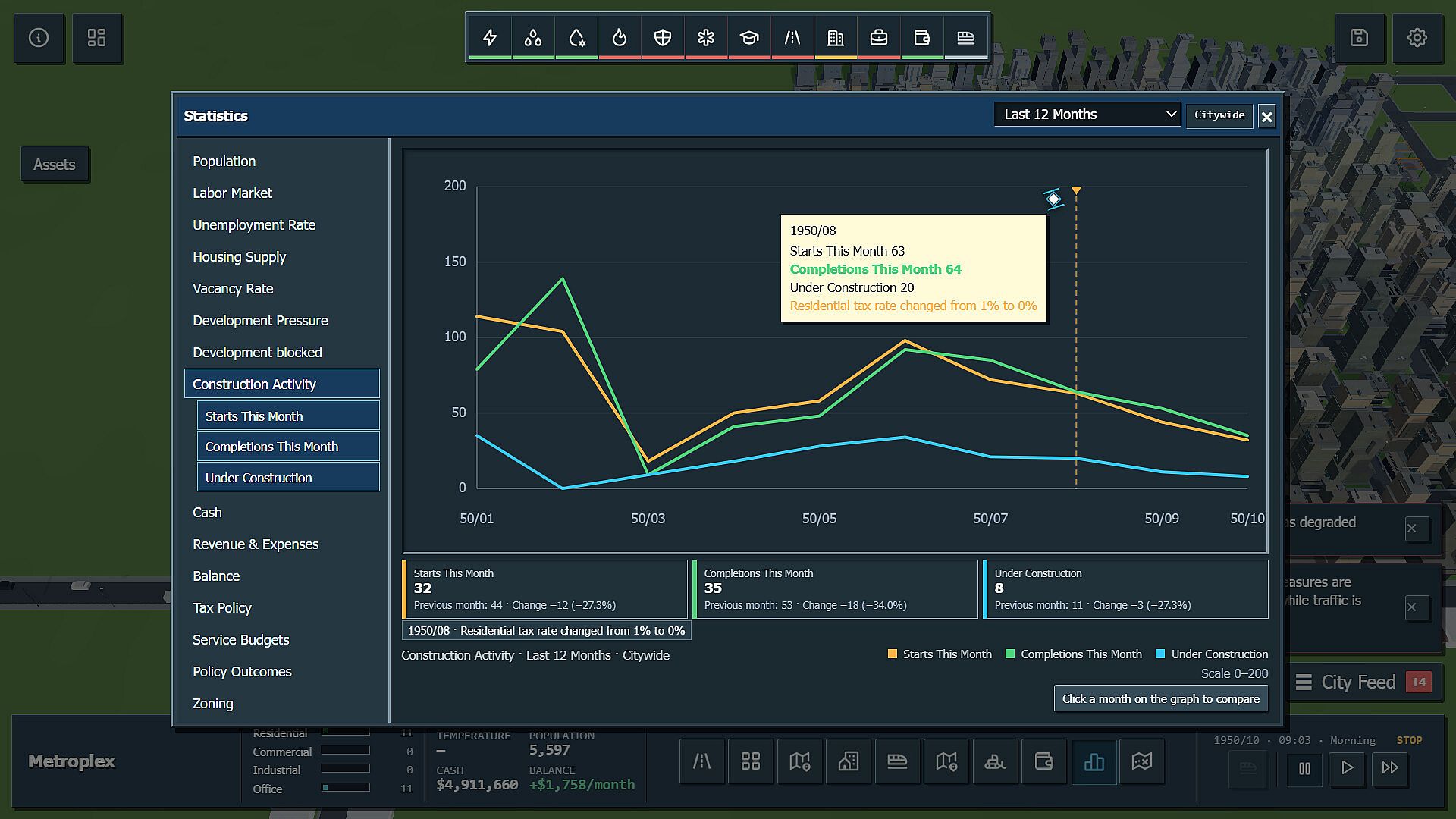
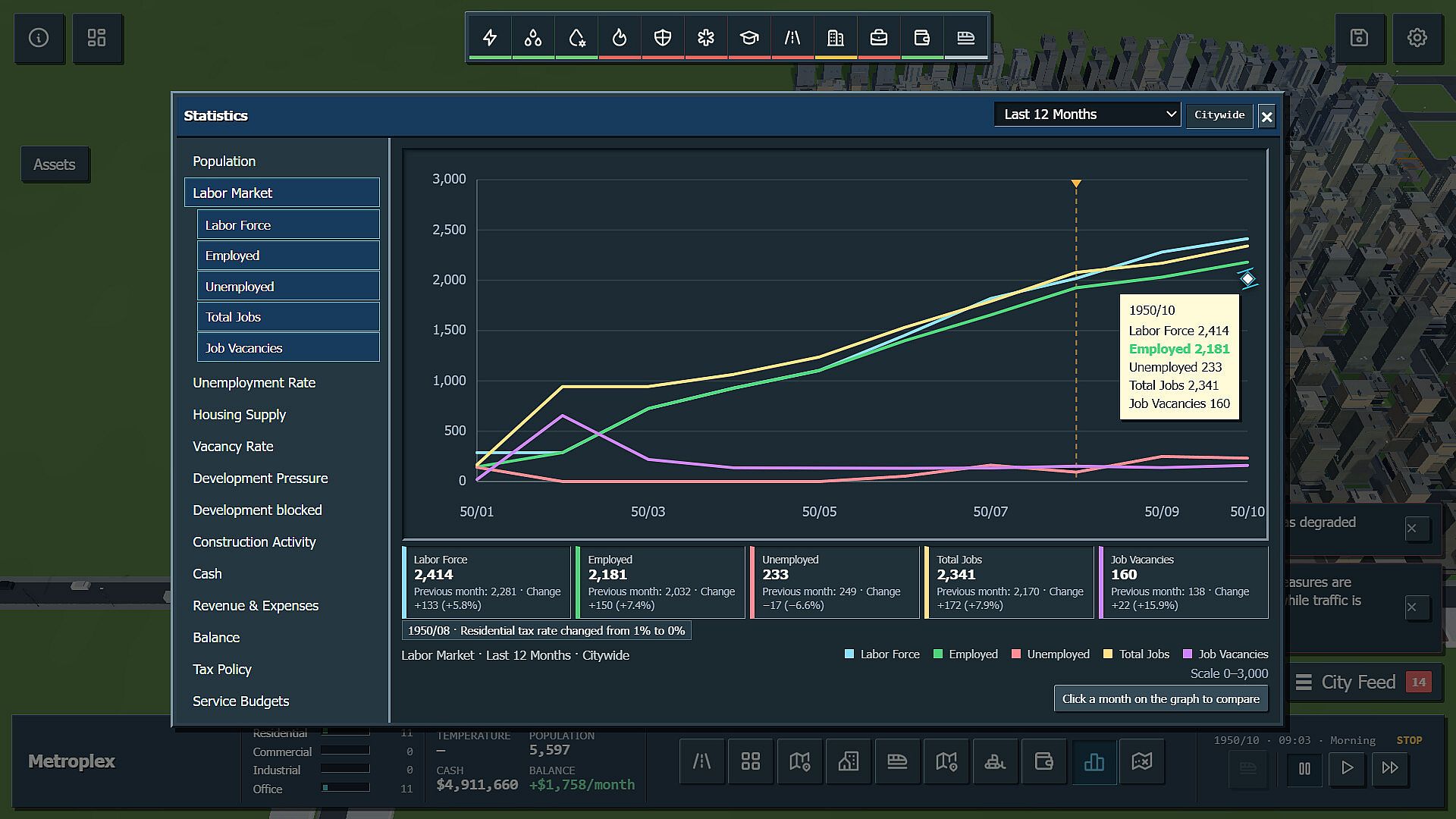
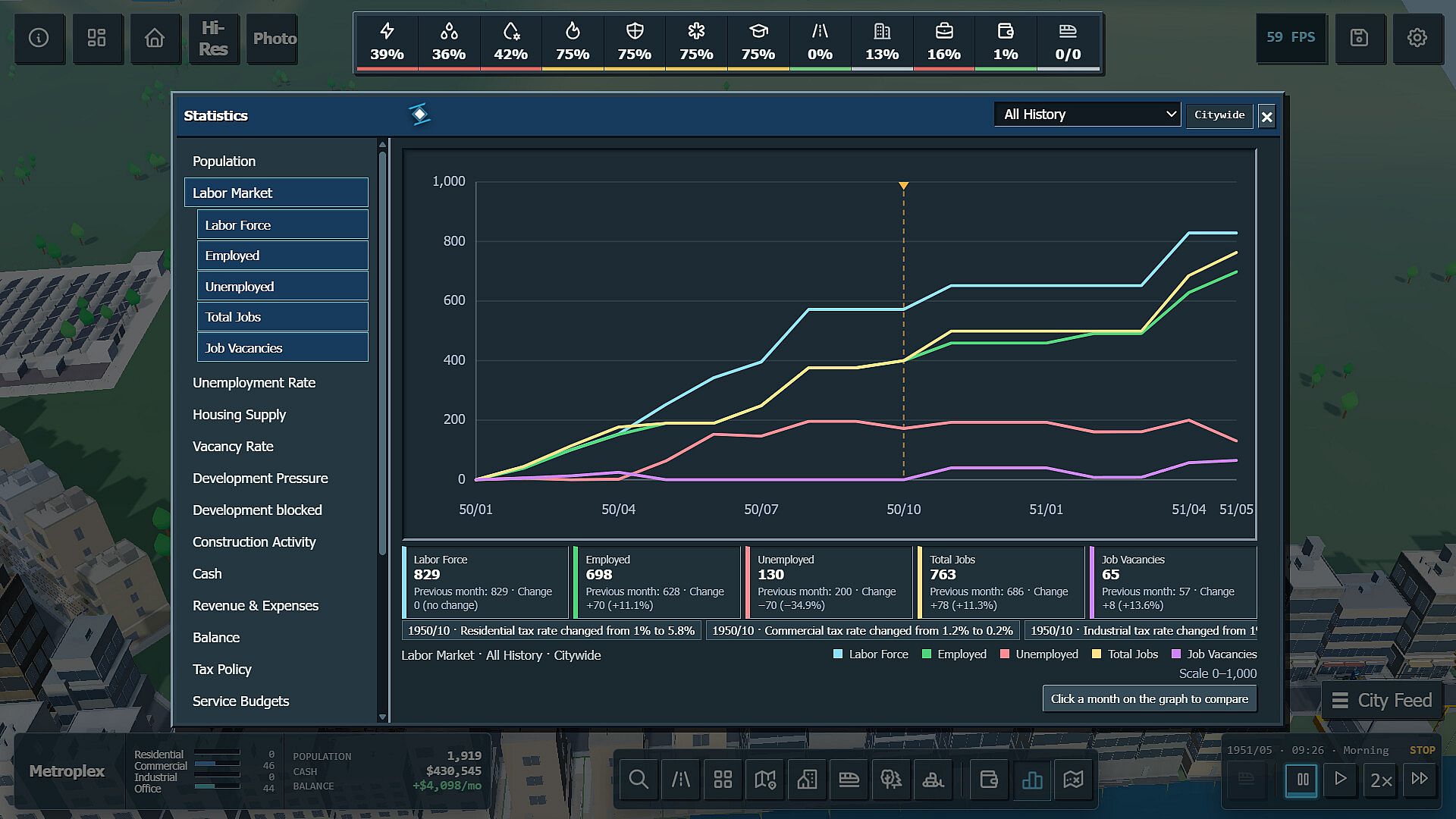
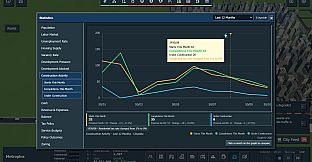
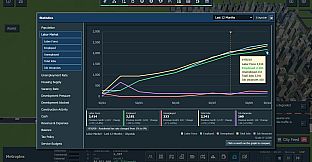
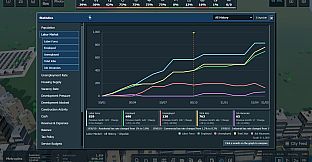
Every action carries layered consequences. Introducing an express service from an outer area can reduce journey times, boost accessibility, raise housing demand and land values, and attract commerce, only for the resulting ridership and interchange congestion to create new bottlenecks later. A factory closure can trigger income drops, reduced shop activity, and resident outmigration, allowing districts to decline organically. Players track metrics including population, jobs, income, housing costs, land value, commute times, ridership, and congestion across years of history, with the ability to compare districts and export data for external analysis.
Game Modes
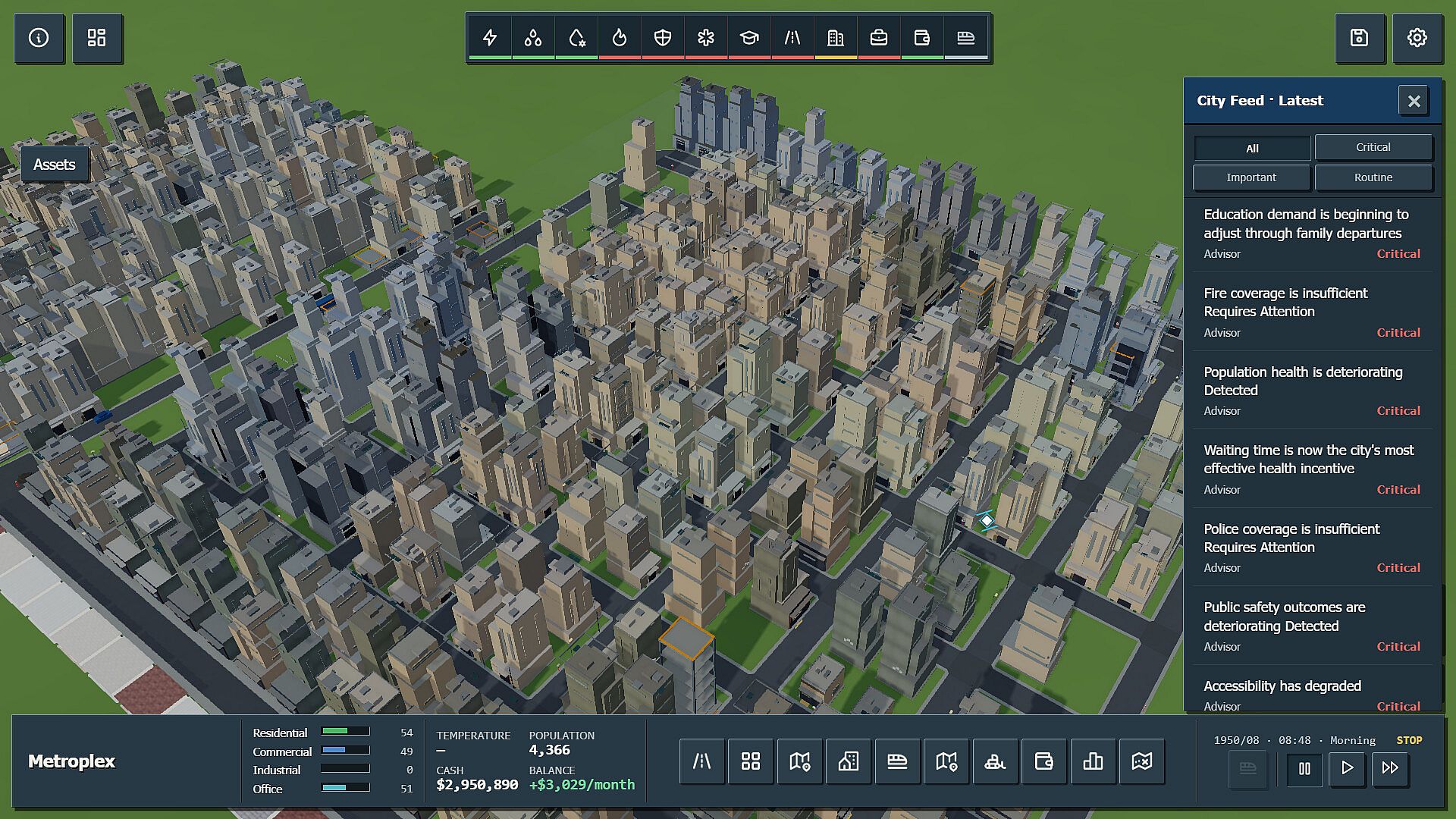
Metroplex operates as a single continuous simulation of regional development rather than segmented modes. Players begin with basic infrastructure and a small population, then guide the evolution of dense centers, suburbs, industrial zones, commuter towns, and satellite cities over decades. The experience emphasizes long-term planning where solutions effective at one scale become problems at the next, with no fixed win conditions or separate campaign structures. Advisors provide input based on their priorities, such as transport capacity or fiscal impact, while a news feed translates simulation events into contextual headlines.
Asset Creation and Feedback Systems
Players can extend the game through AssetBuilder, which simplifies creating buildings, trains, stations, roads, and props by duplicating and modifying existing assets rather than requiring a full art pipeline. This approach supports a consistent low-poly visual language between official and community content. The simulation responds dynamically through the news feed and advisor commentary, highlighting actual outcomes like suburban growth after timetable adjustments or housing pressures near stations, allowing players to interpret results and adjust strategies accordingly.
Is It Worth Playing?
Metroplex suits players who enjoy deep, systems-driven city and transportation simulations where decisions produce visible, compounding effects across a large scale. Its emphasis on regional connectivity, organic growth and decline, and detailed tracking of metrics provides substantial depth for those interested in metropolitan planning rather than isolated city building. As the game remains in active development, features and balance continue to evolve, making it most appropriate for enthusiasts comfortable with ongoing updates and potential changes. The single-player focus and absence of multiplayer elements keep the experience centered on personal experimentation with trade-offs in infrastructure, land use, and service design.











