


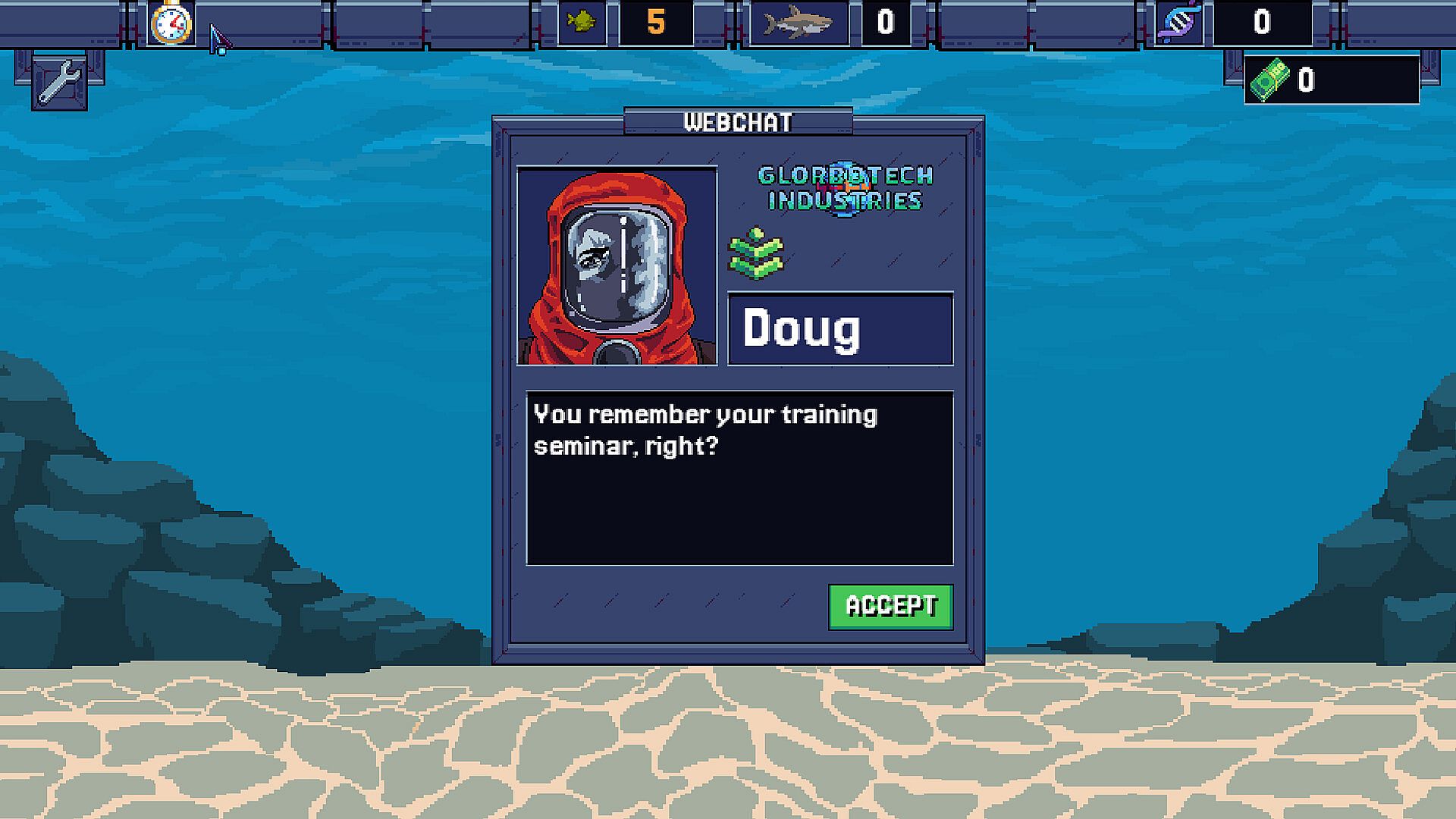
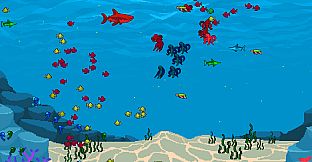

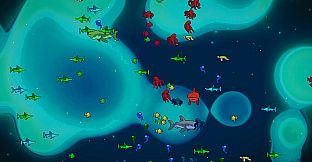


Micro Marine is a casual simulation game set on PC that puts players in charge of an ocean ecosystem sandbox. Drawing direct inspiration from the 1984 Wa-Tor simulation, it lets users observe and influence a living food chain where fish and other marine creatures hunt, evade predators, and evolve through natural processes over time.
Gameplay
The core loop centers on managing an interconnected ocean environment where energy flows from lower to higher levels of the food chain. Populations rise and fall in cycles, with booms at the base creating more resources that support larger numbers of fish before scarcity causes cascading declines across species. This creates ongoing shifts that players can monitor without constant intervention.
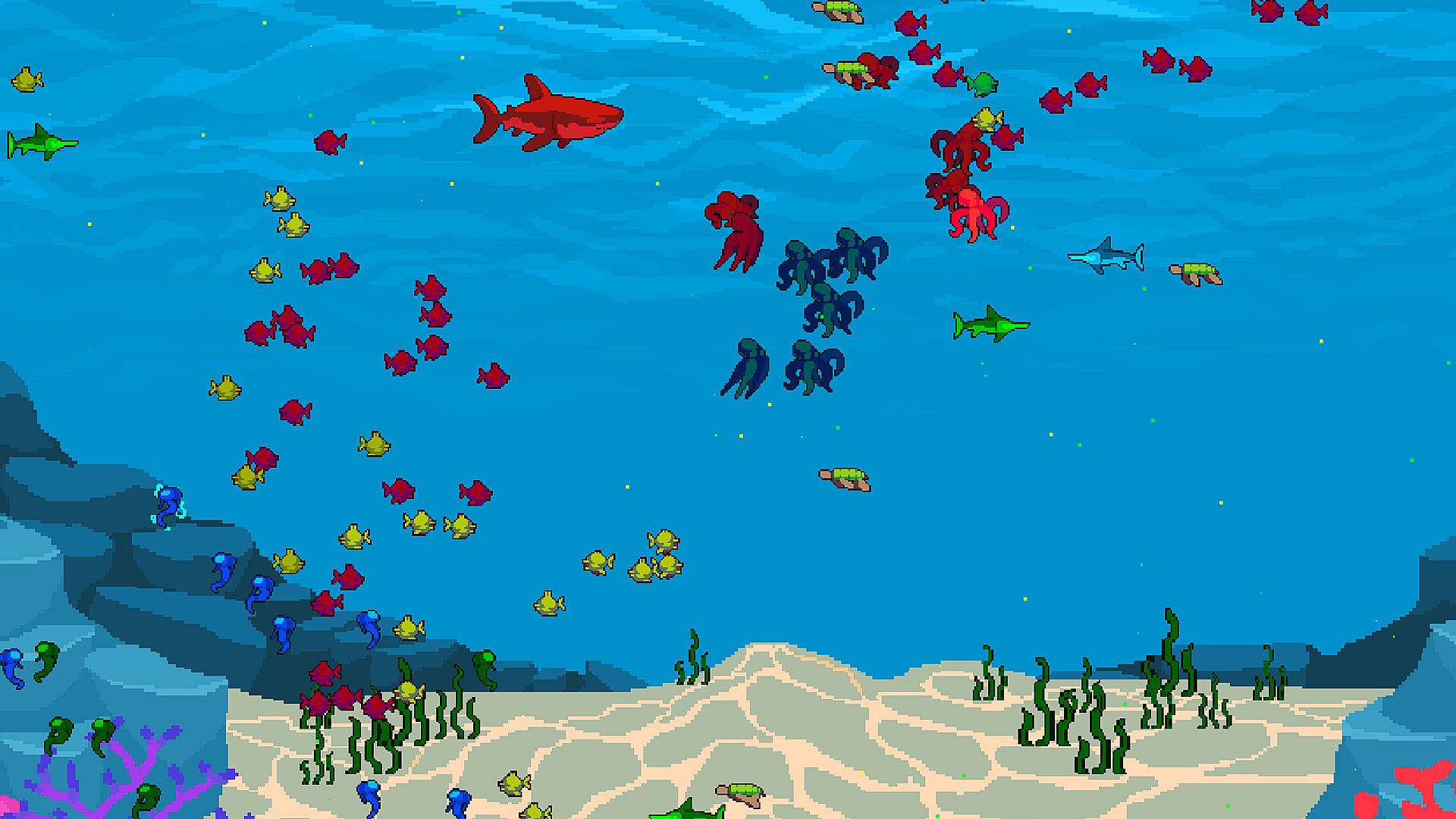
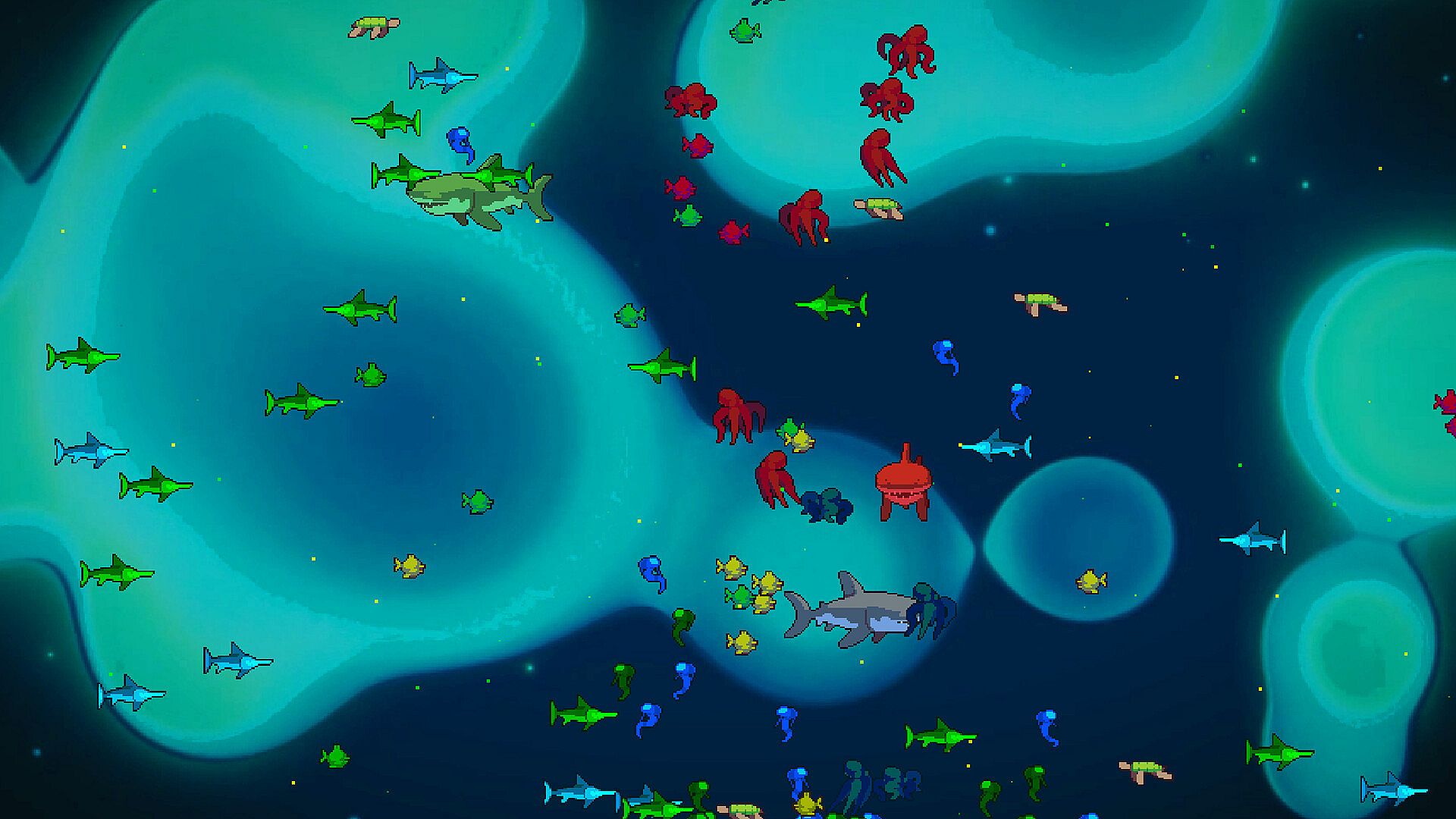
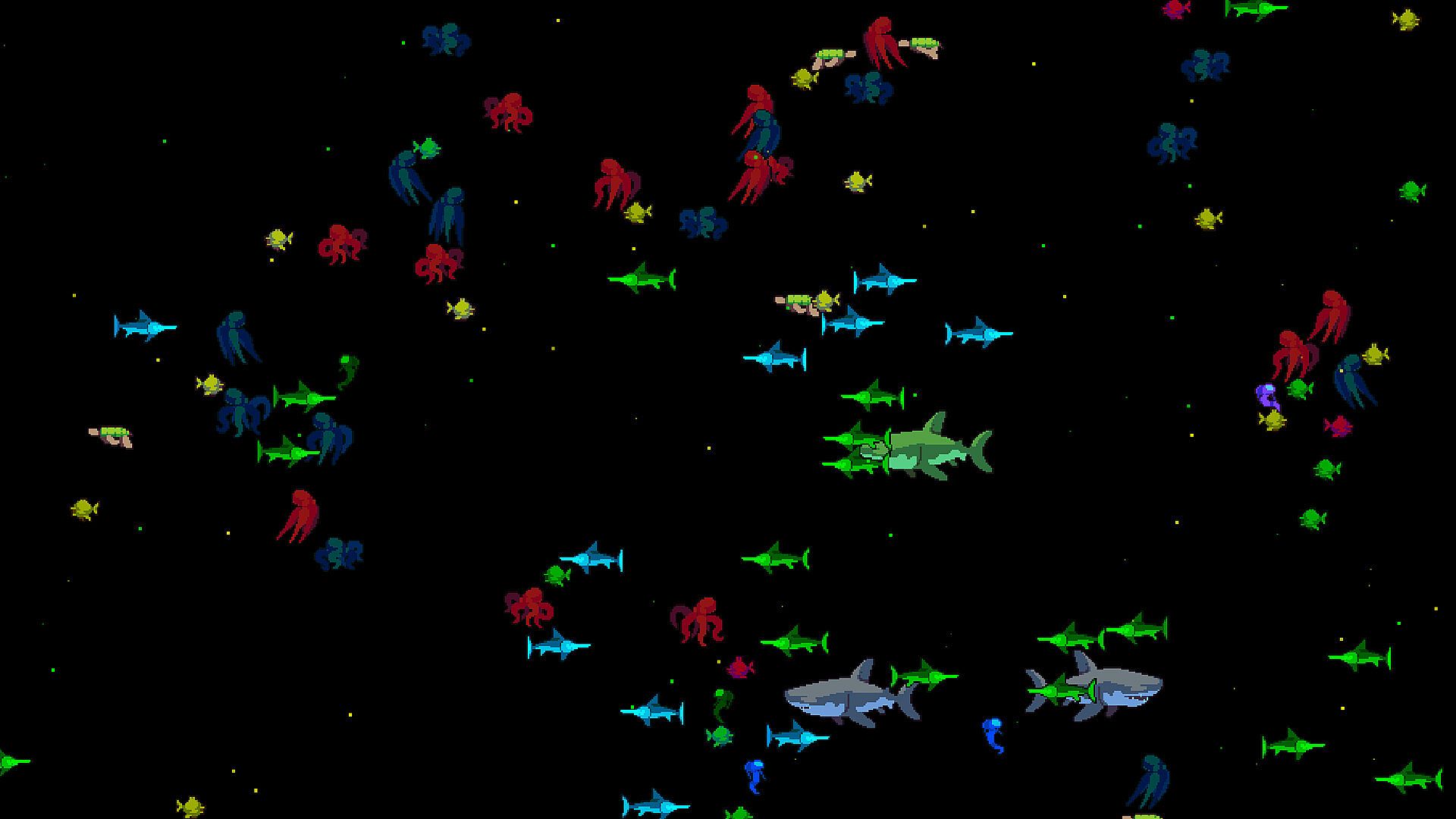
Each fish carries inherited traits passed down during spawning, and random mutations introduce variation that allows different combinations to thrive temporarily. Color coding helps track these changes, showing which lineages dominate as successful trait mixes spread. Sharks receive distinct trait profiles at the progenitor stage, covering speed, boldness, and energy conservation, with offspring colors reflecting the balance of those inherited qualities.
Direct control comes through the ability to remove species or adjust diets, letting herbivores, carnivores, and omnivores respond to new conditions. Right-click feeding provides a simple way to boost energy in the system, while the simulation continues running indefinitely thanks to automatic replenishment near extinction points.
Game Modes
Food Chain Manager serves as the primary sandbox where players experiment by culling unwanted species like sharks or pitting natural rivals such as turtles against jellyfish. Adjusting consumption rules reveals how different groups adapt when their environment changes.
Aquarium Mode replicates the steady-state behavior of the original Wa-Tor simulation, with populations rebounding automatically to keep the display active. This mode emphasizes passive observation alongside occasional feeding interventions.
Missions Mode introduces structured research projects focused on aquatic life facts, where completing tasks unlocks additional funding for further projects and deeper exploration of the ecosystem.
Adaptation Mode allows precise adjustment of initial parameters for each species before running the simulation, with the goal of extending the overall stability of the food web as long as possible.
Minigames provide lighter, fish-themed activities that break up longer observation sessions with quick interactive elements.
Ecosystem Dynamics
Population cycles form the foundation, where increases in prey species generate surplus energy that fuels predator growth until resources tighten and numbers drop throughout the chain. Inherited traits and mutations ensure no single combination stays dominant forever, as new variations continually enter the mix.
Color tracking adds a visual layer for following generational success. Random assignment to most fish progenitors lets players identify winning lineages when a hue spreads widely, while shark colors map directly to the strength of their three core trait profiles. This system turns abstract evolutionary pressures into observable patterns without requiring complex menus.
Is It Worth Playing?
Micro Marine targets players who enjoy relaxed, observation-driven simulations rather than fast-paced action or competitive multiplayer. Its single-player focus on PC makes it suitable for short or extended sessions spent tweaking variables and watching results unfold. With a September 2026 release date and no user reviews available yet, the experience stands on its faithful recreation of classic ecosystem mechanics combined with modern customization tools. Those interested in food chain experiments, trait inheritance, and low-pressure management will find the verified modes and systems align closely with that preference, offering repeatable runs through different starting conditions and interventions. The game runs on modest hardware with straightforward controls, supporting steady play without demanding constant attention.