

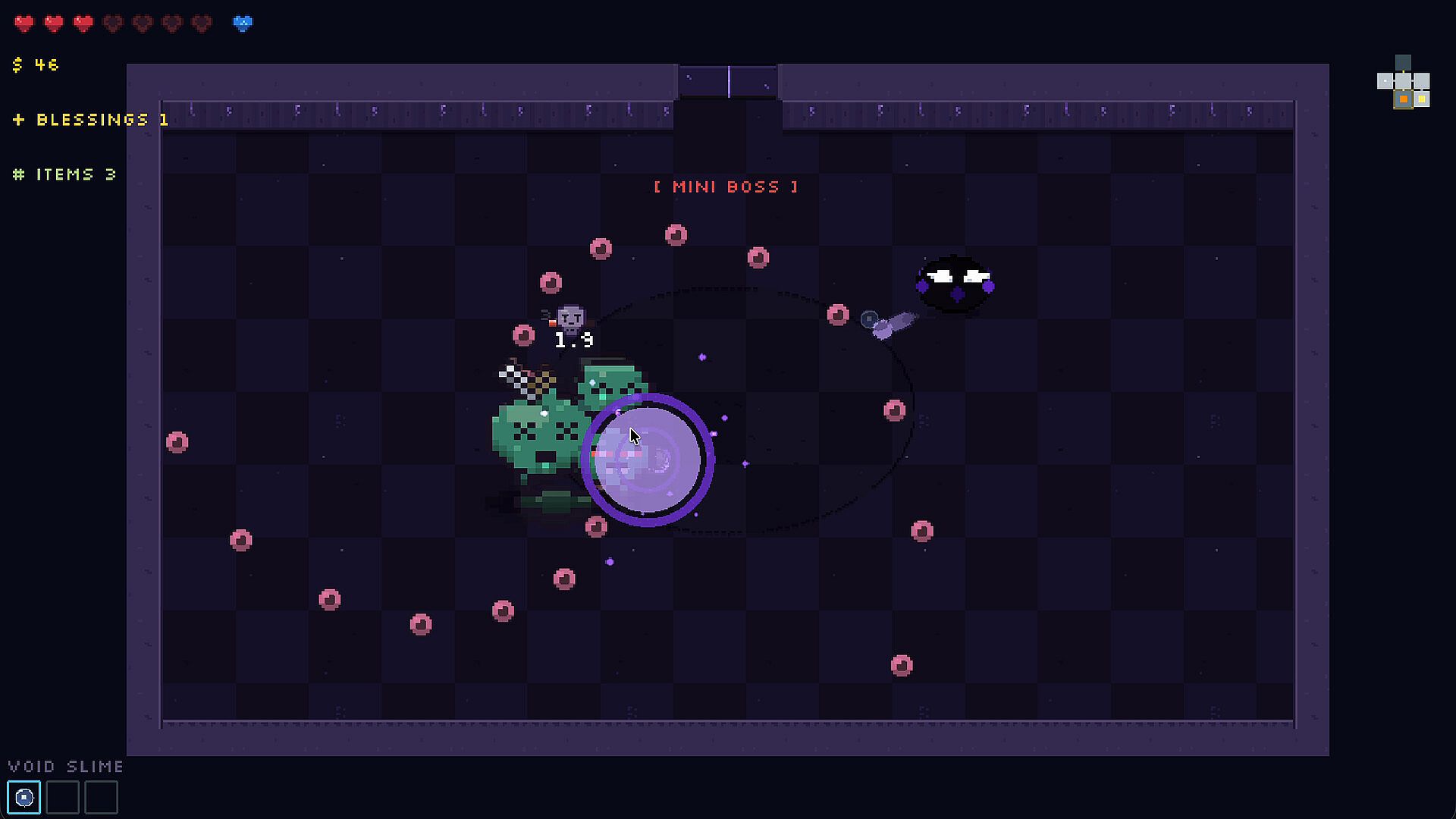
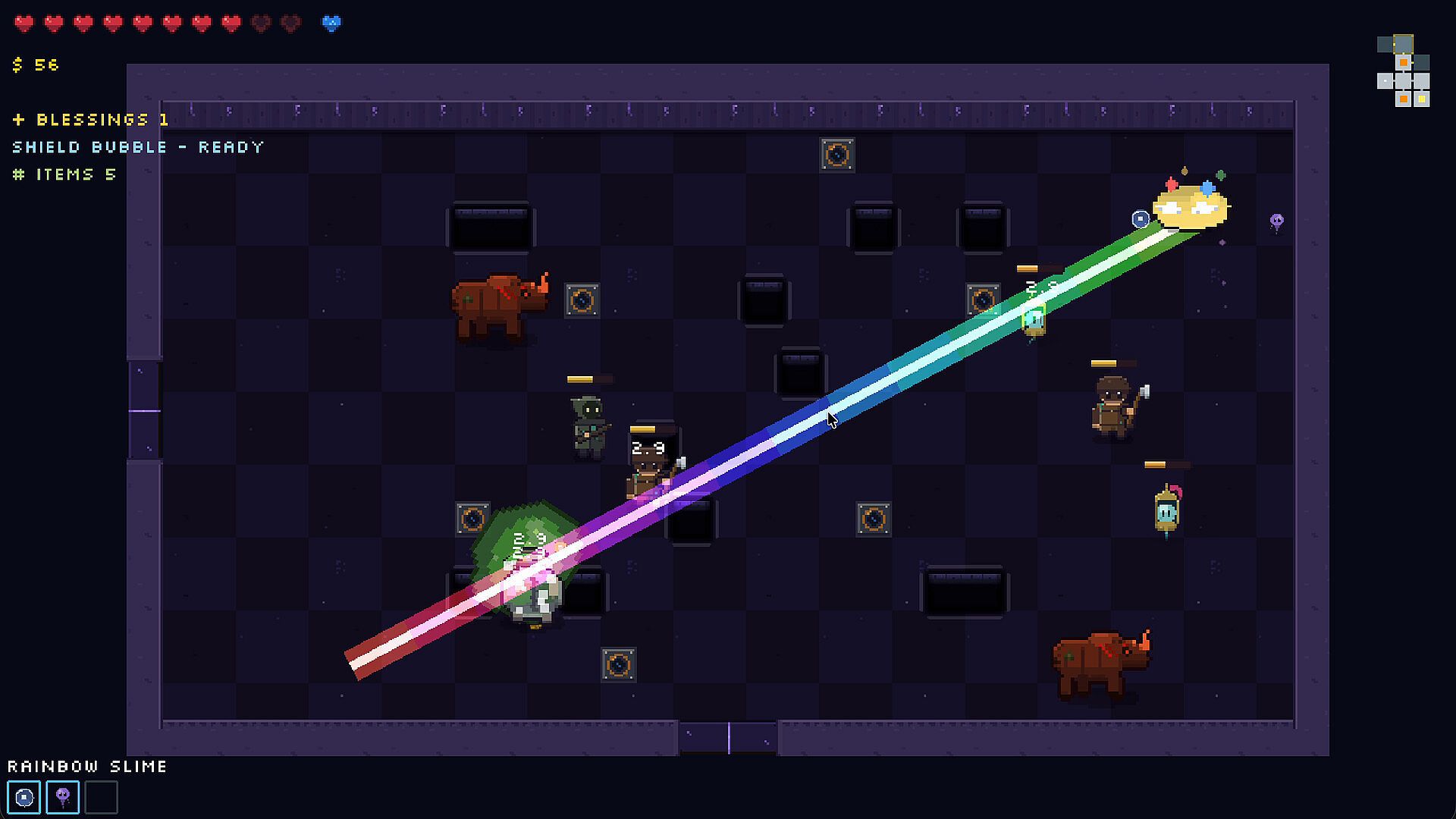
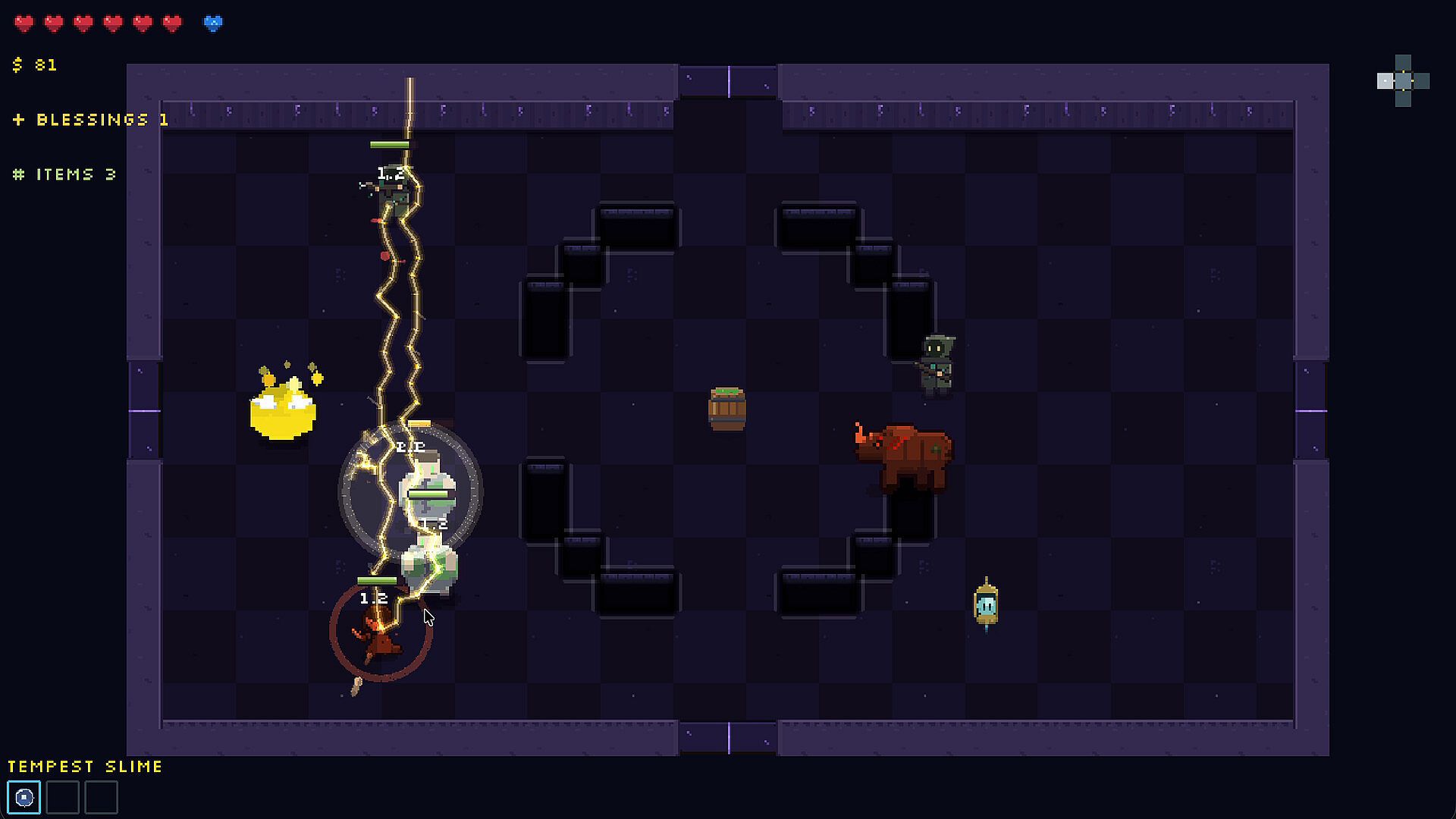
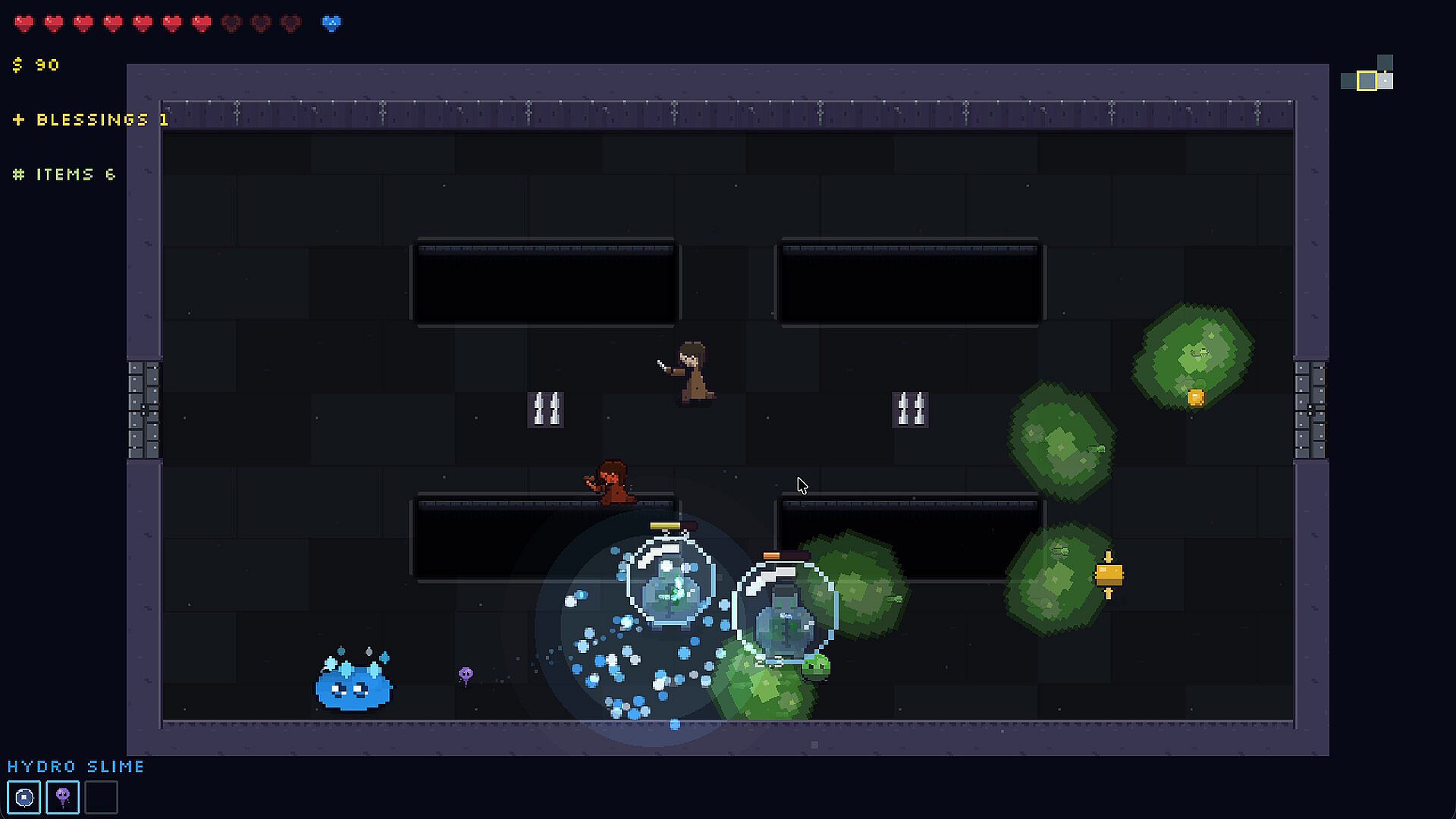
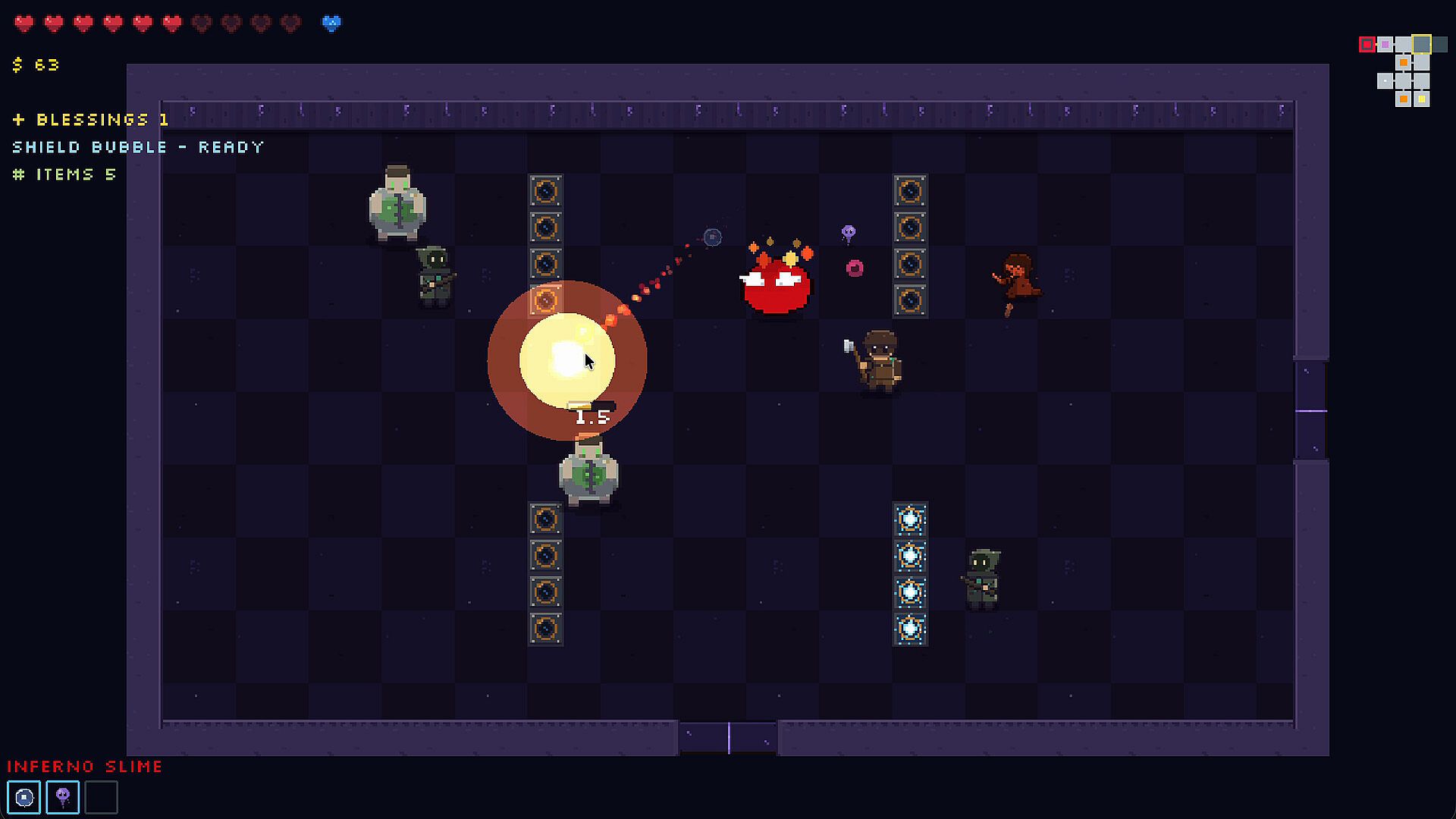
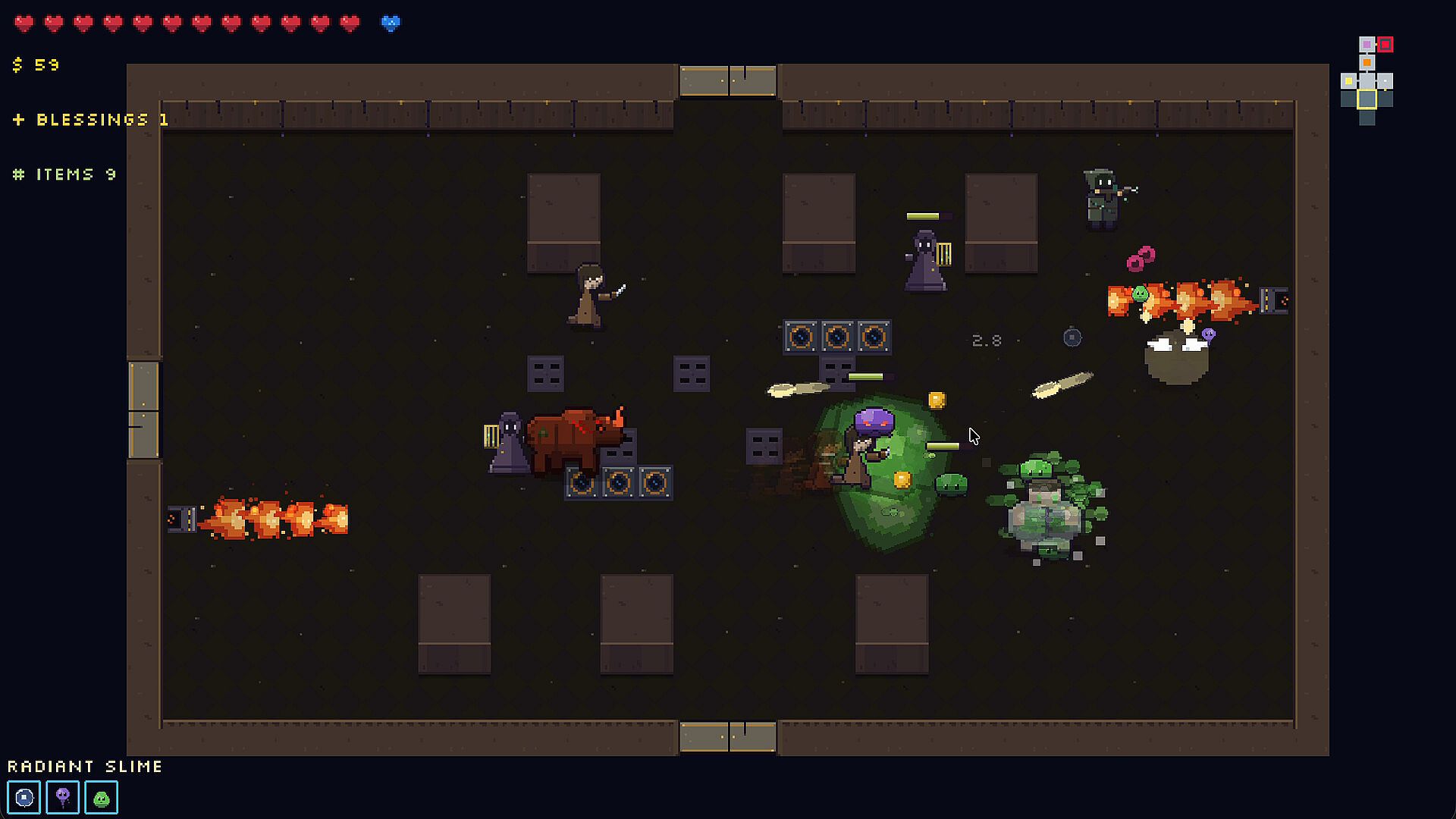
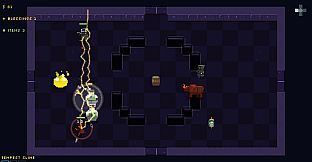
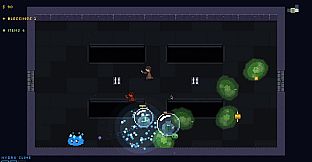
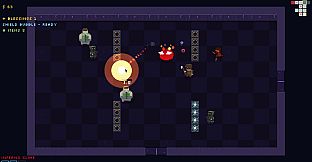
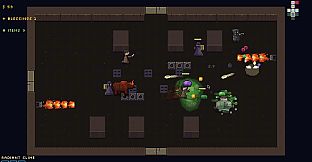
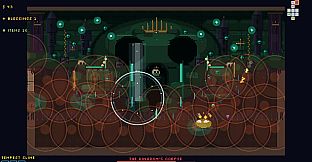
Mool: Chroma is a top-down roguelite action indie game set on PC where players control a small slime that turns the tables on the kingdom's heroes. The core premise places the player as the monster that emerges after generations of slime farming for loot and experience. Runs focus on fast combat against oversized threats while building unique power sets through color absorption and mixing.
Gameplay
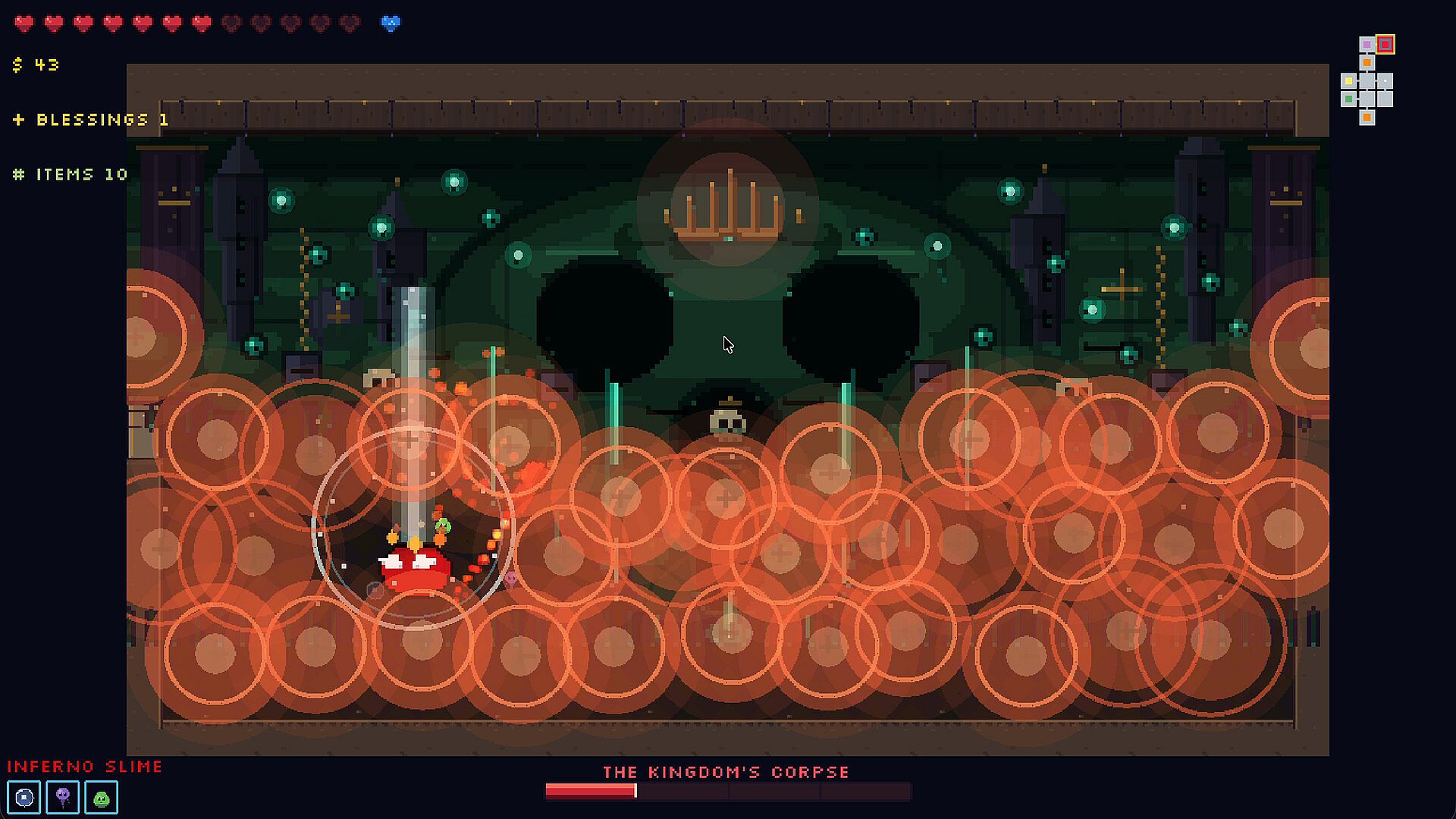
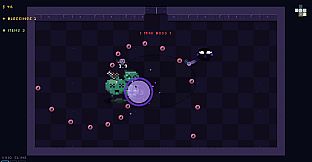
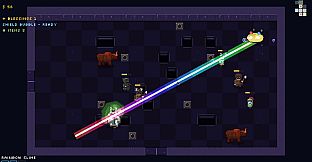
The central loop revolves around absorbing five base atoms: red, yellow, blue, white, and shadow. These combine in different ratios to create varied effects. Red paired with yellow produces burning damage, while blue mixed with shadow delivers biting attacks. Deeper stacks of a single color trigger full awakenings that transform the slime's capabilities into entirely new forms. Each run assembles a distinct weapon from these light and pigment interactions, resulting in explosive shells, chain lightning, piercing beams, homing curse missiles, or a singularity that collapses an entire room.
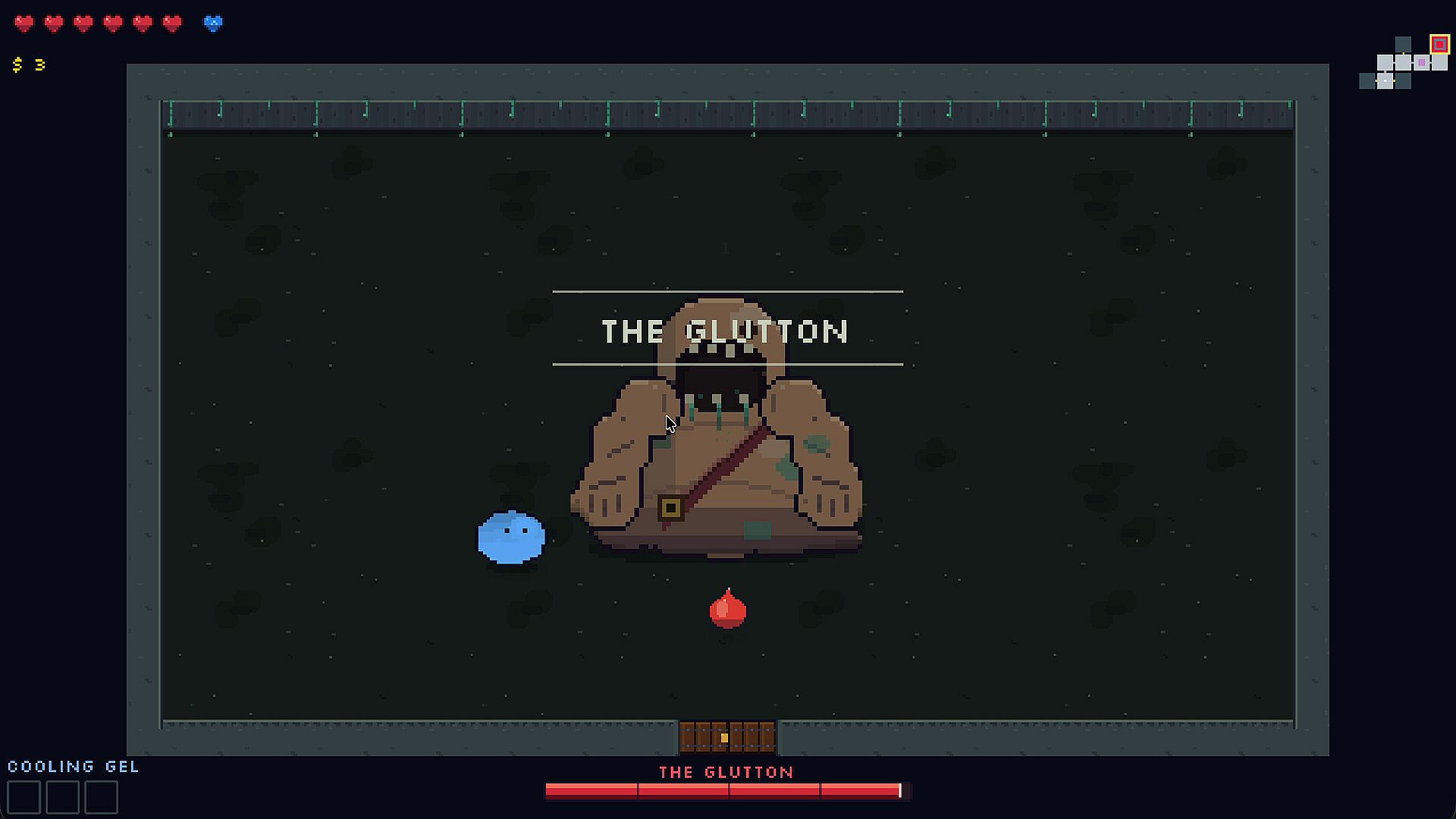
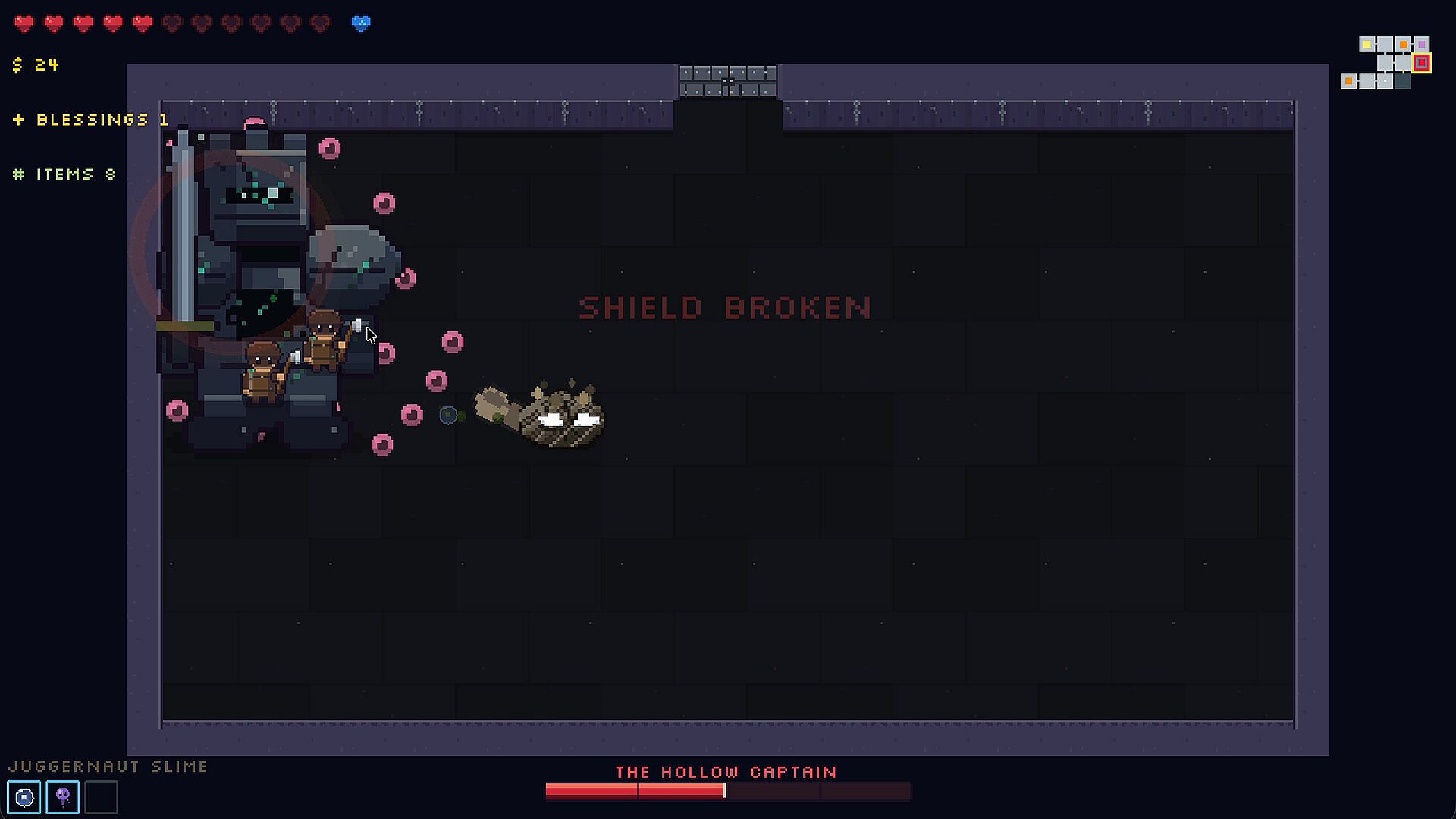
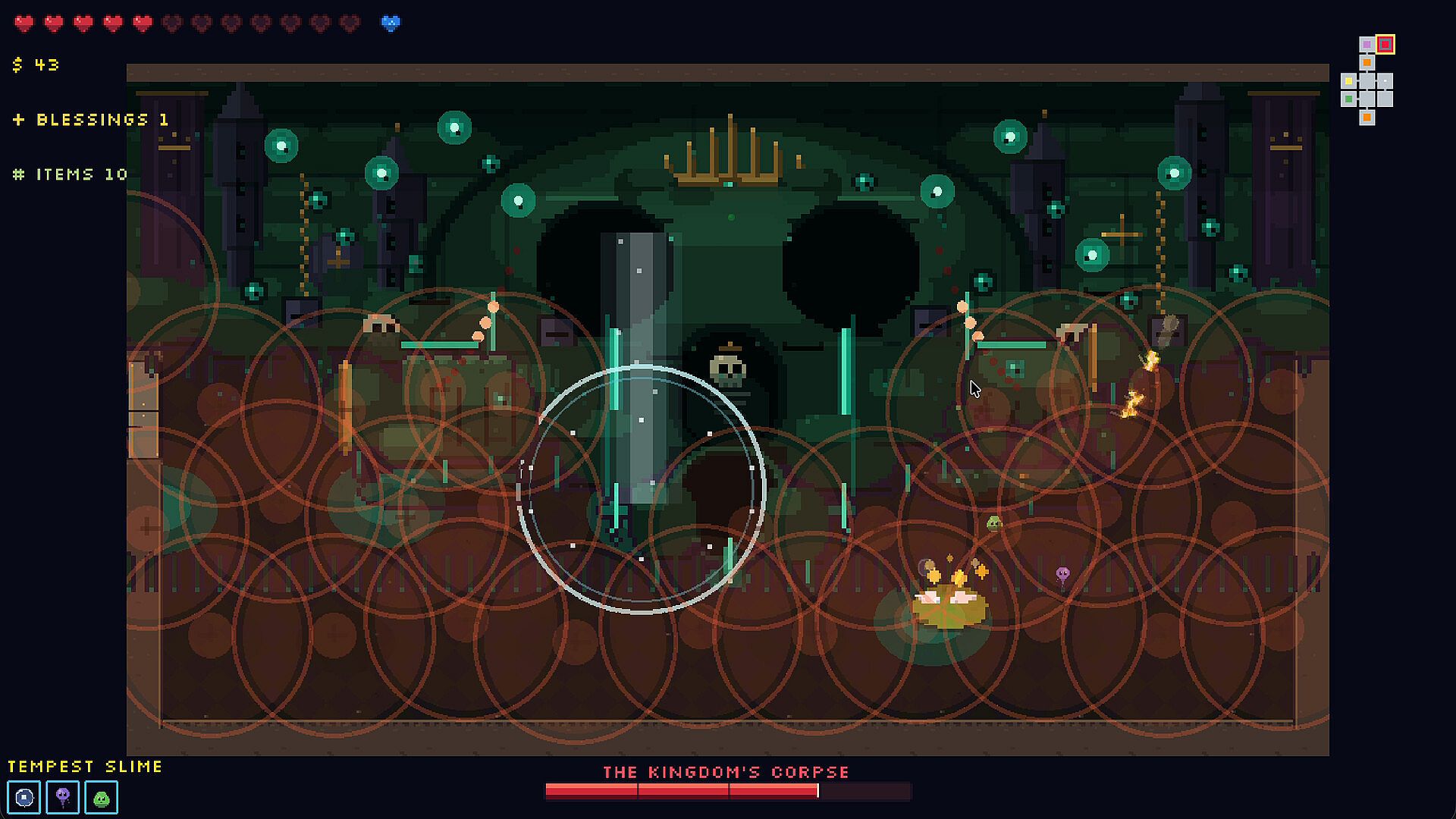
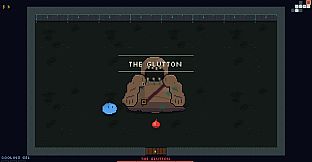
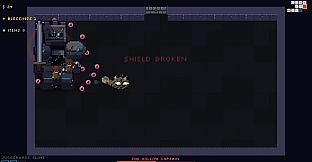
Combat stays quick and top-down, emphasizing positioning against larger enemies. The five champions at the kingdom's depths serve as major encounters, each twisted beyond recognition: a glutton that never stops eating, a hunter locked in endless drawing, a mage who came undone, a captain whose armor fights on without him, and the king who consumed slimes until he became a wall of black ichor crowned and watching with a hundred eyes. Procedural generation keeps room layouts fresh every attempt while hand-built structures provide consistent challenge points across the five stages.
Sound and visuals generate entirely at runtime through custom code, with only bitmap font atlases as static assets. This produces unique pixel art textures and audio notes for every play session. Controls support full rebinding for keyboard and gamepad, and progression tracks unlocks alongside a conquest grid and personal run records.
Game Modes
Standard play consists of roguelite runs lasting 20 to 30 minutes across five stages. Three difficulty levels scale enemy behavior and resource availability. The altar system functions as a core risk-reward layer within every run, dropping curses instead of standard blessings. These stack and degrade performance, yet the altar allows trading accumulated curses for greater rewards the longer they are held. Greed becomes a deliberate mechanic, encouraging players to endure harsher conditions for amplified payouts at the end of a stage or run.
Thirty color forms and nine apex awakenings sit at the top of the progression tree, with ninety-six pickups available to discover and combine. No separate multiplayer or versus modes appear in the design. All activity centers on single-player runs that emphasize build experimentation and repeated attempts to reach apex forms or clear higher difficulties.
Color Systems and Builds
Color mixing drives the majority of strategic depth. Shallow combinations yield immediate tactical options such as area burns or piercing shots, while committing heavily to one atom unlocks specialized apex states. No two runs produce identical loadouts because the mixing tree branches widely and procedural elements alter pickup placement. Players assemble offensive tools on the fly rather than selecting from fixed classes, which rewards quick adaptation during each stage.
The system avoids static upgrades in favor of dynamic assembly. A run might emphasize chain reactions one attempt and focused singularities the next, depending on which atoms appear and how they are stacked. This keeps the 20-to-30-minute sessions varied without requiring external content updates.
Is It Worth Playing?
Mool: Chroma suits players who enjoy short, replay-heavy roguelite sessions built around creative build crafting rather than story or exploration. The color-mixing combat and curse-trading altar create meaningful decisions each run, while the fixed five-stage structure and three difficulties provide clear goals. Procedural generation combined with hand-crafted rooms maintains freshness across multiple attempts, and the fully generated audio and visuals add a distinct layer of variety.
Those drawn to top-down action with strong emphasis on experimentation and risk management will find the systems rewarding. The absence of multiplayer or seasonal content keeps the focus narrow on core loop mastery and record chasing through the conquest grid. Availability remains limited to PC at present.