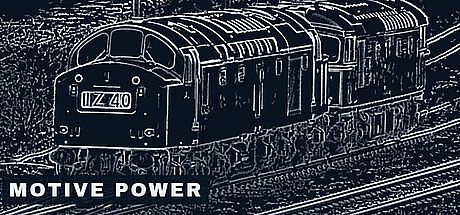



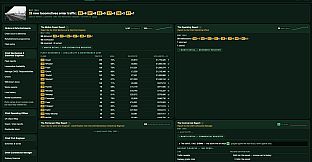
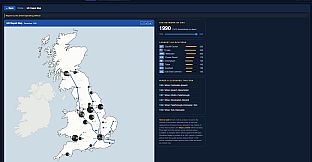
Motive Power is a strategy simulation game set on PC that places players in charge of British Railways during the diesel and electric transition. From 1955 to 1994, the Modernisation Plan provides capital to phase out steam locomotives, and every decision about ordering, allocating, maintaining, and retiring classes falls to the player as chief executive. The experience focuses on long-term fleet planning across four decades rather than operating individual trains or managing signals and timetables.
Gameplay
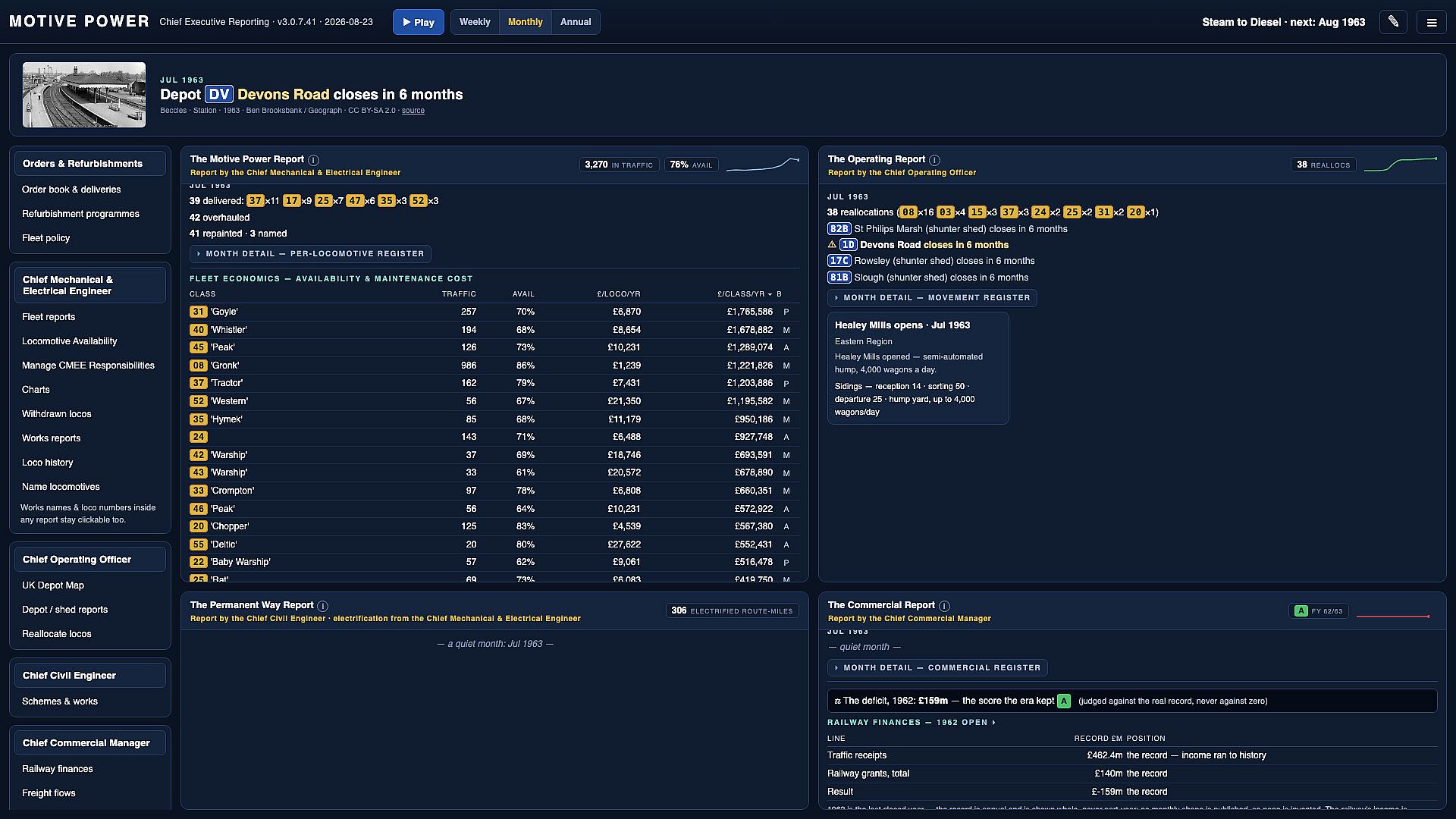
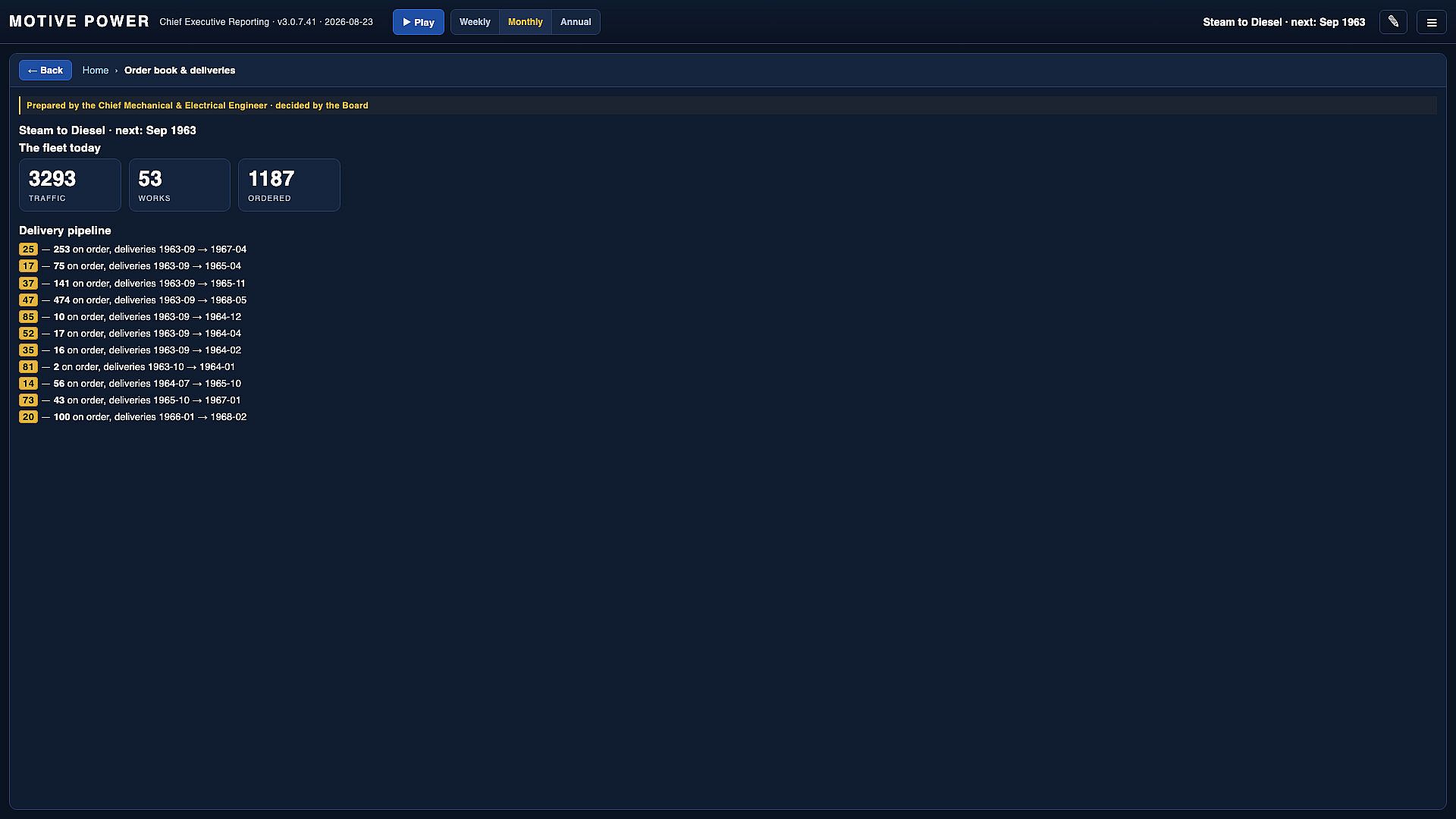
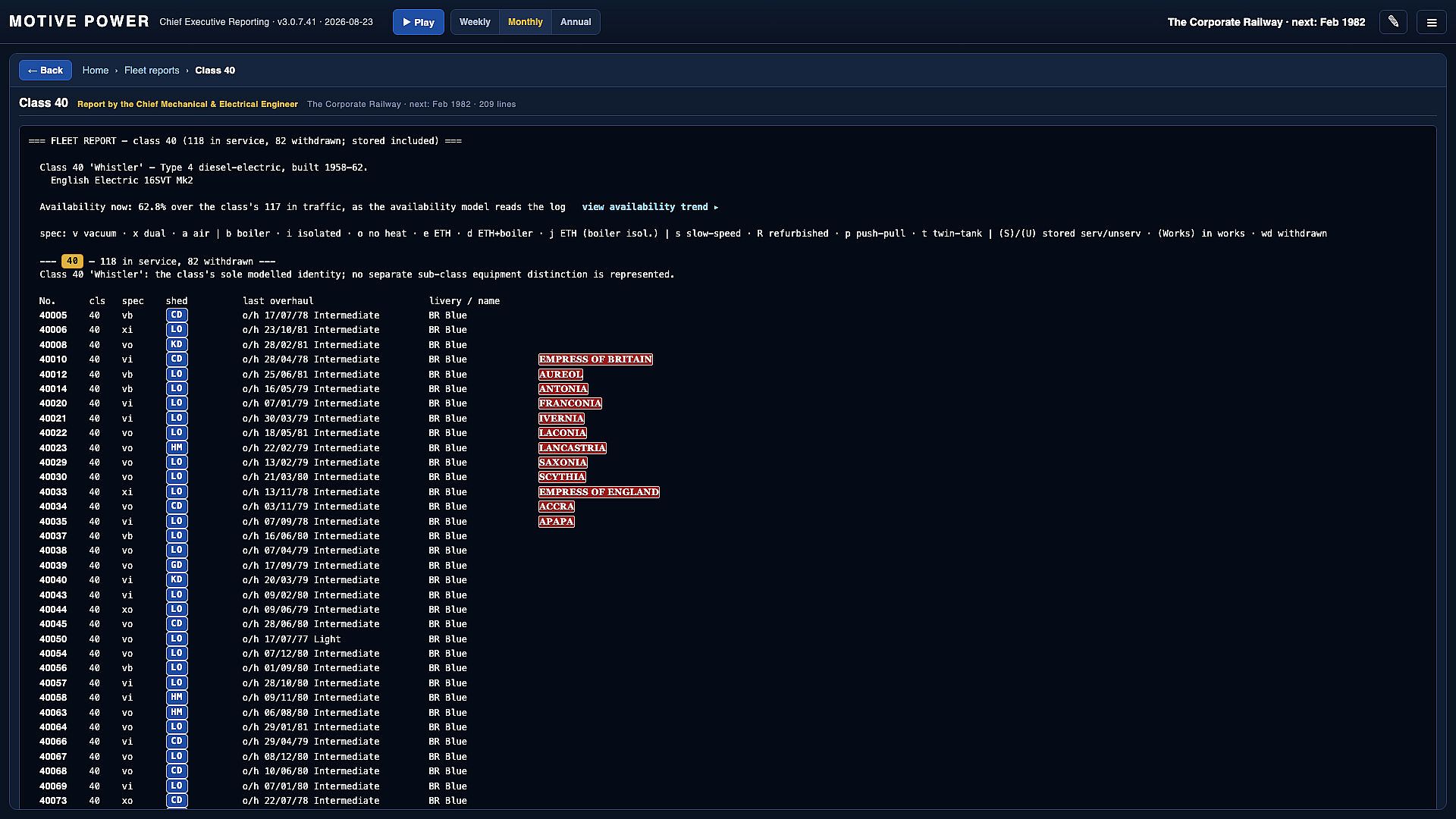
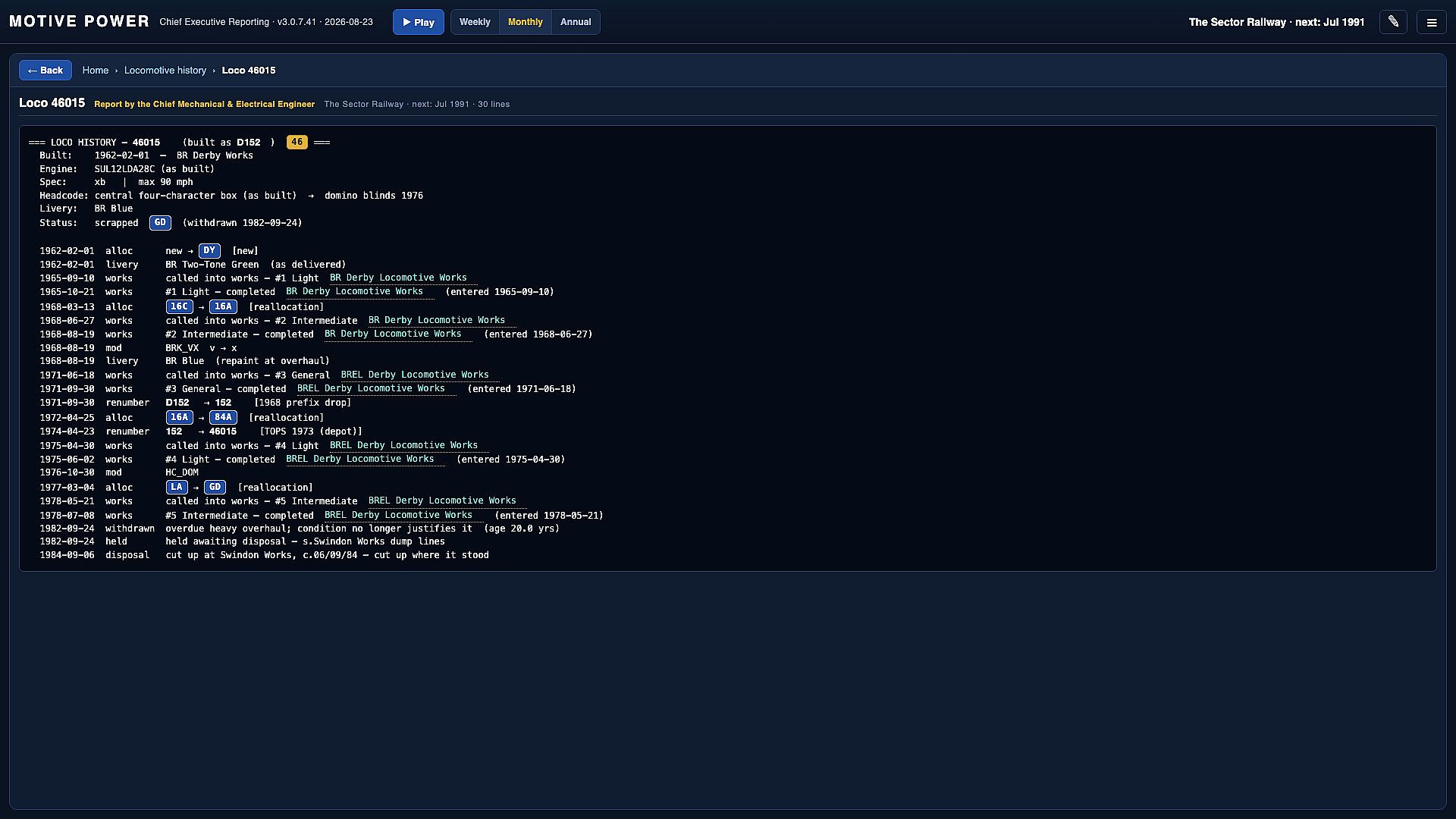
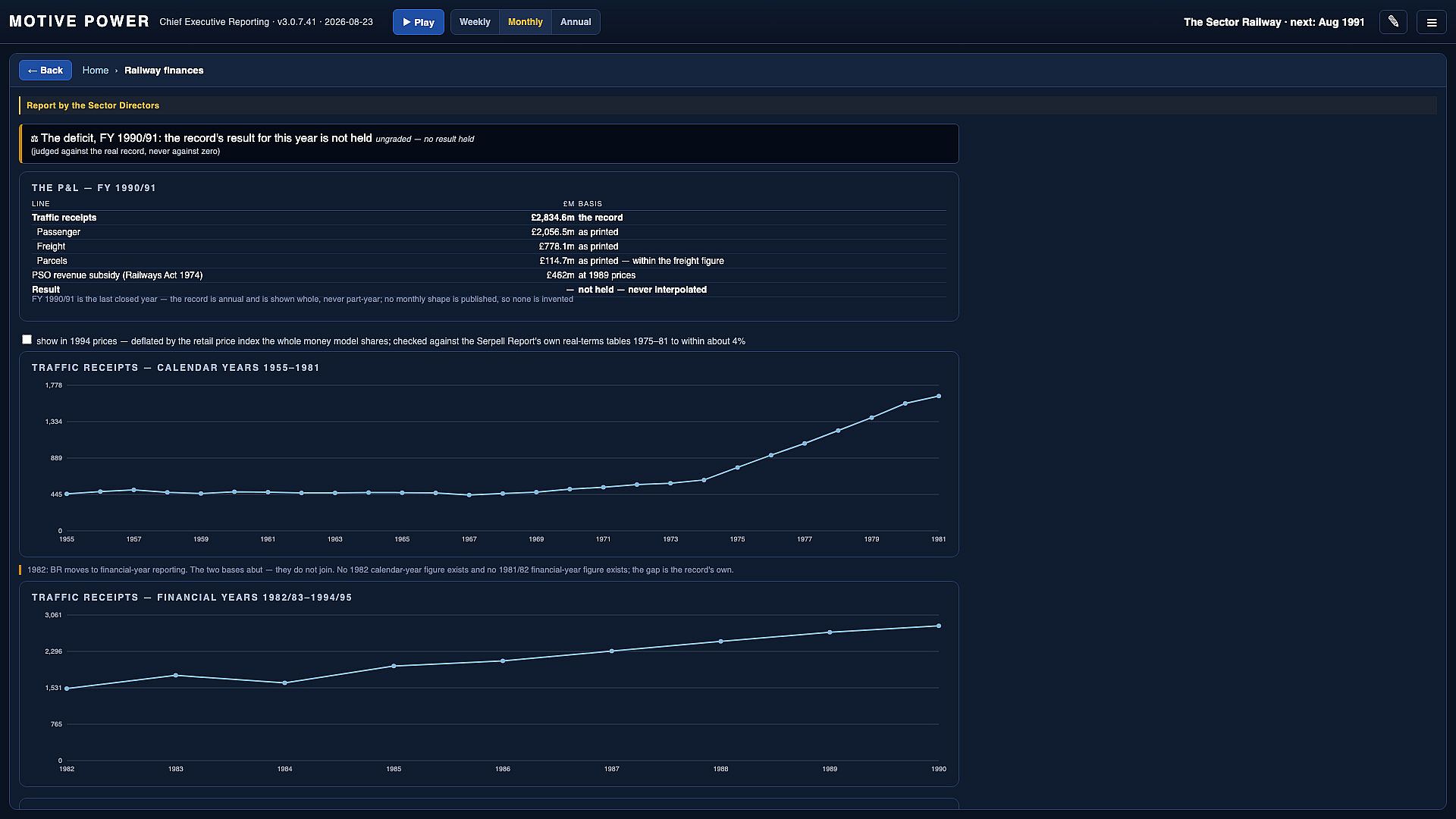
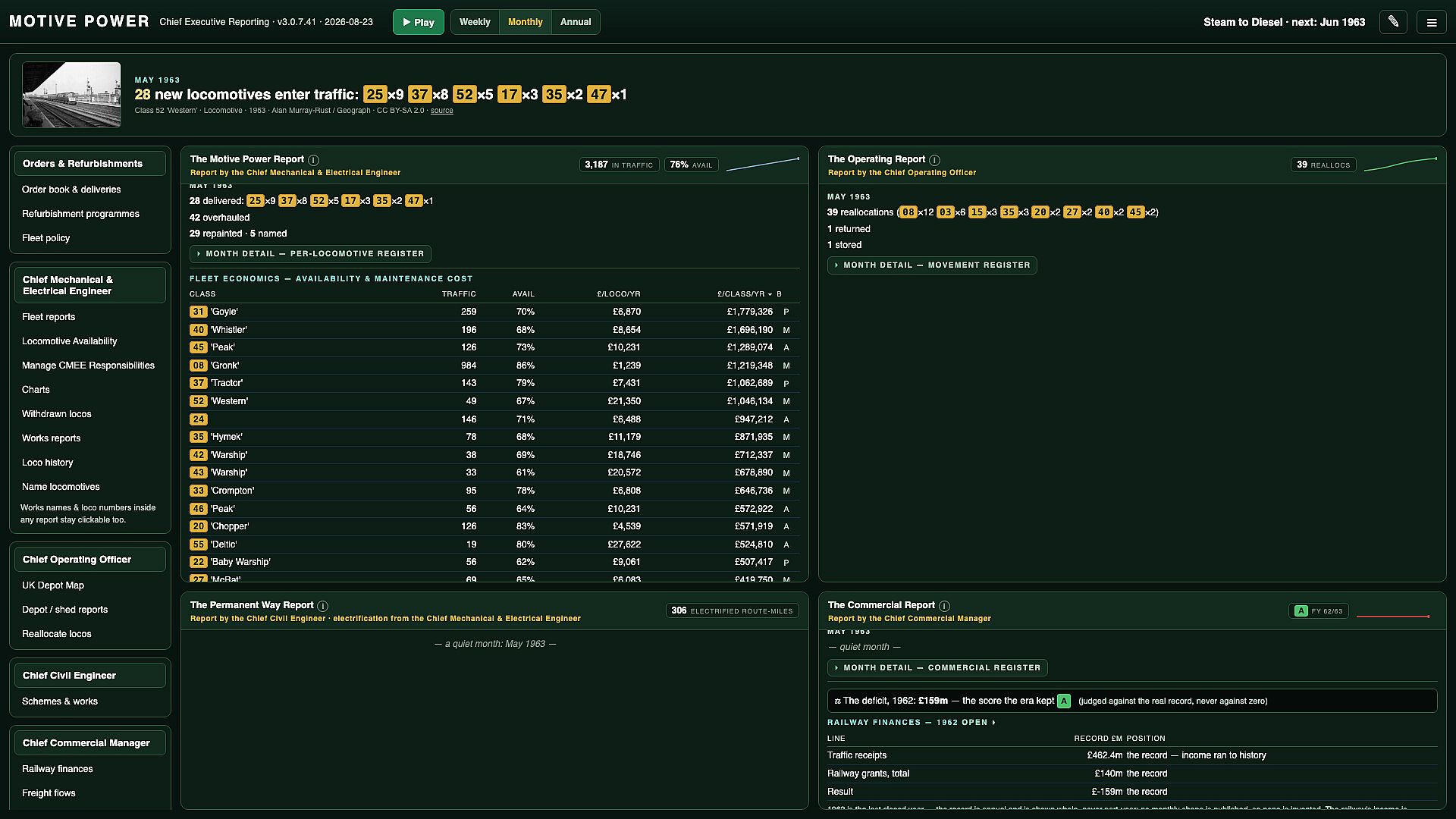
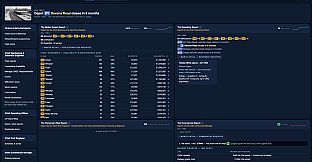
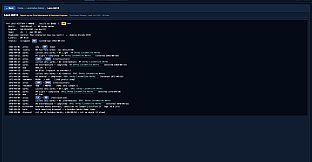
Each month requires attention to fleet construction, operational reliability, and two separate budgets. Capital covers new orders, refurbishments, and conversions while a maintenance allowance covers day-to-day running costs. Neglecting overhaul schedules leads to failures in traffic because every locomotive carries its own works history and equipment status. Works capacity remains finite and shared, forcing careful scheduling of repairs across the network.
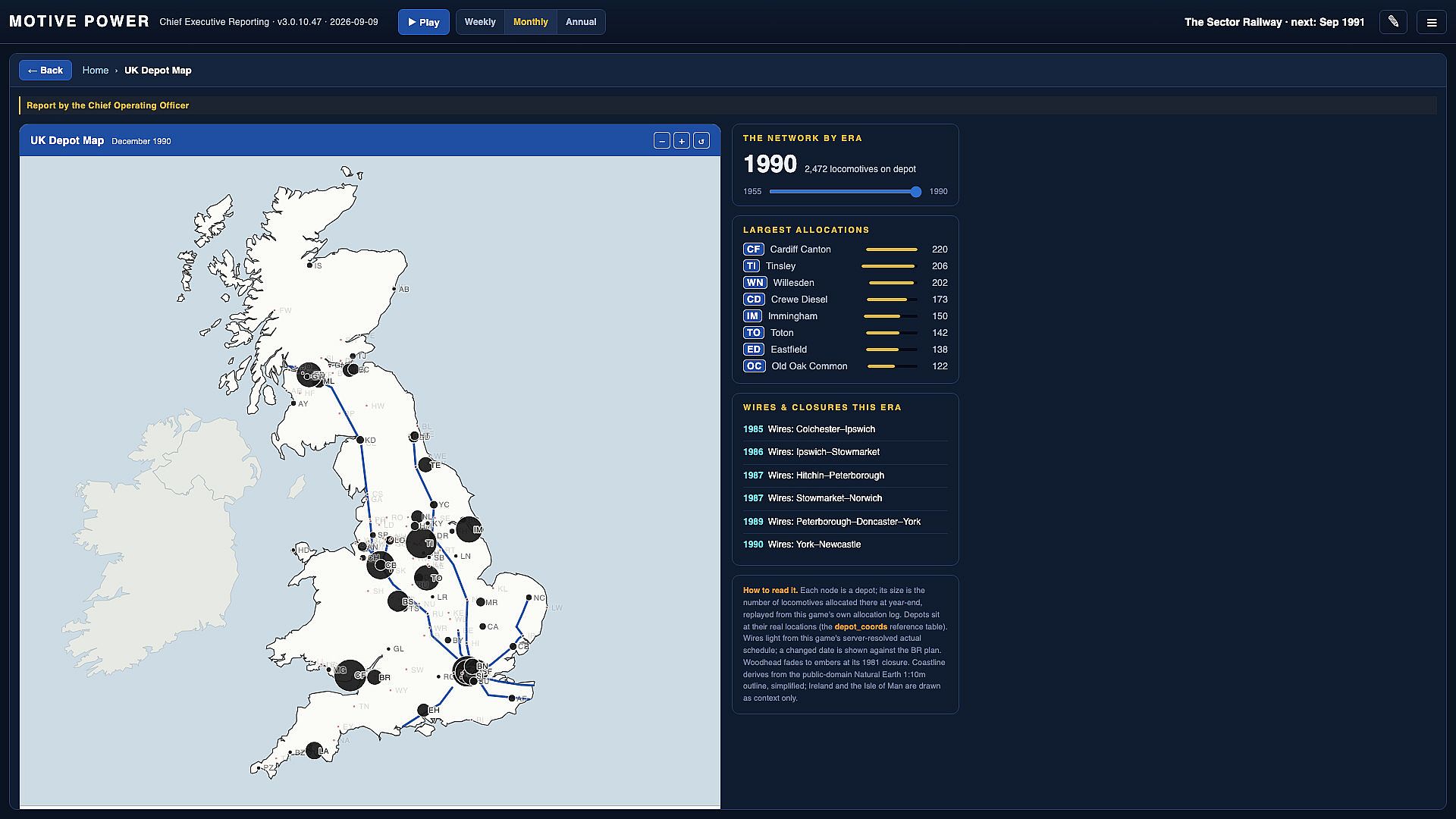
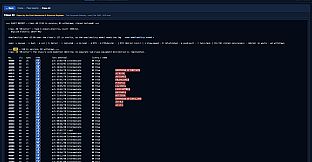
Allocation decisions place classes at real depots that open, close, and specialise over time. Programmes such as electric train heating, dual brakes, life-extension refurbishments, and sub-class conversions follow historical timelines or player-chosen paths. External events including the Beeching reports, the 1968 Transport Act, oil shocks, strikes, and sectorisation arrive on their actual dates and impose specific requirements.
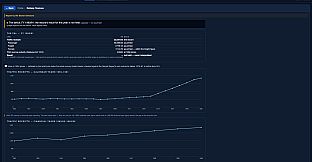
At the end of each year a report card grades performance against the real railway on metrics such as budget adherence, fleet availability, and costs. The final 1994 summary compares four decades of choices directly with British Railways actual outcomes. All 51 locomotive classes receive individual research, and each machine functions as a distinct unit rather than a generic type.
Game Modes
Two distinct approaches shape the campaign. Historical mode functions as a calibrated museum where the fleet follows the documented record as closely as possible and any deviations receive direct measurement against reality. Living economy mode introduces demand-driven consequences so surpluses move into storage while deficits trigger Treasury pressure and alternative-history outcomes.
Neither mode ends in failure. The score simply records the results of the chosen path, allowing continued play to observe long-term effects. Deterministic worlds ensure that identical starting seeds produce identical event sequences, supporting repeatable testing of different strategies.
Core Systems and Interface
The interface adopts period-appropriate styling that evolves from early BR green boardroom aesthetics to later sector-era designs. Period railway photography appears throughout to ground decisions in visual context. A full in-game player guide explains every mechanic without requiring external reference.
Era selection allows starts anywhere from the 1955 Pilot Scheme through to the 1993 sector railway. This flexibility supports shorter campaigns or full four-decade runs. The emphasis remains on strategic fleet oversight rather than minute operational control.
Is It Worth Playing?
Motive Power suits players who enjoy detailed management simulations and historical railway operations. The combination of individual locomotive tracking, shared works capacity, dual budgets, and era-specific events creates a focused decision space that rewards careful planning over many in-game years. Those interested in the real British Railways modernisation story will find the historical mode particularly engaging because outcomes receive direct comparison with documented results.
The living economy mode adds replay value by letting demand and external pressures generate different long-term fleet compositions. With no game-over state, sessions can continue to explore consequences even after the 1994 endpoint. The depth of researched classes and deterministic structure supports repeated playthroughs for strategy refinement. Availability on PC makes it accessible for extended sessions where players can pause and review fleet status at any point.