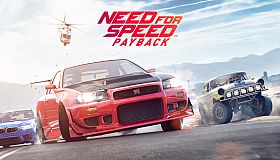
Need for Speed Payback is an arcade-style open-world racing game set in the fictional Fortune Valley. Players take control of three distinct characters working together in a single-player campaign to settle a score with a powerful criminal organization known as The House. The experience centers on high-speed driving across deserts, canyons, mountains, and urban areas, with a 24-hour day-night cycle that affects visibility and atmosphere during free roam and events.
Gameplay
The core loop revolves around acquiring and upgrading cars across five specialized classes: Race for circuit and street events, Drift for cornering-focused challenges, Off-Road for rough terrain runs, Drag for straight-line acceleration contests, and Runner for evasion and delivery-style missions. Each class demands tailored performance builds, and players switch between characters whose skills align with these disciplines. Tyler handles pure racing, Mac focuses on showy off-road and drift work, and Jess manages runner tasks that emphasize getting from point A to B under pressure.
Progression involves earning bank and REP through events while managing a Speed Card system for performance parts. This randomized upgrade approach requires collecting and combining cards to optimize each vehicle. Side bets add a risk-versus-reward element before many races, where extra currency can be wagered for higher payouts or lost on failure. Free roam exploration reveals collectibles like casino chips along with side activities such as speed traps, speed zones, long jumps, billboard smashes, and drift zones. Police encounters appear through scripted story sequences or pursuit boxes rather than constant free-roam pursuit.
Game Modes
The single-player campaign structures the main experience around story missions and league challenges. Players beat roaming racers from various street leagues to unlock boss encounters and advance toward a final high-stakes race. Events include sprint races on straight or short paths, circuit races with multiple laps, off-road races on dirt and trails, drag races emphasizing perfect launches and shifts, and drift events scored on style and angle through turns. Runner missions task players with timely deliveries or extractions while avoiding interference.
Multiplayer options center on Speedlists, which function as competitive tournaments mixing different event types against other players. Leaderboards track performance across events, and Autolog provides personalized recommendations for challenges against friends or rivals. AllDrive supports free-roam sessions where players can explore the map together, participate in impromptu meets, or set up quick races. These modes integrate with the single-player garage and progression without requiring constant online connectivity for the core story.
World and Progression
Fortune Valley serves as a connected playground blending glamorous casino districts with gritty outskirts and rugged natural terrain. Players rebuild abandoned derelict vehicles found in the world and customize them visually and mechanically for their chosen class. The story unfolds through heist-inspired set pieces and rival confrontations that tie the three protagonists together. Post-launch additions like Speedcross events expanded the available challenges without altering the foundational systems.
Performance tuning happens through live adjustments during events and deeper garage work. The emphasis stays on arcade handling with forgiving crashes that rarely reset progress entirely, allowing focus on speed, style, and completing objectives across the map.
Is It Worth Playing?
Player reception on Steam stands at Very Positive based on tens of thousands of reviews, reflecting appreciation for the driving feel, event variety, and open-world freedom. Critics assigned mixed scores around the low 60s on aggregate sites, often citing the upgrade system's friction at launch and a straightforward narrative. The game supports offline single-player fully and remains available for purchase with no requirement for ongoing subscriptions beyond the initial buy.
It suits players who enjoy arcade racers with a mix of story-driven missions, class-specific events, and light multiplayer competition. Those seeking deep simulation handling or extensive live-service updates may find the experience dated, while fans of varied race formats and crew-based campaigns will likely appreciate the focused action-driving loop. Current concurrent player numbers remain modest, indicating a niche but dedicated audience years after release.