





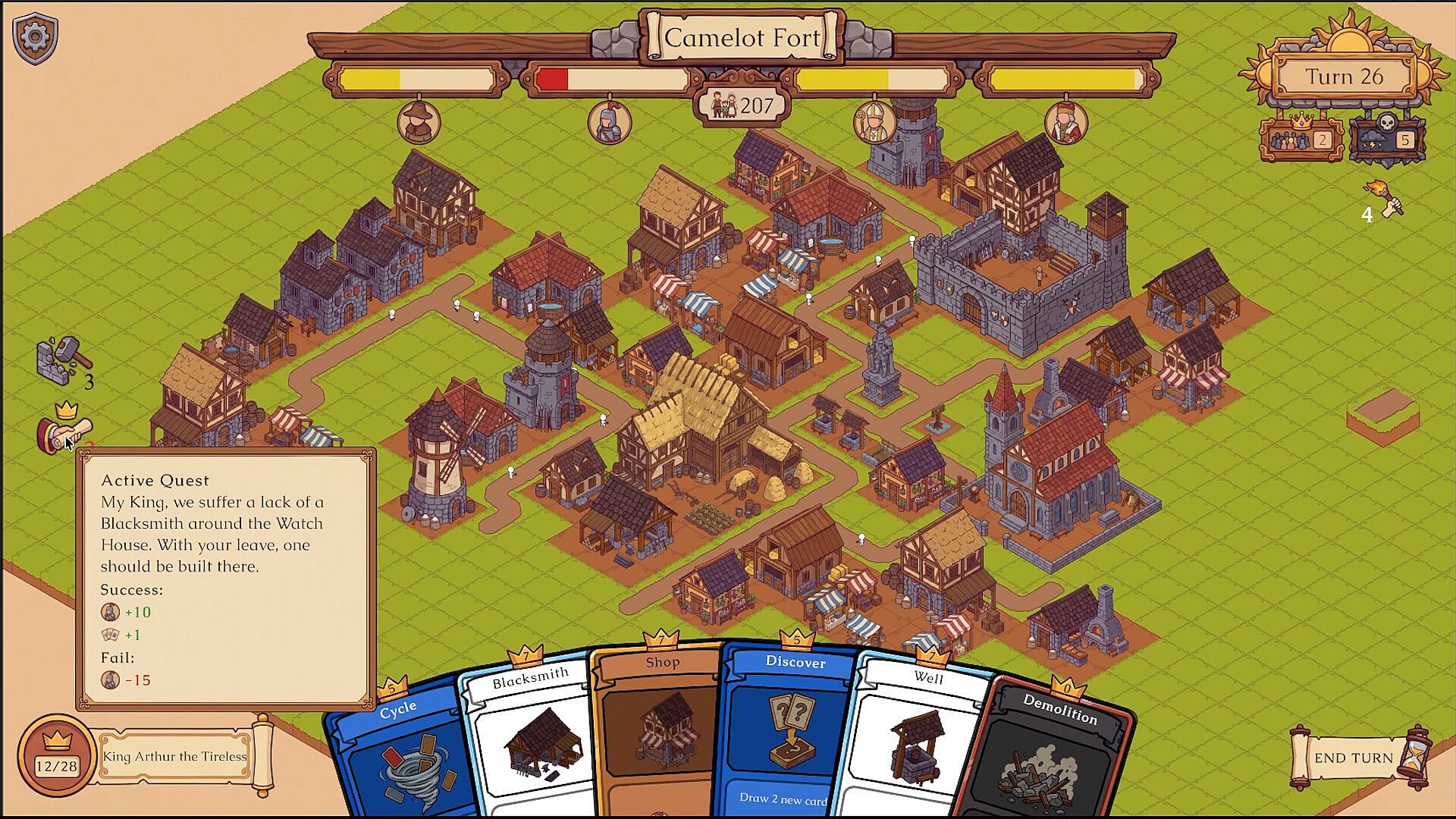
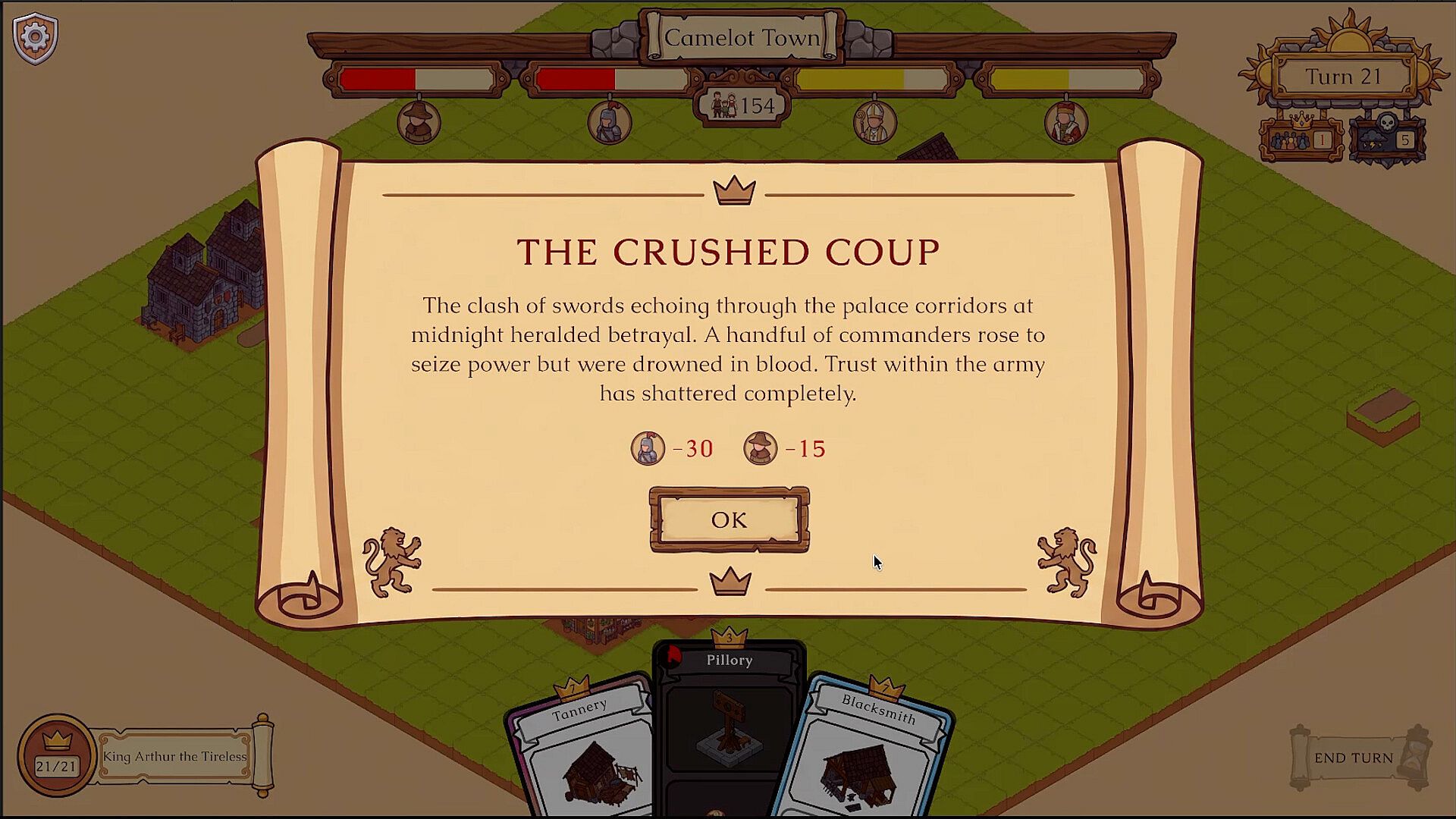
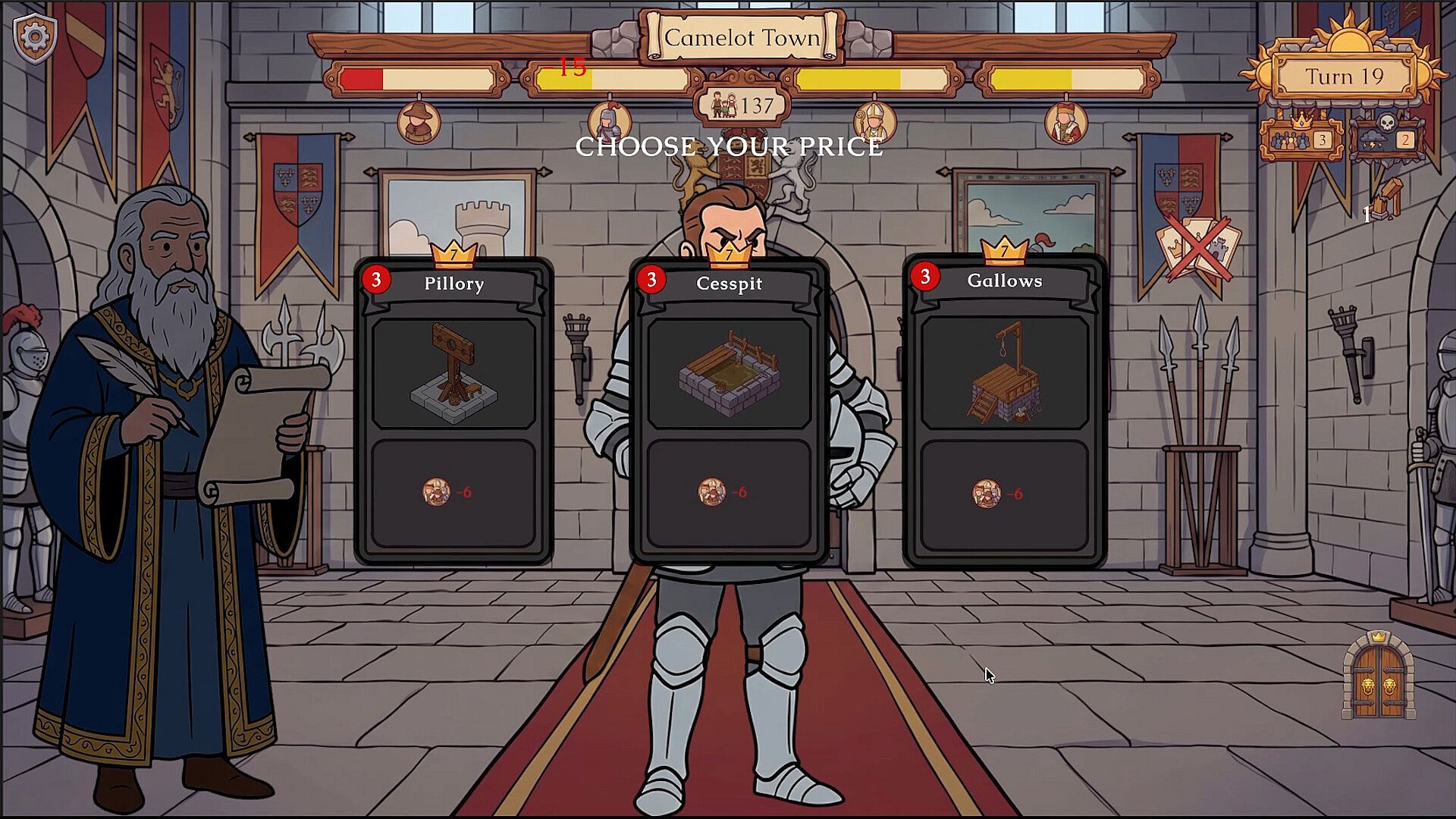
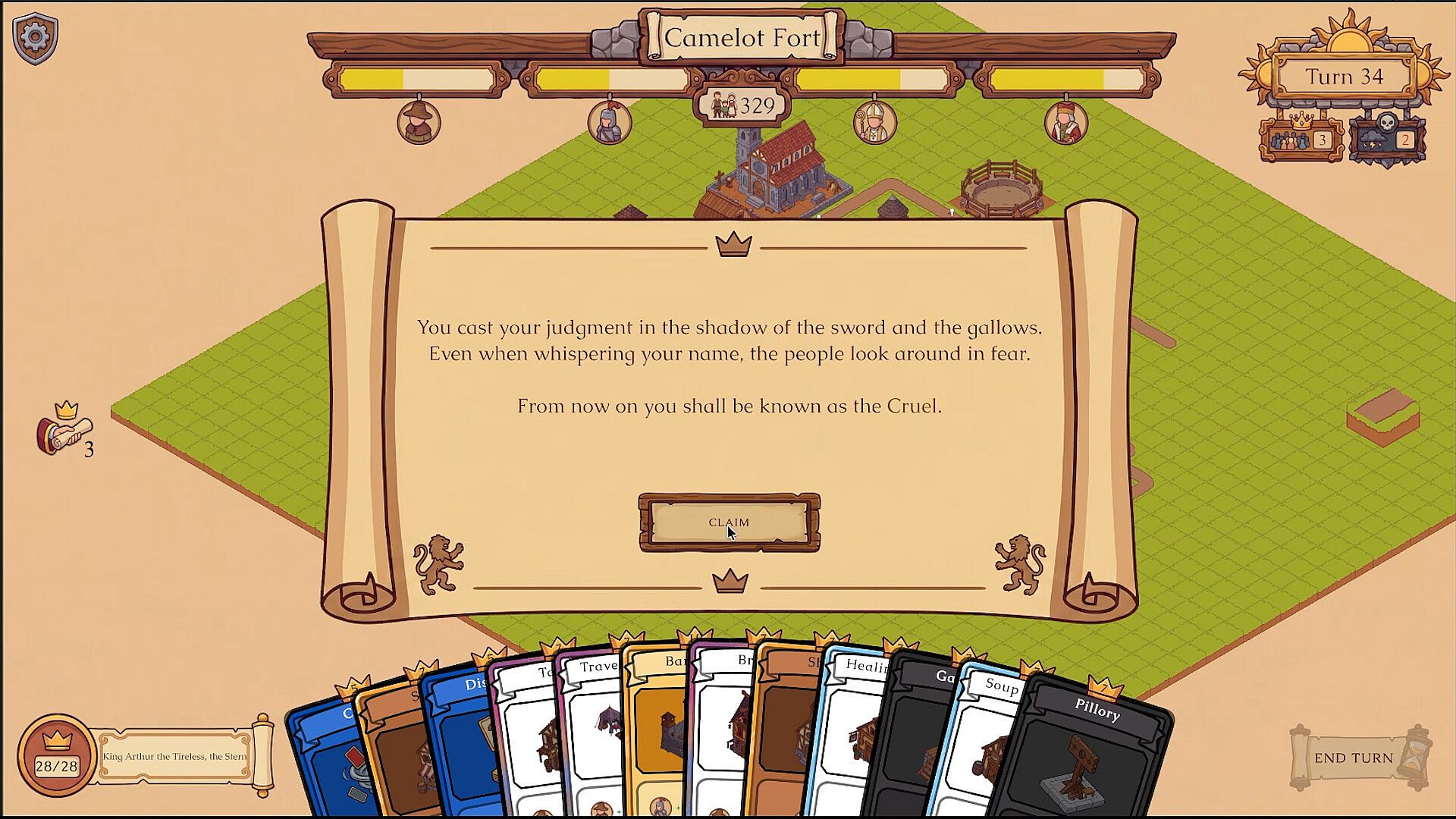
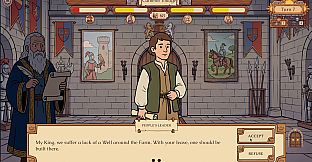
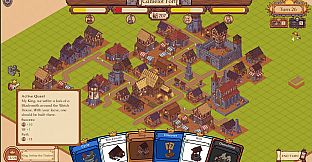
Not Yet King is a strategy indie simulation game for PC in which players assume the role of a ruler whose crown remains unearned. The experience centers on expanding a settlement through deliberate placement decisions while managing competing interests within the kingdom.
Gameplay
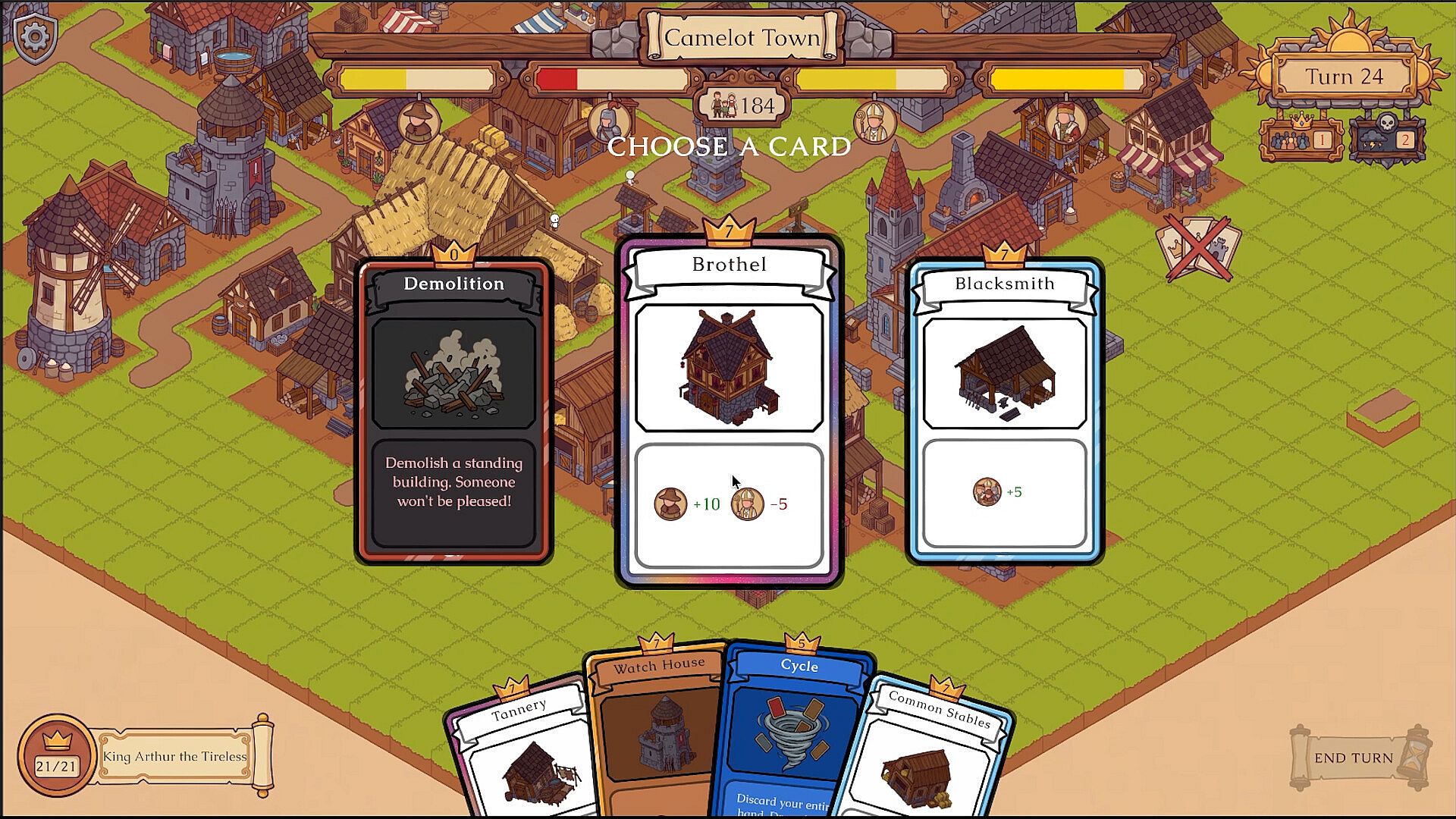
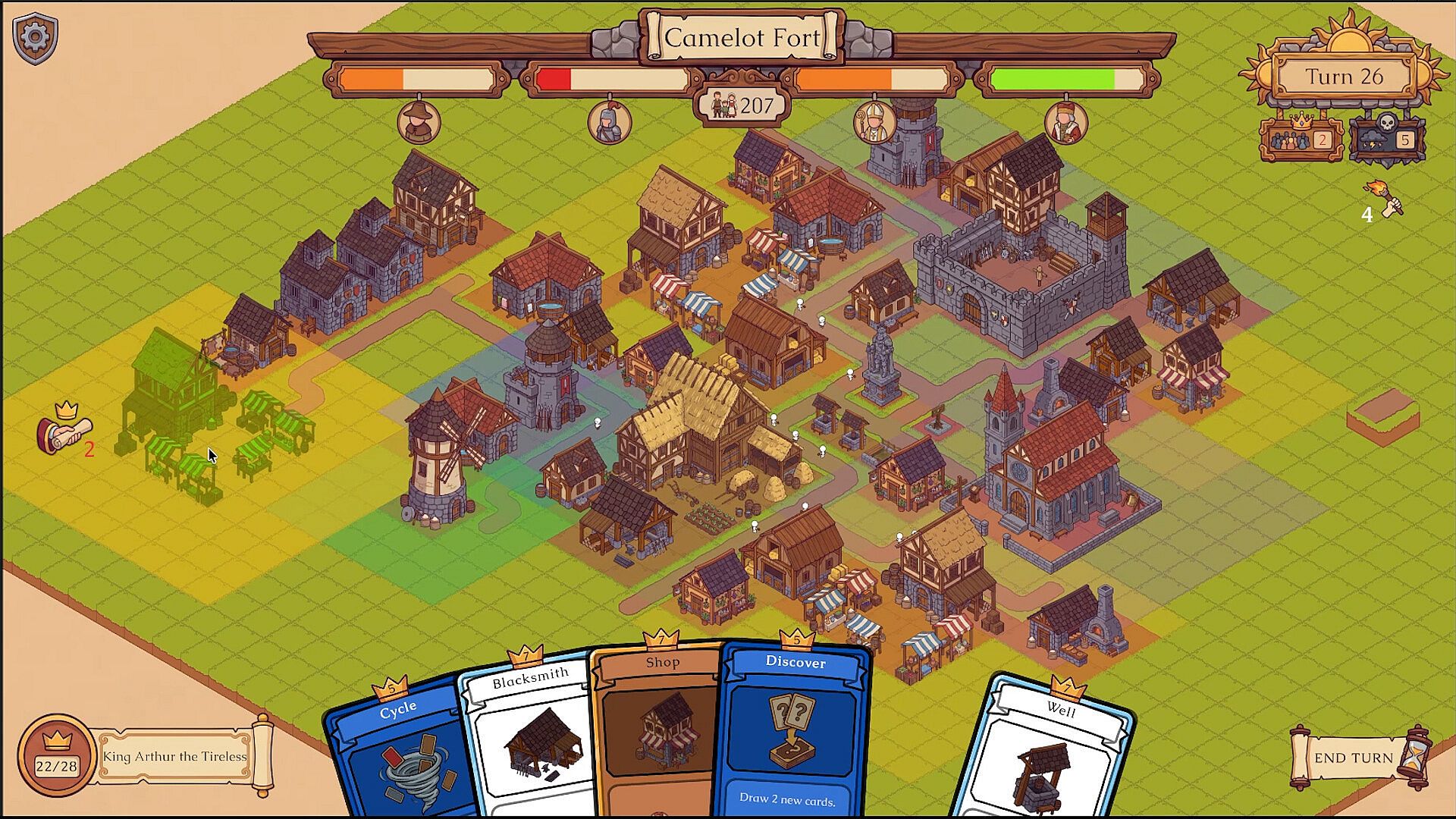
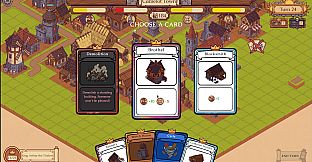
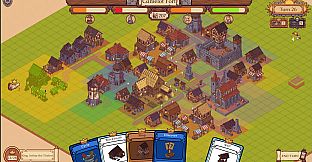
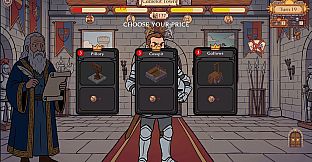
Core play revolves around constructing buildings represented as cards. Placement determines influence zones that overlap to generate synergies between structures. Growth occurs as population increases, gradually revealing more of the map and unlocking additional building options that evolve the settlement from village to city.
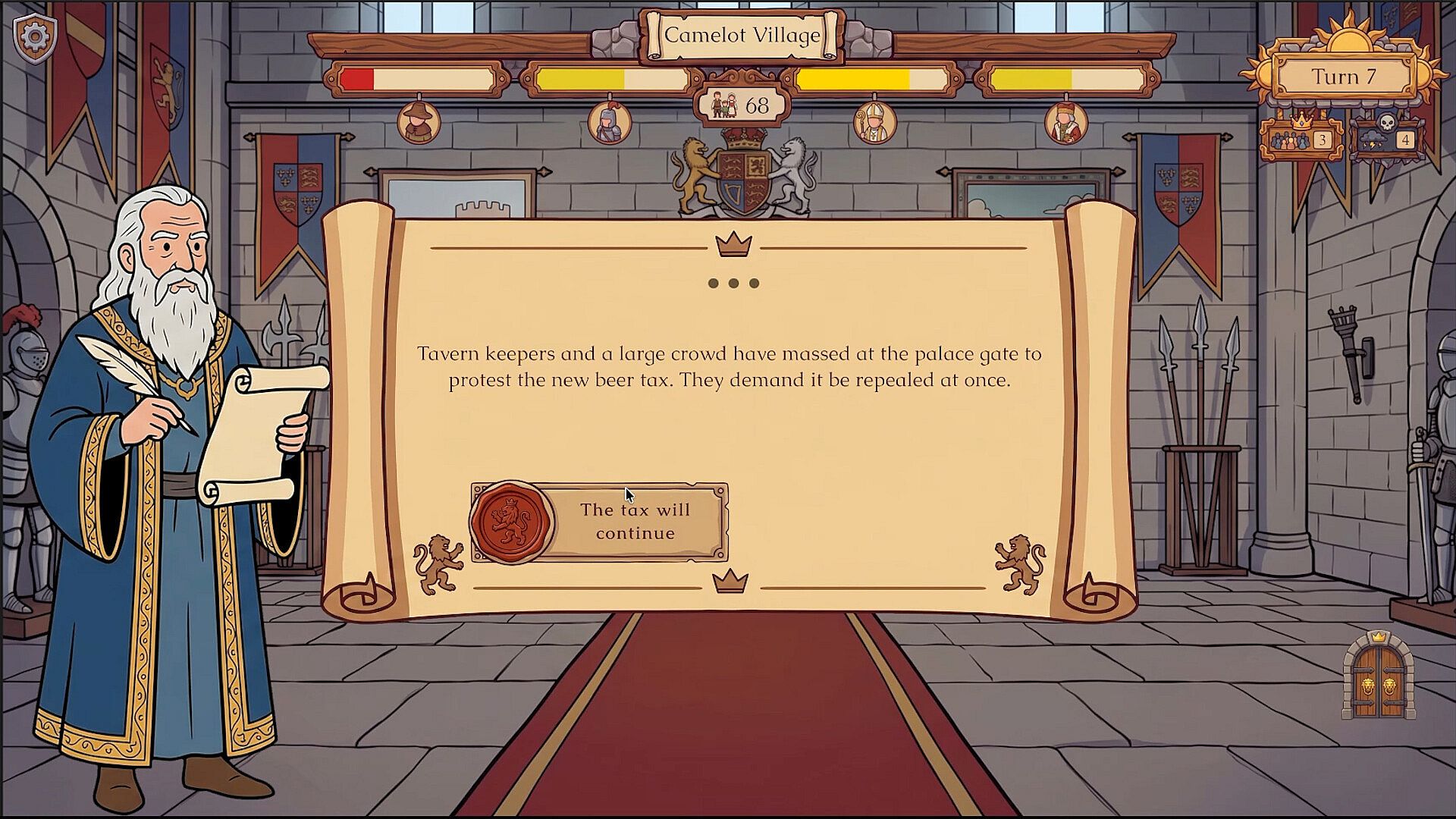
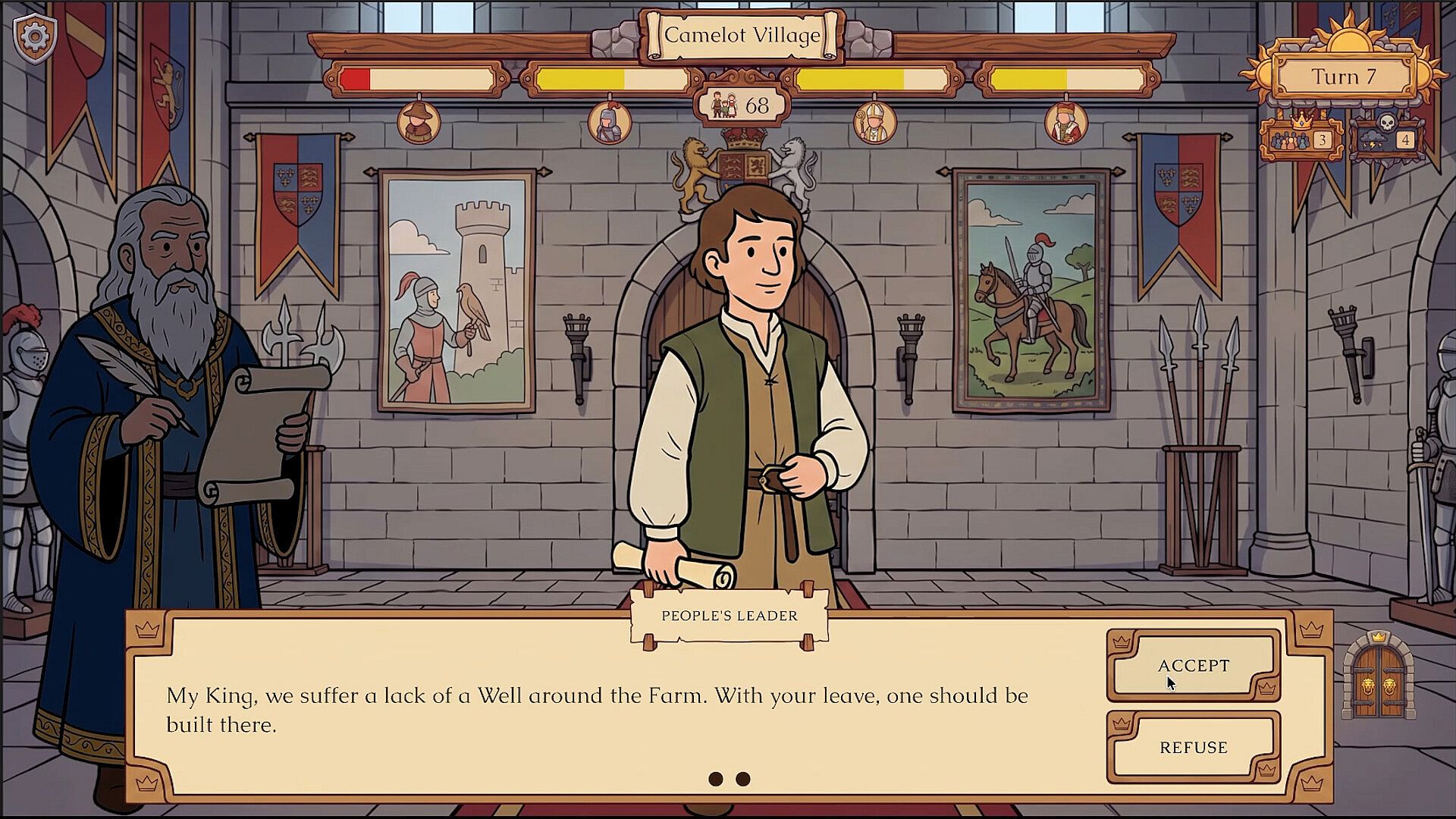
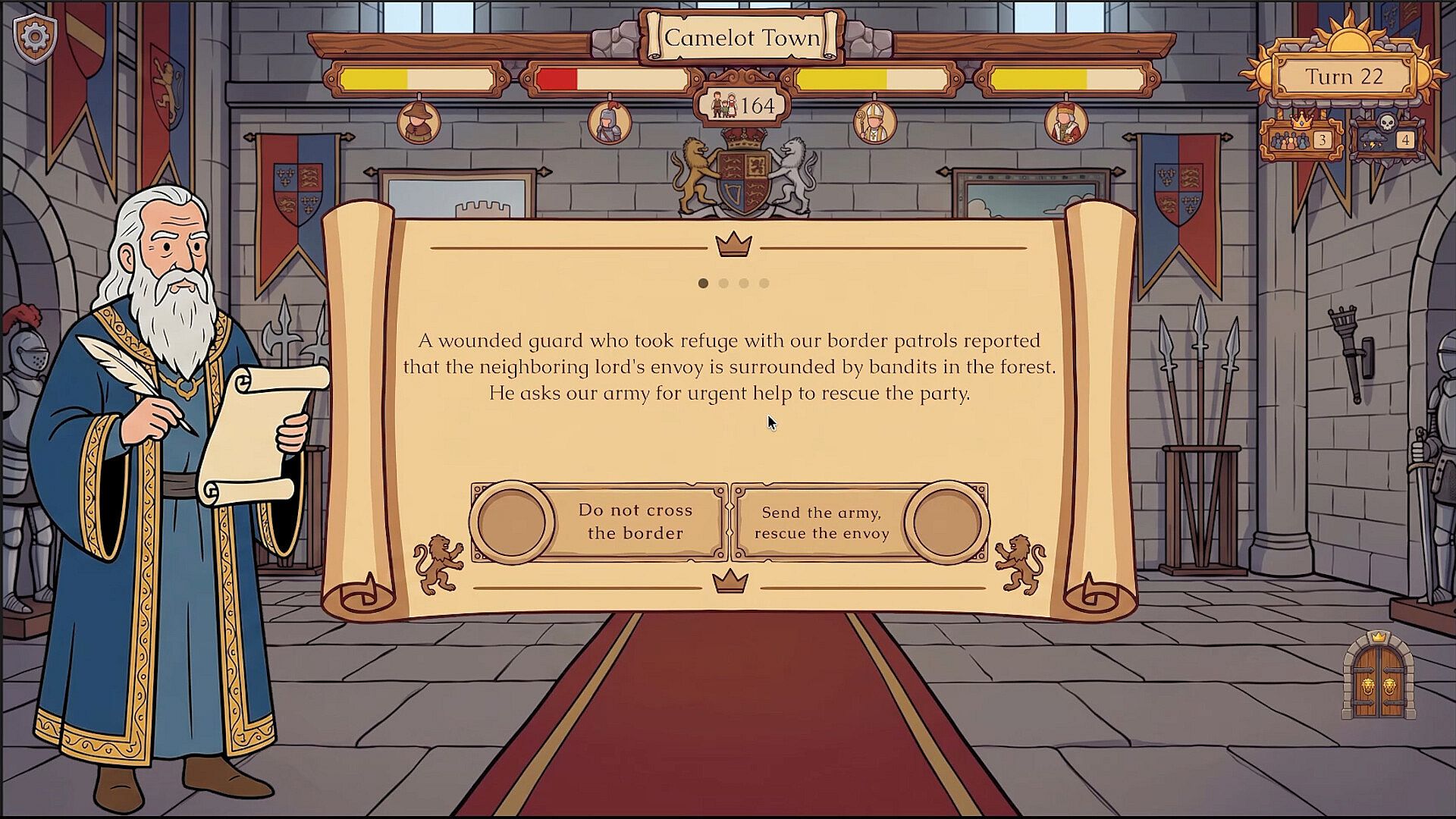
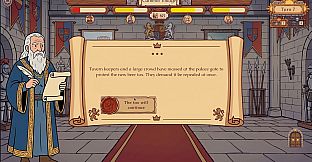
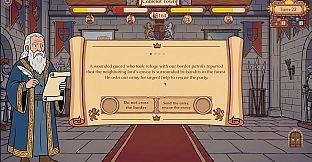
Court sessions form a central loop. Requests from subjects and issues presented by an advisor require rulings that shift standing with four factions: the People, the Military, the Clergy, and the Merchants. Each choice carries consequences that surface in later turns, affecting stability and available options.
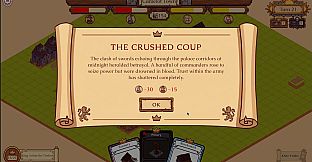
Disasters accumulate over turns and strike periodically. Events such as plague, famine, earthquake, coup, or statue weeping blood test the balance maintained across factions and infrastructure. Nine distinct failure conditions lead to loss of the crown, while a single path leads to earning it outright.
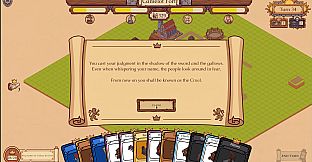
Players name both ruler and kingdom at the start. Decisions throughout determine an earned title such as the Merciful, the Cruel, or the Steadfast, which reflects the overall approach taken.
Game Modes
The game operates as a single continuous campaign without separate named modes. Progression follows a turn-based structure where building, court rulings, and disaster management occur within the same session. Population milestones naturally expand the playable area and available cards, creating a unified experience focused on long-term kingdom stewardship rather than distinct scenarios or competitive formats.
Key Mechanics and Systems
Card-based building emphasizes positioning over simple accumulation. Overlapping influence zones reward thoughtful layouts that strengthen multiple factions simultaneously. Hundreds of individual choices arise from the buildings constructed, with crises often tracing back to earlier decisions.
Faction management requires ongoing attention. Each group grows dangerous if neglected or overly empowered, forcing players to weigh short-term gains against long-term stability. Decisions made early frequently return as complications or opportunities in subsequent turns.
Disaster preparation integrates directly with the building and ruling systems. The counter advances each turn until an event triggers, demanding that infrastructure and faction relations remain resilient enough to absorb the impact without collapsing.
Is It Worth Playing?
Not Yet King suits players who enjoy deliberate strategy and simulation titles centered on resource placement, political balancing, and consequence-driven progression. The card-driven building and court judgment systems provide consistent decision points that reward planning and adaptation. Those seeking quick sessions or multiplayer elements will find the single-player focus and measured pace less suitable. The verified mechanics of faction interplay, disaster timing, and title outcomes deliver a cohesive experience for fans of kingdom management games that emphasize cause and effect over rapid action.












