

OddXI is a strategy, simulation, and sports game that puts players in charge of assembling and managing absurd football teams through a roguelike structure built around physical stickers. In this single-player experience on PC, every session involves ripping open packs of unusual players, arranging them into a starting XI, and guiding the squad through three full seasons that culminate in a continental final. The approach emphasizes quick, self-contained runs where lineup choices directly shape formations, trait combinations, and match odds without any separate tactics screen.
Gameplay
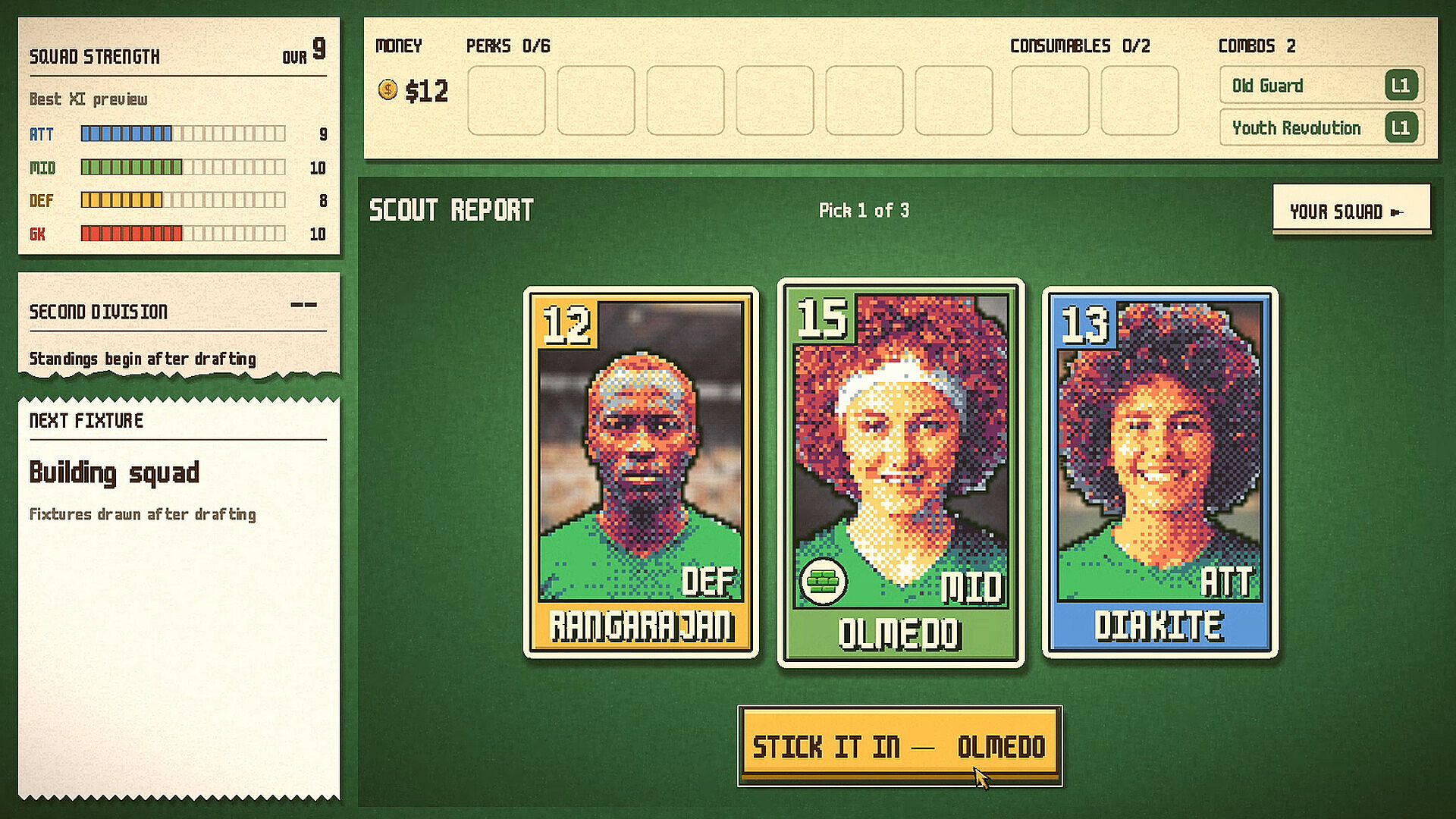
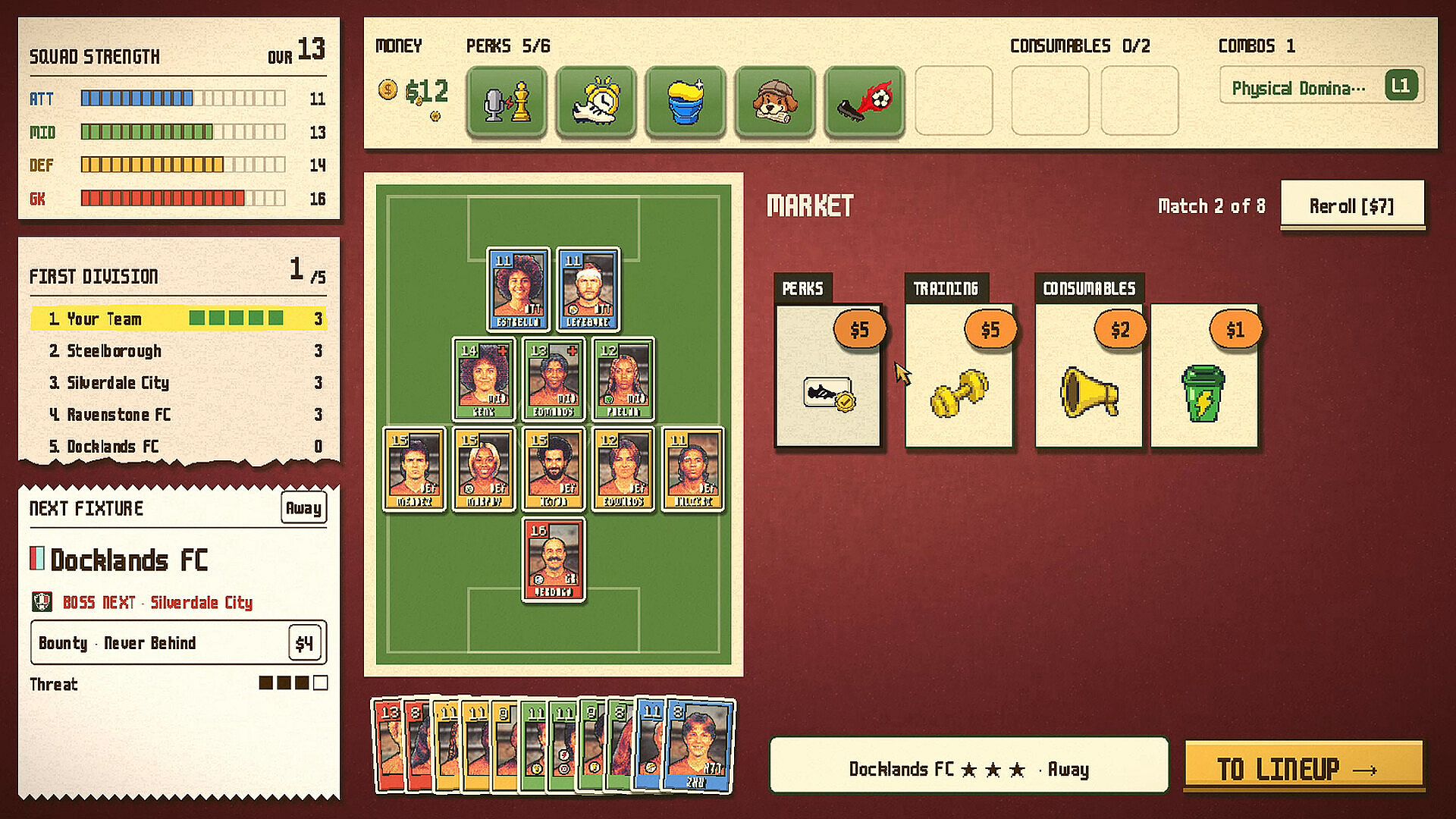
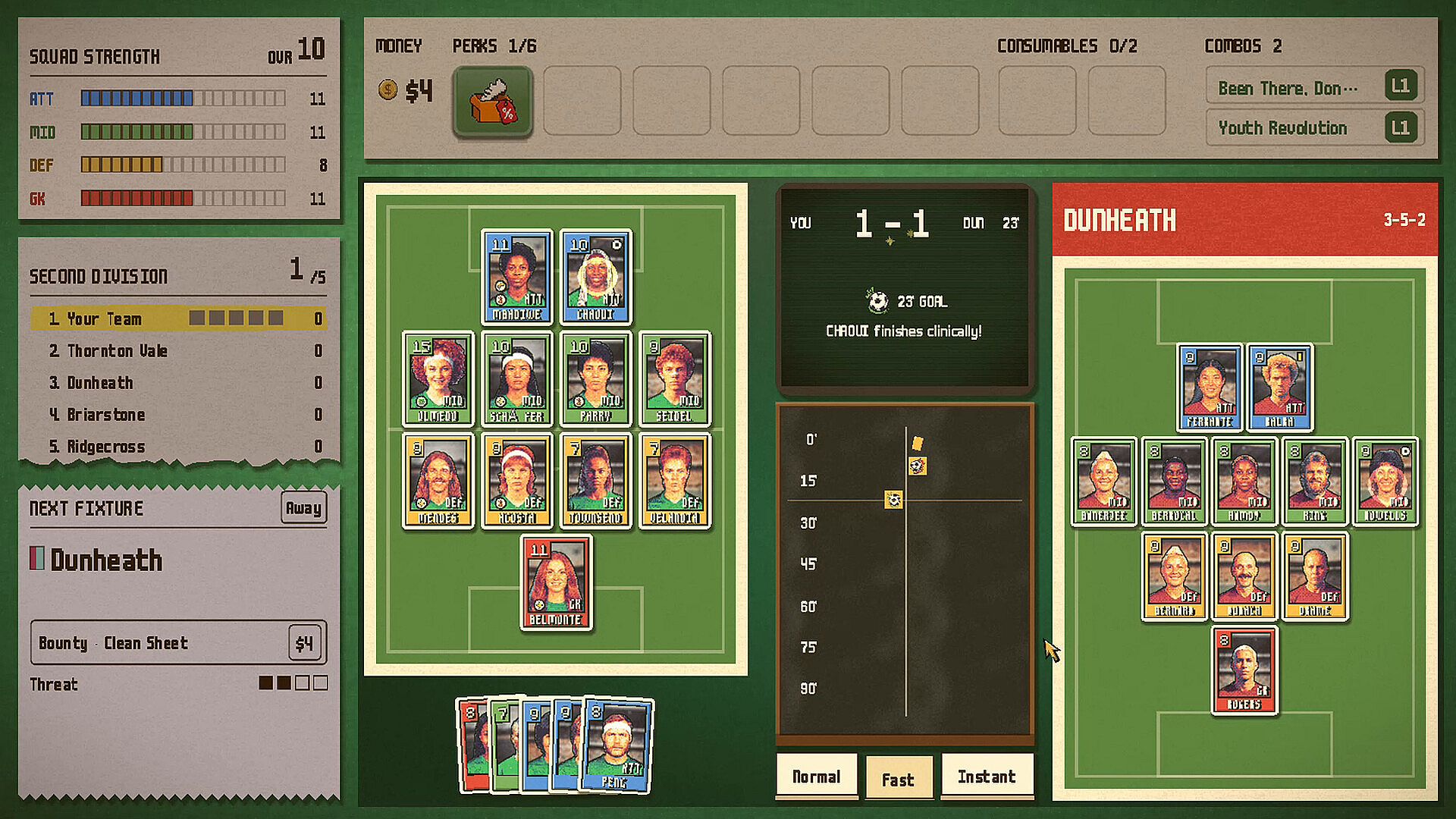
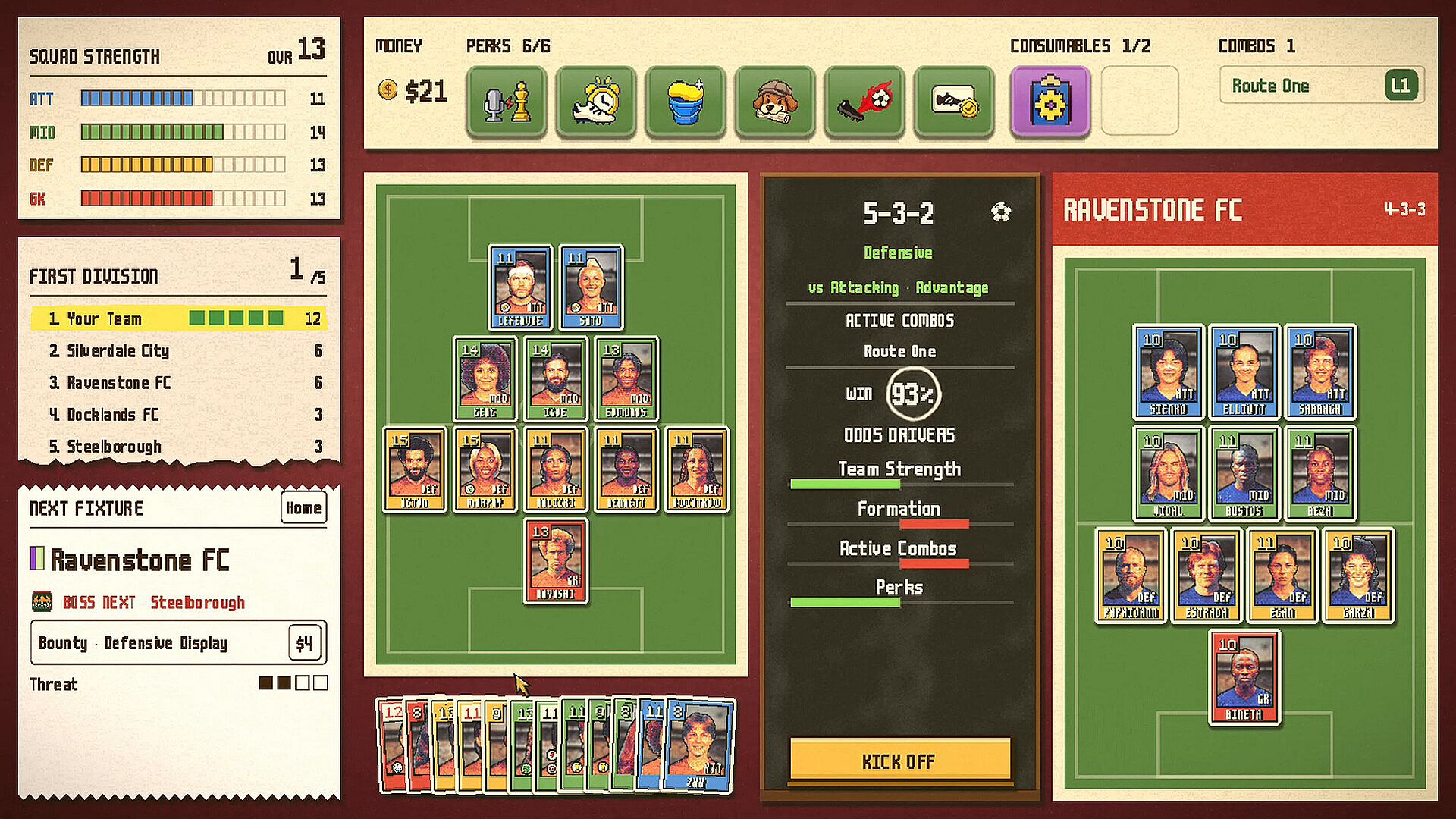
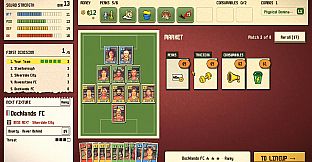
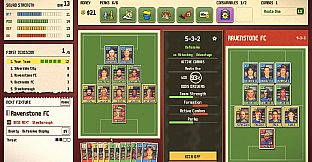
The core loop centers on pack opening and squad building. Each pack delivers stickers that represent individual footballers, complete with a position, a face, and a unique trait. Some traits appear ordinary while others lean toward the eccentric, yet every player must be considered because goalies and substitutes are still required. Once selected, the starting XI determines the formation automatically. Traits stacked across the eleven positions trigger combinations that alter how the team performs on the pitch, creating emergent effects that shift with every substitution or swap.
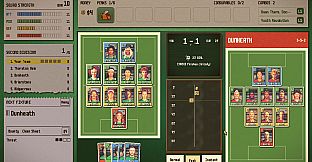
Between matches, prize money can be spent on training sessions, permanent perks, or temporary match-day boosts. A well-timed investment might stabilize a shaky defense or unlock a new combo path, while a poor choice can leave the squad exposed for the remainder of the season. Matches themselves unfold on a small television screen after the lineup is locked in. Players watch the action play out in real time, then intervene at half-time with substitutions if injuries occur or if the current matchup demands adjustment. The system keeps decision-making visible and immediate, with odds displayed before kick-off so the impact of any single change remains clear.
Opposing sides add further variety through themed rules and modifiers. Four distinct boss teams appear at the end of each season, each carrying its own set of eccentric behaviors that force adaptation. Examples include vegan pirate sides that press aggressively, teams that park the bus in defensive setups, a goth band that influences crowd atmosphere, and ancient philosophers who bring video assistant referee elements into the final continental clash. These encounters sit atop twenty-two total boss modifiers that bend standard match rules in unpredictable ways.
Game Modes
OddXI operates entirely through roguelike runs that compress three seasons into a single sitting. Each attempt begins with one of ten available starter squads and progresses from the second division upward. Success depends on navigating the full campaign to the continental final while managing injuries, form swings, and the escalating difficulty of boss encounters. There are no separate competitive ladders or versus modes; the focus remains on repeated, self-contained campaigns where every decision compounds across the three-season arc.
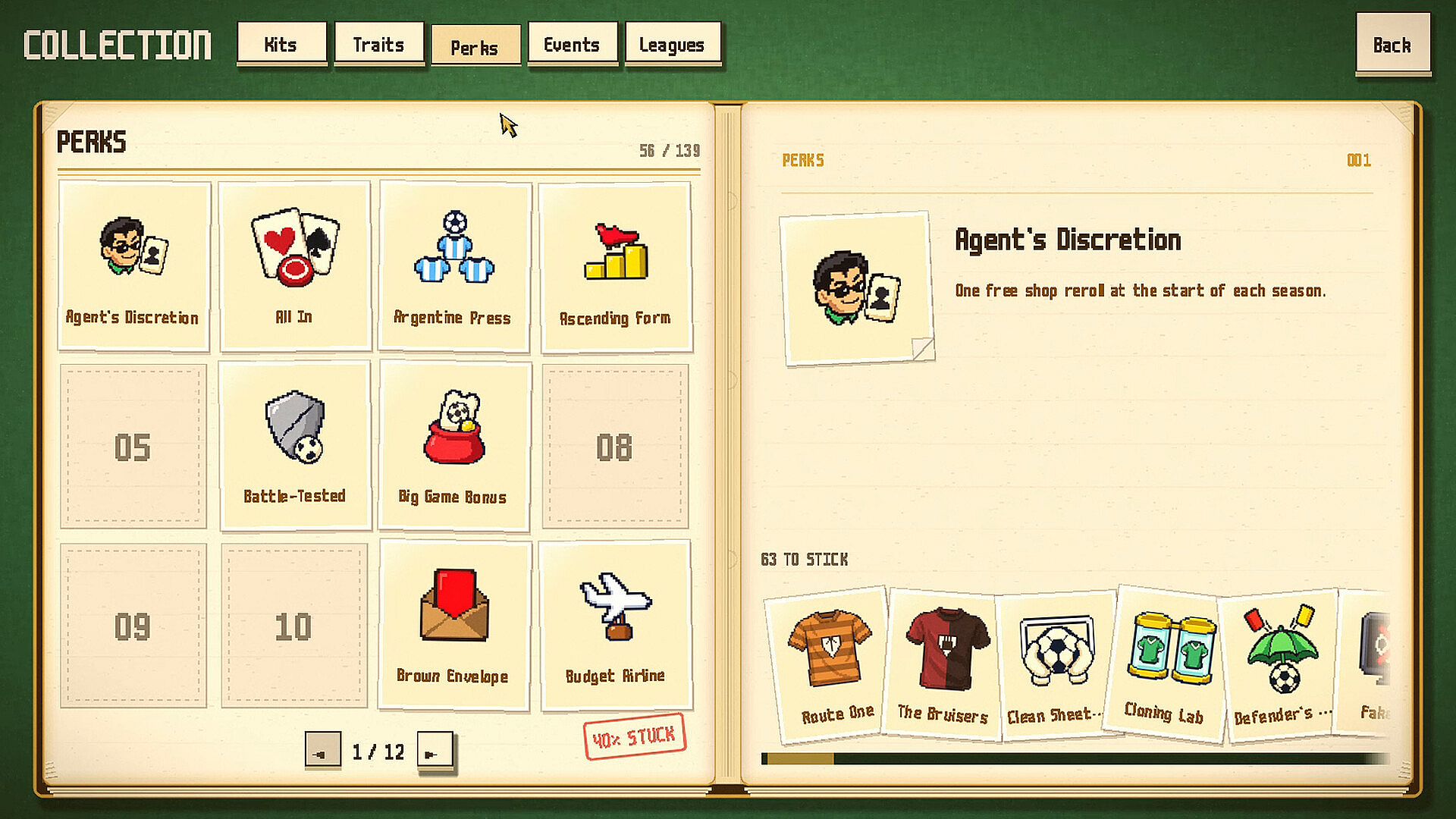
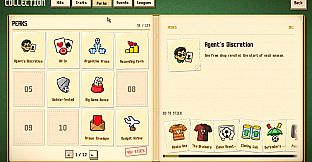
Progression outside individual runs comes from a persistent sticker album. Every player, trait, perk, event, kit, and league discovered during a campaign is recorded permanently. Locked sections within the album provide hints about future content, turning even failed attempts into sources of new discoveries. This collection system encourages multiple runs without altering the core single-player structure.
Customization and Squad Options
Players can field entirely men's squads, entirely women's squads, or mixed squads depending on preference. The trait and combo systems function identically across these choices, so the decision affects only the visual and thematic flavor of the team rather than mechanical balance. Starter squads provide different entry points into the same three-season structure, allowing fresh perspectives on the same set of mechanics without requiring new game modes.
Is It Worth Playing?
OddXI targets players who enjoy roguelike decision trees combined with light football management and humorous presentation. The absence of a traditional tactics menu and the direct link between lineup and outcomes create a streamlined yet deep loop that rewards experimentation with trait stacking and timely spending. Because the game remains in development with a planned release in Q1 2027 and currently has no player reviews available, any recommendation rests on the clarity of its described systems rather than community feedback. Those drawn to short, repeatable campaigns filled with absurd opponents and visible probability shifts will likely find the format engaging, while fans of longer-form simulation or multiplayer competition may prefer titles with broader scope. The single-player focus and emphasis on one-sitting runs make it accessible for sessions that last roughly the length of three simulated seasons.