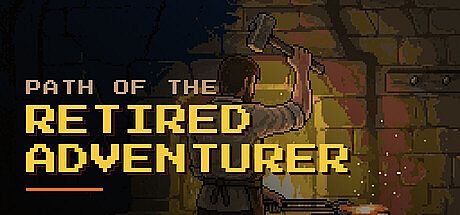


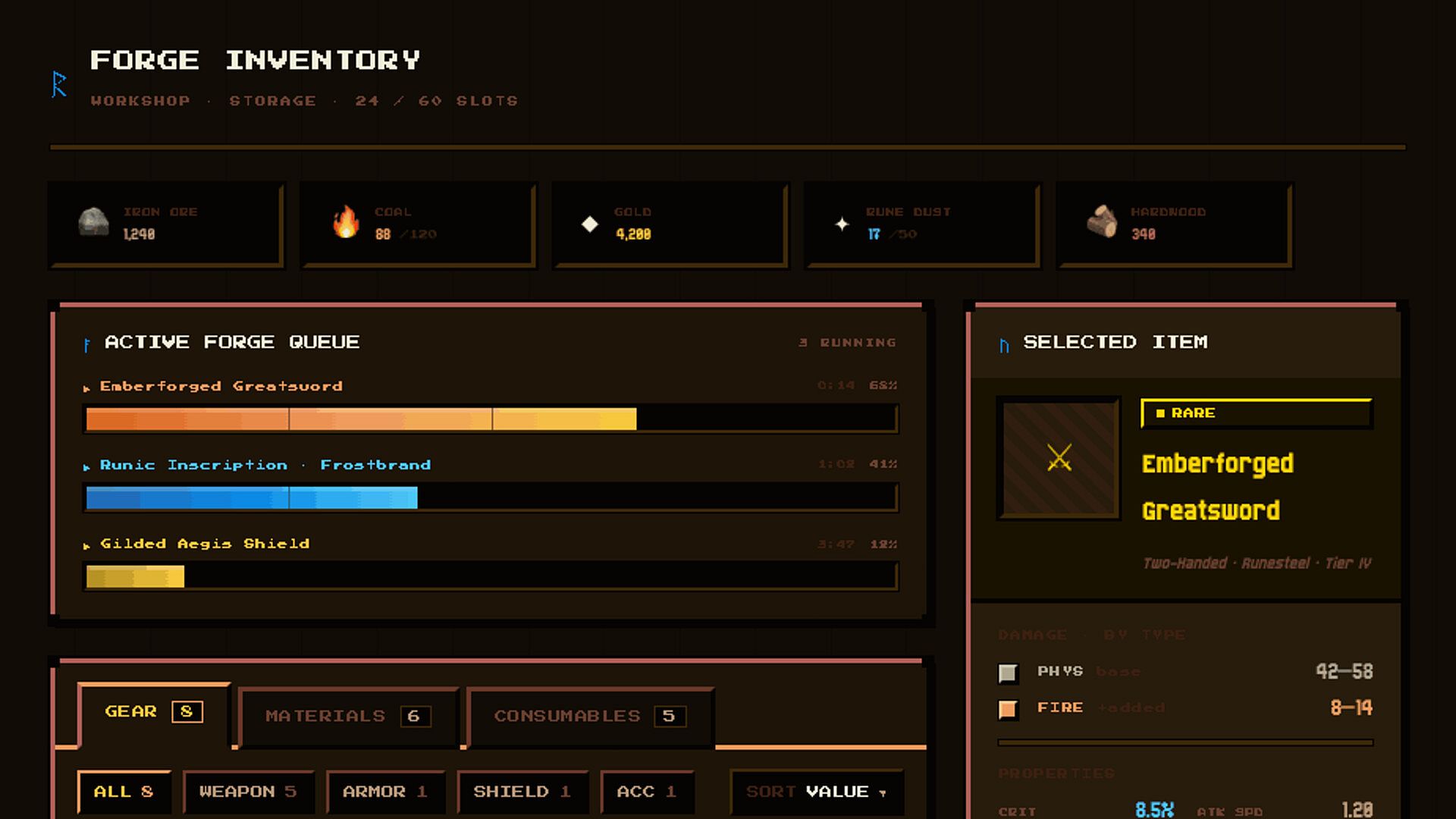
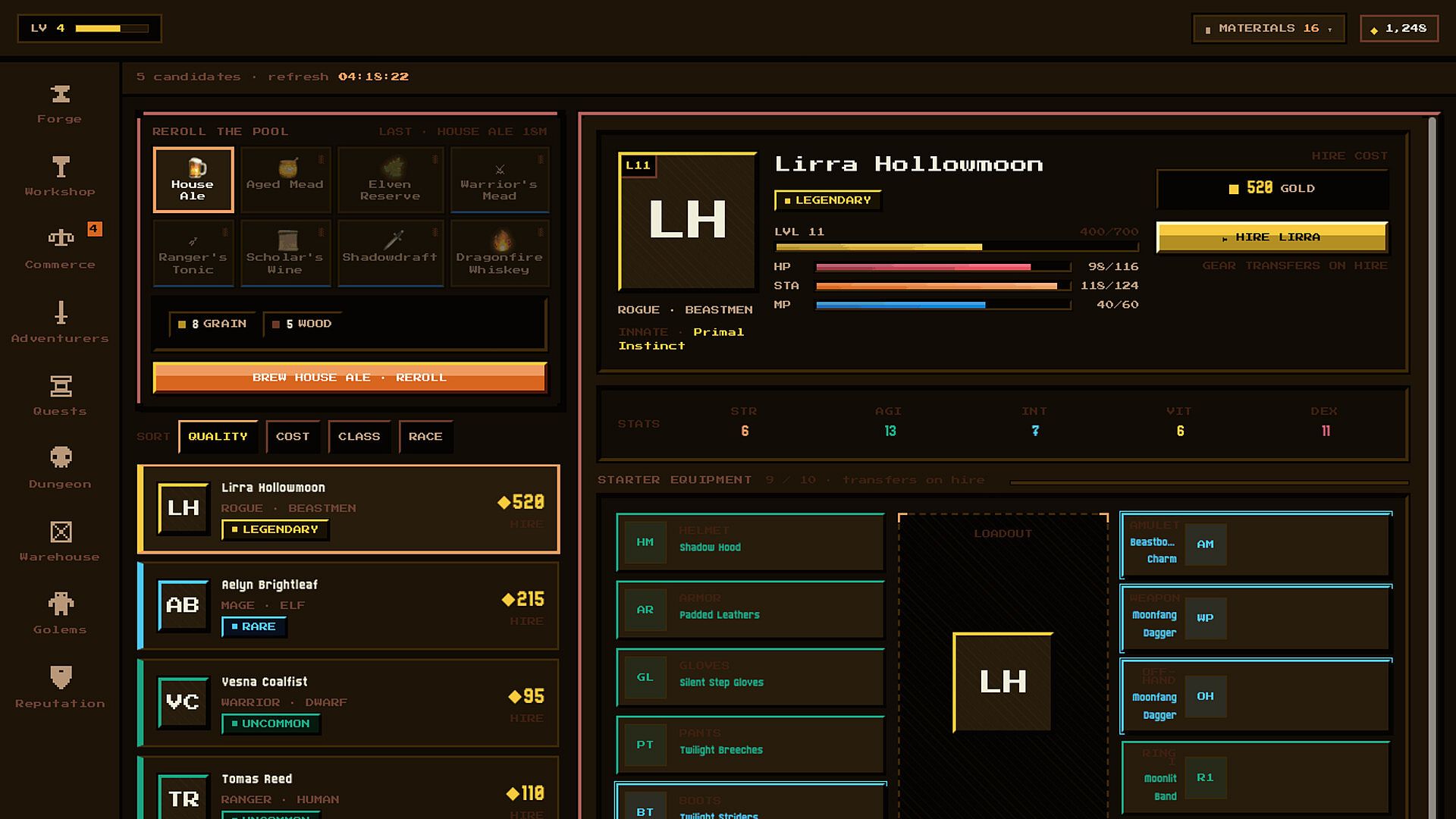
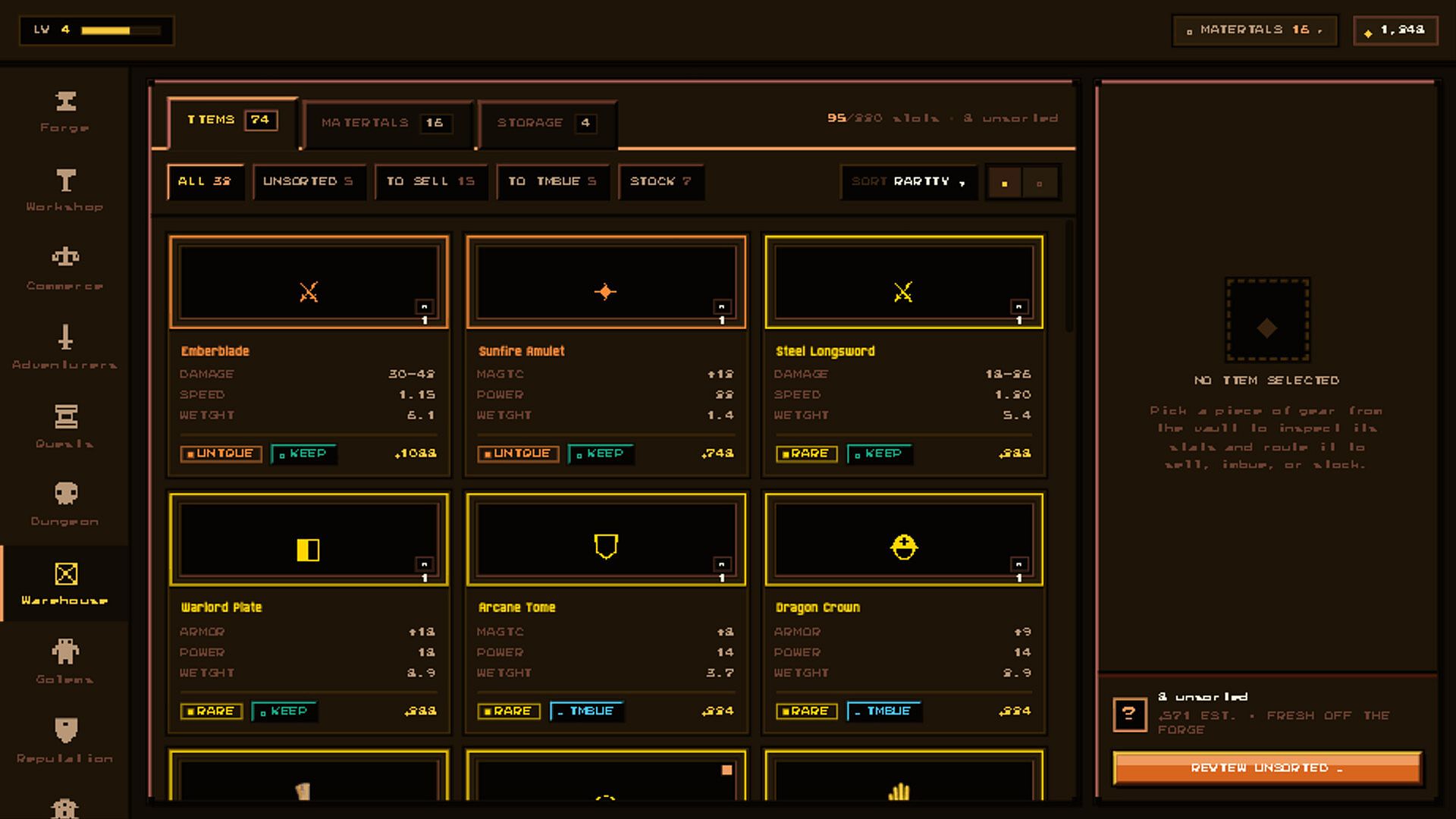
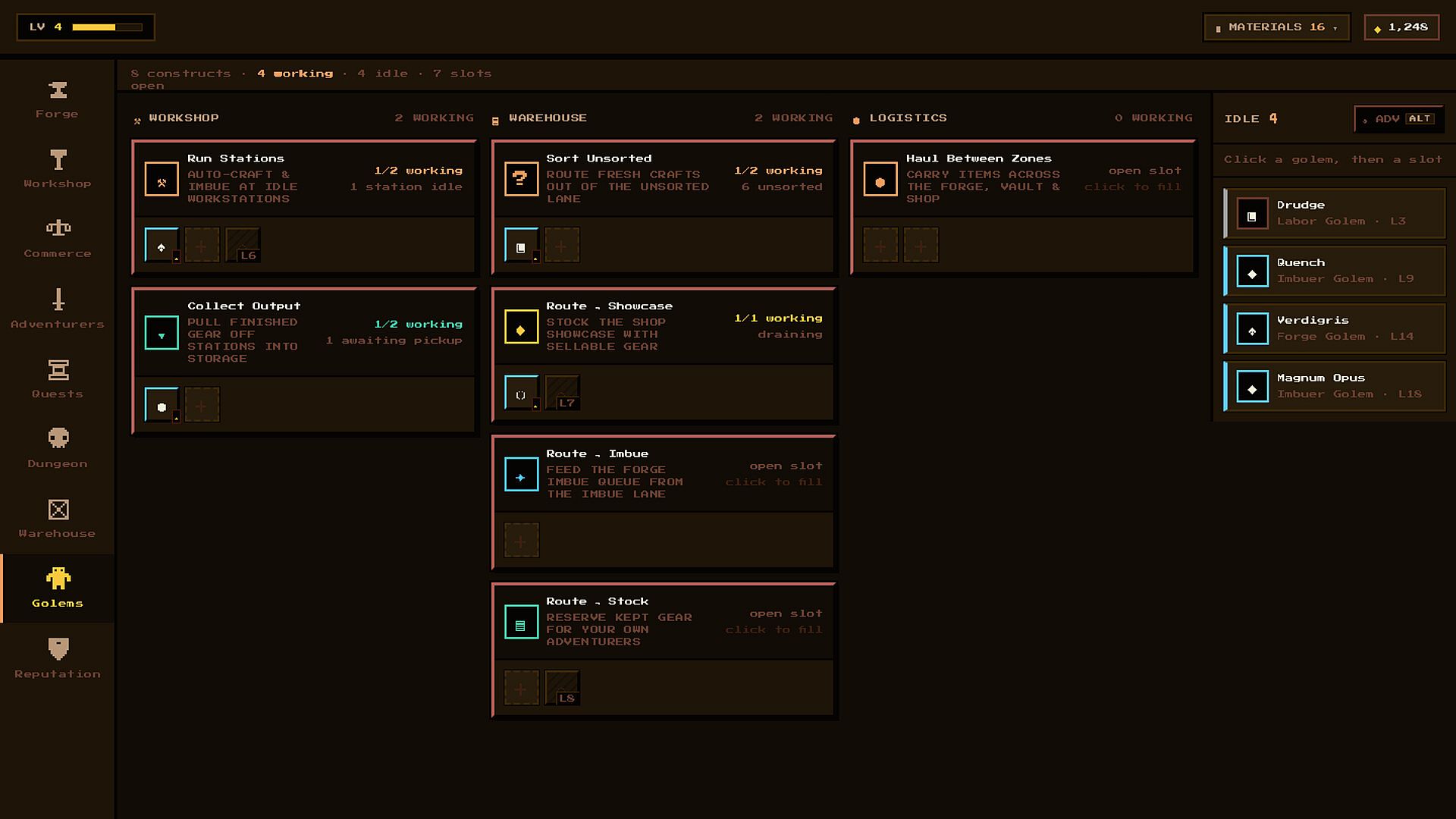
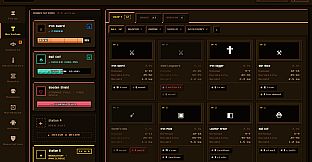
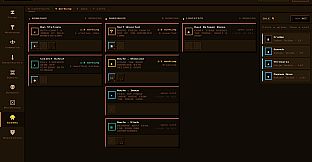
Path of the Retired Adventurer is an indie RPG simulation game built around semi-idle crafting and management. Players focus on forging equipment rather than controlling characters directly in combat. The experience draws from loot-driven systems but removes the constant grinding, allowing progress through automated adventurer expeditions while the workshop operates in the background.
Gameplay
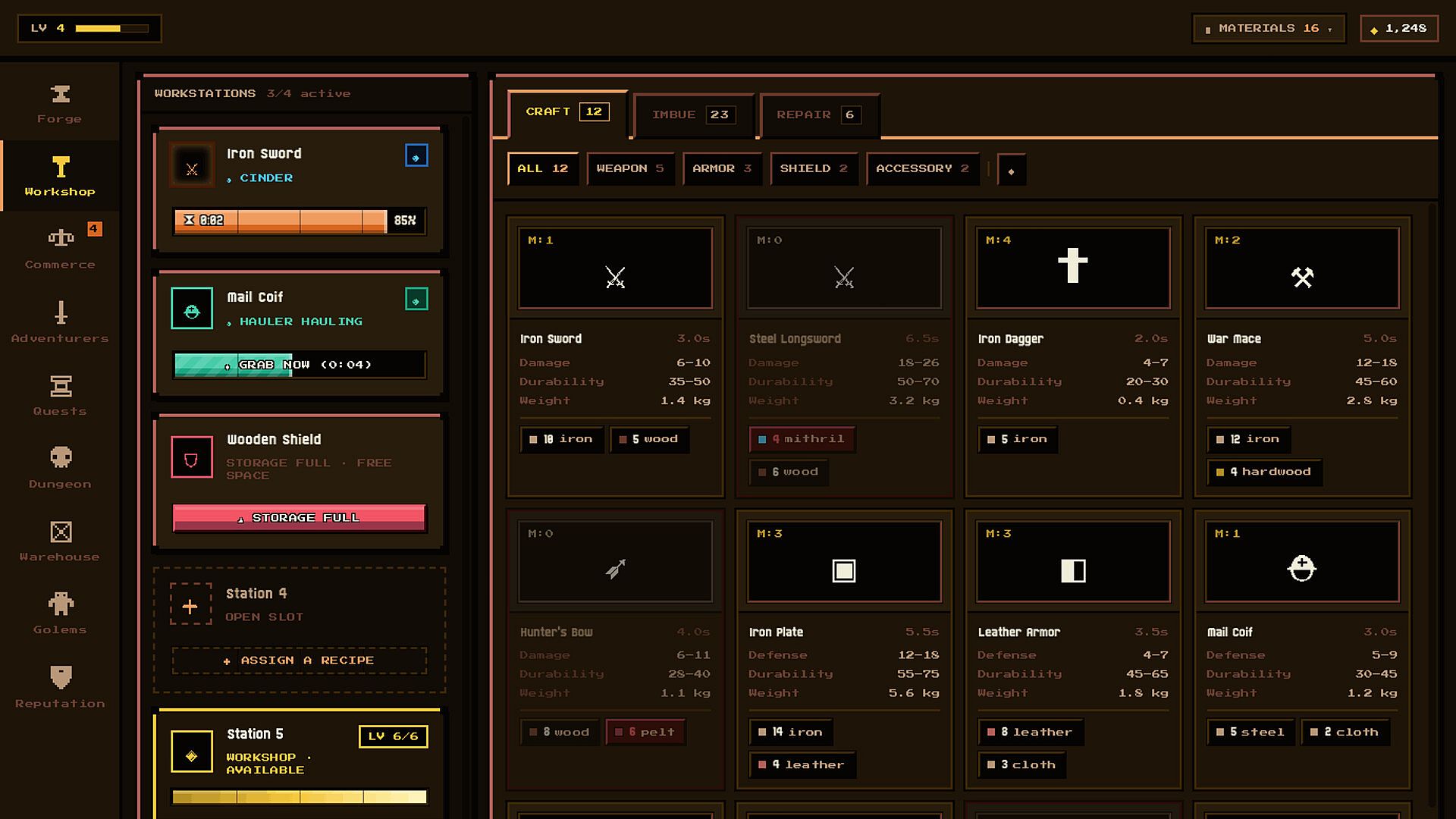
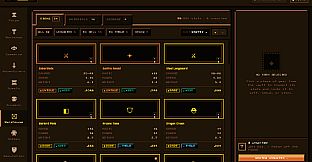
The core loop centers on discovering item recipes and producing gear for hirelings who handle quests and exploration. Over one hundred items form the foundation, with players learning to combine materials into base equipment before enhancing them further. Affix application happens through deliberate imbuing rather than random chance, giving control over stat improvements on specific item families.
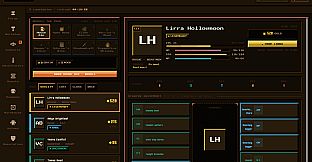
Adventurers recruited into the roster bring individual traits and skills that boost performance when paired with matching gear categories. These hirelings venture out independently, returning with resources and experience only if they complete their assignments successfully. The player monitors results and refines future crafts based on what succeeds or fails.
Automation enters through crafted golems that handle routine workshop tasks. This frees attention for higher-level decisions around affix selection and recipe optimization. The system supports both hands-on tweaking of individual rolls and longer periods of passive accumulation where the workshop continues generating output without constant input.
Game Modes
Two primary activity types structure the expeditions. Quests provide steady resource gains and experience for the adventurers, while dungeon dives offer higher-risk opportunities for rarer materials. Both rely entirely on the quality of equipment supplied by the player, with survival determining whether loot returns to the workshop.
Progression remains single-player throughout, with no multiplayer components. The focus stays on iterative crafting cycles and roster management rather than direct combat control or competitive elements.
Crafting Systems
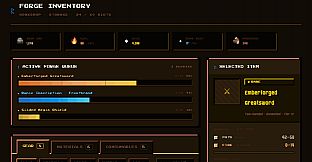
The Forge functions as the central station for affix rolls, presented as a controlled environment for testing combinations instead of pure gambling. Players experiment with different imbuing approaches to push items toward higher performance tiers. Recipe discovery expands the available options over time, encouraging repeated play sessions to unlock and refine new production paths.
Item families receive targeted support through adventurer traits, creating synergy opportunities. Matching the right hireling skills to crafted pieces amplifies results on subsequent runs, turning early experiments into more reliable long-term strategies.
Is It Worth Playing?
The game suits players who enjoy crafting depth and incremental optimization without requiring constant active play. Its semi-idle design allows sessions of focused imbuing followed by periods of automated returns, fitting schedules that mix short bursts of attention with longer absences. Single-player structure keeps the experience self-contained and free of external dependencies.
Those drawn to Path of Exile-style loot systems but seeking relief from heavy grinding will find the core loop aligned with that preference. The emphasis on deliberate affix work and adventurer equipping provides a management layer that rewards planning and iteration. As an upcoming title with no released player data yet, its value will depend on how well the crafting and automation mechanics deliver on the described systems once available.